Budapest Ruin Bars: The Complete Guide
Budapest's ruin bars are unlike anything else in Europe: abandoned buildings transformed into labyrinthine bars, galleries, and gardens. This guide covers the best venues, realistic prices, transport logistics, and seasonal tips to help you experience them properly.
Plan and book this trip
Tools from our partner Travelpayouts help you compare flights and hotels. If you book through them, we may earn a commission at no extra cost to you.
Flights
Hotels map
TL;DR
- Most ruin bars are concentrated in District VII (the Jewish Quarter), around Kazinczy utca and Akácfa utca, walkable from Astoria or Blaha Lujza tér metro stations.
- Szimpla Kert is the original and most famous venue, but it now draws large tourist crowds. Smaller bars nearby offer a more local atmosphere.
- Beer runs 900–1,400 HUF at major ruin bars. The idea that ruin bars are always cheap is outdated: central venues charge close to Western European prices.
- Most ruin bars are free to enter. Some club-style venues charge 2,000–3,000 HUF cover after midnight on weekends.
- A full evening out (dinner, bars, club, transport) typically costs 15,000–25,000 HUF per person. See our Budapest nightlife guide for the broader picture.
What Are Ruin Bars, and Why Does Budapest Have Them?
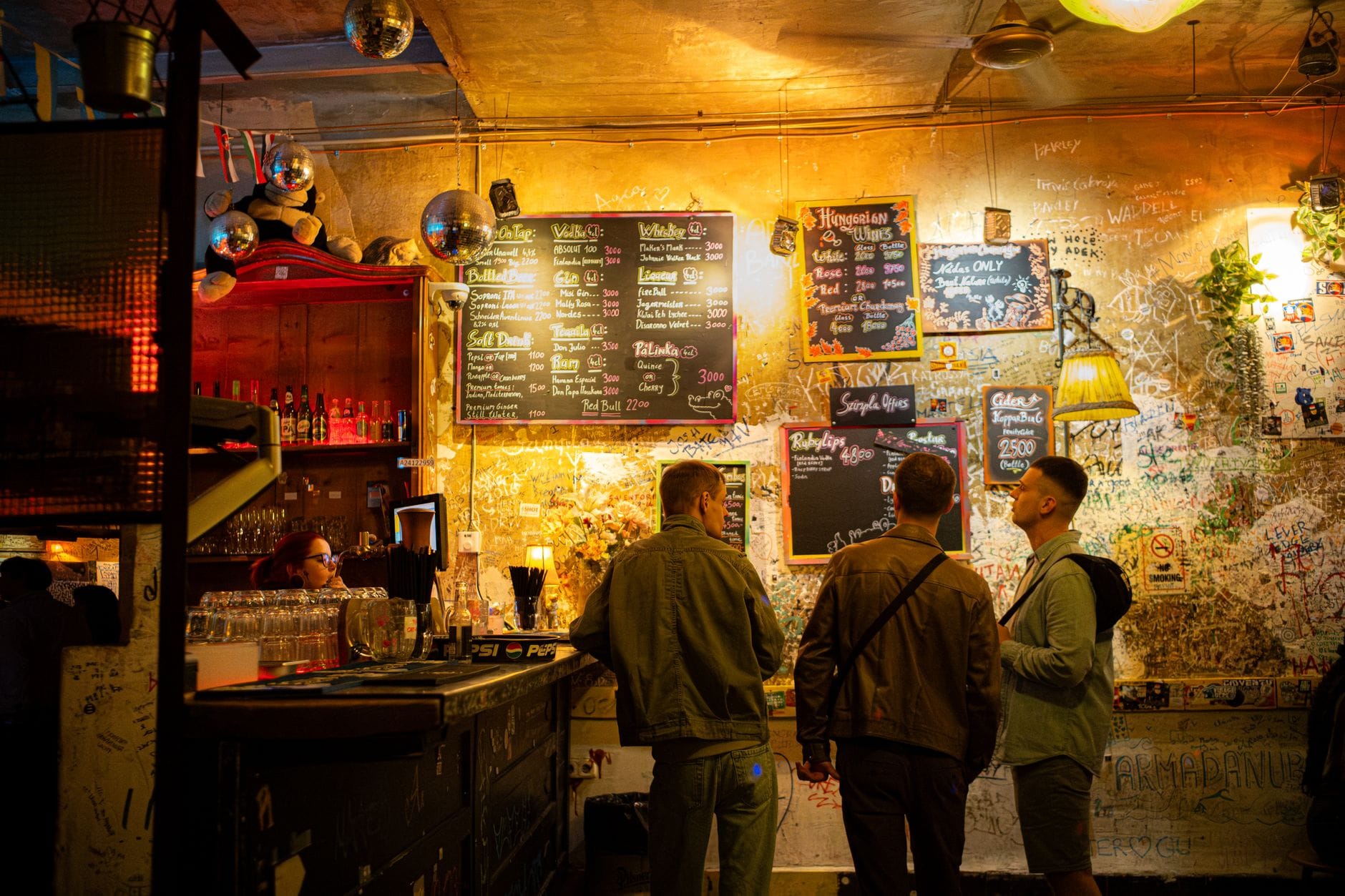
The ruin bar (romkocsma in Hungarian) emerged in Budapest in the early 2000s as entrepreneurs began occupying derelict buildings in District VII. Many of these properties had sat empty for decades following the upheaval of the 20th century, including the devastation of the Second World War and the stagnation of the communist era. Rather than wait for formal redevelopment, a wave of young locals turned these crumbling courtyards and apartments into makeshift bars, filling them with mismatched furniture, salvaged art, and improvised lighting.
Szimpla Kert, which opened in 2002, is widely credited as the first and is now the genre's defining example. The concept spread quickly across the Jewish Quarter and beyond, turning a historically underdeveloped area into one of Europe's most distinctive nightlife districts. Today the scene ranges from the original low-fi aesthetic to polished venues that have borrowed the visual language of ruin bars without much of the original spontaneity.
ℹ️ Good to know
The term 'ruin bar' describes the aesthetic as much as the architecture. Some venues have been fully renovated but keep the eclectic decor. Others are genuinely rough around the edges. The experience varies significantly from one bar to the next.
Where to Find Them: The Jewish Quarter and Beyond
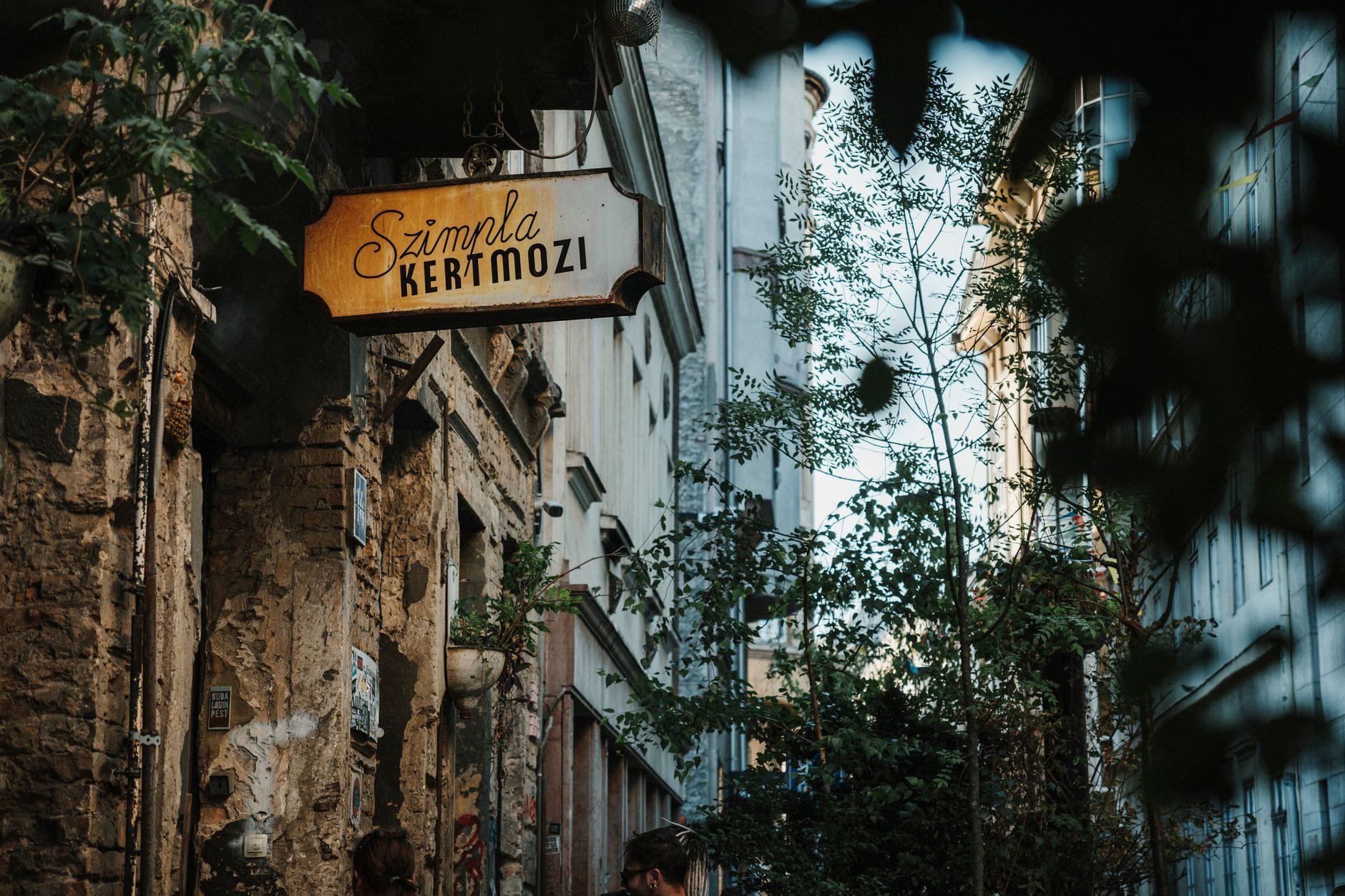
The core ruin bar district sits within District VII (Erzsébetváros), roughly bounded by Király utca to the north, Rákóczi út to the south, and the Nagykörút ring road to the west. Kazinczy utca and Akácfa utca are the two streets you will return to most. Klauzál tér, the neighbourhood's central square, is a useful orientation point.
Getting there is straightforward. Szimpla Kert on Kazinczy utca is about a 6-minute walk (roughly 500 metres) from Astoria station on Metro Line M2. Instant-Fogas on Akácfa utca sits closer to Blaha Lujza tér, also on M2. From Deák Ferenc tér, where Metro lines M1, M2, and M3 intersect, the entire district is reachable on foot in 10-15 minutes. Night buses cover the area after the metro closes around 23:00.
Beyond District VII, there are ruin-style bars scattered across adjacent districts and the downtown area. They tend to be quieter and more local in character, though they lack the density and variety of the Jewish Quarter cluster. If you want to see the full range of what Budapest's ruin bar scene offers, District VII is where you start.
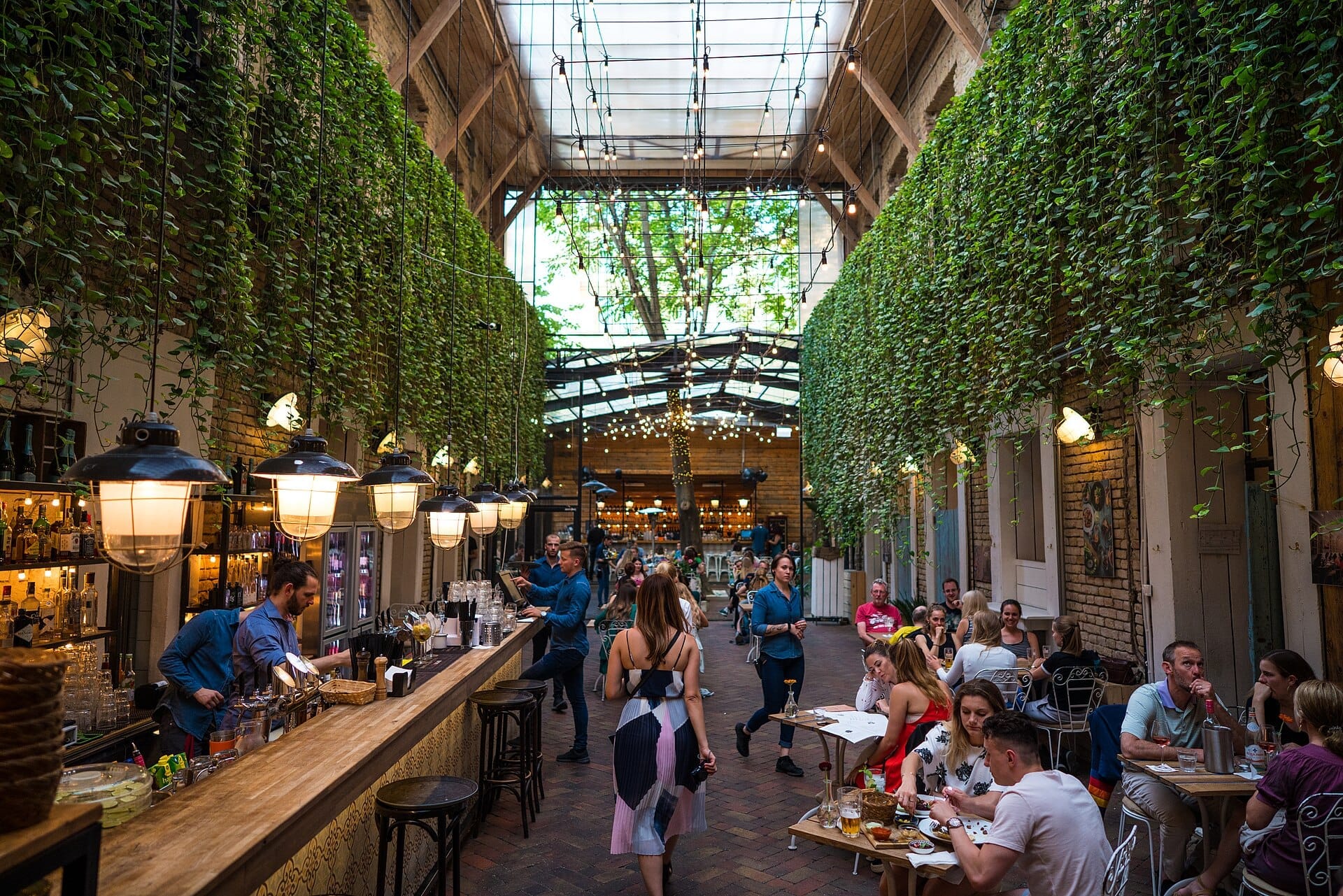
- Szimpla Kert (Kazinczy utca 14) The original. Open Mon-Fri from 15:00, Sat from 12:00, Sun from 9:00, closing at 4:00. Sunday hosts a farmers' market 9:00-14:00. Expect crowds on weekend evenings; arrive before 20:00 for a calmer experience.
- Instant-Fogas (Akácfa utca 51) A large multi-room complex that functions as a bar earlier in the evening and transitions into a full club after midnight. Stays open until around 6:00. Cover charges of 2,000-3,000 HUF apply after midnight on weekends or for special events.
- Mazel Tov (Akácfa utca 47) A ruin bar with a Middle Eastern-influenced restaurant attached. More upscale and less chaotic than the neighbouring venues. Good option if you want food alongside drinks.
- Anker't (Paulay Ede utca 33) A large courtyard bar closer to Deák Ferenc tér. Popular with a mixed local and tourist crowd. The outdoor space is particularly good in summer.
- Red Ruin Bar (Irinyi utca) Open daily 16:00-4:00. Located slightly outside the core District VII cluster, which keeps it less packed on busy nights.
Prices, Drinks, and What to Expect at the Bar
One of the most persistent myths about Budapest ruin bars is that they are uniformly cheap. That was true in the early years. At the well-known tourist-facing venues today, a 0.5L beer costs 900-1,400 HUF, cocktails run 2,000-3,000 HUF, and pálinka shots start from around 600 HUF. Across the broader scene, beer ranges from 500-1,000 HUF and cocktails from 2,000-5,000 HUF depending on complexity and venue. These are not dramatically different from prices in major Western European cities.
The better value comes from the smaller, less prominent bars in the same neighbourhood that don't rely on foot traffic from walking tours. If price matters, look one street away from the main cluster. Pálinka, the Hungarian fruit brandy, is consistently good value relative to imported spirits and a worthwhile local choice. Unicum, the bitter herbal liqueur made by the Zwack family, is another local staple worth trying at least once.
⚠️ What to skip
Some bars in the area use a 'couvert' or mandatory snack charge that appears on your bill uninvited. Check before you order, especially at venues near the main tourist drag. This is less common at the established ruin bars than at some of the adjacent restaurants, but it does happen.
For budgeting purposes: a complete evening covering dinner near the district, three or four drinks across two or three bars, and a club entry typically costs 15,000-25,000 HUF per person. Add a taxi home (order via Bolt, Uber, or another licensed taxi app) and you are looking at the upper end of that range or slightly above.
When to Go: Timing, Seasons, and Crowd Patterns
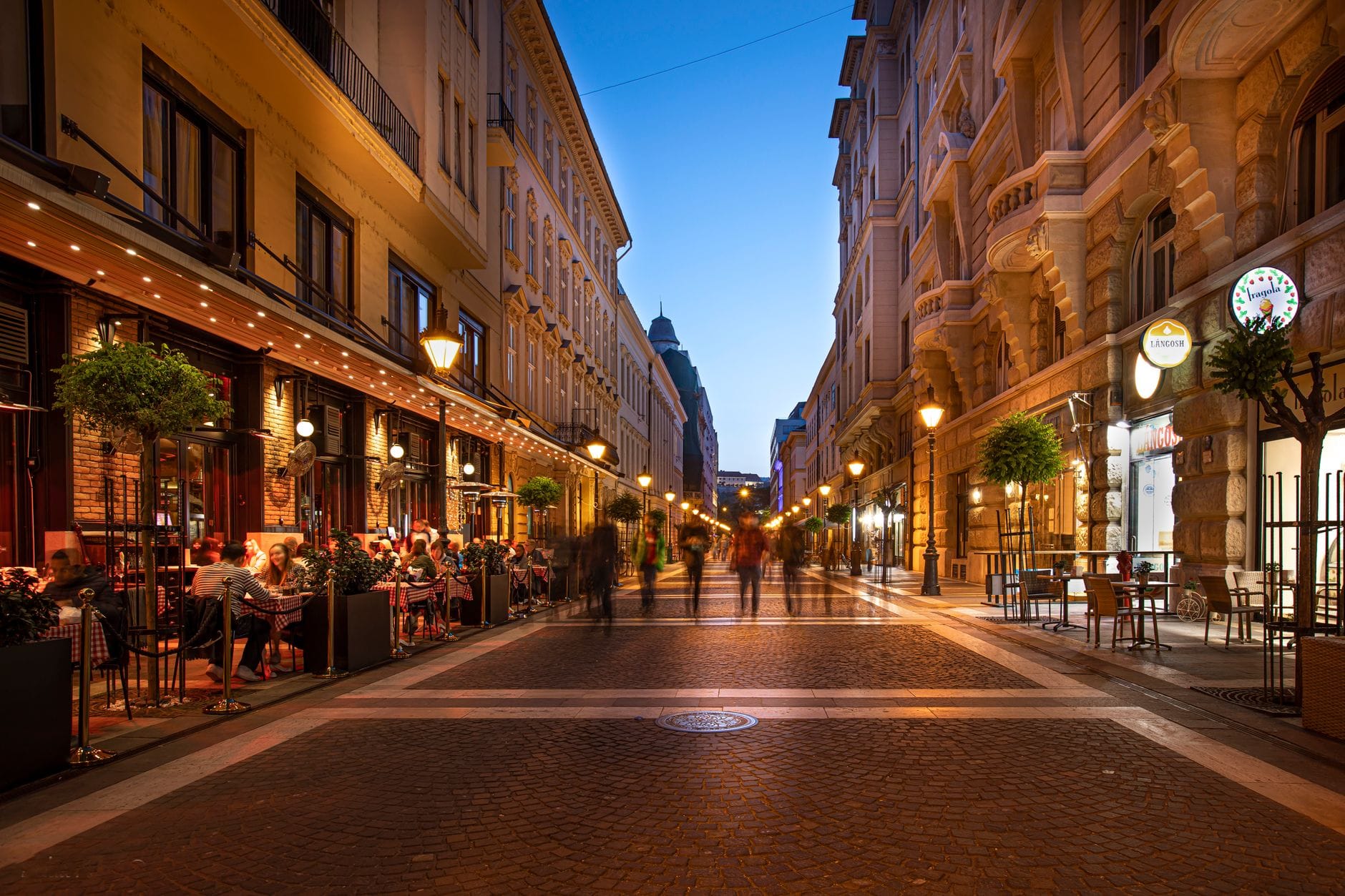
The ruin bars are open year-round, but the experience changes considerably with the season. In the warmer months, roughly May through September, the large courtyard gardens come into their own. Szimpla Kert's inner courtyard and Anker't's outdoor space fill up quickly on warm evenings, and the energy is different from the enclosed winter experience. Peak tourist season runs from late May to early September, and the most famous venues reflect this: Friday and Saturday nights in July and August at Szimpla Kert can feel more like a theme park than a bar.
If you want atmosphere without the density, late September through October is the sweet spot. The courtyards are still usable on mild evenings, the summer crowds have thinned, and the locals are back. Winter is not unpleasant inside these bars (the indoor rooms are well-heated and atmospheric), but you lose the courtyard element entirely. For more on how seasons affect your trip overall, the best time to visit Budapest guide breaks this down in detail.
Timing within the week also matters. Szimpla Kert's Sunday farmers' market (9:00-14:00) draws a crowd that has nothing to do with nightlife and is worth visiting independently. On weekday afternoons, several ruin bars function as quiet cafés. If you want a drink and a look at the architecture without noise, a Tuesday or Wednesday afternoon at Szimpla or Mazel Tov is a very different visit from a Saturday night.
✨ Pro tip
Arrive at Szimpla Kert before 20:00 on a Friday or Saturday if you want to find a table and actually see the space. After 21:00 in peak season, the crowd makes it difficult to move around properly, let alone appreciate the decor.
Ruin Bar Tours, Pub Crawls, and Going Independently
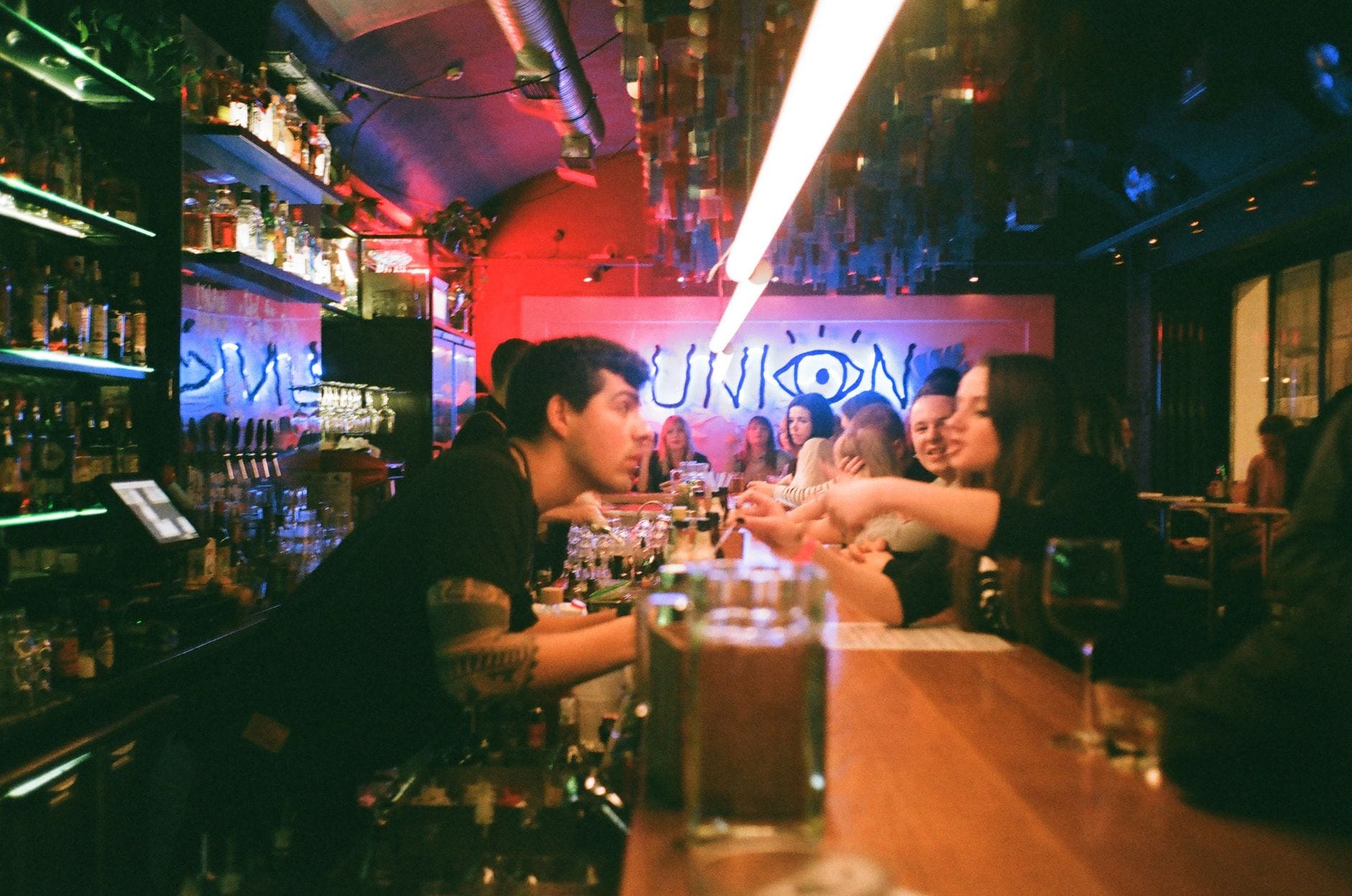
Organised pub crawls and ruin bar tours operate throughout the year, typically covering three to five venues over an evening. Prices generally run €20-35 per person, often including a welcome drink and a free shot at each venue. For solo travellers or small groups who don't know the city, these tours solve the problem of logistics and provide an instant social group. For everyone else, they tend to dilute the experience. You move on the tour's schedule, not yours, and you share the space with a large, often boisterous group. The ruin bars are easy to find independently, and the neighbourhood is safe and walkable at night.
Going independently is straightforward. Start at Deák Ferenc tér or Astoria, walk into District VII, and follow Kazinczy utca. Begin at Szimpla Kert to orient yourself, then work your way through the surrounding streets. The whole cluster is compact enough that you can cover it on foot in a single evening without planning anything in advance. The neighbourhood nightlife typically gets going around 20:00-21:00, with clubs peaking between 1:00 and 3:00.
- Bring cash: some smaller bars don't accept cards reliably, and ATM fees add up.
- Stick to licensed taxis or your hotel's recommended car service for getting home. Do not flag down unmarked vehicles near the bar district at night.
- The 112 emergency number (European standard) works across Hungary.
- Tipping around 10% is customary at table-service bars. For counter service at ruin bars, rounding up the bill is the norm but not obligatory.
- Budapest uses the Hungarian forint (HUF). At the time of writing, rough exchange rates make 1,000 HUF approximately €2.50-€3, but verify current rates before you travel.
Beyond the Ruin Bars: Fitting Them Into a Wider Visit
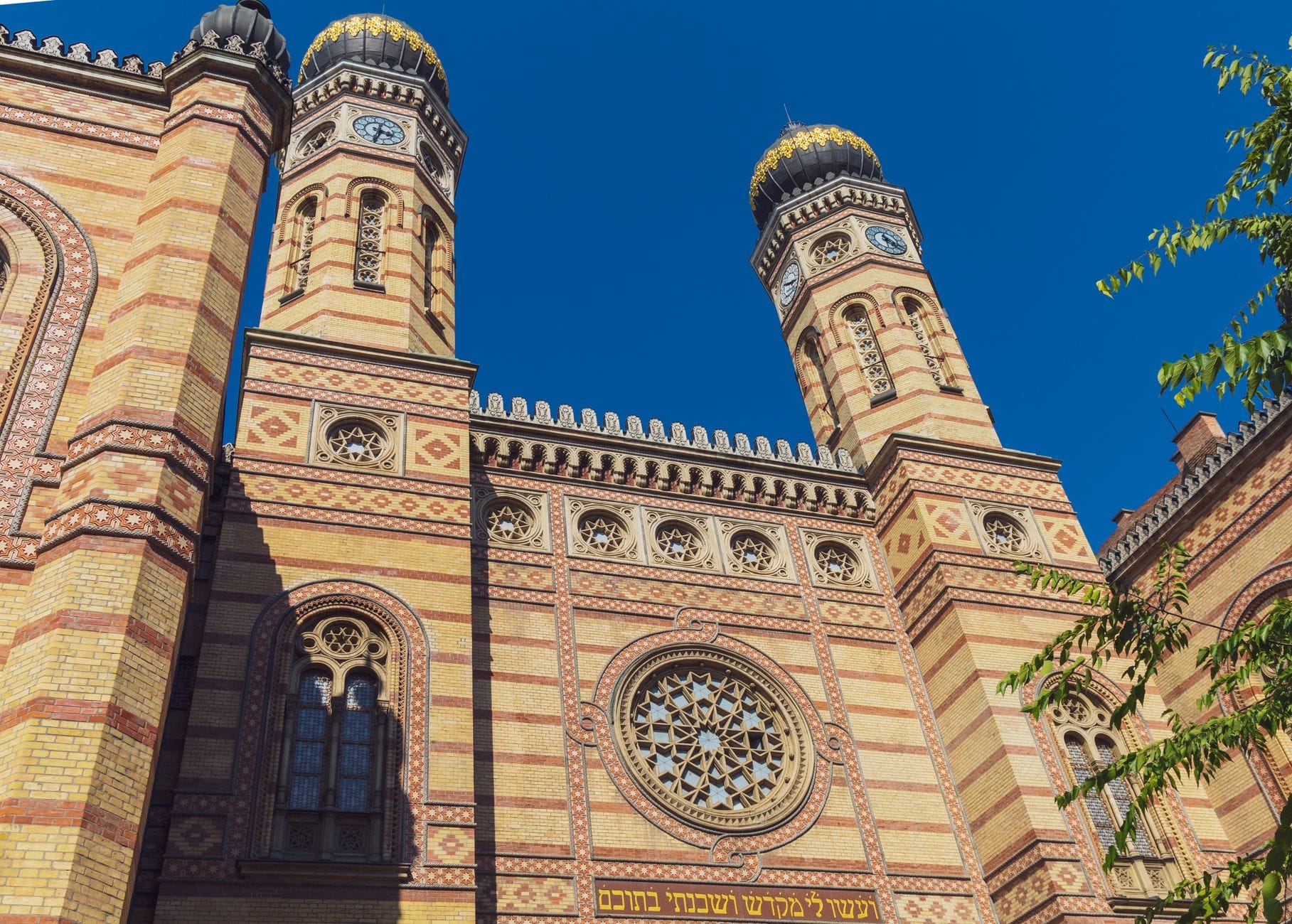
The Jewish Quarter is worth exploring during the day as well. The Great Synagogue on Dohány utca is the largest in Europe and a ten-minute walk from Szimpla Kert. The neighbourhood's street life, independent shops, and food scene make it one of the more interesting parts of central Pest to spend time in before the bars open.
If Budapest's nightlife is the main reason for your visit, pairing an evening in the ruin bars with a night at one of the city's thermal bath experiences is a popular combination. The Széchenyi thermal bath hosts regular evening 'sparty' events, and the Rudas thermal bath runs Friday and Saturday night sessions. Both offer a genuinely different angle on Budapest's after-dark culture.
For visitors with limited time, a three-day Budapest itinerary can comfortably include one ruin bar evening alongside the city's main sights. Those planning to stay longer and explore the full range of what the city offers at night should read the dedicated Budapest nightlife guide for venues, events, and neighbourhood-by-neighbourhood breakdown.
FAQ
Are Budapest ruin bars safe for tourists?
Yes, the main ruin bar district in District VII is well-frequented and generally safe. The usual precautions apply: watch your pockets in crowded bars, use licensed taxis rather than unmarked vehicles at night, and keep an eye on your drink. The area around Kazinczy utca and Akácfa utca is well-lit and busy until the early hours on weekends.
Do I need to book in advance to get into ruin bars?
For most ruin bars, no reservation is needed. You walk in. The exception is if you want a reserved table at a venue for a large group, or if you are attending a specific event or concert at a club like Instant-Fogas, where tickets can sell out. For a standard evening out, just show up.
Which ruin bar is best for first-time visitors?
Szimpla Kert is the obvious starting point because it is the original and most architecturally interesting. However, if you are visiting on a busy Friday or Saturday night in summer, the crowd can overwhelm the atmosphere. Anker't offers a similarly large space with a slightly less intense tourist concentration. For a more relaxed introduction, try a weekday afternoon visit to Szimpla before it fills up.
Is there a dress code at ruin bars?
No formal dress code. Ruin bars are deliberately casual spaces. Smart-casual is more than sufficient. The only exception might be specific event nights at club-oriented venues like Instant-Fogas, where promoters occasionally set standards, but this is rare and advertised in advance.
Are Budapest ruin bars worth visiting for a night cruise or guided tour?
A guided pub crawl covers the logistical basics and works well for solo travellers who want company, but you pay a premium for that convenience (€20-35) and surrender control of your evening. A Budapest night cruise on the Danube is a completely different experience and not directly comparable. If you want to combine both in one trip, do the river cruise first (typically 1-2 hours in the early evening) and then head into the Jewish Quarter afterwards.