Budapest Nightlife: The Complete Guide to Bars, Clubs & After-Dark Experiences
Budapest after dark is one of Europe's most distinct nightlife scenes, built around crumbling courtyards, thermal bath parties, and riverfront venues that keep going until sunrise. This guide covers the key districts, best venues, realistic drink prices, and how to navigate the city's nights without the common tourist mistakes.
Plan and book this trip
Tools from our partner Travelpayouts help you compare flights and hotels. If you book through them, we may earn a commission at no extra cost to you.
Flights
Hotels map
TL;DR
- District VII (Erzsébetváros) is the core of Budapest nightlife, with ruin bars and clubs on nearly every block of Kazinczy utca and Király utca.
- Bars typically close around 4 AM; clubs run until 5-6 AM on Fridays and Saturdays, with many focused on Thursday to Saturday only.
- Beer costs around 900-1,200 HUF (~€2.30-3.00) in ruin bars; cocktails run 2,500-3,000 HUF (~€6.50-8.00). Weekend club entry can reach 3,000 HUF after midnight.
- Sparty (the thermal bath party at Széchenyi) and Danube night cruises are worth booking in advance, especially in summer.
- The nightlife scene runs year-round but outdoor courtyards and riverside terraces peak from May through September. Check our best time to visit Budapest guide for seasonal planning.
Where Budapest Nightlife Actually Happens
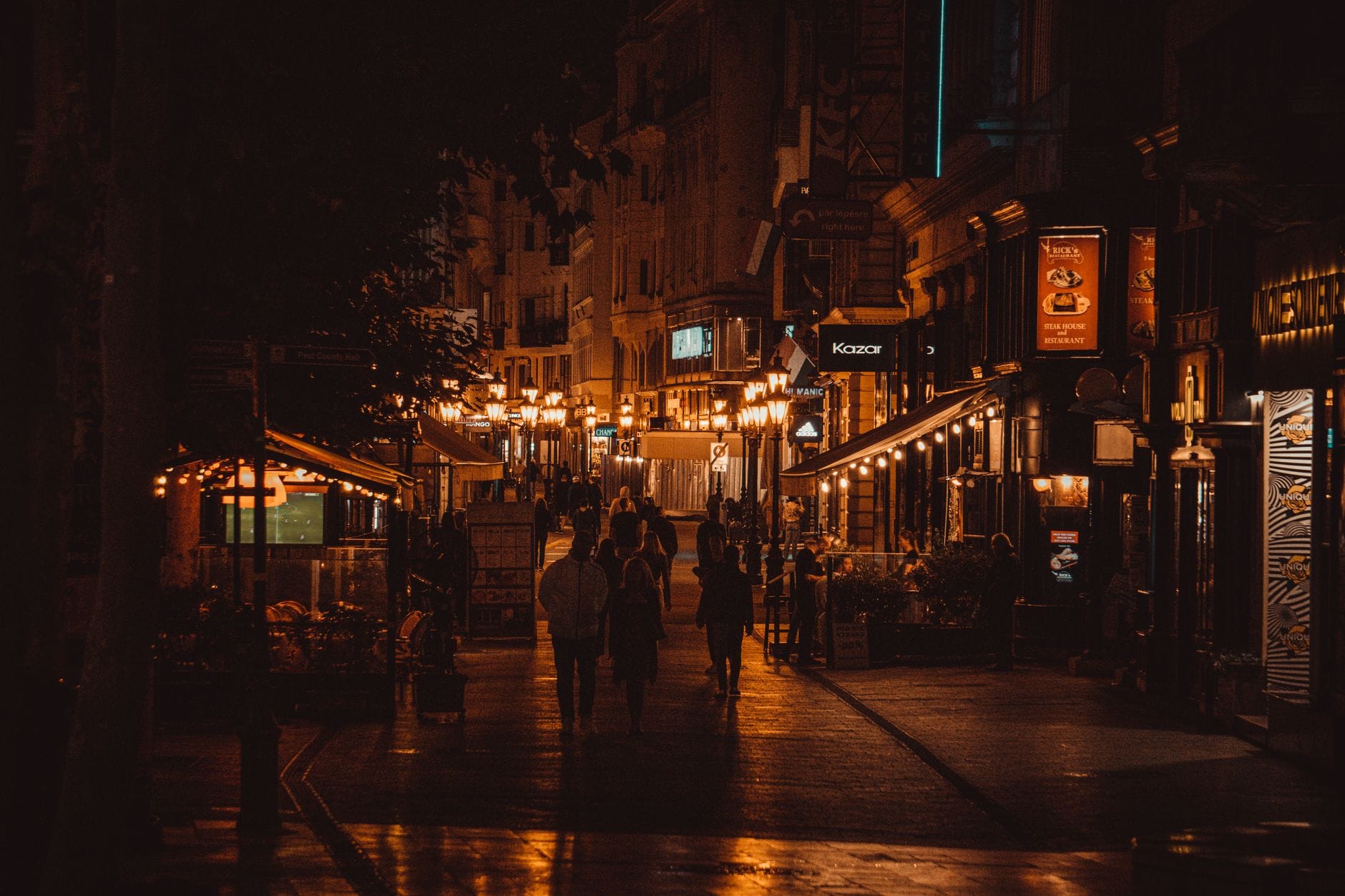
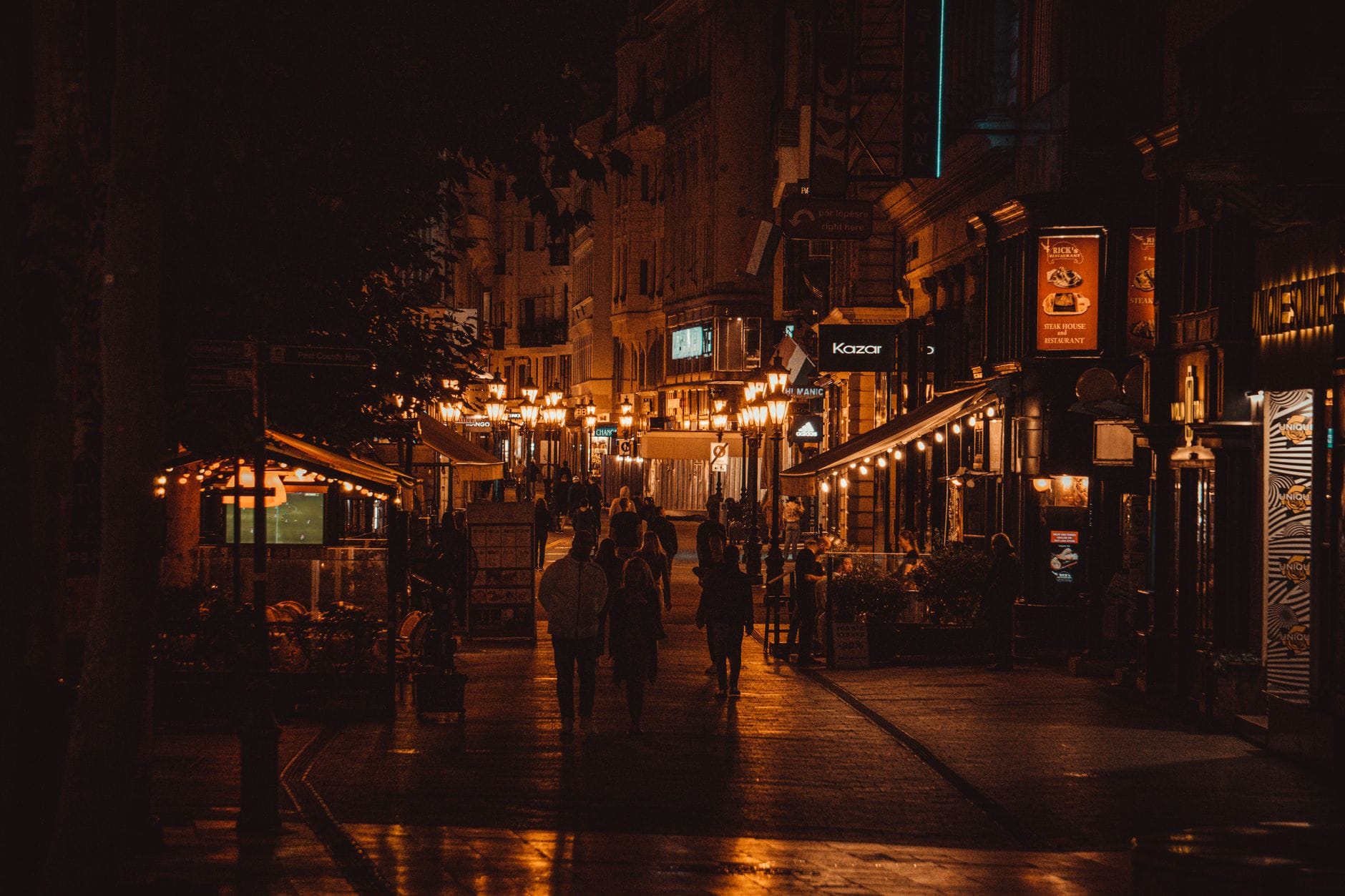
The concentration of nightlife in Budapest is unusually tight. The Jewish Quarter in District VII (Erzsébetváros) holds the densest cluster of bars, clubs, and ruin venues in the city. A ten-minute walk through the grid between Dohány utca and Király utca takes you past more options than most European cities offer in an entire neighborhood.
Beyond District VII, the Danube riverfront adds a second axis of nightlife: floating bars moored along the Pest embankment, open-air terraces near Liberty Bridge, and the famous A38 ship venue anchored at Petőfi Bridge. A third category sits slightly apart from both: the thermal bath party circuit, which turns Széchenyi Spa into a club on select weekend nights.
District V and VI contribute upscale cocktail bars, the terrace venue Akvárium Klub at Erzsébet tér, and scattered jazz and wine bars that attract a more local, older crowd. If you're staying near Andrássy Avenue or the Parliament area, you're 10-15 minutes from the ruin bar cluster on foot, which is manageable but worth knowing before you start.
💡 Local tip
The 47-tram runs along the Pest side of the Danube and connects key daytime transit points. After the metro closes around 11 PM on weekdays (midnight on weekends), night buses take over. Budapest's public transport network is extensive enough that taxis are rarely essential within the central districts.
Ruin Bars: What They Actually Are and Which to Choose
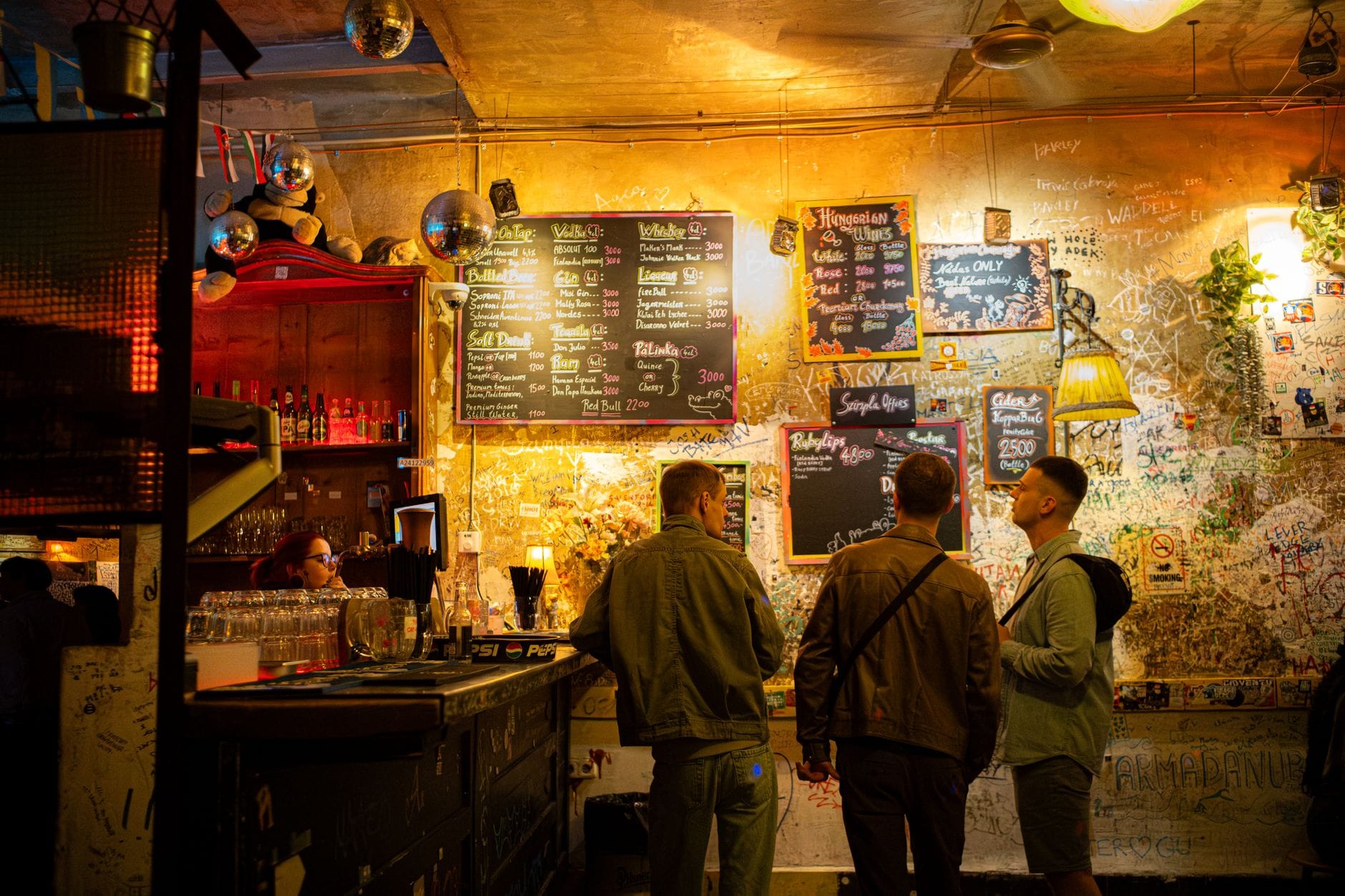
The ruin bar concept started in the early 2000s when entrepreneurs began occupying vacant, semi-derelict buildings in District VII and filling them with mismatched furniture, local art, and cheap beer. Szimpla KertSzimpla Kert on Kazinczy utca 14 was the original and remains the most famous. It opens around noon and runs until around 4 AM, with no standard entry fee for the bar areas, though ticketed events do happen.
Szimpla is worth seeing once, but it is now extremely tourist-heavy on weekend evenings. If you want the atmosphere without the crowds, visit on a Sunday afternoon when a farmers market fills the courtyard, or arrive on a Tuesday evening. The space itself, spread across multiple rooms and outdoor areas in a genuinely decayed building, is unlike anything in Western Europe.
Instant-Fogas on Akácfa utca 51 runs on a different model: it is more explicitly a club, with multiple rooms, resident DJs, and a later, harder-partying crowd. It operates daily until around 6 AM, with entry often free before midnight and weekend fees around 2,000-3,000 HUF after that. Doboz on Király utca 13 is open Friday and Saturday from around 6 PM to 6 AM and tends toward a slightly more local crowd than the Kazinczy utca venues.
⚠️ What to skip
Some ruin bars near the main tourist strip have drifted toward overpriced, watered-down drinks and aggressive upselling, particularly on Kazinczy utca on Friday and Saturday nights. If a bar's entrance is staffed by touts who grab your arm, walk past. The better venues don't need to recruit from the street.
- Szimpla Kert (Kazinczy utca 14) The original ruin bar. Open from around noon to 4 AM. No standard entry fee. Best visited on weekday evenings or Sunday mornings during the farmers market.
- Instant-Fogas (Akácfa utca 51) Multi-room club and bar complex. Open daily until 6 AM. Free entry before midnight; 2,000-3,000 HUF after. More club-focused than bar-focused after midnight.
- Doboz (Király utca 13) Friday and Saturday only, roughly 6 PM to 6 AM. Courtyard layout, mixed local-international crowd, more relaxed door policy than dedicated clubs.
- Akvárium Klub (Erzsébet tér 12) Central location with a large outdoor terrace. Weekday hours around 3 PM to 2 AM; weekends to 6 AM. Major concerts and club nights in the main hall.
- Ötkert (Zrínyi utca 4) Thursday to Sunday, 11 PM to 5 AM. More upscale than ruin bars; popular with a mix of local professionals and international visitors.
The Sparty and Thermal Bath Parties
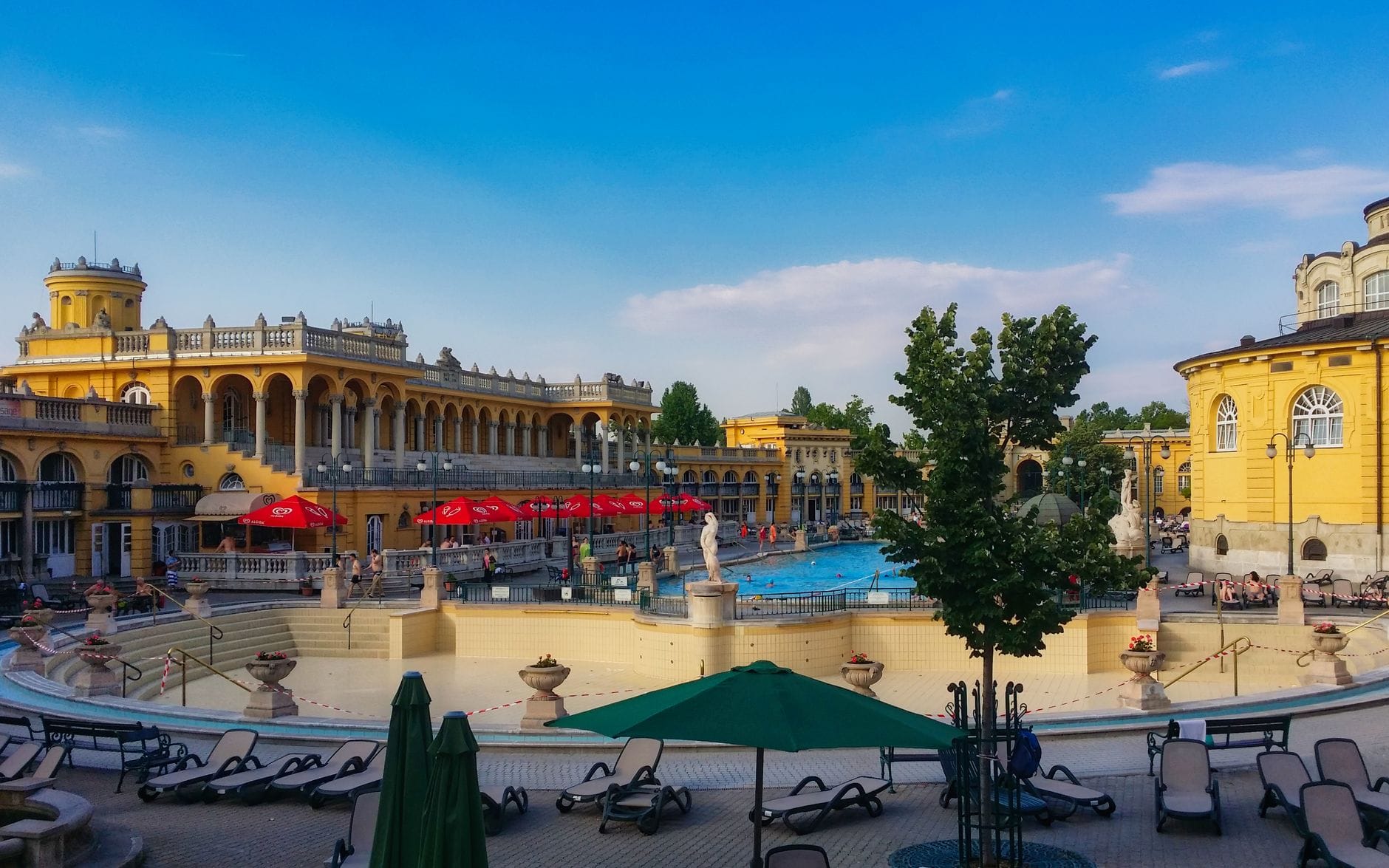
The Sparty is a night party held at Széchenyi Thermal Bath in City Park, one of the largest thermal bath complexes in Europe. On select weekend nights, the outdoor pools are taken over by DJs, lights, and several hundred swimmers-turned-party-goers. It is genuinely singular: there is nothing quite like floating in 38°C water at 2 AM with a drink in hand.
Tickets sell out weeks in advance during peak summer months. Prices and exact dates shift seasonally, so booking through the official Sparty website (spartybooking.com) is the only reliable approach. Budget travelers should note that entry costs significantly more than a standard daytime bath visit, and drinks inside are priced accordingly.
Rudas Thermal Bath also runs occasional night events, though less frequently than Széchenyi. The Rudas setting, with its Ottoman-era dome and star-shaped skylight, is architecturally more dramatic, which makes the night events feel more exclusive. Check the Rudas website directly for dates, as these events are irregular.
✨ Pro tip
Arrive at Sparty events within the first hour of opening. Entry queues can stretch 45 minutes long after midnight on peak nights, and once inside, lockers fill up. Valuables are best left at your hotel entirely.
Budapest Night Cruise and Danube Riverfront After Dark
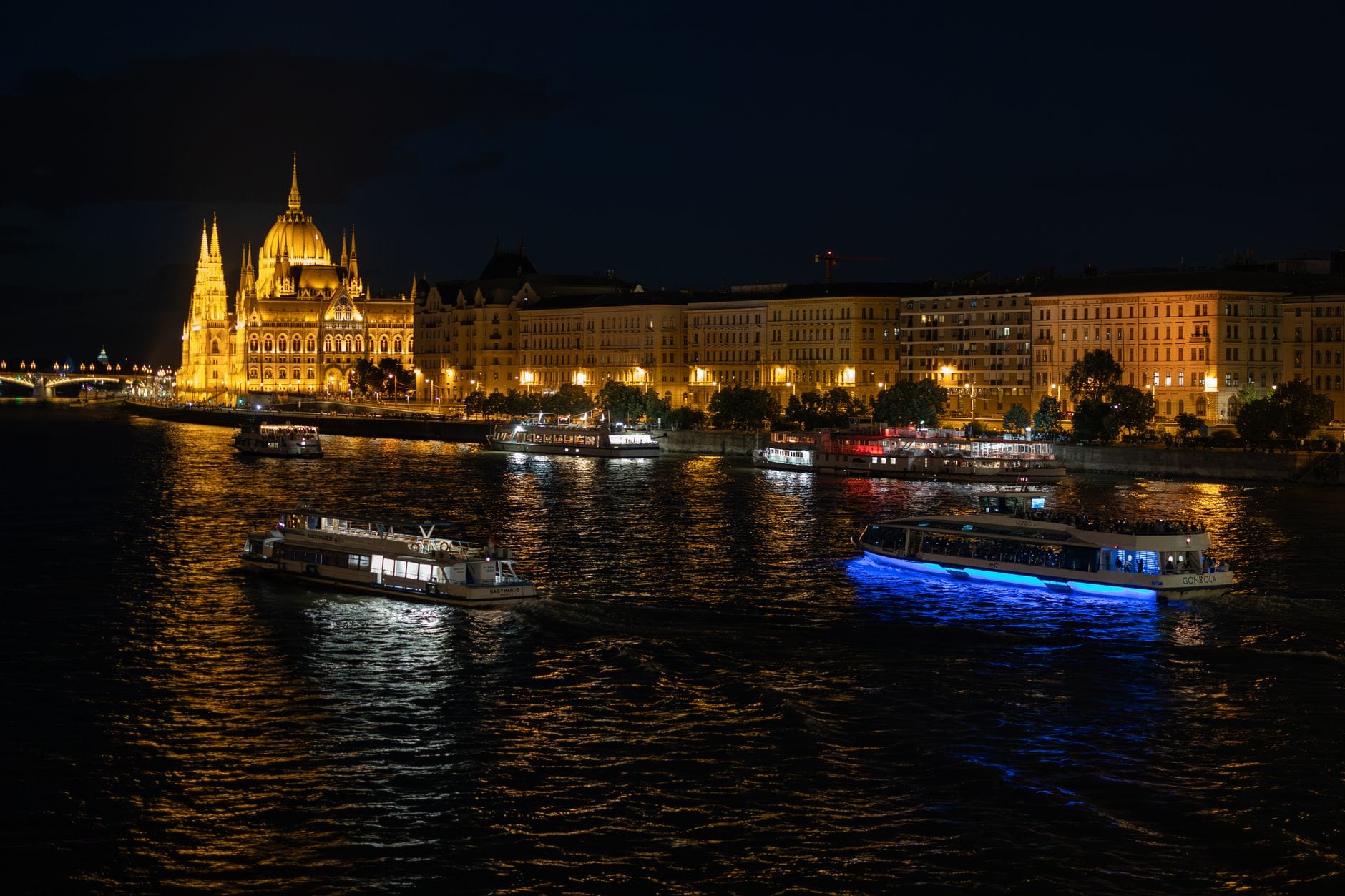
A Budapest night cruise on the Danube is one of the most visually impressive things you can do in the city after dark. The Hungarian Parliament building, Chain Bridge, Buda Castle, and the lit embankments are all dramatically floodlit from dusk onwards, and seeing them from the water at night gives a perspective that no viewpoint on land replicates.
Night cruise options range from basic sightseeing boats to dinner cruises with live music. The sightseeing-only cruises typically last 60-70 minutes and focus on the UNESCO World Heritage stretch of the Danube between Margaret Bridge and Petőfi Bridge. Dinner cruises run longer, often 2-3 hours, and generally include a set menu with Hungarian dishes and wine. Prices vary significantly by operator and package, so comparing a few options before booking makes sense.
If a cruise feels too structured, the A38 venue offers a different kind of riverfront night out. This converted Ukrainian stone-carrier ship moored near Petőfi Bridge hosts concerts, club nights, and cultural events. Its schedule is event-driven rather than daily, so check the program in advance. The deck bar and industrial interior make it one of the more interesting venues in the city on nights when something is scheduled.
For a free alternative, Liberty Bridge (Szabadság híd) is closed to cars most summer evenings and becomes an informal gathering point where locals bring beer and sit on the bridge's ironwork at night. It is unpretentious, costs nothing, and has views across to Gellért Hill that are hard to beat.
Drink Prices, Entry Fees, and What to Actually Budget
Budapest is still cheaper than Vienna, Prague, or Amsterdam for a night out, but the gap has narrowed in recent years. The idea that it is dramatically cheaper than everywhere else in Europe is outdated for cocktails and club entry, even if beer remains affordable.
- Draft beer in ruin bars: 900-1,200 HUF (roughly €2.30-3.00)
- Craft beer at dedicated beer bars: 1,400-2,000 HUF (roughly €3.60-5.00)
- Cocktails at mid-range venues: 2,500-3,000 HUF (roughly €6.50-8.00)
- Cocktails at upscale rooftop or hotel bars: 3,500-5,000 HUF (roughly €9-13)
- Club entry Thursday to Saturday after midnight: 2,000-4,000 HUF (roughly €5-10)
- Sparty (Széchenyi night party): varies by date, typically significantly higher, check spartybooking.com
- Night cruise (sightseeing): varies by operator, compare before booking
Tipping is customary in Budapest. In bars and restaurants, 10-15% is standard when service is table-based. Some venues add a service charge automatically, so check your bill. Cash is still widely accepted for drinks, and many venues prefer it, but card payment has become more common. Hungary uses the forint (HUF), not the euro, so pay in forint to avoid dynamic currency conversion markups.
ℹ️ Good to know
Bolt and Uber operate via licensed taxi partners. Licensed taxis are regulated and metered. For late-night travel, use official taxi apps or ask venue staff to call a trusted company. Pre-agreed fares or unlicensed drivers near major clubs are a known tourist trap in the District VII area.
Seasonal Patterns and Practical Planning
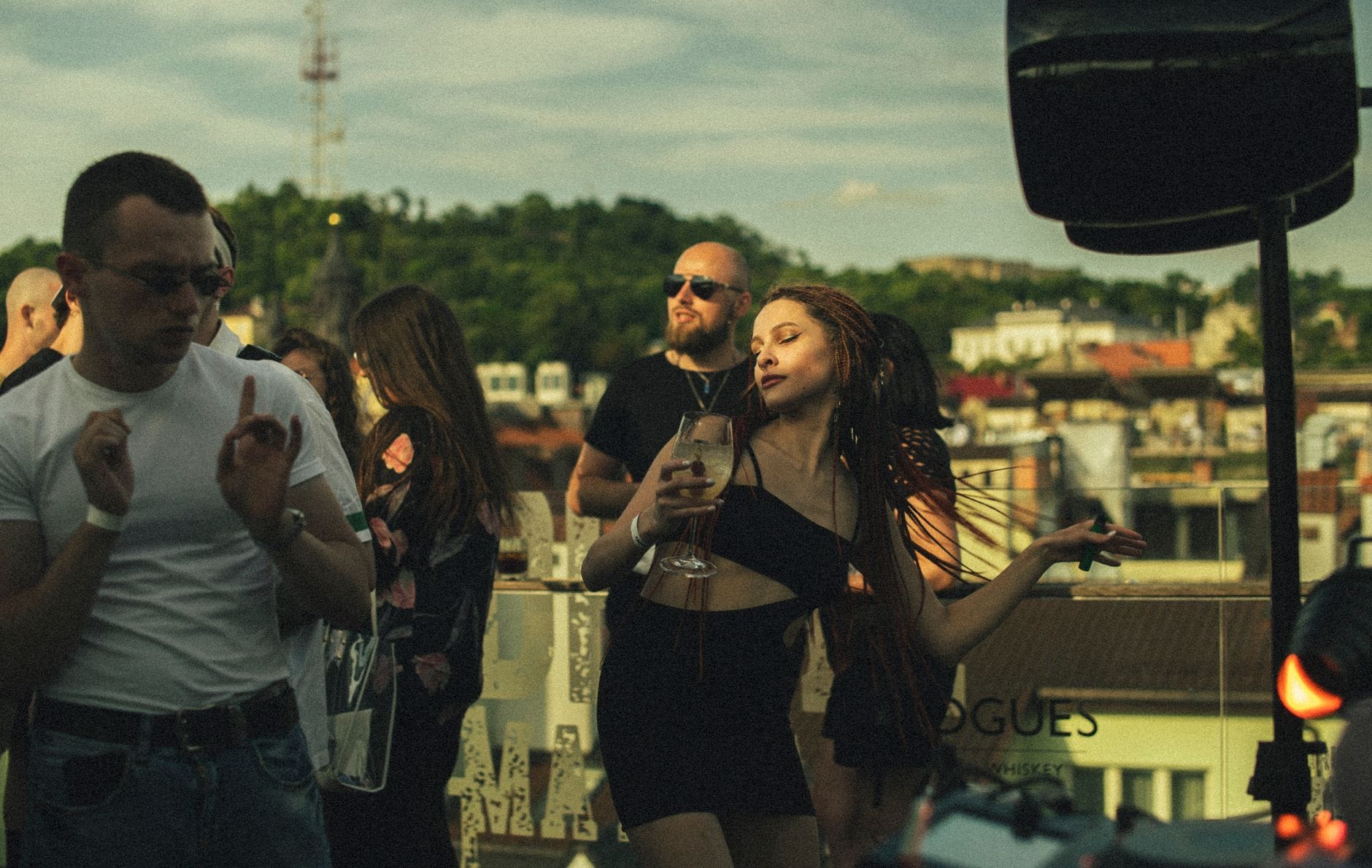
Budapest nightlife runs year-round, but the character changes with the seasons. Summer (June through August) brings peak crowds, outdoor courtyards at full capacity, rooftop bars and floating river venues open nightly, and major events like Sziget Festival drawing international visitors. For the Sparty and any ticketed event, booking weeks ahead is not an exaggeration during this window. See our guide to ruin bars for more detail on the summer scene.
Spring (April to May) and early autumn (September to October) offer a better experience for those who dislike overcrowding. Outdoor spaces are still open, drink prices don't spike, and the crowds are more mixed between locals and tourists. Winter brings a different mood: ruin bar courtyards lose their appeal in sub-zero temperatures, but indoor venues, wine bars, and jazz spots are consistently busy. Budapest in December has its own nightlife appeal around Christmas markets and thermal bath evenings.
The heaviest nights are Friday and Saturday, with Thursday increasingly popular among younger travelers. Sunday nights in the Jewish Quarter are quieter but far from dead, particularly at Szimpla, which draws a local crowd that has been going there for years. Monday and Tuesday are genuinely quiet, which is worth knowing if you are spending multiple nights in the city and want to pace yourself.
- Summer (June-August) Peak season. Outdoor courtyards and floating bars fully open. Book Sparty and popular clubs in advance. Expect larger international crowds and occasional higher entry fees at major events.
- Spring and Autumn (April-May, September-October) Best balance of good weather and manageable crowds. Outdoor venues still operational. Easier to get into popular spots without booking far ahead.
- Winter (December-February) Outdoor and riverside venues scale back. Indoor ruin bars, wine bars, and jazz venues take over. Sparty continues on select dates indoors. Fewer tourists, genuinely local atmosphere at many spots.
FAQ
What time do bars and clubs close in Budapest?
Most bars in the District VII ruin bar area close around 4 AM. Clubs such as Instant-Fogas and Doboz typically run until 5-6 AM on Fridays and Saturdays. Many venues are Thursday to Saturday focused, though some larger bars operate daily. Always check current hours before visiting, as policies change seasonally.
Is Budapest nightlife expensive compared to other European cities?
Beer is genuinely affordable at 900-1,200 HUF (around €2.30-3.00) in ruin bars. Cocktails and club entry, however, are now broadly comparable to cities like Prague or Krakow, running 2,500-3,000 HUF for a drink and up to 4,000 HUF for weekend club entry. It is not as dramatically cheap as the city's reputation sometimes suggests.
How do I get around Budapest late at night?
The metro runs until around 11 PM on weekdays and midnight on weekends. Night buses cover the main routes after that. Taxis are metered and regulated; use official taxi apps rather than street hailing near club areas. Bolt and Uber both operate via licensed taxi partners.
Is the Sparty bath party worth it?
For most first-time visitors, yes. Swimming in a floodlit thermal pool with music at night is a genuinely unusual experience. The cost is higher than a standard bath visit, drinks inside are priced at a premium, and it can feel crowded on peak nights. Booking in advance through spartybooking.com is essential in summer.
Are ruin bars only for tourists?
Not entirely, though the most famous ones (particularly Szimpla on weekend evenings) skew heavily tourist. Locals do use ruin bars, especially on weekdays and Sunday afternoons. Slightly less central venues on Király utca tend to have a more mixed crowd. The ruin bar concept originated as a local scene and still has genuine local participation, just unevenly distributed across venues and nights.