Museum of Fine Arts Budapest (Szépművészeti Múzeum): What to Know Before You Go
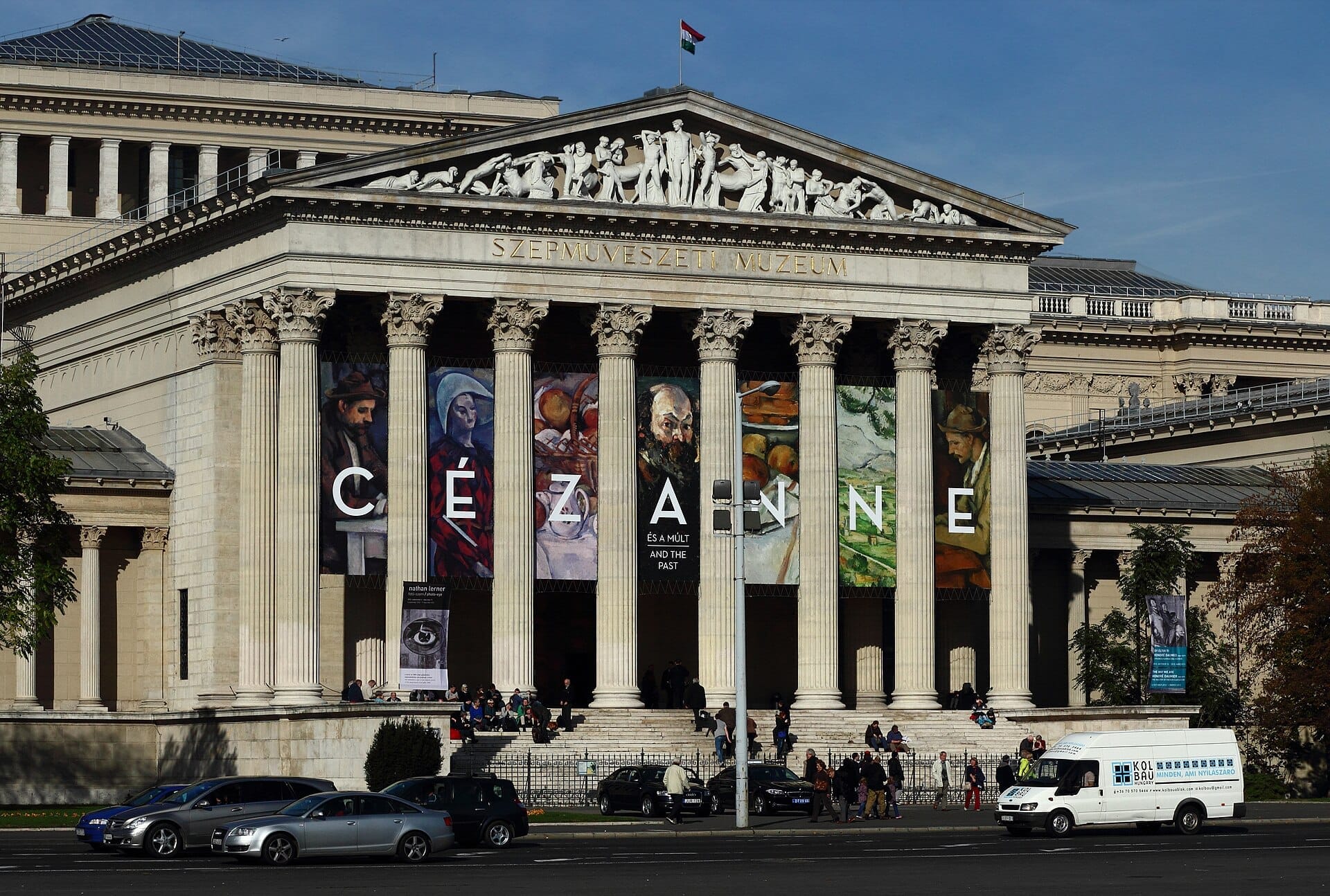
Facing Heroes' Square in City Park, the Museum of Fine Arts holds one of Central Europe's most significant collections of international art, spanning Egyptian antiquities to Spanish masters. Built between 1900 and 1906, the neoclassical building alone is worth the visit. Here is everything you need to plan a worthwhile trip.
Quick Facts
- Location
- Dózsa György út 41, 1146 Budapest (Heroes' Square, City Park)
- Getting There
- Metro M1 to Hősök tere; also buses 20E, 30, 30A, 105 and trolleybuses 72, 75, 79
- Time Needed
- 2 to 3 hours for highlights; up to half a day for thorough visits
- Cost
- Approx. 5,800 HUF adult; reduced rates for EU students and seniors; free for under-6s and EU citizens over 70. Verify current prices on the official site.
- Best for
- Art lovers, history enthusiasts, families with older children, rainy-day culture seekers
- Official website
- www.szepmuveszeti.hu
What the Museum of Fine Arts Actually Is
The Museum of Fine Arts (Szépművészeti Múzeum) is Hungary's primary institution for international fine art, holding a permanent collection of more than 100,000 works. Unlike the Hungarian National Gallery across the river in Buda Castle, which focuses on Hungarian art, this museum is devoted almost entirely to art from beyond Hungary's borders: ancient Egypt and Greece, medieval altarpieces, Renaissance paintings, a world-class Spanish collection, and a substantial print and drawing archive.
The building itself opened in 1906, designed by architects Albert Schickedanz and Fülöp Herzog in an eclectic neoclassical style. The south portico is modeled directly on the Temple of Zeus at Olympia, and the sheer scale of the entrance facade signals the ambition of the Hungarian state at the height of the Austro-Hungarian Empire. Standing on Heroes' Square, it faces the Hall of Art (Műcsarnok) across the plaza, the two institutions forming a symmetrical cultural gateway to City Park.
ℹ️ Good to know
Opening hours: Tuesday to Sunday, from 10:00, with last admission typically at 17:00 and closing around 18:00. Closed on Mondays. Exact closing times and any extended hours should be confirmed at szepmuveszeti.hu before your visit. Free entry applies on three Hungarian national holidays: 15 March, 20 August, and 23 October.
The Collection: What You Will Actually See
The permanent collection is organized across multiple departments, and even a focused visit will feel substantial. The Egyptian collection occupies its own atmospheric lower gallery with sarcophagi, carved reliefs, and funerary objects arranged chronologically. It is one of the more complete Egyptian collections in Central Europe and rarely as crowded as equivalent rooms in Vienna or Paris.
The Old Masters Gallery is the heart of the museum. It contains works attributed to Raphael, Tintoretto, Veronese, and Bruegel the Elder, among dozens of others. The Spanish collection deserves particular attention: with paintings by El Greco, Velázquez, Murillo, and Goya, it is considered one of the finest Spanish holdings outside Spain itself. The Goya section alone is worth the entrance fee for anyone with an interest in 18th-century European painting.
The 19th and 20th century galleries round out the permanent display with French Impressionist works and pieces from across Central Europe. Temporary exhibitions, which often draw international loans, rotate throughout the year and are ticketed separately or as part of a combined admission. Check the official site to see what is running during your visit, as major exhibitions can significantly reshape the experience.
For travelers interested in how this institution fits into Budapest's broader art landscape, it is worth reading our overview of the best museums in Budapest, which covers how the Fine Arts Museum compares to the National Gallery, the Ludwig Museum, and others across the city.
Tickets & tours
Hand-picked options from our booking partner. Prices are indicative; availability and final rates are confirmed when you complete your booking.
Budapest Guided E-Scooter Tour by Night
From 60 €Instant confirmationFree cancellationHalf-day tour to Princess Sissi's Godollő royal palace from Budapest
From 41 €Instant confirmationFree cancellationHalf-Day Countryside Wine Tour from Budapest
From 95 €Instant confirmationFree cancellationWalking tour of Pest
From 10 €Instant confirmationFree cancellation
How the Experience Changes by Time of Day
Arriving at opening (10:00) on a weekday is reliably the quietest option. The entrance hall, with its high barrel-vaulted ceilings and stone columns, feels genuinely grand when you are one of only a handful of people walking through it. The Egyptian gallery in the lower level receives natural light from a small courtyard shaft, and in the morning that light is cooler and less harsh than the warm afternoon glow, which can make reflections on glass display cases more of an issue for photography.
By midday, school groups and organized tours from the Heroes' Square area begin to filter through, particularly in the Old Masters rooms. The audio is noticeable but rarely overwhelming. Afternoon visits from around 14:00 onward tend to be quieter again as group bookings tail off, though the museum fills somewhat on weekends regardless of hour.
💡 Local tip
Tuesday and Wednesday mornings offer the most crowd-free experience of the permanent galleries. Weekend afternoons, especially when a major temporary exhibition is running, can make the entrance lobby feel cramped and ticketing slow. If you are visiting in summer, arriving early also means you benefit from the building's thick stone walls before the interior warms up.
The Building and Its Place in the City
The museum sits at the northeastern edge of Heroes' Square, one of Budapest's most photographed spaces. The square was designed for Hungary's 1896 Millennial celebration, marking a thousand years since the Magyar tribes arrived in the Carpathian Basin. The Museum of Fine Arts and the Műcsarnok were both constructed as part of that broader urban gesture, giving the square its current ceremonial character.
Arriving via Metro M1, the world's second-oldest underground railway line, adds a layer of historical texture to the journey. The M1 stations along Andrássy Avenue are themselves UNESCO World Heritage listed, and the line's yellow carriages are notably narrow by modern standards. If you are walking from the city center, Heroes' Square and the Millennium Monument are immediately in front of the museum and worth pausing at before you go inside.
The museum is also the natural anchor for a day in City Park, Budapest's main public green space. Vajdahunyad Castle, the zoo, the Széchenyi Thermal Bath, and an outdoor skating rink in winter are all within a ten-minute walk. Grouping these in a single day is practical and popular.
Practical Walkthrough: What to Do When You Arrive
Tickets can be purchased at the door or, during busy periods, through the museum's official website. The cloakroom is located near the entrance and large bags must be checked in. The museum provides floor maps at the information desk, and these are genuinely useful given the building's multiple levels and wings. Audio guides are available for rent and cover the permanent collection in several languages including English.
The café inside the museum is a reasonable option for a mid-visit break, set within a high-ceilinged interior space that feels in keeping with the building. It is not a destination café but it is comfortable and more affordable than the tourist-facing options on Heroes' Square itself.
Wheelchair access is available at the main entrance. Anyone with specific accessibility requirements should contact the museum directly in advance, as some areas of the historic building involve steps between levels where not all routes have lift alternatives.
⚠️ What to skip
Photography is generally permitted without flash in the permanent galleries, but temporary exhibitions often have stricter rules. Check the signs at each gallery entrance rather than assuming the same policy applies throughout. Large camera bags must be stored at the cloakroom.
Honest Assessment: Is It Worth Your Time?
The Museum of Fine Arts is not a compact, curated experience like some of the world's newer gallery buildings. It is large, encyclopedic, and occasionally overwhelming if you try to do everything. Travelers who prefer a tight, highly interpretive exhibition should temper expectations: this is an old-school European art museum where context is provided, but the experience is largely self-directed.
That said, the quality of the permanent collection is frequently underestimated. Visitors who spend their Budapest day at the thermal baths or on the castle hill sometimes miss a museum that, for the depth of its Spanish and Old Masters holdings, could hold its own in any European capital. It rewards a slow visit with a floor plan and some prior reading more than a rushed sweep.
Visitors with only one or two days in Budapest may find it harder to justify the time against competing priorities. If you are working from a short itinerary, our 3-day Budapest itinerary suggests how to sequence the museum alongside the city's other major sites without feeling rushed.
Travelers who are not particularly interested in pre-20th-century European painting may find the permanent collection leaves them cold. For them, the Műcsarnok across the square or the Ludwig Museum of Contemporary Art elsewhere in the city may be a better fit. Similarly, if you are visiting Budapest primarily for its thermal bath culture or nightlife, this museum is unlikely to convert you. Check our full guide to things to do in Budapest to weigh it against your other options.
Getting There: Transit Details
The most straightforward route is Metro Line M1 (the yellow line, also called the Millennium Underground), alighting at Hősök tere. The museum is visible immediately as you exit the station. The M1 runs along Andrássy Avenue from Vörösmarty tér near the city center, making it a single, direct ride from most central starting points.
Bus lines 20E, 30, 30A, and 105 all stop at Hősök tere, as do trolleybus lines 72, 75, and 79. These are useful alternatives depending on where you are staying, particularly if your accommodation is in a part of Pest not well connected to the M1 line. All services operate under the BKK network, so standard BKK tickets and passes apply. The Budapest Card, if you have purchased one, covers public transport and may include museum discounts.
For a full breakdown of how to navigate Budapest's transit system, see our guide on getting around Budapest, which covers metro lines, trams, and ticketing in detail.
Insider Tips
- The Spanish collection on the upper floors attracts far fewer visitors than the Egyptian and Impressionist galleries. If you have limited time, skip straight to those rooms for a more focused and uncrowded experience.
- On Hungary's three national holidays (15 March, 20 August, 23 October), entry to the permanent collection is free. These days can be busy, but the free admission makes them a good option for budget travelers.
- The M1 metro station at Hősök tere is small and the exit deposits you almost directly in front of the museum steps. There is no confusing street crossing or navigation required, which makes it the easiest museum arrival in the city.
- If you plan to visit both the Museum of Fine Arts and the Hungarian National Gallery in the same trip, check whether a combined ticket or the Budapest Card offers savings. The two institutions together represent a full day of serious art viewing.
- The museum shop near the exit stocks art books, prints, and exhibition catalogues at reasonable prices. It is one of the better museum shops in Budapest for anyone looking to take home something beyond the usual tourist fare.
Who Is Museum of Fine Arts (Szépművészeti Múzeum) For?
- Art history enthusiasts, particularly those with an interest in Spanish or Dutch Old Masters
- Travelers visiting City Park who want to combine culture with an outdoor afternoon
- Families with children aged 10 and above who can engage with guided tours or audio guides
- Visitors seeking a substantial indoor option during rainy or very hot summer days
- Anyone wanting to understand Budapest's cultural ambitions at the turn of the 20th century through architecture as much as art
Nearby Attractions
Other things to see while in City Park (Városliget):
- Budapest Zoo & Botanical Garden
Founded in 1866, the Budapest Zoo & Botanical Garden is Hungary's oldest zoological institution, occupying a leafy corner of City Park in District XIV. Its mix of historic Secessionist architecture, diverse animal collection, and botanical exhibits makes it a genuinely rewarding stop for families and architecture-curious travelers alike.
- Museum of Ethnography
Relocated to a landmark new building in City Park in 2022, the Museum of Ethnography (Néprajzi Múzeum) is one of Europe's most significant collections of folk and traditional culture. With over 250,000 objects spanning Hungarian rural life and global ethnographic traditions, it rewards visitors who want more than a postcard version of Hungary.
- Széchenyi Thermal Bath
Opened in 1913 and spanning 18 pools across a Neo-Baroque palace in Budapest's City Park, Széchenyi Medicinal Bath and Swimming Pool is one of the largest thermal bath complexes in Europe. This guide covers what the experience actually feels like, the best times to visit, and the practical details that will save you time on arrival.
- Vajdahunyad Castle
Vajdahunyad Castle in Budapest's City Park is a single complex that condenses a thousand years of Hungarian architectural history into one walkable site. Entry to the courtyards is free and open around the clock, making it genuinely worth an hour or two at any time of day. The Hungarian Agricultural Museum inside adds depth for those who want more than a photo stop.