Budapest to Prague: Train, Bus & Flight Guide (2026)
Everything you need to plan the Budapest to Prague journey, whether you want the comfort of a direct train, the cheapest bus fare, or the fastest flight. Includes prices, schedules, booking tips, and what to expect on each route.
Tickets & tours
Live prices and dates from our booking partner. If you book, we may earn a commission at no extra cost to you.
TL;DR
- The Budapest to Prague route is roughly 440–445 km and well-served by direct trains, buses, and occasional budget flights.
- Trains take around 6h 45m to 8 hours; advance tickets start from about €17. Buses can be faster (from 5h 10m) and cheaper, from around €18.
- Flights take about 1h 15m in the air, but total door-to-door time rarely beats a fast direct bus or train when you factor in airport transfers.
- Book at least a few days ahead in summer. For context on what to do before or after the trip, see the full Budapest travel guide.
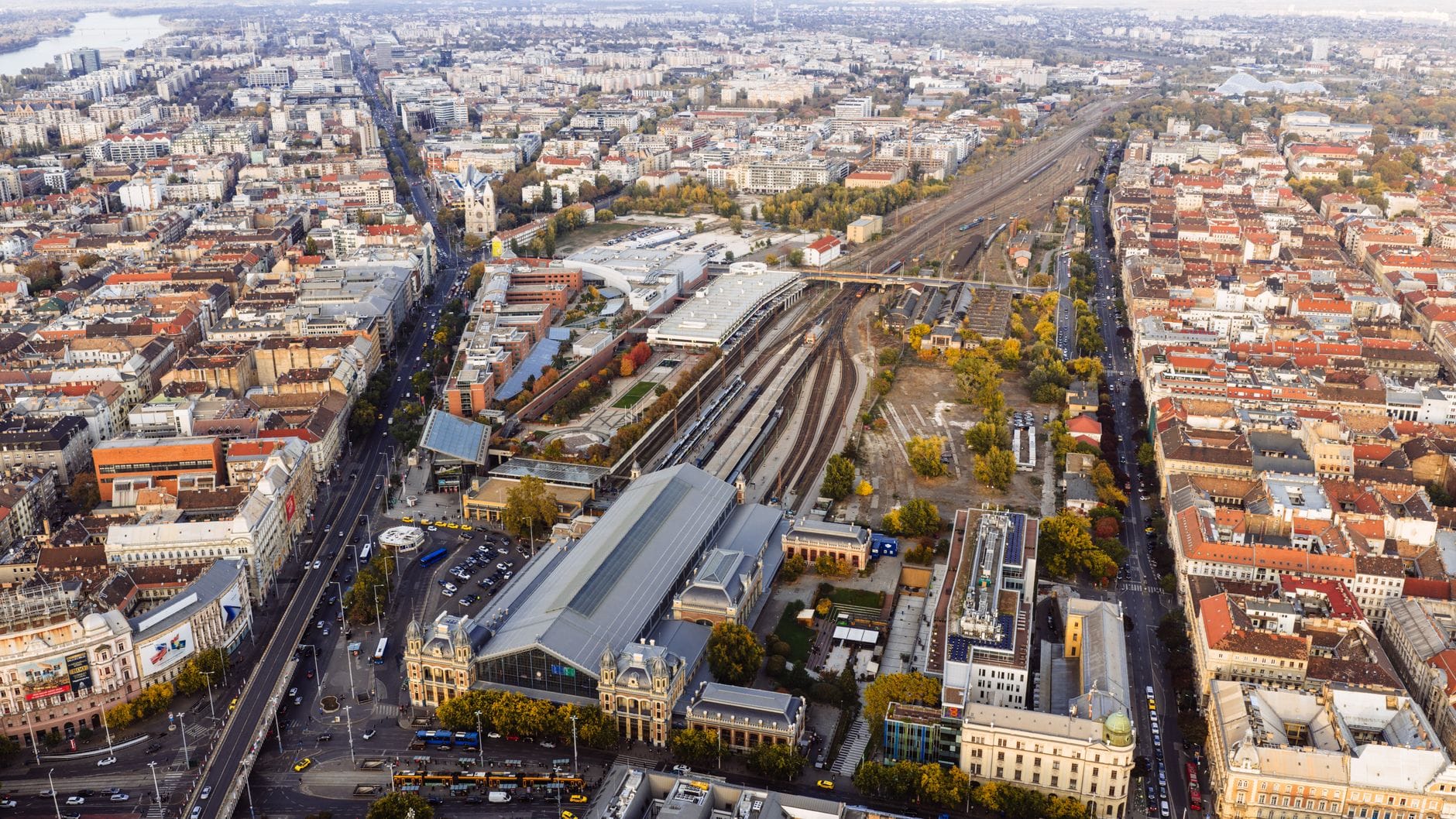
- Both Keleti and Kelenföld stations in Budapest serve international departures; confirm your departure point before travel.
Route Overview: Budapest to Prague by the Numbers
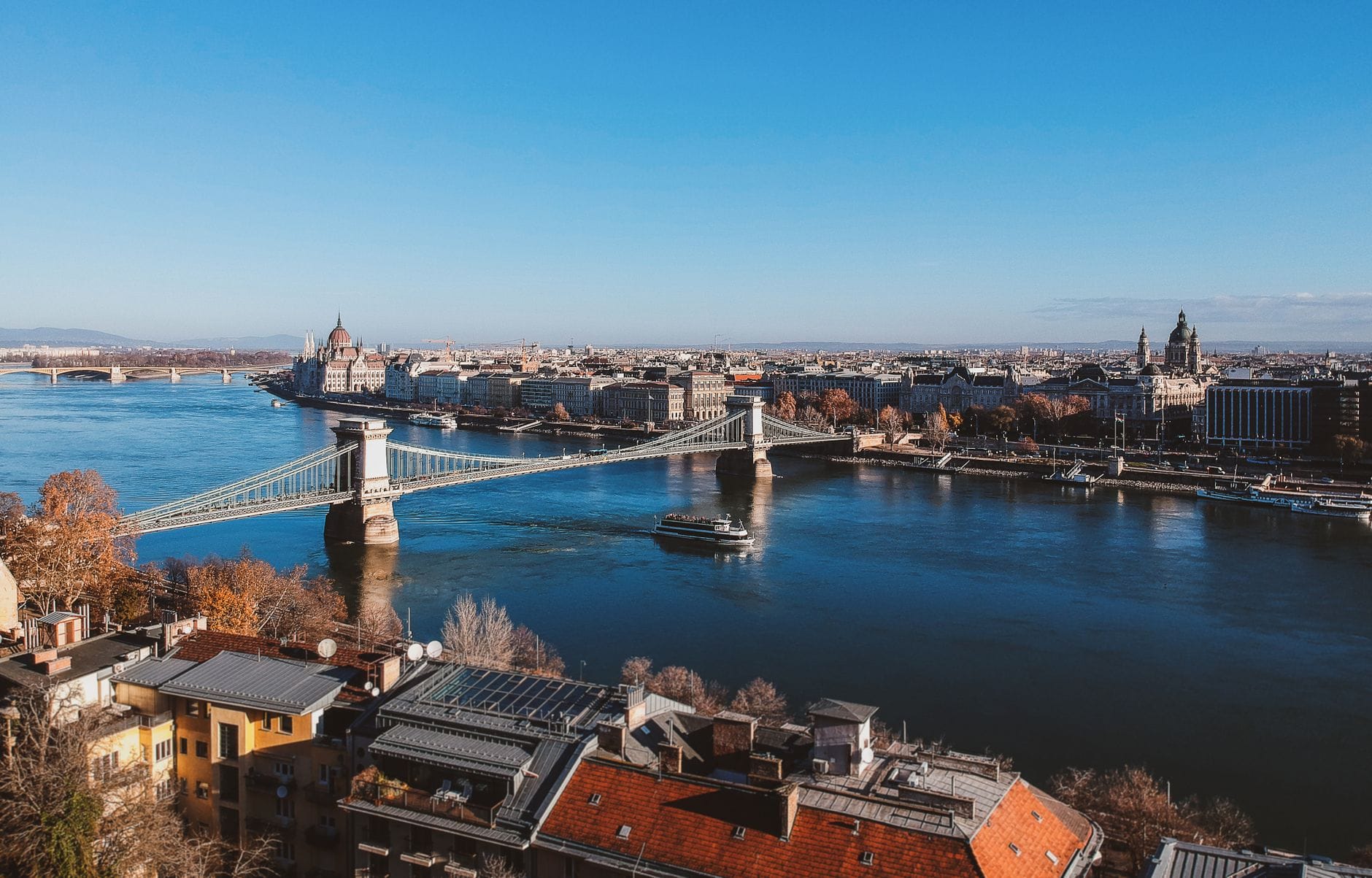
The Budapest to Prague corridor is one of the most popular overland routes in Central Europe, connecting Hungary's capital with the Czech Republic's. The straight-line distance is around 445 km (278 miles), but by road and rail the actual distance is longer. You have three realistic options: train, bus, or flight. Each has a specific traveller profile it suits best.
- Train Fastest direct services: 6h 45m to 6h 53m. Average journey with slower or connecting services: 7–8 hours. Around 21–22 services daily. Departure from Budapest Keleti station.
- Bus Fastest services: 5h 10m to 5h 15m. Typical journey: 6–8 hours. Multiple operators with departures from early morning to late night. Departs from Népliget bus station.
- Flight Air time: around 1h 15m. Ryanair operates BUD–PRG nonstops (schedules vary by season). Factor in 1.5–2 hours each end for airport transfers, check-in, and security. Door-to-door rarely under 5 hours.
ℹ️ Good to know
Budapest is in the CET/CEST timezone, and Prague shares the same timezone. You will not lose or gain any hours on this journey, which simplifies arrival planning considerably.
Travelling by Train: The Most Comfortable Option
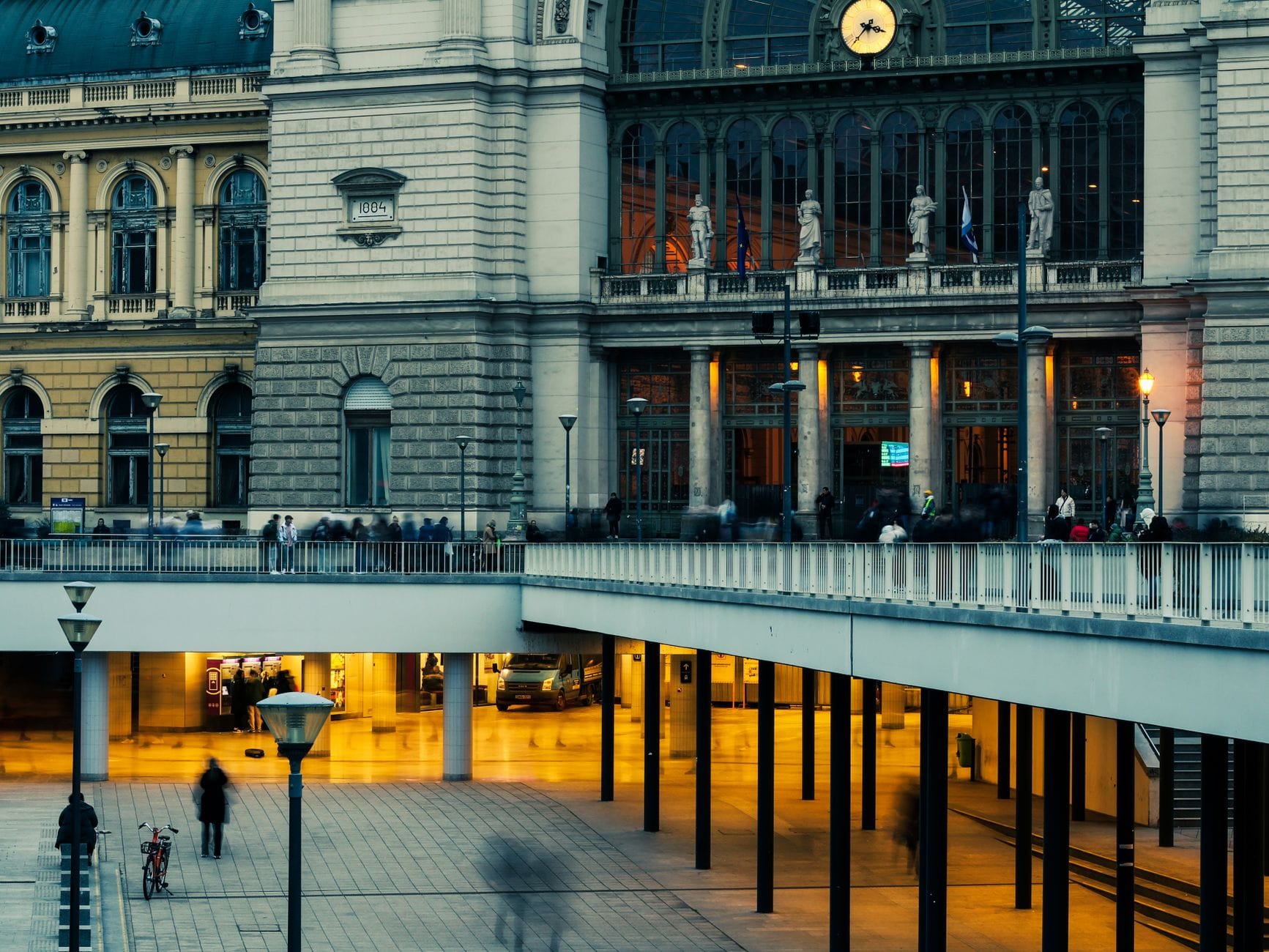
The direct Budapest to Prague train is the go-to choice for travellers who prioritise comfort and a city-centre-to-city-centre journey. You depart from Budapest Keleti (Eastern Station), one of the city's main international rail hubs, and arrive at Praha Hlavní Nádraží (Prague Main Station), which is a short metro ride from the Old Town. No airport buses, no security queues.
The fastest direct services run in around 6h 45m to 6h 53m, operated primarily by MÁV-START (Hungarian Railways) and Czech Railways (České dráhy), with additional services from RegioJet. There are roughly 20–22 trains daily, with departures approximately every two hours. First trains leave around 05:30–05:40, and last departures are around 19:30–19:40. The route passes through Bratislava, which means the scenery shifts between the Hungarian plains, the Danube bend, and eventually the rolling Czech countryside.
Advance tickets start from around €17–€20 if you book several weeks out. A more realistic price for a last-minute or same-day purchase is €25–€41, depending on class and timing. Seat reservations may be required on certain express services, so check when booking. Book via MÁV-START directly, Czech Railways, or aggregators like comparison tools useful for getting around the region.
✨ Pro tip
RegioJet operates on this route and is worth checking separately from MÁV or Czech Railways. Their trains often include free drinks, onboard entertainment, and allocated seating at competitive prices. Book directly on the RegioJet website for best fares; older brands like Eurolines/Student Agency have largely been superseded by RegioJet on this corridor.
Travelling by Bus: Cheapest and Sometimes Fastest
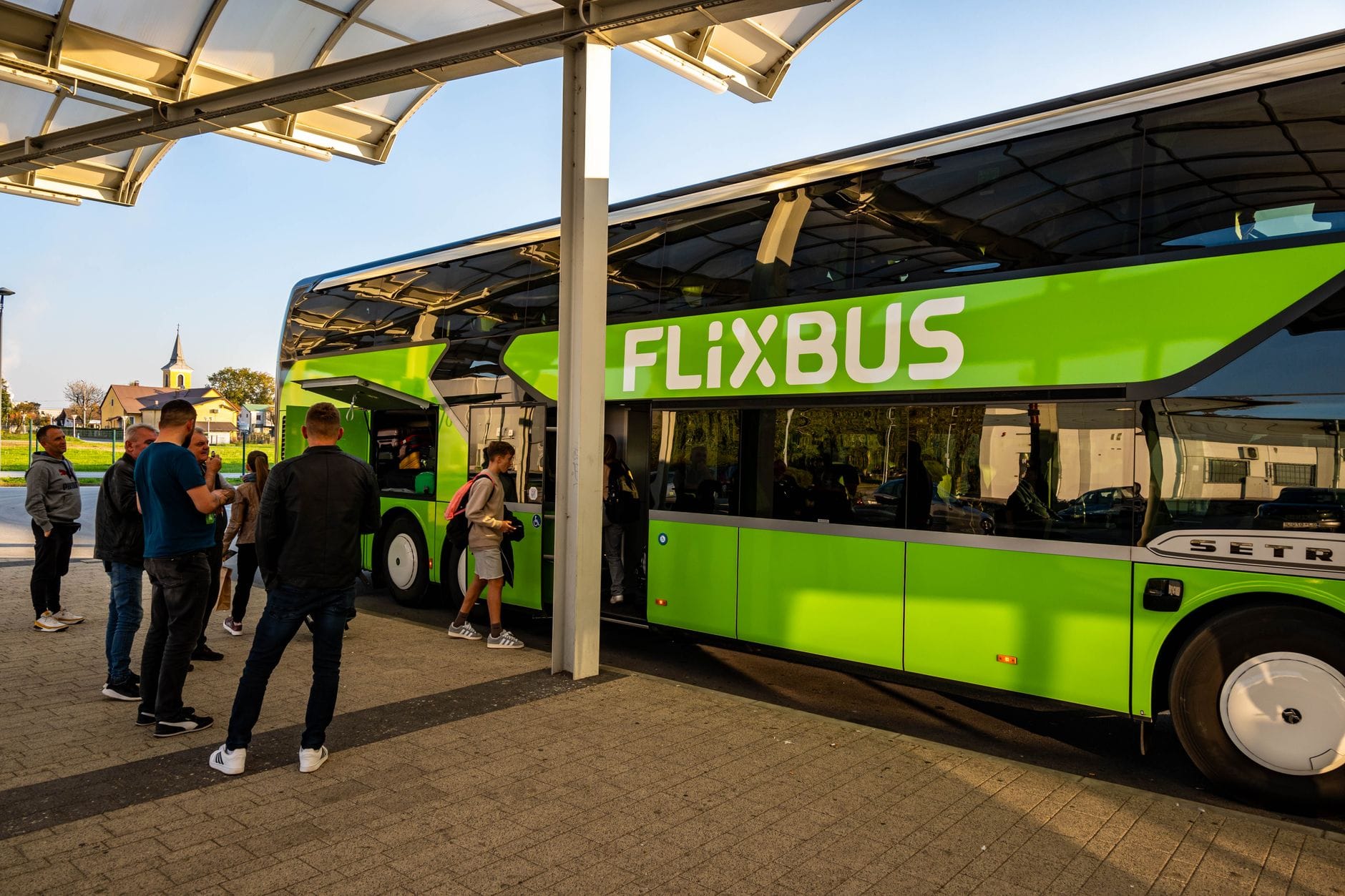
Counterintuitive but true: the fastest way to reach Prague from Budapest overland is sometimes by bus, not train. The quickest bus services can be as short as about 5h 15m, which beats many direct trains. The catch is that these shorter journey times apply to the very fastest departures, usually operated by RegioJet or FlixBus on a direct routing with minimal stops.
Prices start from around €18–€20 for advance bookings, with averages around €25–€35. Buses are consistently cheaper than trains on this corridor. The trade-off is comfort: while modern coaches from FlixBus and RegioJet offer Wi-Fi, power outlets, and onboard toilets, sitting for 5–8 hours in a coach seat is a different experience to a train compartment. Buses depart from Budapest Népliget bus station, which is accessible via metro line M3. Arrivals in Prague are typically at Florenc Bus Station or Černý Most, both well-connected to the metro.
⚠️ What to skip
Bus prices swing significantly by season. Expect average fares to be lowest in February and highest in August. If you're travelling in peak summer, book several weeks ahead or prices will climb sharply toward train-ticket territory, removing the cost advantage entirely.
- FlixBus: extensive schedule, multiple daily departures, reliable pricing, standard coach comfort.
- RegioJet: often the best value-to-comfort ratio, free hot drinks on some services, English-speaking staff.
- Eurolines/Student Agency: legacy brands on this route; long‑distance coach services here are now largely operated under the RegioJet name, so compare RegioJet and FlixBus first for current service quality and schedules.
- Use Wanderu or Busbud to compare all operators in one search before booking direct.
Travelling by Flight: Fastest in the Air, Slowest Door-to-Door
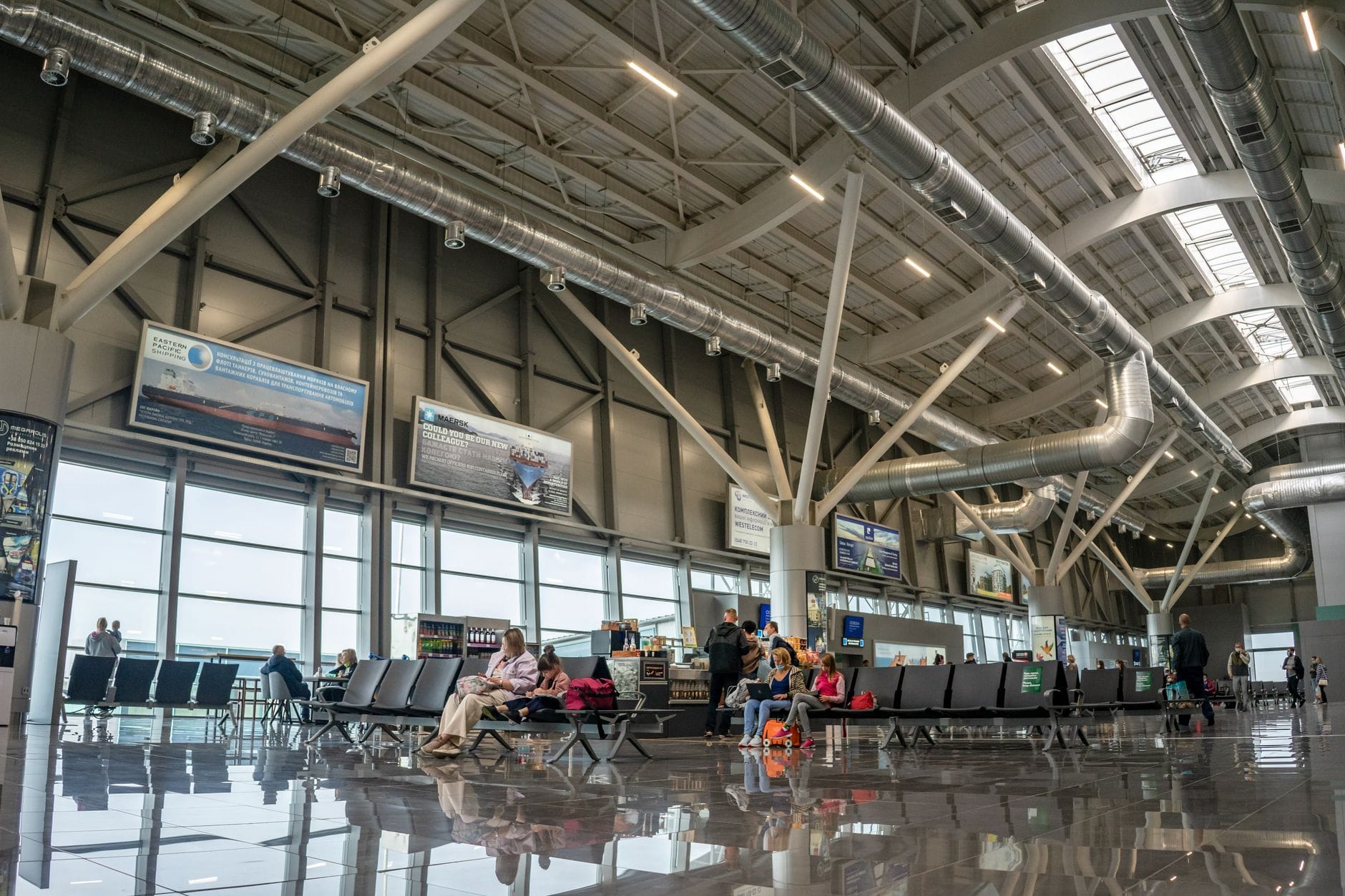
Ryanair does operate nonstop flights between Budapest (BUD) and Prague (PRG); schedules vary by season and day of week, so check current timetables before booking. Flight time is around 1 hour 15 minutes, but the apparent time saving is often offset by airport transfers and procedures.
Budapest Liszt Ferenc International Airport is located about 16 km southeast of the city centre. Getting there on the 100E airport express bus from Deák Ferenc tér takes around 30–40 minutes, depending on traffic, plus the bus runs on a schedule you have to coordinate with. Add around 90 minutes for check-in and security, the 1h 15m flight, then the transfer time from Václav Havel Airport Prague to the city centre (typically 35–45 minutes by public transport). Your realistic door-to-door time is about 5 to 6 hours, comparable to a fast direct bus.
Fares can occasionally undercut the train, with some routes averaging around €22–€28 including fees, but budget airline pricing is unpredictable. The flight option makes most sense if you're booking well in advance, travelling light with hand luggage only, and the timing lines up neatly with your schedule. For most travellers, the train or bus offers a better overall experience for this route.
Which Option Should You Choose?
The right choice depends on what you value. If you want city-centre convenience, scenic travel, and the ability to work or move around freely during the journey, choose the train. If you want the lowest possible fare and don't mind a coach seat, the bus is hard to beat. If you have a specific timetable need and can find a cheap fare with hand luggage only, the flight can work. For most visitors spending a few days in Budapest before continuing west, the train is the most practical choice. If you're still planning your Budapest time, the 3-day Budapest itinerary is a useful starting point.
- Choose the train if: You want to travel city centre to city centre without stress, you have luggage, or you value the journey experience. Best for families, older travellers, and anyone with back issues.
- Choose the bus if: You're travelling on a tight budget, travelling solo with a small bag, or specifically want a RegioJet service with onboard comfort perks. Best for students and budget-conscious travellers.
- Choose the flight if: You found a genuinely cheap fare (under €25 all-in), you're travelling hand-luggage only, and the flight time fits your schedule without requiring an early-morning rush to the airport.
Practical Tips Before You Travel
Budapest is Hungary's capital and the currency is the Hungarian forint (HUF), but many international transport providers price tickets in euros. Prague uses the Czech koruna (CZK). Neither country is in the eurozone, so budget for currency exchange at both ends. If you're arranging accommodation in Budapest before departure, the guide to where to stay in Budapest covers all the key neighbourhoods and price bands.
If you're making a broader Central European trip and want to compare this route with the westward option, note that the day trips from Budapest guide also covers shorter cross-border excursions for those with less time. The Budapest to Vienna train is another very popular option on this corridor, with faster journey times (around 2.5 hours) and more frequent departures than the Prague route.
💡 Local tip
If you're using the Budapest Card for public transport during your stay, note that it covers BKK network services within the city but does not extend to the 100E airport bus or international rail tickets. Keep separate funds or a card for those purchases.
Hungary is part of the Schengen Area, and so is the Czech Republic, which means there are no passport controls at the border for Schengen travellers. EU/EEA passport holders and many others can travel freely. If you hold a non-Schengen passport, verify your visa status for both countries before travel via official embassy or government sources, as rules change and vary by nationality.
Departure tax and any luggage fees are not always included in bus or flight base fares, so read the booking breakdown carefully before paying. For travellers who want to make the most of their final hours in Budapest before heading to the station, Central Market Hall is across town from Keleti (not a short walk) — if you have spare time before a train, it is still worth a metro or tram hop for Hungarian snacks and souvenirs, but do not count on a quick stroll from the station.
FAQ
How long does the Budapest to Prague train take?
The fastest direct trains run in around 6 hours 45 minutes to 6 hours 53 minutes. More typical journey times, accounting for slower services or brief stops, are 7 to 8 hours. There are roughly 21–22 trains daily, with departures approximately every two hours from Budapest Keleti station.
Is it cheaper to take the bus or train from Budapest to Prague?
Buses are generally cheaper. The cheapest bus fares start from around €18, while the lowest train fares start around €17–€20 but tend to be less available. On average, buses cost noticeably less than trains, particularly if you're not booking far in advance. However, in peak summer, bus prices can rise significantly, narrowing the gap.
Do I need a visa to travel from Budapest to Prague?
Both Hungary and the Czech Republic are Schengen Area members, so there are no internal border passport checks for Schengen-eligible travellers. EU/EEA passport holders can travel freely. If you hold a non-EU passport, check your visa requirements for both countries before booking, as rules vary by nationality and can change.
Which Budapest station do trains to Prague depart from?
Most international trains to Prague depart from Budapest Keleti (Eastern Railway Station), which is served by metro lines M2 and M4 and multiple tram and bus routes. Some services may also depart from or stop at Budapest‑Nyugati, so always confirm your specific departure point when you receive your ticket.
Is flying from Budapest to Prague worth it?
Only in specific circumstances. The flight itself takes about 1 hour 15 minutes, but once you add airport transfers at both ends (Budapest airport is about 16 km from the city centre), check-in time, and security, the total door-to-door journey is often around 5–6 hours, comparable to a fast bus. Flying makes sense if you find a fare under €25 all-in and are travelling with hand luggage only. Otherwise, the train or bus is more practical.
Tickets & tours
Live prices and dates from our booking partner. If you book, we may earn a commission at no extra cost to you.
Planning a trip? Discover personalized activities with the Nomado app.