Gellért Thermal Bath: Budapest's Grand Art Nouveau Spa
The Gellért Thermal Bath is Budapest's most celebrated historic spa, housed in a sweeping Art Nouveau complex at the foot of Gellért Hill. Opened in 1918 and fed by natural geothermal springs, it combines soaking culture with genuine architectural grandeur. Note: the bath is closed for major renovation from October 2025, with a planned reopening sometime in 2028.
Quick Facts
- Location
- Kelenhegyi út 4, 1118 Budapest, Hungary — foot of Gellért Hill on the Buda riverside
- Getting There
- Metro M4 to Szent Gellért tér–Műegyetem (2-min walk); Trams 18, 19, 47, 49 to Szent Gellért tér
- Time Needed
- 2–4 hours for a full bathing visit; 30 min if visiting purely for the architecture
- Cost
- Pre-renovation: ~11,000–13,500 HUF (approx. €28–35) depending on day and cabin type. Verify on reopening in 2028.
- Best for
- Architecture lovers, thermal bath first-timers, couples, history enthusiasts
- Official website
- gellertbath.hu
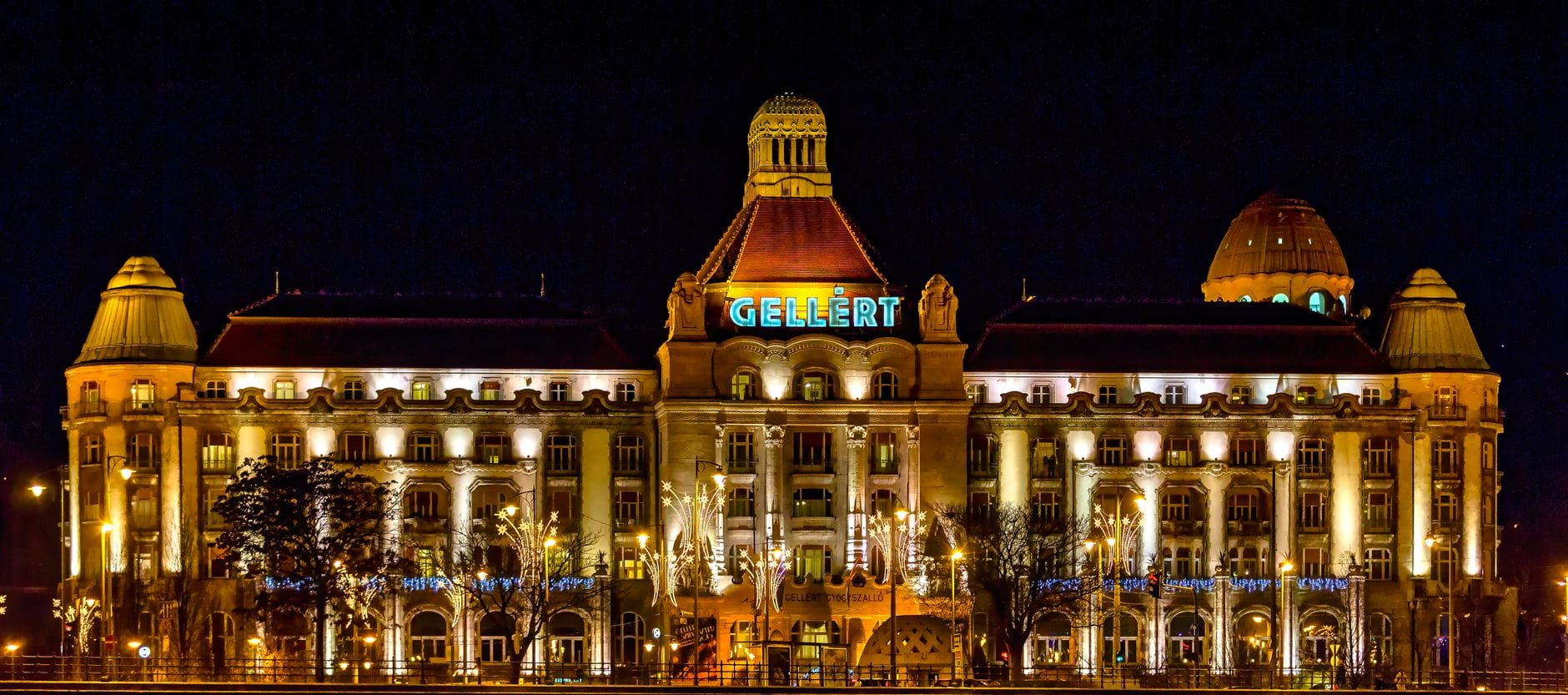
What Makes Gellért Different From Every Other Bath in Budapest
Budapest has more than a dozen functioning thermal baths, but the Gellért Thermal Bath — officially the Szent Gellért Gyógyfürdő és Uszoda — occupies a category of its own. Where other baths emphasize wellness or social atmosphere, Gellért leads with architecture. The moment you pass through the main entrance of the Hotel Gellért complex on Kelenhegyi út, you are inside one of the most intact Art Nouveau interiors in Central Europe. Mosaics, arched colonnades, decorative tilework, and vaulted ceilings define every corridor and pool hall. Soaking here feels less like a spa visit and more like swimming inside a palace.
That distinction matters when you are comparing options. Széchenyi Thermal Bath in City Park draws larger crowds and has a livelier, more social atmosphere. Gellért historically attracted visitors who wanted beauty and relative calm alongside the geothermal waters. Neither is objectively better — they serve different moods. But for sheer visual impact, Gellért has no rival in Budapest.
⚠️ What to skip
IMPORTANT: The Gellért Thermal Bath closed for major structural renovation on 1 October 2025. The planned reopening is sometime in 2028, though no specific date has been officially confirmed. Do not visit expecting entry. The information below documents the experience for planning purposes ahead of reopening.
The Architecture: A Quick Briefing Before You Visit
The complex opened in 1918, built as a unified structure combining the Hotel Gellért with the public thermal baths. The architects drew on Hungarian Secessionist style — the local interpretation of Art Nouveau — which was at its peak in the early twentieth century across Budapest. The result is a building that uses ornament purposefully: arched windows that flood the main pool hall with natural light, Zsolnay ceramic tiles lining the walls and floors, and a domed rotunda entrance that signals ceremony before you have even undressed.
The main indoor thermal pool is the architectural centrepiece — a long, columned hall with a glass ceiling and statuary niches along the walls. The bath was expanded in 1927, deepening the complex and adding the outdoor pool areas. If you want broader context for Budapest's tradition of ornate public architecture, the Budapest Art Nouveau guide traces how the city became one of the movement's most ambitious canvases.
The outdoor wave pool, which operated seasonally from roughly May through late September each year, occupied a terrace area behind the main building. Even in summer, the transition from the ornate indoor halls to the open-air terrace — with Gellért Hill rising steeply behind — was one of the more striking spatial contrasts in the city.
Tickets & tours
Live prices and dates from our booking partner. If you book, we may earn a commission at no extra cost to you.
Private Budapest city tour and Szechenyi thermal spa skip-the-line ticket
From 350 €Instant confirmationFree cancellationSelf-guided discovery walk in Budapest's Gellert Hill
From 28 €Instant confirmationFree cancellationBudapest Szechenyi Thermal Bath entrance ticket
From 43 €Instant confirmationFree cancellationAll-In Turkish bath with wellness and dining experience
From 66 €Instant confirmationFree cancellation
How a Visit Actually Worked: A Practical Walkthrough
Entry was through the hotel's main facade on the riverfront side. After purchasing a ticket at the cash desk — which accepted card but could involve queues of 15–20 minutes at peak weekend morning hours — visitors received a locker or cabin assignment. The locker rooms were traditional: wooden bench cabins, individual lockers, and an attendant system that felt genuinely old-fashioned in the best sense.
The thermal pools were separated by gender in the traditional single-sex wings, with the main mixed pool and outdoor areas requiring swimwear. Water temperatures in the thermal pools ranged across facilities — some pools were cooler for swimming laps, others hot enough that most visitors stayed for ten to fifteen minutes before moving on. The mix of facilities included saunas, steam rooms, and the outdoor pools. Towel rental was available on-site but bringing your own was standard practice among regular visitors.
Pre-renovation ticket prices ran from approximately 11,000 HUF on weekdays to 13,500 HUF on public holidays, with the locker included. Cabin rentals cost more. Expect pricing to change significantly when the bath reopens in 2028 after renovation — verify directly with Budapest Spas at that time.
Time of Day: How the Experience Changed by the Hour
Weekday mornings from opening around 8:00–9:00 were the quietest windows. The indoor pool halls were almost empty between 9:00 and 10:30, and the light through the glass ceiling was at its most dramatic — angled and warm, casting long shadows across the columns. This was the hour when the architecture was most legible, without crowds obscuring sight lines.
By 11:00 on weekends, the queues at the ticket desk stretched outside the main entrance. Weekend afternoons were the peak: families with children in the outdoor pool area, tour groups moving through the main hall, and almost no quiet corner left. For visitors who prioritised the atmosphere over the social energy, weekend afternoons were genuinely frustrating. Friday was the worst day for crowds, combining the weekend premium pricing with high visitor numbers.
Late afternoon — around 16:00 to 17:00 — saw some crowd thinning as day-trippers left, but the pools and saunas began closing progressively from around 18:00, and the cash desks closed by 18:00 with the facilities closing by 19:00.
💡 Local tip
Best visit window: Tuesday to Thursday, arriving at 9:00 when the doors open. You will have the main indoor pool essentially to yourself for the first hour — a rare thing in any major Budapest thermal bath.
Historical and Cultural Context
Thermal bathing in Budapest is not a tourist invention — the city sits on a geological fault line with well over 100 natural hot springs, a fact that shaped settlement patterns from Roman times onward. The Romans built baths at Aquincum, the predecessor settlement to modern Óbuda, nearly 2,000 years ago. Ottoman rule in the sixteenth and seventeenth centuries added hammams, several of which still operate today.
Gellért represents the early twentieth-century phase of this history, when Budapest's civic leadership invested in monumental public bathing as both infrastructure and national symbol. The spa culture that grew from these institutions is genuinely embedded in Budapest life — not a performance for visitors. The Budapest thermal baths guide covers how the city's bath culture evolved and which facilities suit different types of visitor.
The Gellért complex also carries weight as a location. The bath sits at the base of Gellért Hill, named for the Venetian bishop Gerard (Gellért in Hungarian) who, according to medieval tradition, was martyred here in 1046 by being thrown from the hilltop. The hill above the bath is now a public park and home to the Liberation Monument — visible from across the city.
Getting There and What to Bring
The location is genuinely easy to reach. Metro line M4 — Budapest's newest and most modern line — stops at Szent Gellért tér–Műegyetem, a two-minute walk from the main entrance. Several tram lines (18, 19, 47, 49) and bus lines (such as 7, 107, 133E) also serve the same square. If you are coming from the Pest side, tram 47 or 49 from Deák Ferenc tér crosses the Danube directly to the stop.
The surrounding area is worth planning time for. The Liberty Bridge is directly adjacent — the green iron bridge visible from the bath's front facade. Walking across it takes less than five minutes and puts you in the Pest riverside district near the Central Market Hall. On the Buda side, Gellért Hill rises immediately behind the complex, with walking paths to the hilltop and its panoramic views.
Bring: swimwear, flip-flops for the changing area floors, a padlock if you use a locker (or pay for a cabin), and a towel unless you plan to rent one on-site. The changing rooms are warm but the corridors between facilities can be cool, so a light robe or towel wrap is practical. Lockers accommodate standard day bags.
Photography and Accessibility
The main indoor pool hall is among the most photographed interior spaces in Budapest. Shooting conditions are best in the morning when natural light fills the hall. Smartphone cameras handle the space well — the light levels are adequate and the wide-angle capability captures the full column-to-ceiling proportion better than standard lenses. Photography was permitted in public areas but not in changing rooms, for obvious reasons.
On accessibility: specific step-free and mobility aid information was not clearly documented in public sources before the closure. The building dates to 1918 and its historic fabric means some areas may present challenges. Visitors with specific mobility needs should contact Budapest Spas directly once the bath reopens to confirm current arrangements after renovation.
The Renovation: What It Means and When to Return
The closure from October 2025 is not cosmetic maintenance. The renovation is described as major structural work on a 107-year-old building. This is genuinely good news for the long-term future of the complex — historic buildings of this scale require periodic deep intervention, and Gellért had been showing its age in some areas. The planned reopening is 2028, though no specific date within that year has been officially confirmed.
Visitors planning a trip before 2028 who specifically want a thermal bath experience should look instead at Rudas Thermal Bath, located only about 1.5 km along the Buda riverfront. Rudas has Ottoman-era origins and a dramatically different atmosphere — a sixteenth-century domed pool room — but operates fully and offers a serious alternative for the thermal bath experience while Gellért is closed.
ℹ️ Good to know
If your visit to Budapest falls before the 2028 reopening, you can still walk around the exterior of the Gellért complex and view the facade from Liberty Bridge or the riverfront. The building's exterior — especially the domed roof structure and the grand main entrance — is worth seeing even without entry.
Insider Tips
- The exterior of the Gellért complex reads best from the Liberty Bridge pedestrian walkway — the full facade, dome, and Gellért Hill backdrop compose into a single view that most visitors standing directly outside miss entirely.
- When the bath reopens post-2028, buy tickets online in advance if that option is available. Weekend mornings see queues forming before 10:00, and the cash desk wait alone can consume 20–30 minutes of your bathing time.
- The Budapest Card historically included discounted or included entry to Gellért. When the bath reopens, check current Budapest Card terms before buying a separate ticket — the savings can be significant depending on how many other attractions you plan to visit.
- The outdoor wave pool operated only from roughly May through late September or early October. If the outdoor experience matters to you, plan accordingly — visiting in October through April meant the terrace was closed regardless of weather.
- Gellért Hill directly behind the complex has walking trails to the top that take 20–30 minutes at a moderate pace. Combining a morning bath visit with an afternoon hillside walk and the views from the Citadella area makes for one of the more complete half-days on the Buda side.
Who Is Gellért Thermal Bath & Hotel For?
- Architecture and Art Nouveau enthusiasts who want to experience design as a full sensory environment, not just from a distance
- First-time visitors to Budapest who want to understand the city's thermal bath culture at its most historically significant location
- Couples looking for a more refined bathing atmosphere compared to the louder, more social feel of Széchenyi
- Travelers with a half-day on the Buda waterfront who want to combine the bath, Liberty Bridge, and Gellért Hill in one loop
- History-focused visitors interested in early twentieth-century Central European civic architecture
Nearby Attractions
Other things to see while in Buda Waterfront & Gellért Hill:
- Citadella & Liberty Statue
Perched atop Gellért Hill, the Citadella fortress and the 40-metre Liberty Statue together form one of Budapest's most recognizable silhouettes. Entry to the outdoor grounds is free and the site operates daily within posted opening hours rather than being open around the clock, making it one of the most accessible major landmarks in the city.
- Liberty Bridge (Szabadság híd)
Liberty Bridge is Budapest's shortest and arguably most striking central bridge, a 333-metre Art Nouveau iron structure painted green and crowned with mythological Turul birds. Free to cross at any hour, it connects Fővám tér on the Pest side with Szent Gellért tér on the Buda side, and doubles as one of the city's favourite informal gathering spots on warm evenings.
- Lukács Thermal Bath
Tucked along the Buda waterfront near Margaret Bridge, Lukács Thermal Bath has been drawing locals to its mineral-rich waters for centuries. Less theatrical than Széchenyi, less crowded than Gellért, it offers a quieter, more genuine introduction to Budapest's thermal bathing culture.
- Rudas Thermal Bath
Built during the Ottoman occupation and still drawing visitors after 450 years, Rudas Thermal Bath combines a 16th-century domed Turkish pool with a modern rooftop pool overlooking the Danube. It is quieter and more architecturally striking than its famous rivals, and it operates late-night sessions on weekends.
Planning a trip? Discover personalized activities with the Nomado app.