Lukács Thermal Bath: Budapest's Most Authentic Spa Experience
Tucked along the Buda waterfront near Margaret Bridge, Lukács Thermal Bath has been drawing locals to its mineral-rich waters for centuries. Less theatrical than Széchenyi, less crowded than Gellért, it offers a quieter, more genuine introduction to Budapest's thermal bathing culture.
Quick Facts
- Location
- Frankel Leó út 25–29, Budapest 1023 (Buda Waterfront)
- Getting There
- Trams 17 & 19 stop directly outside; Trams 4 & 6 to Margit híd, budai hídfő, then short walk
- Time Needed
- 2–3 hours for pools and saunas; half-day if you add the Sauna World
- Cost
- Adult day tickets from approx. 9,400–10,900 HUF (verify current prices); free with Budapest Card (check current benefits)
- Best for
- Travelers seeking a local thermal bath experience without large tourist crowds
- Official website
- www.lukacsfurdo.hu/en
What Lukács Thermal Bath Actually Is
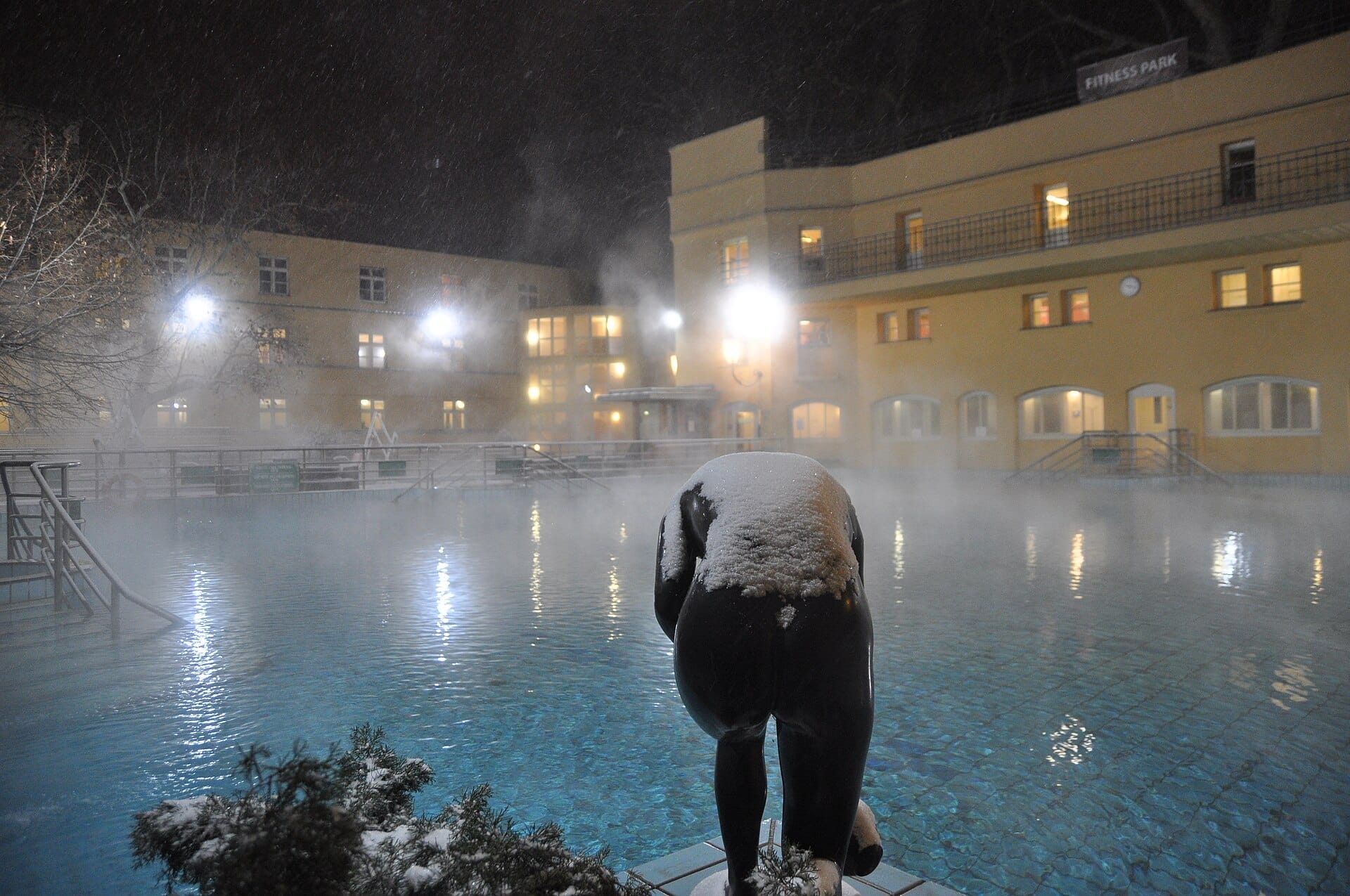
Lukács Thermal Bath, officially the Szent Lukács Gyógyfürdő és Uszoda, sits on the Buda side of the Danube at Frankel Leó út 25–29, a short walk from Margaret Bridge. It is a functioning medicinal bath complex, not a designed showpiece. The building itself is a layered mix of late 19th and early 20th century architecture, reflecting successive expansions over decades rather than a single grand vision. Inside, the complex includes indoor and outdoor thermal pools, a swimming pool, multiple saunas, and a dedicated Sauna World area.
What distinguishes Lukács from Budapest's more photographed baths is its clientele. On any given morning, the outdoor pools are shared between older Hungarian regulars doing slow laps and tourists who found their way here from a guidebook. The tile work is worn in places, the changing cabins are compact, and the poolside café serves coffee in paper cups. None of this is a flaw. It is precisely what makes the experience feel real rather than performed.
💡 Local tip
Ticket prices change regularly. Always check the official price list at lukacsfurdo.hu before your visit. Budapest Card holders currently enter free (at time of writing), which makes it one of the card's best included benefits—always confirm current card benefits before you go.
A History Rooted in the Ground Itself
The springs beneath Lukács have been in use for centuries. The area, historically known as Felhévíz (Upper Hot Water), was already a recognized bathing site during the Ottoman occupation of Buda, and the baths were reportedly a favored retreat of Pasha Mustafa. Budapest's thermal springs are geological fact: the city sits above a fault line that pushes naturally heated, mineral-laden water to the surface at dozens of points along the Danube's Buda bank.
The current complex took its recognizable form in the late 19th century, as Budapest's thermal bathing culture expanded rapidly after the unification of Buda, Óbuda, and Pest in 1873. While other baths in the city were rebuilt in grander styles, Lukács retained a more functional character. For deeper context on how Budapest's thermal culture fits into the city's broader history, the Budapest thermal baths guide covers the full landscape of options across the city.
One detail that surprises first-time visitors: the plaques. Covering a wall near the entrance courtyard are small marble and ceramic tiles left by grateful visitors over decades, many thanking the waters for relief from rheumatic and joint conditions. These are not decorative. They are a record of the bath's continued use as a genuine medicinal facility, a designation that requires the waters to meet specific mineral content standards under Hungarian health law.
Tickets & tours
Hand-picked options from our booking partner. Prices are indicative; availability and final rates are confirmed when you complete your booking.
Private Budapest city tour and Szechenyi thermal spa skip-the-line ticket
From 350 €Instant confirmationFree cancellationBudapest Szechenyi Thermal Bath entrance ticket
From 43 €Instant confirmationFree cancellationSelf-guided discovery walk in Budapest's Gellert Hill
From 28 €Instant confirmationFree cancellationAll-In Turkish bath with wellness and dining experience
From 66 €Instant confirmationFree cancellation
The Pools: What to Expect at Different Times of Day
The complex opens at 07:00 daily, with cash desks closing an hour before and pools needing to be vacated shortly before closing. In the first two hours, the outdoor thermal pools belong almost entirely to local regulars. The water temperature in the main outdoor pools typically sits in the high 30s Celsius, warm enough to raise light steam on cool mornings. In autumn and winter, that steam sits low over the pool surface, and the contrast between the cold air and the warm water is one of the more quietly satisfying experiences Budapest offers. Bring a towel and plan to ease in slowly.
By mid-morning, tourist numbers climb. The outdoor pools become more social, with a mix of languages around the poolside seating. The indoor pools, which tend to run slightly cooler and are better lit, draw a steadier crowd throughout the day. If you are sensitive to noise and prefer calm water, mornings on weekdays remain the most relaxed window. Weekends bring more visitors across all hours.
Tuesday is the one day when the bath extends its hours to 22:00. Evening visits on Tuesdays offer a markedly different atmosphere: fewer people, lower ambient light in the outdoor area, and the particular calm of a thermal pool at night. It is worth timing a visit around this if your schedule allows.
ℹ️ Good to know
Opening hours: Monday and Wednesday–Sunday 07:00–19:00. Tuesday 07:00–22:00. Cash desks usually close 1 hour before, and pools must be vacated shortly before closing. The Sauna World operates on its own schedule, generally from the afternoon on weekdays. Confirm current hours on-site or via the official website.
The Sauna World and Additional Facilities
Lukács includes a dedicated Sauna World section, separate from the main pool complex. It contains multiple sauna types and is ticketed differently from the standard bath entry. For visitors who want a more intensive heat experience rather than a long soak in thermal water, this area is worth investigating, though it operates on limited hours during weekdays.
The swimming pool provides an option for those who want to do actual laps rather than float. It is a proper pool in a utilitarian sense, without the ornamental ceiling work you find at Széchenyi or Gellért. Lockers and changing cabins are available, but the changing rooms are functional rather than spacious. If you are traveling with significant luggage or require wide accessibility, contact the bath directly at +36 1 326 1695 before visiting to confirm current facilities.
Getting There and Practical Logistics
Lukács sits on the Buda bank of the Danube, in the district between Margaret Bridge and the start of the Buda hills. Trams 17 and 19 stop directly in front of the bath at the named stop Szent Lukács Gyógyfürdő, making this one of the easier major baths to reach without navigation. From central Pest, trams 4 and 6 cross Margaret Bridge and stop at Margit híd, budai hídfő, from which the bath is a 5-10 minute walk north along Frankel Leó út. Buses 9, 109, 26, 191, and 291 also serve the area. The HÉV suburban rail's Szentendre line stops at Margit híd as well.
The Buda waterfront along Frankel Leó út is an undervisited stretch that rewards walking. North of Lukács, the road continues toward Óbuda and eventually toward the Roman ruins at Aquincum. South, it leads back toward the bridgehead and the tram interchange at Margaret Island. If you are combining a bath visit with broader Buda exploration, this corridor connects naturally.
💡 Local tip
Bring flip-flops (required in most areas), a swimsuit, and a towel. Towels and bathrobes can usually be rented on-site, but rental fees add up. A small padlock for lockers is useful, though some lockers now use electronic wristbands.
Photography, Atmosphere, and Honest Limitations
Lukács is not a photogenic bath in the way Széchenyi is. There is no grand yellow dome reflected in turquoise water, no colonnaded pool hall. If architectural drama is your primary goal, Lukács will disappoint. What it offers instead is texture: the mosaic of votive plaques, the weathered poolside tiles, the way the steam moves across the outdoor water in winter light. These are details that reward observation rather than wide-angle photography.
Photography policies inside Hungarian thermal baths vary and can change. Photographing other bathers without consent is prohibited everywhere. If you are planning a thermal bath visit primarily for social media content, Széchenyi Thermal Bath or Gellért Thermal Bath offer more visually dramatic settings. Lukács suits visitors who want to use the water, not photograph it.
Weather does affect the experience at Lukács more noticeably than at indoor-only facilities. The outdoor pools are appealing in almost all seasons, but heavy rain in summer makes poolside seating unpleasant, and very high summer heat removes the contrast that makes thermal bathing feel restorative. The bath's value peaks in shoulder seasons: March through May and September through November, when the water temperature is genuinely inviting and crowds are moderate.
Fitting Lukács Into a Broader Budapest Visit
A morning at Lukács pairs naturally with an afternoon on the Buda side of the river. The Buda waterfront between Margaret Bridge and Chain Bridge is walkable, and the area around the bath has several low-key cafés and bakeries on Frankel Leó út. If you are working from a three-day itinerary, a thermal bath morning followed by an afternoon at Castle Hill is a well-paced combination without requiring significant transit.
For visitors holding the Budapest Card, Lukács represents one of the clearest benefits: free entry to a major thermal bath is significant value given the ticket prices. The Budapest Card guide covers whether the card makes financial sense depending on your overall itinerary.
Travelers specifically interested in Budapest's bathing culture may also want to consider Rudas Thermal Bath for its Ottoman dome and rooftop pool, or consult the broader thermal baths guide to compare all major options by character, price, and location.
Insider Tips
- Tuesday evening visits (the bath closes at 22:00) offer the quietest and most atmospheric window in the entire week. Crowd levels drop sharply after 18:00.
- The votive plaque wall near the entrance courtyard is easy to walk past without noticing. Slow down and read a few of the inscriptions. Some date back decades and add genuine historical texture to the visit.
- Arrive at or just before opening at 07:00 on a weekday if you want the outdoor pools nearly to yourself. The regulars who arrive at that hour tend to swim quietly and mind their own business.
- The Budapest Card currently covers entry at Lukács. If you already have the card and were planning to pay separately, check that this benefit is still included—when it is, it’s one of the strongest single uses of the card's included perks.
- Frankel Leó út has several good bakeries and a covered market nearby. Arriving slightly hungry and eating nearby afterward makes the visit feel like a proper neighborhood morning rather than a tourist tick-box.
Who Is Lukács Thermal Bath For?
- Travelers who want a thermal bath experience without large tour groups
- Visitors on a second or third trip to Budapest looking beyond the main attractions
- Budapest Card holders seeking high-value included perks
- Anyone visiting in autumn or winter, when the outdoor pools steam dramatically against cold air
- People with joint or rheumatic conditions seeking the bath's medicinal water designation
Nearby Attractions
Other things to see while in Buda Waterfront & Gellért Hill:
- Citadella & Liberty Statue
Perched atop Gellért Hill, the Citadella fortress and the 40-metre Liberty Statue together form one of Budapest's most recognizable silhouettes. Entry to the outdoor grounds is free and the site operates daily within posted opening hours rather than being open around the clock, making it one of the most accessible major landmarks in the city.
- Gellért Thermal Bath & Hotel
The Gellért Thermal Bath is Budapest's most celebrated historic spa, housed in a sweeping Art Nouveau complex at the foot of Gellért Hill. Opened in 1918 and fed by natural geothermal springs, it combines soaking culture with genuine architectural grandeur. Note: the bath is closed for major renovation from October 2025, with a planned reopening sometime in 2028.
- Liberty Bridge (Szabadság híd)
Liberty Bridge is Budapest's shortest and arguably most striking central bridge, a 333-metre Art Nouveau iron structure painted green and crowned with mythological Turul birds. Free to cross at any hour, it connects Fővám tér on the Pest side with Szent Gellért tér on the Buda side, and doubles as one of the city's favourite informal gathering spots on warm evenings.
- Rudas Thermal Bath
Built during the Ottoman occupation and still drawing visitors after 450 years, Rudas Thermal Bath combines a 16th-century domed Turkish pool with a modern rooftop pool overlooking the Danube. It is quieter and more architecturally striking than its famous rivals, and it operates late-night sessions on weekends.