Aquincum Museum & Roman Ruins: Budapest's Ancient Roman City
In the northern reaches of Budapest's Óbuda district, the Aquincum Museum & Archaeological Park preserves the most substantial Roman remains in Hungary. Once the capital of the province of Pannonia Inferior, the site combines an outdoor field of excavated streets and buildings with a well-curated indoor museum of artifacts. It rewards curious visitors who want something more layered than the city's well-trodden central sights.
Quick Facts
- Location
- Szentendrei út 135, Óbuda (District III), Budapest
- Getting There
- HÉV line H5 to Aquincum stop; buses 34, 106, 134 to Záhony utca (Záhony Street)
- Time Needed
- 1.5 to 2.5 hours
- Cost
- 2,200 HUF adults / 1,100 HUF students; free with Budapest Card (verify current prices and seasonal discounts)
- Best for
- History enthusiasts, archaeology fans, families with older children, off-peak explorers
- Official website
- www.aquincum.hu/en
What Aquincum Actually Is
Most visitors to Budapest are unaware that the city they are walking through was once a major Roman provincial capital. The Aquincum Museum & Archaeological Park, located in the Óbuda district on the west bank of the Danube, is the most complete surviving evidence of that Roman city. Aquincum was founded as a military camp in the 1st century AD and grew into a fully functioning urban settlement of forums, temples, aqueducts, bathhouses, and residential neighborhoods. By the early 2nd century AD, after the division of the province, it had become the capital of Pannonia Inferior, one of the empire's key Danubian provinces.
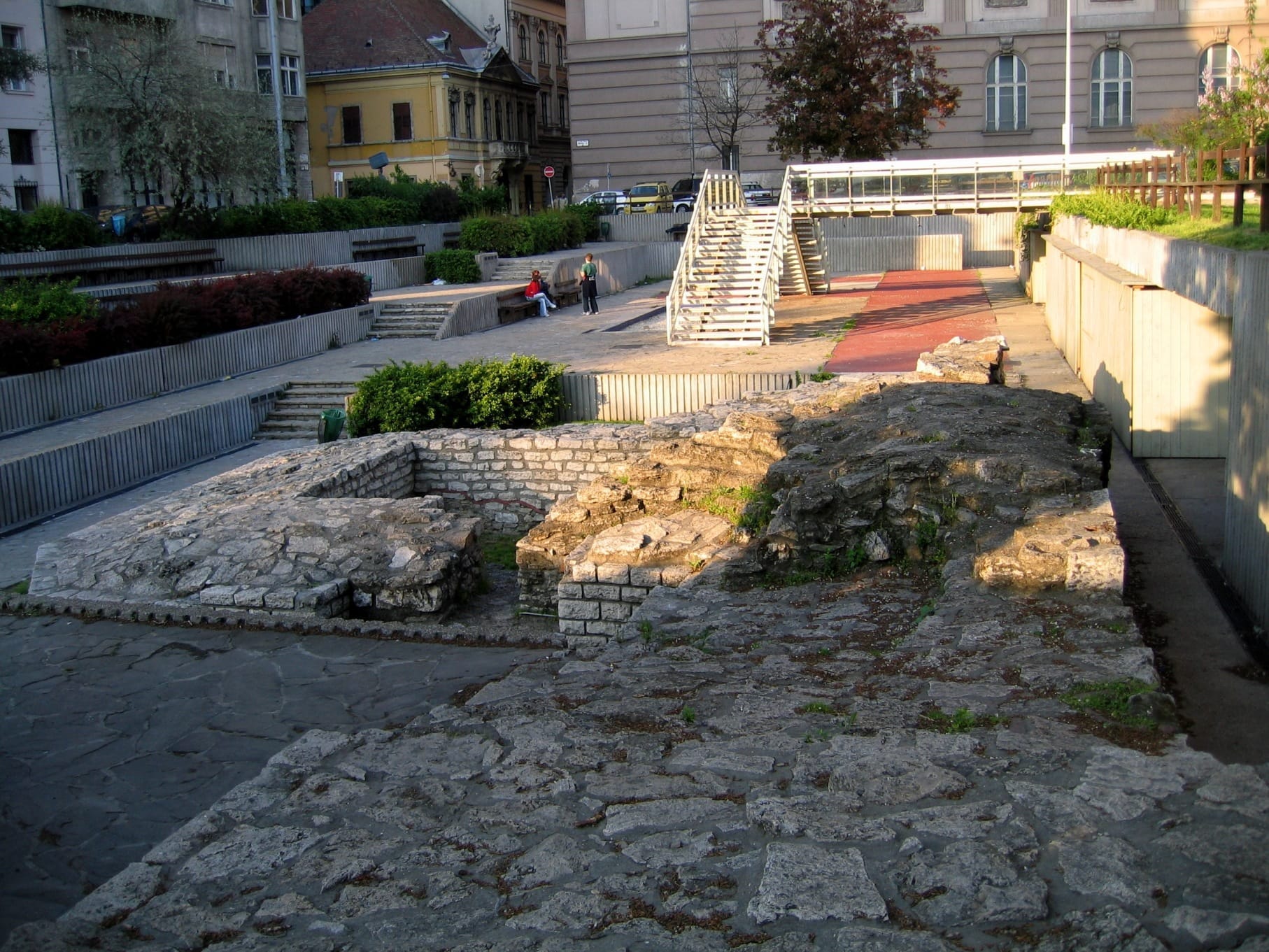
What you visit today is roughly one-third of the ancient city center, the portion that has been excavated since systematic digs began in the 19th century. The museum building itself, a solid neoclassical structure, opened in May 1894 and remains the anchor of the site. Around it stretches an open archaeological park where the foundations of streets, public buildings, private houses, and thermal bath complexes can be traced at ground level. It is not a reconstructed theme park. The stones are real, the layout is genuine, and the scale, once you orient yourself, is genuinely impressive.
ℹ️ Good to know
Opening hours are seasonal. April to October: the archaeological park opens Tuesday to Sunday from 09:00, the museum from 10:00, both closing at 18:00. November to March: both open Tuesday to Sunday from 10:00 to 16:00, with the archaeological park visitable only in dry, non-slippery weather. The site is closed on Mondays year-round.
The Archaeological Park: Reading the Ruins
The outdoor park is where most of your time will go, and it requires a little patience to appreciate. Unlike a standing monument, what you see here is mostly at knee height or below. The excavated remains include the main public baths, the macellum (a covered market), the Mithraeum (a small temple to the Persian deity Mithras, popular among Roman soldiers), private residences with traces of underfloor heating systems, and fragments of the street grid that once organized daily life in the city.
Numbered markers and explanatory panels in Hungarian and English guide you through the site. The panels are clear and informative without being overwhelming. If you take the time to follow them in order, the spatial logic of the town begins to emerge: where the commercial center sat relative to the baths, how residential streets branched off from the main thoroughfare. It is the kind of place where the map in your hand and the stone at your feet eventually connect into something coherent.
The ground in the park is uneven in places. Roman brick, gravel paths, and grass alternate underfoot, and some sections are accessed via low steps or narrow passages between excavated walls. Visitors with mobility limitations should note this before entering. Flat, closed-toe shoes are genuinely recommended, not just as a precaution but because the surface variety changes constantly.
💡 Local tip
The park opens an hour before the museum building on summer mornings (09:00 vs 10:00). Arriving at opening time on a weekday in summer means you will often have the ruins almost entirely to yourself for the first hour. The quality of early morning light across the stone is also noticeably better for photographs.
Tickets & tours
Hand-picked options from our booking partner. Prices are indicative; availability and final rates are confirmed when you complete your booking.
Budapest Guided E-Scooter Tour by Night
From 60 €Instant confirmationFree cancellationHalf-day tour to Princess Sissi's Godollő royal palace from Budapest
From 41 €Instant confirmationFree cancellationHalf-Day Countryside Wine Tour from Budapest
From 95 €Instant confirmationFree cancellation4 Course Dinner cruise with Operetta and Folk show
From 81 €Instant confirmationFree cancellation
Inside the Museum: Artifacts That Reward Attention
The museum building holds the organized collection of objects recovered from the site and the surrounding area. Mosaic fragments, carved funerary stones, bronze surgical instruments, everyday pottery, coins, jewelry, and military equipment fill the galleries across multiple floors. The objects are displayed in a format that feels appropriately serious rather than flashy. Labels are in Hungarian with English translations, though some of the older cabinet displays are less thoroughly translated than the newer sections.
The standout item in the collection is the reconstructed Roman organ, a hydraulic water organ dating from 228 AD that is one of the oldest surviving musical instruments of its type in the world. It was recovered in fragmented form from the site and painstakingly reassembled. Beyond this, look out for the detailed mosaic floors lifted from private houses, and the series of carved relief stones that document the appearance of Roman civilians and soldiers who lived here almost two millennia ago.
The museum is quiet on most weekdays. You will rarely contend with crowds inside the galleries. Weekend mornings attract more visitors, particularly families, but the building is large enough that it rarely feels cramped. The indoor temperature stays comfortable even in the height of summer, making the museum a sensible refuge during the midday heat if you are visiting in July or August.
How the Experience Changes by Season
Aquincum is an outdoor site at its core, and the season shapes the experience substantially. In spring, particularly late April through May, the park is at its most pleasant: the grass is green, the air is mild, and visitor numbers are low enough to allow genuine contemplation. The ruins photograph well against spring skies. Autumn, especially September and early October, offers similar conditions with the added warmth of lower-angle sunlight that throws the carved stonework into sharp relief.
Summer visits are entirely workable but come with caveats. By late morning on clear July or August days, the open park becomes hot and exposed. There is limited shade across much of the site. Bring water, use sunscreen, and consider timing your outdoor section for early morning, then retreating into the museum building as temperatures rise. The winter schedule cuts both opening hours and the overall atmosphere. The archaeological park in December or January, under grey skies with shortened hours, is a more austere experience, though the reduced crowds and quiet are genuinely appealing to some visitors.
If you are planning a broader Budapest trip around the best conditions, the best time to visit Budapest guide covers seasonal trade-offs across the city, which apply equally to outdoor sites like Aquincum.
Getting There: The HÉV Is Part of the Experience
The most direct and pleasant route to Aquincum from central Budapest is the HÉV suburban railway, line H5, departing from Batthyány tér in District I on the Buda side. The HÉV runs along the Danube bank, and the journey to Aquincum station takes roughly 15 to 20 minutes. The station sits almost directly in front of the museum entrance, making the approach simple. This stretch of the H5 line also passes through central Óbuda, giving you a sense of the neighborhood's character before you arrive.
Buses 34, 106, and 134 also serve the area, stopping near the Záhony Street entrance. The bus option is useful if you are approaching from points in Óbuda rather than from the Buda riverside. The car park is accessible via the Záhony Street gate for those arriving by car. Note that Batthyány tér is also served by Metro line M2, so connecting from Pest is straightforward: M2 to Batthyány tér, then H5 to Aquincum.
For a broader overview of navigating Budapest's public transport network, including the HÉV system, the getting around Budapest guide explains ticket options and transit logic clearly.
Aquincum in Context: Óbuda's Roman Layer
Aquincum is not the only Roman remnant in Budapest, but it is the most concentrated and accessible. The civilian town at this site existed alongside a substantial military camp further south, closer to what is now the center of Óbuda. Fragments of Roman infrastructure, including sections of the ancient aqueduct, surface sporadically across the district. The Aquincum Museum effectively serves as the interpretive center for all of these scattered remains.
Óbuda as a neighborhood has its own layered character worth exploring beyond the Roman site. The Óbuda neighborhood guide covers what else the district holds, from its Baroque town square to its cluster of small museums.
Situating Aquincum within Hungarian history more broadly adds depth to a visit. The Romans withdrew from Pannonia in the late 4th and early 5th centuries AD, and the city was gradually abandoned. What the museum traces is not simply old stones but a complete episode of urban civilization on this stretch of the Danube, one that predates the arrival of the Magyar tribes by roughly five centuries.
The Budapest history guide provides the fuller arc, from Roman Aquincum through the medieval kingdom, Ottoman occupation, Habsburg rule, and into the 20th century.
Honest Assessment: What to Expect and Who Might Not Enjoy It
Aquincum is not the kind of site that produces instant visual drama. There is no standing amphitheater, no triumphal arch, no monument that photographs itself. The power of the place is cumulative and requires some engagement from the visitor. If you approach it with the interpretive panels, a rough sense of Roman urbanism, and a willingness to slow down, the site genuinely delivers. If you arrive expecting the scale of Pompeii or the spectacle of Rome's forums, you will be disappointed.
Families with younger children may find the outdoor park more engaging than the museum galleries, where long display cases of pottery and fragments require patience to appreciate. Older children with a history interest, however, often respond well to the site, particularly the thermal bath complex and the organ display. Visitors on very tight schedules covering only Budapest's main central attractions may find Aquincum too far afield for the time investment, but for anyone with two full days or more, the trip is worthwhile.
⚠️ What to skip
The site closes on Mondays. This is one of the most common reasons visitors are turned away. Double-check before making the trip, especially if your itinerary is tight.
Insider Tips
- The Budapest Card includes free admission to Aquincum. If you are already using the card for transport and other museums, it effectively makes this visit cost nothing extra. Check the current card coverage and validity period before purchasing.
- The HÉV from Batthyány tér runs on its own track alongside the Danube and offers river views on the way up. Sit on the right side of the train heading north for the best sightlines.
- The site occasionally hosts summer evening events and open-air concerts in the archaeological park, timed to coincide with the ancient organ's presence. Check the museum's official calendar at aquincum.hu for seasonal programming, which is not widely advertised in general tourism channels.
- If you arrive via the northern HÉV stop (Aquincum station), you enter through the main museum gate. If you are arriving by bus from central Óbuda, the Záhony Street gate brings you into the southern end of the park first. Both are valid entry points, but they give you the site in opposite directions.
- Spend time in the small lapidarium adjacent to the museum building, where carved stones, altars, and inscriptions are arranged outdoors under partial cover. This section is often overlooked by visitors who move directly from the museum to the main ruins field, but it contains some of the most legible Roman inscriptions on the site.
Who Is Aquincum Museum & Roman Ruins For?
- History and archaeology enthusiasts who want context beyond surface-level sightseeing
- Visitors spending three or more days in Budapest and looking beyond the central attractions
- Travelers using the Budapest Card who want to maximize its value with free admissions
- Families with older children or teenagers who have studied Roman history
- Photographers seeking unusual subjects: Roman stonework, open-air ruins, and the texture of ancient materials against Budapest's suburban backdrop