Inner City Parish Church: Budapest's Oldest and Most Layered Sacred Site
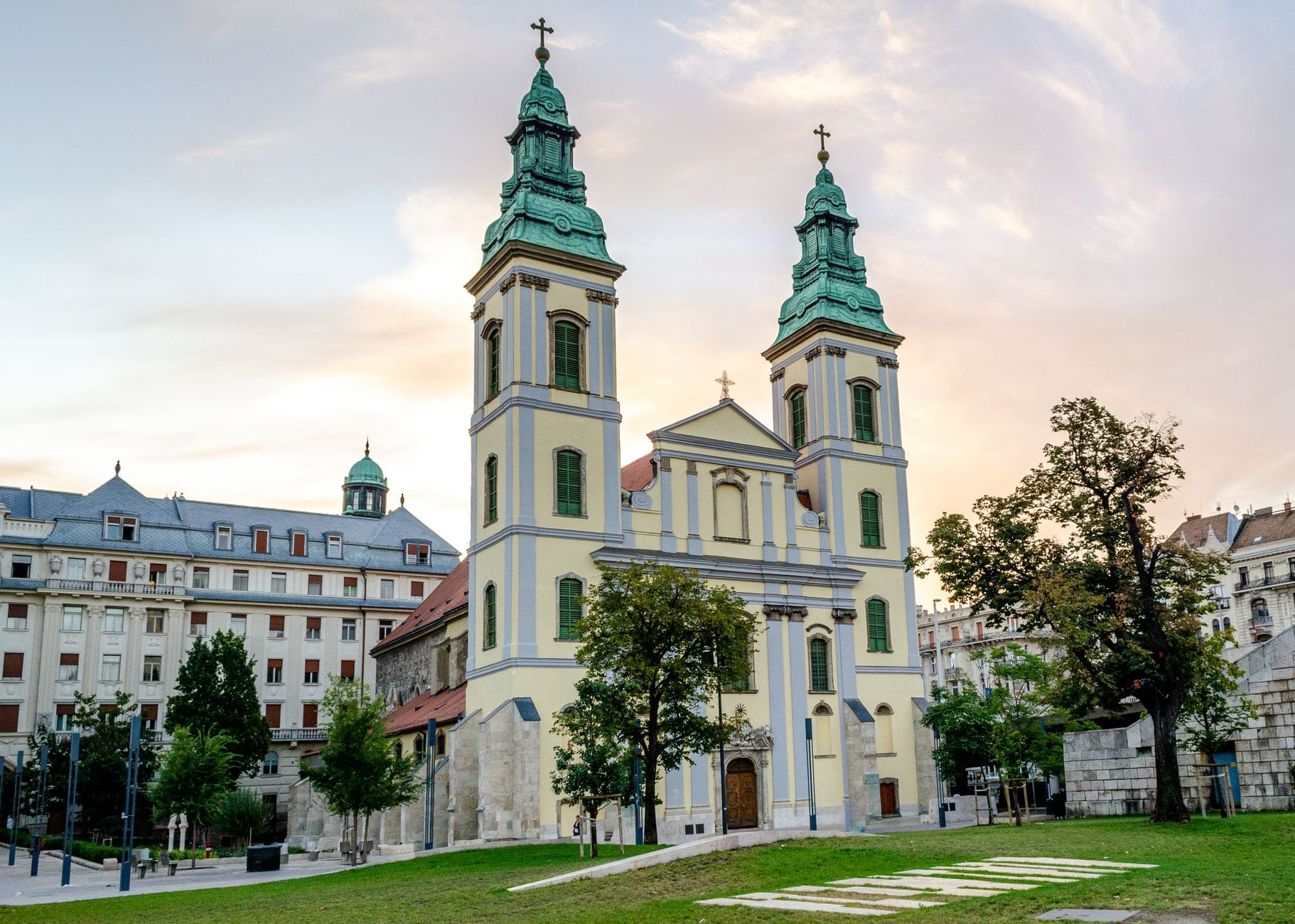
The Belvárosi Plébániatemplom stands at Március 15. tér, a short walk from the Danube, quietly containing two thousand years of history beneath a single roof. Roman ruins, Ottoman prayer niches, Gothic vaulting, and Baroque twin towers make this one of the most architecturally complex buildings in the Hungarian capital.
Quick Facts
- Location
- Március 15. tér 2, District V, Budapest (Pest side of Elisabeth Bridge)
- Getting There
- Metro M3 Ferenciek tere (5-min walk); Tram 2, Bus 15/115 to Március 15. tér
- Time Needed
- 30–60 minutes
- Cost
- Small admission fee for tourist visits (verify locally); free entry during Mass
- Best for
- History lovers, architecture enthusiasts, Catholic pilgrims, curious walkers
- Official website
- belvarosiplebania.hu
Why This Church Deserves More Than a Passing Glance
The Inner City Parish Church, known in Hungarian as the Belvárosi Plébániatemplom, sits on the Pest embankment where the Elisabeth Bridge meets the riverbank. Most visitors walk straight past it, eyes fixed on the Danube or the hills of Buda beyond. That is a genuine loss, because this building contains something almost no other church in Central Europe can match: the visible overlap of Roman, Gothic, Ottoman, and Baroque history in a single, still-functioning sacred space.
The site has been in continuous religious use for roughly a thousand years. Its foundations rest on a Roman military installation from the 2nd century AD. Its nave shows Gothic bones beneath Baroque decoration. Its apse preserves an Ottoman prayer niche carved into Christian stonework. For anyone with even a passing interest in the layers of Central European history, this is one of the most concentrated and legible sites in Budapest.
💡 Local tip
Opening hours vary across sources and change for Mass, holidays, and events. One commonly cited schedule is Monday to Saturday 10:00–17:00, Sunday 9:00–19:00, but verify directly with the parish at belvarosiplebania.hu or check the notice board at the entrance before planning your visit.
Two Thousand Years of History Compressed Into One Building
The ground beneath the church was once occupied by Contra-Aquincum, a Roman auxiliary fort built in the 2nd century AD on the eastern bank of the Danube, directly opposite the legionary settlement of Aquincum on the Buda side. Roman remains are visible inside the church, including through floor-level display areas — one of those genuinely startling moments where the ancient past opens up beneath your feet without warning.
The first Christian church on this site is believed to date to around 1046, making the Belvárosi Plébániatemplom one of the oldest Catholic churches in Hungary. After the Mongol invasion of the 13th century devastated the original structure, the church was rebuilt in Gothic style in the 14th century. If you look carefully at the nave and certain wall sections, you can still read the Gothic bones of that reconstruction beneath later interventions. For context on how this church fits into the broader sweep of Hungarian religious and political history, the Budapest history guide is worth reading before you visit.
The Ottoman period, which lasted from 1541 to 1686 in Buda and the surrounding region, left its mark here in the most tangible way possible. When Ottoman forces occupied the city, the church was converted into a mosque. The most striking physical survivor of that era is the mihrab, an Islamic prayer niche indicating the direction of Mecca, which was carved into the wall of the apse. When the Habsburgs recaptured Buda and the Ottomans departed, the church was reconsecrated — but the mihrab was left in place. It remains there today within a Christian sanctuary, its carved detail still visible.
The Baroque remodelling of the late 17th and 18th centuries gave the building its current exterior character: twin towers, a symmetrical facade, and the kind of restrained ornament typical of Central European Catholic architecture of that period. The interior was further updated in subsequent centuries, which means the visual effect inside is layered rather than unified. Some visitors find this coherent; others find it busy. Either way, it is never dull.
Tickets & tours
Live prices and dates from our booking partner. If you book, we may earn a commission at no extra cost to you.
4 Course Dinner cruise with Operetta and Folk show
From 81 €Instant confirmationFree cancellationPrivate Etyek wine tour and dinner with Danube River evening cruise
From 360 €Instant confirmationFree cancellationBudapest dinner walk
From 93 €Instant confirmationFree cancellationEvening dinner cruise on the Danube in Budapest
From 77 €Instant confirmationFree cancellation
What You Actually See Inside
Entering from Március 15. tér, the first thing you notice is the transition from the noise of the embankment to genuine quiet. The thick stone walls do real acoustic work. The interior is longer than it appears from outside, and the light shifts depending on the time of day, with morning sun coming through differently than the flat afternoon light that fills the nave later.
The glass floor panel revealing Roman stonework is located toward the front of the church. It is easy to miss if you are not looking for it, but once you find it, it rewards slow looking: Roman masonry, clearly distinct in texture and age from everything around it, sitting a metre or so below the church floor. A small explanatory panel provides context.
The Ottoman mihrab in the apse is the single most historically remarkable object in the building. It is not large or dramatic, but knowing what it is and why it is there gives it a weight that grows the longer you look. The church also holds relics displayed in the treasury area. For Catholic pilgrims, these relics are the primary draw. For secular visitors, the mihrab and the Roman glass floor tend to be the main points of focus.
ℹ️ Good to know
The church is a functioning parish, not a museum. Mass is celebrated regularly, and the atmosphere during a service is quite different from a tourist visit. If you arrive during Mass, be respectful: move quietly, do not use flash photography, and consider returning afterward for a closer look at the interior details.
The Setting: Március 15. Tér and the Danube Embankment
The square immediately in front of the church, Március 15. tér, is named for March 15, the date in 1848 when the Hungarian Revolution began. The square itself is used as a transit point by locals heading to and from the Elisabeth Bridge. It is not a grand ceremonial space, but it sits directly on the Danube promenade, and the view across to the Buda hills is one of the better informal viewpoints in central Pest. The best viewpoints in Budapest guide covers this stretch of the embankment in more detail.
The church is well-placed for combining with other nearby sites. The Central Market Hall is a 10-minute walk south along the embankment. The Jewish Quarter and Great Synagogue are roughly 15 minutes on foot to the northeast. For anyone following a walking route through central Pest, the church fits naturally into a half-day itinerary without requiring a dedicated trip.
Best Time to Visit and Practical Considerations
Weekday mornings before 11:00 are the calmest time to visit. Tourist foot traffic is light, the light inside the nave is good, and you are more likely to have the Roman floor panel and the mihrab to yourself for uninterrupted looking. Midday on weekends sees the most visitors, particularly in summer, when tour groups pass through on their way along the embankment.
Admission fees for tourist visits have been inconsistently reported across sources, with figures around 3,000 HUF for adults and 2,000 HUF for students and seniors. The situation appears to allow free entry during Mass with a fee applied during tourist visiting hours. Confirm the current arrangement at the entrance, as pricing has changed. The Budapest Card may offer discounts at some ecclesiastical sites, but this should be verified.
Photography inside is generally permitted for personal use, but be sensitive during services. A wide-angle lens or phone camera handles the interior well given the relatively contained scale. For anyone visiting Budapest in cooler months, the church offers welcome shelter: the thick walls keep the interior noticeably warmer than the street in winter. See also our notes on visiting Budapest in December for seasonal planning context.
Accessibility
Accessibility at this site is limited. The historic architecture creates genuine barriers: sources report conflicting information, with some noting ramps at the main entrance and others noting no wheelchair access. Anyone with specific accessibility requirements should contact the parish directly before visiting.
Who Will Get the Most From This Visit, and Who Might Not
This church rewards visitors who are genuinely curious about architectural layering and historical depth. If you are the kind of traveler who reads wall panels and takes time to locate details that are not immediately obvious, you will leave with more than you expected. If you are visiting Budapest primarily for its thermal baths, nightlife, or food scene, the Inner City Parish Church is not likely to be a priority — and that is a reasonable call. Travelers with children may find the Roman glass floor panel genuinely engaging for younger visitors, though the overall visit is not designed with families in mind. For a broader picture of what to prioritize in the city, the things to do in Budapest guide helps with relative weighting.
The church does not have the visual grandeur of St. Stephen's Basilica or the dramatic hilltop setting of Matthias Church in Buda. What it has instead is density: more distinct historical periods represented in one accessible space than almost anywhere else in the city. For that specific quality, it is genuinely worth 45 minutes.
Insider Tips
- Look for the glass floor panel revealing Roman masonry from the Contra-Aquincum fort as soon as you enter. It is easy to walk past without noticing, but it is one of the most striking things in the building.
- The Ottoman mihrab in the apse is best seen in the morning light when the interior is quiet and the detail is easier to study.
- Tram 2 serves Március 15. tér and is one of the most scenic tram routes in Budapest, running along the Danube embankment. Take it southward for a good view of the river before you arrive.
- If you want to attend Mass rather than a tourist visit, Sunday morning services may start early — arrive a few minutes early to find a seat. The church fills with local parishioners rather than tourists, which gives a noticeably different atmosphere. The church fills with local parishioners rather than tourists, which gives a noticeably different atmosphere.
- Combine the visit with a walk south along the embankment to Liberty Bridge: it is an easy riverside extension that passes several historically significant spots on the Pest waterfront.
Who Is Inner City Parish Church (Belvárosi Plébániatemplom) For?
- History and archaeology enthusiasts drawn to Roman, Ottoman, and medieval layers in one site
- Architecture travelers interested in the coexistence of Gothic, Baroque, and Islamic design
- Catholic pilgrims seeking relics of Hungarian saints and an active parish church
- Walkers building a half-day route through central Pest along the Danube embankment
- Curious travelers who want context beyond the postcard version of Budapest
Nearby Attractions
Other things to see while in Pest City Center (V. District):
- Central Market Hall (Nagy Vásárcsarnok)
The Central Market Hall, known locally as Nagy Vásárcsarnok, is Budapest's largest historic covered market hall. Built in 1897 to a design by architect Samu Petz, it fills three floors with fresh produce, Hungarian specialties, folk crafts, and street food. Entry is free, and it sits steps from the Liberty Bridge in the heart of Pest.
- Chain Bridge (Széchenyi Lánchíd)
The Széchenyi Chain Bridge (Széchenyi lánchíd) is one of the oldest and most recognizable bridges in Budapest, linking the historic Pest riverfront with the foot of Castle Hill. Free to cross at any hour, it rewards visitors with sweeping Danube views and a walk through 175 years of Hungarian history.
- Hungarian National Museum
The Hungarian National Museum is the oldest national history museum in Hungary, tracing the country's story from prehistoric times through the 20th century. Housed in a commanding neoclassical building from 1847, it anchors Budapest's Pest district and offers one of the most complete windows into Hungarian identity available to visitors.
- Hungarian Parliament Building
Rising from the Pest bank of the Danube in a symphony of Gothic spires and terracotta stone, the Hungarian Parliament Building is the defining landmark of Budapest. Built between 1885 and 1904, it houses the Holy Crown of Hungary and opens its gilded interior to guided tours on most days. This guide covers everything you need to visit well.
Planning a trip? Discover personalized activities with the Nomado app.