Hongkou and the North Bund sit just north of the Bund on the same Puxi side of the Huangpu, across Suzhou Creek. The area combines one of Shanghai's most dramatic new waterfront promenades with older residential streets, wartime Jewish refugee sites, and a literary heritage tied to Lu Xun. It rewards visitors who look beyond the obvious.
Hongkou sits across the Huangpu River from Shanghai's most famous waterfront, close enough to see the Bund but with a character entirely its own. The North Bund promenade delivers arguably the best skyline view in the city, while the streets behind it hold Jewish refugee history, lanes from Republican-era Shanghai, and a working-class residential texture that most tourists never reach.
Orientation
Hongkou District occupies the northeastern corner of central Shanghai, sitting just north of the Bund on the Puxi side of the Huangpu, across Suzhou Creek from the city's most celebrated waterfront stretch. Its southern edge is defined by the river itself, from the ornate Waibaidu Bridge (Garden Bridge) in the west to Qinhuangdao Road in the east. To the north and west, the district transitions into denser residential neighborhoods before merging with Yangpu District. East Daming Road runs parallel to the riverfront and serves as the commercial spine of the North Bund redevelopment zone.
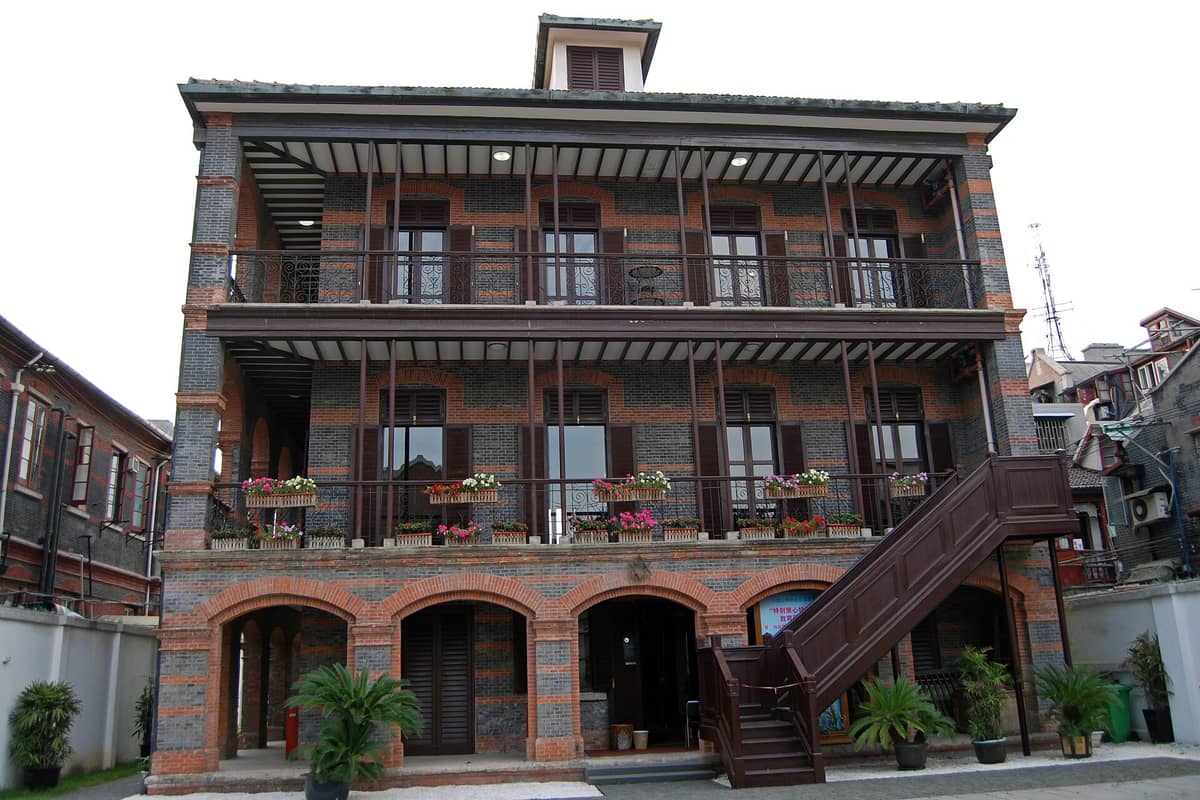
The neighborhood sits within Shanghai Municipality, a provincial-level municipality of the People's Republic of China comprising 16 districts. Hongkou is one of the older inner-city districts, administratively compact but layered with distinct micro-zones: the gleaming new towers and promenade of the North Bund waterfront, the literary and park quarter around Lu Xun Park, the historically significant Tilanqiao area where thousands of Jewish refugees sheltered during World War II, and the quieter residential grids further north toward Siping Road.
For travelers building a mental map, Hongkou is north of the Bund across the Suzhou Creek and Huangpu River confluence. Jing'an District lies to the west, and the Bund and Huangpu District are easily reachable on foot via the Waibaidu Bridge or by ferry. Lujiazui in Pudong is directly visible from the North Bund promenade, a short ferry ride across the water.
Character & Atmosphere
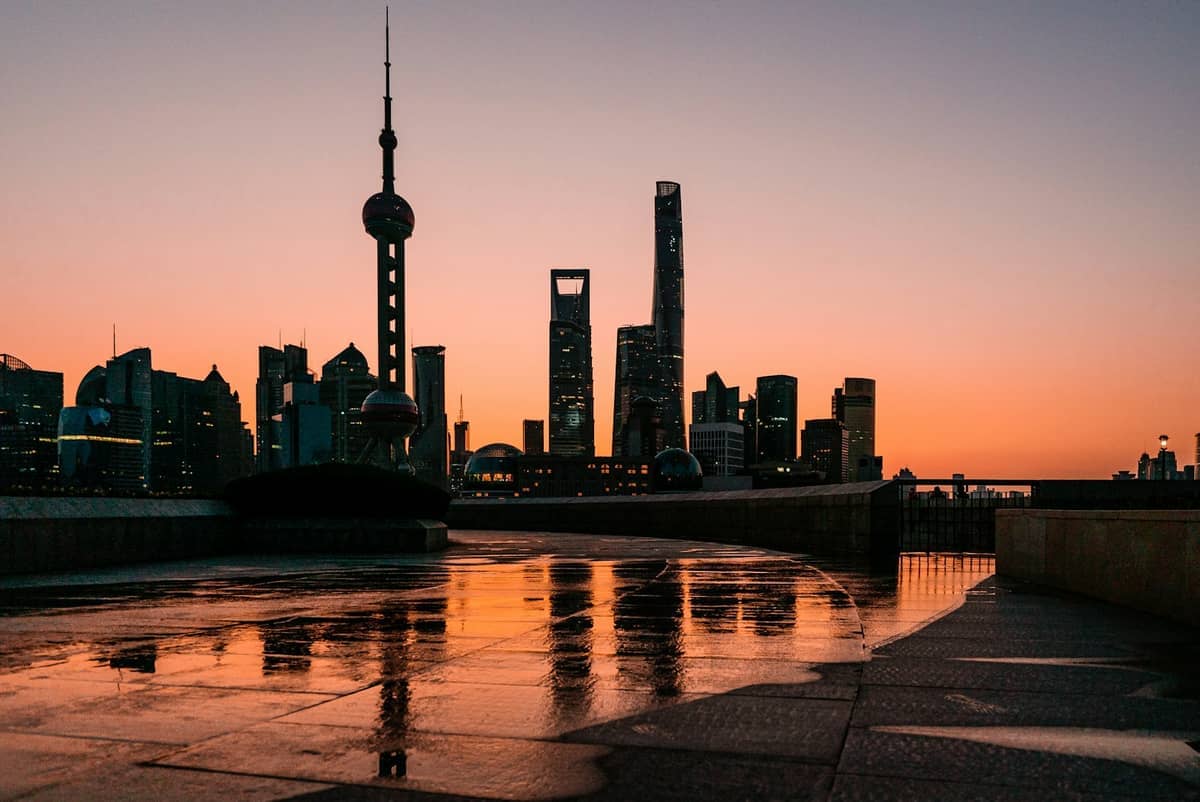
The North Bund waterfront and the back streets of Hongkou feel like two entirely different cities running alongside each other. On the promenade itself, the atmosphere is polished and deliberate: a 2.5-kilometer ribbon of landscaped riverside walk with wide lanes for joggers and cyclists, modern seating areas, and the kind of unobstructed view of the Lujiazui skyline that you simply cannot get from the south bank without crowds pressing in from every side. On weekend mornings, locals claim this stretch before the tour groups arrive, walking small dogs and photographing the mist lifting off the river as the Oriental Pearl Tower catches the early light.
Step back from East Daming Road into the residential blocks and the city shifts register. The lanes north of the cruise terminal have the texture of unreconstructed Shanghai: ground-floor shops selling household goods, elderly residents playing cards outside lane entrances, the smell of soy milk and fried dough from breakfast stalls that open before 7am and close before most visitors have left their hotels. These are not curated experiences. They are simply neighborhoods where people live, and that ordinariness is, for some travelers, the whole point.
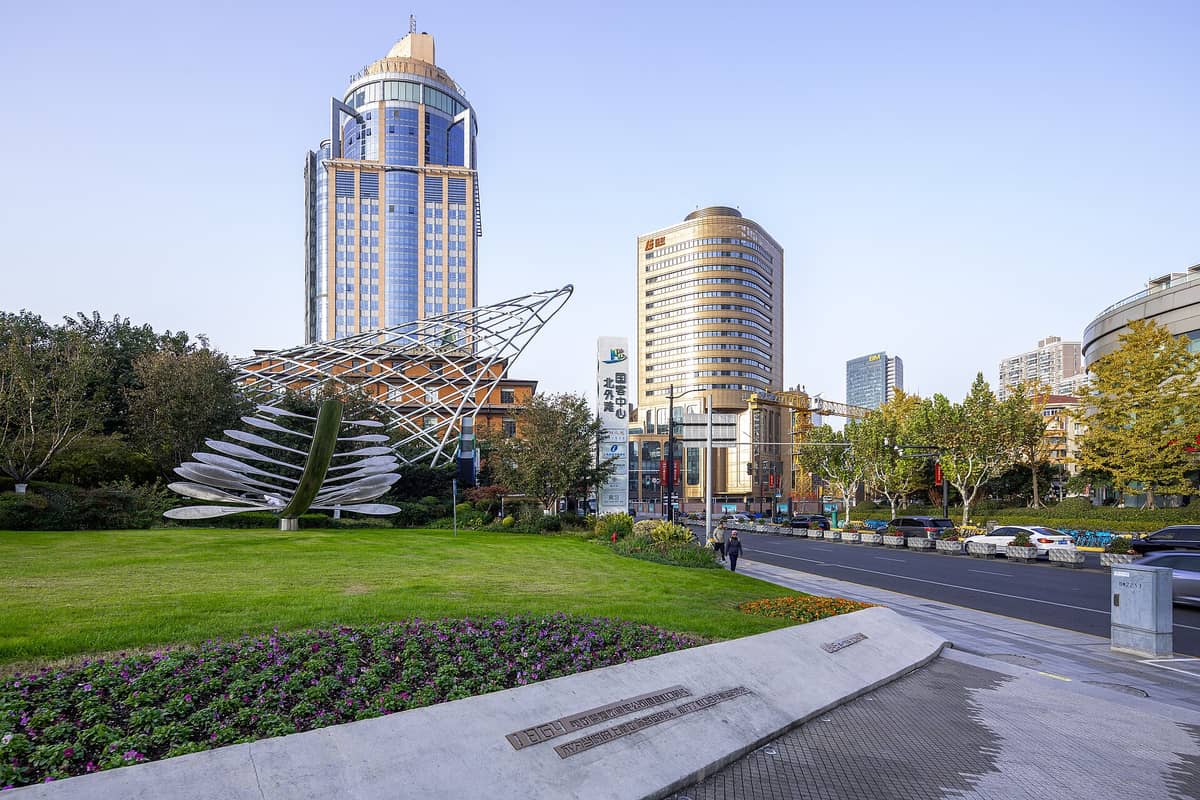
By afternoon the waterfront draws more visitors, particularly around White Magnolia Plaza and the cruise terminal. The light at this time of day is flat and harsh in summer, better in autumn when it turns golden across the river. After dark, the promenade is well-lit and generally safe, with the Lujiazui towers reflecting in the water. The residential streets north of Sichuan North Road become noticeably quieter and darker after 9pm, and the contrast with the riverside illumination is stark.
⚠️ What to skip
The back alleys of Hongkou north of Sichuan North Road are poorly lit after dark and best avoided at night. The North Bund riverside itself is safe and active in the evenings, but use standard city caution elsewhere in the district, particularly regarding petty theft in crowded areas.
What to See & Do
The North Bund promenade is the obvious starting point and genuinely delivers. Walking east from the Waibaidu Bridge along the riverside, you get continuous views of the Lujiazui financial district across the water: the Oriental Pearl Tower, Jin Mao Tower, the Shanghai World Financial Center, and Shanghai Tower arrayed in sequence. The promenade is wide enough that it never feels claustrophobic, and there are sections with lawn areas and benches where you can sit and watch river traffic, including cargo barges and Huangpu River cruise boats moving through the channel.
White Magnolia Plaza (Sinar Mas Plaza), rising to approximately 320 meters on East Daming Road, anchors the modern skyline of this bank. Its observation deck, marketed as The Stage, offers a panoramic look at both the Lujiazui towers and the historic Bund skyline simultaneously from around 280 meters above the river. For a broader survey of Shanghai's best elevated views, the best views in Shanghai guide covers which decks are worth the ticket price and which to skip.
The Shanghai Jewish Refugees Museum on Changyang Road is one of Hongkou's most important historical sites and one of the more affecting museums in the city. Between 1937 and 1941, some 23,000 Jewish refugees fleeing Nazi persecution arrived in Shanghai, one of the few places in the world that accepted them without visas. The Tilanqiao neighborhood around the museum preserves the physical fabric of what was the Designated Area where refugees were required to live from 1943. The museum documents daily life, survival, and the community that formed under extraordinary constraints. Allow at least 90 minutes.
Lu Xun Park, about 2 kilometers north of the waterfront, is a well-maintained public park containing the tomb and memorial hall of Lu Xun, widely regarded as one of China's most significant modern writers. The park itself fills with morning tai chi practitioners, elderly men with caged birds, and badminton games by 7am. The surrounding streets form part of what is loosely called Shanghai Music Valley, a cultural zone delineated by Hailun Road, Liyang Road, Siping Road, and Zhoujiazui Road, where a cluster of music schools, conservatories, and instrument shops gives the neighborhood an unusual civic identity.
The historic Waibaidu Bridge at the western end of the North Bund promenade is worth pausing at: Shanghai's only surviving steel-truss bridge, built in 1907, it connects Hongkou to the Bund across Suzhou Creek and has been photographed from almost every angle. Walking across it is free and takes two minutes. The North Bund waterfront beyond it links naturally to the broader Suzhou Creek Walk if you want to extend the itinerary westward.
North Bund riverside promenade: 2.5 km walk with Lujiazui skyline views, best early morning or at dusk
White Magnolia Plaza observation deck (The Stage): panoramic 360-degree views from around 280 m
Shanghai Jewish Refugees Museum, Changyang Road: essential for understanding 20th-century Shanghai history
Lu Xun Park and Memorial Hall: tranquil public park with literary significance, free entry to both the park and memorial hall
Waibaidu Bridge: historic 1907 all-steel camelback truss bridge, free to cross on foot
North Bund International Cruise Terminal, 500 East Daming Road: major visitor hub on the waterfront and departure point for some river and cruise services
Broadway Mansions (Shanghai Mansions): landmark 1930s Art Deco tower at the base of Waibaidu Bridge
💡 Local tip
The North Bund promenade faces south across the river, which means the Lujiazui skyline is lit from the front in the morning and silhouetted in the afternoon. For photography, arrive before 9am or return after sunset when the tower lights come on.
Eating & Drinking
The food scene in Hongkou divides clearly between the redeveloped waterfront zone and the residential interior. Along East Daming Road and inside the commercial towers of the North Bund, you find international café chains, hotel restaurants, and the kind of polished all-day dining that serves the business crowd working in nearby offices. Prices here are in line with central Shanghai, roughly 60 to 150 yuan per person for a sit-down meal, with most inner-city metro journeys that bring you here costing between 3 and 6 yuan.
The residential neighborhoods around Lu Xun Park and into the Tilanqiao area offer a much more affordable and local eating experience. Hongkou has historically been a working-class district with strong street food culture. Look for shengjianbao (pan-fried pork buns) from small shopfront operations on the side streets, hand-pulled noodle shops, and congee stalls that do most of their business before 9am. The Shanghai soup dumplings guide and the Shanghai noodles guide are useful references for knowing what to order and where to find the real thing.
There are no globally famous restaurants in Hongkou, and that is part of its appeal for travelers who have already eaten their way through Xintiandi and the Former French Concession. The neighborhood rewards wandering: a bakery operating out of a lane house, a Sichuan restaurant with handwritten menus, a Japanese ramen shop catering to the sizable Japanese expat population that has historically lived in this part of the city. Budget 30 to 60 yuan for a solid local lunch.
For drinks, the waterfront area around the cruise terminal has rooftop bar options in the towers, with river views that justify the price of a cocktail. The Music Valley area around Hailun Road has a small cluster of cafés and independent wine bars that attract a younger local crowd in the evenings, though this scene is still developing compared to the Former French Concession.
Getting There & Around
The most direct metro access to the North Bund waterfront is via Metro Line 12, International Cruise Terminal Station. Exits bring you out near White Magnolia Plaza and within easy walking distance of the promenade. Line 12 connects westward through Jing'an, making it straightforward to combine the North Bund with a visit to the Jade Buddha Temple or Jing'an Temple in a single day. Tiantong Road Station on Lines 10 and 12 is also walkable from the western end of the promenade and provides fast connections toward People's Square and the rest of Puxi.
From the Bund, the simplest approach on foot is across the Waibaidu Bridge, a pleasant two- to five-minute walk that crosses Suzhou Creek and deposits you at the western end of the North Bund near Broadway Mansions. This walk also connects naturally to the Bund promenade on the south side. For those who want a more dramatic approach, the Hongkou Ferry crosses from the North Bund directly to Lujiazui, a short scenic river crossing that avoids the metro entirely.
The North Bund to Shanghai Railway Station connection takes roughly 30 minutes by metro: Line 12 to Hanzhong Road, then transfer to Line 1 northbound, with fares typically between 3 and 6 yuan for this inner-city journey. Didi Chuxing (ride-hailing) works well across Hongkou, though the waterfront can get congested on weekend evenings. For general navigation across Shanghai, the getting around Shanghai guide covers metro maps, ticketing, and the practicalities of using public transport in the city.
ℹ️ Good to know
Shanghai Metro station signage and announcements are in both Mandarin and English, and the ticketing machines offer an English-language interface. Most metro journeys within the inner districts cost between 3 and 6 yuan under the distance-based fare system (3 yuan for trips up to 6 km, with an extra 1 yuan for each additional 10 km). Tap-to-pay with eligible international bank cards such as Visa and Mastercard is accepted on most metro gates as of 2025–2026, but verify current card acceptance before relying on it.
Where to Stay
Hongkou is not the first choice for most visitors to Shanghai, and for good reason: the Former French Concession, Jing'an, and the Bund area offer more atmospheric surroundings and easier access to multiple sights. That said, the North Bund has seen significant hotel development tied to its redevelopment, with several business-oriented international hotels near the cruise terminal and White Magnolia Plaza. These make sense for travelers arriving or departing by cruise ship, or for those specifically interested in exploring Hongkou's historical sites. For a broader overview of where to base yourself, the where to stay in Shanghai guide lays out the tradeoffs between each major neighborhood clearly.
If you do choose to stay in Hongkou, the strip along East Daming Road closest to Metro Line 12 gives the most practical location: good transit access, walkable to the promenade, and with convenience stores and breakfast options nearby. Budget and mid-range guesthouses exist in the residential areas further north, but the quieter streets there mean less activity around you in the evenings, and some of those blocks are poorly lit after dark.
Hongkou is best suited as a base for travelers on a longer trip who have already covered the main districts, or for those with a specific interest in the Jewish refugee history or Lu Xun's literary legacy. First-time visitors to Shanghai will likely find it more efficient to stay further south and visit Hongkou as a half-day excursion.
How Hongkou Fits Into a Wider Shanghai Itinerary
For most visitors, Hongkou works best as a morning or afternoon addition to a day already anchored elsewhere. The logical pairing is with the Bund: cross Waibaidu Bridge, walk the North Bund promenade for the reverse Lujiazui view, visit the Jewish Refugees Museum, and return to the Bund area for lunch. This loop takes three to four hours and requires almost no transit. A self-guided walking itinerary can help you structure the route efficiently.
For a more complete day in Hongkou, combine the North Bund waterfront with Lu Xun Park in the morning, the Jewish Refugees Museum after lunch, and then walk back to the river for sunset over Lujiazui. Pair this with a Huangpu River cruise departing from the cruise terminal to end the day on the water. Travelers with three days in the city should consult the 3-day Shanghai itinerary to see where Hongkou fits relative to Pudong, the French Concession, and other major areas.
Shanghai's autumn months (October and November) are particularly good for the riverside promenade, with comfortable temperatures and clearer skies than the humid summer. The guide to Shanghai in autumn explains why this is the season most travelers find the city at its most walkable.
TL;DR
The North Bund promenade offers the best unobstructed view of the Lujiazui skyline in Shanghai, with none of the congestion you find on the south bank.
The Shanghai Jewish Refugees Museum is one of the most significant historical sites in the city and genuinely worth the dedicated time.
Residential Hongkou has authentic street food, local markets, and a working-class character that contrasts sharply with the polished tourist circuits elsewhere.
The area is best visited as a half-day excursion paired with the Bund, rather than as a standalone destination for a full day.
Hongkou suits travelers interested in 20th-century history, literary heritage, or anyone who wants a riverside perspective that does not involve fighting for space with tour groups.
Three days is enough to cover Shanghai's essential contrasts: colonial waterfront, modern skyscrapers, art deco lanes, and some of the best urban food in China. This itinerary is built around the metro, organized by geography to minimize backtracking, and clear about what's worth your limited time.
Shanghai has one of the most diverse museum scenes in Asia, spanning 5,000 years of Chinese civilization, cutting-edge contemporary art, and world-class science. This guide covers the best museums in Shanghai by category, with practical tips on what to expect at each.
Shanghai rewards photographers at every turn, from the world-famous Bund skyline to laneway cafés draped in plane tree shade. This guide covers the 20 best photo spots in Shanghai, with specific advice on timing, angles, and what makes each location worth the trip.
Shanghai rewards walkers more than almost any other megacity in Asia. From the colonial grandeur of the Bund promenade to the plane-tree canopy of the French Concession and the regenerated industrial banks of Suzhou Creek, these self-guided routes are free, fully walkable, and rich with architectural and cultural detail. This guide gives you the routes, the logistics, and the practical detail to make the most of them.
Shanghai's temples are active places of worship with centuries of history behind them, not museum pieces. This guide covers the best Buddhist, Taoist, and Confucian temples in the city, from a golden shrine flanked by luxury malls to a 1,700-year-old complex with Shanghai's oldest surviving pagoda.
Shanghai is a city you can visit year-round, but when you go shapes everything from what you wear to how much you pay. This guide breaks down every season, the crowds, the climate quirks, and the festivals so you can plan with confidence.
Shanghai has one of the world's most dramatic skylines, and the city delivers it from every angle: glass-floored observation decks above the clouds, riverside promenades facing twin horizons, and rooftop bars with unobstructed Bund vistas. This guide covers the best spots to see it all, whether you're chasing the perfect photo at dusk or looking for the highest point in China.
Shanghai sits at the heart of one of China's best high-speed rail networks, putting ancient canal towns, mountain lakes, and imperial gardens within easy reach. This guide covers the top day trips from Shanghai with real costs, transport logistics, and a clear view of what's worth the journey.
Shanghai is one of Asia's most spectacular cities, and a surprising amount of it costs nothing to experience. This guide covers the best free attractions, from iconic waterfronts and heritage walks to museums with free-entry days and parks that locals actually use.
Shanghai has one of the world's most extensive metro systems, official taxi tariffs, a record-breaking Maglev train, and two major international airports. This guide breaks down every transport option with real fares, journey times, and what actually works best for travelers.
Shanghai rewards the curious traveller who looks beyond the Bund and Yu Garden. From a 1930s slaughterhouse turned art labyrinth to a basement full of Cold War propaganda posters, these are the places locals treasure and guidebooks overlook.
Shanghai sits at the top tier of Asia's luxury city-break destinations, with world-class hotels lining the Bund, a Michelin-starred restaurant scene that rivals Paris and Tokyo, and a shopping landscape anchored by flagship boutiques and heritage malls. This guide cuts through the noise to tell you exactly where to stay, eat, and spend your time, and when to go to get the most out of it.
Shanghai contains one of the world's most layered architectural landscapes: 52 colonial-era buildings on the Bund, one of the largest surviving Art Deco collections outside New York, and a Lujiazui skyline that rewrote the rulebook on supertall towers. This guide breaks it all down by era, district, and visiting logic.
Chinese New Year transforms Shanghai into a city of red lanterns, temple fairs, and reunion dinners, but it also brings closures, surging prices, and the world's largest annual human migration. This guide covers everything visitors need to know before arriving during Spring Festival.
Shanghai has quietly become one of Asia's most compelling contemporary art cities, with a scene distributed across state museums, private foundations, converted industrial spaces, and laneway galleries. This guide covers the essential venues across the city, from the West Bund riverfront to Suzhou Creek and the Bund.
Shanghai's food streets and night markets range from centuries-old snack courts near the City God Temple to massive outdoor markets running until 2am on weekends. This guide breaks down every major venue by location, hours, transport links, and what to actually order — so you spend less time searching and more time eating.
Shanghai delivers romance at every budget, from candlelit Bund rooftops and Huangpu River night cruises to slow afternoons in the French Concession. This guide breaks down the best couple experiences with real pricing, seasonal tips, and a clear view of what's worth your time.
Shanghai's hairy crab season runs from late September to early December, with distinct peak windows for female and male crabs. This guide covers the best restaurants, realistic price ranges, authenticity warnings, and practical booking tips to make the most of one of China's most celebrated annual eating events.
Autumn is widely considered the best season to visit Shanghai, but the three months play out very differently. This guide breaks down weather, crowds, seasonal food, key events, and practical logistics for September, October, and November so you can plan the right trip at the right time.
Spring is one of the most rewarding times to visit Shanghai, but each month feels different. This guide breaks down the weather, crowds, cherry blossom timing, and practical tips for March, April, and May so you can plan with confidence.
Shanghai at night is a different city entirely. The Bund glows across the river, French Concession bars fill up past midnight, and underground clubs don't peak until 2am. This guide breaks down where to go, when to arrive, what to pay, and what to skip.
Shanghai noodles are not one dish but an entire culinary category spanning delicate scallion oil noodles, rich braised pork belly noodles, and luxurious seasonal crab roe noodles. This guide breaks down every style worth knowing, with realistic price ranges, seasonal notes, and practical ordering tips for first-timers and returning visitors alike.
Shanghai has a reputation as a global financial powerhouse, but day-to-day costs are far more manageable than most visitors expect. From ¥3 metro rides to free museum admissions and ¥15 noodle bowls, this guide breaks down exactly how to explore one of the world's great cities without burning through your money.
Shanghai is one of Asia's safest major cities for tourists, but petty theft, overcharging, and a handful of persistent scams do catch visitors off guard. This guide breaks down exactly what to watch for, how to get around safely, and what to do if something goes wrong.
Shanghai is one of Asia's great shopping cities, with options ranging from luxury flagship stores and slick megamalls to fabric markets where tailors cut custom suits for a fraction of Western prices. This guide breaks down the best areas, what to expect, and how to avoid the traps.
Xiaolongbao are Shanghai's most iconic bite — thin-skinned, broth-filled, and deceptively tricky to eat without burning yourself. This guide covers where to find the best versions across the city, what to order by season, how much to pay, and the rookie mistakes that will ruin your first basket.
Shanghai is a city of 24.8 million people, 20 metro lines, and a learning curve that catches most first-timers off guard. This guide cuts through the noise with practical, specific advice on getting around, choosing the right season, understanding the neighborhoods, and avoiding the mistakes that waste your time and money.
Four ancient water towns sit within day-trip distance of Shanghai, each with a different character, price point, and crowd level. This guide cuts through the confusion with specific transport details, current ticket prices, and a ranking to help you choose the right one for your trip.
Shanghai rewards family travel more than most cities its size. From the immersive lands of Shanghai Disneyland to the dinosaur halls of the Natural History Museum, this guide covers the best activities for kids of all ages, when to visit, how to get around with children, and what to skip.
Shanghai is one of the most layered cities on earth, where Art Deco waterfront architecture stands opposite a forest of supertall skyscrapers, and century-old tea houses sit a short metro ride from world-class contemporary art museums. This guide covers the best things to do in Shanghai, organized by theme and neighborhood, with a clear view of what's worth your time and what to skip.
Shanghai cuisine is one of China's most distinct regional food traditions, built around sweetness, umami, and precision technique. This guide covers the dishes you should not leave without trying, where to find them, what to pay, and how to eat like someone who actually lives here.
Choosing where to stay in Shanghai shapes your entire trip. This guide breaks down the city's key neighborhoods by location, metro access, price range, and who each area suits best, so you can book with confidence.