1933 Old Millfun: Inside Shanghai's Most Architecturally Striking Creative Complex
Built in 1933 as a municipal slaughterhouse and now reinvented as a design and cultural destination, 1933 Old Millfun is one of Shanghai's most photogenic and architecturally unusual spaces. Entry is free, the building is genuinely extraordinary, and the Hongkou location makes it an easy add-on to a day exploring the North Bund area.
Quick Facts
- Location
- 611 Liyang Road, Hongkou District, Shanghai
- Getting There
- Hailun Road Station (Metro Lines 4 & 10), Exit 3, ~10-min walk
- Time Needed
- 1 to 2 hours
- Cost
- Free general entry; some exhibitions charge separately
- Best for
- Architecture lovers, photographers, design enthusiasts, curious walkers
What Is 1933 Old Millfun?
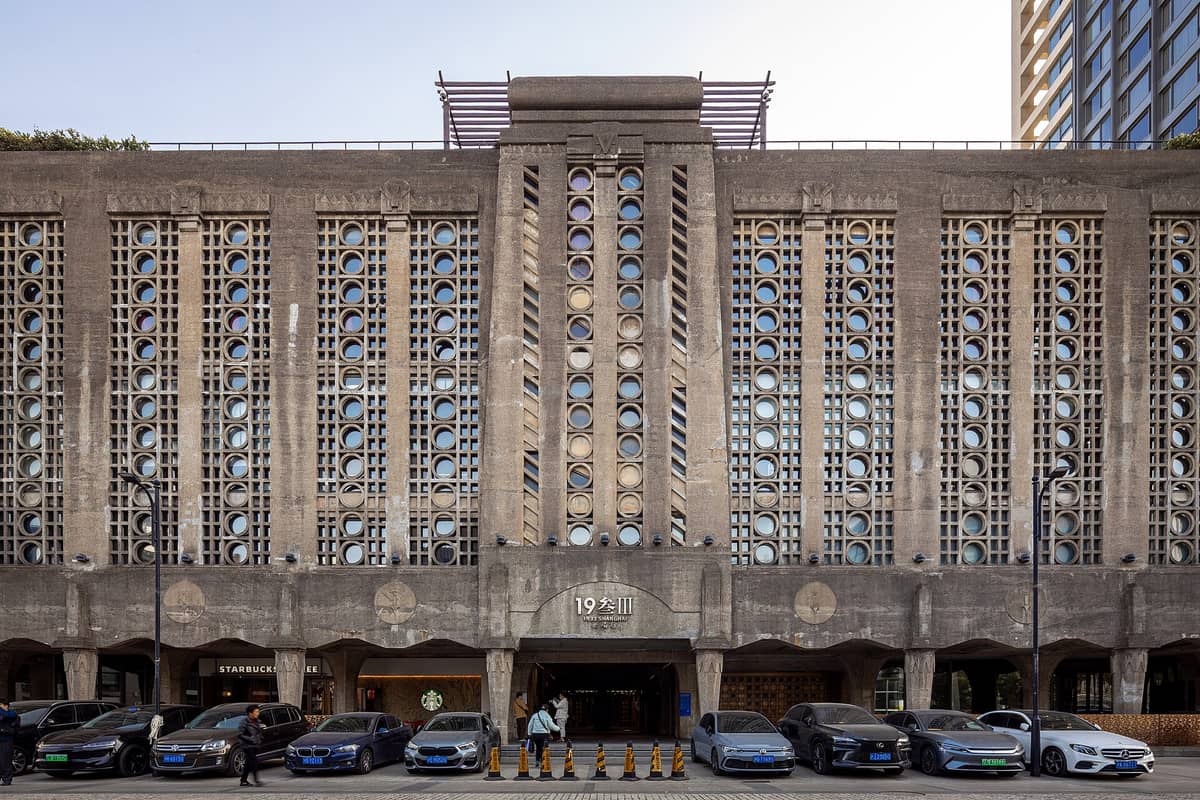
1933 Old Millfun (上海1933老场坊) is a former municipal slaughterhouse in Shanghai's Hongkou District that has been converted into a creative complex of shops, cafes, galleries, and event spaces. Completed in 1933, the building was designed in reinforced concrete with an unusually sophisticated spatial logic for an industrial facility: a maze of spiraling ramps, sky bridges, and multi-level platforms that allowed livestock to be moved through the structure without bottlenecks. Today, those same ramps and walkways give the building its distinctive character and make it one of the most photographed interior spaces in Shanghai.
The name 'Old Millfun' is a transliteration of the Chinese name 老场坊, which roughly means 'old factory grounds'. General admission to the complex is free, though specific exhibitions or events hosted inside may carry their own entrance fees. The building is open daily, roughly 09:00 to late evening, though individual shops and tenants often keep shorter hours.
💡 Local tip
Arrive between 10:00 and 12:00 on a weekday for the best light inside the atrium and the fewest crowds. The concrete ramps and central open shaft catch diffuse natural light in the mid-morning that photographers specifically target.
The Architecture: Why This Building Stands Apart
Few repurposed industrial buildings in China retain as much of their original structural drama as 1933 Old Millfun. The exterior is a solid, almost monolithic block of concrete with small circular windows arranged in repeating patterns along the facade. It reads as austere from the street, which makes the interior all the more disorienting when you first step inside.
The interior is organized around a central atrium that rises through multiple floors. Wide concrete ramps spiral upward around the perimeter, connected at intervals by narrow bridges that cross the open core. The spatial arrangement is often described as Brutalist, though it predates the Brutalist movement proper. The design prioritized function: livestock entered at one level, moved through the ramps and bridges as they progressed through the facility, and never crossed paths with workers or each other in ways that would cause panic. Understanding this original logic gives the space an added layer of interest that pure architecture tourism sometimes misses.
The building's condition is generally well-maintained, with the concrete cleaned and the structural elements preserved rather than cosmetically altered. For travelers interested in how industrial heritage gets adapted, 1933 Old Millfun sits alongside spaces like the Power Station of Art and the M50 Creative Park as examples of Shanghai's approach to keeping significant structures in active use rather than demolishing them.
Tickets & tours
Hand-picked options from our booking partner. Prices are indicative; availability and final rates are confirmed when you complete your booking.
Shanghai city and Zhujiajiao water town private tour with lunch
From 371 €Instant confirmationFree cancellationShanghai private tour with iconic landmarks of the old and new city
From 284 €Instant confirmationFree cancellationShangai Yuyuan Garden entrance tickets
From 9 €Instant confirmationFree cancellation
How the Experience Changes Through the Day
In the morning, the building is quieter and the light entering the atrium from above has a pale, clean quality that works particularly well for photographs. The ramps are largely empty, which lets you appreciate the geometry without navigating crowds. A few cafe tenants open early, but many shops don't raise their shutters until around 11:00 or later.
By early afternoon the complex picks up visitors, a mix of locals browsing the shops, students from nearby universities, and tourists working through a Hongkou itinerary. The central atrium becomes a natural gathering point. Sound bounces off the concrete in an interesting way: conversations from several floors up are audible below, giving the space a low, continuous hum even when it isn't crowded.
Evenings bring a different atmosphere. The complex is lit artificially after dark, and the interplay of light and shadow on the concrete ramps becomes more dramatic. Some events, pop-up markets, or art installations run specifically in the evening hours. If you're in Hongkou after dark, the building is worth a second look for how different it reads compared to daytime. The surrounding streets are quiet and residential, which amplifies the sense that you've found something slightly unexpected.
ℹ️ Good to know
Individual shops and galleries inside the complex set their own hours. If you're visiting specifically for a restaurant, cafe, or exhibition, confirm their schedule directly before you go. The building itself is open until around late evening, but the tenant mix thins out earlier.
Getting There and Getting Around Hongkou
The most straightforward approach is Metro Lines 4 or 10 to Hailun Road Station (海伦路站). Take Exit 3 and walk approximately 650 meters north along Liyang Road. The walk takes around 10 minutes and passes through a residential stretch of Hongkou that gives a reasonable sense of the neighborhood before you arrive. The address is 611 Liyang Road (溧阳路611号).
Several bus lines also stop near the complex on Liyang Road and Zhoujiazui Road, including routes 6, 13, 25, 145, 220, 308, and others, though for most visitors the metro is simpler. Hongkou is not one of Shanghai's most-visited districts, but it rewards the effort. The North Bund and the Shanghai Jewish Refugees Museum are both within reasonable distance, making a half-day Hongkou route feasible.
Accessibility is relatively good for a historic building of this age. Ramps and elevators allow wheelchair users to navigate most of the complex, though some individual tenant spaces on upper floors may have steps. The broad concrete ramps that were originally built for livestock movement now function, with some irony, as the most accessible circulation path in the building.
What to Expect Inside: The Tenants and the Atmosphere
The tenant mix at 1933 Old Millfun has shifted over the years and continues to evolve. At various points the building has housed fashion boutiques, design studios, dining spaces, art galleries, a veterinary clinic (a reference to the building's original function), and event venues. The combination is not always perfectly curated and the commercial occupancy rate can vary, meaning you may find some floors quieter or more sparsely occupied than others. This is worth knowing in advance: 1933 Old Millfun is primarily an architectural experience, and the shops and cafes are secondary to that.
The smell of coffee tends to drift through the atrium from whichever cafe is operating on the ground floor, mixing with the faint mineral odor of old concrete. If you run your hand along the ramp walls, the surface is rough and slightly gritty, the unfinished texture of 1930s industrial construction rather than the smooth pour of contemporary concrete. These small sensory details are part of what makes the building feel genuinely old rather than cosmetically aged.
Photography is effectively unrestricted in the common areas. The central atrium shot looking up through the spiraling ramps is the image most associated with this building, and for good reason: it's genuinely striking. But the bridge connections between levels, the small circular windows with their geometric frames, and the exterior facade at dusk all offer strong compositions that are less frequently reproduced.
Honest Assessment: Who Will Love This, and Who Might Not
Travelers who prioritize architectural interest, photography, or design history will find 1933 Old Millfun genuinely worthwhile. It is one of the few places in Shanghai where a pre-war industrial interior has been preserved with enough integrity to feel substantive rather than decorative. Combined with the broader architectural richness of Shanghai, it fits naturally into an itinerary built around the city's layered building history.
That said, visitors expecting a polished tourist attraction with clear signage, consistent English-language interpretation, and a full schedule of exhibitions will likely be underwhelmed. The building is the draw, not a program built around it. On slower days, some floors feel closer to an underoccupied commercial building than a curated cultural destination. If your time in Shanghai is limited and you're prioritizing experiences with guaranteed content, this may not compete with the city's major museums or river views.
Visitors primarily interested in shopping or food have better options elsewhere. Tianzifang and Xintiandi both offer more consistent retail and dining experiences, though without the architectural context that makes 1933 Old Millfun distinctive.
⚠️ What to skip
The building can feel sparse if you visit on a weekday morning before tenants open. If the architecture alone doesn't interest you, consider timing your visit to coincide with an event or market being hosted inside, which tends to activate the space more fully.
Practical Notes Before You Go
General entry is free. Bring a charged phone or camera. The best interior light is mid-morning. Comfortable shoes are useful since the ramps, while broad, have a slight gradient across every level. The building is open daily from morning into the evening (typically from around 09:00), though individual shops follow their own schedules.
Hongkou sits in the northeastern urban core of Shanghai, across the Suzhou Creek from the Bund area. It is one of the city's 16 districts and is less visited by tourists than the Former French Concession or Pudong, which works in the building's favor in terms of crowd levels. For a broader Hongkou orientation, the Hongkou and North Bund area connects multiple points of interest that can be covered in a half-day on foot or with short metro hops.
Weather affects the experience less than at outdoor attractions, since the building is largely interior. In summer, the concrete structure stays relatively cool in the lower levels, making it a reasonable refuge from Shanghai's humid heat. In winter, some areas may be unheated, so layering helps. The building does not close for rain, which makes it a useful option on wet days when outdoor sightseeing is less appealing.
Insider Tips
- The most-photographed shot inside the building is looking straight up through the atrium at the spiraling ramps and sky bridges. For the clearest version, visit on a bright day between 10:00 and 12:00 when natural light enters from above and reduces harsh shadows.
- Walk all the way up to the top level via the ramps rather than using the elevator. The changing perspectives as you ascend reveal details, angles, and the full scale of the space that the elevator skips entirely.
- Check whether any events, markets, or exhibitions are scheduled during your visit before you arrive. The building's social media accounts and local event listings in Shanghai occasionally announce pop-ups that make the complex feel considerably more active than on a standard weekday.
- The exterior facade is best photographed in the late afternoon when the low sun catches the circular windows and concrete texture. Most visitors walk straight in without pausing outside, so the exterior is usually crowd-free for photography.
- If the tenant mix looks thin on upper floors, don't turn back early. The upper-level bridges and the views down into the atrium are architectural highlights in themselves, regardless of what shops happen to be open.
Who Is 1933 Old Millfun For?
- Architecture and design enthusiasts who want to see an original 1930s industrial interior that hasn't been smoothed over
- Photographers looking for a strong interior subject with geometric depth and natural light
- Travelers building a Hongkou half-day itinerary around North Bund and nearby cultural sites
- Anyone seeking shelter from Shanghai's summer heat or rainy-day backup options
- Visitors interested in how Chinese cities approach industrial heritage and adaptive reuse
Nearby Attractions
Other things to see while in Hongkou & North Bund:
- North Bund Riverside
The North Bund Riverside is a roughly 2.5 km public promenade along the Huangpu River's north bank in Hongkou District. Free to enter and far less crowded than the Bund opposite, it offers some of Shanghai's most photogenic views of the historic waterfront and Pudong skyline from an angle most visitors never see.
- Shanghai Jewish Refugees Museum
Set inside the historic Ohel Moshe Synagogue in Hongkou District, the Shanghai Jewish Refugees Museum tells one of World War II's most extraordinary stories: how Shanghai became a refuge for roughly 20,000 European Jews when nearly every other door in the world was closed. It is a small museum with an outsized emotional weight.