Griffintown
Griffintown is a rapidly redeveloped former industrial district southwest of downtown Montreal, where converted warehouses and glass condos now line the edges of the Lachine Canal. Once the heart of Montreal's Irish immigrant working class, it retains traces of its gritty past while drawing a new generation of residents, restaurants, and cyclists.
Located in Montreal
Overview
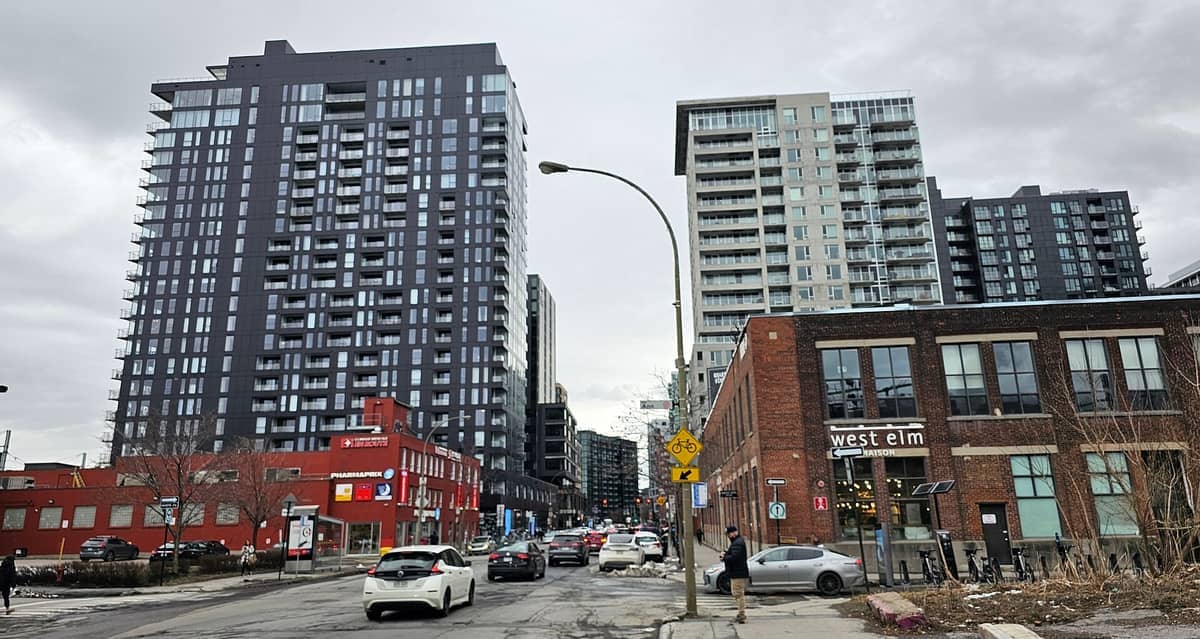
Griffintown sits at an unusual crossroads: old enough to carry real history, new enough that construction cranes are still part of the skyline. It is one of the most dramatically transformed neighborhoods in Montreal, and one of the most instructive places to understand how the city is reinventing itself.
Orientation
Griffintown occupies a compact wedge of land southwest of downtown Montreal. Its boundaries are defined by the Bonaventure Expressway to the east, Notre-Dame Street West to the north, des Seigneurs Street to the west, and the Lachine Canal to the south. On a map, it reads as a rough triangle, pressed between the city's commercial core and the waterway that once powered its industrial economy.
Its position makes it genuinely walkable from several of Montreal's most-visited areas. Old MontrealThe Lachine Canal is a 15-minute walk to the east, following the curve of Wellington Street or cutting through the waterfront. Downtown MontrealOld Montreal is equally close to the north, accessible in under 20 minutes on foot via de la Montagne or Guy Street. The Lachine Canal runs along the southern edge and functions as both a boundary and an entry point into the neighborhood.
The internal layout of Griffintown is straightforward. Wellington Street is the main commercial corridor, running roughly east-west through the middle of the district. To the north, Notre-Dame Street carries heavier traffic and is less pedestrian-friendly. The blocks closest to the canal are quieter and increasingly lined with new residential towers, while the streets near the Bonaventure Expressway feel more industrial and transitional.
Character and Atmosphere
In the morning, Griffintown has the energy of a neighborhood that knows it is still figuring itself out. Coffee shops and breakfast spots on Wellington Street fill early with the kind of young professional crowd that moved into the new condos over the past decade. The light at this hour catches the red brick of surviving warehouse facades, and for a moment the older city is visible beneath the new construction.
By mid-afternoon, the canal path draws cyclists and joggers moving between the Old Port and the western stretches of the waterway. The waterfront side of Griffintown is noticeably calmer than Wellington Street, which carries delivery trucks alongside restaurant terrasses and pop-up retail. The contrast between the two axes, separated by only a few blocks, is one of the more interesting things about walking the neighborhood.
After dark, Griffintown concentrates around its restaurants and a small number of bars. It is not a nightlife district in the way that the Gay Village or Plateau-Mont-Royal are, and the streets away from Wellington can feel quiet, even empty, once the dinner crowd disperses. The neighborhood is safe by all reasonable measures, but its incomplete development means some blocks have more construction hoardings than lit storefronts, which gives parts of it an unfinished quality after 10 pm.
⚠️ What to skip
Construction is an ongoing reality in Griffintown. Pedestrian routes can be disrupted without much notice, and sidewalks near active building sites may be rerouted or closed. Build extra time into any walking itinerary if you are navigating the neighborhood for the first time.
The soul of Griffintown is contested, which is part of what makes it worth paying attention to. Heritage advocates have long argued that the pace of redevelopment erased too much of the physical fabric associated with the Irish-Canadian community that built this district in the 19th century. What remains, the former site of the Griffintown Horse Palace, a handful of surviving brick industrial structures, and the canal itself, sits in sharp visual tension with the glass towers rising alongside it.
What to See and Do
The most essential experience in Griffintown is the Lachine Canal, which runs along the southern boundary of the neighborhood. The canal was built in the 1820s to allow boats to bypass the Lachine Rapids and was central to Montreal's emergence as an industrial city. It was closed to commercial navigation in 1970 and reopened for recreational boating in 2002 as part of the Lachine Canal National Historic Site. Today the multi-use path along its banks is one of the best cycling routes in the city, connecting Griffintown to the Old Port in the east and to the Atwater Market and the borough of LaSalle in the west.
The Atwater Market sits at the western end of the canal within easy reach of Griffintown. It is a covered public market with a strong year-round offering of local produce, butchers, cheesemongers, and specialty food vendors. On weekday mornings it is a working market; on weekends it draws a broader crowd. It is one of the better places in the city to put together a picnic before cycling back along the canal path.
The Griffintown Horse Palace, on Ottawa Street, is one of the last standing structures directly connected to the neighborhood's industrial past. Built in the early 20th century to house the horses used by local delivery firms, it has been designated a heritage building and has gone through various adaptation proposals. Its exterior alone is worth a look as a counterpoint to everything being built around it.
Griffintown is also a productive area for street art, with several large-scale murals on warehouse walls and construction hoardings. If that interests you, the Montreal street art guide covers the broader context and the city's best concentrations of public murals. The Peel Basin, where the canal meets the Old Port, is worth a walk even if you just want water views without the crowds of the main waterfront.
- Cycling or walking the Lachine Canal path from Griffintown to the Old Port
- Shopping at Atwater Market for local food and produce
- Exploring Wellington Street's restaurant and café strip
- Viewing the Griffintown Horse Palace and surviving heritage facades on Ottawa Street
- Kayaking or paddleboarding on the Peel Basin in summer
Eating and Drinking
The food scene in Griffintown has developed quickly, pulled along by the wave of young residents and professionals who moved into the new condo towers over the past decade. Wellington Street is the core of it, with a concentration of restaurants, cafés, and a handful of bars within a few walkable blocks. The range covers casual lunch spots, brunch destinations that get busy on weekends, and more composed dinner options.
The cuisine tends toward the contemporary and international rather than any single regional specialty. You will find Italian-influenced spots, North American comfort food with local sourcing, and several cafés serious enough about coffee to draw people from other neighborhoods. Price points sit mostly in the mid-range, though there are both quick, affordable options and a few more expensive dinner restaurants targeting the wealthier end of the condo market.
For a broader picture of where Griffintown fits into Montreal's overall food geography, the where to eat in Montreal guide gives useful context. If you are specifically interested in classic Montreal food culture, the neighborhood is a short walk or bike ride from the Atwater Market, which provides a better concentration of local food traditions than anything on Wellington Street itself.
💡 Local tip
If you are cycling the canal on a weekend, stop at Atwater Market before heading into Griffintown rather than after. The market is busiest in the late morning, and you can pick up supplies before the brunch rush hits Wellington Street.
Bars in Griffintown are modest in number and generally low-key in character. There is no concentrated nightlife strip. A few spots on Wellington attract an after-work crowd from the offices and condos, but the neighborhood empties out earlier than the Plateau or the Village. If evening entertainment is a priority, you are better placed in a different part of the city.
Getting There and Around
Griffintown is not directly served by a metro station, which is one of the practical disadvantages of staying or spending extended time in the neighborhood. The three closest metro stations are Square-Victoria-OACI on the Orange Line, Bonaventure on the Orange Line, and Guy-Concordia on the Green Line. Walking time from any of these to the interior of Griffintown is roughly 10 to 20 minutes depending on your starting point within the neighborhood.
The STM Route 35 Griffintown bus provides service through the neighborhood, including stops along Notre-Dame, de la Montagne, and Wellington streets. It connects Griffintown with Place-Saint-Henri and Place-des-Arts, making it a useful public transit option for trips between the neighborhood, downtown, and adjacent districts. For general transit planning in Montreal, the getting around Montreal guide covers the metro, bus, and cycling network in detail.
Cycling is genuinely the best way to get around Griffintown and to connect it to surrounding neighborhoods. The Lachine Canal path provides a safe, car-free route to the Old Port and downtown. BIXI, Montreal's public bike-share system, has docking stations throughout the neighborhood and is a practical option for short trips. In good weather, the combination of BIXI and the canal path makes a car entirely unnecessary for most visitors.
For those arriving by car, parking is available but the situation around active construction zones can be confusing. Notre-Dame Street and the Bonaventure Expressway both carry significant traffic, and the area around the expressway interchange is not pedestrian-friendly. If you are driving in from outside the city, leaving the car near a downtown hotel and walking or cycling to Griffintown is more practical than driving directly into the neighborhood.
ℹ️ Good to know
BIXI bike-share operates seasonally, typically from mid-April through November. Outside those months, the canal path is still walkable in good conditions, but cycling connections to the rest of the city are less convenient. Verify the current BIXI season before planning a cycling-based itinerary.
Where to Stay
Hotel development in Griffintown has followed the broader residential boom, and there are now several accommodation options within the neighborhood itself, ranging from boutique hotels to design-forward properties that have converted or incorporated existing industrial structures. These tend to appeal to travelers who want a quieter, more residential experience than the hotels of the Old Montreal waterfront or downtown core provide.
The question of whether Griffintown is the right base depends heavily on how you plan to spend your time. It is a good location for travelers focused on the Lachine Canal, cycling, and the Atwater Market, and it is close enough to Old Montreal to walk there comfortably. It is less convenient for those planning heavy use of the metro network, attending events at Bell Centre regularly, or spending significant time in neighborhoods like the Plateau or Mile End, which require transit transfers. For a full comparison of where to base yourself in the city, the where to stay in Montreal guide lays out the tradeoffs by neighborhood.
If you do stay in Griffintown, aim for accommodation on or near Wellington Street rather than the blocks closest to the Bonaventure Expressway, which carry highway noise. The canal-side blocks are generally the most pleasant but can also be the most exposed to construction activity depending on the development cycle at the time of your visit.
History and Context
Understanding Griffintown requires knowing that it was not always a neighborhood on the edge of things. Through the 19th and early 20th centuries, it was one of the most densely populated industrial districts in Canada. Irish immigrants, many of them arriving after the famine of the 1840s, settled here in large numbers and built a tight-knit working-class community around the factories, foundries, and canal-side warehouses that defined the area.
The decline came gradually after World War II and accelerated with the closure of the Lachine Canal to commercial navigation in 1970. Industry relocated, residents left, and Griffintown spent several decades as one of the more desolate parts of inner-city Montreal: warehouses vacant, lots empty, the Irish community largely dispersed to the suburbs. By the early 2000s the population had shrunk dramatically from its 19th-century peak.
The redevelopment of the past 15 years has been fast and, critics argue, insufficiently sensitive to what came before. Heritage structures were demolished, and the replacement towers, dense and largely anonymous in their architecture, have created a neighborhood that looks newer than almost anywhere else in the city. The canal's reinvention as a recreational corridor, part of the Lachine Canal National Historic Site, was the anchor that made Griffintown attractive to developers and residents again. The tension between that recovery and the loss of physical heritage is still legible on the streets if you know what to look for.
TL;DR
- Griffintown is a post-industrial neighborhood in rapid transition, ideal for travelers interested in urban transformation, canal-side cycling, and proximity to both Old Montreal and downtown.
- The Lachine Canal is the neighborhood's defining asset: a multi-use recreational corridor connecting Griffintown to the Old Port in the east and the Atwater Market to the west.
- There is no metro station in the neighborhood. Route 35 and BIXI cycling are practical local transit options.
- The food and bar scene on Wellington Street is solid but modest in scale. This is not a nightlife destination, and the neighborhood quiets down early compared to the Plateau or the Village.
- Best suited to cyclists, canalside walkers, and travelers who want a quieter residential feel close to the historic core. Less suited to those relying heavily on the metro or seeking concentrated evening entertainment.
Related Travel Guides
- Best Markets in Montreal: Food, Flea & Farmers Markets
Montreal's market scene spans grand Art Deco food halls, open-air farmers markets in Little Italy, historic covered bazaars in Old Montreal, and lively Sunday flea markets at the foot of Mount Royal. This guide covers the best of all of them.
- The Best Museums in Montreal: Art, History, Science & More
Montreal delivers more than its size suggests as a museum city. This guide covers the finest institutions across fine art, social history, archaeology, architecture, and science, with practical details to help you plan your visit.
- Best Time to Visit Montreal: A Season-by-Season Breakdown
Montreal rewards visitors in every season, but the right time to go depends entirely on what you want from the city. This guide breaks down the weather, festivals, crowds, and trade-offs for each season so you can plan with confidence.
- Best Views in Montreal: Rooftops, Lookouts & Skyline Spots
Montreal rewards those who look up and out. Whether you climb to the Kondiaronk Belvedere at golden hour, ride the Grande Roue above the Old Port, or scale the Olympic Tower's inclined funicular, the city offers skyline perspectives that are genuinely worth seeking out. This guide covers the best viewpoints at every elevation, from free hilltop terraces to paid observation decks.
- Best Day Trips from Montreal: Nature, Villages & Wilderness Escapes
Montreal is an island city with extraordinary escapes on its doorstep. Whether you want alpine trails, freshwater beaches, wine country, or wildlife encounters, these are the best day trips from Montreal for every season and travel style.
- Free Things to Do in Montreal: 20 Ways to Explore the City Without Spending a Cent
Montreal is one of North America's most culturally rich cities, and you don't need to spend much to experience it. From mountaintop panoramas to historic churches, Sunday drum circles, and world-class art, this guide covers the best free things to do in Montreal across every season.
- Getting Around Montreal: Metro, Bikes & Transport Guide
Montreal is one of North America's most navigable cities, with a reliable metro, an extensive bus network, and a serious cycling culture. This guide covers every way to move around the city, from airport arrivals to cross-neighborhood cycling, with accurate fares and practical logistics.
- Getting to Montreal: Flights, Trains, Buses & Driving Options
Montreal is well connected by air, rail, road, and bus. This guide breaks down every practical option for getting to Montreal, from booking flights to YUL to taking VIA Rail or an intercity bus, including costs, logistics, and what to watch out for.
- Is Montreal Worth Visiting? What You Need to Know Before You Go
Montreal is one of North America's most distinctive cities: French-speaking, architecturally rich, food-obsessed, and genuinely alive in every season. This guide cuts through the hype and gives you the real picture — including what doesn't live up to expectations.
- Montreal Airport (YUL): How to Get To and From the City
Montréal-Trudeau International Airport (YUL) is the main gateway into Montreal, located about 20 km west of downtown. This guide breaks down every transport option, including real costs, journey times, and practical tips for arriving and departing stress-free.
- Montreal Architecture Guide: From Old Montreal to Olympic Park
Montreal is one of North America's most architecturally diverse cities, layering French colonial stonework, Gothic Revival grandeur, early 20th-century Beaux-Arts institutions, and modernist experiments across its neighborhoods. This guide walks you through the key eras, districts, and buildings worth your time, with practical transit advice for moving between them.
- Montreal Bagels: The Complete Guide to the City's Best Bakeries
Montreal bagels are in a category of their own: hand-rolled, boiled in honey water, and baked in wood-fired ovens until golden and slightly chewy. This guide covers what makes them distinct, the legendary Fairmount vs St-Viateur debate, where to find the best ones, and everything else a first-timer or returning visitor needs to know.
- Beaches Near Montreal: Where to Swim and Sunbathe in Summer
Montreal is an island city, and in summer it takes full advantage of that fact. From supervised urban beaches with skyline views to freshwater shores inside national parks, here are the best places to swim, sunbathe, and cool off near Montreal.
- Montreal Canadiens: How to Watch a Game and Experience NHL Hockey in Montreal
Attending a Montreal Canadiens game at the Bell Centre is one of the most intense sporting experiences in North America. This guide covers everything you need to know: how to find tickets, read the schedule, check standings, get to the arena, and make the most of game night in Montreal.
- Cycling in Montreal: Best Bike Routes & BIXI Guide
Montreal has one of North America's most developed urban cycling networks, with over 1,000 km of paths, a mature bike-share system, and routes that connect historic waterfront districts to leafy residential neighborhoods. This guide covers BIXI pricing, the best routes by experience level, seasonal logistics, and what to watch out for before you clip in.
- Montreal Festivals: Complete Guide to the Best Events
Montreal earns its reputation as Canada's festival capital every summer, when the Quartier des Spectacles, Parc Jean-Drapeau, and the city's streets fill with music, circus arts, fireworks, and outdoor gatherings. This guide covers the venues, neighborhoods, and attractions that make Montreal's festival calendar tick — from free outdoor stages to world-class arena shows.
- First Time in Montreal: Everything You Need to Know
Montreal is one of North America's most distinctive cities, with a French-speaking culture, four dramatic seasons, world-class food, and a calendar packed with festivals. This guide covers everything a first-time visitor needs: how to get in, where to go, what to eat, and how to avoid the common mistakes.
- Romantic Montreal: The Best Things to Do for Couples
Montreal earns its romantic reputation through a combination of European-style architecture, world-class dining, and genuinely varied outdoor experiences that work in every season. This guide covers the best couple-friendly activities across the city, from the Old Port waterfront to Mount Royal's summit viewpoints, with practical tips on what's worth booking in advance.
- Montreal Grand Prix: The Complete F1 Weekend Guide for Visitors
The Canadian Grand Prix is one of Formula 1's most celebrated stops, and Montreal delivers a race weekend unlike any other. This guide covers tickets, getting to the circuit, accommodation strategy, and everything else you need to make the most of the event.
- Hidden Gems in Montreal: Off the Beaten Path Experiences
Montreal rewards curious travelers who look beyond the obvious. From a community museum inside an Art Deco bathhouse to a living history farm in Pointe-Saint-Charles, these under-the-radar experiences reveal the city's deeper character. Here are the local favorites and overlooked spots worth seeking out.
- Montreal in Summer: Festivals, Outdoor Activities & Practical Tips
Montreal transforms in summer, packing months of world-class festivals, outdoor markets, cycling routes, and park culture into a brief but intense warm season. This guide covers what to expect, what to prioritize, and what to skip across June, July, and August.
- Montreal in Winter: What to Expect & the Best Things to Do
Montreal in winter is one of North America's most underrated cold-weather experiences. From illuminated skating rinks to world-class museums and legendary winter festivals, this guide covers what to expect, what to wear, and exactly how to make the most of the season from November through March.
- 3 Days in Montreal: The Perfect Itinerary
Three days is enough time to cover Montreal's historic core, its best neighborhoods, and its signature food culture — if you plan it right. This itinerary is built around walkable clusters, smart transit use, and practical tips on what's worth your time.
- Montreal Jazz Festival 2026: Tickets, Lineup & What to Expect
The Montreal International Jazz Festival runs June 25 to July 4, 2026, with over 350 concerts across Quartier des Spectacles. Most outdoor shows are completely free. Here's how to navigate the 46th edition like a local.
- LGBTQ+ Montreal: The Complete Gay Village & Queer Travel Guide
Montreal has one of North America's most celebrated LGBTQ+ scenes, anchored by the Gay Village on Sainte-Catherine Street East and spread across some of the city's most interesting neighborhoods. This guide covers everything from Pride 2026 dates and Village bar culture to year-round queer travel tips, practical logistics, and what to know before you arrive.
- Montreal Neighborhoods: A Guide to the City's Best Areas
Montreal is not a city you can understand from one neighborhood. From the cobblestones of Old Montreal to the spiral staircases of the Plateau and the repurposed warehouses of Griffintown, each district has a distinct character, crowd, and pace. This guide breaks down the city's key areas so you can match your trip to the right base.
- Montreal Nightlife: Best Bars, Clubs & Live Music Guide
Montreal's nightlife runs deep, from jazz bars in the Plateau to underground clubs in the Quartier des Spectacles and rooftop terraces in Old Montreal. This guide covers the best venues by neighborhood, practical transit tips, seasonal advice, and what to skip.
- Montreal on a Budget: How to Visit Without Breaking the Bank
Montreal is one of North America's most rewarding cities for budget travelers. From free outdoor landmarks to heavily discounted museum nights, this guide breaks down exactly where your money goes further and where it disappears fast.
- Best Poutine in Montreal: Where to Eat Quebec's Iconic Dish
Poutine is Quebec's most exported food idea, but eating the best version requires knowing where to go, what to order, and what to avoid. This guide covers the top spots in Montreal, the dish's real origins, and practical advice for first-timers and repeat visitors alike.
- Shopping in Montreal: Best Streets, Malls & Boutiques
Montreal is one of Canada's top shopping destinations, blending major retail corridors with independent boutiques, covered malls, and a remarkable underground network. This guide breaks down where to shop, what to expect, and how to avoid wasting time on the wrong streets.
- Montreal Smoked Meat: Where to Find the Best Sandwiches
Montreal smoked meat is one of Canada's most iconic deli traditions, and eating it well requires knowing where to go, how to order, and what to expect. This guide covers the history, the best delis, ordering tips, and clear takes on the city's most celebrated sandwich.
- Montreal Street Art: Best Murals & Urban Art Walks
Montreal has one of the most concentrated outdoor mural collections in North America, spread across distinct neighborhoods from the Plateau to Griffintown. This guide covers where to find the best street art, how to walk or cycle the top routes, what to expect at the MURAL Festival, and how to get the most from the city's public art scene year-round.
- National Bank Open Montreal: The Complete Guide to Attending the Tournament
The National Bank Open is one of the top tennis tournaments in North America, held each summer at IGA Stadium in Montreal's Jarry Park. This guide covers tickets, venue logistics, session timing, transport, and what to expect on site — so you can focus on the tennis.
- Best Walking Tours & Self-Guided Walks in Montreal
Montreal is one of North America's most walkable cities, with historic cobblestone streets, forested hilltops, canal-side paths, and distinct neighborhoods that reward exploring on foot. This guide covers the best guided tours and self-guided walks across the city, from Old Montreal's 17th-century architecture to the Lachine Canal waterfront.
- Montreal Winter Festivals: Igloofest, Fête des Neiges & More
Montreal doesn't hibernate in winter. From outdoor electronic music at Igloofest to the giant snow playground of Fête des Neiges and the all-night Nuit blanche, the city turns its coldest months into a full calendar of events. Here's how to make the most of it.
- Montreal with Kids: The Complete Family Activity Guide
From the Biodôme to the Old Port, Montreal is one of Canada's most rewarding cities for families. This guide covers the best kid-friendly attractions, honest admission costs, STM transit rules for children, and practical advice for every season.
- Best Things to Do in Montreal: The Definitive Guide
Montreal is one of North America's most rewarding cities to explore, with a genuinely distinct French-speaking culture, world-class food, and a calendar packed with festivals. This guide covers the top things to do in Montreal Canada, organized by category, with practical details on costs, timing, and what to skip.
- What to Eat in Montreal: Essential Foods & Local Dishes
Montreal has one of the most distinctive food cultures in North America, shaped by French-Canadian tradition, Jewish deli heritage, Portuguese immigration, and a relentless local obsession with quality ingredients. This guide covers the essential dishes, where to find them, and how to eat like someone who actually lives here.
- Where to Eat in Montreal: Best Restaurants & Food Districts
Montreal's food scene is one of the most distinctive in North America, shaped by French culinary tradition, Jewish deli culture, Italian immigration, and a relentless wave of independent restaurants. This guide breaks down the best places to eat in Montreal by neighborhood, food type, and budget, with clear takes on what's worth your time and what to skip.
- Where to Stay in Montreal: Best Neighborhoods & Hotels Guide
Choosing where to stay in Montreal shapes your entire trip. This guide breaks down every major neighborhood by character, convenience, and price range — so you can pick the right base before you book a single hotel room.