Montreal Airport (YUL): How to Get To and From the City
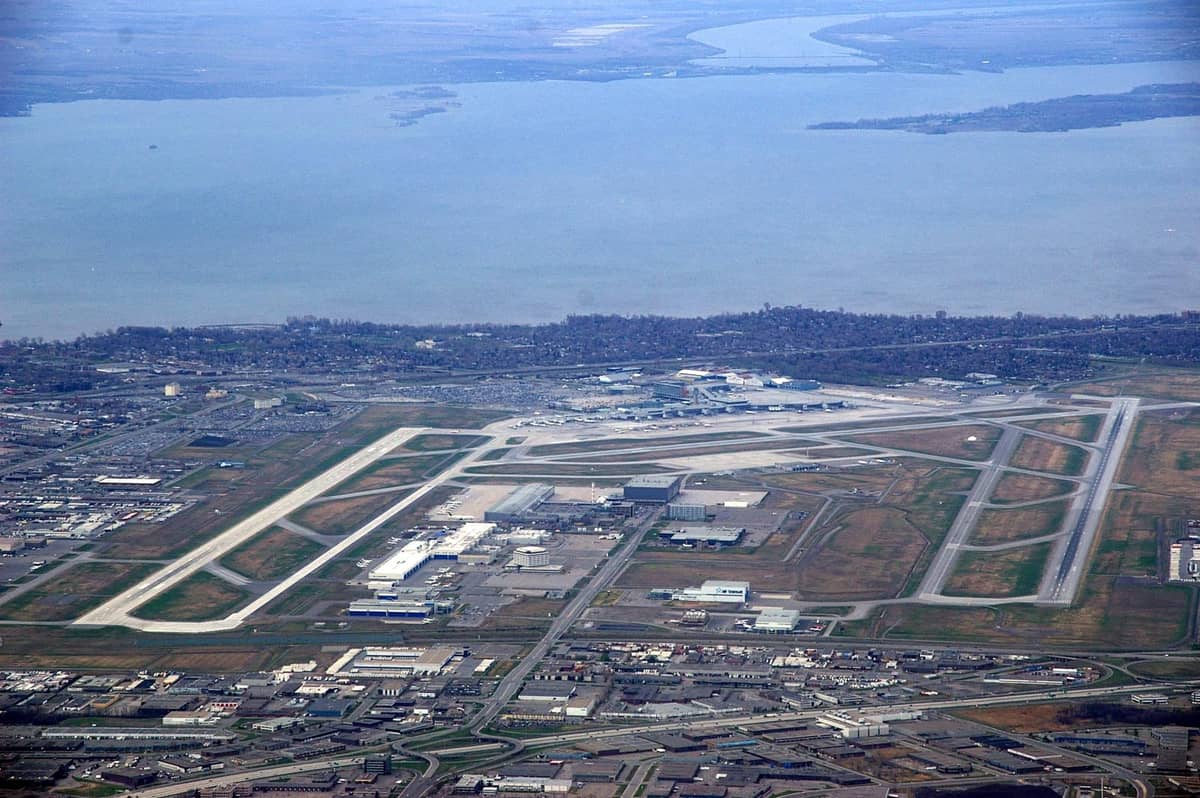
Montréal-Trudeau International Airport (YUL) is the main gateway into Montreal, located about 20 km west of downtown. This guide breaks down every transport option, including real costs, journey times, and practical tips for arriving and departing stress-free.
Plan and book this trip
Tools from our partner Travelpayouts help you compare flights and hotels. If you book through them, we may earn a commission at no extra cost to you.
Flights
Hotels map
TL;DR
- Montreal's main airport is Montréal-Pierre Elliott Trudeau International Airport, airport code YUL, about 20 km from downtown.
- The STM 747 bus runs 24/7 between YUL and downtown for C$11.25, including a 24-hour Zone A transit pass — the best value option for most travelers heading to downtown Montreal.
- Taxis cost C$49.45 fixed rate to downtown (5am–11pm) or C$56.70 overnight — convenient but not cheap.
- Uber and ride-hailing apps work at YUL; prices fluctuate with demand, especially during peak hours and winter weather.
- Car rental is available on-site, but driving into central Montreal adds parking costs and traffic headaches — consider whether you actually need a car.
YUL: What You Need to Know Before You Land
Montréal-Pierre Elliott Trudeau International Airport — universally known by its IATA code YUL — is the only commercial international airport serving Montreal. It sits in the borough of Saint-Laurent, roughly 20 km west of the city centre. Despite its size, it's a manageable airport: two connected terminals (the international and domestic areas are integrated), clear signage in both French and English, and relatively quick baggage claim times compared to major North American hubs.
The airport is operated by ADM Aéroports de Montréal. It serves passengers on direct routes connecting Montreal to destinations across North America, Europe, the Caribbean, and beyond. If you're looking at a Montreal airport map, the terminal building runs roughly east-west, with the arrivals level on the ground floor and departures above. Car rental desks, taxi stands, and the 747 bus stop are all accessible from the arrivals level without needing to go outside through multiple buildings.
ℹ️ Good to know
Montreal has a second airport, Montréal-Mirabel International Airport (YMX), about 55 km northwest of the city. It no longer handles commercial passenger flights and is used primarily for cargo and aircraft maintenance. If your ticket says YUL, you're going to Trudeau. If it says YMX for a passenger flight, double-check your booking — something is wrong.
Option 1: The STM 747 Bus — Best Value by Far
The STM 747 is the airport express bus connecting YUL to downtown Montreal, and it runs 24 hours a day, seven days a week, every day of the year. Daytime frequency is roughly every 10 to 20 minutes. At night, departures thin out to around every 30 minutes, so it's worth checking the live STM schedule if you're arriving after midnight.
The fare is C$11.25 per person. That might sound steep for a bus, but it's actually a 24-hour Zone A transit pass, covering unlimited transfers across the STM metro and bus network, Exo commuter trains, and the REM light rail within Zone A. If you're planning to use transit at any point in your first 24 hours — and you likely will — the 747 ticket is already a deal before you count the airport leg.
- Airport departure point Door 28 on the arrivals level at YUL. Follow 'Bus 747' signs from baggage claim.
- Downtown stops Key stops include Lionel-Groulx métro station and the terminus at Berri-UQAM (stop 52905 on René-Lévesque Boulevard at Berri Street, from January 26, 2026).
- Payment at the airport Vending machines at door 28 accept cash, debit, Visa, and Mastercard. On board, the driver only accepts exact coins — buy your ticket at the machine before boarding.
- Journey time Around 45 to 70 minutes to downtown, depending on traffic. Longer during rush hour (7–9am and 4–7pm weekdays) and winter road conditions.
- Luggage Bring-on luggage is allowed but space is limited. During busy summer periods or holiday travel, a packed 747 with large suitcases is genuinely uncomfortable.
✨ Pro tip
The 747 stops at Lionel-Groulx before reaching Berri-UQAM. If your accommodation is in the western part of downtown or near the métro's Green or Orange lines, getting off at Lionel-Groulx and transferring can cut significant time off your journey. Check your hotel's nearest métro station before you board.
Option 2: Taxi — Predictable Cost, No Hassle
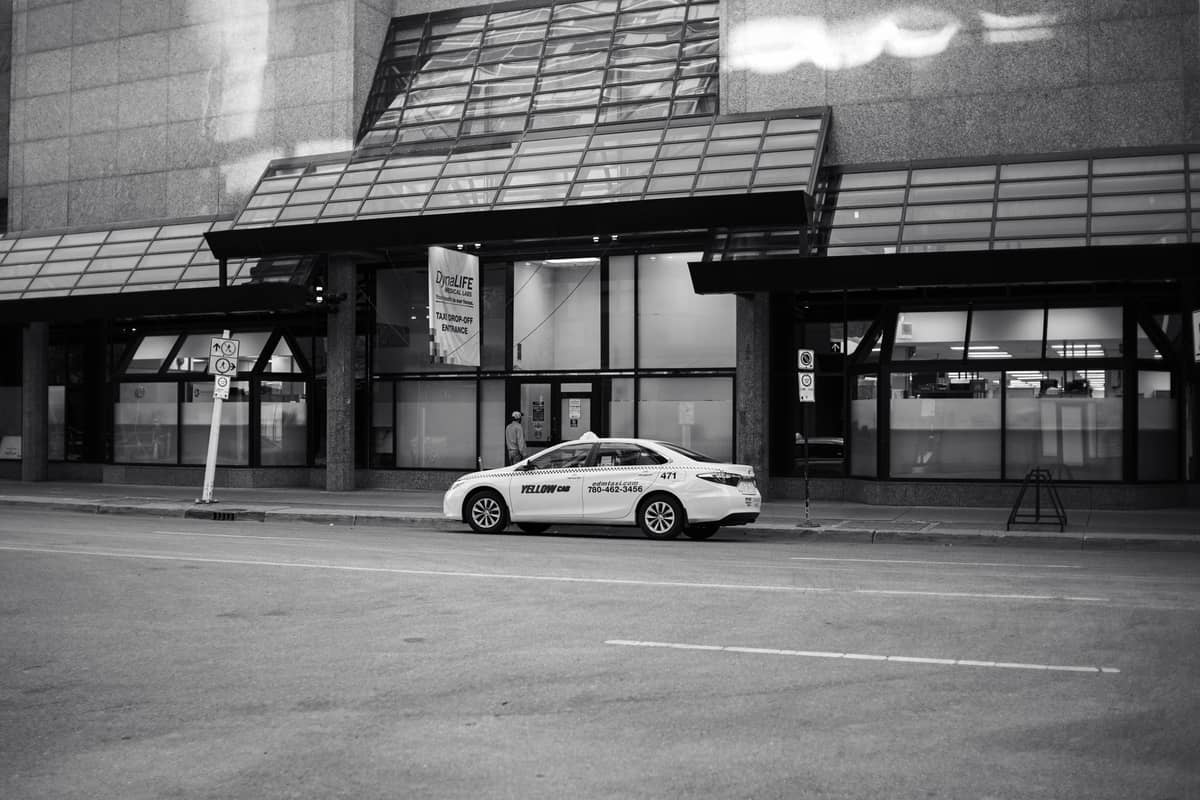
Taxis from YUL to downtown Montreal operate on a published fixed fare for destinations within the downtown zone; check the current fare posted by YUL or the Quebec transport authority before travel. If you’re heading somewhere outside that zone, the meter applies, and costs will vary by distance and time. These fares apply to destinations within the downtown zone. If you're heading somewhere outside that zone, the meter applies, and costs will vary by distance and time.
The fixed fare makes taxis genuinely useful for groups of three or four splitting the cost, travelers with lots of luggage, or arrivals late at night when the 747 runs infrequently. The taxi rank is at the arrivals level — follow signs from baggage claim. Expect a short queue during peak arrival times. The ride to central Montreal typically takes 25 to 45 minutes outside rush hour, but can stretch to an hour or more in heavy traffic.
⚠️ What to skip
Only use official, licensed taxis from the designated taxi rank at YUL. Drivers approaching you inside the terminal offering 'private rides' are operating outside regulated fare structures — avoid them. The official taxi fare is fixed and posted; no reputable driver should negotiate a different price for a downtown trip.
Option 3: Uber and Ride-Hailing
Uber operates at YUL and is a legitimate option. Pickup is from the designated ride-hailing zone on the arrivals level — check the app for the exact location, as these logistics sometimes shift. Pricing is surge-based, so a trip that costs C$35 on a quiet Tuesday afternoon might hit C$70 or more during a snowstorm or major event weekend. The fixed taxi fare can actually work out cheaper in those scenarios.
One practical advantage of Uber over a taxi: you can pre-book and track your driver, which reduces the stress of navigating an unfamiliar arrivals hall. For most travelers heading to Old Montreal or areas not well-served by the 747 route, ride-hailing offers a reasonable middle ground between transit and taxi costs.
Option 4: Car Rental — Useful Only If You Need It
Several major car rental companies operate at YUL, with desks accessible from the arrivals level. If you're planning day trips outside Montreal, renting a car makes practical sense. But for a city-only stay, a rental car is more burden than benefit: downtown parking costs add up fast, traffic during peak hours is real, and Montreal's public transit covers most of the city well.
If you do rent, factor in that Quebec requires winter tires from December 1 to March 15 — rental companies must legally provide them, but it's worth confirming at pickup. Road signage in Montreal and Quebec is in French, which catches some visitors off guard. And before renting, consider how much of your trip actually requires a car vs. how much you can cover by metro, bus, or bike. Montreal's cycling infrastructure is excellent in warmer months, and the STM metro reaches most major areas.
Practical Airport Logistics: What to Expect
YUL is an international airport with all the standard facilities: currency exchange, ATMs, duty-free shops, food options (limited quality, as is standard), and lounges. Canadian customs and border services are typically efficient, though international arrivals during peak periods — Saturday and Sunday mornings, summer weekends, holiday periods — can see waits of 30 to 60 minutes at passport control. Factor this into transport timing if you're catching a connection or meeting someone.
Montreal's climate matters for airport planning. Winter delays are real: snowstorms can affect both flight schedules and road travel times significantly. The 747 bus still operates, but a 45-minute ride can become 90 minutes on a bad weather day. Check the best time to visit Montreal if you have flexibility around your travel dates — winter travel is doable but requires more buffer time built into every logistics decision.
- Wi-Fi is free throughout YUL terminals — useful for checking your Uber app or STM schedules before exiting arrivals.
- ATMs are available at the airport, but exchange rates at airport currency booths are poor. Withdraw Canadian dollars from an ATM and pay the bank fee rather than exchanging at the counter.
- Luggage storage is not a standard YUL amenity — check with your airline or use a downtown luggage storage service if you need to leave bags before hotel check-in.
- The BIXI public bike-share program does not extend to YUL itself, but stations exist throughout downtown and many neighborhoods once you arrive.
- If traveling with children or extra mobility needs, the 747 bus has designated spaces and is accessible, but taxis or ride-hailing may be easier with significant luggage or strollers.
Entry requirements for Canada depend on your nationality. Travelers from visa-exempt countries flying into YUL generally need an Electronic Travel Authorization (eTA) — not a full visa, but a pre-travel approval linked to your passport. US citizens do not need an eTA but should carry valid documentation. Verify requirements at the Government of Canada's official site before booking. Once through customs, you're arriving in Quebec, where French is the official language — signs, menus, and official communications are in French first, though English is widely understood in Montreal and you'll have no practical difficulty navigating the city in English. From there, getting around Montreal is straightforward on transit.
💡 Local tip
For departures, arrive at YUL at least 2.5 hours before an international flight and 90 minutes before a domestic flight. Security queues during peak summer months and holiday weekends regularly catch underprepared travelers. The 747 to the airport is just as reliable as from it — buy your return ticket at any STM metro station before heading to the airport.
FAQ
What is the Montreal airport code?
Montreal's main international airport uses the IATA code YUL. The full official name is Montréal-Pierre Elliott Trudeau International Airport, operated by ADM Aéroports de Montréal. A second airport, Mirabel (YMX), exists northwest of the city but handles cargo only — no commercial passenger flights.
How long does it take to get from Montreal airport to downtown?
By the STM 747 bus, expect 45 to 70 minutes to central downtown, depending on traffic. By taxi or Uber, roughly 25 to 45 minutes outside rush hour, but up to an hour in heavy traffic. Journey times increase significantly during weekday peak hours (7–9am, 4–7pm) and in winter weather.
Is there a direct metro line from YUL to downtown Montreal?
No direct metro line connects YUL to downtown. The 747 express bus is the main public transit link, stopping at Lionel-Groulx métro station where you can connect to the Orange and Green metro lines. There is no REM station directly at the airport terminal as of 2026 — verify current REM expansion status before travel, as infrastructure projects evolve.
How much does the taxi from Montreal airport to downtown cost?
The regulated fare from YUL to the downtown zone is a published fixed fare; check the current fare posted by YUL or the Quebec transport authority before travel. Travel outside that zone is metered. Always use the official taxi rank at arrivals — do not accept offers from unlicensed drivers inside the terminal. These apply to destinations within the defined downtown area. Travel outside that zone is metered. Always use the official taxi rank at arrivals — do not accept offers from unlicensed drivers inside the terminal.
Where is the 747 bus stop at Montreal airport?
At YUL, the 747 bus departs from door 28 on the arrivals level. Follow 'Bus 747' signs from baggage claim. Buy your ticket at the vending machines near door 28 — they accept cash, debit, and major credit cards. The bus driver only accepts exact coins, so purchasing at the machine before boarding is essential.