Cycling in Montreal: Best Bike Routes & BIXI Guide
Montreal has one of North America's most developed urban cycling networks, with over 1,000 km of paths, a mature bike-share system, and routes that connect historic waterfront districts to leafy residential neighborhoods. This guide covers BIXI pricing, the best routes by experience level, seasonal logistics, and what to watch out for before you clip in.
Plan and book this trip
Tools from our partner Travelpayouts help you compare flights and hotels. If you book through them, we may earn a commission at no extra cost to you.
Flights
Hotels map
TL;DR
- Montreal's seasonal bike network operates April 1 to November 15; some all-season routes remain snow-cleared in winter.
- BIXI bike-share is the easiest way to ride the city short-term: the Visit Montréal option is designed for tourists, while seasonal memberships include 45 minutes of free ride time per trip on regular bikes.
- The Lachine Canal path and the Old Port waterfront are the two most popular routes and the best starting points for first-time riders.
- Electric BIXIs are available at select stations and cost $0.19/minute even with a membership — budget accordingly for longer rides.
- Always check the City of Montreal's official bicycle-network map before heading out: route types (protected, shared, multi-use) vary significantly, and some seasonal paths are not marked clearly on third-party apps.
How Montreal's Bike Network Actually Works
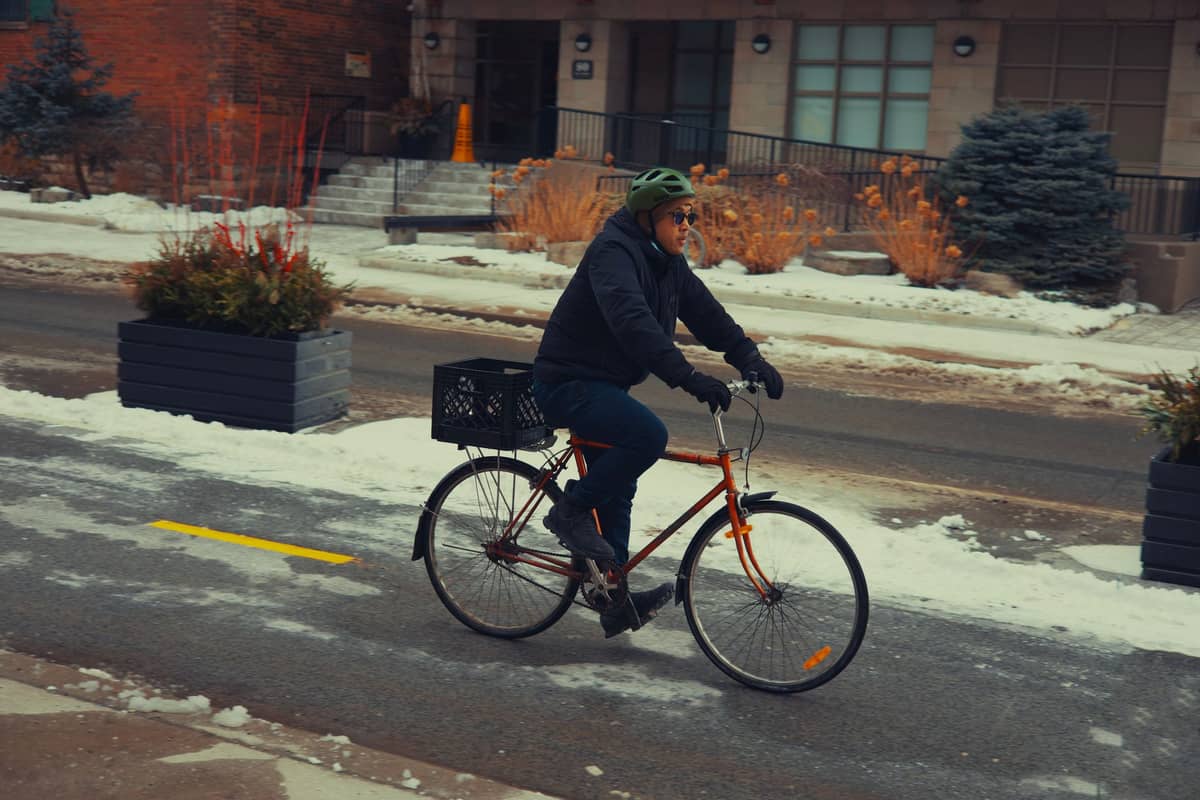
Montreal's cycling infrastructure is split into two distinct layers that are easy to conflate. The all-season network consists of routes that are maintained and snow-cleared throughout the year. The seasonal network adds supplemental routes, particularly through parks and recreational corridors, that open around April 1 and close by November 15. Knowing which type of route you're on matters: seasonal paths can become muddy, icy, or closed entirely outside those dates.
The city distinguishes three main route types: protected bike lanes (physically separated from traffic by curbs, barriers, or parked cars), shared streets (where cyclists and drivers share the road under specific rules), and multi-use paths (shared with pedestrians). On designated shared bike routes, drivers are required to keep their speed at or below 30 km/h and must adapt to the pace of cyclists. Cyclists may ride side by side across the full lane width on these streets. It sounds permissive until you realize how variable driver compliance can be during peak hours.
💡 Local tip
Before any ride, pull up the City of Montreal's official bicycle-network map at montreal.ca. It colour-codes protected lanes, shared routes, and multi-use paths, which is essential for planning a smooth route rather than accidentally ending up in mixed traffic on a major arterial.
The network connects most of the neighborhoods worth exploring: Old Montreal, the Plateau-Mont-Royal, Mile End, and Griffintown all have direct cycling access. The system is genuinely useful for transit, not just recreation.
BIXI: Pricing, Memberships, and What Visitors Actually Need
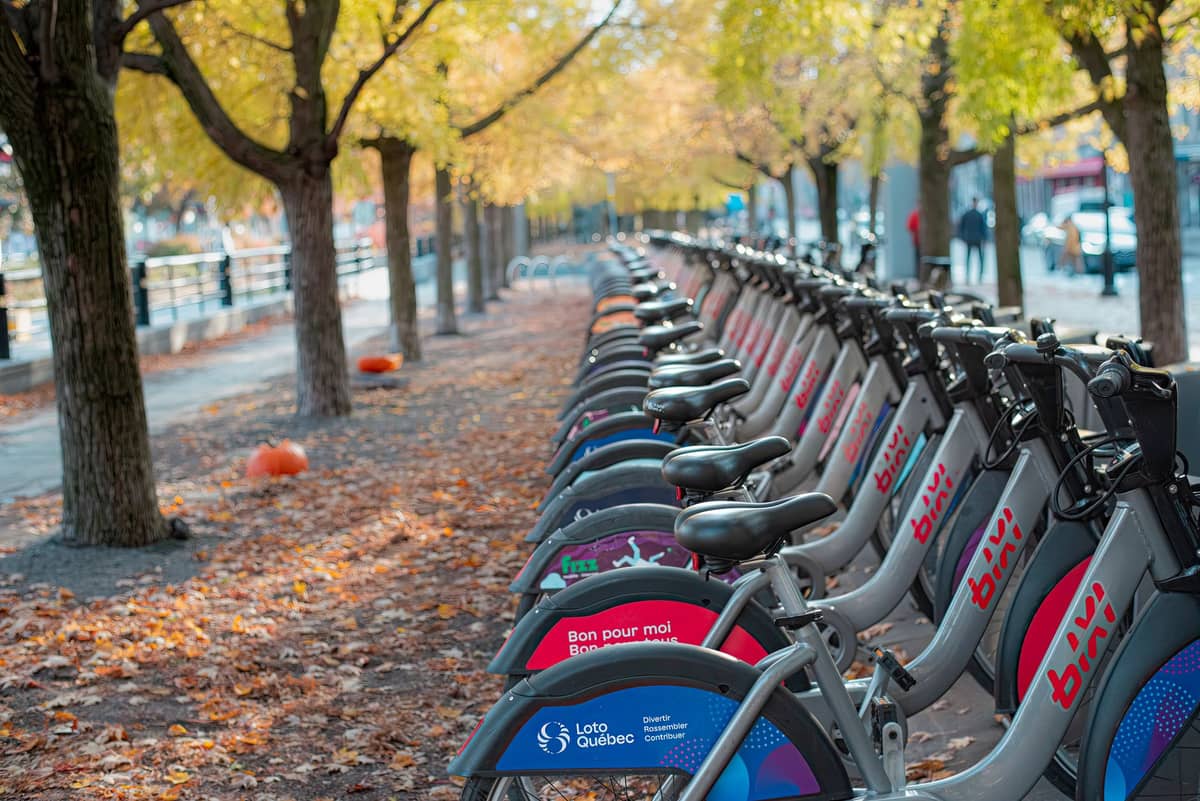
BIXI is Montreal's public bike-share system, and it works well once you understand the pricing structure. There are two main categories: memberships (seasonal or monthly) and pay-as-you-go options for visitors. The seasonal membership runs from April 15 to November 15 and includes 45 minutes of free riding time per trip on regular (non-electric) BIXIs. Exceed that window and you're charged $0.19 per minute. For most urban trips under 5 km, 45 minutes is comfortable. For a leisurely ride along the Lachine Canal, you'll want to plan dock-to-dock stops.
If you're visiting for a few days, skip the seasonal membership and use the dedicated Visit Montréal fare option instead. Pricing and conditions differ from membership rates, so check BIXI's official website (bixi.com) for current figures before you buy — rates are updated seasonally. Electric BIXIs are available at select stations and cost $0.19 per minute even for members, on top of any membership fee. They're faster and useful on hills, but the per-minute cost adds up quickly on longer recreational rides. A 45-minute e-BIXI trip costs around $8.55 in time charges alone.
- Seasonal Membership (April 15 – November 15) First 45 minutes of each regular-BIXI trip included. Additional time at $0.19/min. E-BIXI costs $0.19/min regardless. Trailer rental from $5 for up to four hours.
- Visit Montréal Option Designed for short-stay visitors. Check bixi.com for current pricing and included ride time before purchasing.
- Monthly Membership Available year-round, including winter months. Same 45-minute included time per trip as seasonal. Useful if you're staying long-term outside the seasonal window.
- UCI World Championships Exception (Sept 13–27, 2026) During the 2026 UCI Road World Championships, included ride time increases from 45 to 60 minutes for applicable monthly and seasonal memberships.
⚠️ What to skip
BIXI stations are denser in central Montreal and sparser toward the city's edges. If you plan to ride out to Jean-Drapeau Park or along the full Lachine Canal, check station availability at your destination before you leave — running out of docking options with an active rental clock ticking is an avoidable frustration.
The Best Cycling Routes in Montreal by Type
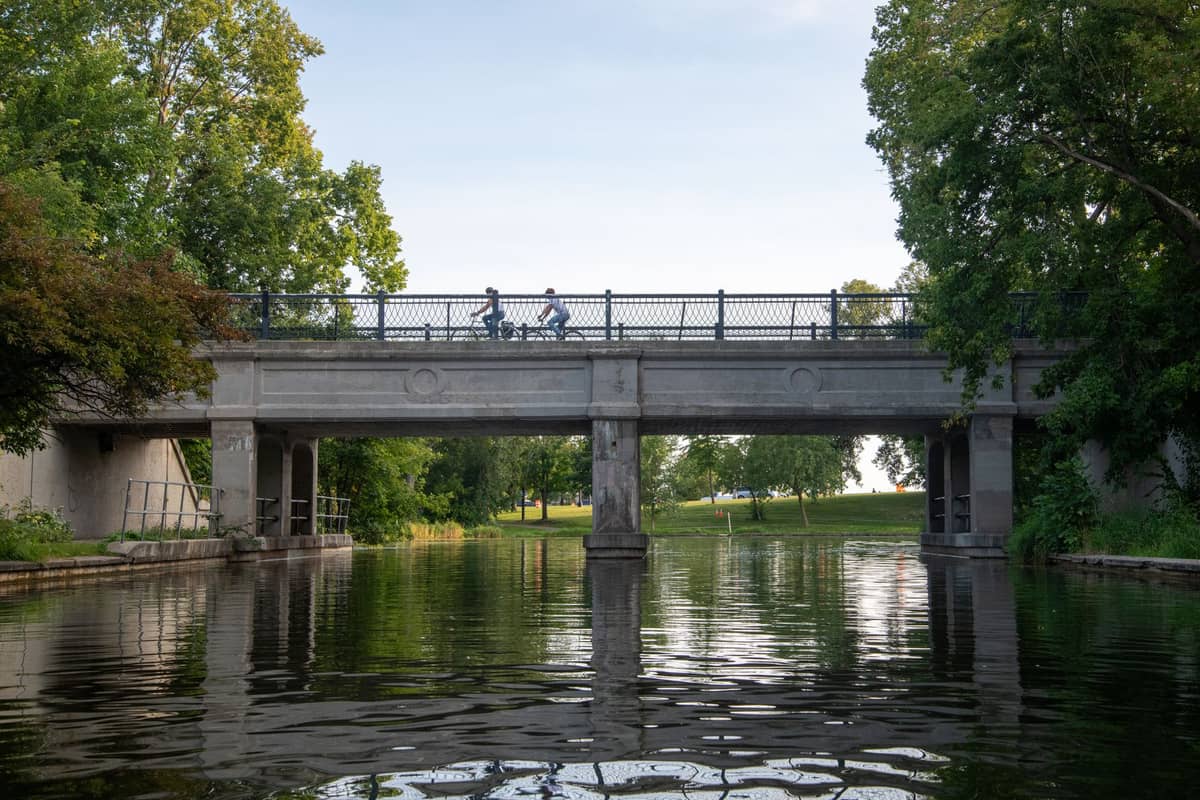
The Lachine Canal path is the gold standard for recreational cycling in Montreal. The route runs approximately 14 km from the Old Port to Lachine, almost entirely on a flat, car-free multi-use path alongside the historic canal. It passes through Griffintown, Pointe-Saint-Charles, and LaSalle, offering a genuine cross-section of the city's working-class industrial heritage and newer residential development. On weekday mornings, it's one of the better commuter corridors in the city. On Sunday afternoons in summer, expect heavy foot and bike traffic — go early or plan for a slower pace.
The Old Port waterfront connects to the Lachine Canal path at its eastern end and extends toward the Clock Tower and Jean-Drapeau Park via the Jacques-Cartier Bridge bike path. Crossing the bridge itself is a significant climb (around 30 metres of elevation gain in a short stretch) and is not suitable for BIXI's heavier bikes — rent a lighter bike or use an e-BIXI if you plan to cross. The park on Île Sainte-Hélène and Île Notre-Dame has excellent cycling loops with relatively low traffic and views of the St. Lawrence River.
For riders comfortable in traffic, the route from the Plateau-Mont-Royal through Mile End to Little Italy and the Jean-Talon Market is one of the most rewarding urban rides in the city. The stretch along Christophe-Colomb Avenue and De Gaspé has protected lanes for much of the way. Arrive at Jean-Talon Market before 10 a.m. on a Saturday to actually find parking for your bike and to beat the crowds.
- Lachine Canal path: 14 km, flat, car-free, best for beginners and recreational riders
- Old Port to Jacques-Cartier Bridge: scenic waterfront, moderate difficulty, connects to Jean-Drapeau Park
- Plateau to Mile End to Jean-Talon Market: urban, protected lanes, some traffic mixing, great for market visits
- Mount Royal loop via Camillien-Houde: challenging climb, 3–4 km ascent, reward is the Kondiaronk Belvedere viewpoint
- Christophe-Colomb to Maisonneuve Park: flat, family-friendly, connects east-end neighborhoods
Cycling up to Mount Royal Park via the Camillien-Houde parkway is the ride that separates recreational cyclists from the genuinely enthusiastic. The climb is about 3–4 km with sustained grades of 6–10%. The parkway is closed to through traffic on weekends, making it safer and far more pleasant for cyclists. At the top, the Kondiaronk Belvedere offers a sweeping panorama of downtown Montreal. The descent on the same road is fast and requires brake confidence — test your bike before committing.
Seasonal Cycling: What Changes Month to Month
Cycling in Montreal is fundamentally a warm-weather activity for most visitors. The seasonal bike network opens around April 1 and closes by November 15. In early April, temperatures can still hover around 4–8°C and some paths remain wet or sandy from winter road treatments — manageable but not pleasant. May through September is the core season, with July and August averaging 18–22°C. Path conditions are excellent, but the Lachine Canal and Old Port paths get genuinely crowded on summer weekends.
October is arguably the best month to cycle in Montreal. Temperatures drop to a comfortable 10–15°C, fall foliage along the canal and through the Plateau is at its peak, and the tourist crowds thin considerably. The seasonal network is still fully operational. By early November, the park paths and some supplemental routes begin closing, though core protected lanes remain open and snow-cleared on the all-season network for those willing to ride in colder conditions.
✨ Pro tip
If you're cycling in Montreal in late September or October 2026, note that BIXI's included ride time increases from 45 to 60 minutes per trip from September 13–27 during the UCI Road World Championships. Some key roads may also have temporary closures during race days — check local event schedules before planning routes through downtown.
Practical Tips: Renting, Safety, and Getting Around
Beyond BIXI, private bike rental shops are available in most central neighborhoods, particularly around the Old Port and along the Lachine Canal corridor. Private rentals are worth considering for full-day rides where the BIXI time structure becomes awkward, for tandems or cargo bikes, and if you want a lighter or higher-quality road bike for climbing Mount Royal. Expect to pay around $25–50 CAD per day for a standard bike from a reputable rental shop, though prices vary by season and bike type.
Helmets are not legally required for adults in Quebec, but they are strongly recommended, particularly for routes with mixed traffic. Bike locks are essential if you're using a private rental and stopping anywhere. BIXI bikes return to their stations automatically, so locking isn't a concern with the bike-share system. For route planning beyond the city's official map, the Komoot and Strava apps both have good coverage of Montreal's cycling infrastructure, though neither is a substitute for the official map when it comes to distinguishing route types. For a broader picture of how to get around Montreal, see the getting around Montreal guide.
- Bring a lock for private rentals; BIXI bikes dock at stations automatically
- Helmets are not legally mandatory for adults in Quebec, but are strongly recommended
- Download the BIXI app to locate stations, check bike availability, and start rentals
- Use the City of Montreal's official bicycle-network map to identify route types before heading out
- Avoid cycling on busy streets like Saint-Laurent Boulevard or Sherbrooke Street without checking for a parallel protected route first
- During major events (Grand Prix, Osheaga, Jazz Festival), some routes near Jean-Drapeau Park and the Old Port face pedestrian overflow — plan alternatives
Cycling integrates well with Montreal's metro system. Bikes are permitted on the STM metro during off-peak hours, though the rules around this are specific and worth verifying with STM directly before you plan a multi-modal trip. For context on all transport options, the guide to getting around Montreal covers metro, bus, and transit passes in detail. If you're planning a full day outdoors and want to combine cycling with other activities, the Montreal in summer guide is a useful companion.
Honest Assessment: Who Cycling in Montreal Works For (and Who It Doesn't)
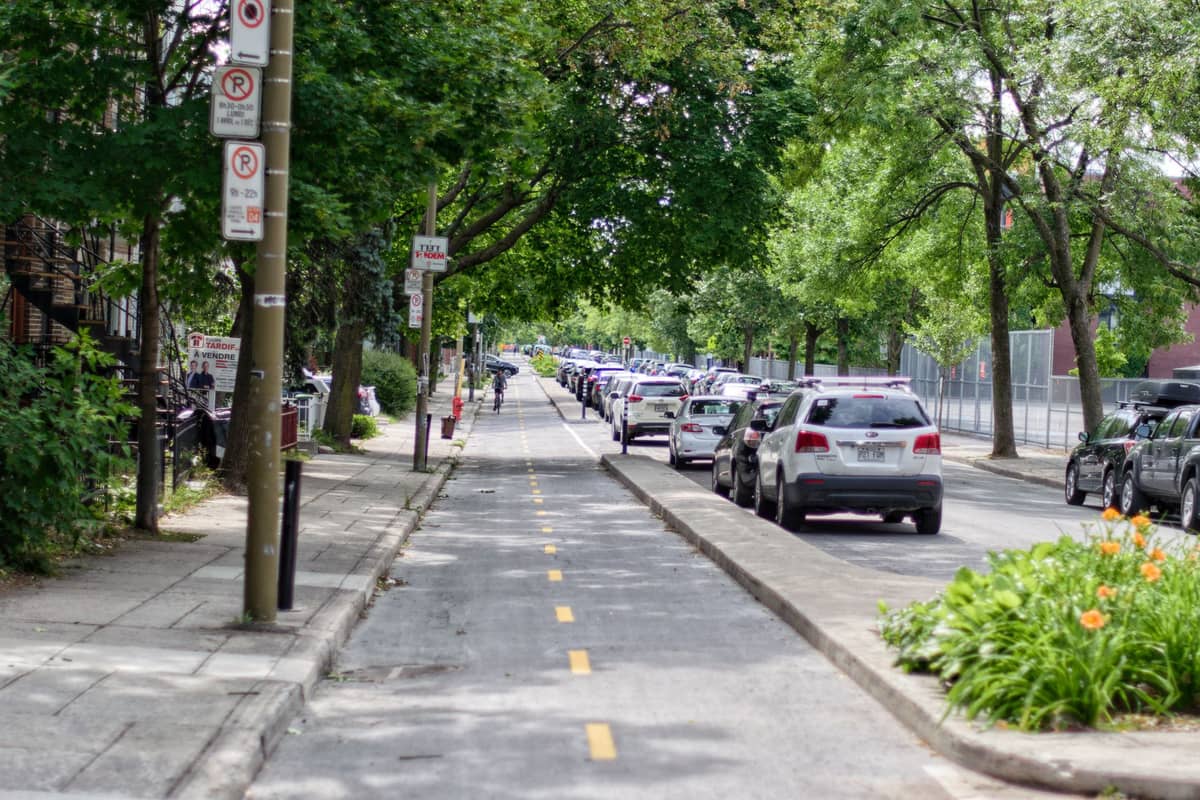
Montreal's cycling infrastructure is genuinely impressive for a North American city, but it has real limitations. The network is strongest in the central and southwestern parts of the island: Old Montreal, the Plateau, Mile End, Griffintown, and the Lachine Canal corridor are all well-connected. The further east or north you go, the patchier the protected infrastructure becomes, and mixing with car traffic on wider arterials is unavoidable.
BIXI works very well for trips under 45 minutes point-to-point. It becomes more cumbersome for full-day recreational rides because of the time-limit structure and the need to dock and re-dock at stations. If your main goal is a leisurely three-hour ride along the canal with stops, rent a private bike. If you're moving between neighborhoods efficiently, BIXI is the right call. Families with young children should know that BIXI does offer trailers (from $5 for up to four hours), but availability is limited and requires advance planning.
Cycling is not the best way to see every part of Montreal. Certain areas, particularly those east of the Plateau or in the western suburbs, are better reached by metro or bus. For a comprehensive picture of what the city offers beyond two wheels, the things to do in Montreal guide and the Montreal neighborhoods guide are worth reading before you finalize your plans.
FAQ
When does BIXI operate in Montreal?
BIXI's seasonal membership runs from April 15 to November 15. Outside that window, BIXI offers year-round service through monthly memberships and one-way trips. The city's seasonal bike network (including park paths) generally operates April 1 to November 15, while all-season protected routes remain open and snow-cleared year-round.
Is cycling in Montreal safe for tourists?
On the Lachine Canal path, Old Port waterfront, and other dedicated multi-use paths, cycling is straightforward and low-risk. Protected lanes in central neighborhoods (Plateau, Mile End, Griffintown) are also well-established. The risk increases when routes mix with heavier traffic, particularly on major streets without dedicated infrastructure. Using the city's official bicycle-network map to plan protected-lane routes minimizes exposure to traffic significantly.
Do I need a helmet to cycle in Montreal?
No, helmets are not legally required for adults cycling in Quebec. However, they are strongly recommended, especially for any route involving road traffic. Children under 12 are required by Quebec law to wear a helmet when cycling.
Can I take a BIXI bike across the Jacques-Cartier Bridge to Jean-Drapeau Park?
Technically yes, but BIXI's standard bikes are heavy (around 18–22 kg), and the Jacques-Cartier Bridge involves a significant climb. It's manageable for fit riders, but an e-BIXI or a lighter private rental makes the crossing considerably more comfortable. Note that e-BIXI use costs $0.19 per minute even with a membership.
What is the best cycling route in Montreal for first-time visitors?
The Lachine Canal path is the best starting point: 14 km, flat, almost entirely car-free, and easily accessible from the Old Port. You can ride the full length one way and return by metro (Charlevoix or Jolicoeur stations are nearby), or simply ride out and back at your own pace. Dock your BIXI at any station along the route before the 45-minute window expires to avoid time charges.