Montreal Neighborhoods: A Guide to the City's Best Areas
Montreal is not a city you can understand from one neighborhood. From the cobblestones of Old Montreal to the spiral staircases of the Plateau and the repurposed warehouses of Griffintown, each district has a distinct character, crowd, and pace. This guide breaks down the city's key areas so you can match your trip to the right base.
Plan and book this trip
Tools from our partner Travelpayouts help you compare flights and hotels. If you book through them, we may earn a commission at no extra cost to you.
Flights
Hotels map
TL;DR
- Montreal's neighborhoods differ sharply in architecture, atmosphere, and what you can do there — knowing the differences matters before you book accommodation.
- Old Montreal and the Old Port suit visitors focused on history, heritage architecture, and the waterfront — see the full picture in our Old Montreal guide.
- The Plateau and Mile End are the city's cultural heartland — dense, walkable, and full of independent restaurants, bookshops, and music venues. Plateau-Mont-Royal and Mile End are adjacent but feel distinct.
- Downtown is the commercial centre and transit hub — convenient for getting around but not where you go for local flavor.
- Getting between neighborhoods is straightforward on the STM metro. A single-trip fare is C$3.75; a 24-hour pass is C$11.25 as of 2026. More on getting around Montreal.
How Montreal's Neighborhoods Actually Work
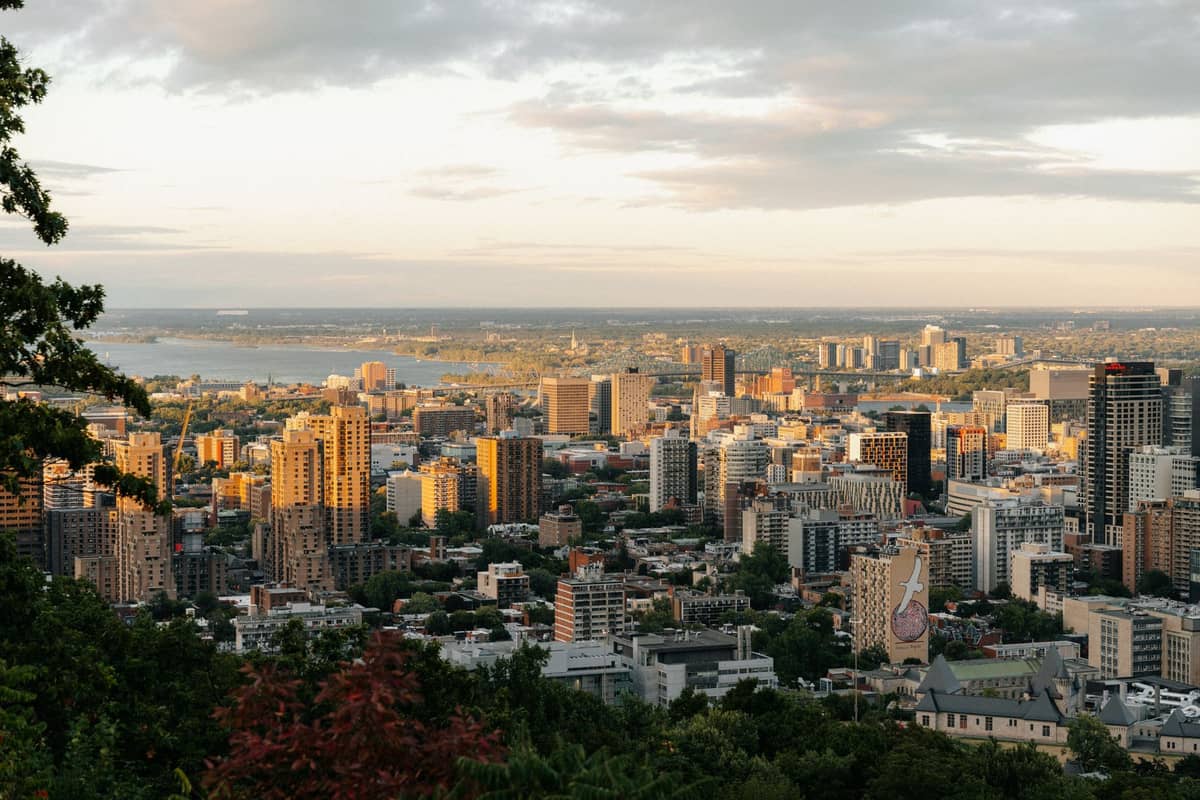
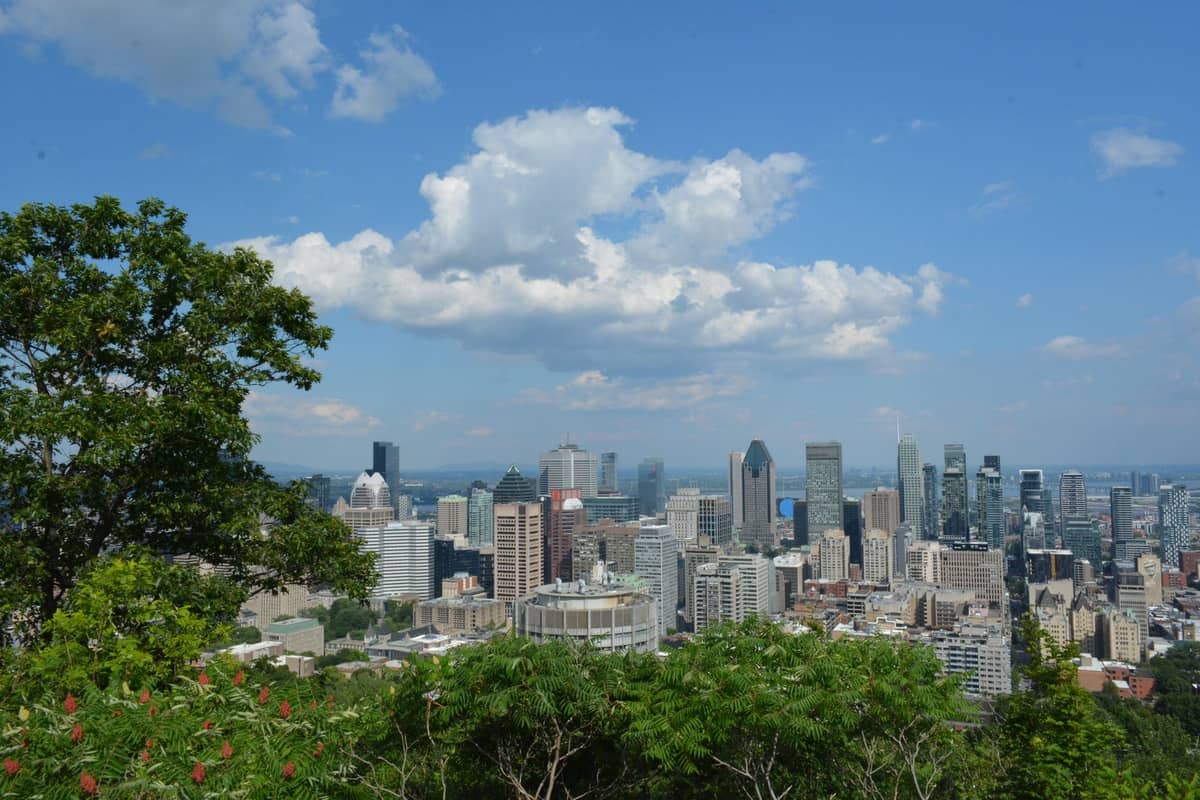
Montreal occupies most of a large island in the St. Lawrence River, near the confluence of the St. Lawrence and Ottawa rivers. The city's street grid runs roughly northeast-southwest, which means locals use "towards the mountain" (vers la montagne) and "towards the river" (vers le fleuve) as orientation points rather than strict compass directions. Mount Royal sits near the geographic center at about 233 metres above sea level, and most central neighborhoods radiate outward from it.
One common misconception worth clearing up early: "downtown Montreal" does not mean all of central Montreal. Old Montreal, the Plateau, Mile End, the Village, and the Canal districts are separately identified areas, each with different street layouts, housing stock, and character. Tourisme Montréal maps them as distinct neighborhoods, not subsections of downtown. If you're planning where to stay in Montreal, understanding these distinctions can save you from booking somewhere that looks central on a map but is inconvenient for what you actually want to do.
ℹ️ Good to know
Montreal's official language is French under Quebec's language legislation, and most neighborhoods use French for street signage and business names. English is widely spoken in tourist areas, but the degree varies by neighborhood — Mile End and the Plateau tend to be more bilingual in practice than, say, Rosemont or Villeray.
Old Montreal and the Old Port
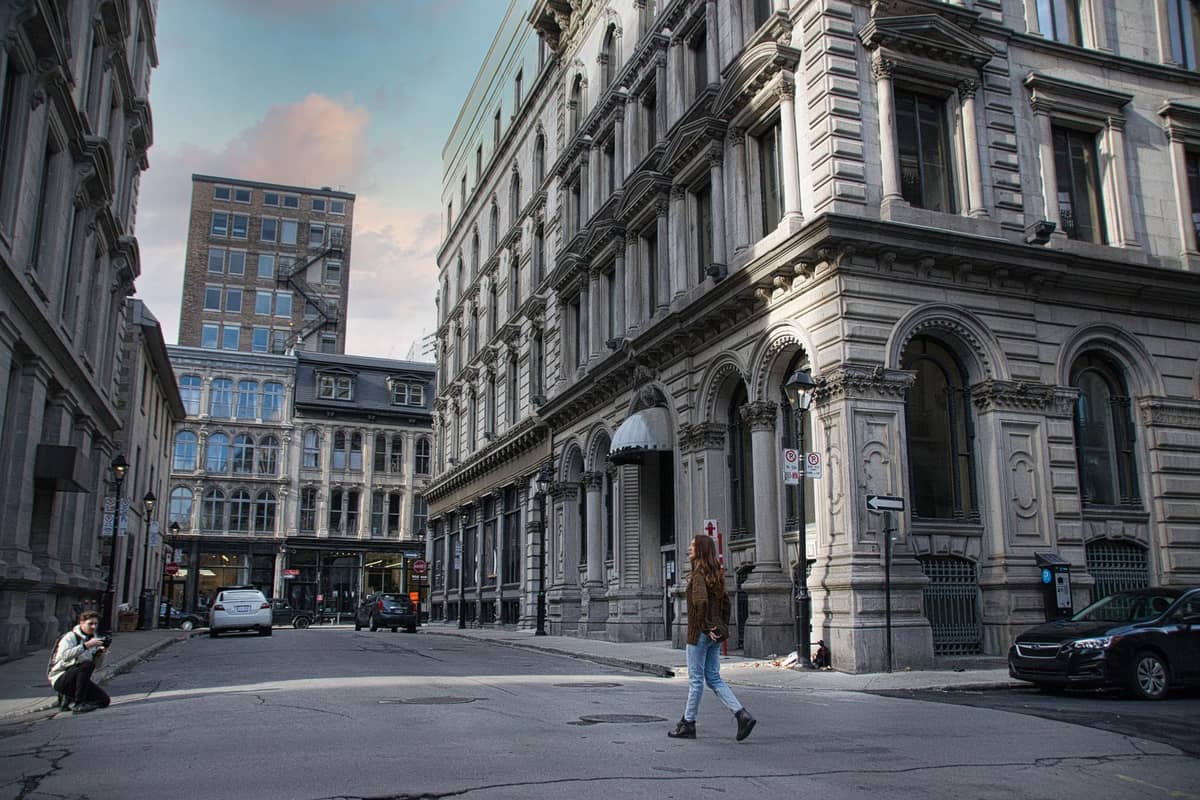
Old Montreal (Vieux-Montréal) is the city's founding district, built on a grid of narrow streets between McGill Street and Berri Street, running south to the St. Lawrence. The architecture spans from 17th-century stone warehouses to Second Empire facades, and the density of heritage buildings is genuinely exceptional by North American standards. The Notre-Dame Basilica on Place d'Armes is the most recognizable building, but the district rewards slower exploration down streets like Rue Saint-Paul and around Place Jacques-Cartier.
The Old Port (Vieux-Port) runs along the waterfront south of Old Montreal and functions as a separate public zone with its own seasonal programming. In summer, it fills up with cyclists, families, and festival crowds. The Grande Roue observation wheel and the Montreal Science Centre anchor the western end. The Clock Tower at the eastern pier offers good views for free.
One honest caveat: Old Montreal is heavily touristed from May through September. Place Jacques-Cartier in particular fills with calèche carriages, street performers, and tourist menus at elevated prices. This does not make it worth skipping, but it does mean you should arrive early, eat breakfast before you get there, and walk two blocks off the main square to find restaurants that serve actual Montrealers.
💡 Local tip
The Pointe-à-Callière Museum sits at the archaeological heart of Old Montreal, directly above the city's founding site. It is consistently one of the best-value cultural institutions in the city and far less crowded than the Basilica. Allow at least two hours.
Downtown Montreal
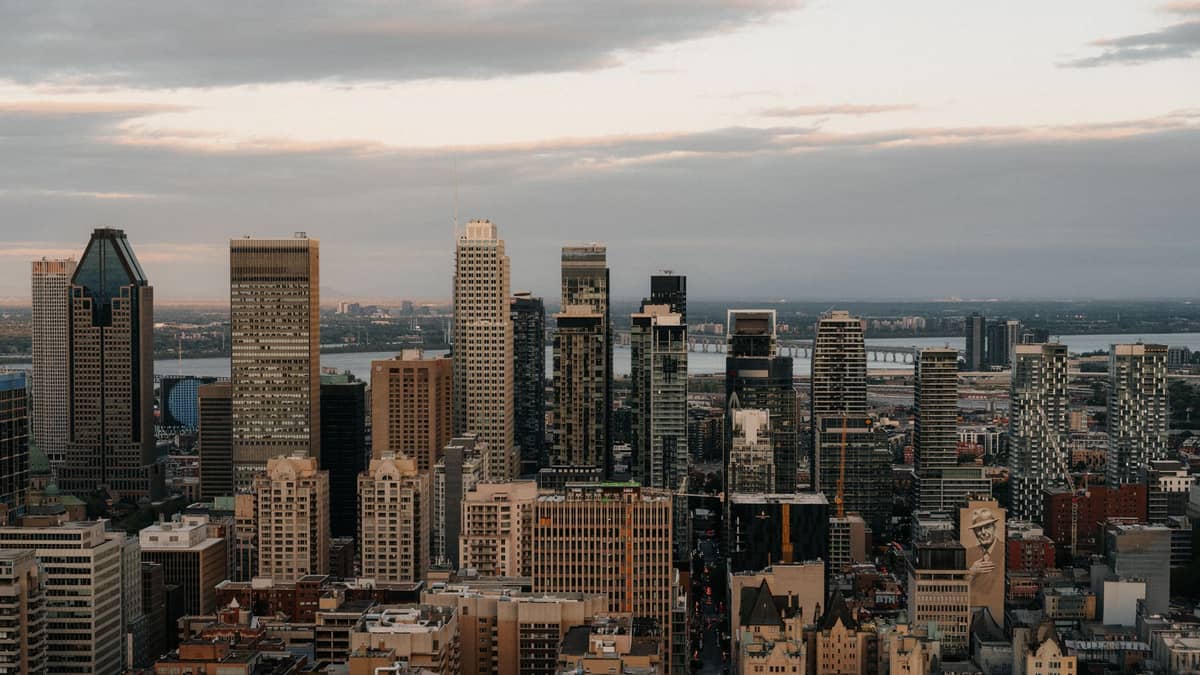
Downtown is the city's commercial and transit core, anchored roughly by René-Lévesque Boulevard to the south, Sherbrooke Street to the north, Atwater Avenue to the west, and Saint-Laurent Boulevard to the east. It contains the major hotels, corporate towers, and the largest concentration of metro stations. The Underground City (RESO) connects much of downtown through 33 kilometres of underground tunnels — genuinely useful in winter, when temperatures regularly drop below -10°C.
Downtown has two major cultural anchors worth planning around: the Montreal Museum of Fine Arts on Sherbrooke West, which is one of the largest art museums in Canada, and Quartier des Spectacles around Place des Arts, which hosts the Jazz Festival, Just For Laughs, and dozens of other events throughout the year.
Downtown is not where most people go for a distinctly Montreal experience, but it's practical as a base. Room rates are higher than in the Plateau or Mile End, the streets are quieter on weekends, and you'll feel the city's French character less strongly here than elsewhere. It works best for business travelers or anyone prioritizing metro access above neighborhood character.
The Plateau, Mile End, and Little Italy
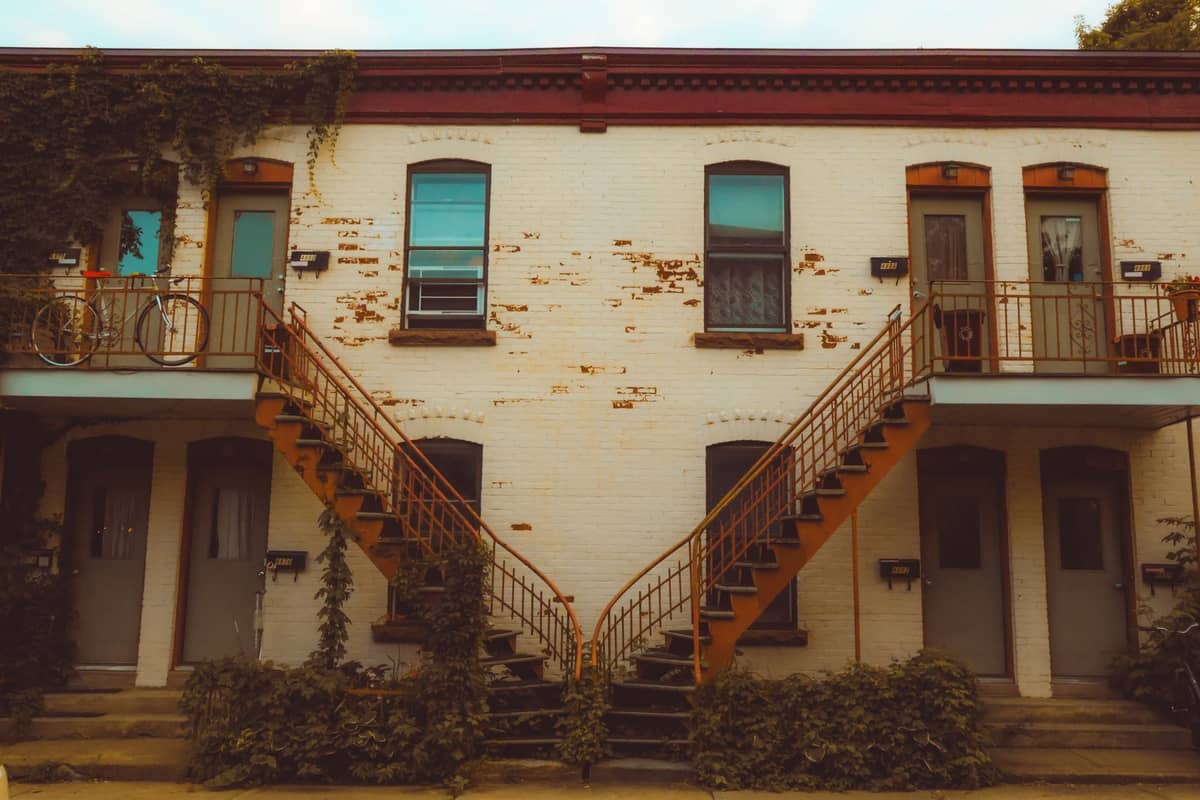
These three adjacent neighborhoods are often mentioned together but they each have their own logic. Plateau-Mont-Royal is the densest and most walkable, known for brightly painted row houses, wrought-iron exterior staircases (a signature of Montreal's residential architecture), and Saint-Laurent Boulevard's restaurant strip. Mont-Royal Avenue running east-west through the middle of the Plateau is one of the city's best streets for cafés, secondhand shops, and everyday commerce.
Mile End sits north of the Plateau and has a more mixed, slightly grittier character. It's the neighborhood most associated with Montreal's independent music scene, and with the bagel culture centred on Fairmount and St-Viateur. The two bagel bakeries on those streets operate around the clock, and the difference between them is a genuine local debate. For the full context on the city's most argued-about food, the Montreal bagels guide goes into proper detail.
Little Italy borders Mile End to the north along Saint-Laurent. The neighborhood retains a strong Italian commercial identity, with espresso bars, social clubs, and specialty food shops. Its anchor is the Jean-Talon Market, the largest open-air market in North America by some measures and one of the best places in the city to buy local produce, cheese, and prepared foods. It operates year-round but peaks from June to October.
✨ Pro tip
If you're staying in the Plateau or Mile End, you can walk to Mount Royal Park in under 15 minutes from most streets. The Sunday Tam-Tams drum circle at the base of the George-Étienne Cartier Monument runs from mid-May through September and functions as an informal neighborhood gathering that is very much a local institution rather than a tourist event.
The Canal Districts: Griffintown, Saint-Henri, and Little Burgundy
These three neighborhoods southwest of downtown are grouped by Tourisme Montréal as "Les Quartiers du Canal" because they all border or are near the historic Lachine Canal. The canal itself is now a linear park with a cycling and walking path that runs 14 kilometres from the Old Port to Lachine — one of the best urban cycling routes in Quebec.
Griffintown is the most transformed of the three, converted from a former industrial district into a zone of new condo towers and ground-floor restaurants and bars. It lacks the architectural texture of older neighborhoods but has good access to downtown and the canal path. Saint-Henri and Little Burgundy are older, more established working-class neighborhoods that have seen significant gentrification over the past decade without losing their original street character entirely. Both have strong independent food and bar scenes. The Atwater Market sits at the meeting point of these districts and is worth a visit on any weekend morning.
The Village, Outremont, Westmount, and Other Areas
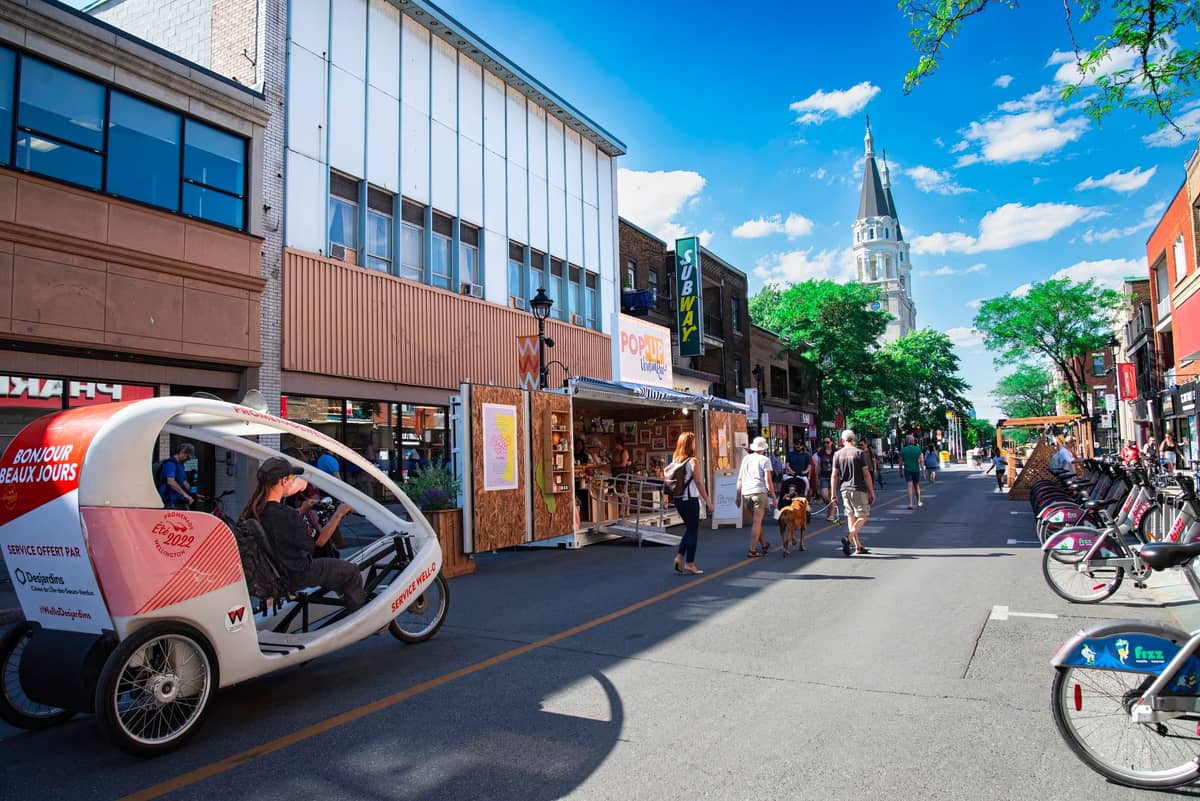
The Gay Village (Le Village) runs along Sainte-Catherine Street East between Saint-Hubert and Papineau, east of downtown. It's the cultural and social centre of Montreal's LGBTQ+ community and one of the largest gay villages in North America. During summer, the central stretch of Sainte-Catherine is pedestrianized and lined with terrasses. The neighborhood is active year-round but peaks in July and August, particularly during the Fierté Montréal (Pride) festival.
Outremont, north of the Plateau on the other side of the mountain, is a quieter residential borough with tree-lined streets, upscale shops along Bernard Avenue, and a significant Hasidic Jewish community in its western section. It's not a typical tourist neighborhood but makes a pleasant half-day walk if you're already heading to or from the Plateau. Westmount is technically a separate municipality surrounded by Montreal, with a strong English-speaking institutional history and some of the city's most impressive Victorian residential architecture. Neither is a destination in itself for most visitors, but both add texture to a longer stay.
- Best for first-timers Old Montreal gives you the concentrated historic experience; the Plateau gives you the everyday Montreal feel. Spending two nights in each covers the spectrum efficiently.
- Best for food and markets Little Italy and Mile End for daytime eating; Saint-Henri and the Plateau for dinner. Jean-Talon Market on a Saturday morning is a reliable highlight.
- Best for cycling The Lachine Canal path is the city's most accessible long-distance cycling route and connects Griffintown, Saint-Henri, Little Burgundy, and the Old Port. Bike-share (BIXI) stations are found across all central neighborhoods from late April through November.
- Best for a winter visit Downtown's Underground City connection and proximity to the Bell Centre make it a practical base in deep winter. The Plateau is less convenient in heavy snow but still walkable.
- Best for longer stays Mile End or Saint-Henri offer a more genuine residential feel without being distant from major sites, and short-term rental availability in both areas is generally good.
⚠️ What to skip
Neighborhood names like Mile End, Mile Ex, and Saint-Henri do not have fixed official boundaries. Maps from different sources place the edges differently. When asking for directions locally, name a specific street intersection rather than a neighborhood — Montrealers navigate by cross streets.
For a broader sense of how to use your time across the city, the 3-day Montreal itinerary structures a trip across multiple neighborhoods efficiently. If cost is a factor, the free things to do in Montreal guide maps free options by area.
FAQ
Which Montreal neighborhood is best for tourists?
Old Montreal is the most concentrated tourism district, with heritage architecture, major attractions, and the Old Port waterfront within walking distance. The Plateau-Mont-Royal offers a more residential, locally-flavored experience that many visitors prefer for longer stays. Neither is objectively better — it depends on whether you prioritize sightseeing density or neighborhood atmosphere.
Is it better to stay in Old Montreal or downtown?
Old Montreal suits visitors who want to be close to historic sites and the waterfront, but it has fewer metro stations and higher accommodation prices. Downtown has better transit access and more hotel options across price ranges, but less street character. The Plateau or Mile End offer the best balance for visitors who want local atmosphere and reasonable metro access.
How do you get between Montreal neighborhoods without a car?
The STM metro has four lines and connects most central neighborhoods with downtown. A single trip costs C$3.75; a 24-hour pass is C$11.25 as of 2026. BIXI bike-share runs from late April through November and is often faster than the metro for short cross-neighborhood trips. The Plateau, Mile End, Little Italy, and Old Montreal are all walkable between each other with enough time.
Is the Gay Village safe to visit?
Yes. The Village is a well-established neighborhood with regular foot traffic, and Sainte-Catherine Street East is pedestrianized in summer. Like any urban neighborhood, it pays to be attentive at night in less-lit side streets, but there are no particular safety concerns specific to the area.
What is the difference between Mile End and the Plateau?
The Plateau-Mont-Royal is the larger borough that includes the area often called "the Plateau," roughly bounded by Mont-Royal Avenue to the north and Sherbrooke to the south. Mile End sits above that, generally described as running from Mont-Royal Avenue north to Van Horne Avenue, between Hutchison and Saint-Denis streets. Mile End has a slightly younger, more indie-music-oriented character; the Plateau is denser, more family-oriented, and more established.