Montreal Clock Tower (Tour de l'Horloge): What to Know Before You Visit
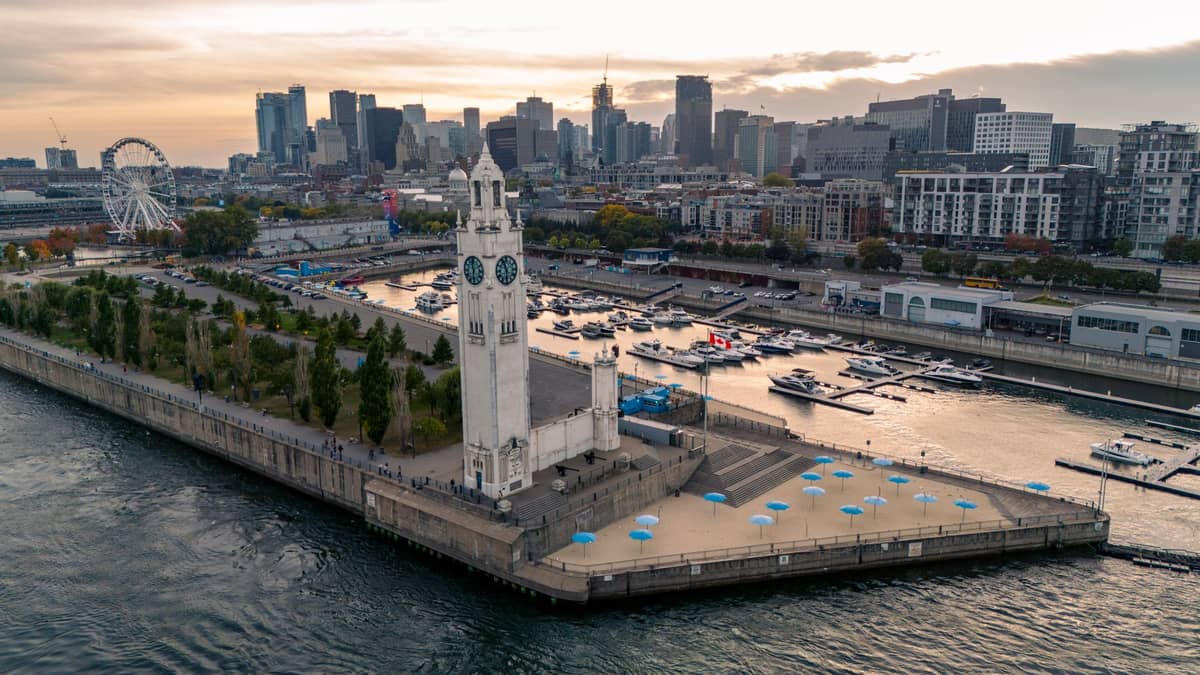
Standing at the eastern tip of the Old Port, the Montreal Clock Tower is an emblematic monument that has stood at the end of Clock Tower Quay since 1922.
Quick Facts
- Location
- 1 Quai de l'Horloge, Old Port of Montreal, QC
- Getting There
- Champ-de-Mars or Place-d'Armes metro stations (Orange Line), then a 15-minute walk through the Old Port waterfront
- Time Needed
- 15 to 30 minutes for the exterior; the tower interior is not currently open to visitors
- Cost
- Free when open (seasonal access — verify hours before visiting)
- Best for
- Views over the Saint Lawrence, WWI history, waterfront photography
- Official website
- www.oldportofmontreal.com
What the Clock Tower Is
The Montreal Clock Tower, known officially in French as the Tour de l'Horloge, stands at the far eastern end of Quai de l'Horloge in the Old Port. The emblematic monument has stood there since the summer of 1922.
The tower's square plan and clock faces give it a civic, almost town-hall character, though it stands alone at the water's edge with no neighboring buildings competing for space. When public access is available, visitors can explore the monument and its waterfront setting.
⚠️ What to skip
Check the Old Port of Montreal's official website before visiting for current information about access and activities at the Clock Tower.
The Climb and What You See at the Top
The interior staircase, when open to visitors, is narrow and enclosed, with a slightly industrial texture to the walls — stone and mortar without much decorative finish. It is not a climb for those uncomfortable in tight spaces, and it requires a reasonable level of mobility.
At the top, the view opens in a way that is genuinely surprising given how modest the tower looks from ground level. The Saint Lawrence River spreads out to the south in both directions, the Îles-de-Boucherville visible on clearer days. To the north, Old Montreal's rooftop landscape rolls toward the downtown towers. The perspective is different from the better-known vantage points on the mountain — here you are at water level with the river dominant, not background.
Photographers should note that the eastern and southern exposures catch strong morning light, while late afternoon softens the western view over the Old Port's clock-lined quays. For a broader comparison of panoramic spots across the city, see the guide to the best views in Montreal.
Tickets & tours
Hand-picked options from our booking partner. Prices are indicative; availability and final rates are confirmed when you complete your booking.
Montreal evening cruise on the St. Lawrence River
From 54 €Instant confirmationFree cancellation3-hour e-bike guided tour in Montreal
From 68 €Instant confirmationFree cancellationWalking tour of Old Montreal
From 20 €Instant confirmationFree cancellationMontreal helicopter tour
From 156 €Instant confirmationFree cancellation
Historical Context: A Memorial, Not Just a Landmark
The tower has stood at the end of Clock Tower Quay since the summer of 1922, making it one of the Old Port's longstanding landmarks. Its functioning clock and prominent waterfront position tied the structure to the practical rhythms of the port.
The tower remains an emblematic Old Port monument, and its waterfront setting makes it a distinctive stop on a walk through the district.
The Old Port district surrounding the tower has its own layered history, from 17th-century fur trade warehouses to 19th-century industrial infrastructure. The nearby Pointe-à-Callière Museum covers that longer arc in detail, and pairing the two makes for a coherent half-day in the area.
How the Experience Changes by Time of Day
Early morning, before the waterfront cycle paths fill, the approach along Quai de l'Horloge has an unhurried quality. The river smells of cool water and damp stone, and the clock tower throws a long shadow westward across the empty pier. This is the best time for photography of the exterior without crowds in frame.
By mid-morning on weekends in summer, the Old Port has shifted into a different gear: cyclists stream past on the waterfront trail, the Grande Roue is visible turning slowly to the west, and small groups gather at the tower base. The interior climb tends to see its peak traffic between 11 a.m. and 2 p.m. If the staircase is narrow and visitor flow is managed, you may wait a few minutes at the entrance.
Late afternoon and early evening offer arguably the most atmospheric version of the visit. The light over the river turns amber, recreational boats are more active on the water, and the city behind you picks up a golden tone. The tower does not light up in any dramatic way after dark, so there is less reason to linger past sunset.
💡 Local tip
Aim for a Tuesday or Wednesday morning in July or August for the lightest crowds. Weekend afternoons draw the heaviest foot traffic on the entire waterfront, which makes the short walk from the metro more congested than the tower itself.
Getting There and the Walk Along the Waterfront
The tower sits at the far eastern end of the Old Port waterfront. From Champ-de-Mars metro station (Orange Line), walk south through Old Montreal and continue east toward the Old Port waterfront and Quai de l'Horloge. Check a current map for the walking route and timing.
Alternatively, arriving by bicycle along the Old Port cycle path makes the approach more enjoyable — the path connects to Montreal's broader cycling network, and Bixi bike-share docks are available nearby. The Montreal cycling guide covers the waterfront routes and Bixi logistics in detail.
Driving is possible but unnecessary and adds parking complications. The Old Port has paid parking lots, but they fill quickly on summer weekends. Transit or cycling is a significantly simpler approach for most visitors.
Practical Details and Accessibility
Check the Old Port of Montreal's website for current information about public access, hours, and admission before visiting. Do not assume the tower interior will be accessible simply because you are visiting in July or August.
Visitors with mobility limitations should verify current interior access and accessibility arrangements with the Old Port before visiting. The exterior monument and surrounding waterfront can be viewed without entering the tower.
Wear comfortable shoes with grip. The stairs inside are not slippery under normal conditions, but the interior can feel cool even on warm days. There are no facilities inside the tower, so use restrooms in the Old Port before beginning the climb. The nearest public washrooms are back along the waterfront toward the main Old Port pavilions.
ℹ️ Good to know
The tower can be viewed from the Old Port waterfront even when interior access is unavailable; check the official Old Port website for current visitor information.
Is It Worth Your Time?
If the tower is open during your visit, the climb is free and takes under an hour. By those measures alone, it earns its place on a waterfront walk rather than a dedicated detour. The view from the top offers a river-facing perspective that differs genuinely from rooftop bars, the Olympic Tower, or the Kondiaronk Belvedere — so it adds something distinct rather than duplicating another city panorama.
If the tower happens to be closed during your visit, the waterfront walk itself is still worth doing. The Old Port is one of the more appealing parts of the city for an evening stroll, and pairing the area with the Grande Roue observation wheel or the Montreal Science Centre fills the gap easily.
Travelers who are not interested in WWI history, who have limited mobility, or who find stair climbs uncomfortable will find more satisfaction in the surrounding waterfront than in the tower itself. The setting outperforms the interior experience on its own terms.
Insider Tips
- Stand at the very tip of Quai de l'Horloge, past the tower, and look back west along the waterfront: the row of Old Port buildings with the downtown skyline behind them is one of the more underused photograph compositions in the city.
- The clock faces on the tower are large enough to read from a considerable distance — useful as an actual navigation reference if you are orienting yourself along the Old Port waterfront.
- If interior access is available, check on-site staff guidance about queues and visitor flow.
- The base of the tower is sheltered from westerly winds by the quay orientation, which makes it a slightly warmer microclimate on breezy spring days — useful if you want to linger at the water's edge.
- Check whether any seasonal events are programmed at the Old Port on the day you plan to visit; the waterfront occasionally hosts sound-and-light shows or outdoor exhibitions that can change crowd density significantly.
Who Is Clock Tower For?
- Visitors who want river views without paying admission or navigating a complex site
- Travelers interested in Old Port history and waterfront landmarks
- Photographers looking for a water-level perspective on the Saint Lawrence and city skyline
- Anyone doing a full Old Port waterfront walk who wants a clear destination at the eastern end
- Families with older children who can manage stairs independently, if interior access is available
Nearby Attractions
Other things to see while in Old Port of Montreal:
- Atwater Market
Open since 1933 in a landmark Art Deco building, Atwater Market is where Montreal's serious food culture lives. From Quebec cheeses and heritage-breed butchers to seasonal produce and local bakeries, it rewards both quick stops and slow morning visits. Free to enter, easy to reach by metro, and positioned at the edge of the Lachine Canal, it belongs on almost any Montreal itinerary.
- Grande Roue de Montréal
La Grande Roue de Montréal is a 60-metre (200-foot) observation wheel on the Old Port waterfront, offering rotating views of the Saint Lawrence River, Old Montreal's historic skyline, and Mount Royal. Here is what the experience actually delivers, when to go, and whether the ticket price is justified.
- Habitat 67
Designed by Moshe Safdie for Expo 67, Habitat 67 is a stacked concrete puzzle of 354 prefabricated modules that has fascinated architects and tourists alike for nearly six decades. Guided tours run seasonally through November, offering rare access to the interior of this private residential complex on the Saint Lawrence waterfront.
- Lachine Canal
The Lachine Canal National Historic Site stretches 14.5 km from Montreal's Old Port to the historic town of Lachine, tracing a corridor that once powered Canada's industrial revolution. Today the canal is free to visit, open daily from sunrise to 11 p.m., and best explored on foot or by bicycle along its well-maintained waterfront path.