Atwater Market (Marché Atwater): Montreal's Best Public Market
Open since 1933 in a landmark Art Deco building, Atwater Market is where Montreal's serious food culture lives. From Quebec cheeses and heritage-breed butchers to seasonal produce and local bakeries, it rewards both quick stops and slow morning visits. Free to enter, easy to reach by metro, and positioned at the edge of the Lachine Canal, it belongs on almost any Montreal itinerary.
Quick Facts
- Location
- 155 Greene Avenue, Sud-Ouest borough, Montréal, QC H4C 2G3
- Getting There
- Lionel-Groulx metro station (Orange and Green lines), roughly a 5-minute walk
- Time Needed
- 45 minutes to browse; 2 hours if you eat, linger, and walk the canal
- Cost
- Free admission. Parking: 0–15 min free; up to 1 hr CAD $2.25; up to 2 hrs CAD $4.50 (verify before visiting)
- Best for
- Foodies, morning wanderers, picnic planners, and anyone curious about Quebec's food culture
- Official website
- www.marchespublics-mtl.com/en/markets/atwater-market
What Atwater Market Actually Is
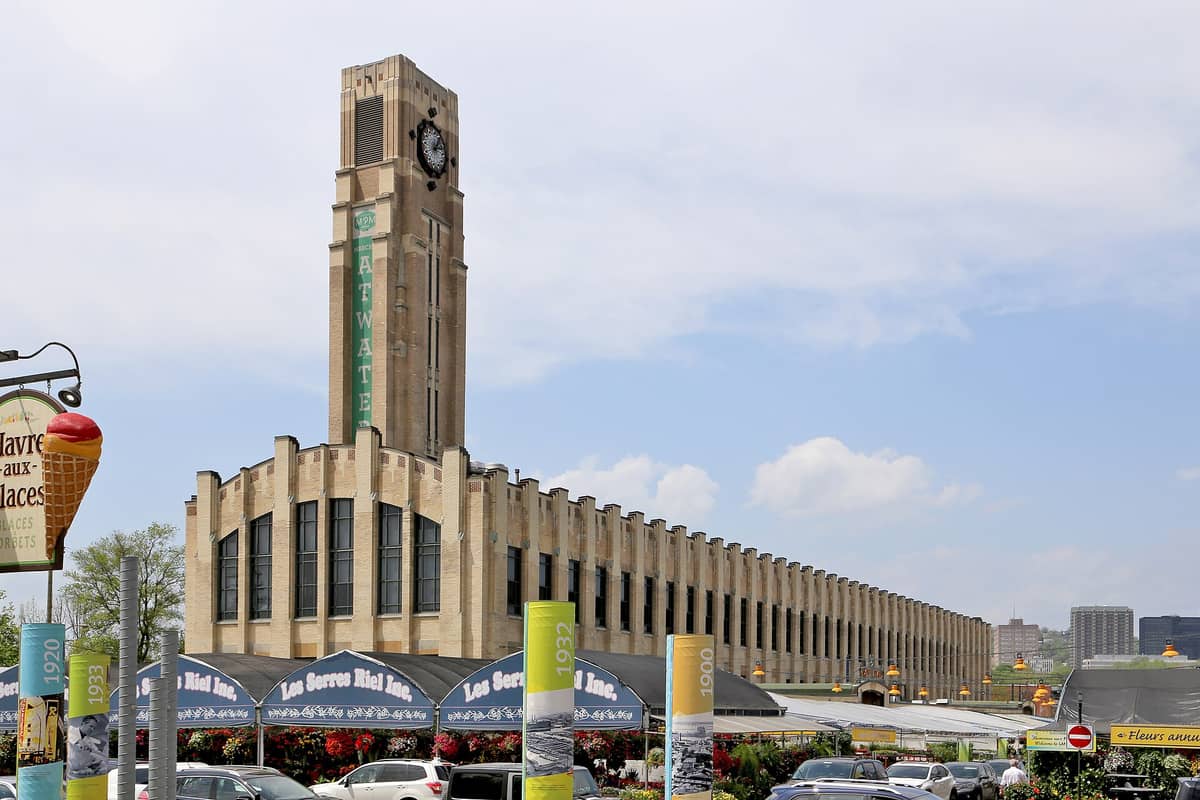
Atwater Market, known in French as Marché Atwater, is one of Montreal's two flagship public markets, alongside Jean-Talon to the north. It opened in 1933, and the building itself sets the tone before you even step inside: a low, symmetrical Art Deco structure in brick and stone, anchored by a square clock tower that has become one of the more quietly iconic shapes on Montreal's west side. The architecture is not flashy, but it carries the kind of institutional confidence that reminds you this was built to last.
The market sits at the corner of Atwater Avenue and Notre-Dame Street West in the Sud-Ouest borough, right at the edge of the Lachine Canal. That geography matters: many visitors combine a market visit with a walk or bike ride along the canal, which makes the whole outing feel less like an errand and more like a proper Montreal morning.
ℹ️ Good to know
Hours: Monday to Friday 9:00 a.m.–6:00 p.m.; Saturday and Sunday 9:00 a.m.–5:00 p.m. Closed December 25–26 and January 1–2. Individual merchants may keep shorter hours, especially on weekdays.
The Layout: What You'll Find Inside and Out
The market operates across two main areas. The permanent indoor vendors occupy the main hall and the lower ground floor, where you'll find butchers, fishmongers, cheese specialists, bakeries, wine and beer shops, and a handful of prepared food counters. These are year-round businesses, not seasonal pop-ups, which is why the quality tends to be high and the specialty range unusually deep for a public market. Quebec cheesemakers, in particular, are well represented, and a knowledgeable counter staff member can walk you through the difference between a washed-rind Oka-style and an aged cheddar from the Eastern Townships.
Outside, rows of outdoor stalls line the building and the surrounding area. In summer and fall, these stalls carry fresh local produce — strawberries in June, sweet corn and tomatoes in August, cider apples and squash in October. In winter, the outdoor section contracts significantly, and some produce vendors close entirely. If you're visiting between December and March, plan your expectations around the indoor hall, which remains fully operational and arguably more atmospheric in the cold months, when the smell of warm bread and aged cheese hits harder against the chill.
Cyclists take note: the market connects directly to the Lachine Canal path, one of Montreal's most pleasant flat cycling routes. Locking up outside, doing a quick run through the market, and continuing along the canal toward Lachine or back toward the Old Port makes for a near-perfect Montreal half-day.
Tickets & tours
Hand-picked options from our booking partner. Prices are indicative; availability and final rates are confirmed when you complete your booking.
Montreal evening cruise on the St. Lawrence River
From 54 €Instant confirmationFree cancellation3-hour e-bike guided tour in Montreal
From 68 €Instant confirmationFree cancellationWalking tour of Old Montreal
From 20 €Instant confirmationFree cancellationMontreal helicopter tour
From 156 €Instant confirmationFree cancellation
How the Experience Changes by Time of Day
Saturday morning between 9:00 and 10:30 a.m. is peak Atwater. The produce stalls are fully stocked, the cheese counters have their longest selection, and the energy in the hall is genuinely lively — not loud or chaotic, but purposeful. You'll share the aisles with a mix of local families doing their weekly shop, restaurant buyers inspecting crates of produce, and visitors who have come specifically because someone told them to. The bakery near the entrance tends to sell out of its better loaves by midday on weekends.
Weekday mornings are calmer and, in many ways, more pleasant for unhurried browsing. The indoor hall in particular feels roomier between Tuesday and Thursday, when you can actually stand at a counter and have a conversation with the vendor without someone stepping past your elbow. If you're there to eat rather than shop, the prepared food counters operate steadily through the lunch hour on weekdays.
Late afternoon on any day is worth avoiding if your priority is choice. The best produce and the popular bakery items are often already sold out, and several smaller vendors begin packing up before the official closing time, especially on weekdays.
💡 Local tip
Come on Saturday morning for the full experience, but arrive before 10:00 a.m. if you want the best selection from bakeries and produce stalls. The market gets noticeably quieter after about 2:00 p.m.
The Architecture and Its Context
The 1933 building is significant enough to be worth a few minutes of deliberate attention, not just a glance as you walk past. Art Deco public markets were a feature of North American civic planning in the 1930s, when cities invested in permanent market infrastructure as both an economic and architectural statement. Atwater Market's tower, the clean horizontal lines of the façade, and the restrained decorative detailing around the entrance are all characteristic of the style. The building has been maintained rather than heavily restored, which means some of its original roughness is intact.
If architectural context interests you, Montreal has an unusually rich stock of buildings from this era. The Montreal architecture guide covers the broader picture, but Atwater Market is one of the more accessible examples to simply walk around without any fee or appointment.
Getting There and Getting Around
Lionel-Groulx metro station is the standard approach, served by both the Orange Line and the Green Line — which makes it easy to reach from downtown, the Plateau, or Verdun. From the station, the market is about a 5-minute walk south along Atwater Avenue. The route is straightforward and flat, though it passes through a stretch of commercial street that is functional rather than scenic.
Driving is possible, and parking is available: Driving is possible, and parking is available: approximately 440 outdoor spaces on Greene Street and behind the Pharmaprix. Short stays up to 15 minutes are free, which is just enough time to run in and pick up something specific. The paid rates are low enough that driving is practical if you're planning to carry a significant amount of shopping.
Cycling is genuinely the most satisfying way to arrive. The Lachine Canal bike path passes within steps of the market, and Montreal's BIXI bike-share stations are located nearby. If you're planning a longer day around the canal and waterfront, check the Montreal cycling guide for route options.
ℹ️ Good to know
Accessibility: The market is listed as partially accessible for people with reduced mobility. The outdoor areas are generally flat, but the indoor lower level may present challenges. Check with individual vendors or the market management if you have specific requirements.
What to Buy and What to Eat On-Site
The indoor hall is where the serious shopping happens. The cheese selection is one of the strongest arguments for visiting: Quebec has a mature artisan cheese culture, and Atwater's cheesemongers carry a breadth of local production that you won't find at a standard grocery store. Aged cheddars from rural Quebec, soft-ripened local varieties, and imported European cheeses are typically all available, often with the option to taste before buying.
Butchers at the market tend toward heritage breeds and local sourcing, with prepared cuts and marinades that are clearly intended for buyers who know what they're doing. The fishmongers rotate selection based on availability, with a mix of Atlantic and freshwater species. The bakeries vary in style, but fresh bread and pastry are consistently present, and the quality is several notches above supermarket standard.
For eating on the spot, there are prepared food options inside the hall and a few counters where you can get something to take outside. The canal-side picnic is not an accident — it's practically an institution. Grab bread, cheese, charcuterie, and something cold to drink, then walk five minutes to the canal bank. In good weather, this is one of the more pleasant ways to have lunch in Montreal.
If comparing Montreal's two main public markets, note that Jean-Talon Market in Little Italy is larger, has a broader outdoor produce section, and draws bigger crowds on weekends. Atwater is more compact, generally less hectic, and arguably stronger on specialty indoor vendors. Neither is obviously superior — they reward different priorities.
Honest Assessment: Who This Is For and Who Might Be Disappointed
Atwater Market delivers most to people who actually care about food. If you're here to browse, taste, pick up something specific, and maybe sit by the canal afterward, this is a genuinely excellent place to spend a couple of hours. The quality of the vendors is high, the setting has real character, and the surrounding area connects well with other things worth doing.
If you're hoping for the kind of sprawling, chaotic energy of a traditional European market or a mega-scale food hall, Atwater is more restrained than that. It is a working neighborhood market, not a tourist attraction dressed up as one — which is precisely why food-focused visitors tend to rate it so highly, but it can feel underwhelming to someone expecting spectacle. In winter, when the outdoor stalls are sparse, the visit is shorter and the sensory experience more muted. That's worth knowing before you make a special trip in January.
Atwater Market also appears in Montreal's broader list of free or low-cost experiences. For more options along those lines, the free things to do in Montreal guide includes a range of places where the entry cost is zero and the experience is genuine.
Insider Tips
- The lower ground floor of the market hall is worth exploring separately from the main level. It's easy to miss and tends to house some of the specialty vendors with the most interesting stock, including wine shops and prepared foods.
- If you're visiting in autumn, the outdoor squash and apple cider vendors represent some of the best seasonal Quebec produce of the year. October visits hit the outdoor section at its most rewarding.
- Bring a reusable bag. The market is not particularly set up for packaging purchases on the fly, and a canvas tote makes the whole experience easier.
- Parking on Greene Street fills quickly on Saturday mornings. If you arrive by car on a weekend, aim for 9:00 a.m. or accept that you may need to loop the block. The Lionel-Groulx metro is more reliable.
- The bakeries typically restock mid-morning, so if the shelves looked thin when you arrived at 9:15, checking back at 10:00 a.m. sometimes turns up a fresh batch.
Who Is Atwater Market For?
- Food enthusiasts who want direct access to Quebec's artisan cheese, meat, and produce culture
- Cyclists pairing a market visit with a ride along the Lachine Canal
- Weekend morning visitors looking for a calm, local alternative to tourist-heavy sites
- Picnic planners who want high-quality ingredients and a scenic spot to eat them
- Families looking for a short, free outing with concrete sensory appeal for kids — the smells, textures, and colors of a working market
Nearby Attractions
Other things to see while in Old Port of Montreal:
- Clock Tower
Standing at the eastern tip of the Old Port, the Montreal Clock Tower is an emblematic monument that has stood at the end of Clock Tower Quay since 1922.
- Grande Roue de Montréal
La Grande Roue de Montréal is a 60-metre (200-foot) observation wheel on the Old Port waterfront, offering rotating views of the Saint Lawrence River, Old Montreal's historic skyline, and Mount Royal. Here is what the experience actually delivers, when to go, and whether the ticket price is justified.
- Habitat 67
Designed by Moshe Safdie for Expo 67, Habitat 67 is a stacked concrete puzzle of 354 prefabricated modules that has fascinated architects and tourists alike for nearly six decades. Guided tours run seasonally through November, offering rare access to the interior of this private residential complex on the Saint Lawrence waterfront.
- Lachine Canal
The Lachine Canal National Historic Site stretches 14.5 km from Montreal's Old Port to the historic town of Lachine, tracing a corridor that once powered Canada's industrial revolution. Today the canal is free to visit, open daily from sunrise to 11 p.m., and best explored on foot or by bicycle along its well-maintained waterfront path.