Montreal Architecture Guide: From Old Montreal to Olympic Park
Montreal is one of North America's most architecturally diverse cities, layering French colonial stonework, Gothic Revival grandeur, early 20th-century Beaux-Arts institutions, and modernist experiments across its neighborhoods. This guide walks you through the key eras, districts, and buildings worth your time, with practical transit advice for moving between them.
Plan and book this trip
Tools from our partner Travelpayouts help you compare flights and hotels. If you book through them, we may earn a commission at no extra cost to you.
Flights
Hotels map
TL;DR
- Old Montreal contains the city's oldest surviving streetscapes, with architecture dating from 1685 onward, including Notre-Dame Basilica, a National Historic Site built between 1824 and 1829.
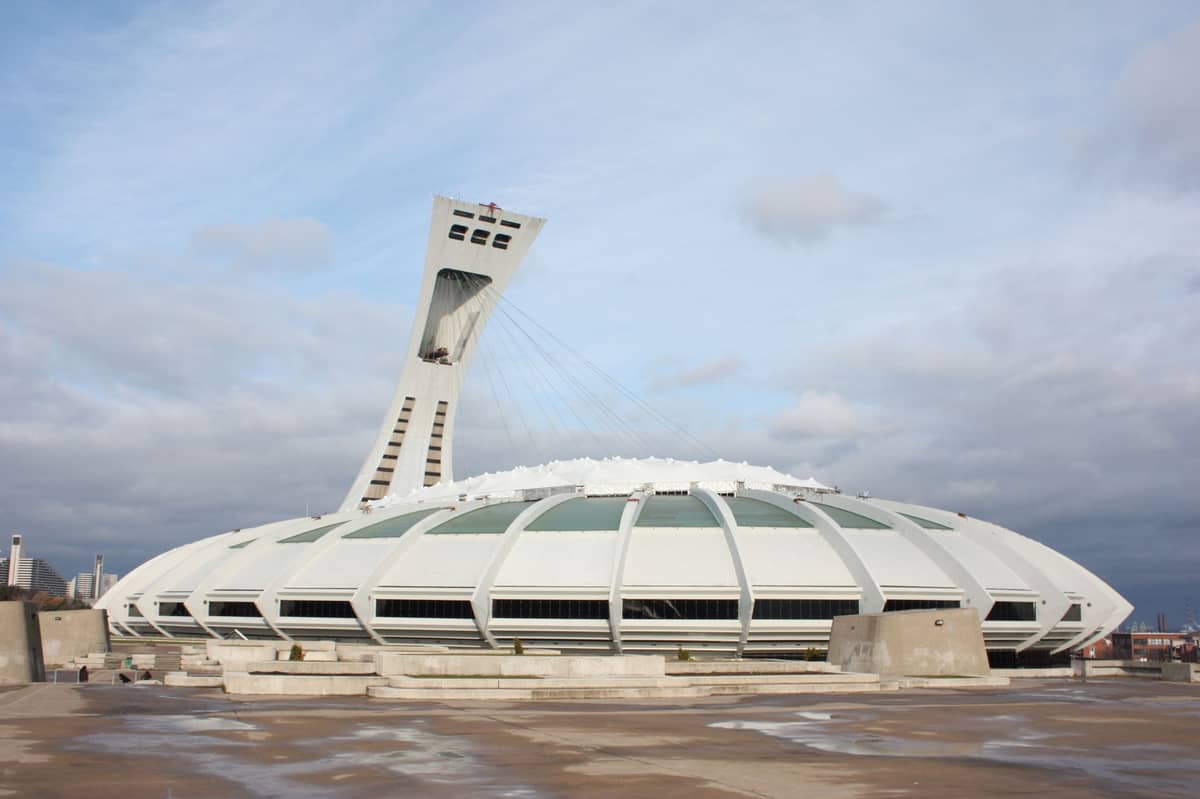
- Olympic Stadium, designed by Roger Taillibert for the 1976 Summer Olympics, features the world's tallest inclined tower at 175 metres.
- The most efficient route: start in Old Montreal, take the Orange Line metro toward downtown, then switch to the Green Line to Viau station for Olympic Park.
- Summer offers the best outdoor walking conditions; winter visits are possible but require planning around snow, ice, and variable opening hours.
- Montreal's architecture is spread across distinct neighborhoods, each with its own character. A single day won't cover everything, but a well-planned two-day route will.
Why Montreal's Architecture Stands Apart
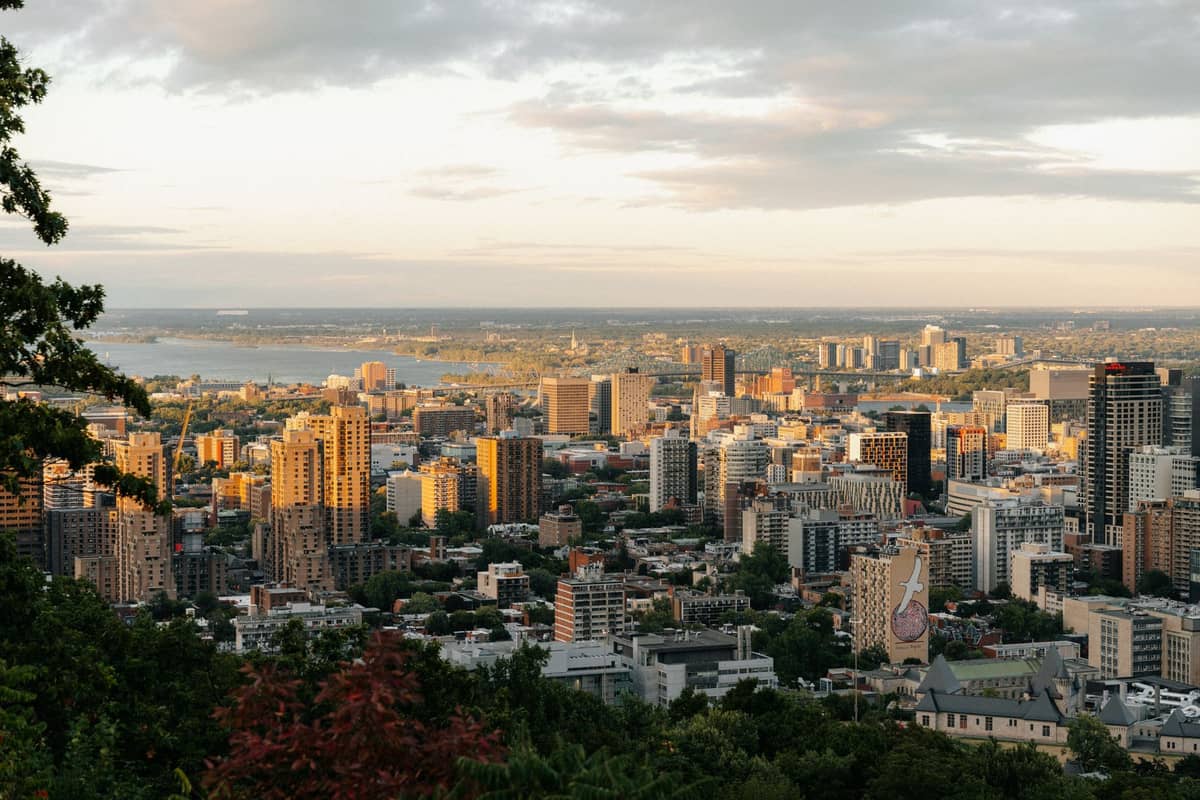
Few cities in North America carry the same architectural density as Montreal. The island has been continuously settled since the 1640s, and unlike many North American cities that bulldozed their historic cores through the mid-20th century, Montreal retained large swaths of its older building stock. The result is a city where you can walk from 17th-century stone warehouses to a Brutalist sports complex within a few metro stops.
The architecture reflects the city's layered history: French colonial construction methods, British institutional grandeur, waves of immigrant communities building their own institutions, and a series of bold modernist interventions. Expo 67 alone produced structures that still define the city's skyline, including Habitat 67, Moshe Safdie's stacked concrete housing experiment that remains one of the most photographed buildings in Canada.
ℹ️ Good to know
Montreal's official language is French. Building names, metro signage, and most plaques appear in French first. Knowing a few terms helps: 'basilique' is basilica, 'hôtel de ville' is city hall, and 'vieux' means old.
Old Montreal: The Colonial Core
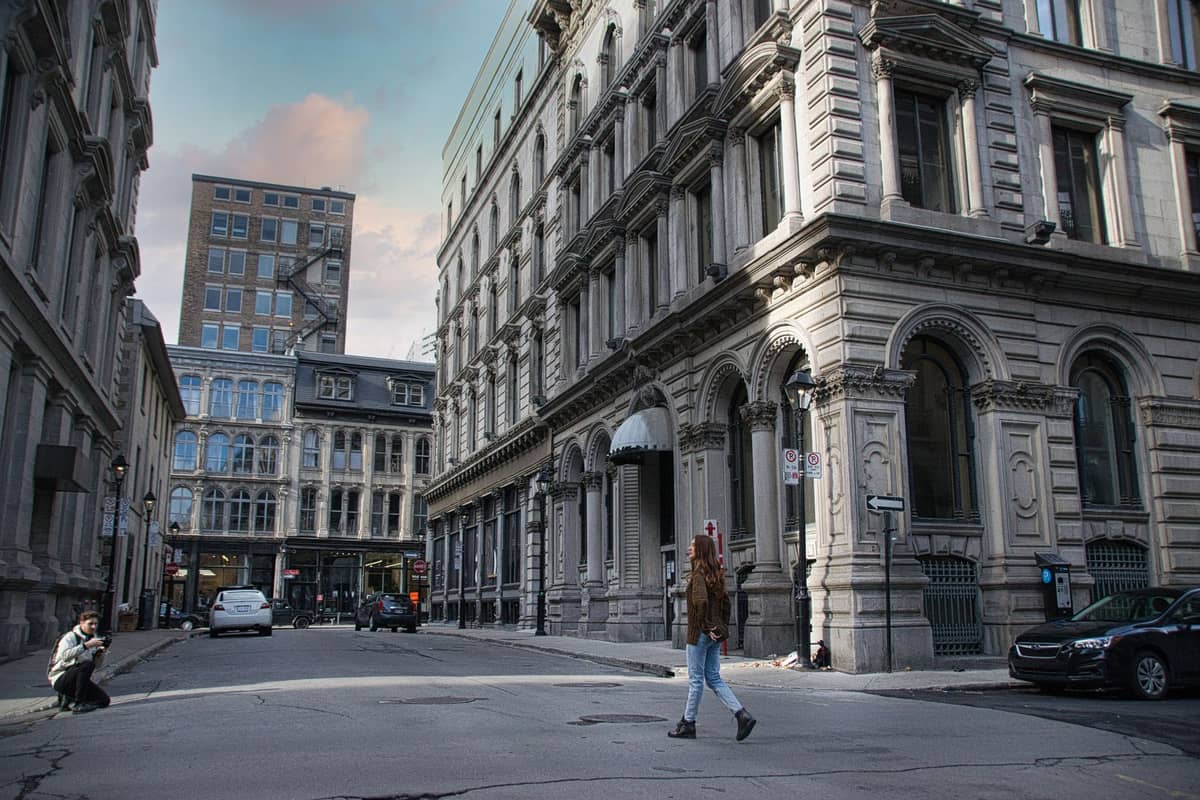
Old Montreal is the logical starting point for any architectural tour. The district sits along the Saint Lawrence River and preserves a streetscape that has evolved since 1685, making it the oldest concentrated urban fabric in the city. The Pointe-à-Callière Museum sits on the exact site of Montreal's original settlement and is itself a clever piece of contemporary architecture inserted into historic ruins.
Notre-Dame Basilica, completed in 1829, is the district's anchor. Designed by Irish-American architect James O'Donnell in the Gothic Revival style, it's one of the largest churches in North America and a designated National Historic Site of Canada. The interior is particularly striking, with deep blue vaulted ceilings, gilded woodwork, and stained glass panels depicting scenes from Montreal's history rather than biblical stories. Admission costs around $15 CAD for adults; verify the current rate before visiting. Also worth noting on the same square is Montreal City Hall, a Second Empire building completed in 1878 that was partly rebuilt after a 1922 fire.
Walking east from Notre-Dame along Saint-Paul Street, you'll pass some of the best-preserved 19th-century commercial architecture in the city: stone facades, cast-iron detailing, and narrow lot widths that reflect the French colonial street grid. Bonsecours Market at the eastern end of the Old Port dates to 1847 and is recognizable by its silver dome, which served as a navigational landmark for ships entering the port.
💡 Local tip
Visit Old Montreal on a weekday morning to walk the streets with minimal crowds. By midday in summer the main squares fill quickly. The stone buildings retain heat poorly, so mornings in spring and fall can be cool even when the afternoon warms up — bring a layer.
- Notre-Dame Basilica Gothic Revival, completed 1829. The interior blue-and-gold scheme is more ornate than most European churches of the same era.
- Pointe-à-Callière Museum Contemporary building integrating archaeological ruins of the 1642 settlement. Combines old and new construction well.
- Bonsecours Market Neoclassical, 1847. The dome was once the city's main landmark visible from the river.
- Montreal City Hall Second Empire French architecture, rebuilt 1878-1926. De Gaulle delivered his 'Vive le Québec libre' speech from the balcony in 1967.
- Notre-Dame-de-Bon-Secours Chapel The current structure dates to 1771, making it one of the oldest surviving churches in Montreal. Mariners' votive models hang from the ceiling.
Downtown and the Institutional Core
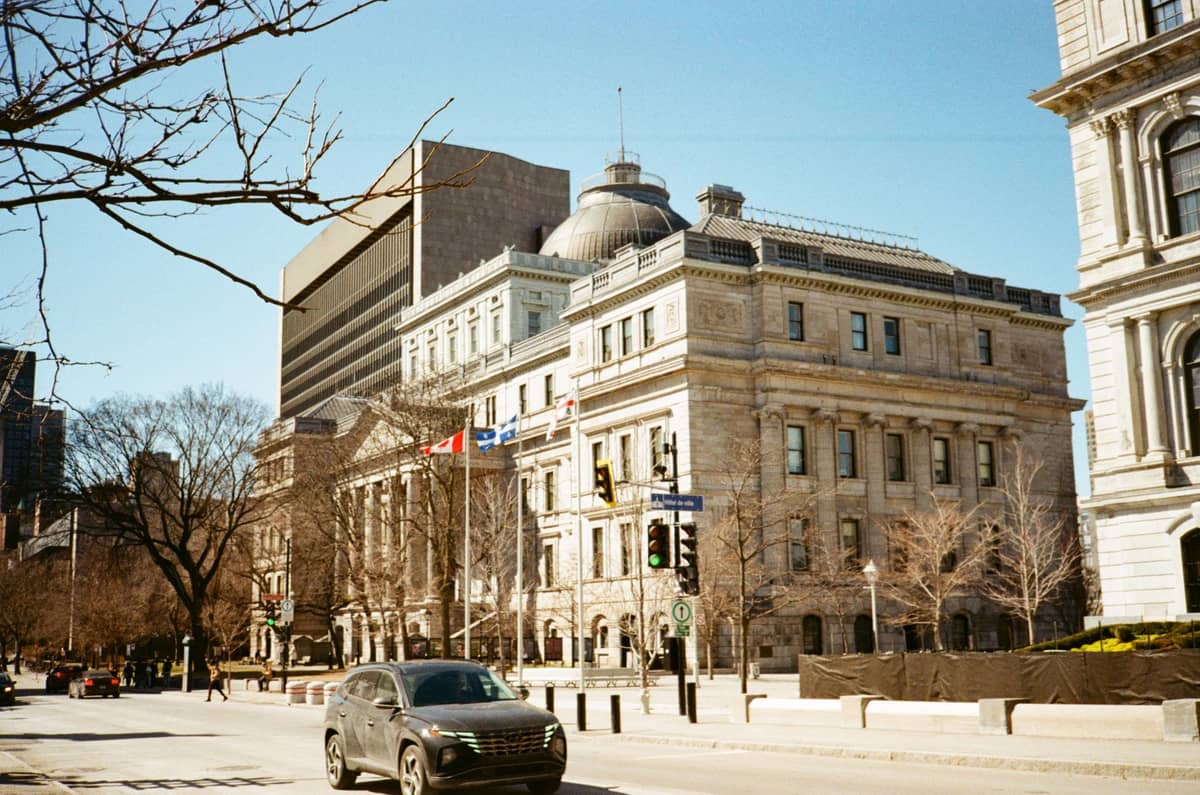
Moving north and west from Old Montreal, downtown Montreal is where you encounter the 19th and early 20th-century institutional architecture that shaped the city's identity as a financial and cultural capital. McGill University occupies a campus at the base of Mount Royal with buildings spanning from the 1840s neoclassical Arts Building to mid-century modernist additions. The contrast in styles across a single green space is a condensed lesson in how Montreal's growth unfolded.
The Montreal Museum of Fine Arts on Sherbrooke Street West occupies several buildings from different eras, including a Beaux-Arts pavilion from 1912 and a later glass-and-stone addition across the street, connected by an underground passage. The Mary Queen of the World Cathedral nearby is a smaller-scale replica of St. Peter's Basilica in Rome, built between 1870 and 1894. It's frequently overlooked by visitors focused on the more famous Notre-Dame, but the proportions and setting in the middle of downtown make it worth a stop.
Downtown is also where Montreal's Underground City, known as the RÉSO, becomes relevant architecturally. Over 33 kilometres of underground passages connect metro stations, shopping complexes, and office towers, creating an interior urban fabric that functions as its own city during winter. The Underground City is easy to miss as architecture precisely because it lacks a singular street presence, but its scale and the way it shapes how Montrealers move through winter is genuinely impressive.
Residential Architecture: The Plateau and Beyond
Montreal's most distinctive contribution to everyday residential architecture is the exterior staircase. Walk through Plateau-Mont-Royal and you'll see block after block of two- and three-storey duplexes and triplexes with iron or wooden staircases running up the exterior to upper-floor entrances. This wasn't decorative — it kept interior square footage usable and reduced heat loss from common stairwells. The style is specific to Montreal and developed primarily between the 1880s and 1930s.
The Plateau also contains some of the city's best examples of the local 'plex' typology: narrow-fronted buildings on French-style long lots, often with curved iron railings, ornamental brick, and recessed balconies. The area around Avenue du Mont-Royal and Rue Saint-Denis is particularly dense with these. Further north, Mile End adds a different layer: late 19th-century rowhouses and small commercial blocks that reflect the waves of Jewish, Greek, and Portuguese immigrants who shaped the neighborhood before its current creative profile.
✨ Pro tip
The best time to photograph Plateau staircases is late afternoon in spring or early fall, when low-angle light catches the iron railings and creates strong shadows against the brick. Summer foliage often obscures the upper floors entirely.
Olympic Park: Ambition, Excess, and Engineering
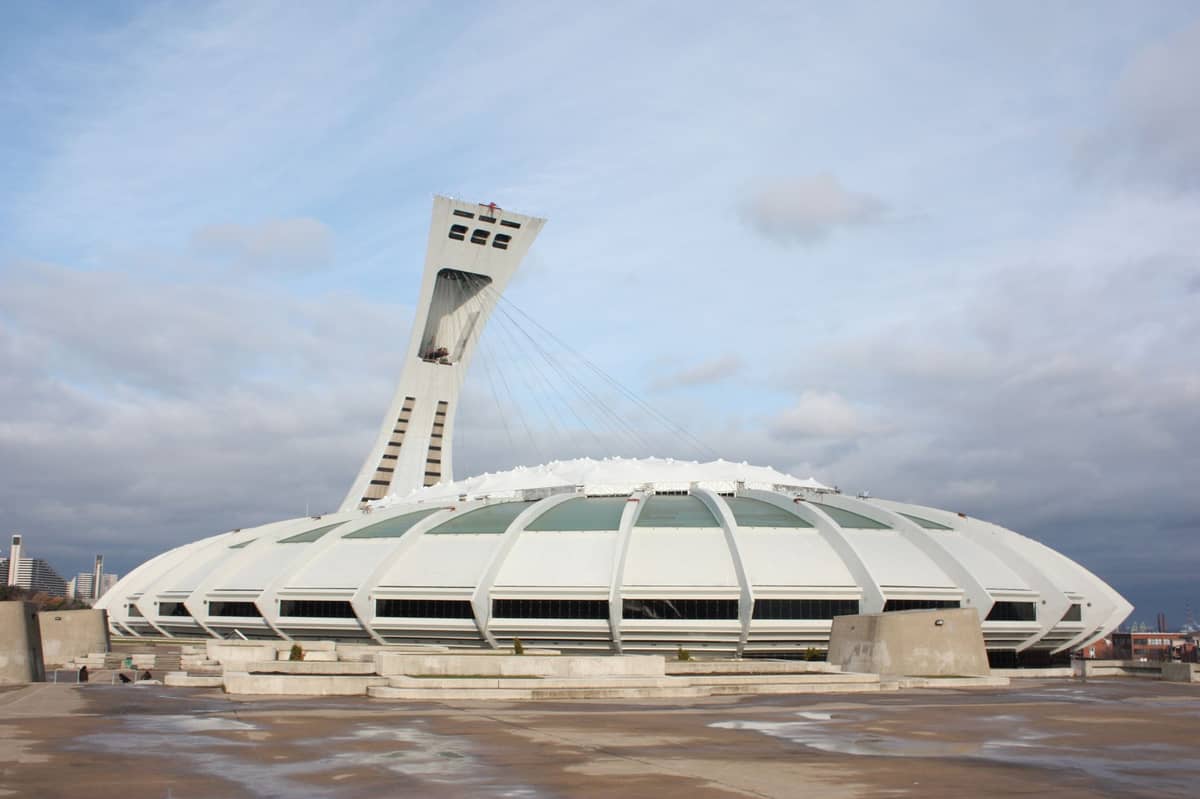
Olympic Park is Montreal's most polarizing architectural site. Commissioned for the 1976 Summer Olympics and designed by French architect Roger Taillibert, the complex was meant to signal Montreal's status as a world-class city. It succeeded architecturally. Financially, it was a cautionary tale: the stadium's debt wasn't fully paid off until 2006, thirty years after the Games.
The defining feature is the inclined tower, which rises 175 metres from the stadium's north base at a 45-degree angle. It's certified as the world's tallest inclined tower. The original retractable roof concept was never fully functional during the Olympics themselves, and the roof system has been a recurring maintenance problem. This is not a minor footnote: the gap between Taillibert's vision and the building's actual performance is part of what makes it worth studying. The Montreal Tower has a funicular that carries visitors to an observation deck with views over the city, the St. Lawrence River, and on clear days, the Green Mountains in Vermont.
The surrounding complex includes the Olympic Stadium, the velodrome (now the Biodôme), and the swimming facilities. The Rio Tinto Alcan Planetarium is a more recent addition, completed in 2013. The complex is accessible via Viau metro station on the Green Line. Regular Centre sportif hours run Monday to Friday from 6:30 a.m. to 10 p.m. and Saturday to Sunday from 8 a.m. to 6 p.m., but hours shift around events and public holidays, so check before you go.
⚠️ What to skip
Olympic Stadium is not a comfortable walk from central Montreal. It's roughly 7 km from Old Montreal and the surrounding streets offer little interest along the way. Take the metro: Green Line to Viau station puts you at the stadium's door in around 25 minutes from downtown.
- Olympic Stadium Taillibert's Brutalist concrete shell seats around 56,000 and continues to host concerts and trade shows. Tours of the interior are available.
- Montreal Tower 175-metre inclined tower with a funicular to the observation level. The engineering is genuinely unusual; no other structure like it exists.
- Biodôme The former Olympic velodrome converted into a natural environment museum. The cycling track's curved concrete shell is still visible from inside.
- Botanical Garden Adjacent to the stadium complex, the Montreal Botanical Garden covers 75 hectares and is considered one of the most significant in the world.
Planning Your Architecture Route
A practical two-day structure: spend day one in Old Montreal and downtown, using the metro's Orange Line to connect between areas. On day two, head to Plateau-Mont-Royal on foot or by bus, then take the Green Line to Viau for Olympic Park in the afternoon. For visitors with only one day, prioritize Old Montreal, walk north through downtown, and save Olympic Park for a separate trip. The 3-day Montreal itinerary covers this sequencing in more detail.
Seasonally, the outdoor streetscape walks in Old Montreal and the Plateau work best from May through October. Winter visits are possible but ice on cobblestones in Old Montreal is genuinely hazardous, and many outdoor viewpoints become less accessible. Olympic Park operates year-round but the approach from the metro is exposed and cold in January. If you're visiting in winter, the winter Montreal guide covers practical adjustments including the Underground City as an architectural experience in its own right.
For architectural depth beyond the main sites, the Canadian Centre for Architecture in Shaughnessy Village is one of the best architecture museums in the world. It combines a research institution with a renovated 1874 mansion and a modern wing, and regularly mounts exhibitions on Montreal's built environment. It's not on most tourist itineraries, which is exactly why it's worth prioritizing if architecture is your primary interest.
FAQ
What is the most architecturally significant building in Montreal?
There's no single answer, but Notre-Dame Basilica and Olympic Stadium are typically cited first. Notre-Dame is the most visited and the most historically layered. Olympic Stadium is the most structurally audacious. For those interested in modernist residential design, Habitat 67 from Expo 67 is arguably the most internationally influential.
How do I get to Olympic Park by public transit?
Take the Green Line metro to Viau station. The station provides access to the Olympic Park complex. From downtown, allow roughly 20–25 minutes depending on your starting station and transfers. The STM regular one-trip All Modes A fare is $3.75 CAD; verify the current rate with STM before your visit as fares can change.
Can you tour inside Notre-Dame Basilica?
Yes. The basilica is open to visitors outside of Mass times. Admission is charged; the rate is around $15 CAD for adults but verify directly with the basilica before visiting. The light-and-sound show called AURA runs on select evenings and requires a separate ticket.
Is Montreal's architecture best seen in summer or another season?
Late May to early October is the most practical window for outdoor walking tours. September and early October combine moderate temperatures with autumn foliage that frames Plateau rowhouses particularly well. Winter reveals the structural logic of buildings unobscured by trees, but ice on Old Montreal's cobblestones and exposed conditions around Olympic Park are real drawbacks.
What Montreal neighborhood has the most interesting everyday architecture?
Plateau-Mont-Royal for its distinctive exterior staircase typology and dense 'plex' housing stock. Mile End for a mix of working-class rowhouses and small institutional buildings. Old Montreal for density of heritage stonework. Each represents a different era and social history of the city.