Montreal's Underground City (RÉSO): What It Actually Is and How to Use It
The Underground City, officially the Réseau piétonnier souterrain de Montréal (RÉSO), is a 32-kilometre network of pedestrian tunnels, corridors, and concourses connecting downtown Montreal's metro stations, office towers, hotels, and shopping centres. It is free to walk through, genuinely useful in winter, and worth understanding before you explore downtown.
Quick Facts
- Location
- Downtown Montreal, QC — distributed network; key access at Square-Victoria–OACI, Bonaventure, and McGill métro stations
- Getting There
- STM Métro: Orange and Green lines. Enter at McGill, Bonaventure, or Square-Victoria–OACI stations
- Time Needed
- 30 minutes (transit use) to 3+ hours (exploration or shopping)
- Cost
- Free to walk. Metro fare required for transit; individual shops and restaurants charge separately
- Best for
- Winter visitors, commuters, shoppers, and anyone who wants to understand how downtown Montreal actually functions
- Official website
- montreal.ca/articles/reso-le-reseau-souterrain-de-montreal-13713
What RÉSO Actually Is
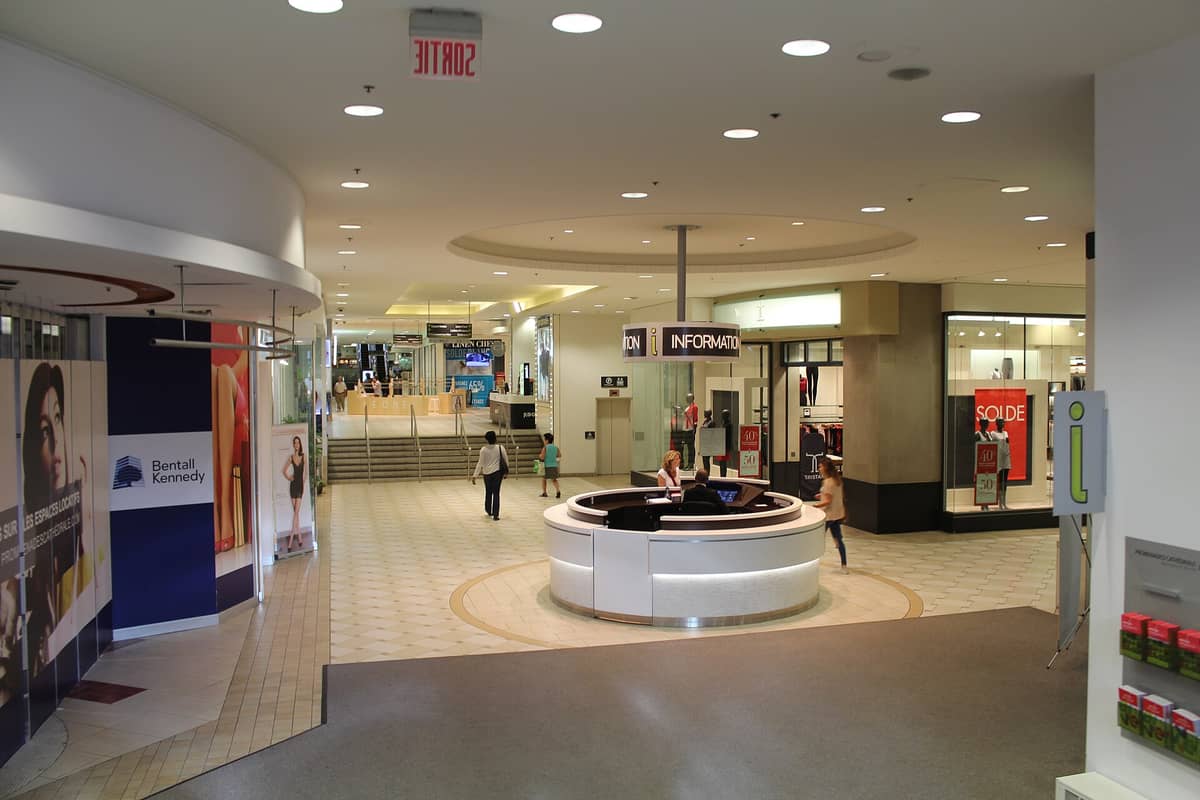
The Underground City, known officially as the Réseau piétonnier souterrain de Montréal and commonly written as RÉSO, is not a single building, attraction, or shopping mall. It is a network of approximately 32 kilometres of pedestrian corridors and concourses running beneath downtown Montreal, connecting metro stations, office towers, hotels, universities, shopping centres, and cultural venues. You can enter through a hotel lobby, walk underground to a metro platform, continue through a shopping complex, and surface inside an office tower, never once stepping outside.
This matters for context: RÉSO is infrastructure as much as it is an attraction. Tens of thousands of Montreal workers use it daily without thinking of it as a tourist destination at all. For visitors, it functions best as a practical tool in cold weather, or as a lens through which to understand how the city has adapted to a climate where winter temperatures routinely drop below -9°C.
ℹ️ Good to know
RÉSO has no single entrance, no single operating schedule, and no ticket booth. Hours vary section by section depending on the building, shopping centre, or metro corridor you are in. Most commercial areas are open during standard business hours; metro-connected corridors follow STM operating hours. Verify specific sections before planning an early-morning or late-night visit.
How the Network Grew: A City Built Downward
The origins of RÉSO trace to the construction of Place Ville Marie in 1962, a cruciform skyscraper developed by William Zeckendorf and designed by I.M. Pei's firm, with underground commercial space connected to the new Montreal Metro. The concept was deliberate: create a climate-controlled pedestrian realm that would keep downtown commercially viable even through Quebec winters. As subsequent towers, hotels, and shopping complexes were developed over the following decades, each new project extended the network further.
The result is a kind of accidental urban infrastructure, built project by project rather than master-planned from above. That piecemeal history explains why some sections feel polished and well-signed while others are narrow, dimly lit service corridors that feel like finding a passage behind the stage of a theatre. The architecture varies enormously: the concourse beneath the Palais des congrès has its famous multicoloured glass facade visible from below; the older tunnels near McGill station have the slightly institutional feel of a 1970s airport.
RÉSO now connects with major downtown landmarks including the Bell Centre arena, the Montreal Museum of Fine Arts, Place des Arts, and multiple metro stations. It is one of the largest underground pedestrian networks in the world by total length.
Tickets & tours
Hand-picked options from our booking partner. Prices are indicative; availability and final rates are confirmed when you complete your booking.
Montreal evening cruise on the St. Lawrence River
From 54 €Instant confirmationFree cancellation3-hour e-bike guided tour in Montreal
From 68 €Instant confirmationFree cancellationWalking tour of Old Montreal
From 20 €Instant confirmationFree cancellationMontreal helicopter tour
From 156 €Instant confirmationFree cancellation
What It Feels Like to Walk Through
Step underground at McGill station on a Tuesday morning in February and the sensory shift is immediate: the bitter cold vanishes, replaced by dry, heated air carrying the smell of coffee from nearby food court counters and, faintly, the particular dusty-warm scent of a metro system. The sound of boots on polished concrete replaces street noise. Workers in wool coats move with practiced speed, pulling off scarves mid-stride. The rhythm is less like a tourist attraction and more like an airport terminal: purposeful, efficient, and slightly anonymous.
Navigation requires attention. Signage within RÉSO has improved over the years but is still inconsistent. Some intersections have clear colour-coded maps showing nearby buildings and exits; others have no directional signage at all. The network connects across multiple levels in some sections, with escalators dropping you from one retail tier to another before continuing toward a metro platform. First-time visitors frequently surface in the wrong building. This is not necessarily a problem: half the interest of RÉSO is discovering what unexpected space you have emerged into.
During weekday lunch hours, between roughly 11:30 and 13:30, the central corridors near Place Ville Marie and Les Coopérants fill with office workers. The food options at this hour are genuinely good and fast: poke bowls, Vietnamese soup counters, bakeries, sushi take-out. The smell shifts corridor by corridor. Early mornings before 8:00 and weekend afternoons have a quieter character, with more retail browsing and less directional urgency.
💡 Local tip
Download a RÉSO map before entering. The Ville de Montréal and third-party sites like montreal-underground.com publish detailed corridor maps. Cell signal is intermittent underground, and offline maps will save you from wandering in circles in a poorly signed passage near Bonaventure.
When to Use It: Season and Time of Day
RÉSO's value is inversely proportional to the weather above ground. On a clear summer afternoon in July, when downtown Montreal is pleasantly warm, there is little reason to duck underground unless you are specifically shopping or cutting across to the metro. The network can feel sealed-off and artificially lit when the outdoors is genuinely pleasant.
In winter, the calculation reverses entirely. When temperatures fall below -15°C with windchill, which happens with regularity from December through February, walking above ground for even ten minutes in light clothing is genuinely uncomfortable. RÉSO becomes less of a curiosity and more of a basic convenience: a way to travel substantial distances between downtown destinations without layering up every time you move between buildings. For visitors staying in a connected downtown hotel, it is possible to reach multiple museums, shopping centres, and the metro without wearing a coat at all.
Shoulder seasons, particularly March and November, are when RÉSO usage spikes most noticeably among residents. The weather is unpredictable enough that the underground becomes default routing. If you are planning a winter visit to Montreal, familiarising yourself with two or three key RÉSO corridors before you arrive will noticeably improve your daily comfort.
Practical Walkthrough: Key Sections to Know
The network is large enough that trying to explore all of it in one session produces fatigue without much reward. Instead, think in corridors and clusters.
The McGill to Bonaventure corridor is the most visitor-friendly stretch, passing through Eaton Centre, Place Montreal Trust, Place Ville Marie, and several hotel lobbies. The signage is better here than in most other sections, and the retail mix covers everything from pharmacy staples to clothing chains. This is the section most relevant for tourists doing practical errands while exploring downtown.
The Square-Victoria area connects toward the Palais des congrès and Old Montreal's edges, but the transition corridor between the financial district and the Old Port is where signage becomes sparse. The tunnels here can feel like maintenance passages: narrower, less retail-facing, with overhead pipes visible above drop ceilings. They are functional but not scenic.
The section near the Bell Centre connects to several hotel towers and is particularly useful during events. If you are attending a Bell Centre game or concert, arriving via the underground from Lucien-L'Allier or Bonaventure station lets you avoid the outdoor crowd crush entirely.
⚠️ What to skip
Not all metro stations in the RÉSO zone are fully accessible. Some older stations lack elevators, and several underground corridors involve stairs without accessible alternatives. If you have mobility considerations, check the STM accessibility map and Tourisme Montréal's accessibility notes before planning a route.
Shopping, Food, and What Is Actually Down Here
RÉSO is not a single shopping mall with a curated tenant list. It incorporates several distinct retail properties, each with different anchors and atmospheres. Cours Mont-Royal occupies a converted 1920s hotel building and has a more upscale character, with Quebec designers and independent retailers alongside international brands. Les Promenades de la Cathédrale, built beneath Christ Church Cathedral and one of the more architecturally unusual projects in the network, has mid-range retail on several levels. Eaton Centre remains the largest single shopping component.
Food court quality varies. The best options tend to be in individual restaurant concepts scattered throughout the corridors rather than in the large multi-vendor food courts, which lean toward standard fast food. For a better lunch, look for the independent counters tucked into corridor junctions near Place Ville Marie and the financial district towers.
RÉSO is also relevant if you are shopping more broadly. The network connects to most of the major downtown retail zones that you would find in any Montreal shopping guide, and navigating between them underground in winter is significantly more comfortable than repeated outdoor crossings on Sainte-Catherine Street.
Honest Assessment: Limitations and Overhyped Aspects
RÉSO is frequently described in superlative terms in travel media. The '32 kilometres' figure gets repeated as if it implies a single coherent underground world. The reality is more fragmented. Many of those kilometres are transition corridors between buildings, not shopping arcades or visitor-facing spaces. Parts of the network are genuinely dull: low ceilings, fluorescent lighting, no natural light, and the slight disorientation of not knowing which street you are under or which direction you are facing.
As a pure tourist attraction to seek out in good weather, RÉSO is weak. There is nothing visually spectacular, no single dramatic space to photograph, and no singular cultural experience. Its value is practical and contextual. The visitors who get the most from it are those who use it as a functional part of navigating downtown, not those who go underground specifically to sightsee.
If you are visiting Montreal in summer and focused on outdoor experiences, neighbourhoods like Plateau-Mont-Royal or the Old Port will reward your time far more than the underground network. RÉSO earns its place in a Montreal visit when the temperature, your itinerary, or your agenda make it genuinely useful.
Insider Tips
- The cleanest and most comfortable public washrooms in downtown Montreal are often inside the RÉSO-connected hotel lobbies and shopping centres, not at street level. In a pinch, the Marriott Château Champlain and Fairmont Queen Elizabeth lobbies both have well-maintained facilities accessible from the underground.
- If you get disoriented underground, head for the nearest metro station signage and reorient from there. Every metro station in the network has consistent STM maps showing you which street you are below and which exits lead where.
- The underground sections near the financial district on weekday mornings are excellent for people-watching: the professional dress code, the speed of movement, and the coffee-in-hand commuter ritual are quintessentially Montréal weekday. It is a slice of daily urban life that purely tourist-facing areas do not show.
- Several underground corridors have rotating public art installations. The Palais des congrès section, with its coloured glass panels casting light on the passage below, is worth walking through specifically for the architectural effect. It photographs better in the morning when foot traffic is lighter.
- If you are arriving by VIA Rail at Gare Centrale (Central Station), the building is directly connected to RÉSO. You can walk from the train platform to a downtown hotel, shopping complex, or metro station without once going outside, which is particularly useful if you are arriving in winter with luggage.
Who Is Underground City (RÉSO) For?
- Winter visitors who want to move between downtown attractions without repeated exposure to extreme cold
- Shoppers covering multiple downtown retail zones in a single outing
- Business travellers connecting between hotels, offices, and the convention centre (Palais des congrès)
- Curious urbanists and architecture enthusiasts interested in how a major city adapts its infrastructure to climate
- Anyone arriving at Gare Centrale by train who needs a seamless route to their downtown accommodation
Nearby Attractions
Other things to see while in Downtown Montreal:
- Bell Centre
The Bell Centre is Montreal's premier indoor arena, home to the storied Montreal Canadiens and one of North America's highest-capacity NHL venues. Whether you're coming for hockey, a concert, or just to soak up the atmosphere outside, this guide covers everything you need to make the most of your visit.
- Canadian Centre for Architecture
The Canadian Centre for Architecture (CCA) is both a museum and an international research centre devoted to architecture and urbanism. Located on René-Lévesque Boulevard in downtown Montreal, it holds one of the world's most significant architecture collections and stages exhibitions that challenge how we think about cities, design, and space.
- Mary Queen of the World Cathedral
Standing at the heart of downtown Montreal, Mary Queen of the World Cathedral is a one-fifth-scale replica of St. Peter's Basilica in Rome, completed in 1894. Free to enter daily, it offers one of the most striking architectural contrasts in the city: solemn stone and gilded interiors set directly against glass towers and commuter traffic.
- McCord Stewart Museum
The McCord Stewart Museum on Sherbrooke Street West holds one of Canada's richest collections of photographs, clothing, Indigenous artifacts, and everyday objects tracing over 350 years of Montreal and Canadian life. Serious in scope but accessible in presentation, it rewards curious visitors who want more than architecture tours.