McCord Stewart Museum: Montreal's Window Into Canadian Social History
The McCord Stewart Museum on Sherbrooke Street West holds one of Canada's richest collections of photographs, clothing, Indigenous artifacts, and everyday objects tracing over 350 years of Montreal and Canadian life. Serious in scope but accessible in presentation, it rewards curious visitors who want more than architecture tours.
Quick Facts
- Location
- 690 Sherbrooke Street West, Downtown Montreal (across from McGill University)
- Getting There
- McGill metro station (Green Line), approximately 5 minutes on foot
- Time Needed
- 2 to 3 hours for a thorough visit; 90 minutes if focused on one collection
- Cost
- Adults CAD $20, Seniors CAD $19, Students (18–30) CAD $15; Indigenous visitors, children and teens 17 and under free; Wednesday evenings free for some exhibitions and CAD $10 online for designated second-floor exhibitions
- Best for
- History enthusiasts, photographers, design lovers, families with older children
- Official website
- www.musee-mccord-stewart.ca/en
What the McCord Stewart Museum Actually Is
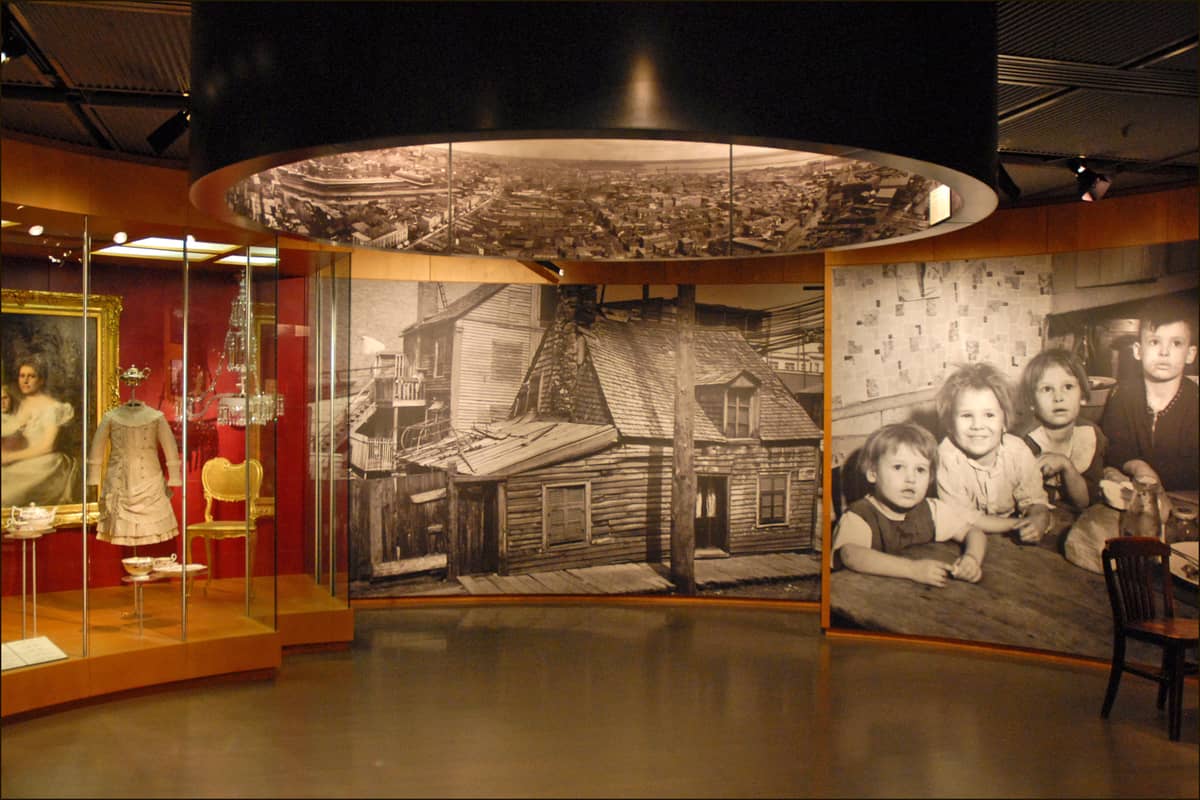
The McCord Stewart Museum is a social history museum, not an art museum. That distinction matters. Where fine-arts institutions organize experience around aesthetics and chronology of style, the McCord Stewart organizes around people: who lived in Montreal and Canada, how they dressed, what objects they owned, and how they understood themselves and each other. The result is a collection that feels intimate and specific in a way that large national museums rarely do.
The museum holds over 175,000 artifacts and 1.5 million archival photographs, making the Notman Photographic Archives alone one of the most important visual records of 19th- and early-20th-century Canadian life in existence. William Notman was a Scottish-born photographer who documented Montreal society from the 1850s onward with extraordinary technical precision. His studio portraits, composite photographs, and outdoor scenes provide a visual register of the city that no written record can match.
The building itself sits on Sherbrooke Street West directly across from McGill University, in the institutional corridor that defines upper downtown Montreal. The facade is understated, and first-time visitors sometimes walk past it. Look for the stone building with the museum signage at street level; the main entrance is on Sherbrooke, with the accessible and group entrance around the corner at 2175 Victoria Street.
💡 Local tip
Wednesday evenings offer free admission from 5:00 p.m. for designated exhibitions. Crowds are lighter after 6:00 p.m., and the natural light through the upper-floor windows shifts to a warm late-afternoon tone that makes the textile and clothing galleries particularly atmospheric.
The Collections: What You Will Actually See
The permanent collection rotates across several gallery spaces, but certain strengths are consistently present. The Indigenous cultures collection spans several thousand years and includes objects from First Nations, Métis, and Inuit communities across Canada. These are displayed with contextual information that situates objects within living cultural traditions rather than treating them as historical curiosities. The interpretation is more careful and current than at many comparable institutions.
The costume and fashion collection is one of the finest in North America for Canadian dress history. The museum holds garments from the 18th century onward, and when these are displayed, the level of detail rewards close attention: the cut of a mid-19th-century dress, the construction of a fur-trade-era coat, the difference in how working-class and upper-class Montreal dressed in the same decade. Labels are bilingual (French and English) throughout the museum.
Temporary exhibitions tend to address Canadian identity, urban change, immigration, or specific communities, and they are usually well-researched and visually strong. Check the museum's website before your visit, because the temporary gallery content can shift significantly every few months and sometimes frames the entire visit worthwhile on its own.
ℹ️ Good to know
The museum is closed on Mondays. Tuesday and Thursday through Sunday hours are 10:00 a.m. to 5:00 p.m. Wednesday hours extend to 9:00 p.m. Wednesday evening admission is free for some exhibitions, while designated second-floor exhibitions require a CAD $10 online ticket; holiday closures vary, so verify the official website before planning around a specific date.
Tickets & tours
Hand-picked options from our booking partner. Prices are indicative; availability and final rates are confirmed when you complete your booking.
Montreal evening cruise on the St. Lawrence River
From 54 €Instant confirmationFree cancellation3-hour e-bike guided tour in Montreal
From 68 €Instant confirmationFree cancellationWalking tour of Old Montreal
From 20 €Instant confirmationFree cancellationMontreal helicopter tour
From 156 €Instant confirmationFree cancellation
How the Experience Changes by Time of Day
Weekend mornings between 10:00 a.m. and noon tend to bring school groups and families with younger children. The ground-floor entrance area can feel crowded during drop-off windows. If your priority is the permanent collection galleries, heading directly to the upper floors on arrival is a useful tactic: most school groups stay on the main and second levels.
Weekday afternoons are consistently the quietest window. The Notman archives galleries, in particular, are rarely crowded, and the silence in those rooms alongside large-format photographs of 1870s Montreal has a particular quality that a busier visit does not provide. Late Wednesday evenings attract a different demographic: adults, often younger, who treat the free admission period as a casual cultural outing rather than a planned trip. The café area on the ground floor is more active at these times.
Natural light is present in some gallery spaces and absent in others, depending on the sensitivity of objects on display. Fragile textiles and photographs are shown under controlled lighting, which means certain rooms feel dim. Bring reading glasses if you rely on them for small-print labels.
Historical and Cultural Context
The museum takes its name from David Ross McCord, a Montreal lawyer and obsessive collector who spent decades accumulating artifacts, documents, and objects related to Canadian history. He died in 1930 having assembled one of the largest private collections in the country. McGill University eventually took over the collection and opened it to the public in the early 20th century. The museum was formally established in 1921, making it over a century old.
The Stewart name was added in recognition of a major donation from the Alcan (now Rio Tinto) family foundation, specifically the Gail and Stephen A. Jarislowsky Foundation and Zita Davisson Stewart, acknowledging the ongoing private philanthropy that keeps the institution running alongside public funding. The full name became McCord Stewart Museum in 2021.
For visitors exploring Montreal's museum landscape more broadly, the McCord Stewart occupies a specific niche: it is less encyclopedic than the larger institutions but more specific and more Montreal-focused than most. If you want to understand what the city actually looked like and how people lived here before the 20th century, no other institution in the city comes close. Pair it with a visit to Pointe-à-Callière Museum in Old Montreal for a complementary archaeological perspective on the same history.
Practical Walkthrough: Getting There and Getting Around Inside
From McGill metro station (Green Line), exit at the main Sherbrooke Street exit and walk west along Sherbrooke for approximately five minutes. The museum is on the north side of the street. The walk is flat and entirely on paved sidewalk. In winter, note that Sherbrooke is not part of Montreal's underground pedestrian network, so you will be outside for those five minutes: wear adequate footwear on snow days.
Visitors using wheelchairs, strollers, or mobility aids should use the accessible entrance at 2175 Victoria Street, on the museum’s west side. The museum is accessible to people with strollers, and it provides reserved access for people with disabilities.
Photography is generally permitted in the permanent collection galleries without flash. Temporary exhibition photography policies vary by exhibition and are posted at gallery entrances. The museum has a cloakroom for coats and bags, which is useful in winter. A café and a gift shop with well-chosen Canadian-designed goods are on the ground floor.
⚠️ What to skip
Tickets purchased at the door cost CAD $2 more than online tickets. If you plan to visit on a busy Saturday, buying online also speeds up entry. Wednesday evening admission is free for some exhibitions, while designated second-floor exhibitions require a CAD $10 online ticket; check the website to confirm which spaces are included before making the trip specifically for the free window.
Photography at the Notman Archives
The Notman Photographic Archives deserve particular attention from anyone interested in documentary photography or visual history. William Notman and his sons produced approximately 450,000 images between the 1850s and 1930s, covering Montreal society, Canadian landscapes, sports, Indigenous communities, and urban development. The museum displays a rotating selection of prints and has digitized a significant portion of the collection, which is accessible online.
In the gallery, the composite photographs are among the most technically remarkable objects: Notman would photograph individuals separately in his studio, then assemble them into large composite scenes, including hockey matches, skating parties, and tableaux involving hundreds of people. The results are simultaneously meticulous and slightly uncanny, and they record details of dress, posture, and equipment that no other source preserves.
Photography enthusiasts visiting Montreal should consider the McCord Stewart alongside the best museums in Montreal for a fuller picture of what the city's cultural institutions offer.
Who Should Think Carefully Before Visiting
The McCord Stewart is a quiet museum. The galleries are text-heavy, the pace is slow, and the most interesting material often requires reading carefully rather than standing back and taking in a visual spectacle. Visitors looking for immersive multimedia experiences, large-scale installations, or the kind of sensory intensity that a science centre or children's museum offers will not find it here.
Children under 10 may find the costume and archive galleries difficult to engage with unless accompanied by an adult who can contextualize what they are seeing. The Indigenous collection and some temporary exhibitions, however, have material that works well for older children, particularly if family history or Canadian identity is already a topic of interest at home.
Visitors with very limited time in Montreal who are prioritizing outdoor landmarks, architecture, and street-level experience may find that three hours inside a history museum is harder to justify. That said, a focused 90-minute visit covering the Notman Archives and one major temporary exhibition is a genuinely efficient use of a rainy afternoon.
Insider Tips
- The museum's online collection portal (accessible via the official website) allows you to browse Notman photographs by subject, year, and location before your visit. Identifying two or three images from Montreal streets or neighborhoods you plan to visit creates a useful frame for the city's physical geography.
- Wednesday evening free admission (from 5:00 p.m.) applies to designated exhibitions. Arrive at 5:00 p.m. sharp on a Wednesday in winter and you will often have the galleries nearly to yourself for the first 30 minutes.
- The gift shop stocks a thoughtful selection of Canadian design objects, books on Quebec and Canadian history, and reproduction prints from the Notman Archives. It is one of the better museum shops in the city for actually finding something you want to bring home.
- If you have a specific research interest in Canadian history, the museum's curatorial staff occasionally offer access to the study collections by appointment. This is not widely advertised but is noted in the museum's researcher access information.
- The café on the ground floor is small but usable as a meeting point or a quiet stop mid-visit. It is not a destination café, but it serves decent coffee and is a reasonable place to rest between gallery floors.
Who Is McCord Stewart Museum For?
- History and social history enthusiasts who want depth over spectacle
- Photography lovers, particularly those interested in 19th-century documentary work
- Travelers curious about Indigenous cultures of Canada presented with current, respectful interpretation
- Rainy-day visitors who want three hours of genuine engagement rather than waiting out weather
- Design and fashion history followers drawn to one of North America's strongest Canadian costume collections
Nearby Attractions
Other things to see while in Downtown Montreal:
- Bell Centre
The Bell Centre is Montreal's premier indoor arena, home to the storied Montreal Canadiens and one of North America's highest-capacity NHL venues. Whether you're coming for hockey, a concert, or just to soak up the atmosphere outside, this guide covers everything you need to make the most of your visit.
- Canadian Centre for Architecture
The Canadian Centre for Architecture (CCA) is both a museum and an international research centre devoted to architecture and urbanism. Located on René-Lévesque Boulevard in downtown Montreal, it holds one of the world's most significant architecture collections and stages exhibitions that challenge how we think about cities, design, and space.
- Mary Queen of the World Cathedral
Standing at the heart of downtown Montreal, Mary Queen of the World Cathedral is a one-fifth-scale replica of St. Peter's Basilica in Rome, completed in 1894. Free to enter daily, it offers one of the most striking architectural contrasts in the city: solemn stone and gilded interiors set directly against glass towers and commuter traffic.
- McGill University
Founded by royal charter in 1821, McGill University sits at the foot of Mount Royal in downtown Montreal, offering free public access to one of Canada's most architecturally striking campuses. Whether you're a prospective student, a history enthusiast, or simply looking for a quiet green space in the middle of the city, the campus rewards a slow, unhurried visit.