Bell Centre Montreal: What to Know Before You Go
The Bell Centre is Montreal's premier indoor arena, home to the storied Montreal Canadiens and one of North America's highest-capacity NHL venues. Whether you're coming for hockey, a concert, or just to soak up the atmosphere outside, this guide covers everything you need to make the most of your visit.
Quick Facts
- Location
- 1909 Avenue des Canadiens-de-Montréal, Downtown Montreal, QC H3B 4C9
- Getting There
- Bonaventure metro station (Orange Line) — underground access via the city’s walkway network
- Time Needed
- 3–4 hours for a game or concert; 30 minutes for the exterior experience
- Cost
- No general admission; ticket prices vary by event (CAD) — verify at centrebell.ca
- Best for
- Hockey fans, concert-goers, sports culture seekers, group outings
- Official website
- centrebell.ca/en
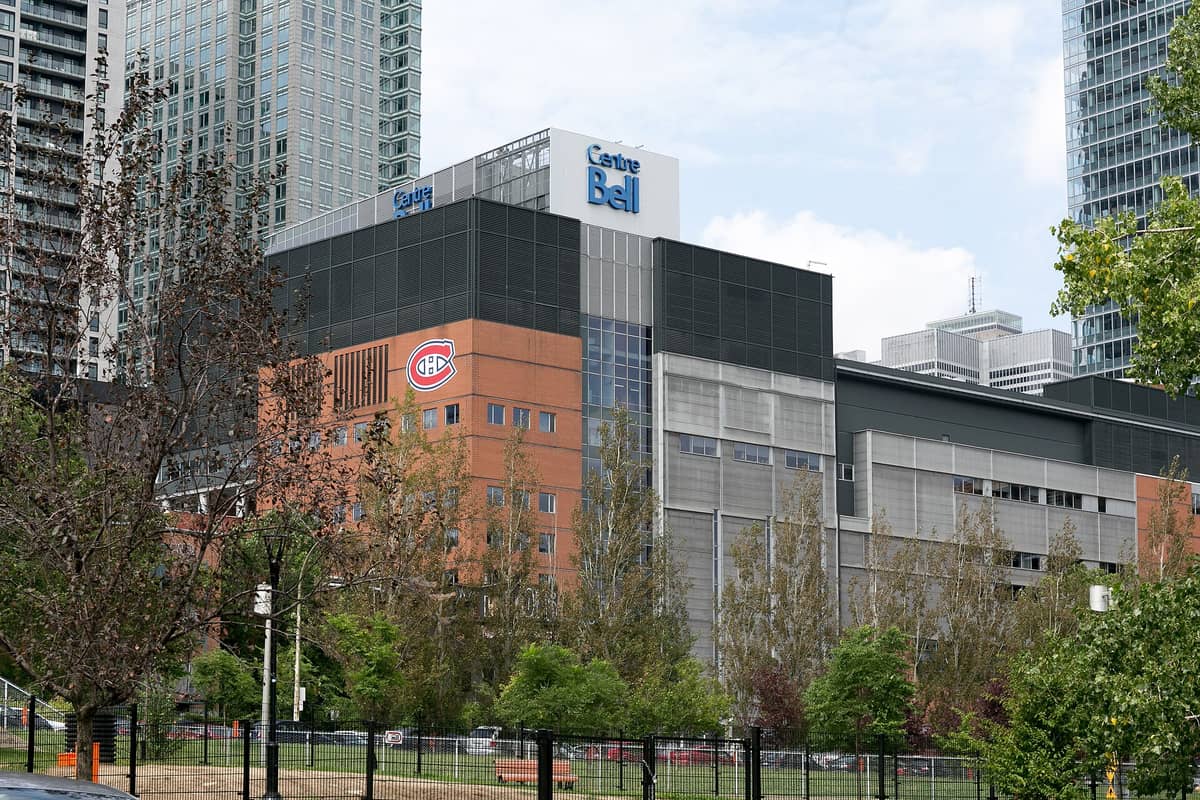
What the Bell Centre Actually Is
The Bell Centre — known officially in French as Centre Bell — is one of Canada’s largest arenas, holding more than 21,000 spectators for Montreal Canadiens hockey games. Opened on March 16, 1996, it anchors the western edge of downtown Montreal and functions as the city's primary venue for both major sporting events and large-scale concerts. This is not a museum or a casual walk-through attraction. It is an active, event-driven venue, and your experience here is almost entirely shaped by what's on the schedule.
For hockey, the building carries an emotional weight that is hard to overstate. The Montreal Canadiens are the winningest franchise in NHL history, with 24 Stanley Cup championships, and the culture around game nights here reflects that legacy. Even if you have only a passing interest in ice hockey, attending a Canadiens game at the Bell Centre is an experience embedded in Montreal's civic identity in a way few other attractions can match.
ℹ️ Good to know
The box office opens three hours before each event. Telephone service runs Monday to Friday, 10:00–17:00; on event days, service runs 10:00–20:00 on weekdays and noon–20:00 on Saturdays and Sundays. There is no walk-up access on non-event days for general visitors.
The Exterior: What You See Before Going In
From the street, the Bell Centre is a study in large-scale urban architecture from the mid-1990s: a circular steel-and-glass structure that occupies an entire city block between René-Lévesque Boulevard and Saint-Antoine Street. The exterior is functional rather than ornate, with none of the heritage character you find a few blocks east in Old Montreal. But on game nights, the plaza around the building transforms completely.
By 5:30 p.m. on a Canadiens game night, the sidewalks around Avenue des Canadiens-de-Montréal fill with fans in red, white, and blue jerseys. Street vendors position themselves at the corners; the smell of hot food and cold air mixes as crowds filter in from the Bonaventure metro below. The noise builds gradually — conversations in French, English, and a scatter of other languages — and by puck drop the area feels genuinely electric. Outside the arena, larger-than-life images of current and past Canadiens players line the building facade, giving even passersby a sense of the franchise's historical depth.
If you want to see the atmosphere without buying a ticket, arriving around 6:00 p.m. on a game night and lingering outside for 20–30 minutes gives you a real feel for Montreal's hockey culture. Pair it with a walk through downtown Montreal afterward for a complete evening.
Tickets & tours
Hand-picked options from our booking partner. Prices are indicative; availability and final rates are confirmed when you complete your booking.
Montreal Canadiens ice hockey game tickets at Bell Center
From 48 €Instant confirmationMontreal evening cruise on the St. Lawrence River
From 54 €Instant confirmationFree cancellation3-hour e-bike guided tour in Montreal
From 68 €Instant confirmationFree cancellationWalking tour of Old Montreal
From 20 €Instant confirmationFree cancellation
Inside on Event Night: What to Expect
Once inside, the scale of the arena hits immediately. The main concourse circles the entire bowl and is wide enough to move comfortably even during intermission, when the full crowd empties out of their seats at once. Sight lines from almost every section are strong — the bowl design means there are few truly bad seats, though the upper blues (the highest sections, roughly 300-level) do place you at a steep angle above the ice. For a first visit, mid-level seating in the reds or lower blues offers a good balance of proximity and overview.
The crowd behavior during a Canadiens game is worth understanding in advance. The anthem is a ritual: fans sing loudly in French and English, and the volume when the Canadiens score is genuinely startling if you're not expecting it. This is a deeply partisan environment. Opposing-team jerseys are common and perfectly safe to wear, but expect good-natured ribbing. At concerts, the configuration shifts and the floor is often opened as standing space, changing the feel of the room considerably.
💡 Local tip
Arrive at least 45 minutes early for Canadiens games. Security lines move efficiently but the sheer volume of 21,000 people funneling through a few entry points means late arrivals routinely miss the opening faceoff.
Food and drink options inside cover standard North American arena fare: hot dogs, poutine, draft beer, and several food stalls offering slightly more varied options on the upper concourse. Prices follow arena norms — expect to pay significantly more than street or restaurant prices for the same items. The beer, for what it's worth, is cold and served quickly, which matters during a fast-moving game.
The Canadiens and Their Place in Montreal's Identity
The Montreal Canadiens, founded in 1909, are the oldest active professional hockey team in the world. Their connection to French-Canadian identity and culture runs deep, and that weight is present inside the Bell Centre in ways that go beyond sports fandom. Retired jersey numbers hang from the rafters — Maurice Richard's number 9, Jean Béliveau's 4, Guy Lafleur's 10 — and the history they represent shapes how Montreal sees itself as a city. For context on how sports intersect with Montreal culture more broadly, the Montreal Forum, the team's legendary former home, is still standing a short distance away on Sainte-Catherine Street West, now operating as an entertainment complex.
The Bell Centre replaced the Forum in 1996 after it became clear the old building could no longer support a modern NHL franchise's operational needs. Capacity, luxury suites, and broadcast infrastructure drove the move. Some longtime fans still mourn the intimacy of the Forum; the Bell Centre is undeniably larger and more corporate in atmosphere, but it has developed its own identity over nearly three decades of championship runs, playoff dramas, and sold-out concerts.
Getting There and Getting Around
The Bell Centre is one of the most transit-accessible venues in Canada. Bonaventure metro station on the Orange Line connects to Montreal’s underground walkway network, allowing visitors to reach the arena from much of downtown without stepping outside. For transit information and route planning, the STM website is the authoritative source. More general guidance on moving around the city is covered in our . For transit information and route planning, the STM website is the authoritative source. More general guidance on moving around the city is covered in our getting around Montreal guide.
Driving and parking near the Bell Centre on event nights is a calculated inconvenience. Several commercial parking garages operate in the immediate area, including the arena's own indoor lot accessible from Saint-Antoine Street, but they fill early and charge premium event-night rates. If you're staying elsewhere in downtown Montreal, the metro is the practical choice. Uber and taxis are also readily available before the event but can be slow to dispatch immediately after games let out due to the volume of people leaving simultaneously.
⚠️ What to skip
After major events, Saint-Antoine Street and Boulevard René-Lévesque experience significant pedestrian and vehicle congestion for 30–45 minutes. If using a ride-hailing app, arrange a pickup at a specific secondary street rather than directly in front of the arena to avoid wait times.
Accessibility and Practical Logistics
The Bell Centre has designated accessible entrances at multiple points: the dedicated entrance at Place des Canadiens, the Avenue des Canadiens-de-Montréal entrance with elevators at section 119, and direct elevator access from the indoor parking area. Wheelchair rentals are available at the venue. The underground connection from Bonaventure metro is also elevator-accessible, making it a viable route for visitors with mobility limitations. That said, the main concourse during a sold-out event is dense and loud, which may be challenging for some visitors regardless of physical accessibility.
The venue does not offer general public tours as a regular program — it is primarily operational for events. If you are visiting Montreal specifically to experience the arena outside of a game or concert, you would need to check the official site for any tour offerings, as these are not a standard product. Most travelers who want to connect with hockey history in a more curated way seek out the Montreal Forum building or look into the team's official museum resources.
Who This Attraction Is Really For
The Bell Centre works best for people with a reason to be inside: a game ticket, a concert booking, or genuine curiosity about a live sporting event in one of the most passionate hockey cities in the world. Travelers who are not attending an event will find limited engagement beyond the exterior atmosphere. If you're looking for Montreal experiences that don't require event tickets, the city's free things to do in Montreal include a range of alternatives worth considering.
Visitors who are indifferent to hockey and not attending a concert may find the building unremarkable on its own. The architecture does not reward tourism the way Notre-Dame Basilica or Pointe-à-Callière Museum do. The Bell Centre's value is almost entirely in the live event experience, and that experience at its best — a playoff game, a sold-out show — is genuinely memorable.
Families with children can attend games comfortably; the environment is loud but not threatening, and younger fans often find the spectacle of professional hockey immediately engaging. For broader context on visiting Montreal with children, see our guide to Montreal with kids.
Insider Tips
- For the best value on Canadiens tickets, check the official NHL resale marketplace and the team's own website in the week before the game — prices often drop as the event approaches, especially for midweek matchups against less-visited opposing teams.
- The underground connection from Bonaventure metro to the Bell Centre is a genuine advantage in winter. Exit the metro at Bonaventure, follow the signs toward the arena, and you can reach your seat without putting on your coat — a small but meaningful comfort when temperatures drop below -10°C.
- The red section (200-level) offers a strong combination of proximity to the ice and a clear sightline down the length of the rink. If you're watching your first NHL game, this level gives you a better sense of the speed of play than the blues directly above the glass.
- Intermissions are 18 minutes long — enough time to visit the concession stands and return, but not if you wait until the horn sounds. Move during the final two minutes of each period to avoid the rush.
- On concert nights, the floor configuration varies significantly by artist. Standing floor tickets place you in the centre of the action but with no seatback to rest against during a long show. Check the specific stage layout on the official venue maps before choosing your tickets.
Who Is Bell Centre For?
- Hockey fans visiting Montreal specifically to see the Canadiens play in person
- Concert-goers attending major touring acts — the Bell Centre hosts some of the largest shows that come through Quebec
- Sports travelers interested in the culture and atmosphere of one of the NHL's most historic franchises
- Groups and families looking for a shared evening event with a defined schedule and central location
- First-time Montreal visitors who want to experience a distinctly local institution alongside more traditional sightseeing
Nearby Attractions
Other things to see while in Downtown Montreal:
- Canadian Centre for Architecture
The Canadian Centre for Architecture (CCA) is both a museum and an international research centre devoted to architecture and urbanism. Located on René-Lévesque Boulevard in downtown Montreal, it holds one of the world's most significant architecture collections and stages exhibitions that challenge how we think about cities, design, and space.
- Mary Queen of the World Cathedral
Standing at the heart of downtown Montreal, Mary Queen of the World Cathedral is a one-fifth-scale replica of St. Peter's Basilica in Rome, completed in 1894. Free to enter daily, it offers one of the most striking architectural contrasts in the city: solemn stone and gilded interiors set directly against glass towers and commuter traffic.
- McCord Stewart Museum
The McCord Stewart Museum on Sherbrooke Street West holds one of Canada's richest collections of photographs, clothing, Indigenous artifacts, and everyday objects tracing over 350 years of Montreal and Canadian life. Serious in scope but accessible in presentation, it rewards curious visitors who want more than architecture tours.
- McGill University
Founded by royal charter in 1821, McGill University sits at the foot of Mount Royal in downtown Montreal, offering free public access to one of Canada's most architecturally striking campuses. Whether you're a prospective student, a history enthusiast, or simply looking for a quiet green space in the middle of the city, the campus rewards a slow, unhurried visit.