Mile End
Mile End sits at the northern tip of the Plateau-Mont-Royal borough, a few blocks south of Little Italy and just east of Outremont. It has long drawn artists, writers, musicians, and waves of immigrant communities, leaving behind a neighborhood where a century-old bagel bakery shares a block with a record shop and a Portuguese fish market.
Located in Montreal
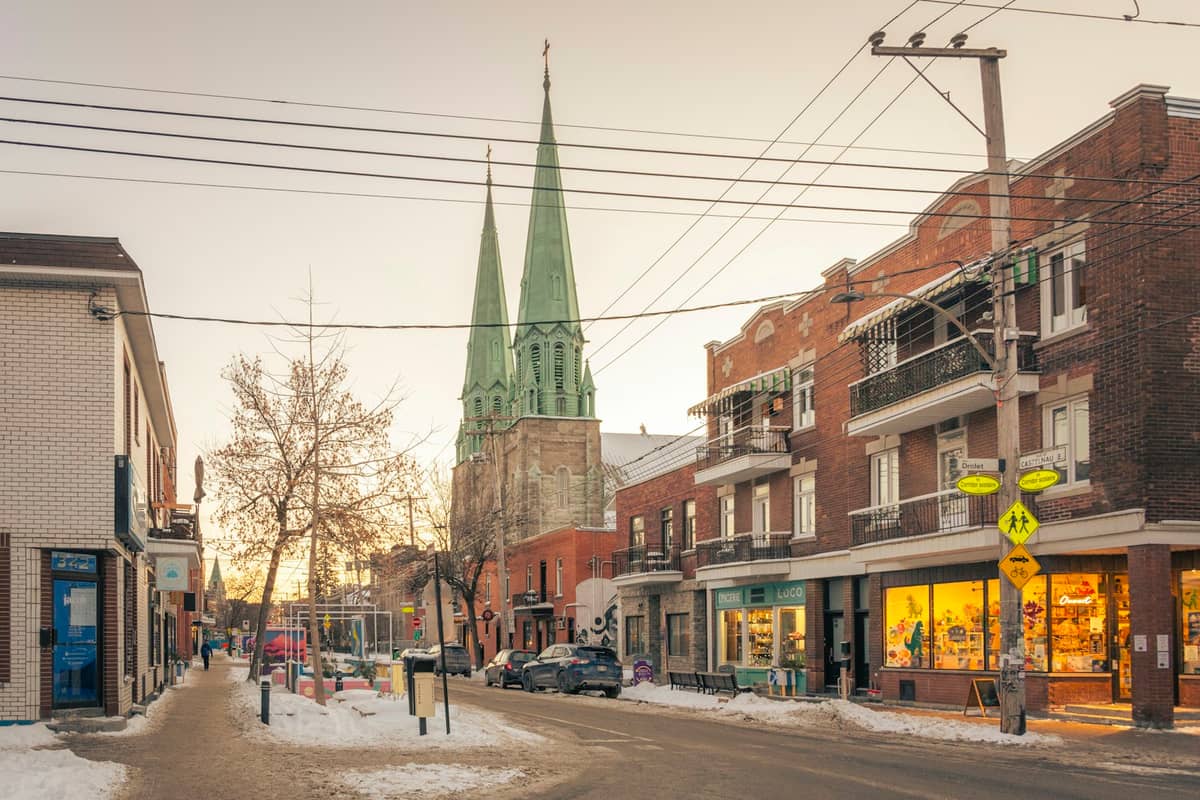
Overview
Mile End is the kind of neighborhood that earns its reputation quietly. There are no grand monuments or waterfront panoramas, just a dense, walkable grid of row houses, independent shops, and cafés where the same faces show up morning after morning. It is arguably the most culturally layered stretch of Montreal, shaped by successive immigrant communities and a long association with the city's creative class.
Orientation
Mile End occupies the northern section of Montreal's Plateau-Mont-Royal borough. Its commonly used boundaries run from Avenue du Mont-Royal to the south, Van Horne Avenue to the north, Hutchison Street to the west, and Saint-Denis Street to the east, though these lines are informal and locals will give you slightly different answers depending on who you ask. In practice, the neighborhood's commercial heart concentrates around two east-west streets: Saint-Viateur and Fairmount, between Boulevard Saint-Laurent and Avenue du Parc.
Getting your bearings is straightforward. Boulevard Saint-Laurent, known locally as "The Main," cuts through the neighborhood's center running north-south and serves as the informal dividing line between the French-dominant east and the historically Anglophone and allophone west. To the south, Mile End blends almost seamlessly into the Plateau-Mont-Royal proper, with the commercial stretch of Avenue Mont-Royal about a 15-minute walk down. To the north, Van Horne marks the edge where Mile End gives way to Little Italy and the Jean-Talon market district.
Walking east to west across the neighborhood from Saint-Denis to Avenue du Parc takes under 20 minutes at a relaxed pace. The blocks are compact and the street grid is regular, which makes Mile End one of the easier Montreal neighborhoods to navigate without a map. Avenue du Parc forms the western boundary and is a major arterial road, busy at all hours, that leads south toward Mount Royal Park.
Character & Atmosphere
Mile End developed its character over more than a century of layered immigration. Greek, Portuguese, Italian, and Sephardic Jewish communities all put down roots here, and traces of each remain: a Greek Orthodox church on one corner, a Portuguese deli on the next, a Hasidic yeshiva a block further along. The neighborhood's Jewish heritage is particularly visible around Saint-Viateur and Fairmount streets, where the two most famous bagel bakeries in Montreal have been operating for decades, each with loyal partisans willing to argue at length about which produces the superior product.
From the late 1990s onward, Mile End attracted artists and musicians who were priced out of the Plateau. Several internationally known bands emerged from the neighborhood's DIY music scene, and that creative energy still flavors the area even as rents have climbed considerably. Independent bookshops, small galleries, record stores, and design studios are concentrated particularly along Saint-Viateur Ouest and on the side streets between Fairmount and Bernard.
Early morning is the best time to feel the neighborhood at its most local. By 7am, the bagel shops are already busy, wood fires going in the stone ovens, and the smell of sesame seeds drifting into the street. Cafés on Saint-Viateur fill up with a mix of students, remote workers, and tradespeople. The light at this hour is soft and even across the low-rise rooflines. By midday the pace picks up: delivery bikes, parents with strollers, and a growing number of visitors making the pilgrimage to Fairmount or Saint-Viateur Bagel. Weekend afternoons, particularly in summer, bring the neighborhood closest to something like tourist activity, though it never reaches the density of Old Montreal.
After dark, Mile End shifts toward its music venue and bar character. The cluster of venues around Boulevard Saint-Laurent between Bernard and Saint-Viateur keeps the streets lively well past midnight on weekends. The residential side streets quiet down considerably by 10pm, which is worth knowing if you are staying in the neighborhood and value sleep. There are no serious safety concerns specific to Mile End; standard urban awareness applies.
💡 Local tip
If you want to experience Mile End at its most authentic, arrive on a weekday morning. The bagel shops and cafés are operating at full pace, the streets are full of locals rather than visitors, and you can walk the entire commercial stretch without the weekend foot traffic.
What to See & Do
Mile End does not deal in conventional tourist attractions. There is no single landmark that anchors a visit the way Notre-Dame Basilica anchors Old Montreal. What the neighborhood offers instead is a texture of small discoveries: a bakery with a 50-year history, a record shop with floor-to-ceiling vinyl, a café that doubles as an art space. That said, there are specific destinations worth seeking out.
The bagel bakeries on Fairmount Avenue and Saint-Viateur Street are genuine institutions, not tourist traps. Both operate around the clock, baking wood-fired Montreal-style bagels that are smaller, denser, and sweeter than their New York counterparts. Watching them pulled fresh from the oven and stacked into paper bags is one of those simple, specific pleasures that Montreal does better than anywhere else.
The Church of Saint-Enfant-Jésus-du-Mile-End, at the corner of Saint-Dominique and Maplewood, is an impressive neo-baroque structure whose interior is surprisingly grand for a residential neighborhood. It doubles as a concert venue for classical and contemporary music events. For a broader look at Montreal's independent music culture, the venues along Boulevard Saint-Laurent, particularly Casa del Popolo and La Sala Rossa, have been central to the city's scene for years. Check listings before you visit. Mile End also rewards slow walking: the back lanes and residential streets between Fairmount and Bernard have some of the best examples of Montreal's characteristic outdoor staircases and colorful row houses. This architecture is discussed in more detail in the Montreal architecture guide.
- Fairmount Bagel and Saint-Viateur Bagel: the two bagel institutions, open 24 hours
- Church of Saint-Enfant-Jésus-du-Mile-End: neo-baroque architecture and concert programming
- Casa del Popolo and La Sala Rossa: independent music venues on Boulevard Saint-Laurent
- Vintage and independent boutiques along Saint-Viateur Ouest between Saint-Laurent and Jeanne-Mance
- Street art and murals concentrated along the laneways and on commercial building facades
- Independent bookshops and record stores on and around Bernard Avenue
If you want to extend your exploration north, the Jean-Talon Market is about a 15-minute walk from the northern edge of Mile End. It is one of the best food markets in Montreal, particularly for local produce, cheese, and charcuterie. For a broader overview of Montreal's market culture, the best markets in Montreal guide covers all the major options.
ℹ️ Good to know
Mile End has a well-established street art scene, with large-scale murals appearing regularly on the sides of commercial buildings, particularly along the laneways east of Saint-Laurent. The work changes over time, so what you find on one visit may be different on the next. The Montreal street art guide covers the wider city context.
Eating & Drinking
The food culture in Mile End punches well above the neighborhood's size. It starts, inevitably, with bagels. The Montreal bagel debate is a genuine civic passion, and both Fairmount Bagel and Saint-Viateur Bagel have their committed supporters. The standard approach is to buy a bag warm from the oven and eat them as you walk. For context on what makes Montreal bagels distinct from every other variety, the Montreal bagels guide goes into the detail.
Beyond bagels, Mile End has a café culture that is among the strongest in the city. The cafés here tend toward the serious end of specialty coffee, with longer opening hours and a work-friendly atmosphere that reflects the neighborhood's creative workforce. Saint-Viateur Street and the blocks around it have the highest concentration, but Bernard Avenue to the north is worth exploring for a slightly quieter experience.
For full meals, the neighborhood offers a range that reflects its multilingual character. Portuguese restaurants cluster along certain blocks, serving grilled fish and piri-piri chicken at prices that remain relatively affordable compared to the Plateau proper. There are several strong Italian options reflecting the neighborhood's historical connections to that community. The independent restaurant scene also includes a rotating cast of newer spots focused on natural wine, seasonal menus, and international influences. Prices are mid-range across most of the neighborhood, with higher-end options scattered in.
For drinking, Mile End leans toward wine bars and craft beer spots rather than nightclubs. The bars along Boulevard Saint-Laurent tend to be the most active later in the evening, while the wine bars on the side streets draw a calmer crowd. The neighborhood is not a late-night destination in the way that the Plateau's lower section or the Gay Village is, but there is enough going on until 1 or 2am on weekends to keep things interesting.
💡 Local tip
Tipping at Montreal restaurants is customary. A standard range is 15 to 20 percent calculated on the pre-tax total. Staff wages in Quebec are structured assuming tips will supplement them, so leaving nothing on a normal sit-down meal is considered poor form.
Getting There & Around
Mile End has no metro station within its boundaries, which surprises visitors who expect the neighborhood's reputation to come with direct transit access. The nearest stations on the STM Orange Line are Laurier to the south (at the corner of Laurier and Berri, about a 15-minute walk from Saint-Viateur Street) and Rosemont to the east (at Rosemont and Saint-Hubert, useful if you are coming from the east end). From downtown, the practical approach is to take the Orange Line to Laurier and walk north along Avenue Laurier or cut through on Saint-Denis.
Bus coverage fills the gap reasonably well. Route 55 (Saint-Laurent) runs north-south along Boulevard Saint-Laurent through the heart of Mile End and connects to the metro network at multiple points. Route 80 (Avenue du Parc) runs along the western edge of the neighborhood and provides a direct connection south to the Mont-Royal metro station and north toward the Jean-Talon area. Routes 51 and 161 serve cross-streets within the neighborhood. For general guidance on navigating Montreal by transit, the getting around Montreal guide covers all modes in detail.
Cycling is an excellent option for exploring Mile End and connecting to adjacent neighborhoods. The BIXI bike-share system has docking stations throughout the area, and dedicated cycling infrastructure runs along several streets. The Lachine Canal cycling path is about a 20-minute ride to the southwest, and Mount Royal Park is accessible from the western edge of the neighborhood. The flat terrain through Mile End itself makes cycling easy even for casual riders.
On foot, Mile End connects naturally to the Plateau to the south, Outremont to the west across Avenue du Parc, and Little Italy to the north. Walking south from Saint-Viateur along Saint-Denis or Saint-Laurent puts you in the Plateau proper in about 10 minutes. The walk from Mile End to Old Montreal takes roughly 40 to 50 minutes and passes through some interesting transitional blocks, though most people prefer transit for that distance.
⚠️ What to skip
Transit fares and route numbers can change. Always verify current STM schedules and fares at stm.info before your visit, particularly if you are planning around specific bus routes or late-night service.
Where to Stay
Mile End has very few hotels in the traditional sense. Accommodation is dominated by short-term rental apartments and a small number of bed-and-breakfast style guesthouses in the area's converted row houses. This suits travelers who want to experience the neighborhood as residents rather than visitors, with a grocery shop or café a short walk from their front door. For a broader overview of accommodation across the city, the where to stay in Montreal guide covers all the main neighborhoods and hotel options.
Staying in Mile End is best suited to independent travelers, couples, and anyone specifically interested in Montreal's creative and food culture. It is a strong choice for people who want to use cafés and local shops as their daily base rather than a hotel lobby. It is less practical for travelers who need frequent, direct access to downtown or Old Montreal, given the neighborhood's limited metro connections. Families with young children can find it comfortable during the day, though the late-night venue activity on and around Saint-Laurent is worth factoring in when choosing your specific street.
The streets west of Boulevard Saint-Laurent, particularly around Fairmount Ouest and Saint-Viateur Ouest, tend to be slightly quieter residentially than the blocks immediately on or east of The Main. If noise is a concern, aim for accommodation in that western section. For travelers interested in Montreal's LGBTQ+ scene, Mile End has a welcoming atmosphere though the dedicated scene is concentrated further south in the Gay Village.
Mile End and the Wider City
One reason to choose Mile End as a base is how well it positions you to explore beyond it. The neighborhood sits at a geographic midpoint between several of Montreal's most interesting areas. A 20-minute walk south brings you to the densest part of the Plateau and eventually to the Quartier des Spectacles, the city's main festival zone. Walking west across Avenue du Parc takes you into Outremont, a noticeably quieter, more residential neighborhood with excellent French-language institutions and bookshops. The walk up to Mount Royal Park from the corner of Côte-Sainte-Catherine and Avenue du Parc is under 15 minutes.
For visitors on their first trip to the city, Mile End works well as a complement to a stay in Old Montreal or downtown rather than a replacement for it. If you are planning a three-day itinerary, allocating one afternoon and evening specifically to Mile End gives you enough time to cover the bagel circuit, browse the boutiques, eat a proper meal, and hear live music if the timing works. The Montreal 3-day itinerary builds this kind of cross-neighborhood structure. For first-time visitors trying to understand how all the neighborhoods fit together, the Montreal neighborhoods guide provides the full city-wide overview.
TL;DR
- Mile End is a dense, walkable neighborhood in northern Plateau-Mont-Royal, bordered roughly by Mont-Royal Avenue, Van Horne Avenue, Avenue du Parc, and Saint-Denis Street.
- Its character comes from layered immigrant history, a strong independent business culture, and a long association with Montreal's music and arts scene. Fairmount Bagel and Saint-Viateur Bagel are genuine institutions worth visiting.
- There is no metro station in the neighborhood. The nearest Orange Line stops are Laurier and Rosemont; bus routes 55 and 80 provide the most useful transit connections through the area.
- Best suited to independent travelers, food-focused visitors, and anyone who wants to experience Montreal beyond the main tourist circuit. Less practical for those needing quick, easy access to downtown.
- Morning visits on weekdays give the most authentic experience. Weekend afternoons draw more visitors, particularly to the bagel shops and boutiques. Evenings are lively around the music venues on Boulevard Saint-Laurent.
Related Travel Guides
- Best Markets in Montreal: Food, Flea & Farmers Markets
Montreal's market scene spans grand Art Deco food halls, open-air farmers markets in Little Italy, historic covered bazaars in Old Montreal, and lively Sunday flea markets at the foot of Mount Royal. This guide covers the best of all of them.
- The Best Museums in Montreal: Art, History, Science & More
Montreal delivers more than its size suggests as a museum city. This guide covers the finest institutions across fine art, social history, archaeology, architecture, and science, with practical details to help you plan your visit.
- Best Time to Visit Montreal: A Season-by-Season Breakdown
Montreal rewards visitors in every season, but the right time to go depends entirely on what you want from the city. This guide breaks down the weather, festivals, crowds, and trade-offs for each season so you can plan with confidence.
- Best Views in Montreal: Rooftops, Lookouts & Skyline Spots
Montreal rewards those who look up and out. Whether you climb to the Kondiaronk Belvedere at golden hour, ride the Grande Roue above the Old Port, or scale the Olympic Tower's inclined funicular, the city offers skyline perspectives that are genuinely worth seeking out. This guide covers the best viewpoints at every elevation, from free hilltop terraces to paid observation decks.
- Best Day Trips from Montreal: Nature, Villages & Wilderness Escapes
Montreal is an island city with extraordinary escapes on its doorstep. Whether you want alpine trails, freshwater beaches, wine country, or wildlife encounters, these are the best day trips from Montreal for every season and travel style.
- Free Things to Do in Montreal: 20 Ways to Explore the City Without Spending a Cent
Montreal is one of North America's most culturally rich cities, and you don't need to spend much to experience it. From mountaintop panoramas to historic churches, Sunday drum circles, and world-class art, this guide covers the best free things to do in Montreal across every season.
- Getting Around Montreal: Metro, Bikes & Transport Guide
Montreal is one of North America's most navigable cities, with a reliable metro, an extensive bus network, and a serious cycling culture. This guide covers every way to move around the city, from airport arrivals to cross-neighborhood cycling, with accurate fares and practical logistics.
- Getting to Montreal: Flights, Trains, Buses & Driving Options
Montreal is well connected by air, rail, road, and bus. This guide breaks down every practical option for getting to Montreal, from booking flights to YUL to taking VIA Rail or an intercity bus, including costs, logistics, and what to watch out for.
- Is Montreal Worth Visiting? What You Need to Know Before You Go
Montreal is one of North America's most distinctive cities: French-speaking, architecturally rich, food-obsessed, and genuinely alive in every season. This guide cuts through the hype and gives you the real picture — including what doesn't live up to expectations.
- Montreal Airport (YUL): How to Get To and From the City
Montréal-Trudeau International Airport (YUL) is the main gateway into Montreal, located about 20 km west of downtown. This guide breaks down every transport option, including real costs, journey times, and practical tips for arriving and departing stress-free.
- Montreal Architecture Guide: From Old Montreal to Olympic Park
Montreal is one of North America's most architecturally diverse cities, layering French colonial stonework, Gothic Revival grandeur, early 20th-century Beaux-Arts institutions, and modernist experiments across its neighborhoods. This guide walks you through the key eras, districts, and buildings worth your time, with practical transit advice for moving between them.
- Montreal Bagels: The Complete Guide to the City's Best Bakeries
Montreal bagels are in a category of their own: hand-rolled, boiled in honey water, and baked in wood-fired ovens until golden and slightly chewy. This guide covers what makes them distinct, the legendary Fairmount vs St-Viateur debate, where to find the best ones, and everything else a first-timer or returning visitor needs to know.
- Beaches Near Montreal: Where to Swim and Sunbathe in Summer
Montreal is an island city, and in summer it takes full advantage of that fact. From supervised urban beaches with skyline views to freshwater shores inside national parks, here are the best places to swim, sunbathe, and cool off near Montreal.
- Montreal Canadiens: How to Watch a Game and Experience NHL Hockey in Montreal
Attending a Montreal Canadiens game at the Bell Centre is one of the most intense sporting experiences in North America. This guide covers everything you need to know: how to find tickets, read the schedule, check standings, get to the arena, and make the most of game night in Montreal.
- Cycling in Montreal: Best Bike Routes & BIXI Guide
Montreal has one of North America's most developed urban cycling networks, with over 1,000 km of paths, a mature bike-share system, and routes that connect historic waterfront districts to leafy residential neighborhoods. This guide covers BIXI pricing, the best routes by experience level, seasonal logistics, and what to watch out for before you clip in.
- Montreal Festivals: Complete Guide to the Best Events
Montreal earns its reputation as Canada's festival capital every summer, when the Quartier des Spectacles, Parc Jean-Drapeau, and the city's streets fill with music, circus arts, fireworks, and outdoor gatherings. This guide covers the venues, neighborhoods, and attractions that make Montreal's festival calendar tick — from free outdoor stages to world-class arena shows.
- First Time in Montreal: Everything You Need to Know
Montreal is one of North America's most distinctive cities, with a French-speaking culture, four dramatic seasons, world-class food, and a calendar packed with festivals. This guide covers everything a first-time visitor needs: how to get in, where to go, what to eat, and how to avoid the common mistakes.
- Romantic Montreal: The Best Things to Do for Couples
Montreal earns its romantic reputation through a combination of European-style architecture, world-class dining, and genuinely varied outdoor experiences that work in every season. This guide covers the best couple-friendly activities across the city, from the Old Port waterfront to Mount Royal's summit viewpoints, with practical tips on what's worth booking in advance.
- Montreal Grand Prix: The Complete F1 Weekend Guide for Visitors
The Canadian Grand Prix is one of Formula 1's most celebrated stops, and Montreal delivers a race weekend unlike any other. This guide covers tickets, getting to the circuit, accommodation strategy, and everything else you need to make the most of the event.
- Hidden Gems in Montreal: Off the Beaten Path Experiences
Montreal rewards curious travelers who look beyond the obvious. From a community museum inside an Art Deco bathhouse to a living history farm in Pointe-Saint-Charles, these under-the-radar experiences reveal the city's deeper character. Here are the local favorites and overlooked spots worth seeking out.
- Montreal in Summer: Festivals, Outdoor Activities & Practical Tips
Montreal transforms in summer, packing months of world-class festivals, outdoor markets, cycling routes, and park culture into a brief but intense warm season. This guide covers what to expect, what to prioritize, and what to skip across June, July, and August.
- Montreal in Winter: What to Expect & the Best Things to Do
Montreal in winter is one of North America's most underrated cold-weather experiences. From illuminated skating rinks to world-class museums and legendary winter festivals, this guide covers what to expect, what to wear, and exactly how to make the most of the season from November through March.
- 3 Days in Montreal: The Perfect Itinerary
Three days is enough time to cover Montreal's historic core, its best neighborhoods, and its signature food culture — if you plan it right. This itinerary is built around walkable clusters, smart transit use, and practical tips on what's worth your time.
- Montreal Jazz Festival 2026: Tickets, Lineup & What to Expect
The Montreal International Jazz Festival runs June 25 to July 4, 2026, with over 350 concerts across Quartier des Spectacles. Most outdoor shows are completely free. Here's how to navigate the 46th edition like a local.
- LGBTQ+ Montreal: The Complete Gay Village & Queer Travel Guide
Montreal has one of North America's most celebrated LGBTQ+ scenes, anchored by the Gay Village on Sainte-Catherine Street East and spread across some of the city's most interesting neighborhoods. This guide covers everything from Pride 2026 dates and Village bar culture to year-round queer travel tips, practical logistics, and what to know before you arrive.
- Montreal Neighborhoods: A Guide to the City's Best Areas
Montreal is not a city you can understand from one neighborhood. From the cobblestones of Old Montreal to the spiral staircases of the Plateau and the repurposed warehouses of Griffintown, each district has a distinct character, crowd, and pace. This guide breaks down the city's key areas so you can match your trip to the right base.
- Montreal Nightlife: Best Bars, Clubs & Live Music Guide
Montreal's nightlife runs deep, from jazz bars in the Plateau to underground clubs in the Quartier des Spectacles and rooftop terraces in Old Montreal. This guide covers the best venues by neighborhood, practical transit tips, seasonal advice, and what to skip.
- Montreal on a Budget: How to Visit Without Breaking the Bank
Montreal is one of North America's most rewarding cities for budget travelers. From free outdoor landmarks to heavily discounted museum nights, this guide breaks down exactly where your money goes further and where it disappears fast.
- Best Poutine in Montreal: Where to Eat Quebec's Iconic Dish
Poutine is Quebec's most exported food idea, but eating the best version requires knowing where to go, what to order, and what to avoid. This guide covers the top spots in Montreal, the dish's real origins, and practical advice for first-timers and repeat visitors alike.
- Shopping in Montreal: Best Streets, Malls & Boutiques
Montreal is one of Canada's top shopping destinations, blending major retail corridors with independent boutiques, covered malls, and a remarkable underground network. This guide breaks down where to shop, what to expect, and how to avoid wasting time on the wrong streets.
- Montreal Smoked Meat: Where to Find the Best Sandwiches
Montreal smoked meat is one of Canada's most iconic deli traditions, and eating it well requires knowing where to go, how to order, and what to expect. This guide covers the history, the best delis, ordering tips, and clear takes on the city's most celebrated sandwich.
- Montreal Street Art: Best Murals & Urban Art Walks
Montreal has one of the most concentrated outdoor mural collections in North America, spread across distinct neighborhoods from the Plateau to Griffintown. This guide covers where to find the best street art, how to walk or cycle the top routes, what to expect at the MURAL Festival, and how to get the most from the city's public art scene year-round.
- National Bank Open Montreal: The Complete Guide to Attending the Tournament
The National Bank Open is one of the top tennis tournaments in North America, held each summer at IGA Stadium in Montreal's Jarry Park. This guide covers tickets, venue logistics, session timing, transport, and what to expect on site — so you can focus on the tennis.
- Best Walking Tours & Self-Guided Walks in Montreal
Montreal is one of North America's most walkable cities, with historic cobblestone streets, forested hilltops, canal-side paths, and distinct neighborhoods that reward exploring on foot. This guide covers the best guided tours and self-guided walks across the city, from Old Montreal's 17th-century architecture to the Lachine Canal waterfront.
- Montreal Winter Festivals: Igloofest, Fête des Neiges & More
Montreal doesn't hibernate in winter. From outdoor electronic music at Igloofest to the giant snow playground of Fête des Neiges and the all-night Nuit blanche, the city turns its coldest months into a full calendar of events. Here's how to make the most of it.
- Montreal with Kids: The Complete Family Activity Guide
From the Biodôme to the Old Port, Montreal is one of Canada's most rewarding cities for families. This guide covers the best kid-friendly attractions, honest admission costs, STM transit rules for children, and practical advice for every season.
- Best Things to Do in Montreal: The Definitive Guide
Montreal is one of North America's most rewarding cities to explore, with a genuinely distinct French-speaking culture, world-class food, and a calendar packed with festivals. This guide covers the top things to do in Montreal Canada, organized by category, with practical details on costs, timing, and what to skip.
- What to Eat in Montreal: Essential Foods & Local Dishes
Montreal has one of the most distinctive food cultures in North America, shaped by French-Canadian tradition, Jewish deli heritage, Portuguese immigration, and a relentless local obsession with quality ingredients. This guide covers the essential dishes, where to find them, and how to eat like someone who actually lives here.
- Where to Eat in Montreal: Best Restaurants & Food Districts
Montreal's food scene is one of the most distinctive in North America, shaped by French culinary tradition, Jewish deli culture, Italian immigration, and a relentless wave of independent restaurants. This guide breaks down the best places to eat in Montreal by neighborhood, food type, and budget, with clear takes on what's worth your time and what to skip.
- Where to Stay in Montreal: Best Neighborhoods & Hotels Guide
Choosing where to stay in Montreal shapes your entire trip. This guide breaks down every major neighborhood by character, convenience, and price range — so you can pick the right base before you book a single hotel room.