What to Eat in Montreal: Essential Foods & Local Dishes
Montreal has one of the most distinctive food cultures in North America, shaped by French-Canadian tradition, Jewish deli heritage, Portuguese immigration, and a relentless local obsession with quality ingredients. This guide covers the essential dishes, where to find them, and how to eat like someone who actually lives here.
Plan and book this trip
Tools from our partner Travelpayouts help you compare flights and hotels. If you book through them, we may earn a commission at no extra cost to you.
Flights
Hotels map
TL;DR
- Poutine, smoked meat, and wood-fired bagels are the three non-negotiable dishes — each has a specific Montreal character you won't find replicated elsewhere.
- Montreal bagels are boiled in honey-sweetened water and baked in wood-fired ovens — they are fundamentally different from New York bagels, not just a regional variation. See our Montreal bagels guide for the full story.
- Schwartz's smoked meat is marinated for around 10 days before smoking — the queue is long, but the sandwich is worth it.
- Markets like Jean-Talon Market and Atwater Market are seasonal and typically run from late April or May through mid-to-late October.
- Tipping 15–20% before Quebec sales tax is standard at sit-down restaurants.
Poutine: The Dish Montreal Takes Seriously
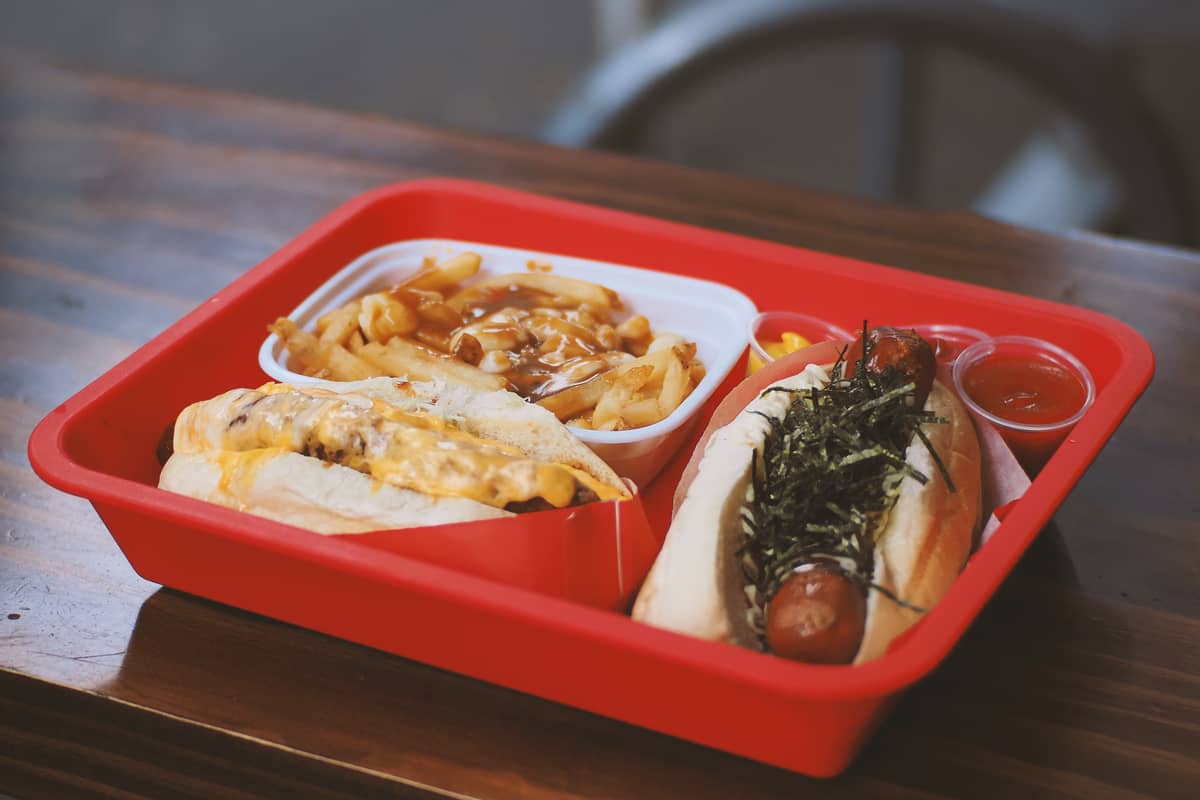
Poutine is a Quebec invention, not a Montreal one, but the city has adopted it with particular intensity. The formula is simple: fries topped with fresh cheese curds and brown gravy. The execution varies wildly. The cheese must squeak against your teeth when fresh — that texture is the clearest sign of quality curds. The gravy should be hot enough to soften the curds without fully melting them. If the curds are rubbery or fully dissolved, the kitchen has cut corners.
La Banquise on Rue Rachel in the Plateau is the benchmark. It operates 24 hours a day and serves more than 30 poutine variations, from the classic to options loaded with pulled pork, merguez, or smoked bacon. The lines on weekend nights can stretch down the block, but the kitchen moves quickly. For a shorter wait and arguably more focused execution, Patati Patata on Saint-Laurent serves a tight menu with excellent classic poutine in a very small space. Ma Poule Mouillée and Paul Patates are also worth knowing — both have loyal followings among Montrealers who consider tourist-facing spots to be overrated.
💡 Local tip
If you're ordering poutine at multiple spots to compare, share a portion or order a small size. Standard servings are generous, and the dish is rich. Tourisme Montréal's own food guides recommend splitting portions when doing a tasting tour.
- La Banquise Plateau-Mont-Royal, 24 hours, 30+ variations. The reference point for classic and creative poutine.
- Patati Patata Boulevard Saint-Laurent, tight menu, consistent quality. Better for a quick solo lunch than a group visit.
- Ma Poule Mouillée Popular with locals, known for Portuguese-influenced flavors alongside traditional poutine.
- Paul Patates Old-school counter operation in Pointe-Saint-Charles. Unaffected by trends, which is exactly the point.
Montreal Bagels: Why They're Different
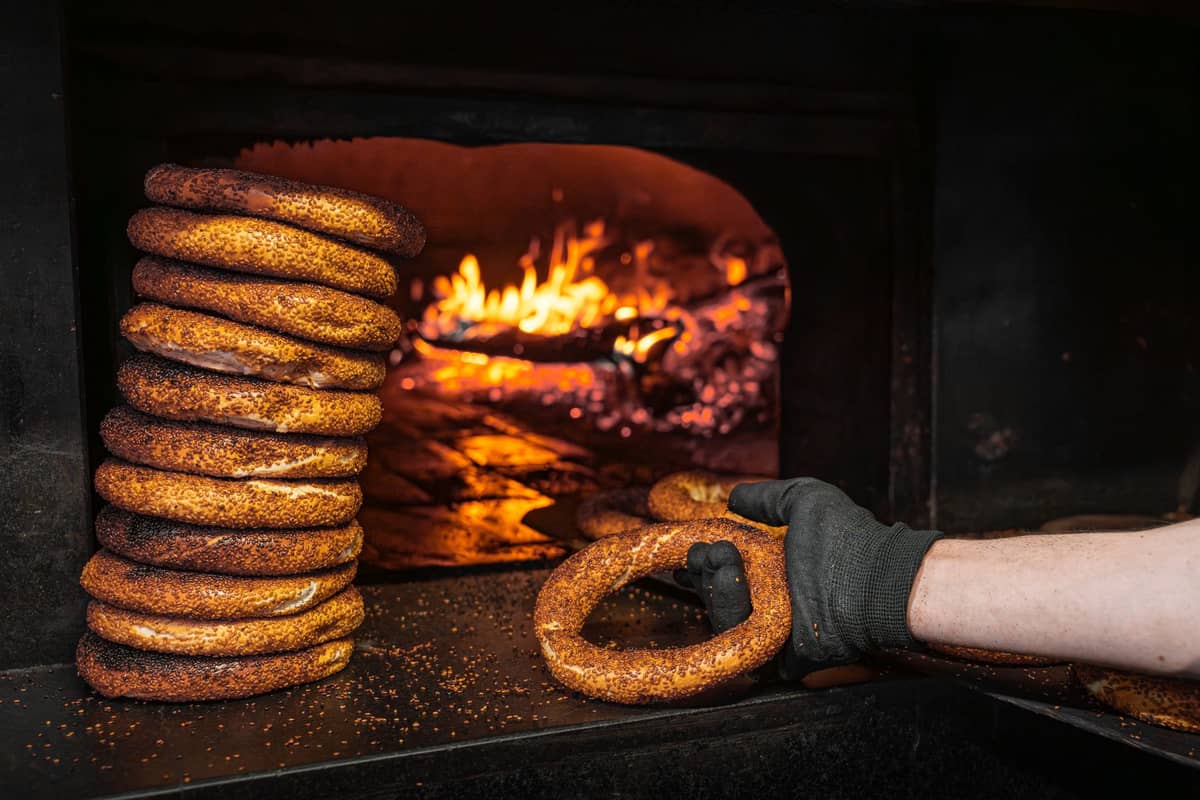
The Montreal bagel debate with New York is a genuine food argument, not marketing spin. The two products are made differently and taste different. Montreal bagels are hand-rolled, boiled in honey-sweetened water, and baked in a wood-fired oven. The result is denser, chewier, slightly sweet, and with a crispier exterior than a New York bagel, which is typically larger, softer, and baked in a deck oven after a plain water boil. Neither is objectively better. They are different foods.
The two established destinations are Fairmount Bagel and St-Viateur Bagel, both located in the Mile End neighborhood. Fairmount has been operating since 1919 and is open 24 hours. St-Viateur opened in 1957 and has multiple locations. Both sell by the baker's dozen. The correct approach is to buy a bag of sesame bagels, eat one warm, and form your own opinion. Bringing cream cheese and lox is optional but not wrong.
ℹ️ Good to know
The Fairmount versus St-Viateur debate is a genuine local divide, similar to the smoked meat debate. Locals have strong preferences. The honest answer: both are excellent, and the main variable is which one you happen to be closer to when the craving hits.
Smoked Meat: The Schwartz's Standard
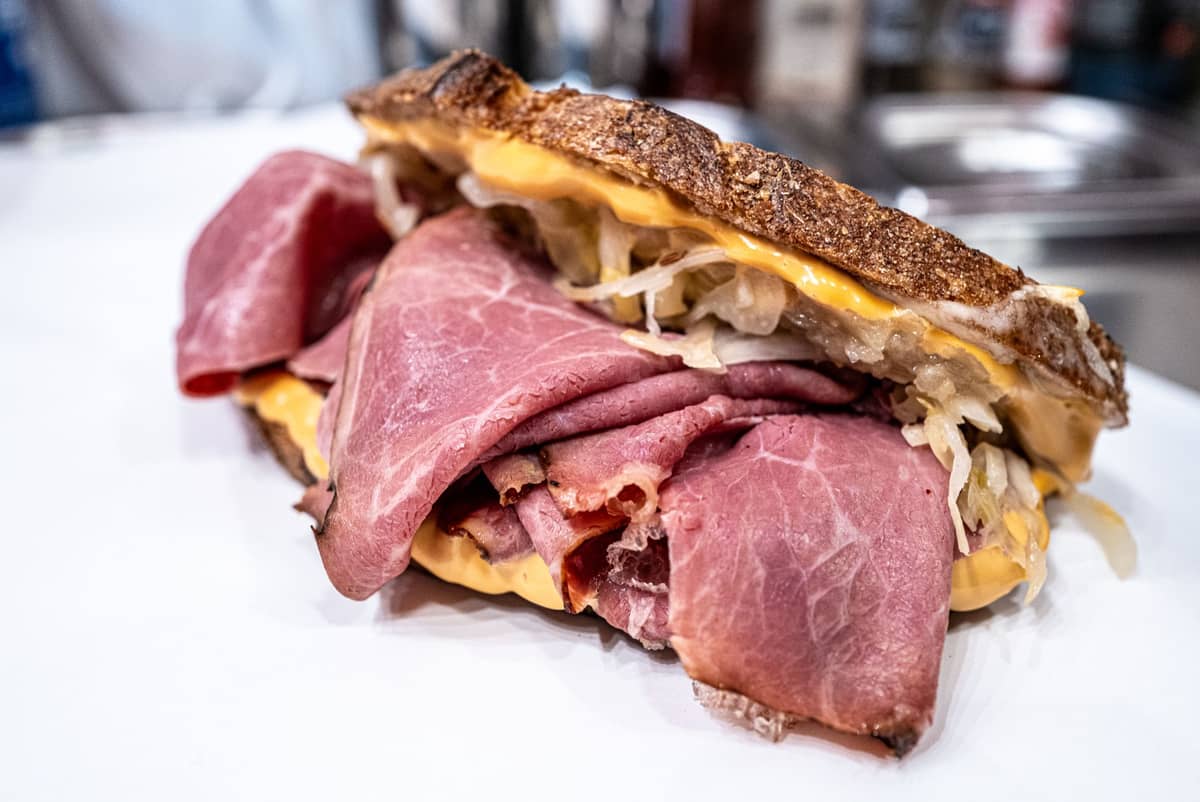
Montreal smoked meat is a distinct cured beef product with roots in Eastern European Jewish immigration. The brisket is marinated in a spice blend for approximately 10 days, then smoked and steamed before being hand-sliced to order. It bears some resemblance to pastrami but the spicing and preparation differ. The result is a leaner, more intensely flavored meat with a firmer texture.
Schwartz's Hebrew Delicatessen at 3895 Saint-Laurent Boulevard has been operating since 1928 and remains the reference. The menu is deliberately minimal: smoked meat sandwiches, smoked meat plates, pickles, coleslaw, and cherry cheesecake. Order medium fat for the best flavor balance — lean is drier, extra fatty is rich but polarizing. The queue is real and moves at its own pace. For a deeper dive, our Montreal smoked meat guide covers alternatives and the full history of the dish.
⚠️ What to skip
Schwartz's does not take reservations and cash was traditionally preferred, though payment options may have changed. Verify current policies before visiting. The queue at peak times (Friday dinner, Saturday lunch) can be 30–45 minutes or longer.
Beyond the Big Three: Other Essential Montreal Foods
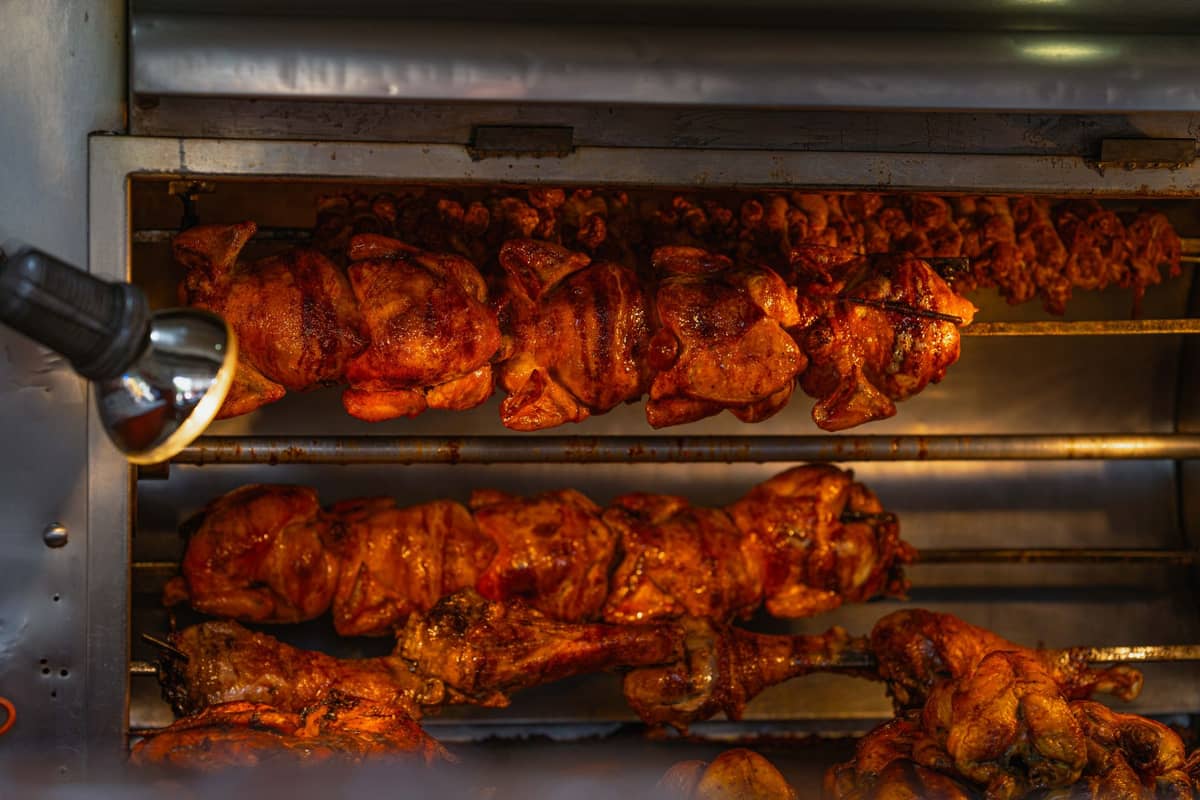
Montreal's food culture extends well past the three flagship dishes. Portuguese grilled chicken is a city staple, a direct result of one of Montreal's significant immigrant communities. Cote-des-Neiges and certain blocks of Saint-Laurent are where you'll find the best rotisseries, serving halves and whole chickens with fries and piri-piri sauce at prices that make most restaurant meals look expensive.
Traditional Québécois cuisine deserves more attention than tourists typically give it. Tourtière (a spiced meat pie), cretons (pork fat spread served with toast), and sugar pie are dishes that predate the tourist economy. The sugar shack tradition in late winter and early spring, known locally as cabane à sucre season, draws Montrealers out to the surrounding countryside for meals built around maple syrup. Dishes like eggs cooked in maple syrup, oreilles de crisse (fried pork rinds), and maple taffy poured onto snow are eaten together in large groups. It runs roughly from late February through April.
Montreal also has a strong Jewish deli and Ashkenazi food tradition beyond smoked meat: smoked fish, rye bread, latkes, and chopped liver appear at delis across the city. The Jewish community has shaped the food culture of neighborhoods like Mile End and Outremont in ways that remain visible. Rugelach, black and white cookies, and babka appear at bakeries that have operated for generations.
- Portuguese grilled chicken: look for rotisseries in Cote-des-Neiges and along Saint-Laurent
- Tourtière: available at traditional Quebec restaurants and brasseries, especially in winter
- Cabane à sucre (sugar shack) meals: seasonal, late February to April, usually a day trip from the city
- Smoked fish and deli staples: Mile End and Outremont bakeries and delis
- Maple products: available year-round at markets, but most meaningful in late winter during maple season
- Croissants and French pastries: Montreal's bakery culture is serious — the Plateau, Mile End, and Outremont all have excellent options
Markets, Neighborhoods, and Where to Eat
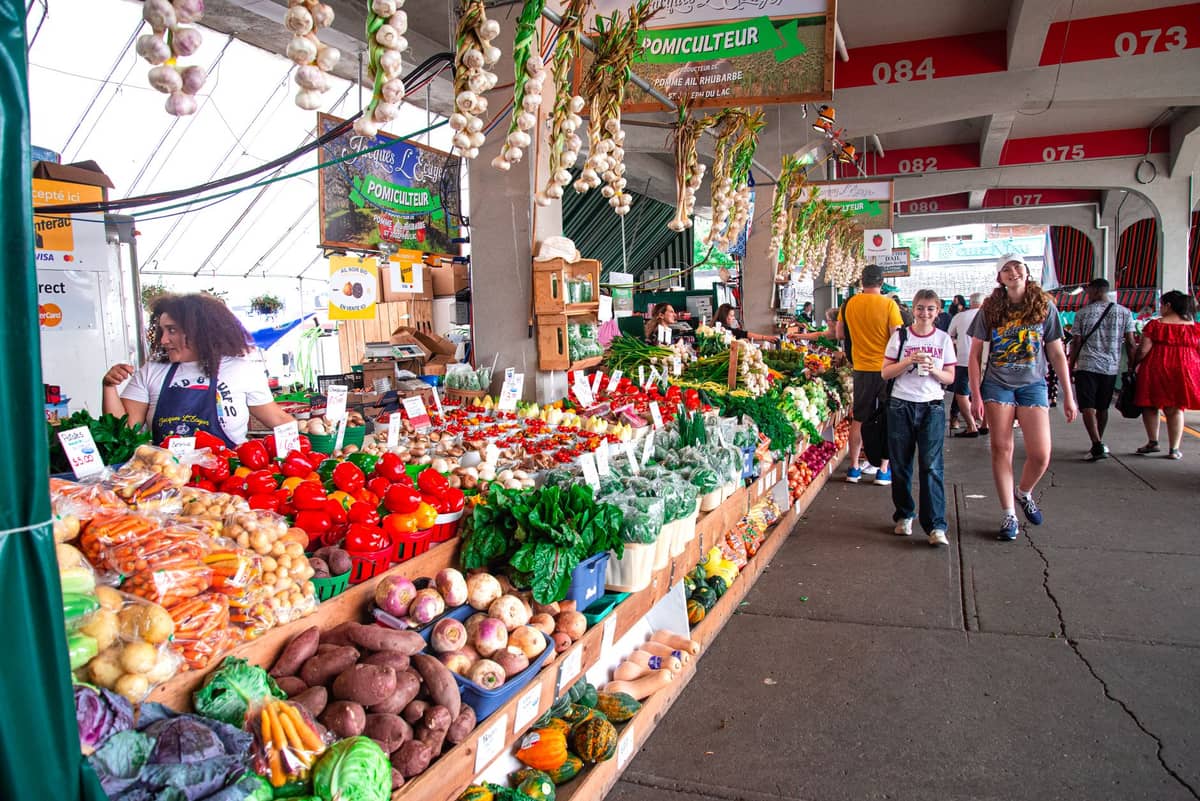
Jean-Talon MarketJean-Talon Market in Little Italy is Montreal's largest public market and one of the best in North America for seasonal produce. It runs roughly from early May through mid-October for outdoor vendors, with the indoor section operating year-round. In summer, the market overflows with Quebec produce: strawberries in June, corn and tomatoes in August, squash and apples in September. It is genuinely worth visiting as a food experience, not just a shopping errand.
Atwater MarketAtwater Market near the Lachine Canal is smaller and more neighborhood-focused, with excellent butchers, cheese shops, and a wine merchant. The seasonal outdoor section typically runs from late April through late October. Both markets should be checked for current vendor schedules before visiting, as individual stall availability varies.
For restaurant density, the Plateau-Mont-Royal and Mile End neighborhoods offer the highest concentration of independent restaurants, cafés, and bakeries. Old Montreal has good options but also more tourist-facing establishments where quality can be inconsistent. The rule: the further a restaurant is from Place Jacques-Cartier, the more likely it is aimed at people who actually live in the city.
For a broader overview of where to eat across different neighborhoods and price points, the full Montreal restaurant guide covers the city's dining scene in depth, including which neighborhoods are worth the trip for specific cuisines.
Practical Eating Advice for Visitors
Prices at Montreal restaurants are generally more affordable than equivalent establishments in Toronto or Vancouver, but costs have risen. A classic smoked meat sandwich at Schwartz's runs around CAD 15–16. A poutine at La Banquise is typically CAD 12–18 depending on toppings. A baker's dozen of bagels at Fairmount or St-Viateur is under CAD 15. Sit-down restaurant mains in the Plateau or Mile End range from roughly CAD 20–40 at mid-range spots. Verify current prices directly with the establishment before budgeting.
Tipping at sit-down restaurants is standard: 15–20% calculated on the pre-tax total is the accepted range. Quebec adds both a federal GST (5%) and a provincial QST (9.975%) to restaurant bills, so the total tax is close to 15%. Some diners use the combined tax total as a rough guide for a 15% tip, though this is a floor, not a ceiling. For more on keeping costs down while eating well, see our guide to visiting Montreal on a budget.
- Reservations are strongly recommended for popular dinner spots, especially on Friday and Saturday evenings
- Many of the best-known spots (Schwartz's, La Banquise) do not take reservations — arrive early or be prepared to wait
- Montreal's official language is French; menus are frequently in French, sometimes bilingual. Basic menu vocabulary helps: "assiette" is plate, "sandwich" is universal
- Market vendors are mostly seasonal — confirm hours and opening dates before making a special trip
- Food halls and depanneurs (corner stores) stock local products including local cheeses, maple products, and craft beverages worth taking home
FAQ
What is the most famous food in Montreal?
Poutine, Montreal smoked meat, and Montreal-style bagels are the three dishes most closely associated with the city. Each has a specific character and preparation method that distinguishes it from versions made elsewhere. If you only have time for one, smoked meat at Schwartz's is the most singular experience — there is no precise equivalent outside Montreal.
Is Montreal good for food overall, or just for a few specific dishes?
Montreal is widely considered one of the best restaurant cities in North America, not just for its iconic dishes. The city has a serious French bistro tradition, an excellent Portuguese food scene, strong Jewish deli culture, and a growing number of acclaimed contemporary restaurants. The Plateau-Mont-Royal and Mile End neighborhoods have particularly high concentrations of quality independent restaurants.
When are the public markets in Montreal open?
Jean-Talon Market and Atwater Market both have year-round indoor sections, but the main outdoor seasonal vendors typically operate from late April or early May through mid-to-late October. Exact dates vary by year and vendor. Check the Marchés publics de Montréal website for current seasonal calendars before visiting.
Is Montreal smoked meat the same as pastrami?
No. Both are cured beef products with Eastern European Jewish origins, but they differ in spicing, preparation, and texture. Montreal smoked meat uses a different spice blend, is marinated for longer (around 10 days at established delis like Schwartz's), and is typically leaner and more intensely flavored than New York pastrami. They are related but distinct.
Are Montreal bagels worth trying if I've already had New York bagels?
Yes, because they are a different product. Montreal bagels are smaller, denser, sweeter, and crispier due to the honey-water boil and wood-fired baking. The texture and flavor profile are genuinely different from a New York bagel. Most people who try both have a preference, but they are not competing versions of the same thing — they are separate regional foods.