Montreal Street Art: Best Murals & Urban Art Walks
Montreal has one of the most concentrated outdoor mural collections in North America, spread across distinct neighborhoods from the Plateau to Griffintown. This guide covers where to find the best street art, how to walk or cycle the top routes, what to expect at the MURAL Festival, and how to get the most from the city's public art scene year-round.
Plan and book this trip
Tools from our partner Travelpayouts help you compare flights and hotels. If you book through them, we may earn a commission at no extra cost to you.
Flights
Hotels map
TL;DR
- Montreal street art is concentrated on Saint-Laurent Boulevard and in the Plateau-Mont-Royal, Mile End, and Griffintown neighborhoods.
- The MURAL Festival runs annually in June along Saint-Laurent Boulevard — the 14th edition is scheduled for June 4–14, 2026.
- Art Public Montréal offers free self-guided routes ranging from 30 minutes to several hours; the city also publishes official public art walking tours with podcast options in French and English.
- Murals can be seen year-round, but May to September is best for comfortable walking conditions and peak activity.
- MURAL is a festival, not a generic term for every mural in Montreal — the city's broader public art collection is documented separately through Art Public Montréal and the Ville de Montréal.
Why Montreal Became a Street Art Capital
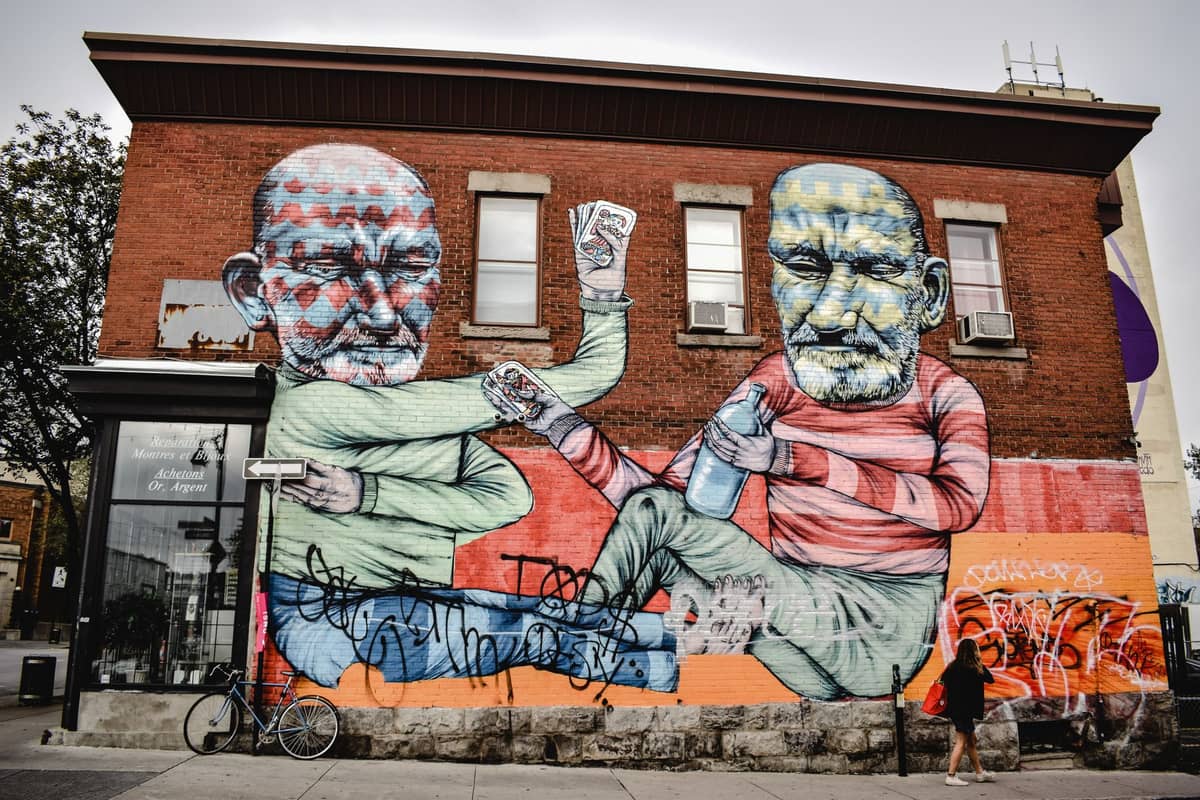
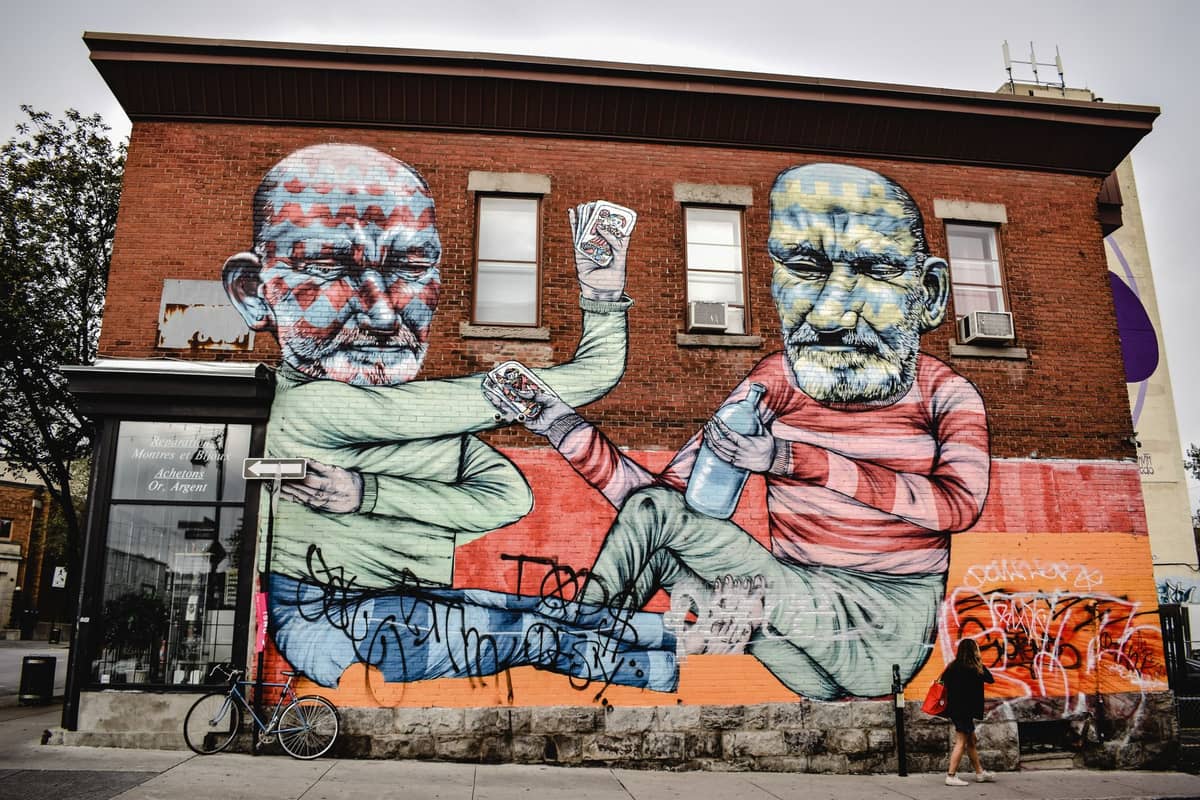
Montreal's public art culture did not appear overnight. The city has a long history of commissioning large-scale works for public spaces, and by the early 2010s that tradition collided with a growing international mural movement. The MURAL Festival launched in 2012 on Saint-Laurent Boulevard, the symbolic dividing line between the city's French east and English west, and grew quickly into one of the most significant street art events in North America. What separates Montreal from cities with a handful of tagged underpasses is scale, density, and institutional support: the Ville de Montréal funds public art acquisition, Art Public Montréal catalogs hundreds of permanent and temporary works, and entire neighborhoods have effectively become open-air galleries.
The bilingual, multicultural character of the city also shapes what gets painted. Artists from Quebec, the rest of Canada, the United States, Latin America, and Europe bring work that reflects Indigenous histories, immigrant communities, political commentary, and pure formal experimentation. You will find hyper-realistic portraits next to abstract geometry next to text-based works in French, English, and other languages. Montreal rewards slow walking and repeated visits, because works evolve, get painted over, and are replaced by new commissions every summer.
The Core Street Art Neighborhoods
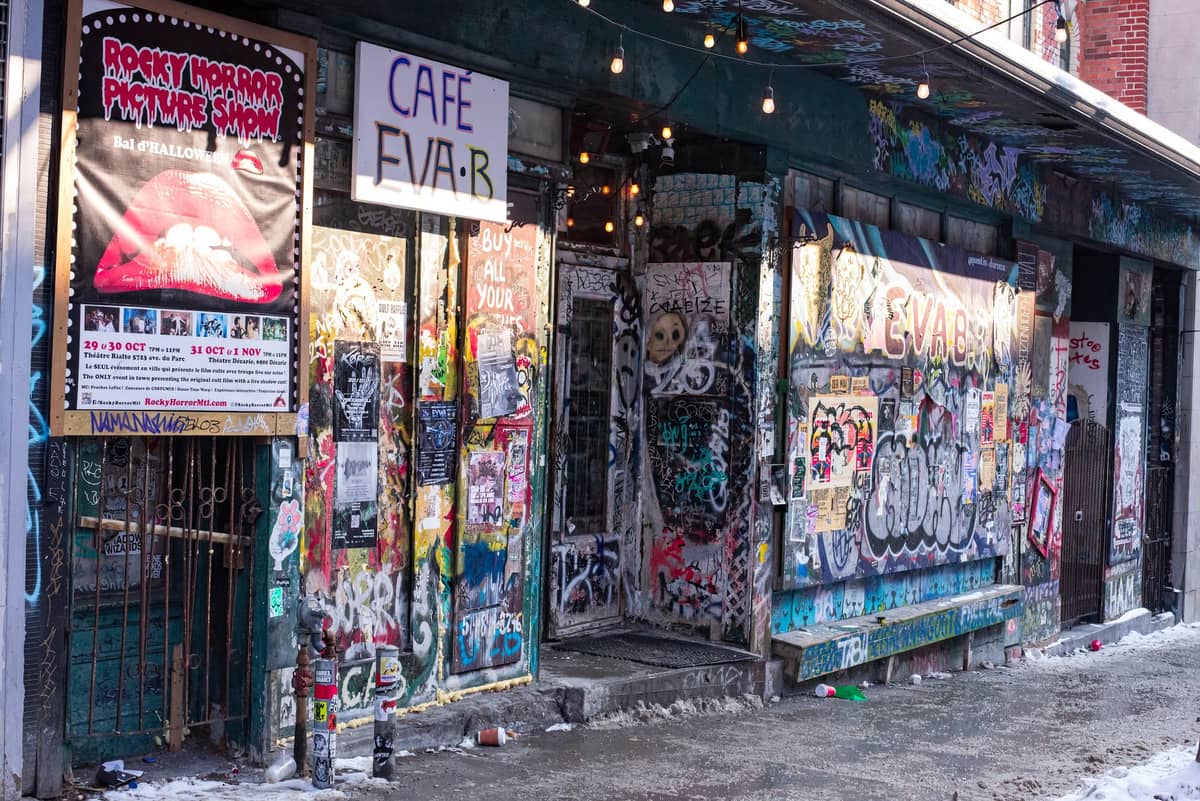
Saint-Laurent Boulevard, from roughly Sherbrooke Street north to Bernard Avenue, is the single most concentrated corridor for large-scale murals in Montreal. The boulevard runs through the heart of the Plateau-Mont-Royal and borders Mile End, and it serves as the primary canvas for the MURAL Festival each June. Side streets off Saint-Laurent — Prince-Arthur, Rachel, Marie-Anne — also have significant works tucked onto building ends and alley walls.
Mile End, the commonly used name for the neighborhood north of the Plateau, has a particularly dense cluster of murals along Saint-Laurent and on the walls of its low-rise industrial and commercial buildings. The area around the intersection of Saint-Laurent and Saint-Viateur is a reliable starting point. If you are combining street art with food or coffee, Little Italy and the Jean-Talon Market area to the north have a smaller but growing collection of murals, often reflecting the neighborhood's cultural heritage.
Griffintown, the rapidly redeveloped former industrial district southwest of downtown, has attracted large commissioned works on the blank concrete walls of its new condo towers and converted warehouses. The scale of some Griffintown murals is striking — several span six or more stories. The neighborhood is less walkable than the Plateau in terms of charm, but the mural density on certain blocks rivals any area in the city. Wellington Street and its side streets are worth exploring.
Downtown Montreal has a scatter of public murals and sanctioned public art pieces, particularly in the Quartier des Spectacles area around Place des Arts. These tend to be more formally commissioned works rather than festival murals, and they blend with other public sculptures and light installations. Worth a look if you are already in the area, but downtown is not a street art destination on its own terms.
💡 Local tip
The most efficient way to cover Montreal's top mural corridors is to combine the Saint-Laurent Boulevard walk from Sherbrooke to Bernard with a detour east along Rachel Street toward Parc Lafontaine. This circuit takes roughly two to three hours on foot and passes through the highest concentration of MURAL Festival pieces and permanent commissions.
The MURAL Festival: What It Actually Is
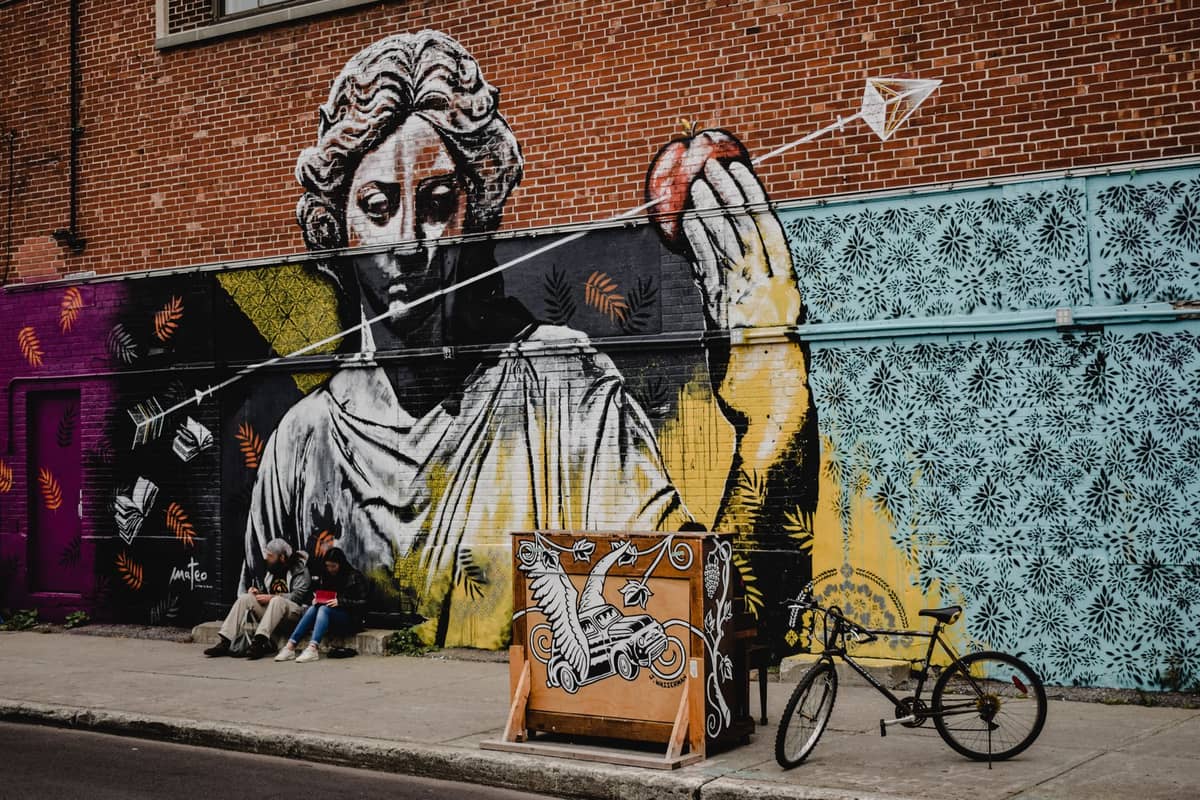
MURAL is an annual public art festival, not a generic description of every painted wall in Montreal. This distinction matters practically: if you visit expecting to find fresh murals being created, you need to time your trip to the festival, typically held over ten days in early to mid-June on and around Saint-Laurent Boulevard. The 14th edition is scheduled for June 4–14, 2026. During the festival, artists paint live on building facades, there are guided tours, outdoor performances, and evening programming with music and food. Much of the outdoor mural viewing is free; some programming events have ticket costs.
Outside festival week, the streets still hold hundreds of completed works from past editions, many of which have been preserved or repainted. The experience is different, quieter, and in some ways more contemplative without festival crowds. If you are visiting Montreal between July and May, you are still looking at a serious outdoor collection, just not at work in progress. Check the official MURAL Festival website (muralfestival.com) for confirmed dates and programming before making travel plans around it.
⚠️ What to skip
Festival dates and programming are confirmed annually and can shift. Do not book travel based solely on information from third-party sites — always verify the current year's schedule directly on the MURAL Festival's official website before committing to dates.
Self-Guided Routes and Practical Planning
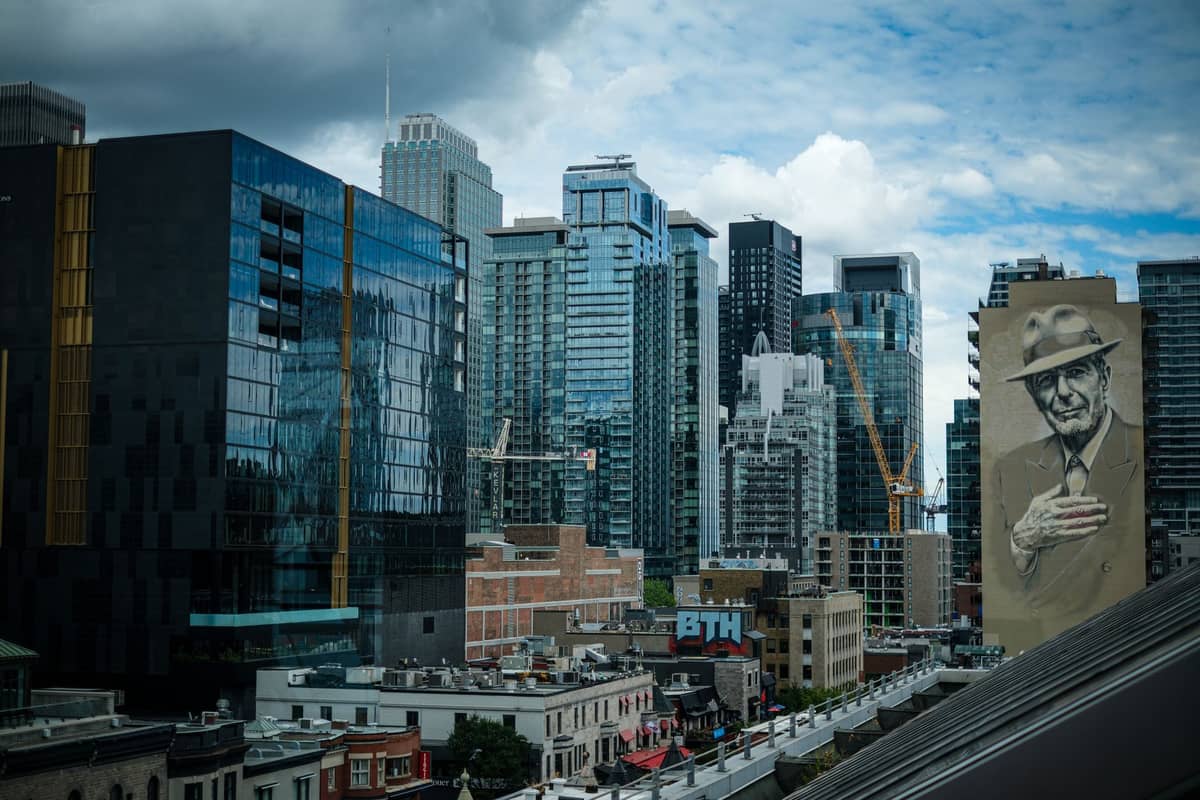
Art Public Montréal (artpublicmontreal.ca) is the most reliable resource for self-guided street art exploration. The organization catalogs public artworks across the city with locations, artist credits, and historical context. Their themed routes vary considerably in scope: a short Plateau circuit takes around 30 minutes, while a Mont-Royal to McGill route runs closer to an hour, and longer options around the Lachine Canal can fill a half-day. Routes are available in French and English, and some are formatted as downloadable audio experiences compatible with walking at your own pace.
The Ville de Montréal also publishes official public art trails through its website and has offered podcast-based tours that provide artist interviews and context as you walk. These are particularly useful for understanding the commissioned works that are formally part of the city's permanent collection, which goes beyond festival murals to include sculptures, installations, and integrated architectural art. For a broader cultural loop, consider pairing an art walk with a visit to the Montreal Museum of Fine Arts, which occasionally features street art and urban art programming alongside its permanent collection.
- Plateau Mini-Tour (30 min) Focuses on murals between Sherbrooke and Mont-Royal along and near Saint-Laurent Boulevard. Good starting point for first-time visitors with limited time.
- Mont-Royal to McGill Route (1 hour) Moves through the transition zone between the Plateau and downtown, mixing large festival murals with older commissioned public works.
- Lachine Canal Route (2–3 hours) A longer circuit combining industrial-era architecture with murals on warehouse walls. Best done by bicycle given the distances involved.
- Griffintown Walk (1–2 hours) Focuses on the large-format commissioned works on new construction along Wellington Street and surrounding blocks. Works here tend to be more recent and very large in scale.
For guided experiences, Spade & Palacio runs a Montréal mural tour focused on Saint-Laurent Boulevard, covering the history of the street and the festival alongside the artworks themselves. A two-hour street art e-bike tour operated by Fitz Montréal Bike Tours covers parts of the Plateau, Downtown, and Mile End, which is a practical option for visitors who want to cover more ground without committing to a full day on foot. Prices for both vary by date and group size; confirm availability and rates directly with the operators or through Tourisme Montréal before booking.
✨ Pro tip
Bring a wide-angle lens or use your phone's ultrawide mode for building-height murals — standard focal lengths cut off the tops of six-story works. Morning light (before 10am) from the east works best for murals on west-facing walls along Saint-Laurent's eastern side, and vice versa in the afternoon.
Seasonal Considerations and Year-Round Access
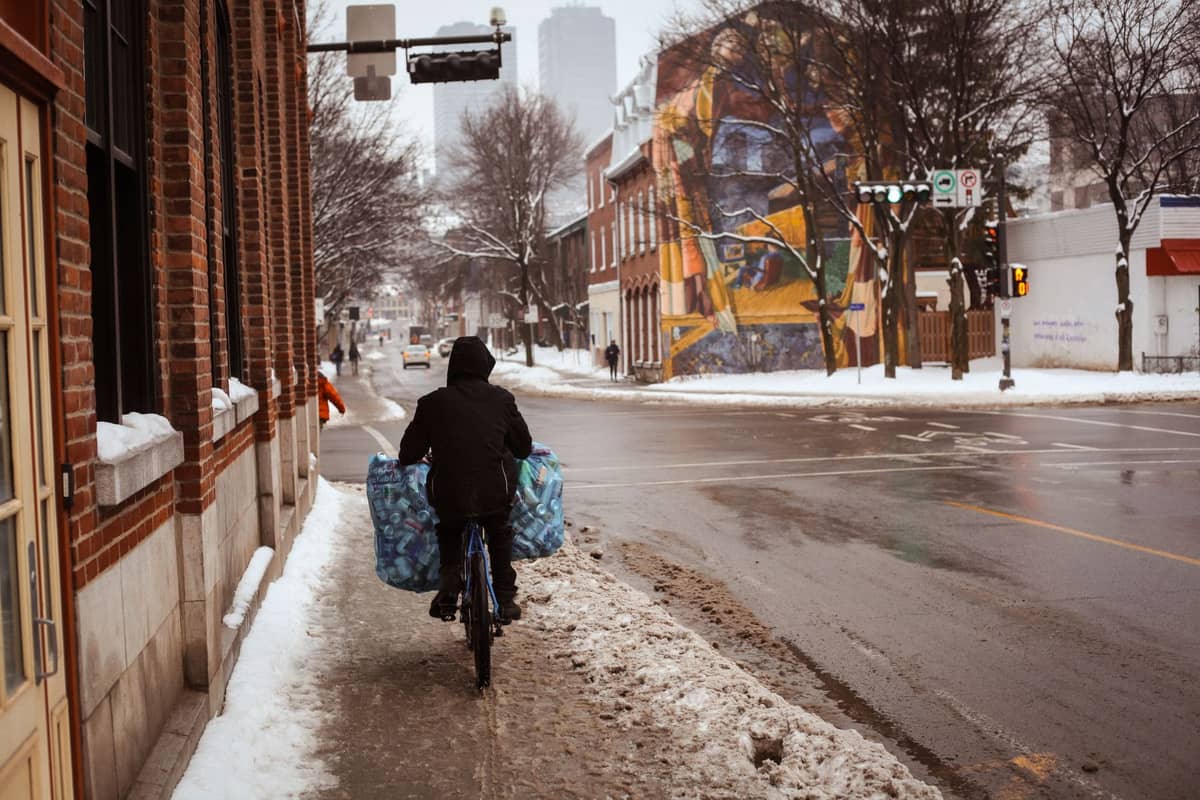
Outdoor murals in Montreal are accessible year-round, which means even a winter visit can include a street art walk. That said, Montreal winters are genuinely cold, with average daily temperatures ranging from around -9°C to -4°C between December and February, and wind chill can make extended outdoor walks uncomfortable. If you are visiting in winter and want to combine art with warmth, the Underground City has a scattering of public art installations along its corridors, though it is not a street art destination in the same sense as the Plateau.
May through September is the practical window for comfortable extended outdoor walks. June is peak season for street art specifically because of the MURAL Festival, but July and August offer long daylight hours (sunset after 8pm) and warm temperatures averaging 18°C to 22°C. September is excellent: crowds thin, the light is softer, and the foliage in nearby Mount Royal Park starts to turn, making combined walks particularly worthwhile. For a broader look at what Montreal offers in warm weather, the Montreal in summer guide covers the full seasonal picture.
- June: MURAL Festival activity, artists working live, guided tours widely available
- July–August: All completed murals accessible, long daylight, no festival crowds
- September–October: Comfortable temperatures, softer photography light, fewer tourists
- November–April: Murals visible but cold weather limits long walks; some works may be partially obscured by snow or scaffolding
Practical Tips for Getting the Most Out of Montreal's Murals
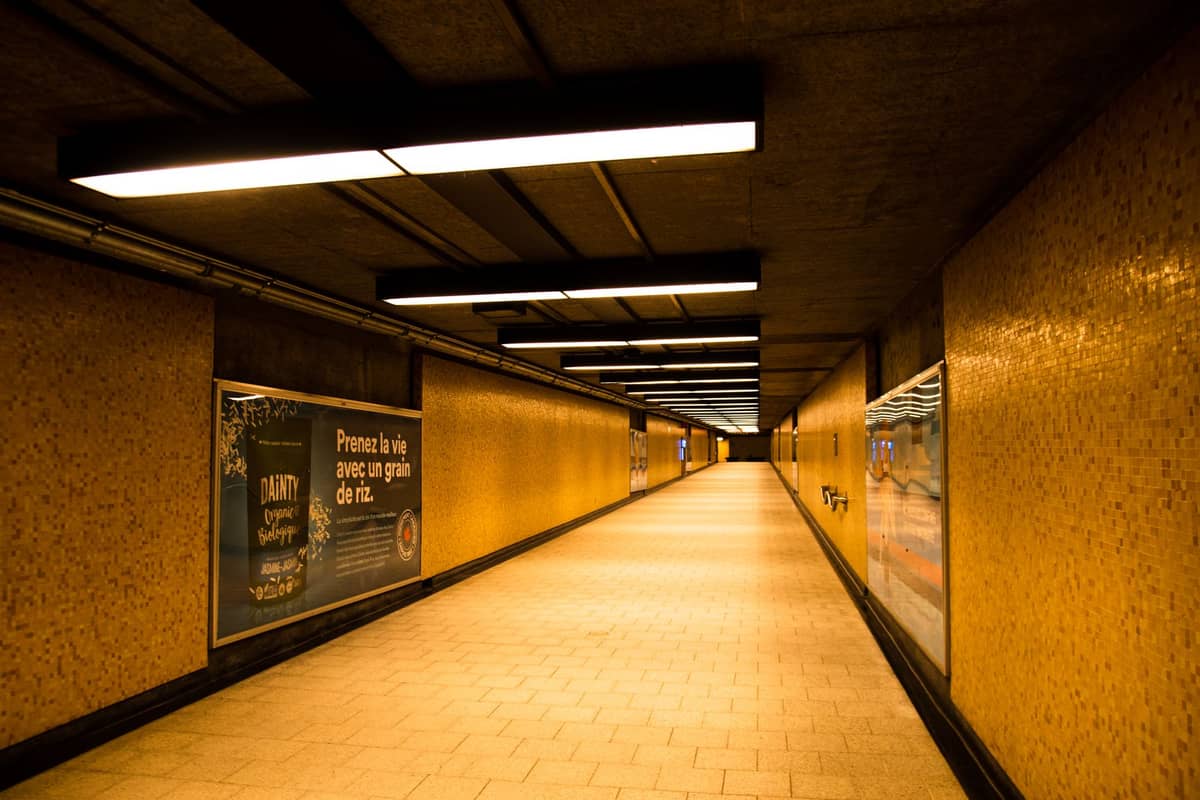
Getting around the Plateau and Mile End on foot is straightforward: both neighborhoods are dense, flat, and walkable, with most major murals within a few blocks of each other along Saint-Laurent. The STM metro's Mont-Royal station (Orange Line) puts you directly in the heart of the mural corridor. For Griffintown, the Lucien-L'Allier station (Orange Line) is the closest metro stop, though some walking is still required. A full breakdown of transit options across the city is in the getting around Montreal guide.
Cycling is an efficient way to connect the Plateau, Mile End, and Griffintown mural clusters in a single outing. Montreal's BIXI bike-share system has stations throughout these neighborhoods and is one of the most practical ways to move between spots without backtracking. The Montreal cycling guide covers BIXI logistics, routes, and safety in detail. Alternatively, the Lachine Canal path is a dedicated cycling and walking route that links Griffintown to the western part of the island, passing several murals on warehouse walls along the way.
- Download the Art Public Montréal route maps before you go — cell service can be inconsistent in some alley sections
- Murals are on private buildings; do not trespass to access a better view or photograph a work
- Some of the most photogenic murals are in alleys (ruelles) — these are generally accessible but are residential spaces, so be considerate of noise
- Festival-era murals can be painted over; works that appeared in photos from previous years may no longer exist
- Most guided tours operate in English and French; confirm language options when booking
If street art is part of a broader cultural agenda, Montreal's public art scene pairs naturally with its gallery circuit. The Musée d'art contemporain de Montréal regularly features artists who also work at an urban scale, and the museum's programming often intersects with the MURAL Festival. For a fuller picture of what the city's museums offer alongside its outdoor art, the best museums in Montreal guide is a useful companion.
FAQ
When is the MURAL Festival in Montreal in 2026?
The 14th edition of the MURAL Festival is scheduled for June 4–14, 2026, primarily along Saint-Laurent Boulevard. Programming details and any date changes should be confirmed on the official MURAL Festival website at muralfestival.com before making travel plans.
Is Montreal street art free to see?
Yes, the murals themselves are free to view — they are painted on public-facing building walls and accessible from the street. Self-guided route maps from Art Public Montréal and the Ville de Montréal are also free. Guided walking tours and e-bike tours have fees that vary by operator; some MURAL Festival evening events also have ticket costs.
What is the best neighborhood in Montreal to see street art?
Saint-Laurent Boulevard through the Plateau-Mont-Royal and into Mile End is the most concentrated single corridor. For very large-format works, Griffintown has some of the most visually impressive building-scale murals in the city. Combining both neighborhoods in one day by bicycle is practical and covers the main highlights.
Are Montreal murals visible in winter?
Yes, the murals are painted on permanent building surfaces and are visible year-round. Winter temperatures in Montreal typically range from -9°C to -4°C on average, which makes long outdoor walks uncomfortable. Snow accumulation can obscure the lower sections of some works. For extended art walks, May through October is significantly more pleasant.
What is the difference between MURAL Festival murals and other Montreal street art?
MURAL is a specific annual festival that commissions and produces new large-scale murals during a roughly ten-day window in June. Montreal's broader public art collection includes hundreds of permanent and independently commissioned works documented through Art Public Montréal and the Ville de Montréal, which are entirely separate from the festival. Many of the most celebrated murals in the city predate or exist independently of the MURAL Festival.