Musée d'art contemporain de Montréal: A Practical Guide to Montreal's Contemporary Art Museum
Founded in 1964, the Musée d'art contemporain de Montréal is a major Canadian museum dedicated exclusively to contemporary art. Currently operating from a temporary location inside Place Ville Marie, it offers a surprisingly accessible and often thought-provoking experience in the heart of downtown Montreal.
Quick Facts
- Location
- Place Ville Marie, Gallery Level, corner of Mansfield & Cathcart Streets, Downtown Montreal
- Getting There
- Bonaventure (Orange Line) or McGill (Green Line) metro stations; Place Ville Marie is connected to the Underground City network
- Time Needed
- 1.5 to 3 hours depending on current exhibitions
- Cost
- CAD $10 general admission; free under 20, Indigenous visitors, and visitors with disabilities; pay-what-you-want Thursday evenings
- Best for
- Contemporary art enthusiasts, design-conscious travelers, budget-savvy visitors (Thursday evenings), rainy-day culture seekers
- Official website
- macm.org/en
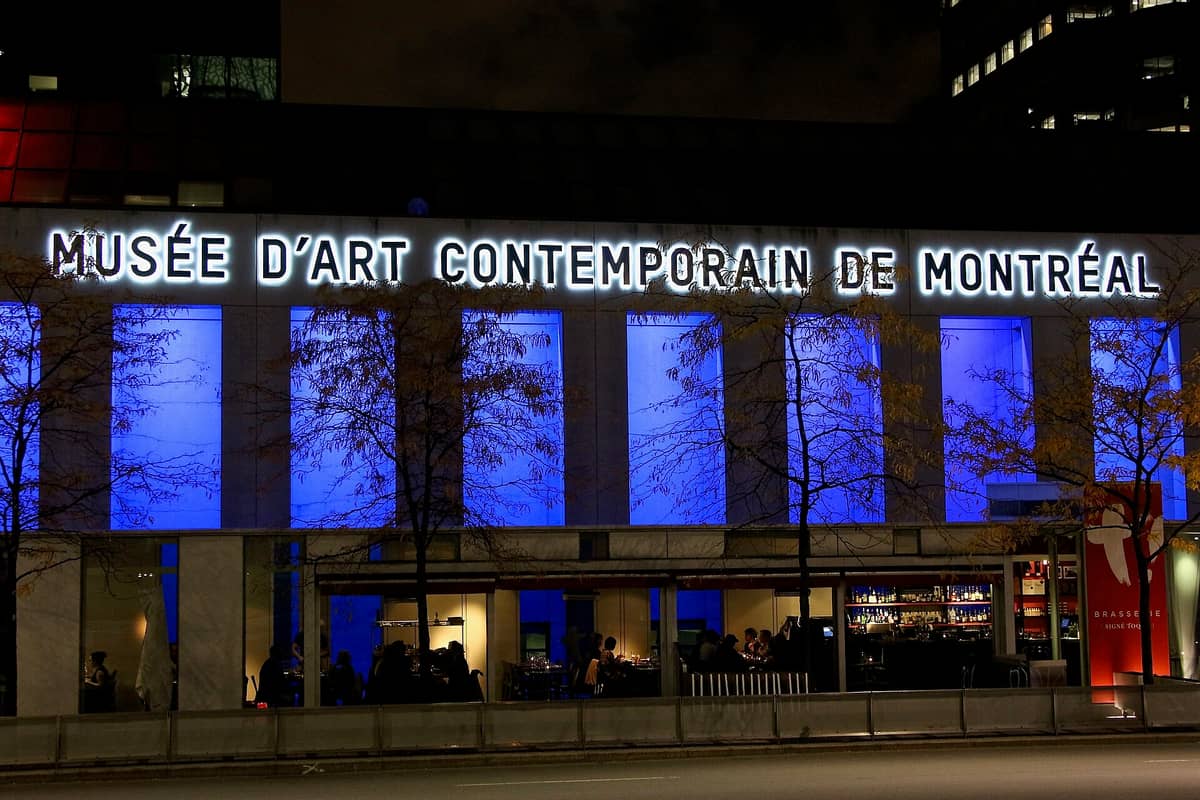
What the MAC Is Right Now
The Musée d'art contemporain de Montréal, universally known as the MAC, was founded by the Government of Québec in 1964 and is dedicated to contemporary art. Its collection now contains more than 8,000 works. For decades it operated from its home in the Quartier des Spectacles on Sainte-Catherine Street West. That building is currently undergoing a major architectural transformation, and the museum has temporarily relocated to the Gallery Level of Place Ville Marie, the iconic cruciform skyscraper complex in downtown Montreal.
This temporary setup deserves an honest assessment. Place Ville Marie is a shopping and office complex, and arriving through its retail corridors does not feel like approaching a grand cultural institution. The transition from the underground concourse to the gallery level requires some navigation. That said, once inside the exhibition spaces, the curated environment reads as genuinely museum-quality: controlled lighting, thoughtful wall text in both French and English, and the kind of spatial pacing that rewards slow looking. The MAC's programming team has not lowered its ambitions just because the building has changed.
ℹ️ Good to know
The MAC is temporarily housed at Place Ville Marie (Gallery Level, corner of Mansfield and Cathcart Streets). Enter via Mansfield Street or Cathcart Street. Hours and programming may shift during the renovation period, so check macm.org before visiting.
The Collection and What You Can Expect to See
The MAC holds a permanent collection of over 8,000 works, with particular depth in Quebec and Canadian contemporary art from the 1960s onward. Painters, sculptors, video artists, installation artists, and photographers whose careers trace the arc of postwar Quebec culture are all represented. The collection includes significant holdings by Paul-Émile Borduas and Jean-Paul Riopelle, two figures central to the Automatistes movement that reshaped Quebec cultural identity in the late 1940s. The collection is not currently on display in the temporary Place Ville Marie space.
The temporary exhibition program is where the MAC consistently performs at its highest level. The museum has a track record of bringing international names to Montreal and commissioning ambitious site-responsive works from Quebec artists. Exhibition durations vary, typically running several months, so it is worth checking the website to understand exactly what is on before you go. Visiting without knowing what is showing can lead to a satisfying surprise or a slightly underwhelming hour, depending on your sensibility.
If contemporary art is a genuine interest rather than a casual curiosity, the MAC pairs naturally with a visit to the Montreal Museum of Fine Arts, which is only a short walk west along Sherbrooke Street and covers a much broader historical sweep. Together, they offer a more complete picture of how Montreal's art world is organized.
Tickets & tours
Hand-picked options from our booking partner. Prices are indicative; availability and final rates are confirmed when you complete your booking.
Montreal evening cruise on the St. Lawrence River
From 54 €Instant confirmationFree cancellation3-hour e-bike guided tour in Montreal
From 68 €Instant confirmationFree cancellationWalking tour of Old Montreal
From 20 €Instant confirmationFree cancellationMontreal helicopter tour
From 156 €Instant confirmationFree cancellation
Visiting by Time of Day
Tuesday through Friday, the museum opens at 11:30 a.m., which means arriving shortly after noon puts you ahead of any significant crowd. Midweek mornings are the calmest periods. The gallery level of Place Ville Marie sees lunch-hour foot traffic from nearby office workers, some of whom pop in briefly, but the exhibition spaces themselves rarely feel crowded during weekday afternoons.
Saturday openings at 11:00 a.m. and Sunday at 11:00 a.m. draw a more leisure-oriented crowd. Weekend afternoons can feel livelier, particularly if a new exhibition has just opened. If you prefer unhurried gallery time, aim for a weekday afternoon between 2:00 and 5:00 p.m.
Thursday evenings are the most socially charged visit. The pay-what-you-want admission policy from 5:00 p.m. onward draws a noticeably younger, more mixed audience. The mood shifts from contemplative to more conversational. If you want the art with fewer distractions, this is not the session to choose. If you want to experience the museum as a community space rather than a private sanctuary, Thursday evening is the most interesting version of that.
💡 Local tip
Thursday evening admission is pay-what-you-want, including zero. This is a genuine Montreal cultural institution making itself accessible, not a promotional gimmick. It is one of the better free or near-free options in the city for art lovers.
Getting There and Getting Around Inside
Place Ville Marie is near Bonaventure metro station (Orange Line) and is also a short walk from McGill station (Green Line). Both stations connect to the Underground City, the network of subterranean pedestrian corridors that links much of downtown Montreal. In winter, you can reach Place Ville Marie from several metro stations without stepping outside, which makes the MAC one of the more weather-proof museum destinations in the city.
For those unfamiliar with how to navigate the underground network, the Underground City can be confusing at first. Signage for the MAC within Place Ville Marie directs you toward the Mansfield or Cathcart Street entrances; following museum signage once inside the complex is more reliable than relying on the general building directories.
Accessible parking is available at Place Ville Marie on levels P1 and P2. The venue has automatic doors, ramps to the PVM Esplanade, escalators, and accessible routes throughout. The gallery level itself is flat and navigable with a wheelchair or mobility aid. If you have specific accessibility questions, the museum's website has detailed information, and staff at the entrance are generally well-informed.
Admission, Concessions, and What the Ticket Covers
General admission is CAD $10, which positions the MAC as one of the more affordable major museums in downtown Montreal. Free admission applies to visitors under 20 (with identification), Indigenous visitors, and visitors with disabilities or who are Deaf, plus one companion of their choosing. Thursday evening admission from 5:00 p.m. is pay-what-you-want.
If you are working through the city on a tight budget, the MAC's Thursday evening policy is worth building an itinerary around. The free things to do in Montreal guide covers similar opportunities across the city.
Admission prices cover all current exhibitions. The museum is closed on Mondays and may also close between exhibitions during installation periods. Confirming online before making a specific trip is a reasonable precaution, particularly if you are visiting from outside the city or scheduling tightly.
Photography and What to Bring
Photography policies at the MAC vary by exhibition. Some shows permit personal photography without flash; others, particularly those featuring works by artists or estates with specific reproduction rights, do not. The policy for each exhibition is posted at the entrance and repeated on room-level signage. Asking a gallery attendant at the start of your visit is the most reliable way to know what is permitted.
There is no strict dress code. The gallery environment is climate-controlled year-round, which matters in Montreal's extremes: the spaces are warm in winter and cooled in summer. A bag-check option at the entrance allows you to leave coats and larger bags. Comfortable shoes are sensible; you will be standing and walking for the duration of your visit.
Honest Assessment: Who Should Visit and Who Might Not
The MAC is not a generalist museum. It does not survey the full arc of Western art history, offer crowd-pleasing Impressionist galleries, or maintain the kind of encyclopedic permanent collection that draws casual visitors across multiple generations. If you are primarily interested in Old Masters, historical artifacts, or the kind of art that reads immediately as beautiful or accessible, the MAC may frustrate rather than reward. The Montreal Museum of Fine Arts or Pointe-à-Callière Museum would be better choices.
For travelers who follow contemporary art, or who are genuinely curious about Quebec's cultural production from the postwar era onward, the MAC is a serious institution with a serious program. The temporary venue is a limitation, and the building itself offers none of the architectural drama of the planned renovated home. But the curatorial standard remains high, and on a good exhibition cycle, this is one of the more intellectually engaging museum experiences available in Montreal.
The MAC sits in the Quartier des Spectacles, Montreal's designated cultural district. The area around it includes Place des Arts, the city's main performing arts complex, and a cluster of smaller galleries and performance venues. If you are spending a day in this district, the MAC fits naturally into a broader cultural itinerary rather than requiring a dedicated trip.
Insider Tips
- Check the MAC website for exhibition changeover dates. The museum sometimes closes for a week or two between shows for installation. Arriving during a changeover means very limited or no art on view.
- Thursday pay-what-you-want evenings attract a noticeably social crowd. If you want quiet contemplation, a Tuesday or Wednesday afternoon is significantly calmer.
- The Mansfield Street entrance to Place Ville Marie is the most straightforward approach from the street. If you arrive via the underground metro corridors, follow Place Ville Marie internal signage toward the Gallery Level rather than the shopping concourse.
- Bilingual wall text is standard across exhibitions, so language is not a barrier even for visitors whose French is limited. Audio guides and other interpretive tools vary by exhibition, so check the website for the current show.
- Free admission for visitors under 20 with ID makes this one of the few serious contemporary art institutions in North America where young visitors are genuinely not paying anything, not just receiving a discount.
Who Is Musée d'art contemporain de Montréal For?
- Contemporary art enthusiasts looking for a serious curatorial program, not a tourist-facing survey
- Budget travelers: CAD $10 general admission is low for a major city museum, and Thursday evenings are pay-what-you-want
- Rainy or cold days when outdoor Montreal is less appealing and an indoor cultural experience fits the schedule
- Travelers interested in Quebec's cultural identity and artistic history, particularly from the 1960s onward
- Anyone connecting through downtown Montreal with a few hours to spare and already navigating the Underground City
Nearby Attractions
Other things to see while in Quartier des Spectacles:
- Place des Arts
Place des Arts is Montreal's flagship performing arts complex, home to six performance venues and the anchor of the Quartier des Spectacles. Whether you're catching a symphony, attending a festival, or simply crossing the esplanade on your way through downtown, this is where Montreal's cultural life concentrates.