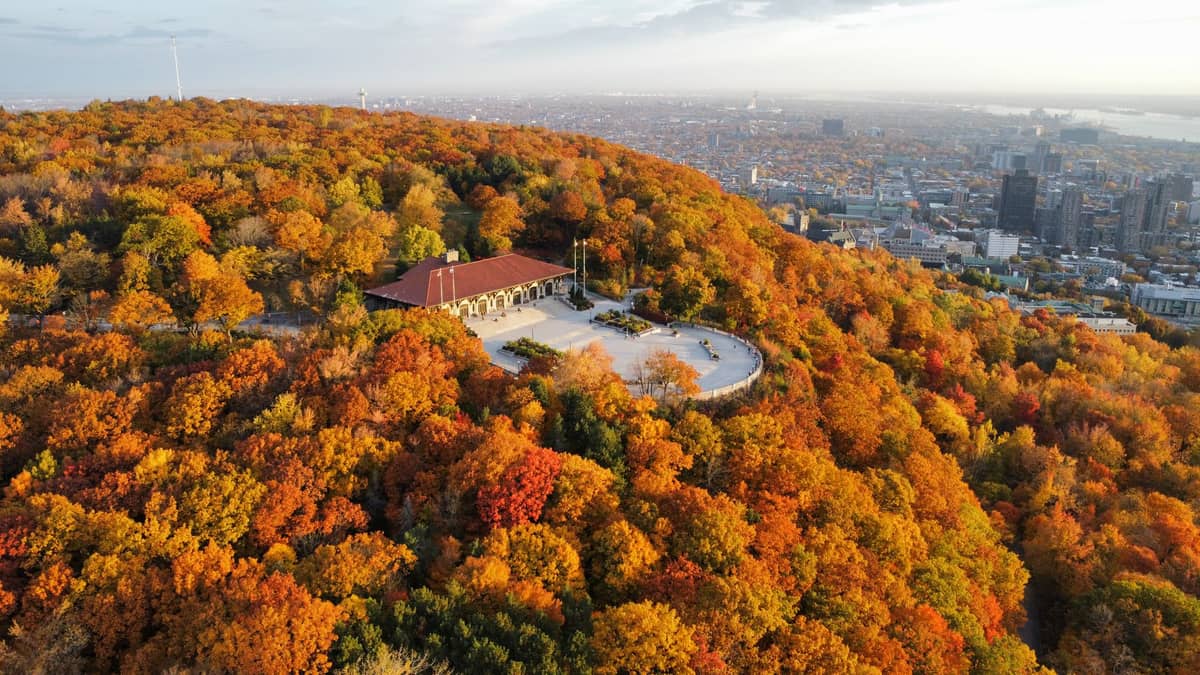
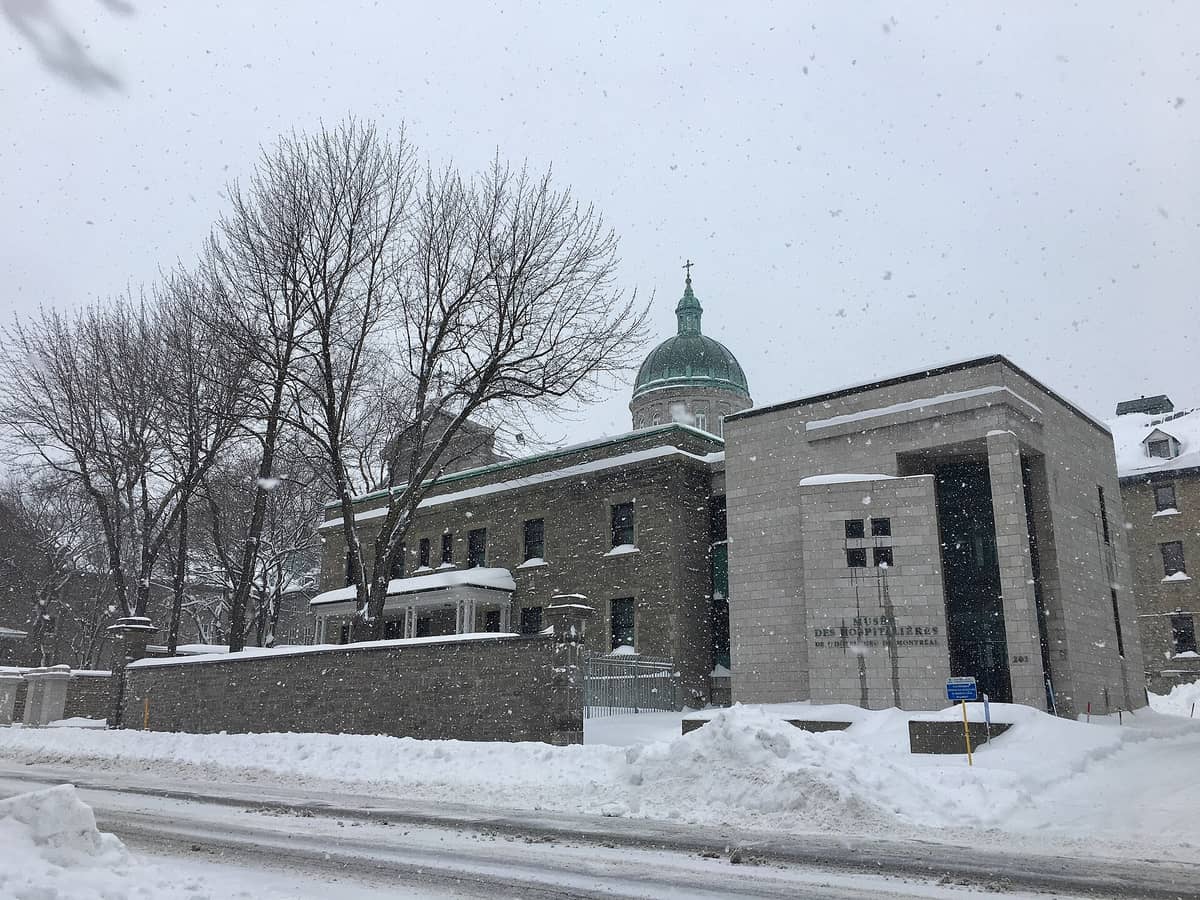
Mount Royal is the igneous hill that defines Montreal's skyline and daily life. The municipal park covers about 200 hectares, while the wider historic district stretches across roughly 10 km² and also includes cemeteries, university campuses, religious institutions, and the residential neighbourhoods that wrap around its slopes.
Mount Royal is Montreal's defining landmark: a forested hill rising about 233 metres above sea level that simultaneously functions as a public park, a natural boundary between neighbourhoods, and the symbolic heart of the island. Where other cities have a central square or a waterfront promenade, Montreal has a mountain — one that residents hike before work, ski in January, and gather on in summer Sundays with drums and friends.
Orientation
Mount Royal sits roughly in the middle of the island of Montreal, about 3 kilometres northwest of downtown. The hill and its protected territory cover approximately 10 km² and function as a hard geographic edge that divides the city's central core from its northern and western residential boroughs. The neighbourhoods of Outremont, Côte-des-Neiges, and Notre-Dame-de-Grâce lie on the north and west slopes; the Plateau-Mont-Royal and downtown press up against the south and east flanks.
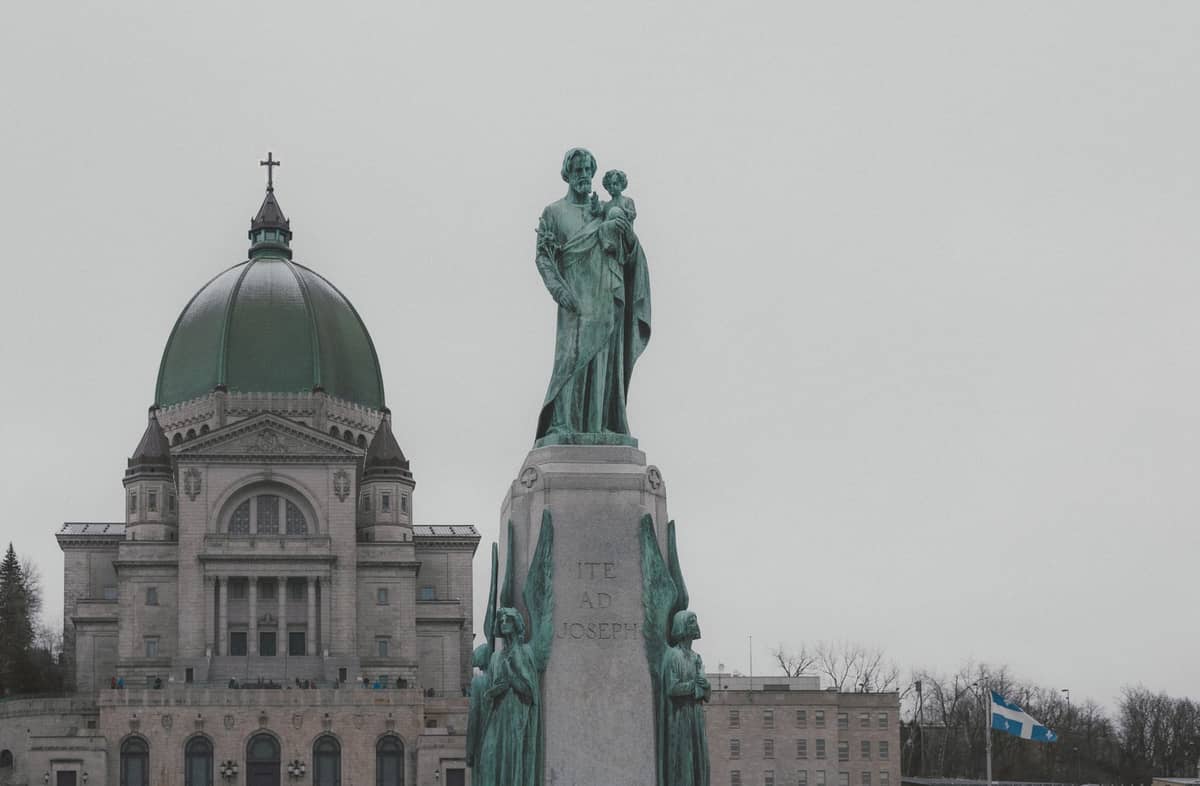
The official heritage boundaries run roughly from Esplanade Avenue and Saint-Urbain Street on the east side down to Pine Avenue, Sherbrooke Street, and Dr. Penfield Avenue along the south, west to Westmount's municipal boundary and Summit Circle, and north to Édouard-Montpetit Boulevard and Côte-Sainte-Catherine Road. Within those limits you'll find not just trees and trails but McGill University's upper campus, Université de Montréal's main campus, two of Canada's largest cemeteries, and Saint Joseph's Oratory.
The park itself — Mount Royal Park — occupies the central and highest portion of the territory. It is the part most visitors think of when they say 'the mountain': the wooded paths, the chalet, the Kondiaronk Belvedere, and Beaver Lake. But the broader Mount Royal experience extends well beyond the park's formal edges, into the institutional campuses and cemetery grounds that give the hill its particular quiet gravity.
Character & Atmosphere
Early on a weekday morning, the mountain belongs to joggers and dog walkers. The main carriage path that loops from the Peel Street entrance up toward the chalet collects a steady stream of people moving fast, earphones in, coffee in hand. The air smells of pine and wet earth, and through the canopy you catch glimpses of the office towers on René-Lévesque below. At this hour the park feels less like a tourist attraction and more like a large, shared backyard.
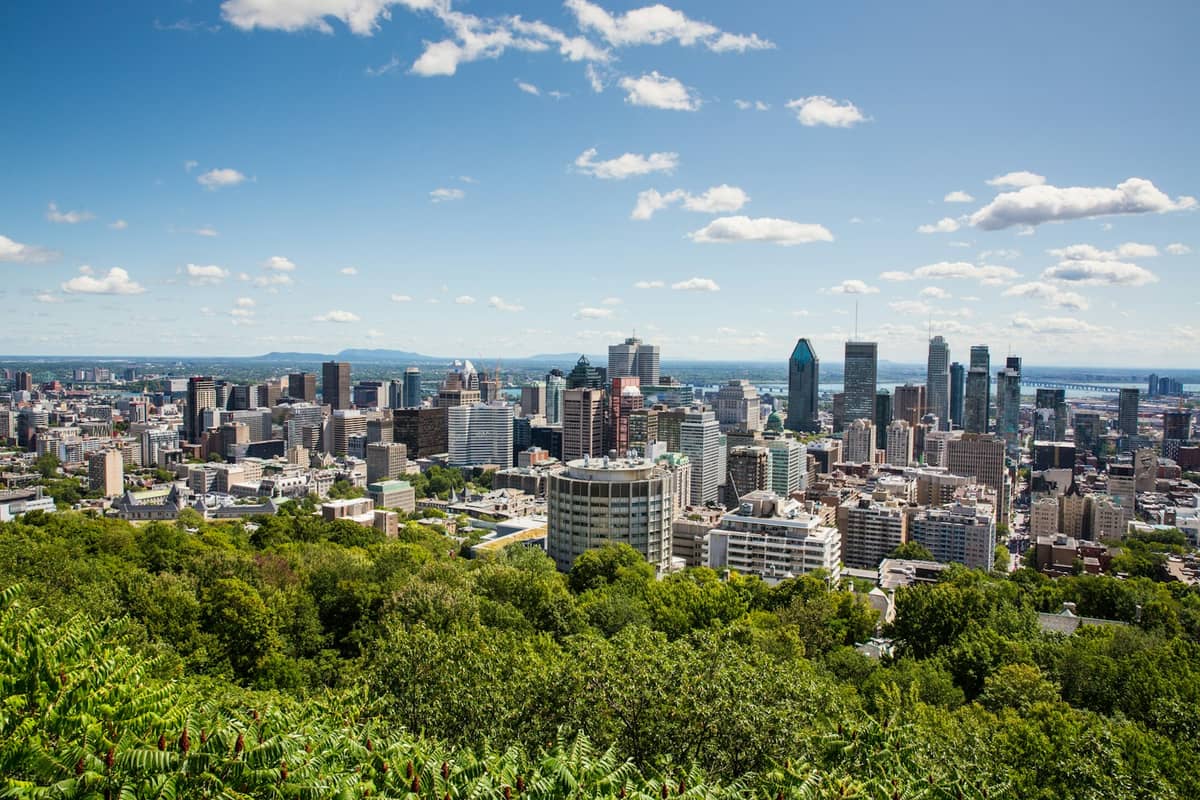
By midday on weekends, especially in summer, the atmosphere shifts. Families spread out across the lawn near the chalet. Visitors from all over the city and beyond make the climb, some arriving breathless up the stone steps from Peel Street, others rolling in via Camilien-Houde Parkway by car or bus. The Kondiaronk Belvedere fills with people taking in the downtown skyline — the view from that terrace, with the office towers below and the Saint Lawrence glinting beyond them, is among the most striking urban panoramas in Canada.
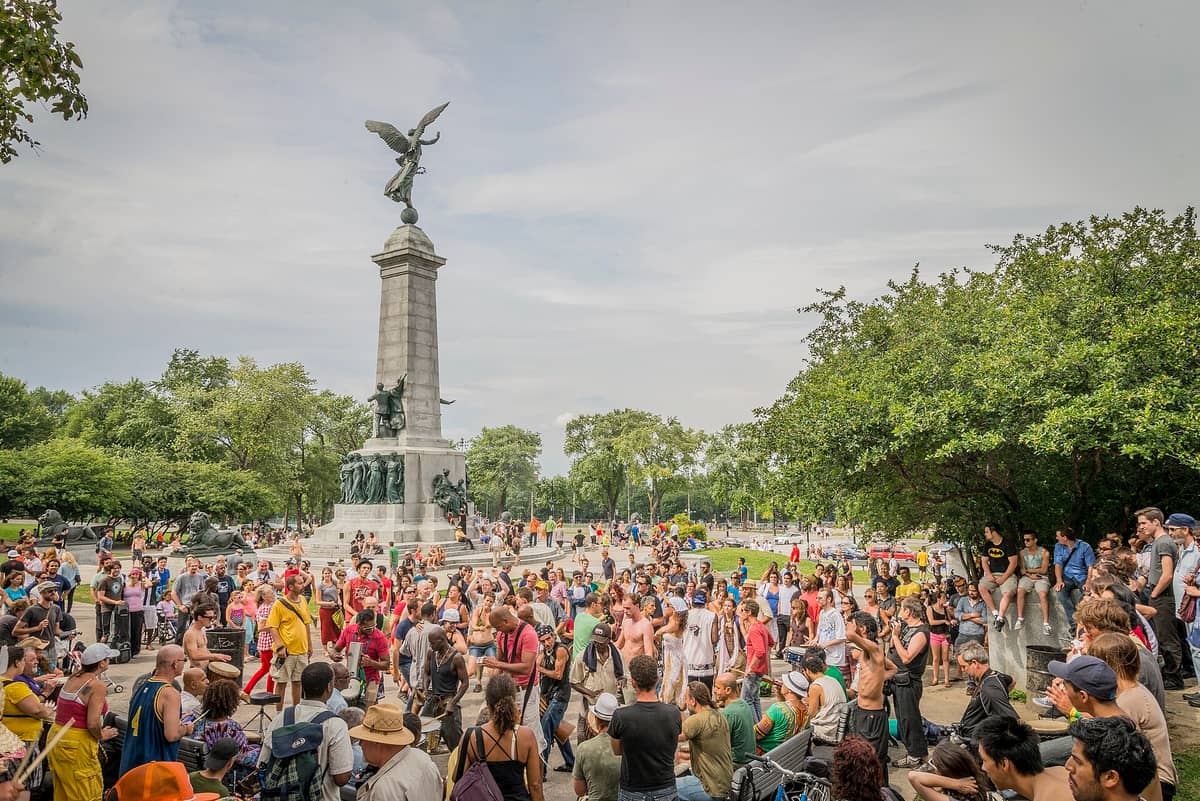
Sunday afternoons in summer bring a long-running tradition to the eastern slope near the Sir George-Étienne Cartier Monument: the Tam-Tams, an informal gathering of drummers, dancers, and picnickers that has been happening weekly for decades. It draws enormous crowds and has a genuinely spontaneous energy — there is no stage, no admission, no announced lineup. The Tam-Tams are one of the few events in Montreal that feel entirely unrehearsed. It draws enormous crowds and has a genuinely spontaneous energy — there is no stage, no admission, no announced lineup. The Tam-Tams at Mount Royal are one of the few events in Montreal that feel entirely unrehearsed.
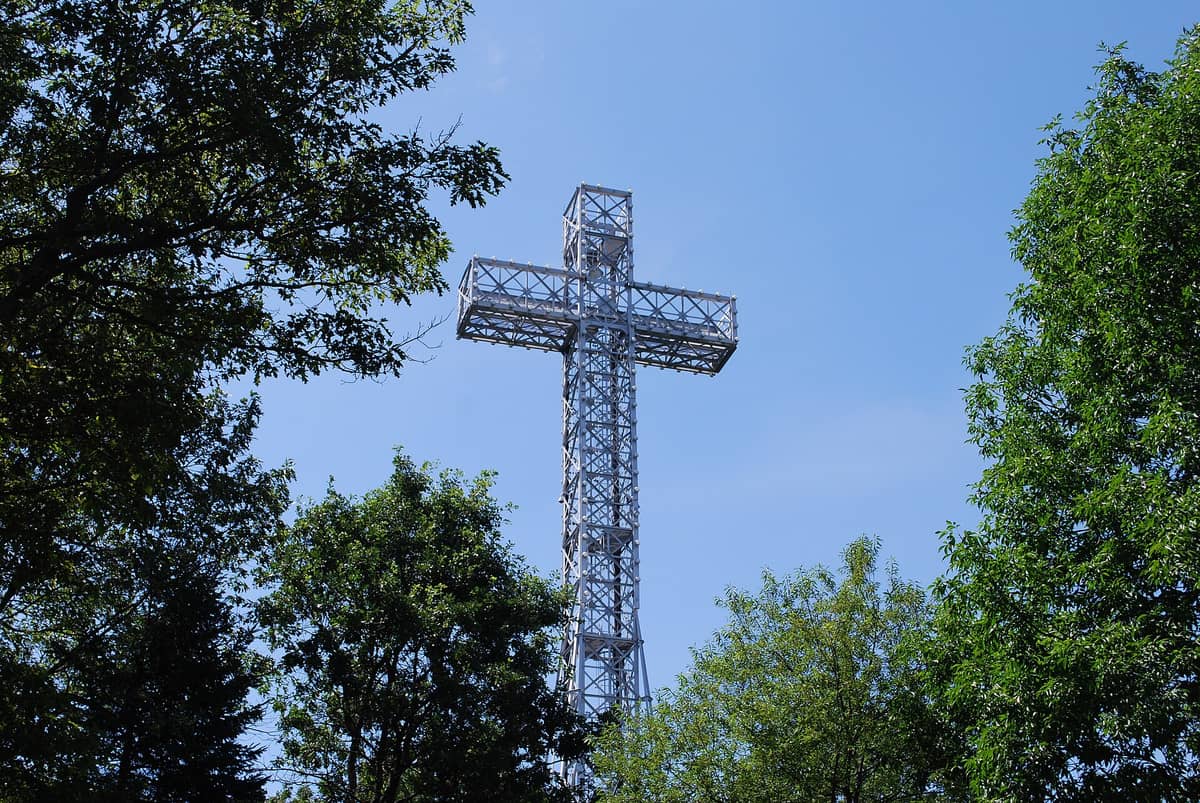
After dark, the park closes to the general public, though the belvedere area and the cross remain visible from below. The lit cross on the summit — a 30-metre steel structure visible from across the city — takes on a different character at night, shifting colour for major occasions. The residential streets on the mountain's lower slopes, particularly those around Outremont and the avenues near McGill, stay lively into the evening, with restaurants and cafés running until late.
ℹ️ Good to know
Mount Royal Park is officially open from 6am to midnight daily, though specific facilities have their own hours. The park is maintained by the City of Montreal and managed with input from Les amis de la montagne, the mountain's main conservation organization. Check the official site for seasonal service updates before visiting.
What to See & Do
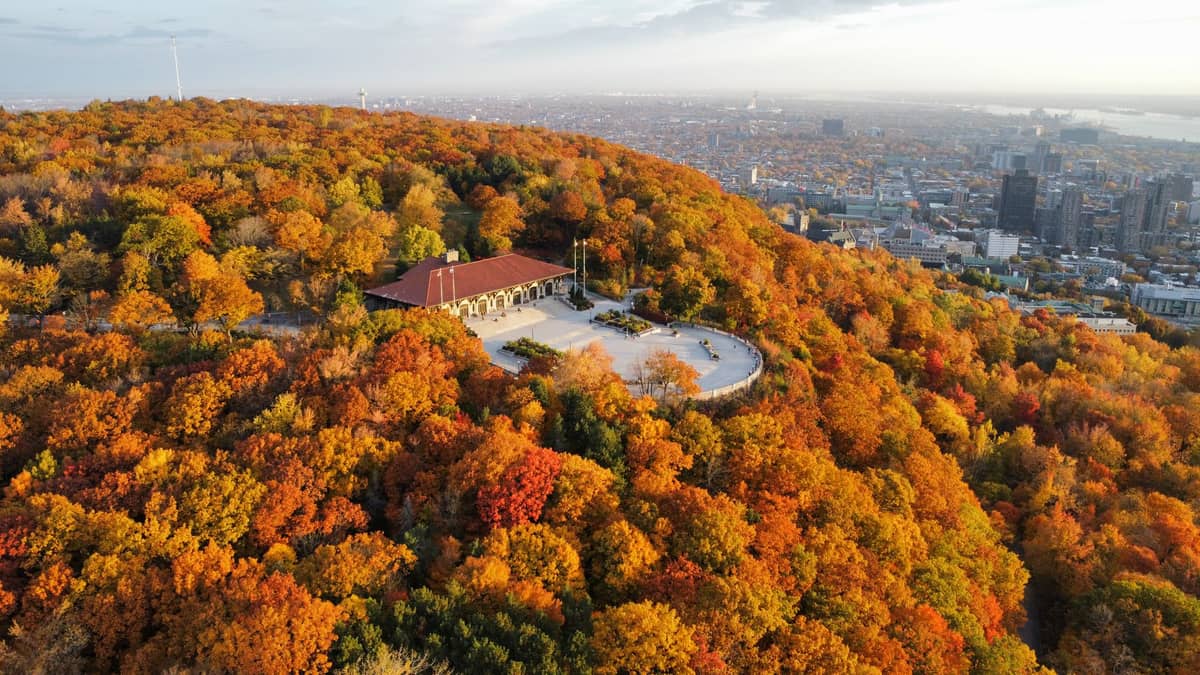
The main draw is the view from the Kondiaronk Belvedere, the large stone terrace directly in front of the Mount Royal Chalet. The chalet itself — a grand 1930s building with a decorated interior — is free to enter and often hosts rotating exhibitions about the mountain's history and ecology. The terrace in front of it faces squarely south, framing the entire downtown skyline.
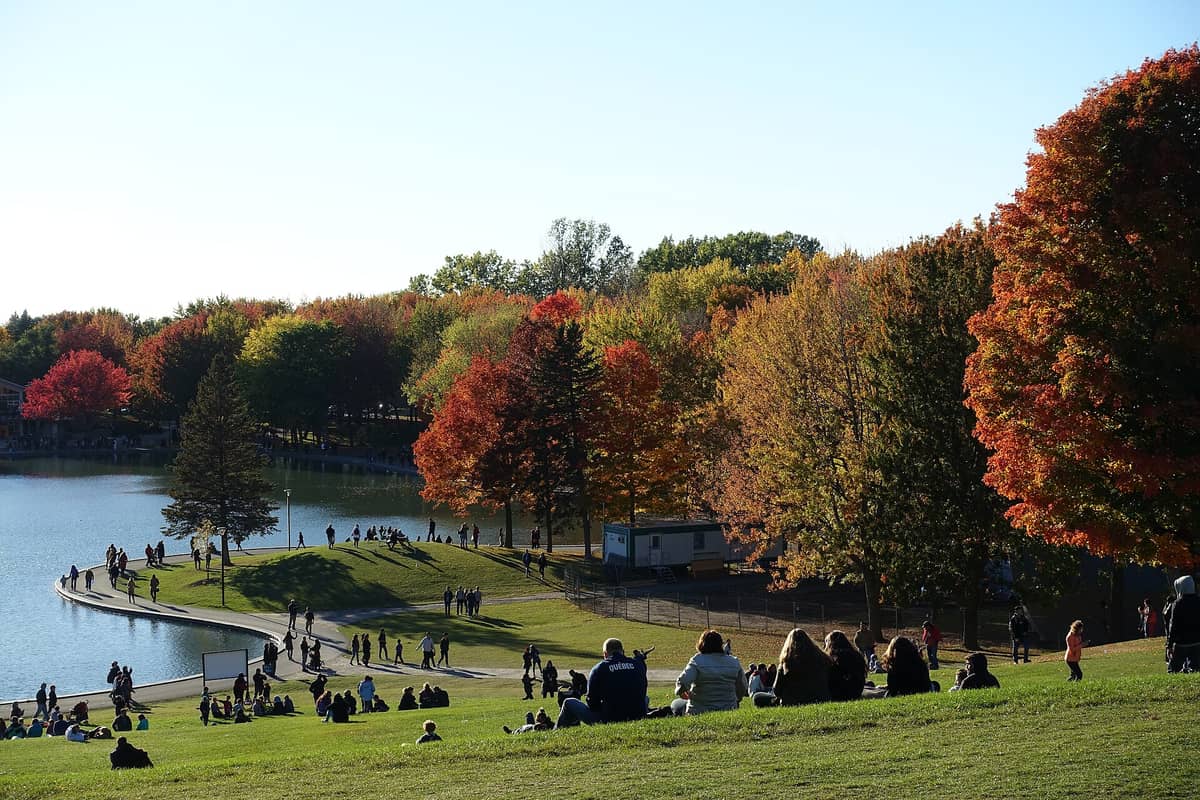
A short walk northwest from the chalet brings you to Beaver Lake (Lac-aux-Castors), a shallow man-made lake that becomes a skating rink in winter and a popular picnic area in summer. The surrounding lawn is one of the most relaxed spots on the whole mountain: less crowded than the belvedere, with a café-pavilion and pedal boats available in warmer months.
Further up the hill, and slightly removed from the main park circuit, stands the Mount Royal Cross. Reaching it requires a steeper, less-trafficked trail, which means it tends to be quieter than the belvedere. The cross was first erected in 1643 by Paul de Chomedey de Maisonneuve, fulfilling a vow made after a flood. The current steel version dates from 1924.
On the south slope, just outside the park's main perimeter and accessible from the Chemin Queen-Mary, Saint Joseph's Oratory dominates the skyline of the Côte-des-Neiges neighbourhood. Its copper dome is the second largest in the world after Saint Peter's in Rome, and its interior, with multiple chapels and a vast basilica, rewards an hour or two of exploration.
Walk or cycle the main carriage path (about 4 km loop) for an accessible way to see the park without serious climbing
In winter, cross-country ski trails are maintained around Beaver Lake and the carriage paths
The Mount Royal Cemetery and Notre-Dame-des-Neiges Cemetery, which together cover a large portion of the mountain's north face, are open to visitors and contain significant architectural monuments and the graves of notable Canadians
McGill University's upper campus, accessible from the south slope via the steep paths off Pine Avenue, connects the park to the academic institutions below
The Les amis de la montagne organization runs guided nature walks, snowshoe tours, and educational programs throughout the year
💡 Local tip
The fastest route to the Kondiaronk Belvedere on foot from downtown is up the stone staircase at the top of Peel Street, beginning at the intersection with Pine Avenue. It takes about 20 minutes at a moderate pace and drops you directly at the chalet terrace. The Olmsted Path, accessed from the same area, is a longer but gentler gravel trail that winds up gradually if you prefer a less steep climb.
Eating & Drinking
The park itself has limited food options: the chalet pavilion at Beaver Lake serves snacks and light meals in season, and there are a few drink kiosks near the Tam-Tams gathering point in summer. Serious eating happens at the foot of the mountain, in the neighbourhoods that wrap around it.
The streets closest to the mountain's eastern slope, particularly around the lower Plateau and the avenues running up from Pine, have a concentration of relaxed cafés that serve the student and professional crowd from McGill and Université de Montréal. This area sits at the edge of Plateau-Mont-Royal, where you'll find some of Montreal's most reliable neighbourhood restaurants: Portuguese grills, French bistros, Japanese counters, and no-frills poutine spots.
On the Outremont side, the streets around Bernard Avenue and Laurier Avenue West have a quieter, more established feel. Restaurants here tend toward French and Mediterranean, with wine lists and prix-fixe menus. The Côte-des-Neiges neighbourhood, on the mountain's west slope, skews younger and more diverse in its food offer, with South Asian, Vietnamese, and West African restaurants alongside Lebanese pastry shops.
For a post-hike coffee, the cluster of cafés just below the park entrance on Mont-Royal Avenue East (about a 15-minute walk east of the mountain's edge) is reliable and affordable. Bring snacks and water if you're planning a long trail day; the park's own refreshment options are seasonal and limited.
Getting There & Around
No metro station sits at the park's entrance. The closest options are Mont-Royal station on the Orange Line (about a 20-minute walk west to the park's eastern edge) and Peel or Guy-Concordia stations on the Green Line (about a 20-minute walk north up to the Pine Avenue trailhead). Neither gives you a quick drop at the summit.
Bus 711 is a key transit route to the mountain. It links Snowdon and Mont-Royal métro stations via Laurier and serves Mount Royal Park and Saint Joseph's Oratory; service is seasonal, operating daily from mid-June through the end of August and on weekends from late August. During Camillien-Houde closures, route 711 is rerouted and does not reach the mountain; route 804 is the service that reaches the summit. Confirm current schedules and stops with the STM before your visit, as seasonal adjustments apply.
Cycling is a practical and popular option. The mountain connects to Montreal's broader bike network, and several routes lead up from the Plateau to the south. The carriage paths within the park are wide and mostly unpaved gravel, suitable for hybrid and mountain bikes. For context on navigating the city's cycling infrastructure more broadly, the Montreal cycling guide covers the main routes and seasonal conditions.
⚠️ What to skip
Drivers and pedestrians should exercise extra caution at the Remembrance interchange and the Camilien-Houde Parkway crossing points. These have been identified as problematic for pedestrian safety — sight lines are poor and vehicle speeds can be high. Where possible, use the dedicated pedestrian paths rather than crossing the parkway directly.
For general orientation across Montreal's transit network, including metro lines and bus coverage, the guide to getting around Montreal is the most useful starting point.
Where to Stay
There are no hotels within the park or on the mountain itself. Accommodation options cluster at the base of the mountain in three main directions.
Staying in downtown Montreal, roughly south of Pine Avenue and west of Saint-Laurent Boulevard, puts you within a 20-minute walk of the park's main entrance at Peel Street. This is the most practical base for visitors who want access to both the mountain and the city's main sights, transit network, and restaurant areas. The downtown Montreal area has the widest range of hotel categories, from budget chains to independent boutique properties.
The streets immediately east of the park, around Mont-Royal Avenue and the lower Plateau, are mostly residential with a small number of bed-and-breakfast properties and short-term rentals. For a thorough comparison of neighbourhood bases, the where to stay in Montreal guide breaks down the trade-offs by area and traveller type.
The Côte-des-Neiges neighbourhood on the mountain's northwest slope has limited tourist accommodation but good value for longer stays, particularly for visitors with university affiliations. It is quieter than downtown and the Plateau, with easy bus connections to the park.
Practical Considerations
Mount Royal is a year-round destination, but the experience changes dramatically with the seasons. Summer brings long evenings, Tam-Tams crowds, and the full green canopy. Autumn — particularly from late September through mid-October — is widely considered the most visually striking time, when the maple and birch canopy turns gold, orange, and red. For timing advice across the city, the best time to visit Montreal covers seasonal trade-offs in full.
Winter on the mountain is genuinely worth experiencing rather than avoiding: cross-country ski trails are groomed around Beaver Lake, the carriage path becomes a walking and skiing corridor, and the city view from the belvedere on a clear February morning — with the Saint Lawrence frozen and the buildings dusted in snow — is unlike anything you'll see in warmer months. Dress in proper layers; the summit is consistently 3 to 5 degrees colder than street level, and wind chill on the exposed belvedere terrace can be significant.
The park is one of the best viewpoints in Montreal and also figures prominently among things to do at no cost in the city. Admission to the park, chalet, and all its trails is free. The Tam-Tams are free. The cross is free to view. Bring your own food, water, and if you're going in winter, microspike traction devices for icy trails.
💡 Local tip
If you want to see the city skyline from the Kondiaronk Belvedere without the weekend crowds, aim for a weekday morning between 7am and 9am. You'll have the terrace largely to yourself, the light falls across the downtown skyline from the east, and the carriage path below is peaceful.
Quick Verdict
Mount Royal is not optional for a first visit to Montreal. It explains the city's geography, provides its best skyline view, and offers a quality of urban green space that few North American cities can match. Understanding how the mountain divides and defines the city's neighbourhoods also makes everywhere else easier to navigate. For a broader look at how Mount Royal fits into the full Montreal experience, the Montreal first-timer guide is the logical next read.
TL;DR
Mount Royal Park is free to enter year-round and offers the city's best panoramic view from the Kondiaronk Belvedere — a straightforward 20-minute walk up from the Peel Street entrance.
No metro station accesses the park directly; seasonal bus 711 links Mount Royal Park with Snowdon and Mont-Royal stations, while route 804 reaches the summit during Camillien-Houde closures — confirm schedules with the STM.
The Tam-Tams gathering every Sunday afternoon in summer near the Cartier Monument is one of Montreal's most authentic public events and requires no planning to attend.
Winter use is genuine and rewarding: cross-country skiing, snowshoeing, and skating at Beaver Lake make the mountain a year-round destination rather than a warm-weather attraction only.
Best suited to: first-time visitors building a mental map of Montreal, outdoor enthusiasts, families, and anyone who wants to understand why Montrealers are attached to their city the way they are.
Montreal's market scene spans grand Art Deco food halls, open-air farmers markets in Little Italy, historic covered bazaars in Old Montreal, and lively Sunday flea markets at the foot of Mount Royal. This guide covers the best of all of them.
Montreal delivers more than its size suggests as a museum city. This guide covers the finest institutions across fine art, social history, archaeology, architecture, and science, with practical details to help you plan your visit.
Montreal rewards visitors in every season, but the right time to go depends entirely on what you want from the city. This guide breaks down the weather, festivals, crowds, and trade-offs for each season so you can plan with confidence.
Montreal rewards those who look up and out. Whether you climb to the Kondiaronk Belvedere at golden hour, ride the Grande Roue above the Old Port, or scale the Olympic Tower's inclined funicular, the city offers skyline perspectives that are genuinely worth seeking out. This guide covers the best viewpoints at every elevation, from free hilltop terraces to paid observation decks.
Montreal is an island city with extraordinary escapes on its doorstep. Whether you want alpine trails, freshwater beaches, wine country, or wildlife encounters, these are the best day trips from Montreal for every season and travel style.
Montreal is one of North America's most culturally rich cities, and you don't need to spend much to experience it. From mountaintop panoramas to historic churches, Sunday drum circles, and world-class art, this guide covers the best free things to do in Montreal across every season.
Montreal is one of North America's most navigable cities, with a reliable metro, an extensive bus network, and a serious cycling culture. This guide covers every way to move around the city, from airport arrivals to cross-neighborhood cycling, with accurate fares and practical logistics.
Montreal is well connected by air, rail, road, and bus. This guide breaks down every practical option for getting to Montreal, from booking flights to YUL to taking VIA Rail or an intercity bus, including costs, logistics, and what to watch out for.
Montreal is one of North America's most distinctive cities: French-speaking, architecturally rich, food-obsessed, and genuinely alive in every season. This guide cuts through the hype and gives you the real picture — including what doesn't live up to expectations.
Montréal-Trudeau International Airport (YUL) is the main gateway into Montreal, located about 20 km west of downtown. This guide breaks down every transport option, including real costs, journey times, and practical tips for arriving and departing stress-free.
Montreal is one of North America's most architecturally diverse cities, layering French colonial stonework, Gothic Revival grandeur, early 20th-century Beaux-Arts institutions, and modernist experiments across its neighborhoods. This guide walks you through the key eras, districts, and buildings worth your time, with practical transit advice for moving between them.
Montreal bagels are in a category of their own: hand-rolled, boiled in honey water, and baked in wood-fired ovens until golden and slightly chewy. This guide covers what makes them distinct, the legendary Fairmount vs St-Viateur debate, where to find the best ones, and everything else a first-timer or returning visitor needs to know.
Montreal is an island city, and in summer it takes full advantage of that fact. From supervised urban beaches with skyline views to freshwater shores inside national parks, here are the best places to swim, sunbathe, and cool off near Montreal.
Attending a Montreal Canadiens game at the Bell Centre is one of the most intense sporting experiences in North America. This guide covers everything you need to know: how to find tickets, read the schedule, check standings, get to the arena, and make the most of game night in Montreal.
Montreal has one of North America's most developed urban cycling networks, with over 1,000 km of paths, a mature bike-share system, and routes that connect historic waterfront districts to leafy residential neighborhoods. This guide covers BIXI pricing, the best routes by experience level, seasonal logistics, and what to watch out for before you clip in.
Montreal earns its reputation as Canada's festival capital every summer, when the Quartier des Spectacles, Parc Jean-Drapeau, and the city's streets fill with music, circus arts, fireworks, and outdoor gatherings. This guide covers the venues, neighborhoods, and attractions that make Montreal's festival calendar tick — from free outdoor stages to world-class arena shows.
Montreal is one of North America's most distinctive cities, with a French-speaking culture, four dramatic seasons, world-class food, and a calendar packed with festivals. This guide covers everything a first-time visitor needs: how to get in, where to go, what to eat, and how to avoid the common mistakes.
Montreal earns its romantic reputation through a combination of European-style architecture, world-class dining, and genuinely varied outdoor experiences that work in every season. This guide covers the best couple-friendly activities across the city, from the Old Port waterfront to Mount Royal's summit viewpoints, with practical tips on what's worth booking in advance.
The Canadian Grand Prix is one of Formula 1's most celebrated stops, and Montreal delivers a race weekend unlike any other. This guide covers tickets, getting to the circuit, accommodation strategy, and everything else you need to make the most of the event.
Montreal rewards curious travelers who look beyond the obvious. From a community museum inside an Art Deco bathhouse to a living history farm in Pointe-Saint-Charles, these under-the-radar experiences reveal the city's deeper character. Here are the local favorites and overlooked spots worth seeking out.
Montreal transforms in summer, packing months of world-class festivals, outdoor markets, cycling routes, and park culture into a brief but intense warm season. This guide covers what to expect, what to prioritize, and what to skip across June, July, and August.
Montreal in winter is one of North America's most underrated cold-weather experiences. From illuminated skating rinks to world-class museums and legendary winter festivals, this guide covers what to expect, what to wear, and exactly how to make the most of the season from November through March.
Three days is enough time to cover Montreal's historic core, its best neighborhoods, and its signature food culture — if you plan it right. This itinerary is built around walkable clusters, smart transit use, and practical tips on what's worth your time.
The Montreal International Jazz Festival runs June 25 to July 4, 2026, with over 350 concerts across Quartier des Spectacles. Most outdoor shows are completely free. Here's how to navigate the 46th edition like a local.
Montreal has one of North America's most celebrated LGBTQ+ scenes, anchored by the Gay Village on Sainte-Catherine Street East and spread across some of the city's most interesting neighborhoods. This guide covers everything from Pride 2026 dates and Village bar culture to year-round queer travel tips, practical logistics, and what to know before you arrive.
Montreal is not a city you can understand from one neighborhood. From the cobblestones of Old Montreal to the spiral staircases of the Plateau and the repurposed warehouses of Griffintown, each district has a distinct character, crowd, and pace. This guide breaks down the city's key areas so you can match your trip to the right base.
Montreal's nightlife runs deep, from jazz bars in the Plateau to underground clubs in the Quartier des Spectacles and rooftop terraces in Old Montreal. This guide covers the best venues by neighborhood, practical transit tips, seasonal advice, and what to skip.
Montreal is one of North America's most rewarding cities for budget travelers. From free outdoor landmarks to heavily discounted museum nights, this guide breaks down exactly where your money goes further and where it disappears fast.
Poutine is Quebec's most exported food idea, but eating the best version requires knowing where to go, what to order, and what to avoid. This guide covers the top spots in Montreal, the dish's real origins, and practical advice for first-timers and repeat visitors alike.
Montreal is one of Canada's top shopping destinations, blending major retail corridors with independent boutiques, covered malls, and a remarkable underground network. This guide breaks down where to shop, what to expect, and how to avoid wasting time on the wrong streets.
Montreal smoked meat is one of Canada's most iconic deli traditions, and eating it well requires knowing where to go, how to order, and what to expect. This guide covers the history, the best delis, ordering tips, and clear takes on the city's most celebrated sandwich.
Montreal has one of the most concentrated outdoor mural collections in North America, spread across distinct neighborhoods from the Plateau to Griffintown. This guide covers where to find the best street art, how to walk or cycle the top routes, what to expect at the MURAL Festival, and how to get the most from the city's public art scene year-round.
The National Bank Open is one of the top tennis tournaments in North America, held each summer at IGA Stadium in Montreal's Jarry Park. This guide covers tickets, venue logistics, session timing, transport, and what to expect on site — so you can focus on the tennis.
Montreal is one of North America's most walkable cities, with historic cobblestone streets, forested hilltops, canal-side paths, and distinct neighborhoods that reward exploring on foot. This guide covers the best guided tours and self-guided walks across the city, from Old Montreal's 17th-century architecture to the Lachine Canal waterfront.
Montreal doesn't hibernate in winter. From outdoor electronic music at Igloofest to the giant snow playground of Fête des Neiges and the all-night Nuit blanche, the city turns its coldest months into a full calendar of events. Here's how to make the most of it.
From the Biodôme to the Old Port, Montreal is one of Canada's most rewarding cities for families. This guide covers the best kid-friendly attractions, honest admission costs, STM transit rules for children, and practical advice for every season.
Montreal is one of North America's most rewarding cities to explore, with a genuinely distinct French-speaking culture, world-class food, and a calendar packed with festivals. This guide covers the top things to do in Montreal Canada, organized by category, with practical details on costs, timing, and what to skip.
Montreal has one of the most distinctive food cultures in North America, shaped by French-Canadian tradition, Jewish deli heritage, Portuguese immigration, and a relentless local obsession with quality ingredients. This guide covers the essential dishes, where to find them, and how to eat like someone who actually lives here.
Montreal's food scene is one of the most distinctive in North America, shaped by French culinary tradition, Jewish deli culture, Italian immigration, and a relentless wave of independent restaurants. This guide breaks down the best places to eat in Montreal by neighborhood, food type, and budget, with clear takes on what's worth your time and what to skip.
Choosing where to stay in Montreal shapes your entire trip. This guide breaks down every major neighborhood by character, convenience, and price range — so you can pick the right base before you book a single hotel room.