Saint Joseph's Oratory of Mount Royal: What to Know Before You Visit
Saint Joseph's Oratory of Mount Royal is Montreal's largest church and one of the most visited pilgrimage sites in North America. Perched on the north slope of Mount Royal, it draws both devoted pilgrims and curious travelers with its massive copper dome, candlelit votive chapel, and sweeping views over the city.
Quick Facts
- Location
- 3800 Queen Mary Road (chemin Queen-Mary), Montréal, QC H3V 1H6 — north slope of Mount Royal
- Getting There
- Côte-des-Neiges metro station, then bus 165 (check current STM directions), or a walk
- Time Needed
- 1.5 to 3 hours depending on interest in the museum, gardens, and multiple chapels
- Cost
- Shrine entry free; heritage/museum area CAD $3 adults, CAD $1 ages 7–17, free under 7
- Best for
- Architecture lovers, pilgrims, history seekers, and anyone wanting a quiet elevated view of Montreal
- Official website
- saint-joseph.org/en
What Saint Joseph's Oratory Actually Is
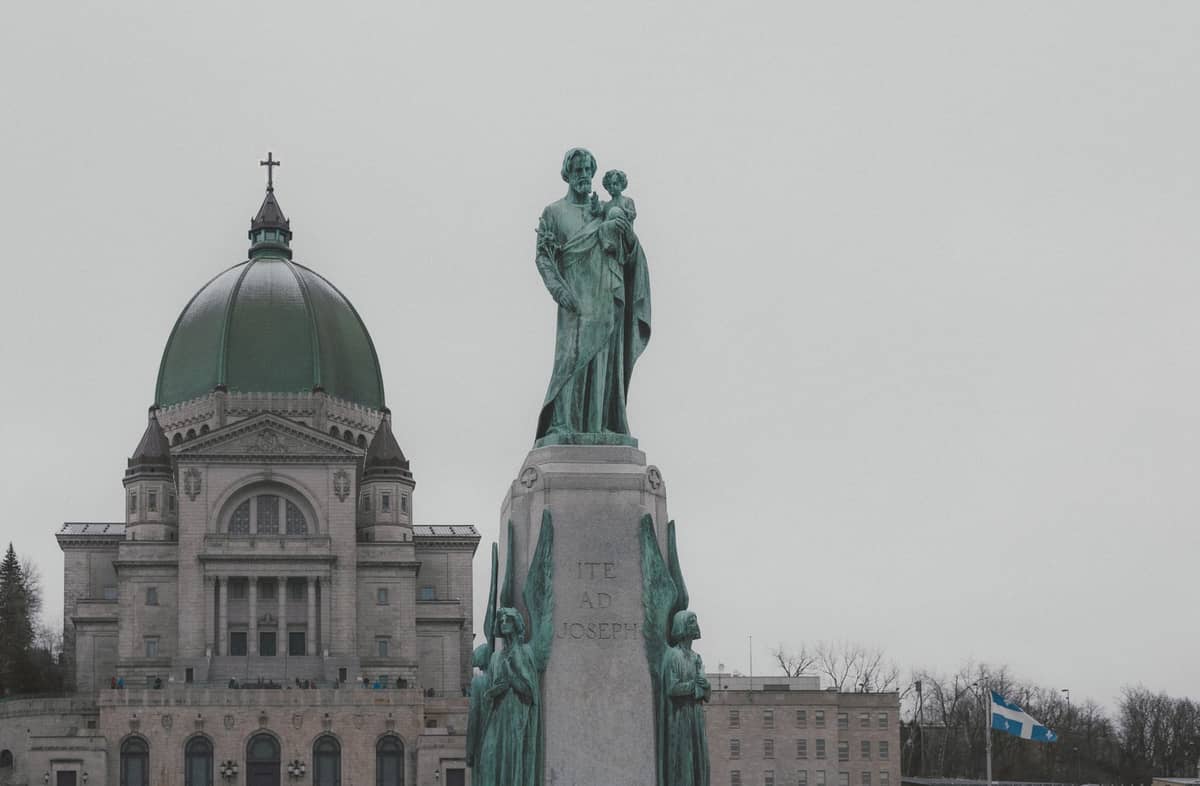
L'Oratoire Saint-Joseph du Mont-Royal, known in English as Saint Joseph's Oratory of Mount Royal, is Canada's largest church and one of the most significant Catholic pilgrimage sites in the Western Hemisphere. Its copper dome, the third largest of its kind in the world after St. Peter's in Rome and the Panthéon in Paris, is visible from considerable distances across the city. That dome alone makes the Oratory one of the most recognizable silhouettes on the Montreal skyline.
The site is not a single building but a layered complex: a lower Crypt Church, the main Basilica above it, a votive chapel filled with flickering candles and discarded crutches left by those who believed they had been healed, a museum dedicated to founder Brother André, and outdoor gardens and Stations of the Cross spread across the hillside. First-time visitors often underestimate how large and varied the site is.
The Oratory sits on the north face of Mount Royal, which gives it both its spiritual drama and its very steep approach. Whether you arrive by bus or on foot, the climb to the main entrance is real. On warm days, some pilgrims still ascend the exterior staircase on their knees, a practice that remains deeply personal to witness.
💡 Local tip
The shrine is open daily 6:30 a.m. to 9:00 p.m. The museum and heritage areas keep separate hours: 10:00 a.m. to 4:30 p.m. daily, with ticket sales ending at 4:00 p.m. Arrive before 4:00 p.m. if you want to see the museum.
The History Behind the Dome
The story of Saint Joseph's Oratory begins with one quietly remarkable figure. Brother André Bessette, a Holy Cross brother with little formal education who served as a doorkeeper at the adjacent Collège Notre-Dame, began receiving visitors seeking healing in the late 19th century. He attributed any recoveries to Saint Joseph and convinced the college to allow a small wooden chapel to be built on the hillside in 1904. Word spread, and the trickle of visitors became a flood.
Construction of the Crypt Church began in May 1915. It was inaugurated on December 16, 1917, and consecrated on August 9, 1943. The Crypt measures 63.39 metres long, 36.5 metres wide, and 13.1 metres high, with seating for approximately 1,000 people. The Basilica above it, with its towering dome, took decades longer. Brother André died in 1937 and did not live to see the Basilica's completion. He was beatified in 1982 and canonized by Pope Benedict XVI in 2010, becoming the first Quebec-born saint.
The heart preserved from Brother André's body is displayed in a reliquary inside the Oratory. This is not a metaphor. The physical relic draws pilgrims specifically to this spot and is part of what makes the Oratory a living pilgrimage site rather than a static monument. It was briefly stolen in 1973 and returned in 1974, an episode that underlines how seriously devoted visitors regard it.
Tickets & tours
Hand-picked options from our booking partner. Prices are indicative; availability and final rates are confirmed when you complete your booking.
Montreal evening cruise on the St. Lawrence River
From 54 €Instant confirmationFree cancellation3-hour e-bike guided tour in Montreal
From 68 €Instant confirmationFree cancellationWalking tour of Old Montreal
From 20 €Instant confirmationFree cancellationMontreal helicopter tour
From 156 €Instant confirmationFree cancellation
Moving Through the Complex
Most visitors enter via the broad exterior steps or use the Oratory’s inclined railway to reach the upper levels. The Crypt Church is the first worship space most people encounter. It has a low vaulted ceiling, warm stone floors, and an atmosphere that is noticeably more intimate than the cavernous Basilica above. Morning light comes in at low angles and the space is usually quiet before 10:00 a.m., making it the best time to sit and take in the architecture without crowds.
The votive chapel is one of the most visually striking spaces on the site, and one of the more unusual. The walls are lined with crutches, canes, and braces left by people who came seeking healing and believed they received it. Hundreds of candles burn at all times. The smell of wax is immediate and heavy. Whether or not you share the faith behind it, the room carries a peculiar emotional weight that most visitors feel before they can articulate why.
The main Basilica, reached by elevators or interior stairs, is vast and relatively spare in its ornamentation compared to older European churches. The acoustics are exceptional. If you visit during an organ recital or a choral service, the sound fills the space in a way that is difficult to replicate elsewhere in Montreal. The Oratory hosts free Sunday afternoon organ recitals at 3:30 p.m. between late August and late May; check the official website for the current schedule before visiting.
ℹ️ Good to know
The Oratory hosts free Sunday organ recitals in the Basilica between late August and late May, typically at 3:30 p.m. Dates and times can shift seasonally. Confirm the schedule at saint-joseph.org before you go.
The View and the Gardens
The terrace in front of the Basilica offers a clear panorama looking north over the Côte-des-Neiges neighborhood and beyond. It is not the most famous view in Montreal — that distinction belongs to the lookout at Kondiaronk Belvedere on the southern flank of the mountain — but it is quieter, less photographed, and gives a different orientation of the city. Late afternoon light on clear autumn days is particularly good here.
The gardens and outdoor Stations of the Cross on the hillside are worth exploring if the weather cooperates. The path winds through trees and includes 14 stations with life-size bronze figures. In summer, the gardens have a calm that contrasts with the activity near the Basilica entrance. For more outdoor space on the mountain, Mount Royal Park is accessible from the south side of the hill and offers trails, Beaver Lake, and the main summit lookout.
In winter, the approach to the Oratory requires care. The exterior steps and terraces can be icy, and the hillside gardens are generally closed. The interior, however, is fully heated and makes the Oratory one of the more comfortable cold-weather visits in the city. Crowds thin noticeably in January and February compared to the summer pilgrimage season.
The Museum and Brother André's Story
The museum area, accessible for CAD $3 for adults, focuses on the life of Brother André and the history of the Oratory's construction. It is modest in size but carefully organized. Artifacts include personal effects, period photographs of the hillside before the Basilica was built, and documentation of the healing claims that brought the site to international attention. It takes roughly 30 to 45 minutes to move through at a relaxed pace.
Visitors with a broader interest in Montreal's religious heritage might also find value in Notre-Dame Basilica in Old Montreal, which represents an entirely different architectural tradition — neo-Gothic rather than the Oratory's early 20th-century classical revival — and is open to tourists throughout the day.
Practical Details Worth Knowing
Getting there without a car is straightforward. From Côte-des-Neiges metro station on the blue line, take bus 165 or 435; the ride is short and stops near the lower entrance on Queen Mary Road. The walk from the metro station takes about 10 minutes on flat ground before the ascent begins. From Guy–Concordia station, buses 165 and 166 also reach the area. Parking is available on site for drivers.
The site is well adapted for visitors with mobility limitations. Wheelchair-accessible facilities cover the worship spaces, service pavilions, the museum, the permanent exhibition, meeting rooms, and the Jean XXIII Pavilion. The inclined railway means that visitors who cannot manage the exterior stairs can still reach the upper levels. This accessibility is genuine and consistent, not perfunctory.
Dress modestly if you plan to enter the worship spaces. There is no strict enforced dress code, but the Oratory is an active pilgrimage site with daily services, not simply a tourist attraction. Shoulders and knees covered is the practical standard. Photography is generally permitted in non-service hours, but be attentive to pilgrims at prayer in the votive chapel.
⚠️ What to skip
The Oratory is an active religious site with daily Masses and occasional special services. Some areas may be temporarily restricted during liturgical events. Check the schedule on the official website if your visit has specific timing requirements.
Who This Works For, and Who Might Leave Unmoved
The Oratory rewards visitors who engage with it on more than a visual level. If you approach it purely as a viewpoint or a photogenic dome, you will likely find the experience incomplete. The real substance is in the layered history, the continued pilgrimage activity, and the quiet detail of the votive chapel and Crypt Church. Travelers who enjoy understanding how a place actually functions in its community, not just what it looks like, tend to find it one of Montreal's more memorable visits.
Visitors with very limited time in Montreal who are primarily interested in food, outdoor activity, or contemporary culture may prefer to focus elsewhere. The Oratory is not the most obvious stop on a short itinerary built around the city's other strengths. For general orientation on how to structure a first visit, the Montreal first-timer guide outlines how the city's main areas and attractions relate to each other.
Families with young children can visit, and the exterior spaces and gardens offer room to move. The interior spaces require quiet and respect. Children who are curious about architecture or religious history will find things to engage with; those who aren't may find the experience slow. For family-oriented activities across the city, the Montreal with kids guide covers a broader range of options.
Insider Tips
- Arrive before 9:30 a.m. on weekdays to experience the Crypt Church with almost no other tourists present. By mid-morning on summer weekends, tour groups begin arriving in volume.
- The best photography of the exterior dome is from the street below on Queen Mary Road looking up, not from the terrace itself. A wide-angle lens or a few steps back lets you capture the full scale.
- Sunday organ recitals (late August through late May, typically 3:30 p.m.) are free and open to all, not just worshippers. The Basilica acoustics make this one of the more unusual free cultural experiences in Montreal.
- The inclined railway between the lower level and the upper terrace is not always operating. If mobility is a concern, call ahead or check the official website to confirm it is available on your visit date.
- The Stations of the Cross path on the hillside is largely unknown to day-tripping tourists and offers a shaded, meditative walk through the wooded slope with virtually no crowds, even on busy summer afternoons.
Who Is Saint Joseph's Oratory For?
- Architecture and urban history travelers who want to understand how Montreal's religious heritage shaped the city's physical landscape
- Pilgrims and spiritually curious visitors interested in an active, still-functioning devotional site rather than a museum-only experience
- Visitors seeking a quieter, less-photographed elevated view of Montreal's north-facing neighborhoods
- Travelers interested in Quebec's social history and the role of the Catholic Church in shaping francophone Montreal
- Anyone visiting in winter who wants a substantial indoor cultural experience on a cold or grey day
Nearby Attractions
Other things to see while in Mount Royal:
- Beaver Lake
Beaver Lake, known in French as Lac aux Castors, is an artificial basin at the centre of Mount Royal Park. Free to access year-round, it draws picnickers in summer, skaters in winter, and anyone who needs a few quiet hours above the city's noise.
- Kondiaronk Belvedere
Perched above the Mount Royal Chalet at 233 metres, the Kondiaronk Belvedere delivers an unobstructed panorama of downtown Montreal and the Saint Lawrence River. Free to visit and open from 6 a.m. to midnight daily, it rewards visitors at every hour, from misty mornings to blazing sunsets.
- Mount Royal Cross
The Mount Royal Cross (Croix du mont Royal) is a 30-metre illuminated steel cross perched on the summit of Mount Royal, visible from much of Montreal. Free to visit year-round, it rewards the uphill walk with a sweeping view over the city and a surprisingly moving sense of scale when you stand beneath it.
- Mount Royal Park
Rising 233 metres above the city, Parc du Mont-Royal is free to enter, open daily from 6 a.m. to midnight, and rewards visitors year-round with panoramic lookouts, forested trails, and a pace of life that feels deliberately separate from the streets below. It is the park that Montrealers use, not just visit.