Best Things to Do in Montreal: The Definitive Guide
Montreal is one of North America's most rewarding cities to explore, with a genuinely distinct French-speaking culture, world-class food, and a calendar packed with festivals. This guide covers the top things to do in Montreal Canada, organized by category, with practical details on costs, timing, and what to skip.
Plan and book this trip
Tools from our partner Travelpayouts help you compare flights and hotels. If you book through them, we may earn a commission at no extra cost to you.
Flights
Hotels map
TL;DR
- Old Montreal and the Old Port are the historic core. Start there, but don't stop there. See our Old Montreal neighborhood guide for full coverage.
- Mount Royal Park is free, takes 2–3 hours, and beats any paid viewpoint in the city. Go on a Sunday for the Tam-Tams drum circle (summer only).
- Montreal's food culture is the real draw. Bagels, smoked meat, and poutine are all distinct from their elsewhere counterparts. Check what to eat in Montreal before you arrive.
- A 3-day STM transit pass costs C$21.75 and covers the metro and buses. Kids 11 and under ride free with an adult.
- May through October is the best window for outdoor activities and festivals. See the best time to visit Montreal for a month-by-month breakdown.
Old Montreal and the Old Port: Where History Meets the River
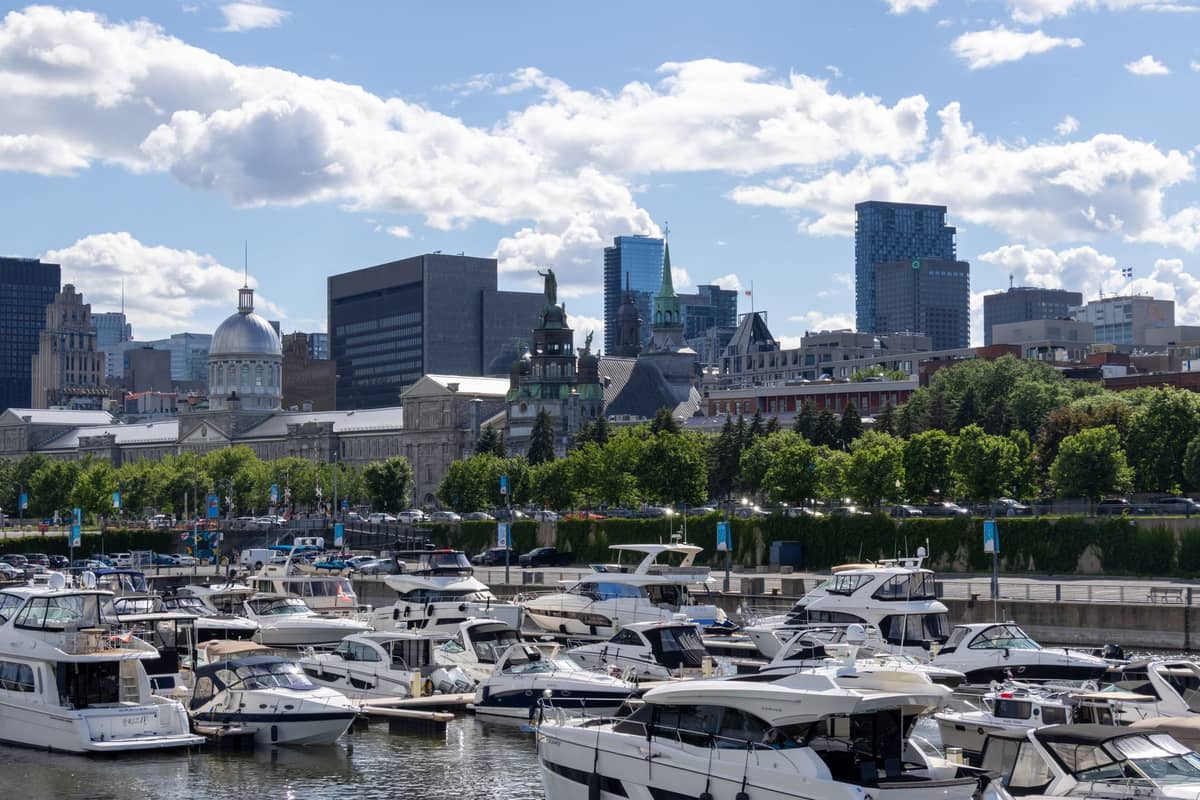
The things to do in Montreal Canada that most first-timers prioritize are concentrated in Vieux-Montréal, the city's historic core. The cobblestone streets around Notre-Dame Street, Place d'Armes, and Place Jacques-Cartier give you the densest concentration of 18th and 19th-century architecture on the continent. It's genuinely impressive, not just for a North American city, but by any standard.
The undisputed anchor is Notre-Dame Basilica, a Gothic Revival landmark completed in 1829. Entry costs around C$15 for adults. The interior, with its painted wood vaulting and gilded altarpiece, justifies the price. Evening sound-and-light shows run in the main nave and are worth booking ahead if you're visiting in summer.
From Place Jacques-Cartier, walk south toward the Old Port. The waterfront promenade runs along the Saint Lawrence River and is free to walk. In summer it's busy with cyclists, skaters, and families. The Grande Roue de Montréal, a 60-metre observation wheel, offers panoramic views of the river and city skyline for around C$25–30. It's enjoyable, but if you're budget-conscious, Mount Royal gives better views for free.
💡 Local tip
The Tourisme Montréal visitor information centre is at 174 Notre-Dame Street East in Old Montreal. From September to late October 2026, it's open daily 10 a.m.–6 p.m. Stop in for free maps and the current Passeport MTL discount booklet before buying individual attraction tickets.
For history with real depth, Pointe-à-Callière Museum stands on the actual site of Montreal's founding in 1642. The underground archaeological crypt is genuinely fascinating: you walk through layers of the city's past, from Indigenous settlements through French colonial fortifications. Admission runs around C$30 for adults. Allow at least 90 minutes.
Mount Royal: The Park That Defines the City
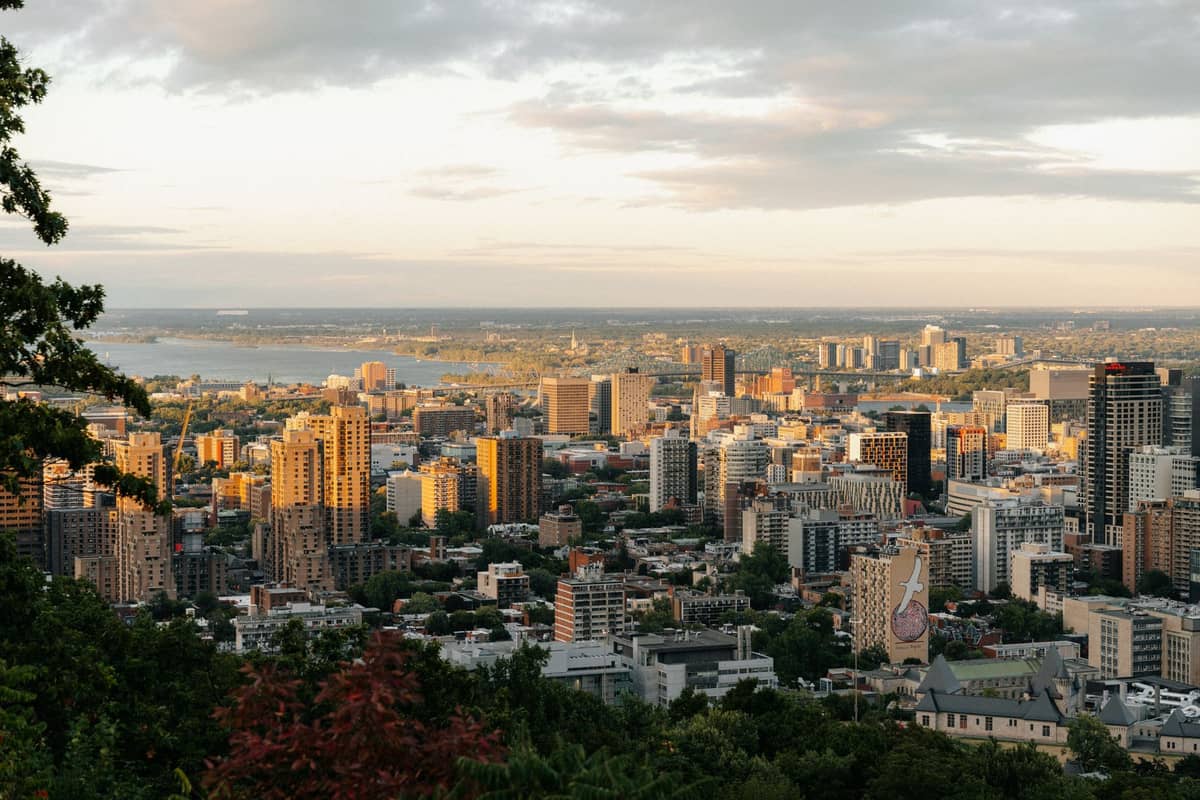
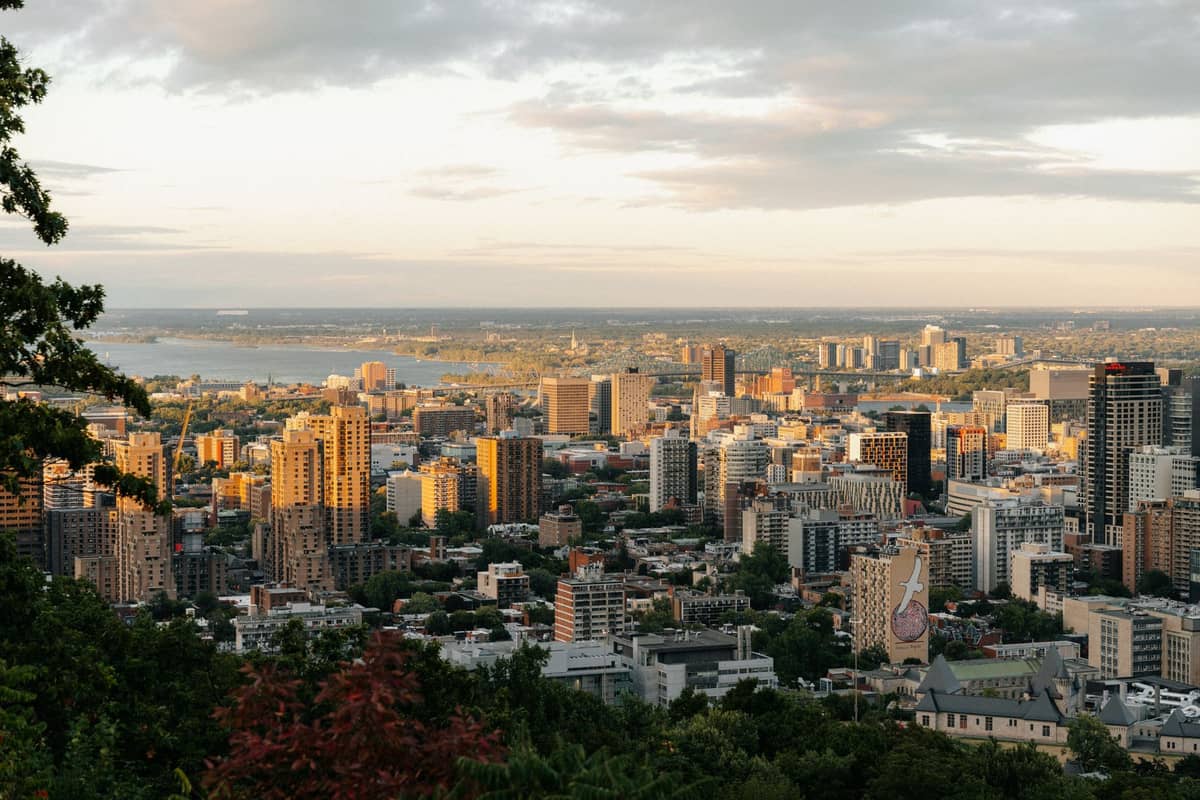
Mount Royal Park is arguably the single best free thing to do in Montreal. Designed by Frederick Law Olmsted, the same landscape architect behind New York's Central Park, it sits at about 233 metres above sea level and is accessible from multiple entry points. The most scenic route from downtown is the path up from the Peel Street stairs, a 30-minute walk to the Kondiaronk Belvedere, the main lookout terrace with an unobstructed view of downtown and the Saint Lawrence.
On Sunday afternoons from late May through October, the open space near the Tam-Tams drum circle at the George-Étienne Cartier monument becomes one of Montreal's best free events. Hundreds of people gather to play percussion, dance, and socialize. It's spontaneous, diverse, and entirely locals-driven. No ticket required, no schedule, just show up.
In winter, Beaver Lake at the top of the park becomes a free skating rink. Skate rentals are available on-site. Snowshoeing and cross-country ski trails are also accessible. The park operates year-round, though trail conditions vary and the city posts updates at montreal.ca.
✨ Pro tip
For the best light, visit Kondiaronk Belvedere around sunset on a clear evening. The view across downtown to the river with the sky behind you is one of the finest urban panoramas in Canada. Arrive 30 minutes before sunset to get a good spot, especially on weekends in summer.
Museums Worth Your Time (and One to Skip)
Montreal has a serious museum culture, driven partly by its universities, partly by Quebecois cultural investment. The Montreal Museum of Fine Arts is the largest art museum in Canada by collection size. It spans five interconnected pavilions with works ranging from Egyptian antiquities to contemporary Quebec art. Admission to the permanent collection is free; temporary exhibitions run around C$20–25. It's worth a half-day.
The Montreal Botanical Garden is one of the largest in the world, covering 75 hectares near Olympic Park. The Chinese Garden and Japanese Garden are standouts, but every section is maintained to a serious standard. Combine it with the Biodôme and the Insectarium on the same site for a full day. Admission packages covering all three are available through Espace pour la vie (Space for Life), Montreal's natural science museum complex.
- Montreal Museum of Fine Arts Best general art museum in the city. Permanent collection is free. Allow 2–3 hours minimum.
- Pointe-à-Callière Museum Best for history and archaeology. Built over the city's founding site. Essential for first-timers interested in Montreal's origins.
- McCord Stewart Museum Strongest photography and social history collection. The Notman Archive alone has over 450,000 images of 19th-century Canada.
- Biodôme Four ecosystems under one roof, including a Laurentian Forest and a Sub-Antarctic Islands environment. Good for families or rainy days.
- Musée d'Art Contemporain (MAC) Canada's only museum dedicated exclusively to contemporary art. Note: it was undergoing major renovations as of 2026. Verify current status before visiting.
⚠️ What to skip
The Olympic Stadium observation tower, called the Montreal Tower, claims to be the world's tallest inclined tower. The view is fine, but at around C$25 admission it's significantly less impressive than the free view from Kondiaronk Belvedere. Skip it unless you have a specific reason to go.
Food, Markets, and the Eating Culture That Defines Montreal
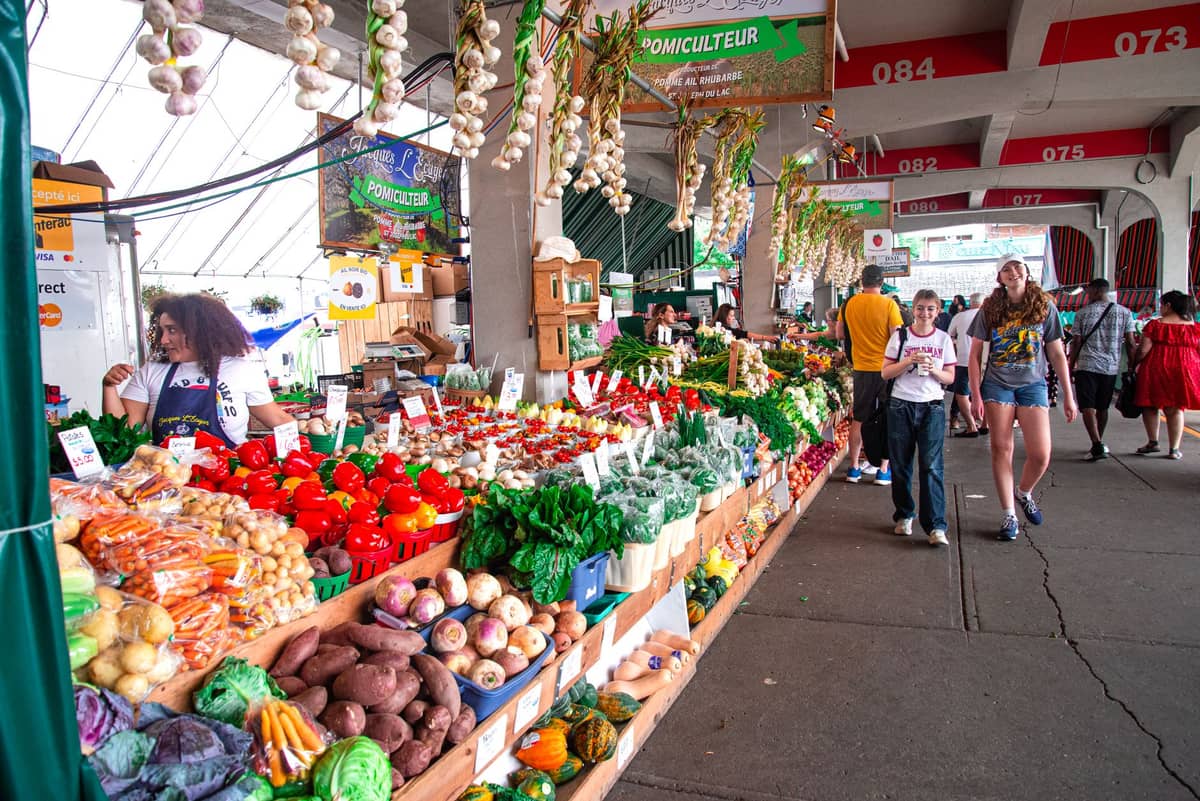
Food is not a side activity in Montreal. It's the activity. The city's food culture is shaped by French technique, Jewish deli traditions, Italian immigration, and more recently a wave of creative chefs who treat Quebec ingredients seriously. For top things to do in Montreal, eating well belongs at the top of any list.
The two main public markets are essential stops. Jean-Talon Market in Little Italy is the largest open-air market in North America and runs from May through October outdoors, with an indoor section open year-round. Atwater Market near the Lachine Canal is smaller, more curated, and has exceptional cheese and charcuterie shops inside. Both are free to browse.
- Montreal bagels are wood-fired, honey-sweetened, and denser than New York bagels. The two camps are Fairmount Bagel (open 24 hours) and St-Viateur Bagel, both in Mile End. Try both, form an opinion.
- Montreal smoked meat is a distinct cure from pastrami or corned beef. Schwartz's Deli on Saint-Laurent is the institution, but expect a line. Lester's Deli is a serious alternative with a shorter wait. The Main Deli Steak House closed in 2023.
- Poutine is a Quebec invention: fries, fresh cheese curds (not shredded cheese), and brown gravy. La Banquise on Rachel Street is open 24 hours and has over 30 variations. Avoid tourist-trap versions in Old Montreal.
- The Plateau-Mont-Royal and Mile End neighborhoods have the highest density of good independent restaurants per block in the city. Budget around C$20–35 per person for a sit-down meal at a mid-range spot.
Neighborhoods Worth Exploring on Foot
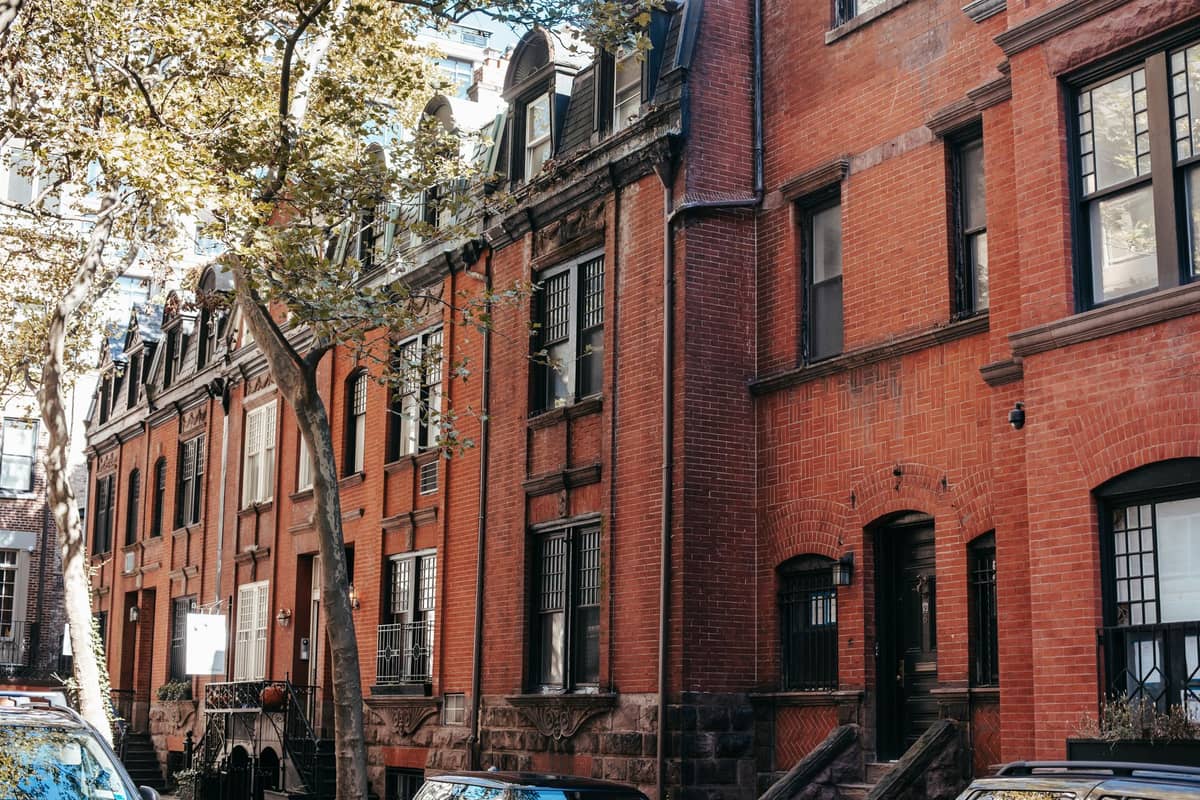
Montreal's best neighborhoods reward slow walking more than any tour bus. Le Plateau-Mont-Royal is the most photographed for its colourful row houses and wrought-iron exterior staircases, a feature unique to Montreal that developed in the early 20th century for practical construction reasons. The main arteries are Boulevard Saint-Laurent and Avenue du Mont-Royal.
Mile End is the commonly used name for the area north of the Plateau, centered on Avenue Bernard and Rue Saint-Viateur. It's known for its mix of long-established Jewish and Greek communities alongside newer creative and tech businesses. It has a genuine neighborhood feel that the more tourist-heavy parts of the city lack.
For a half-day walk, combine the Lachine Canal path with a stop at Atwater Market. The canal runs 14 kilometres from the Old Port to Lachine and has a dedicated cycling and walking path the entire length. In summer you can rent kayaks or paddleboards near the Old Port end. The southwestern stretch passes through Griffintown, a redeveloped former industrial district with new restaurants and bars worth a stop.
Practical Planning: Getting Around, Costs, and Timing
Montreal's metro system, operated by the STM, is clean, reliable, and covers all the main visitor areas. A single Zone A fare is C$3.75, a 24-hour pass is C$11.25, and a 3-day pass is C$21.75. Children aged 11 and under ride free when accompanied by someone aged 14 or older. The metro runs until around 1 a.m. on weekdays and later on Friday and Saturday nights.
From Montréal-Trudeau International Airport (YUL), roughly 20 kilometres from downtown, the STM 747 bus runs 24 hours a day, seven days a week. The fare is C$11.25 and includes 24-hour access to the full metro and bus network. It is not free, and a standard single fare does not cover it. Taxis from the airport operate on a regulated flat rate for downtown; verify the current amount at the airport before boarding. Uber also operates from YUL.
For attraction savings, Passeport MTL offers packages covering multiple sites. For summer and fall 2026, pricing starts at around C$60 plus tax for three attractions or C$90 plus tax for five. Confirm included attractions and validity before purchasing, as the lineup changes by season.
- Best months for outdoor activities May through October. September and early October combine mild temperatures (roughly 10–17°C) with autumn foliage and fewer crowds than July and August.
- Winter visits January and February are cold (average lows around −13°C), but Montreal's underground city network (RÉSO) connects over 33 kilometres of indoor passages between metro stations, hotels, and shopping centres. The city functions normally in winter.
- Festival season June through August is Montreal's festival peak: the Jazz Festival (late June), Just for Laughs (July), and Osheaga music festival (August) all draw large crowds and raise accommodation prices. Book well ahead.
- Language French is Montreal's official language under Quebec law. English is widely understood in tourist areas, but making an effort with basic French (bonjour, merci, s'il vous plaît) is genuinely appreciated and often changes the interaction.
ℹ️ Good to know
Tipping in Montreal restaurants is customary at 15–20% calculated on the pre-tax total, not the final bill. Quebec adds two sales taxes: QST (9.975%) and GST (5%), which together add about 15% to most purchases. Keep that in mind when budgeting for meals.
FAQ
How many days do you need in Montreal?
Three full days is enough to cover Old Montreal, Mount Royal, the main museums, a market visit, and serious eating. Four or five days lets you explore neighborhoods like Mile End and the Plateau at a slower pace and catch a festival or event. A weekend trip (two days) is feasible but requires prioritizing.
What are the best free things to do in Montreal?
Mount Royal Park is the top free activity, including the Kondiaronk Belvedere viewpoint and (on summer Sundays) the Tam-Tams drum circle. The permanent collection at the Montreal Museum of Fine Arts is also free. Walking Old Montreal, the Lachine Canal path, and browsing Jean-Talon Market cost nothing. The underground city (RÉSO) is free to walk in winter.
Is Montreal safe for tourists?
Montreal is generally safe in all the main tourist areas. Standard urban precautions apply: watch your belongings in crowded areas, be aware of your surroundings at night in less-trafficked streets, and note that some areas east of downtown are less frequently visited by tourists. The emergency number across Canada is 911.
Do I need to speak French to visit Montreal?
No. English is widely spoken in hotels, restaurants, and tourist-facing businesses across Montreal. That said, French is the city's official language and the dominant language in most neighborhoods outside downtown. Starting interactions with 'Bonjour' and attempting basic French phrases will serve you well socially, even if you switch to English immediately after.
What is the best way to get around Montreal as a tourist?
The STM metro is the fastest and most reliable option for moving between neighborhoods. A 3-day pass at C$21.75 covers unlimited metro and bus rides and is worth it for most visitors. Bixi, Montreal's public bike-share system, is excellent in spring through fall for shorter trips. Walking is practical within individual neighborhoods. Avoid driving downtown: parking is expensive and traffic is often slow.