Place Jacques-Cartier: The Living Heart of Old Montreal
Place Jacques-Cartier (Jacques-Cartier Square) is Old Montreal's most animated public square, stretching from Rue Notre-Dame Est down to the Old Port waterfront. Free to enter and open around the clock, it draws a constant mix of locals, tourists, street performers, and flower sellers across all seasons.
Quick Facts
- Location
- Old Montreal (Vieux-Montréal), between Rue Notre-Dame Est and the Old Port
- Getting There
- Champ-de-Mars metro station (Orange Line), a short walk away
- Time Needed
- 30–90 minutes for the square itself; longer if you linger at a terrasse or explore nearby streets
- Cost
- Free (CAD $0) to enter the square; restaurants and shops around it have their own pricing
- Best for
- First-time visitors, people-watching, history, summer strolling, photography
- Official website
- montreal.ca/en/places/place-jacques-cartier
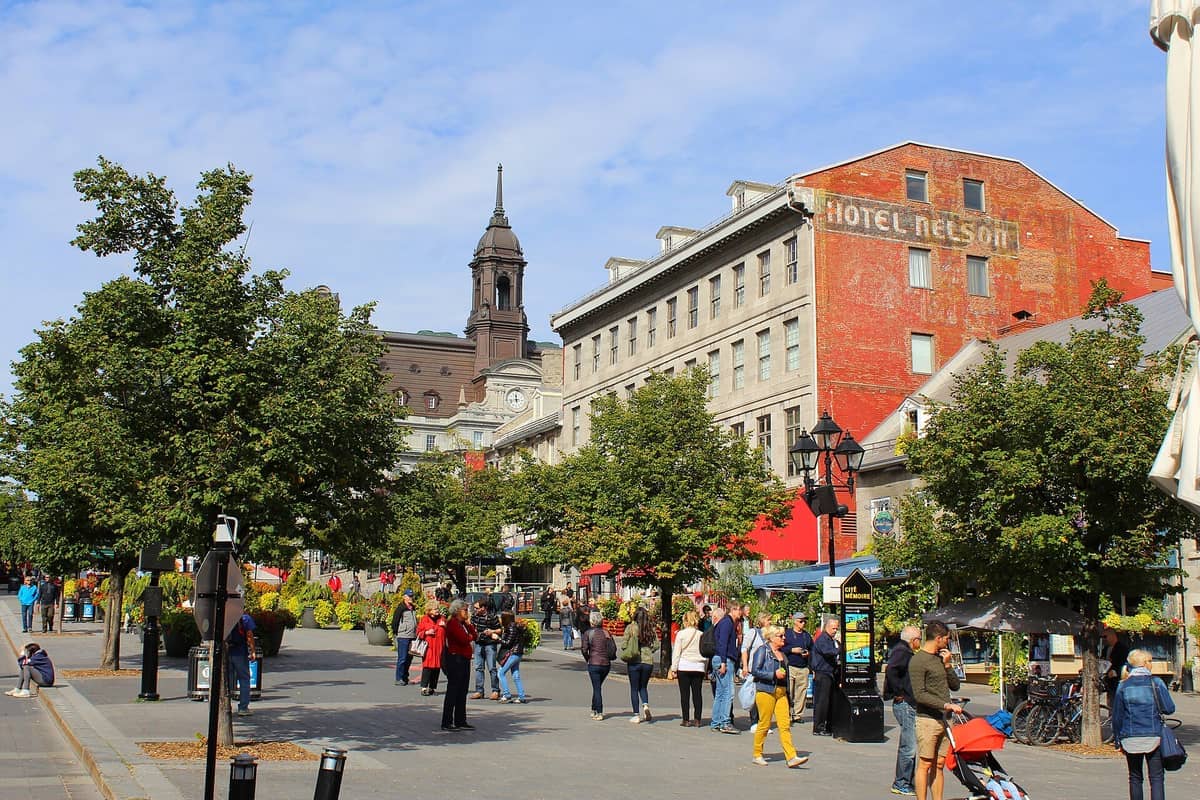
What Place Jacques-Cartier Actually Is
Place Jacques-Cartier is the main public square of Old Montreal, a long, gently sloping promenade that runs north to south from the steps of the historic Hôtel de Ville (City Hall) down toward the Saint Lawrence River waterfront. It is not a formal plaza in the European piazza sense, more a wide, pedestrianized street flanked on both sides by 18th- and 19th-century stone buildings, their ground floors converted almost entirely into restaurants, cafes, and tourist shops. The cobblestones underfoot, the grey stone facades above, and the Nelson Monument rising at the upper end give the square a coherence and historical weight that makes it the logical starting point for any exploration of Old Montreal.
The square is publicly accessible at all hours and costs nothing to walk through. What you spend here is entirely your choice, whether that is a coffee at a sidewalk terrasse, a crepe from a vendor, or nothing at all. This accessibility is part of what makes it work so well as a gathering point.
💡 Local tip
The Champ-de-Mars metro station on the Orange Line puts you within a short walk of the square’s upper end. It is elevator-accessible, though you should verify current elevator availability with the STM before travel if mobility is a concern.
The History Behind the Square
The land that became Place Jacques-Cartier has been occupied since the earliest decades of French settlement in Montreal. City toponymy records note that Philippe de Rigaud de Vaudreuil, Governor General of New France, rented property at the corner of Saint-Paul and Saint-Charles streets from 1701 for twenty years, illustrating how this corner of the city was already significant real estate at the start of the 18th century.
The square takes its name from Jacques Cartier, the French explorer whose 16th-century voyages along the Saint Lawrence River established the foundation for French presence in Canada. The most visually prominent historical element is the Nelson Monument, a tall column erected in 1809 to commemorate British Admiral Horatio Nelson's victory at the Battle of Trafalgar in 1805. It is widely noted as one of the earliest Nelson monuments in the world, predating the more famous one in London's Trafalgar Square. Its presence in a predominantly French-speaking city has always carried some cultural tension, which is itself a quietly interesting piece of Montreal's layered colonial history.
The surrounding architecture reflects Montreal's merchant prosperity in the 18th and 19th centuries. Many of the stone buildings that line the square were originally commercial properties, warehouses, and residences for the city's trading class. Walking the length of the square while looking up at the upper storeys, rather than into the restaurant windows at street level, reveals a more authentic picture of the district's architectural heritage. For more on this subject, the Montreal architecture guide provides useful context for understanding the district as a whole.
Tickets & tours
Hand-picked options from our booking partner. Prices are indicative; availability and final rates are confirmed when you complete your booking.
Montreal evening cruise on the St. Lawrence River
From 54 €Instant confirmationFree cancellation3-hour e-bike guided tour in Montreal
From 68 €Instant confirmationFree cancellationWalking tour of Old Montreal
From 20 €Instant confirmationFree cancellationMontreal helicopter tour
From 156 €Instant confirmationFree cancellation
How the Square Changes Through the Day
Early morning, before 9 a.m., the square is relatively quiet. The cobblestones are being hosed down, delivery trucks idle near side streets, and the terrasse chairs are still stacked. This is genuinely the best time to photograph the architecture and the Nelson Monument without crowds in the frame, and to notice details you would miss later, like the texture of the 19th-century stonework, the wrought-iron balcony railings, and the way the street slopes toward the river.
By mid-morning the flower vendors arrive and set up near the lower end of the square. Their buckets of cut flowers add colour to an otherwise grey-and-beige streetscape. Street performers typically begin appearing around noon: musicians, living statues, portrait artists with easels. By early afternoon in summer, the square is at full capacity, which means navigating through tour groups, cyclists cutting across, and slow-moving foot traffic. It is lively, but it can feel crowded to the point of being hard to enjoy if you had a contemplative visit in mind.
Evening is arguably the most photogenic window. The restaurant terrasses fill up, warm light spills from windows, and the Nelson Monument catches the last of the sun from its elevated position. The energy is social rather than touristy, with a mix of visitors and Montrealers choosing to eat outdoors. After 9 p.m. on summer nights, the square stays animated well into the night, with the Old Port drawing crowds just steps away.
ℹ️ Good to know
In winter, the square loses most of its terrasse activity and street performance, but it takes on a different character: quieter, sometimes snow-covered, with shorter lines at restaurants and a much clearer view of the architecture. It is worth visiting in any season.
What to Do and See Around the Square
The square itself is the experience, but its value comes partly from what surrounds it. At the northern end, the Hôtel de Ville de Montréal (Montreal City Hall) sits directly across Rue Notre-Dame Est, its French Second Empire facade worth a closer look. At the southern end, a short walk leads directly to the Old Port, where the Saint Lawrence River opens up and the Grande Roue de Montréal observation wheel is visible.
One block east along Rue Saint-Paul, the Bonsecours Market is worth the short detour. Its silver dome is one of Old Montreal's most recognizable silhouettes, and the building now houses Quebec artisan vendors. One block to the west, the Pointe-à-Callière Museum offers some of the best archaeological context for understanding what Montreal was before it became a tourist destination, with excavated ruins of the city's original settlement visible below ground.
The restaurants lining the square are generally aimed at visitors and priced accordingly. A few are genuinely good, but the standard guidebook advice applies here: for better value and less tourist markup, walk one or two blocks off the square onto Rue Saint-Paul or the smaller side streets.
Practical Walkthrough: Getting There and Getting Around
From Champ-de-Mars metro station, exit onto Rue Viger and walk south toward Rue Notre-Dame Est. The square begins almost immediately, visible from the street corner. From Champ-de-Mars metro station, exit onto Rue Viger and walk south toward Rue Notre-Dame Est. The square begins a short walk away, visible from the street corner. Allow several minutes from the metro exit to the upper end of the square at a normal pace.
The surface throughout is cobblestone. This is visually authentic and historically appropriate, but practically it means that wheelchairs, mobility scooters, and strollers require some effort to navigate. The City of Montreal lists the square as stroller-friendly, and most of it is manageable, but the uneven stones mean you should plan accordingly if mobility is a concern. The slope from Rue Notre-Dame down toward the waterfront is gradual but noticeable.
If you are planning a broader day in the area, Place Jacques-Cartier pairs naturally with the surrounding blocks. The Montreal walking tours that cover Old Montreal almost always pass through the square. Comfortable walking shoes with grip are strongly recommended, especially after rain when the cobblestones become slippery.
⚠️ What to skip
After rain, the cobblestones become noticeably slippery. Avoid smooth-soled shoes or sandals without grip if rain is forecast. This is especially relevant in spring and autumn when the weather can shift quickly.
Photography and Seasonal Notes
The square photographs best in the early morning (soft light, no crowds) or in the hour before sunset (warm tones, active terrasses). The Nelson Monument is the natural vertical anchor for wide shots taken from the southern end looking uphill. The building facades on both sides of the square provide strong symmetry for straight-on compositions from the middle of the promenade.
In summer, the flower buckets near the lower end add colour that the rest of the square lacks. In winter, a dusting of snow on the cobblestones and the stone window ledges creates a quiet, monochromatic quality that is completely different from the summer experience and, for certain photographers, more interesting.
Weather affects the experience directly. A cold, rainy October afternoon empties the square almost completely, which can actually be a gift for anyone who wants to look at the architecture without navigating a crowd. A hot July Saturday at 2 p.m. is the opposite: dense, loud, and more like an outdoor market than a heritage site.
Who Should Consider Skipping It
Travelers who prioritize authenticity over atmosphere may find that the square's tourist orientation is hard to look past. The ground-floor restaurants are almost uniformly aimed at visitors, menus are frequently printed in English first, and prices reflect the location. If you have visited other major European squares or historic districts, Place Jacques-Cartier may feel familiar to the point of predictability.
It is not a place for solitude or for experiencing everyday Montreal life. For that, the surrounding back streets of Old Montreal, or neighborhoods like the Plateau or Mile End, are more rewarding. But as an orientation point, a brief stop, or a place to sit and watch people on a summer evening, it earns its place on any Old Montreal itinerary.
Insider Tips
- Arrive before 9 a.m. on a weekday for the cleanest views of the architecture and the Nelson Monument, with almost no foot traffic. Most tour groups arrive mid-morning, so the window is short but genuinely worthwhile.
- Look up. The ground floors of buildings are given over entirely to restaurants and souvenir shops, but the upper storeys retain original 18th- and 19th-century windows, cornices, and ironwork that tell a more honest story of the square's merchant past.
- Skip the restaurants directly on the square if you are watching your budget. Walk one block east or west onto Rue Saint-Paul or into the smaller side streets, where the prices drop and the menus often reflect more effort.
- The flower vendors at the lower end of the square typically operate in warm-weather months and set up mid-morning. If you want to buy flowers or simply photograph them, arrive before noon when the buckets are freshest.
- In winter, the square loses its crowds but not its character. The stone facades and the monument read more clearly against a grey sky, and the restaurants have far more room. If your visit falls between November and March, do not write off the square — adjust your expectations instead.
Who Is Place Jacques-Cartier For?
- First-time visitors to Montreal wanting a single orientating stop in Old Montreal
- History and architecture enthusiasts interested in French colonial and 19th-century Montreal
- Families with young children who need open, walkable space in the historic district
- Photographers working in early morning light or golden-hour evening conditions
- Travelers who enjoy people-watching, street performance, and outdoor cafe culture
Nearby Attractions
Other things to see while in Old Montreal:
- Bonsecours Market
Marché Bonsecours has stood at the heart of Old Montreal since 1847, surviving its reinventions as a temporary seat of parliament, a city hall, and a concert venue before settling into its current role as a showcase for Quebec designers and cultural exhibitions. Entry is free, the architecture is striking, and its location beside Place Jacques-Cartier makes it a natural anchor for any walk through the historic district.
- Montreal City Hall
Standing at the edge of Place Jacques-Cartier in Old Montreal, Montreal City Hall is a Second Empire civic landmark. Entry is free during its listed weekday hours, and the building carries a history that has shaped Canadian and Quebec political life.
- Musée Marguerite-Bourgeoys
Tucked into a corner of Old Montreal's rue Saint-Paul, the Musée Marguerite-Bourgeoys combines one of Canada's oldest pilgrim chapels with a genuinely surprising archaeological museum. It covers more than 2,400 years of history, costs less than most Montreal museums, and includes free access to the chapel above.
- Notre-Dame Basilica of Montreal
Notre-Dame Basilica of Montreal is a 19th-century Gothic Revival masterpiece at the heart of Old Montreal, recognized as the first church of its kind in Canada. Behind its twin stone towers lies one of the most ornate interiors in North America — deep indigo vaulting, carved wood, and thousands of gold stars overhead. This guide covers what to see, when to go, and how to make the most of your time inside.