Bonsecours Market: Old Montreal's Most Storied Building
Marché Bonsecours has stood at the heart of Old Montreal since 1847, surviving its reinventions as a temporary seat of parliament, a city hall, and a concert venue before settling into its current role as a showcase for Quebec designers and cultural exhibitions. Entry is free, the architecture is striking, and its location beside Place Jacques-Cartier makes it a natural anchor for any walk through the historic district.
Quick Facts
- Location
- 350 Saint-Paul Street East, Old Montreal, QC H2Y 1H2
- Getting There
- Champ-de-Mars metro station (Orange Line), approx. 10-minute walk
- Time Needed
- 45 minutes to 1.5 hours
- Cost
- Free entry; fees may apply for temporary exhibitions
- Best for
- Architecture lovers, design shoppers, history enthusiasts, first-time visitors
- Official website
- www.marchebonsecours.qc.ca/en
What Bonsecours Market Actually Is
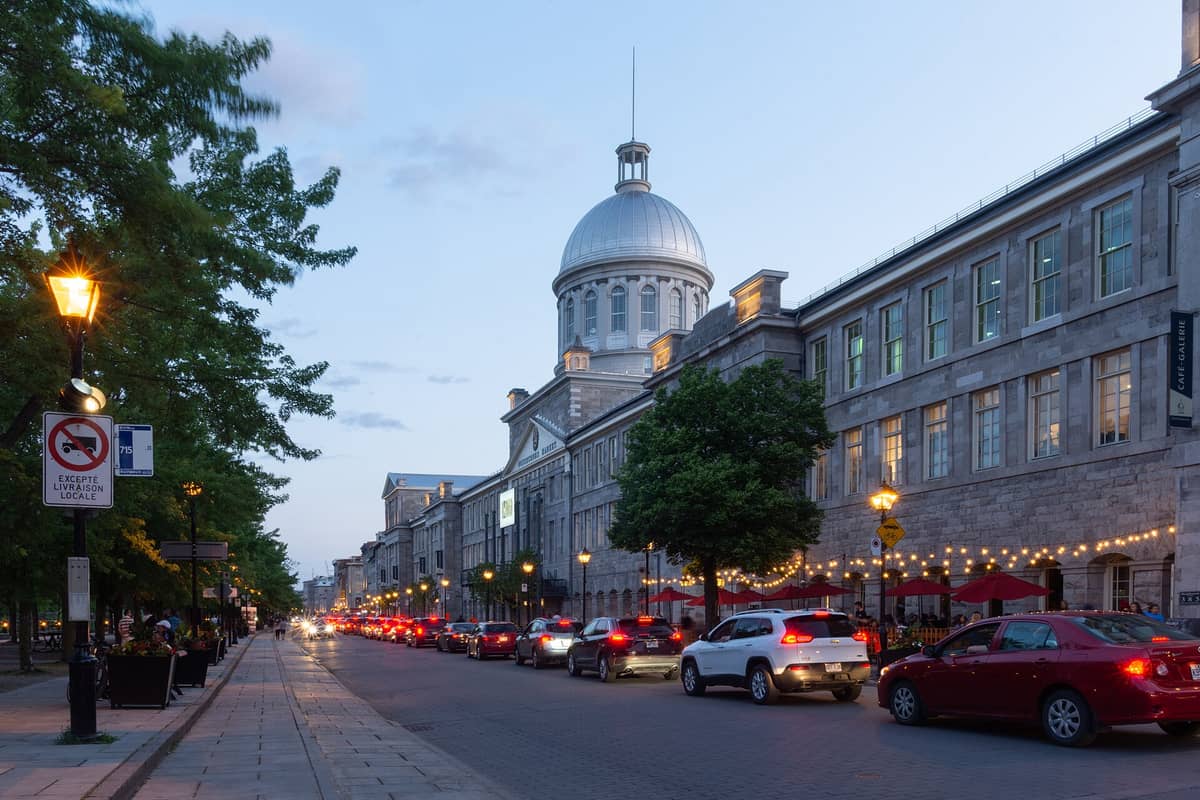
Marché Bonsecours is one of the most recognizable buildings in Montreal, yet plenty of visitors walk past without fully understanding what they are looking at. The long neoclassical facade stretching along Saint-Paul Street East, the cast-iron dome rising above the roofline, the row of Doric columns at the entrance: all of it points to a civic ambition that goes far beyond a farmers market.
Today the building functions as a cultural marketplace, home to a collection of boutiques selling work by Quebec designers alongside a rotating schedule of exhibitions, craft fairs, and seasonal events. It is not a food market in the traditional sense. Visitors expecting stalls of fresh produce will not find them here. What they will find is a handsome interior space with polished wood floors, high ceilings, and shops selling clothing, jewelry, ceramics, and home goods made in Quebec.
ℹ️ Good to know
Hours: Monday to Friday 12:00 p.m. to 6:00 p.m., Saturday 11:00 a.m. to 5:00 p.m., Sunday 12:00 p.m. to 5:00 p.m. Hours can shift during holiday periods or special events, so check the official website before visiting.
A Building With an Outsized History
The market opened in 1847 after several years of planning and construction delays, becoming the city's central public market at a time when Montreal was the largest and most commercially active city in British North America. The English architect William Footner designed the building in a neoclassical style that was deliberately grand: the intention was to give the young city a civic centerpiece that could compete with anything in New York or London.
Its early years were turbulent. In 1849, after rioters burned down the Parliament of the Province of Canada nearby, the parliament temporarily relocated to Bonsecours Market while the damage was assessed. Then from 1852 to 1878, the building served as Montreal City Hall, hosting the municipal government during a period of rapid urban growth. It also functioned as a concert hall and exhibition space during the 19th century, drawing audiences for events that mixed civic ceremony with public entertainment.
By the 20th century the building had declined in both function and condition. A major restoration effort in the 1960s and subsequent work later in the century returned it to its current state, preserving the exterior heritage elements while updating the interior to accommodate contemporary retail and cultural programming. The silver domes, which are among the most photographed features of Old Montreal's skyline, were restored as part of that effort.
Bonsecours Market sits in the heart of Old Montreal, a district where nearly every block carries a layer of 18th or 19th-century history. For a deeper look at the area's architectural evolution, the Montreal architecture guide provides useful context on the different periods and styles visible across the neighborhood.
Tickets & tours
Hand-picked options from our booking partner. Prices are indicative; availability and final rates are confirmed when you complete your booking.
Montreal evening cruise on the St. Lawrence River
From 54 €Instant confirmationFree cancellation3-hour e-bike guided tour in Montreal
From 68 €Instant confirmationFree cancellationWalking tour of Old Montreal
From 20 €Instant confirmationFree cancellationMontreal helicopter tour
From 156 €Instant confirmationFree cancellation
The Experience Inside
Walking through the main entrance off Saint-Paul Street, the interior opens up unexpectedly. The ground floor is longer than it appears from outside, with shops lining both sides of a central corridor that fills with natural light during the day. The atmosphere is calm rather than commercial: there is no market-hall noise, no crowd pressure, and the boutiques are spaced generously enough that browsing feels unhurried.
The products on offer lean toward craft and design rather than mass retail. Jewelry using Quebec-sourced materials, hand-thrown ceramics, clothing from local fashion designers, artisan food products, and decorative objects make up the bulk of what is available. Quality and price points vary across shops, and the selection changes as tenants evolve. It is a reasonable place to look for a thoughtful souvenir that was not manufactured on the other side of the world.
Temporary exhibitions occupy dedicated gallery spaces within the building and change several times a year. Some focus on visual art, others on design or cultural heritage. Admission for these may carry a separate charge, so it is worth checking the current program on the market's website before visiting.
💡 Local tip
Arrive on a weekday morning if you want the building largely to yourself. By Saturday afternoon, particularly in summer, Saint-Paul Street draws significant foot traffic and the market fills with tour groups moving through quickly. Weekday mornings offer a more relaxed pace for actually looking at the architecture and browsing the shops.
How It Changes Through the Day and Seasons
In the morning, before the tour groups arrive, the interior feels almost library-quiet. The light through the upper windows hits the polished floors at an angle that shows the architectural proportions to their best advantage. A few shopkeepers are still setting up displays. It is the best time to photograph the interior without people crowding the frame.
By midday the building is at its most active. The exterior terrace along the Old Port side sees foot traffic from visitors walking between Place Jacques-Cartier and the waterfront. In summer, the building often hosts outdoor events and craft markets that spill onto this terrace, which looks directly toward the Saint Lawrence River. The views from the terrace toward the water and the Clock Tower are worth the detour even if you spend no time inside.
Winter changes the picture significantly. The outdoor elements disappear, and the market retreats into itself, but the building is if anything more atmospheric in the cold months. The gray stone facade against a white sky, the domes catching flat winter light, and the relative quiet of Saint-Paul Street in January or February give Bonsecours Market a solemnity that summer crowds obscure. For travelers visiting during the winter festival season, it is an easy indoor stop between outdoor activities.
If you are planning a winter trip, the Montreal winter festivals guide explains how events like Igloofest and Fête des Neiges use the Jean-Drapeau Park area, while Old Montreal provides a quieter complement to the larger festival venues.
Getting There and Getting Around
The most direct metro connection is Champ-de-Mars station on the Orange Line, a walk of roughly 8 to 10 minutes through Old Montreal. The route passes rue Saint-Paul and several notable buildings, making the walk itself worthwhile. Place-d'Armes station is a similar distance from the opposite direction and works equally well if you are coming from downtown or Notre-Dame Basilica.
Bonsecours Market is on Rue Saint-Paul Est between civic numbers 300 and 390, positioned between Place Jacques-Cartier to the west and the Old Port waterfront to the south. Paid parking is available in the surrounding area, though spaces fill quickly on summer weekends. Cycling is practical on the dedicated paths along the waterfront, and BIXI bike-share stations are located nearby.
The building is reported as wheelchair accessible and holds Kéroul certification, Quebec's accessibility recognition program for tourism sites. The main entrance and ground floor retail areas are accessible. Verify specific access details directly with the venue if this is a primary consideration.
Bonsecours Market sits steps from Place Jacques-Cartier, Old Montreal's main public square, and the Notre-Dame-de-Bon-Secours Chapel is a short walk east along Saint-Paul Street. Planning these three together makes a coherent half-day in the historic district.
Photography Notes and Practical Details
The exterior is most photogenic from the south, looking north toward the facade from the Old Port promenade. The symmetry of the building, with the dome towers framing the central portico, reads best from a distance of around 50 to 80 meters. Early morning and late afternoon provide soft directional light on the stone. At midday in summer, the facade can blow out in direct sun, and the crowd on Saint-Paul Street makes a clean shot difficult.
Inside, the lighting is a mix of natural and artificial. A standard wide-angle lens at ISO 800 to 1600 handles the interior corridor well without flash. The dome interior, visible from certain points within the building, rewards looking up.
⚠️ What to skip
Bonsecours Market is not a food market. If you are looking for fresh produce, cheese, or prepared foods, Jean-Talon Market in Little Italy or Atwater Market near Griffintown are the right destinations. Do not visit Bonsecours expecting that experience.
Who This Attraction Suits and Who It Does Not
Visitors interested in Quebec design, local craft, or architectural history will find the visit worthwhile at any time of year. The free admission means the cost of a brief look is only your time, and the building's central Old Montreal location means it fits naturally into almost any walk through the area.
Travelers who are primarily interested in food markets, outdoor atmosphere, or interactive historical experiences may find the visit thin. The current retail format has its critics: the building's extraordinary history is not deeply interpreted within the interior, and the boutique shopping experience, while pleasant, does not require much time. Those expecting the grandeur of a major museum or the energy of a working market will likely feel the building is underused relative to its architectural presence.
For travelers working through a first visit to Montreal, the Montreal first-timer guide helps prioritize how Bonsecours Market fits alongside larger draws like the Basilica, the Old Port, and Pointe-à-Callière Museum, all within walking distance.
Insider Tips
- The terrace on the river side of the building faces the Saint Lawrence and offers a direct sightline to the Clock Tower across the Old Port basin. It is one of the cleaner waterfront viewpoints in Old Montreal and costs nothing to access.
- Check the market's events calendar before visiting. Several times a year the building hosts themed craft markets, design fairs, and cultural events that significantly change what is on offer inside and draw a different, more local crowd than the standard retail day.
- Saint-Paul Street just west of the market is narrower and better preserved than the blocks facing Place Jacques-Cartier. Walking that stretch before entering gives a better sense of the 19th-century streetscape the building was originally designed to anchor.
- The Champ-de-Mars metro exit deposits you at street level beside the Vauquelin Square fortification walls. Walking south from there through the grid of Old Montreal lanes is a more interesting approach than coming directly along the main tourist circuit.
- If you are visiting in December, the market typically runs a holiday artisan fair that draws Quebec craftspeople selling directly rather than through permanent boutiques. The quality and variety during that period is often higher than the regular year-round retail selection.
Who Is Bonsecours Market For?
- First-time visitors to Old Montreal who want an easy, free introduction to the historic district
- Shoppers looking for Quebec-made design objects, jewelry, and clothing as alternatives to mass-produced souvenirs
- Architecture and heritage travelers drawn to neoclassical civic buildings and the 19th-century cityscape
- Winter visitors wanting a warm indoor stop along the Old Port waterfront walk
- Photographers working the Old Montreal exterior circuit who want the landmark facade without paying admission
Nearby Attractions
Other things to see while in Old Montreal:
- Montreal City Hall
Standing at the edge of Place Jacques-Cartier in Old Montreal, Montreal City Hall is a Second Empire civic landmark. Entry is free during its listed weekday hours, and the building carries a history that has shaped Canadian and Quebec political life.
- Musée Marguerite-Bourgeoys
Tucked into a corner of Old Montreal's rue Saint-Paul, the Musée Marguerite-Bourgeoys combines one of Canada's oldest pilgrim chapels with a genuinely surprising archaeological museum. It covers more than 2,400 years of history, costs less than most Montreal museums, and includes free access to the chapel above.
- Notre-Dame Basilica of Montreal
Notre-Dame Basilica of Montreal is a 19th-century Gothic Revival masterpiece at the heart of Old Montreal, recognized as the first church of its kind in Canada. Behind its twin stone towers lies one of the most ornate interiors in North America — deep indigo vaulting, carved wood, and thousands of gold stars overhead. This guide covers what to see, when to go, and how to make the most of your time inside.
- Notre-Dame-de-Bon-Secours Chapel
Standing at the eastern edge of Old Montreal's rue Saint-Paul, Notre-Dame-de-Bon-Secours Chapel is the city's oldest surviving chapel, with roots going back to 1675. Free to enter, packed with maritime history, and part of a historic site that includes a small museum and archaeological site, it rewards visitors who take the time to look past the cobblestones outside.