Notre-Dame-de-Bon-Secours Chapel: Montreal's Oldest Chapel and a Quiet Anchor of Old Montreal
Standing at the eastern edge of Old Montreal's rue Saint-Paul, Notre-Dame-de-Bon-Secours Chapel is the city's oldest surviving chapel, with roots going back to 1675. Free to enter, packed with maritime history, and part of a historic site that includes a small museum and archaeological site, it rewards visitors who take the time to look past the cobblestones outside.
Quick Facts
- Location
- 400 rue Saint-Paul Est, Old Montreal (Vieux-Montréal), Quebec H2Y 1H4
- Getting There
- Champ-de-Mars metro station (Orange Line), roughly a 5-minute walk
- Time Needed
- 45 minutes for the chapel alone; 1.5–2 hours with the Marguerite Bourgeoys museum and archaeological crypt
- Cost
- Chapel entry is free. Museum and archaeological site carry a separate admission fee — verify current prices at margueritebourgeoys.org before visiting
- Best for
- History lovers, architecture enthusiasts, travelers doing Old Montreal on foot, and anyone seeking a quiet pause mid-afternoon
- Official website
- margueritebourgeoys.org
What You're Actually Looking At
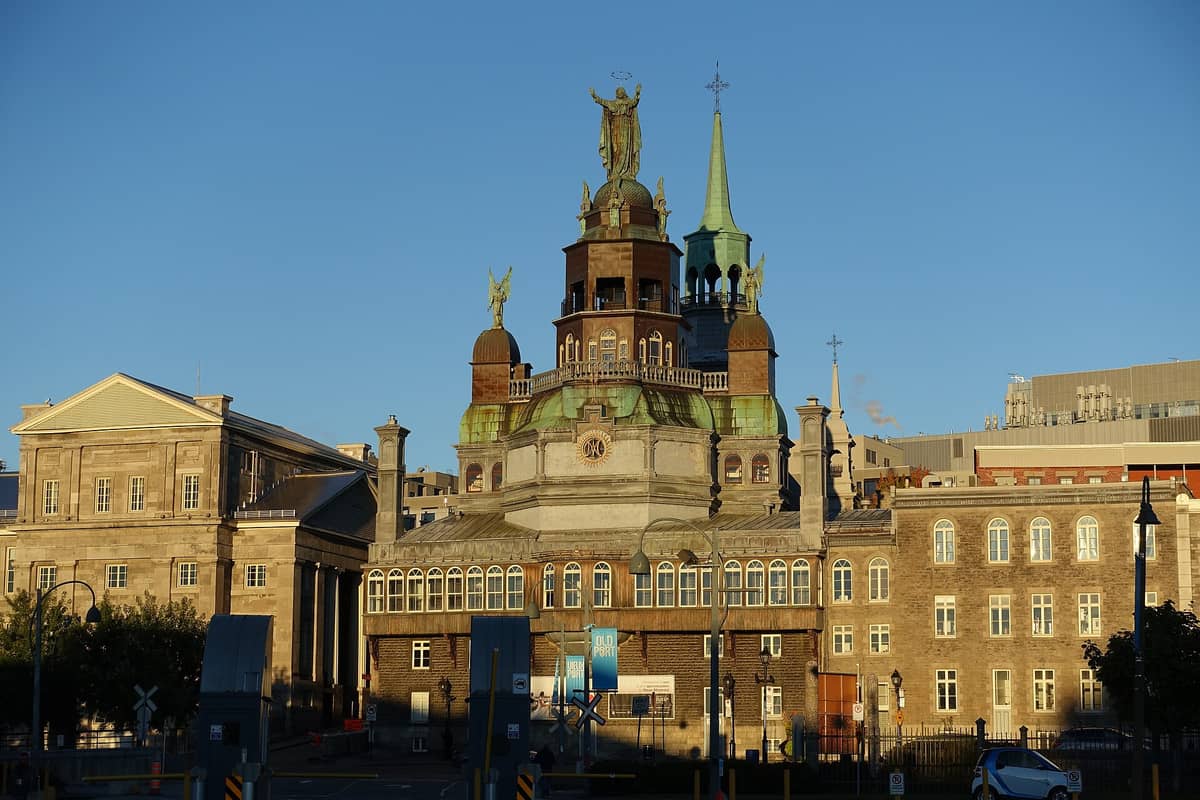
Notre-Dame-de-Bon-Secours Chapel sits at 400 rue Saint-Paul Est, near the eastern end of Old Montreal's main commercial artery. The building you see today was reconstructed from 1771 to 1773, making it the oldest chapel still standing in Montreal. But the site is older still: a stone chapel was first erected here in 1675 under the direction of Marguerite Bourgeoys, a French-born teacher and religious figure who founded the Congregation of Notre-Dame and was later canonized as Canada's first female saint. Fire destroyed that original structure in 1754, and the 1771–1773 rebuild eventually incorporated a bell tower and the rooftop statue of the Virgin Mary that now serves as a navigational landmark for anyone walking east along Saint-Paul.
From the street, the chapel reads as quietly dignified rather than dramatically ornate. Its pale stone facade is narrow and steep-fronted, hemmed in by neighboring buildings in the way that colonial-era structures often are in this part of the city. The rooftop figure of Our Lady, arms extended toward the Saint Lawrence River, is visible from a distance and appears on countless Old Montreal photographs, though many people photograph it without quite knowing what they're looking at.
ℹ️ Good to know
The chapel is also known as the Sailors' Church (Église des Marins). In the 19th century, it became a pilgrimage site for sailors arriving at the nearby port, and returning sailors left votive ship models as offerings. Dozens of those models still hang from the ceiling inside.
Inside the Chapel: What to Look For
Stepping through the entrance, the interior is smaller than the exterior suggests, which is part of what makes it work. The proportions feel human-scale: the vaulted ceiling is not distant, the painted surfaces are close enough to read, and the light from the side windows falls at an angle that shifts noticeably with the time of day. Morning light enters from the east and catches the gilded details on the altarpiece. By mid-afternoon, the interior is softer and more diffuse, which makes it easier to examine the painted ceiling panels without squinting.
The votive ship models hanging from the ceiling are the feature most visitors mention afterward. These ex-votos range in size from small carved pieces to elaborate rigged models, and they span several centuries of maritime tradition. They are a direct material record of who used this space and what they feared: the Saint Lawrence River, even close to Montreal, was not a forgiving waterway. The collection transforms what might otherwise feel like a typical historic chapel into something with a specific social history.
The chapel remains an active place of worship, so the atmosphere shifts depending on when you arrive. Weekday mornings tend to be the quietest, with small groups of visitors moving through respectfully. Weekend afternoons bring more foot traffic from tourists walking Saint-Paul. If you want to spend time in genuine stillness, a weekday visit before noon is significantly better.
Tickets & tours
Hand-picked options from our booking partner. Prices are indicative; availability and final rates are confirmed when you complete your booking.
Montreal evening cruise on the St. Lawrence River
From 54 €Instant confirmationFree cancellation3-hour e-bike guided tour in Montreal
From 68 €Instant confirmationFree cancellationWalking tour of Old Montreal
From 20 €Instant confirmationFree cancellationMontreal helicopter tour
From 156 €Instant confirmationFree cancellation
The Marguerite Bourgeoys Museum and Archaeological Site
Attached to the chapel is the Marguerite Bourgeoys Historic Site, which includes a small museum dedicated to the founder and an archaeological section that exposes the foundations of the 1675 original chapel and pre-colonial Indigenous artifacts uncovered during excavations. The museum portion is modest in scale but serious in focus: it does not aim for blockbuster presentation. The archaeological site is the more unusual of the two sections, and visitors should check guided-tour availability.
Admission to the museum and archaeological site carries a separate fee from the free chapel entry. Current prices are not consistently listed across sources, so check the official site at margueritebourgeoys.org before you go. The museum is not enormous, but if you have genuine interest in the pre-Confederation history of New France, it offers context you will not easily find condensed elsewhere in the city.
If your interest runs more broadly to the early history of the city, Pointe-à-Callière Museum sits roughly 10 minutes west on foot and provides a larger-scale archaeological experience covering the founding of Montreal itself. The two sites make a natural pairing on the same afternoon.
The Rooftop: Elevation and Context
One practical detail that many visitors miss: the chapel complex offers a low-level perspective over the Saint-Paul streetscape and toward the waterfront. It is not a panoramic overlook in the way that the Montreal Tower or the Kondiaronk Belvedere are, but it provides context within the tightly built fabric of Old Montreal.
💡 Local tip
Photography note: interior photography should be respectful of worship and any posted site rules, particularly during services.
Getting There and Practical Details
The chapel is straightforward to reach on foot from the Champ-de-Mars metro station on the Orange Line, approximately a 5-minute walk southwest. If you are coming from the heart of Old Montreal, it sits at the far eastern end of rue Saint-Paul, which means you will pass most of the other major sights on Saint-Paul before reaching it. Plan your direction accordingly: starting at Bonsecours Market and moving east to the chapel, or using the chapel as your starting point and walking west toward Place Jacques-Cartier, both make logical routes.
The chapel and historic site are open seasonally. Listed hours are 10:00 a.m. to 6:00 p.m. daily from May 15 to October 15; from October 16 to May 14, the site is closed Mondays, open Tuesday to Saturday from 11:00 a.m. to 5:00 p.m., and Sundays from 10:00 a.m. to 5:00 p.m. Hours may vary around religious services, public holidays, and seasonal programming. Verify at the official site before making it a fixed anchor in your itinerary.
Accessibility is limited: Tourism Montréal lists the historic site as not accessible, and the site involves stairs at multiple points, including access to the archaeological area and any upper-level areas. Visitors requiring step-free access should contact the site in advance. For wider context on getting around the city, the Montreal transit guide covers metro, bus, and accessible travel options in more detail.
How It Fits Into a Day in Old Montreal
Notre-Dame-de-Bon-Secours Chapel is rarely the centerpiece of a day in Old Montreal, and it does not need to be. It works well as part of a longer walk along Saint-Paul, combined with a stop at Bonsecours Market next door and a detour down to the waterfront at the Old Port. The chapel itself takes under an hour at a relaxed pace; adding the museum and archaeological site stretches the visit to around two hours.
For travelers following a structured itinerary, the chapel fits naturally into a first morning in Old Montreal. It opens early, entry is free, and it functions as a genuine orientation point: from the rooftop you can get your bearings across the neighborhood before the rest of your day begins. If you want a broader framework, a three-day Montreal itinerary places the chapel in context with the wider city.
Who Might Want to Skip It
If you have already visited Notre-Dame Basilica earlier in your trip and found the religious-heritage format less engaging than expected, the chapel will feel similar in tone, if smaller and less grand. The free entry makes it low-risk to check quickly, but visitors with no interest in colonial religious history, maritime folk tradition, or archaeology are unlikely to find it deeply compelling on its own. It is not a spectacle. It rewards curiosity more than it rewards passive sightseeing.
⚠️ What to skip
The chapel is still used for religious services. Visitors in the middle of an active service should behave accordingly: quiet entry, no flash photography, and awareness that the space is not a museum in those moments, regardless of the tourism signage outside.
Insider Tips
- Arrive before 10:30 a.m. on a weekday if you want the chapel almost entirely to yourself. The tour groups that move through Old Montreal typically arrive mid-morning and tend to cluster around Place Jacques-Cartier first.
- The votive ship models are the most photographed interior feature, but look also at the painted ceiling panels above the nave. They are easy to miss if you spend all your time looking at the altar end of the chapel.
- The archaeological site has guided-tour availability that can vary. Ask at the entrance desk about current tour times and guide availability before visiting.
- Bonsecours Market is literally next door and shares the same stretch of rue Saint-Paul. If you want coffee or food before or after the chapel, the market's ground-floor vendors are a practical option without having to go far.
- In winter, the chapel's stone interior holds the cold. If you are visiting between November and March, wear more layers than you think you need — the building does not feel like a heated tourist attraction.
Who Is Notre-Dame-de-Bon-Secours Chapel For?
- History and heritage travelers interested in New France and colonial Montreal
- Architecture walkers doing a full Old Montreal circuit on foot
- Visitors who want a free, quiet counterpoint to the more crowded paid attractions nearby
- Anyone with an interest in folk religious art and the maritime history of the Saint Lawrence
- Travelers on a tight budget who want genuine historical depth without an admission fee
Nearby Attractions
Other things to see while in Old Montreal:
- Bonsecours Market
Marché Bonsecours has stood at the heart of Old Montreal since 1847, surviving its reinventions as a temporary seat of parliament, a city hall, and a concert venue before settling into its current role as a showcase for Quebec designers and cultural exhibitions. Entry is free, the architecture is striking, and its location beside Place Jacques-Cartier makes it a natural anchor for any walk through the historic district.
- Montreal City Hall
Standing at the edge of Place Jacques-Cartier in Old Montreal, Montreal City Hall is a Second Empire civic landmark. Entry is free during its listed weekday hours, and the building carries a history that has shaped Canadian and Quebec political life.
- Musée Marguerite-Bourgeoys
Tucked into a corner of Old Montreal's rue Saint-Paul, the Musée Marguerite-Bourgeoys combines one of Canada's oldest pilgrim chapels with a genuinely surprising archaeological museum. It covers more than 2,400 years of history, costs less than most Montreal museums, and includes free access to the chapel above.
- Notre-Dame Basilica of Montreal
Notre-Dame Basilica of Montreal is a 19th-century Gothic Revival masterpiece at the heart of Old Montreal, recognized as the first church of its kind in Canada. Behind its twin stone towers lies one of the most ornate interiors in North America — deep indigo vaulting, carved wood, and thousands of gold stars overhead. This guide covers what to see, when to go, and how to make the most of your time inside.