Getting to Montreal: Flights, Trains, Buses & Driving Options
Montreal is well connected by air, rail, road, and bus. This guide breaks down every practical option for getting to Montreal, from booking flights to YUL to taking VIA Rail or an intercity bus, including costs, logistics, and what to watch out for.

Plan and book this trip
Tools from our partner Travelpayouts help you compare flights and hotels. If you book through them, we may earn a commission at no extra cost to you.
Flights
Hotels map
TL;DR
- Flights to Montreal land at Montréal-Trudeau International Airport (YUL), about 20 km from downtown. The STM 747 bus connects the airport to central Montreal 24/7 for around CAD 11.25.
- VIA Rail connects Montreal to Toronto, Ottawa, and Quebec City from Central Station. Book early for the best fares.
- Intercity buses, including Orléans Express to Quebec City, are a budget-friendly alternative to train travel.
- Driving into Montreal is straightforward from the U.S. and eastern Canada, but winter road conditions and downtown parking require planning.
- Check the Montreal airport guide for detailed terminal logistics and transport options once you land.
Flights to Montreal: What You Need to Know About YUL
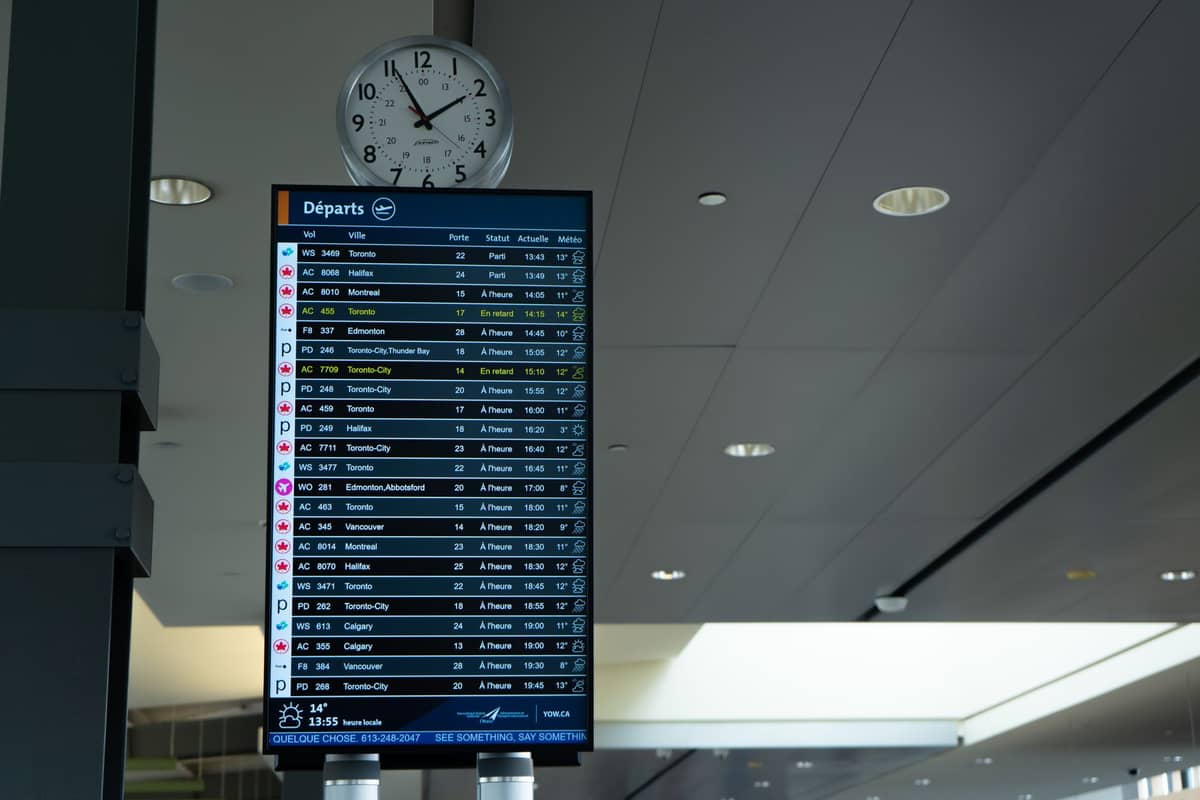
Montréal-Pierre Elliott Trudeau International Airport (IATA code: YUL) is the city's main commercial airport and the primary gateway for international and domestic flights to Montreal. Montréal Metropolitan Airport (YHU) in Saint-Hubert now handles some scheduled passenger flights, but most first-time visitors still arrive at YUL. It sits in the borough of Saint-Laurent, roughly 20 km west of downtown, and serves over 150 destinations through more than 30 airlines. That reach includes direct transatlantic routes to European cities, transborder flights to U.S. hubs, and domestic connections across Canada.
Montreal's geographic position makes it a competitive market for air travel. You'll find nonstop or one-stop options from virtually any major North American city. From Toronto (Pearson, YYZ), the flight is about 1 hour 15 minutes. From New York (JFK or EWR), expect roughly 1 hour 30 minutes. Transatlantic routes from London, Paris, and other European cities typically run 7 to 8 hours. When planning your trip, cross-reference fares across Air Canada, Air Transat, Porter Airlines, and international carriers. Prices shift significantly with season, booking window, and demand, especially around the Jazz Festival in late June and the Grand Prix weekend in early June.
⚠️ What to skip
YUL is not a downtown airport. Factoring in check-in, customs (for international arrivals), and ground transport, budget at least 90 minutes between landing and arriving at your hotel. Don't book a tight connection or a reservation that assumes you'll be in the city centre 30 minutes after touchdown.
A second airport, Montréal-Mirabel (YMX), exists about 55 km northwest of downtown but handles only cargo and private aviation. It is not an option for commercial passenger flights, despite occasionally appearing in outdated travel content.
Getting from YUL Airport to Downtown Montreal
Once you land, you have four realistic options for the airport-to-city journey: the STM 747 express bus, a regulated taxi, a rideshare app, or a rental car. Each involves a different balance of cost, convenience, and travel time.
- STM 747 Bus (best value) Operates 24 hours a day, 7 days a week between YUL and Berri-UQAM métro station in downtown Montreal, with a stop at Lionel-Groulx. Departs from near Door 28 on the arrivals level. Fare is approximately CAD 11.25, which includes 24-hour access to the entire STM bus and métro network. Verify the current fare at stm.info before travelling, as prices are subject to change.
- Taxi (regulated flat rate) Airport taxis to central Montreal operate on a regulated fixed fare. Confirm the current rate with the taxi dispatcher or on the ADM website before you board. The ride typically takes 25 to 45 minutes depending on traffic, and downtown rush hours (7–9 am, 4–6 pm) can extend that significantly.
- Rideshare (Uber) Uber operates at YUL, with designated pickup zones that differ from taxi stands. App-based pricing fluctuates with demand, so a ride during a busy arrival peak or a major event weekend can cost considerably more than a taxi. Check the ADM website for current rideshare pickup locations.
- Rental Car Several major rental companies operate counters at YUL. Useful if you're planning day trips or need flexibility, but driving downtown Montreal involves one-way streets, limited parking, and significant costs if you're parking in a hotel garage daily.
✨ Pro tip
If you're arriving during off-peak hours (late night or early morning) and staying near a métro station, the 747 bus is the easiest call. The 24-hour transit pass bundled into the fare means you can hop on the métro directly from Berri-UQAM without buying another ticket. That's a real practical advantage over a taxi for most budget-conscious travellers.
Arriving by Train: VIA Rail and Central Station
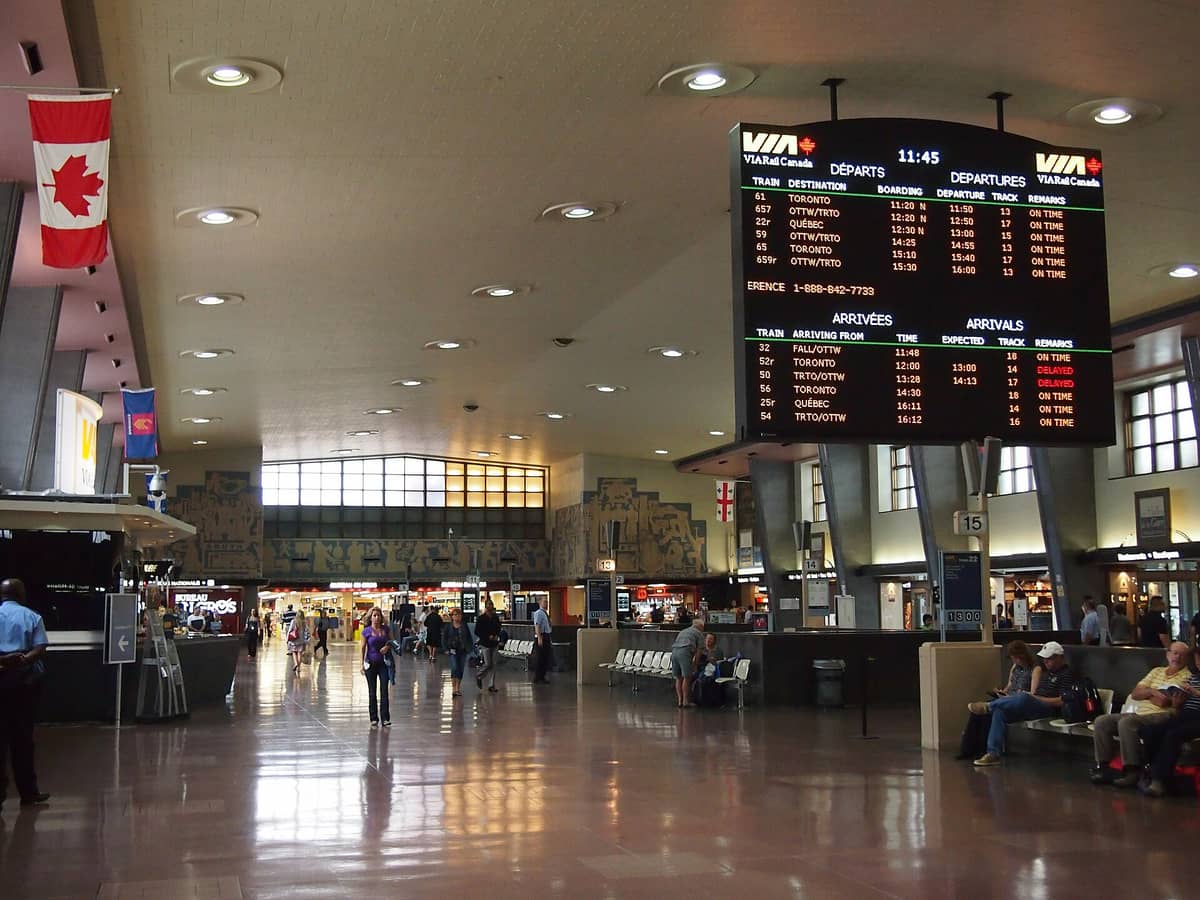
VIA Rail connects Montreal to Ottawa, Toronto, and Quebec City from Gare Centrale (Central Station), which sits directly beneath the downtown core and links directly into the underground pedestrian network. The station's central location is one of the strongest arguments for choosing rail over flying on routes like Montreal-Toronto or Montreal-Ottawa.
The Montreal-Toronto corridor (roughly 5 hours 30 minutes to 6 hours by train) is well served, with multiple daily departures. It's not faster than flying when you factor in security and airport transfers, but the city-centre-to-city-centre convenience makes it genuinely competitive for many travellers. The Montreal-Ottawa route takes around 2 hours. Fares vary considerably based on booking window and class, so booking weeks in advance on VIA Rail's website generally yields the best prices.
💡 Local tip
VIA Rail's Business class on the Quebec City-Windsor corridor includes meals and wider seating, and can be worth the premium on longer journeys like Montreal-Toronto. Keep an eye on promotional fares, which VIA Rail runs periodically and which can make rail competitive with budget airlines even without accounting for baggage fees.
Winter is the variable to watch. VIA Rail operates year-round, but heavy snowstorms or infrastructure issues can cause delays on Canadian rail lines. Check VIA Rail's real-time train status and alerts before any winter journey, particularly from November through March. The upside of rail travel in winter is that you're not subject to airport de-icing delays or the same volume of weather-related cancellations that affect short-haul flights.
Intercity Buses: Budget-Friendly and Practical for Regional Routes
Bus travel to Montreal is most useful for regional routes where train connections are limited or prices are higher. Orléans Express is the dominant carrier between Montreal and Quebec City, with around 15 daily departures and a typical travel time of approximately 3 hours 15 minutes (with some express runs closer to 3 hours). Fares are generally lower than rail for equivalent booking windows, making this a practical choice if flexibility isn't a priority.
From the United States, Greyhound previously served Montreal extensively, but its Canadian network has contracted significantly. Check current cross-border bus options carefully before assuming service exists on a specific route. For travellers coming from the U.S. northeast, driving or flying is often the more reliable choice. Once in Montreal, the city's own STM bus and métro network handles local movement well. For an overview of getting around once you're here, the guide to getting around Montreal covers all the details.
Driving to Montreal: Routes, Borders, and Parking Reality
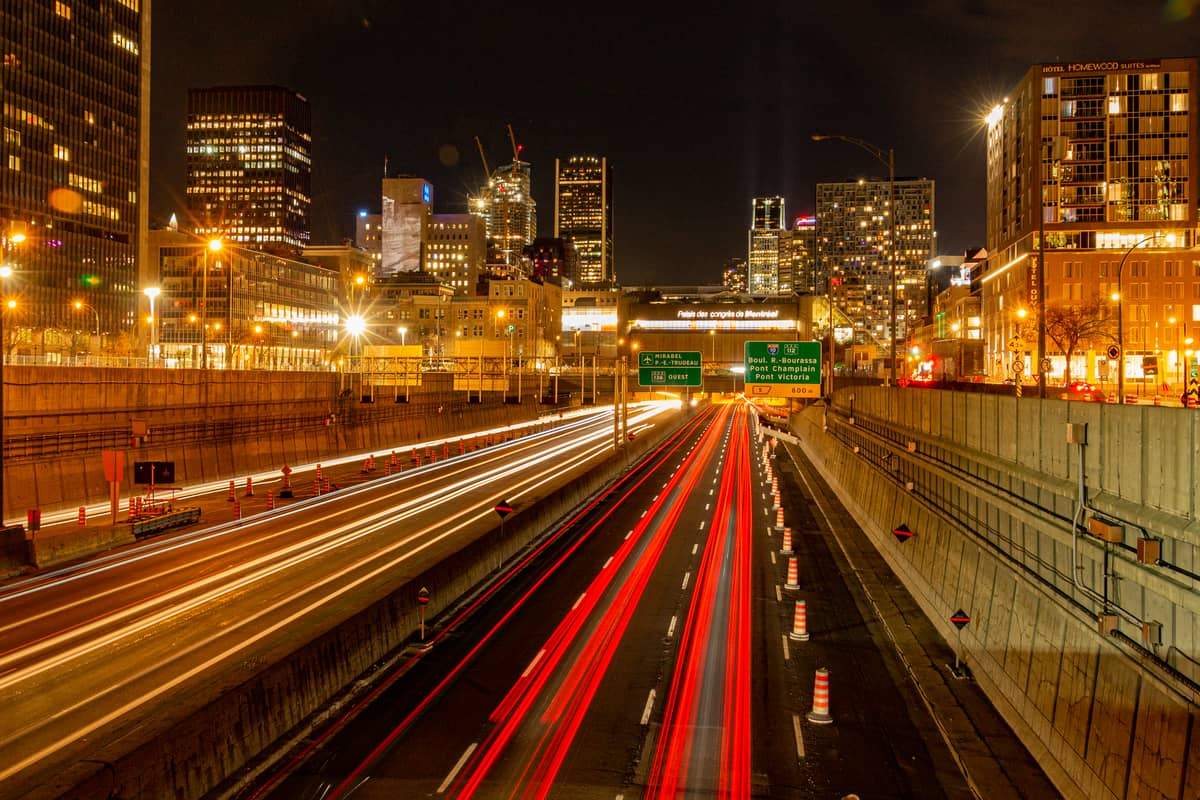
Montreal sits at the intersection of several major highways, making it accessible by car from across eastern Canada and the northeastern United States. From Toronto, the most direct route via the 401 and 20 (or 40) is about 540 km, typically 5 to 6 hours without stops. From New York City, the I-87 north through the Adirondacks crosses the border at Champlain and connects to Autoroute 15 into Montreal, running roughly 5 to 6 hours depending on traffic and border wait times. From Boston, the most common route via I-93 and I-89 enters Quebec near Magog before connecting to Autoroute 10, a drive of about 4 hours 30 minutes to 5 hours.
U.S. citizens and permanent residents generally don't need a Canadian visitor visa, but do need a valid passport (or acceptable identity document, depending on status) for the border crossing. Citizens of visa-exempt countries arriving by land may not need an eTA (the electronic travel authorization is primarily tied to air travel), but requirements depend on nationality and status. Check the Government of Canada's official entry requirements page before your trip, as rules can change.
- Winter driving requires genuine preparation. Quebec roads are generally well-maintained, but snowstorms can significantly extend travel times. Winter tires are legally required in Quebec from December 1 to March 15 for vehicles registered in the province. If you're renting a car, confirm winter tires are included.
- Check Quebec's 511 road information service (quebec511.info) for real-time updates on construction, closures, and conditions before any long drive.
- Entering Montreal from the south via the Champlain Bridge or from the east via the Tunnel Louis-Hippolyte-La Fontaine can bottleneck during rush hours. Plan arrivals for mid-morning or mid-afternoon if possible.
- Parking downtown is expensive and scarce. Daily rates at hotel garages typically run CAD 20 to 40+. If you're spending most of your time in the city, consider parking at a suburban métro station (Longueuil or Laval have large park-and-ride lots) and taking the metro in.
⚠️ What to skip
Right turns on red lights are prohibited on the Island of Montreal (though permitted elsewhere in Quebec). This catches many drivers from Ontario and the U.S. off guard and results in fines. The rule applies island-wide, not just in certain zones.
Entry Requirements and Practical Pre-Departure Checklist
Canada's entry requirements depend on your nationality, travel document, and how you're arriving. Flying travellers from visa-exempt countries (including the UK, EU nations, and Australia) generally need an electronic travel authorization (eTA), which costs CAD 7 and is linked to your passport. It's quick to obtain online but must be secured before you board. U.S. citizens don't need a visa or eTA but do need a valid passport for air travel. Citizens of countries that require a Canadian visitor visa must apply in advance through the Government of Canada's IRCC portal. Requirements change, so verify the current rules for your specific nationality before booking. For timing your visit strategically, check the best time to visit Montreal for a breakdown of seasonal trade-offs.
- Currency: Canadian dollar (CAD). Credit cards are widely accepted. ATMs are available at YUL and throughout the city.
- Electricity: Type A and B plugs, 120V/60Hz. Most North American devices work without adapters. European travellers need both a plug adapter and a voltage converter for some appliances.
- Time zone: Eastern Time (EST, UTC-5 in winter; EDT, UTC-4 during daylight saving). Montreal observes daylight saving time.
- Language: French is the official language of Montreal and Quebec. English is widely spoken in tourist areas, hotels, and restaurants, but learning a few basic French phrases is both practical and appreciated.
- Emergency services: Dial 911 for police, fire, and ambulance emergencies. Canada's country code is +1; Montreal area codes are 514 and 438.
Once you're sorted on logistics, the real question is what to do with your time. A 3-day Montreal itinerary is a solid starting point, or explore the Montreal neighborhoods guide to figure out where you want to base yourself.
FAQ
What airport do flights to Montreal arrive at?
All commercial passenger flights to Montreal arrive at Montréal-Pierre Elliott Trudeau International Airport (YUL), located about 20 km west of downtown. The older Mirabel Airport (YMX) is now cargo and private aviation only and is not used for commercial passenger flights.
How do I get from Montreal airport to downtown?
The cheapest option is the STM 747 express bus, which runs 24/7 between YUL and Berri-UQAM métro station for approximately CAD 11.25, including 24-hour access to the bus, métro, exo train, and REM network in Zone A. Taxis run on a regulated fixed fare. Uber also operates at YUL from designated pickup zones. Verify current fares at the time of travel, as prices change.
Is it better to fly or take the train to Montreal from Toronto?
For most travellers, the train is more convenient on a city-centre-to-city-centre basis. VIA Rail's Toronto-Montreal route takes around 5.5 to 6 hours but deposits you at Central Station in downtown Montreal. Flying is technically faster in the air, but when you add airport check-in, security, and the 20 km ground transfer on both ends, the total time difference narrows significantly. Book VIA Rail early for the best fares.
Do I need a visa to visit Montreal from the United States?
U.S. citizens don't need a Canadian visitor visa, but do need a valid passport for air travel. U.S. permanent residents have different rules. Citizens of other countries should check the Government of Canada's official entry requirements page for their specific nationality. Citizens of visa-exempt countries flying to Canada generally need an eTA (electronic travel authorization), which is applied for online before departure.
What is the best time to book cheap flights to Montreal?
Fares to Montreal fluctuate considerably by season. Peak demand hits in late June through August (summer festivals and warm weather), around the Grand Prix weekend in June, and over winter holidays. Shoulder seasons, particularly April-May and October-early November, often offer lower airfares and hotel rates. Booking 6 to 10 weeks in advance tends to yield reasonable fares on most routes, though transatlantic flights benefit from earlier booking.