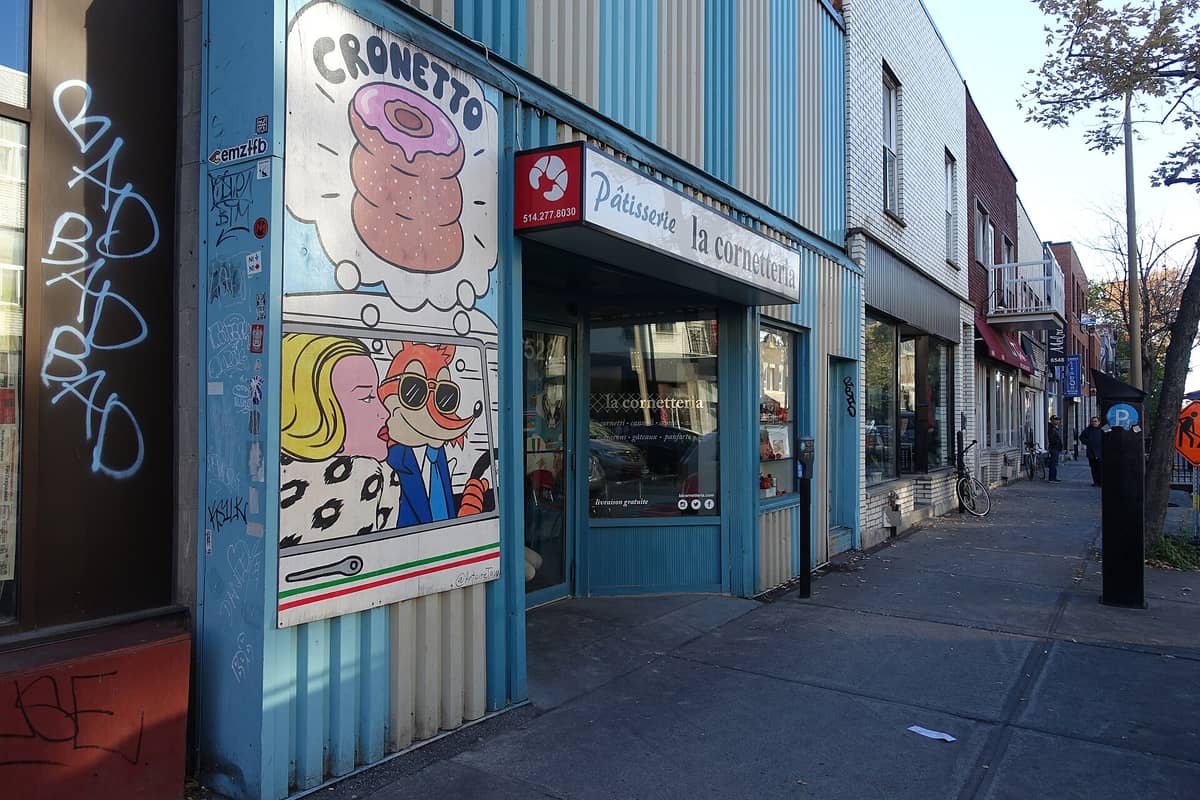
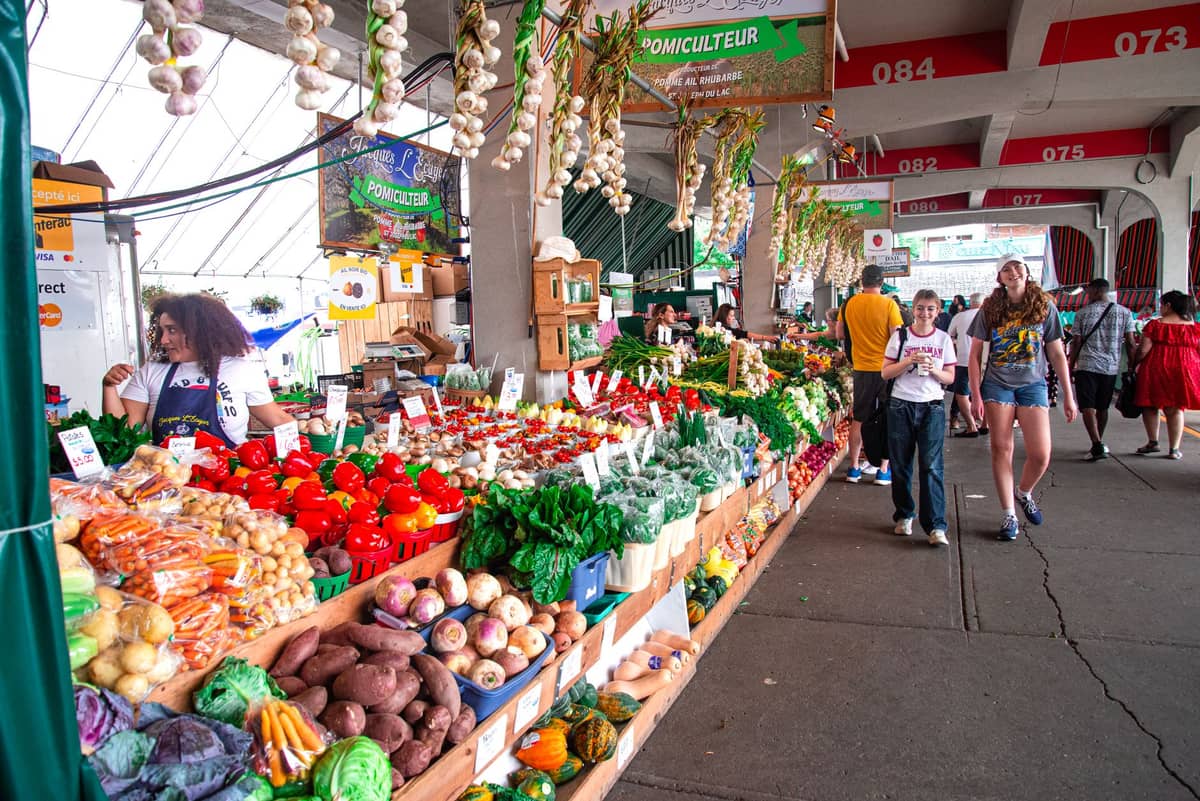
Little Italy is Montreal's most food-focused neighborhood, anchored by Jean-Talon Market and lined with Italian cafés, pastry shops, and trattorias along Saint-Laurent Boulevard. The area blends its Italian immigrant roots with a broader multicultural residential character that makes it worth visiting well beyond meal times.
Little Italy is where Montreal's Italian immigrant history has been absorbed into the city's food culture so thoroughly that it no longer feels like a heritage district performing its past. The stretch of Saint-Laurent Boulevard between Saint-Zotique and Jean-Talon streets operates as a living commercial corridor: espresso bars open early, the market draws serious cooks by mid-morning, and the terrasses fill slowly through the afternoon. It is a neighborhood where locals still outnumber tourists on most days of the week.
Orientation
Little Italy sits in the northern-central part of the island of Montreal, within the borough of Rosemont-La Petite-Patrie. Its commonly understood core runs along both sides of Saint-Laurent Boulevard between Saint-Zotique Street and Jean-Talon Street, with the heart of the neighborhood most clearly felt along that corridor, where cafés, restaurants, and Italian specialty shops are concentrated.
To understand where Little Italy sits in the wider city, picture the island's central axis. Old Montreal is at the southern tip, Downtown occupies the middle, and the Plateau-Mont-Royal district spreads north from there. Little Italy is another step north again, roughly 5 kilometers from downtown. Its neighbors are Mile End to the west across Saint-Laurent, the low-key residential streets of La Petite-Patrie to the east, and Villeray above Jean-Talon Street. This position gives the neighborhood a quieter, more local-feeling rhythm than the Plateau or Mile End, with far fewer visitors arriving without a specific destination in mind.
Jean-Talon Street itself functions as a dividing line rather than a border. Cross it heading north and the Italian character dissolves almost immediately. Cross it heading south and you are moving toward the Plateau's denser commercial strips. The neighborhood's gravitational center is Jean-Talon Market, which sits just inside the northern edge of the neighborhood and pulls visitors from across the city every weekend.
Character & Atmosphere
On a weekday morning, Little Italy is distinctly a working neighborhood. The Saint-Laurent espresso bars are occupied by older Italian-speaking regulars before 9 a.m., standing at counters or sitting at small tables with espresso and cornetti. The streets smell of roasting coffee and, closer to the market, of fresh bread and seasonal produce. The residential side streets between Saint-Laurent and Saint-Denis are quiet: two- and three-story duplexes with the exterior spiral staircases characteristic of Montreal, small front gardens, and the occasional Italian flag or Madonna statue marking a longer family tenure.
By late morning on weekends, the pace shifts. Jean-Talon Market becomes one of the most genuinely animated food spaces in Quebec, with vendors selling tomatoes in August, squash in October, and greenhouse greens through the winter. The market's covered stalls draw a cross-section of the city: professional cooks, weekend home chefs, recent immigrants navigating the same vendors their predecessors found decades ago, and curious visitors who have heard about it but are not quite sure where to start. The surrounding streets absorb the overflow, with café terrasses filling from around 11 a.m. onward.
In the late afternoon, Saint-Laurent Boulevard between Saint-Zotique and Jean-Talon takes on a warm, unhurried quality. The light comes at a low angle from the west and catches the painted facades and neon café signs. Families walk to the park. Terrasses start the slow transition toward dinner service. This is a neighborhood that has a clear Italian-influenced culture of lingering: no one is in a hurry to turn a table or finish a conversation.
After dark, Little Italy is more subdued than the Plateau or Mile End. The restaurants are busy on weekends, some bars stay active past midnight, and Parc Dante sees groups of young people on warm evenings. But it is not a late-night destination in the way the areas further south are. Visitors looking for nightlife beyond a good dinner will likely want to continue south or west.
💡 Local tip
The neighborhood is at its most atmospheric during summer evenings when restaurant terrasses spill onto Saint-Laurent Boulevard. Arrive before 7 p.m. on weekends to avoid waits at the most popular spots, as reservations are not always available.
History & Context
Italian immigration to Montreal began in significant numbers in the nineteenth century and accelerated through the early twentieth century, with waves arriving from southern Italy and Sicily seeking work in construction, food trades, and small commerce. Saint-Laurent Boulevard became the commercial spine of the new Italian community. The businesses, churches, and social institutions they established along this corridor gradually consolidated into what became known as Little Italy.
The Church of the Madonna della Difesa on Henri-Julien Avenue is one of the neighborhood's most significant landmarks. Built in the early twentieth century, it contains a fresco of Benito Mussolini on horseback, painted in 1933 before the full consequences of Italian fascism became clear in Canada. The fresco was never painted over, and it remains a complicated historical artifact inside an active parish church. The church is generally open to visitors and is worth a look, both for the architecture and for the frank way the community has chosen to preserve a difficult piece of its own history.
Casa d'Italia, on Jean-Talon Street just east of Saint-Laurent, was built in 1936 as a social and cultural center for the Italian community. It was requisitioned by the Canadian government during World War II for use as an internment processing center for Italians classified as enemy aliens, a chapter of Canadian history that is not widely known. The building has since returned to its role as a cultural institution and community space. Parc Dante, named for the medieval Italian poet, sits nearby and functions as a gathering point for the neighborhood.
What to See & Do
The primary reason most people make the trip north to Little Italy is Jean-Talon Market. Open year-round with reduced winter hours, the market is one of North America's major open-air markets by some measures, and one of the places where Montreal's food culture is most legibly on display. In summer and autumn, the outdoor stalls overflow with local produce. In winter, the permanent indoor vendors carry specialty foods, cheese, charcuterie, spices, and imported Italian pantry items. It rewards slow wandering more than a shopping list.
The Madonna della Difesa Church on Henri-Julien Avenue is worth visiting for anyone interested in architecture, religious art, or the complicated history of immigrant communities in wartime Canada. The interior is Italian Baroque in influence, with the controversial Mussolini fresco visible in the apse. Services are held in Italian, French, and English, and the church welcomes respectful visitors outside of service times.
Parc Dante is the neighborhood's main green space and a pleasant place to sit on a warm day, particularly in the afternoon when the park fills with older residents playing pétanque and families letting children run. Parc de la Petite-Italie nearby is smaller but has a similar feel. Neither park is a destination in itself, but together they explain the neighborhood's unhurried pace: there are places to sit and nothing urgently requiring your attention.
Church of the Madonna della Difesa: early 20th-century church with historically significant interior fresco
Casa d'Italia: Italian-Canadian cultural center with layered wartime history on Jean-Talon Street
Parc Dante: neighborhood park popular with pétanque players and families
Saint-Laurent Boulevard corridor: window shopping, Italian specialty grocery stores, café-watching
For visitors who want to combine Little Italy with a broader north-of-downtown loop, the neighborhood connects naturally to Mile End to the southwest, reachable on foot in about 15 minutes via Saint-Laurent Boulevard heading south. The two neighborhoods share an interest in food and independent commerce but have very different characters: Mile End is younger, louder, and more international in its current cultural mix.
ℹ️ Good to know
Jean-Talon Market has the best selection of local produce in late summer and early autumn, roughly August through October. If you are visiting Montreal during this window, a Saturday morning trip to the market is one of the most genuinely local experiences the city offers.
Eating & Drinking
Food is the main event in Little Italy, and the neighborhood delivers it across a range of settings and price points. The Italian coffee culture here is not theatrical: it is functional, consistent, and takes the espresso seriously. The older cafés on Saint-Laurent Boulevard serve short drinks at the counter with pastries or biscotti, and the expectation is that you will drink standing up or at a small table, not spend an hour on a laptop. Newer cafés in the neighborhood have expanded on this model with longer menus and more seating, but the baseline is still strong espresso.
Italian restaurants range from family-run trattorias that have been on Saint-Laurent for decades to more recent additions with updated menus and natural wine lists. Pizza, pasta, and fresh-made gelato are the most reliable standbys. The market area has generated its own cluster of restaurants and food stalls that operate more casually, particularly at lunch on weekends when the market crowd needs to eat. Prices in the neighborhood are generally moderate to mid-range, with a full dinner at a sit-down restaurant running somewhere between CAD 40 and CAD 80 per person with wine, depending on the place.
Beyond Italian, the neighborhood reflects its wider multicultural character in a scattering of Portuguese, Greek, and Middle Eastern restaurants along Saint-Denis and the cross streets. These places are often less visible to visitors but are well-regarded by residents and worth exploring if you are staying for more than a meal or two. The market itself has vendors selling prepared foods from a range of origins, and the indoor section carries specialty ingredients from across Europe and the Mediterranean.
Espresso and Italian pastry bars along Saint-Laurent Boulevard: best in the morning
Gelato shops clustered near the market and around Parc Dante
Trattoria-style Italian restaurants: strong for pasta and wood-oven pizza
Market food stalls: casual, affordable, excellent for weekend lunches
Specialty food shops: aged balsamic, imported Italian charcuterie, house-made pasta to take away
For a broader sense of where Little Italy fits into Montreal's food landscape, the best markets in Montreal guide covers Jean-Talon alongside the city's other major markets and explains why they each attract different kinds of shoppers and visitors.
⚠️ What to skip
Several of the neighborhood's most popular restaurants do not accept reservations, and weekend dinner queues can be long. If you are planning a Friday or Saturday dinner, either arrive by 6 p.m. or check reservation policies in advance. Weekday dinners are notably calmer.
Getting There & Around
Little Italy is well served by Montreal's metro system. The most useful stations for visitors are Jean-Talon, served by the Orange and Blue lines, and Beaubien, on the Orange Line. Jean-Talon provides access near the market, while Beaubien is useful for the southern end of the Saint-Laurent corridor. De Castelnau is on the Blue Line and can be useful for the northern end of the area.
The 55 bus runs along Saint-Laurent Boulevard through Little Italy and connects the neighborhood southward through Mile End and the Plateau. This is a practical option if you want to combine several neighborhoods in one trip without backtracking through the metro. For general transit orientation across the city, the getting around Montreal guide covers STM fares, the metro network, and the city's cycling infrastructure in detail.
From downtown Montreal, Little Italy is approximately 5 to 6 kilometers north, with Jean-Talon station providing Orange- and Blue-line access. The city's BIXI bike-share system has docking stations near the market and along Saint-Laurent, making it a natural part of a longer cycling route through the city's central neighborhoods. Walking from Mile End to Little Italy takes roughly 15 minutes along Saint-Laurent, making the two areas easy to combine in a single morning or afternoon.
Montreal's cycling network makes Little Italy very accessible by bike, particularly in warmer months. The Montreal cycling guide covers the BIXI system, the best routes north from downtown, and how to navigate the city on two wheels without a car.
Where to Stay
Little Italy is not a major hotel district, and most accommodation options in the area are smaller boutique hotels, bed-and-breakfasts, and short-term rental apartments. Staying here suits a specific kind of traveler: someone interested in a genuinely residential neighborhood experience, easy access to the market, and a quieter base than downtown or the Plateau without sacrificing transit access. The Orange Line metro puts you roughly 20 minutes from downtown and 10 minutes from Mile End.
For visitors who want to be closer to central attractions, staying in the Plateau or downtown and making day trips north to Little Italy and Jean-Talon Market is the more common approach. The where to stay in Montreal guide compares the city's main accommodation districts and helps match neighborhood character to traveler priorities.
If you do stay in Little Italy, the streets closest to Jean-Talon Market and the Saint-Laurent commercial corridor offer the most walkable access to food and transit. The quieter residential blocks east of Saint-Laurent toward Saint-Denis are pleasant and well-connected but involve a slightly longer walk to the metro and the main café strip.
Practical Notes
Little Italy is a generally safe residential neighborhood with no particular safety concerns for visitors during the day or early evening. The area around Jean-Talon Market and the Saint-Laurent corridor is well-frequented through market hours and dinner service. Like any urban area, normal city awareness applies after dark on quieter side streets. The local police station lists crime, road safety, and residents' sense of security among its priorities for Little Italy and La Petite-Patrie, which is a standard urban policing framework rather than an indication of unusual risk.
The neighborhood is primarily French-speaking, with Italian spoken among older residents and in some traditional businesses. English is understood at most commercial establishments, but starting interactions in French or at least attempting a brief greeting in French is standard courtesy in Montreal. At Jean-Talon Market, vendors will typically switch languages comfortably to serve customers.
Visitors arriving in summer should check the Montreal festivals guide for events that may affect the neighborhood or the city more broadly. The area around Jean-Talon Market can be particularly crowded during summer weekends and during Italian cultural events that draw visitors from across Montreal.
TL;DR
Little Italy is primarily a food destination, best experienced through Jean-Talon Market, the Saint-Laurent espresso bars, and a long weekend lunch rather than a checklist of tourist attractions.
The neighborhood has genuine historical depth, including the Madonna della Difesa Church and Casa d'Italia, both of which tell complicated and underexplored stories about Italian-Canadian history.
Transit access is excellent via the Orange Line metro (Jean-Talon or Beaubien stations), and the neighborhood pairs naturally with Mile End for a half-day or full-day north-of-downtown itinerary.
Accommodation options are limited, and most visitors will find it easier to stay in the Plateau or downtown and visit Little Italy on a day trip.
Best for: food-focused travelers, market enthusiasts, anyone interested in immigrant community history, and visitors who prefer neighborhood exploration over headline attractions.
Montreal's market scene spans grand Art Deco food halls, open-air farmers markets in Little Italy, historic covered bazaars in Old Montreal, and lively Sunday flea markets at the foot of Mount Royal. This guide covers the best of all of them.
Montreal delivers more than its size suggests as a museum city. This guide covers the finest institutions across fine art, social history, archaeology, architecture, and science, with practical details to help you plan your visit.
Montreal rewards visitors in every season, but the right time to go depends entirely on what you want from the city. This guide breaks down the weather, festivals, crowds, and trade-offs for each season so you can plan with confidence.
Montreal rewards those who look up and out. Whether you climb to the Kondiaronk Belvedere at golden hour, ride the Grande Roue above the Old Port, or scale the Olympic Tower's inclined funicular, the city offers skyline perspectives that are genuinely worth seeking out. This guide covers the best viewpoints at every elevation, from free hilltop terraces to paid observation decks.
Montreal is an island city with extraordinary escapes on its doorstep. Whether you want alpine trails, freshwater beaches, wine country, or wildlife encounters, these are the best day trips from Montreal for every season and travel style.
Montreal is one of North America's most culturally rich cities, and you don't need to spend much to experience it. From mountaintop panoramas to historic churches, Sunday drum circles, and world-class art, this guide covers the best free things to do in Montreal across every season.
Montreal is one of North America's most navigable cities, with a reliable metro, an extensive bus network, and a serious cycling culture. This guide covers every way to move around the city, from airport arrivals to cross-neighborhood cycling, with accurate fares and practical logistics.
Montreal is well connected by air, rail, road, and bus. This guide breaks down every practical option for getting to Montreal, from booking flights to YUL to taking VIA Rail or an intercity bus, including costs, logistics, and what to watch out for.
Montreal is one of North America's most distinctive cities: French-speaking, architecturally rich, food-obsessed, and genuinely alive in every season. This guide cuts through the hype and gives you the real picture — including what doesn't live up to expectations.
Montréal-Trudeau International Airport (YUL) is the main gateway into Montreal, located about 20 km west of downtown. This guide breaks down every transport option, including real costs, journey times, and practical tips for arriving and departing stress-free.
Montreal is one of North America's most architecturally diverse cities, layering French colonial stonework, Gothic Revival grandeur, early 20th-century Beaux-Arts institutions, and modernist experiments across its neighborhoods. This guide walks you through the key eras, districts, and buildings worth your time, with practical transit advice for moving between them.
Montreal bagels are in a category of their own: hand-rolled, boiled in honey water, and baked in wood-fired ovens until golden and slightly chewy. This guide covers what makes them distinct, the legendary Fairmount vs St-Viateur debate, where to find the best ones, and everything else a first-timer or returning visitor needs to know.
Montreal is an island city, and in summer it takes full advantage of that fact. From supervised urban beaches with skyline views to freshwater shores inside national parks, here are the best places to swim, sunbathe, and cool off near Montreal.
Attending a Montreal Canadiens game at the Bell Centre is one of the most intense sporting experiences in North America. This guide covers everything you need to know: how to find tickets, read the schedule, check standings, get to the arena, and make the most of game night in Montreal.
Montreal has one of North America's most developed urban cycling networks, with over 1,000 km of paths, a mature bike-share system, and routes that connect historic waterfront districts to leafy residential neighborhoods. This guide covers BIXI pricing, the best routes by experience level, seasonal logistics, and what to watch out for before you clip in.
Montreal earns its reputation as Canada's festival capital every summer, when the Quartier des Spectacles, Parc Jean-Drapeau, and the city's streets fill with music, circus arts, fireworks, and outdoor gatherings. This guide covers the venues, neighborhoods, and attractions that make Montreal's festival calendar tick — from free outdoor stages to world-class arena shows.
Montreal is one of North America's most distinctive cities, with a French-speaking culture, four dramatic seasons, world-class food, and a calendar packed with festivals. This guide covers everything a first-time visitor needs: how to get in, where to go, what to eat, and how to avoid the common mistakes.
Montreal earns its romantic reputation through a combination of European-style architecture, world-class dining, and genuinely varied outdoor experiences that work in every season. This guide covers the best couple-friendly activities across the city, from the Old Port waterfront to Mount Royal's summit viewpoints, with practical tips on what's worth booking in advance.
The Canadian Grand Prix is one of Formula 1's most celebrated stops, and Montreal delivers a race weekend unlike any other. This guide covers tickets, getting to the circuit, accommodation strategy, and everything else you need to make the most of the event.
Montreal rewards curious travelers who look beyond the obvious. From a community museum inside an Art Deco bathhouse to a living history farm in Pointe-Saint-Charles, these under-the-radar experiences reveal the city's deeper character. Here are the local favorites and overlooked spots worth seeking out.
Montreal transforms in summer, packing months of world-class festivals, outdoor markets, cycling routes, and park culture into a brief but intense warm season. This guide covers what to expect, what to prioritize, and what to skip across June, July, and August.
Montreal in winter is one of North America's most underrated cold-weather experiences. From illuminated skating rinks to world-class museums and legendary winter festivals, this guide covers what to expect, what to wear, and exactly how to make the most of the season from November through March.
Three days is enough time to cover Montreal's historic core, its best neighborhoods, and its signature food culture — if you plan it right. This itinerary is built around walkable clusters, smart transit use, and practical tips on what's worth your time.
The Montreal International Jazz Festival runs June 25 to July 4, 2026, with over 350 concerts across Quartier des Spectacles. Most outdoor shows are completely free. Here's how to navigate the 46th edition like a local.
Montreal has one of North America's most celebrated LGBTQ+ scenes, anchored by the Gay Village on Sainte-Catherine Street East and spread across some of the city's most interesting neighborhoods. This guide covers everything from Pride 2026 dates and Village bar culture to year-round queer travel tips, practical logistics, and what to know before you arrive.
Montreal is not a city you can understand from one neighborhood. From the cobblestones of Old Montreal to the spiral staircases of the Plateau and the repurposed warehouses of Griffintown, each district has a distinct character, crowd, and pace. This guide breaks down the city's key areas so you can match your trip to the right base.
Montreal's nightlife runs deep, from jazz bars in the Plateau to underground clubs in the Quartier des Spectacles and rooftop terraces in Old Montreal. This guide covers the best venues by neighborhood, practical transit tips, seasonal advice, and what to skip.
Montreal is one of North America's most rewarding cities for budget travelers. From free outdoor landmarks to heavily discounted museum nights, this guide breaks down exactly where your money goes further and where it disappears fast.
Poutine is Quebec's most exported food idea, but eating the best version requires knowing where to go, what to order, and what to avoid. This guide covers the top spots in Montreal, the dish's real origins, and practical advice for first-timers and repeat visitors alike.
Montreal is one of Canada's top shopping destinations, blending major retail corridors with independent boutiques, covered malls, and a remarkable underground network. This guide breaks down where to shop, what to expect, and how to avoid wasting time on the wrong streets.
Montreal smoked meat is one of Canada's most iconic deli traditions, and eating it well requires knowing where to go, how to order, and what to expect. This guide covers the history, the best delis, ordering tips, and clear takes on the city's most celebrated sandwich.
Montreal has one of the most concentrated outdoor mural collections in North America, spread across distinct neighborhoods from the Plateau to Griffintown. This guide covers where to find the best street art, how to walk or cycle the top routes, what to expect at the MURAL Festival, and how to get the most from the city's public art scene year-round.
The National Bank Open is one of the top tennis tournaments in North America, held each summer at IGA Stadium in Montreal's Jarry Park. This guide covers tickets, venue logistics, session timing, transport, and what to expect on site — so you can focus on the tennis.
Montreal is one of North America's most walkable cities, with historic cobblestone streets, forested hilltops, canal-side paths, and distinct neighborhoods that reward exploring on foot. This guide covers the best guided tours and self-guided walks across the city, from Old Montreal's 17th-century architecture to the Lachine Canal waterfront.
Montreal doesn't hibernate in winter. From outdoor electronic music at Igloofest to the giant snow playground of Fête des Neiges and the all-night Nuit blanche, the city turns its coldest months into a full calendar of events. Here's how to make the most of it.
From the Biodôme to the Old Port, Montreal is one of Canada's most rewarding cities for families. This guide covers the best kid-friendly attractions, honest admission costs, STM transit rules for children, and practical advice for every season.
Montreal is one of North America's most rewarding cities to explore, with a genuinely distinct French-speaking culture, world-class food, and a calendar packed with festivals. This guide covers the top things to do in Montreal Canada, organized by category, with practical details on costs, timing, and what to skip.
Montreal has one of the most distinctive food cultures in North America, shaped by French-Canadian tradition, Jewish deli heritage, Portuguese immigration, and a relentless local obsession with quality ingredients. This guide covers the essential dishes, where to find them, and how to eat like someone who actually lives here.
Montreal's food scene is one of the most distinctive in North America, shaped by French culinary tradition, Jewish deli culture, Italian immigration, and a relentless wave of independent restaurants. This guide breaks down the best places to eat in Montreal by neighborhood, food type, and budget, with clear takes on what's worth your time and what to skip.
Choosing where to stay in Montreal shapes your entire trip. This guide breaks down every major neighborhood by character, convenience, and price range — so you can pick the right base before you book a single hotel room.