Astoria and Long Island City make up the western edge of Queens, sitting directly across the East River from Midtown Manhattan. Together they offer a striking contrast: LIC's glass-tower waterfront and gallery scene give way northward to Astoria's low-rise residential streets, Greek coffeehouses, and one of the most ethnically layered food cultures in the city.
Astoria and Long Island City occupy western Queens, separated from Manhattan by nothing more than the East River and a few subway stops. LIC has transformed from an industrial warehouse district into a skyline of residential towers with serious art institutions, while Astoria has held its neighborhood character across decades of immigration waves, resulting in Greek tavernas sitting beside Egyptian bakeries, Brazilian steakhouses, and Irish pubs on the same block.
Orientation
Both neighborhoods sit in western Queens, bounded to the west by the East River and connected to Manhattan by two bridges and a major railroad viaduct: the Queensboro (Ed Koch) Bridge at 59th Street and the Triborough (RFK) Bridge farther north link Queens to Manhattan and the Bronx, while the Hell Gate railroad arch above Astoria Park carries Amtrak trains between Queens and Randall’s and Wards Islands, not directly to Manhattan. Newtown Creek marks the southern boundary with Greenpoint, Brooklyn, while the northern edge of Astoria runs up to Ditmars Boulevard, beyond which the neighborhood transitions to more residential corners near LaGuardia Airport.
Long Island City is the southern portion of this combined district. Its core runs roughly from Newtown Creek north to around 36th Avenue, with Queens Plaza and the approach to the Queensboro Bridge as its commercial and transit heart. The Hunters Point sub-neighborhood, at the southwestern tip of LIC, is where you find the waterfront parks, the LIRR's Hunters Point station, and the densest cluster of new residential towers. Moving north from Queens Plaza, the streets gradually lower in height and the architecture shifts from glass condos to brick walk-ups: that transition marks your entry into Astoria proper.
The internal boundary between LIC and Astoria is contested. Locals and real estate listings disagree, with some placing the dividing line near 36th Avenue and others at the Queensboro Bridge approach. For practical purposes, think of anything south and west of Queens Plaza as LIC and anything north of it as Astoria. The two areas share subway infrastructure but feel distinctly different on foot.
ℹ️ Good to know
ZIP codes for this combined area include 11101, 11102, 11103, 11105, 11106, and 11109. LIC concentrates in 11101 and 11109 (Hunters Point), while Astoria spans 11102, 11103, 11105, and 11106.
Character & Atmosphere
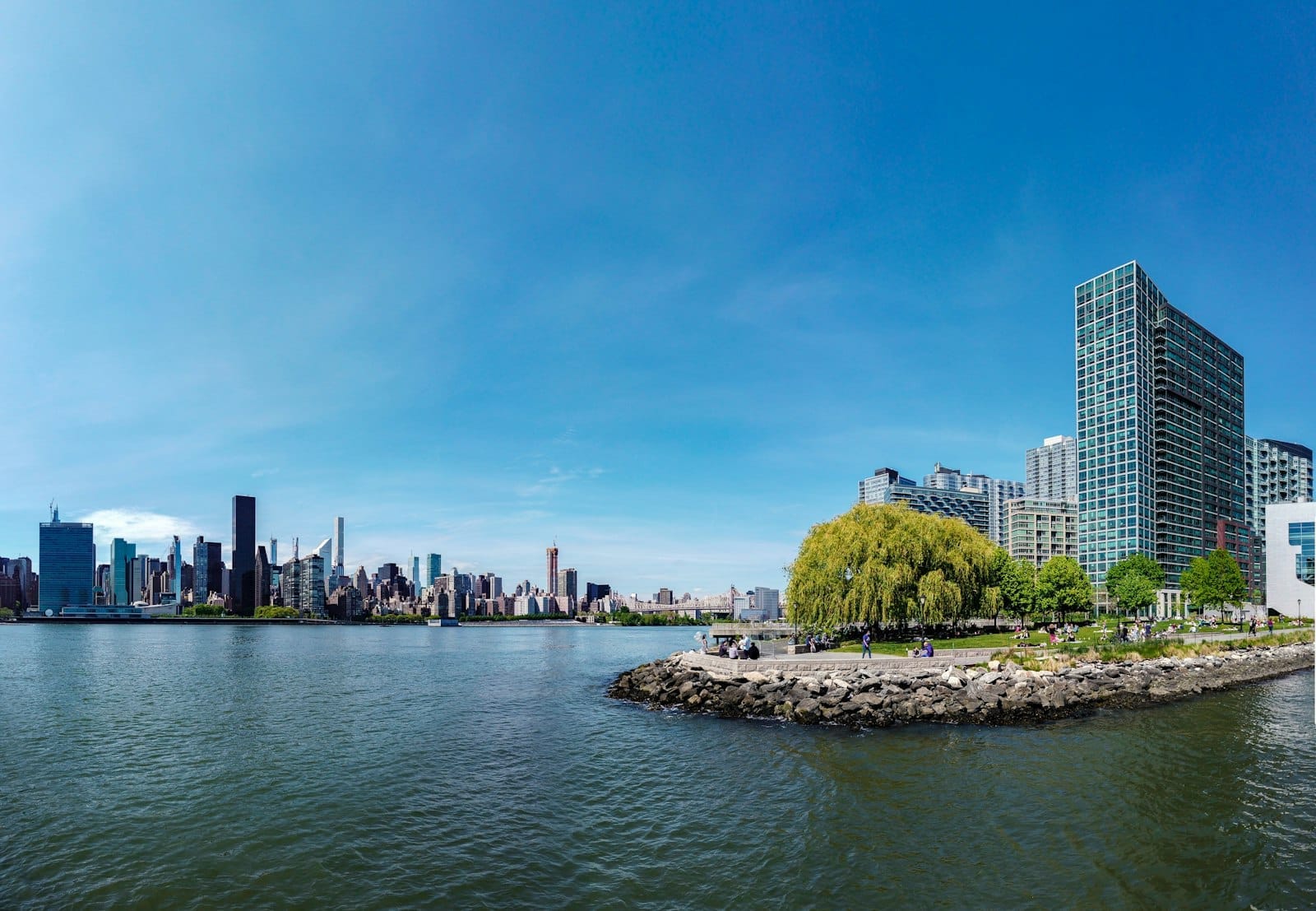
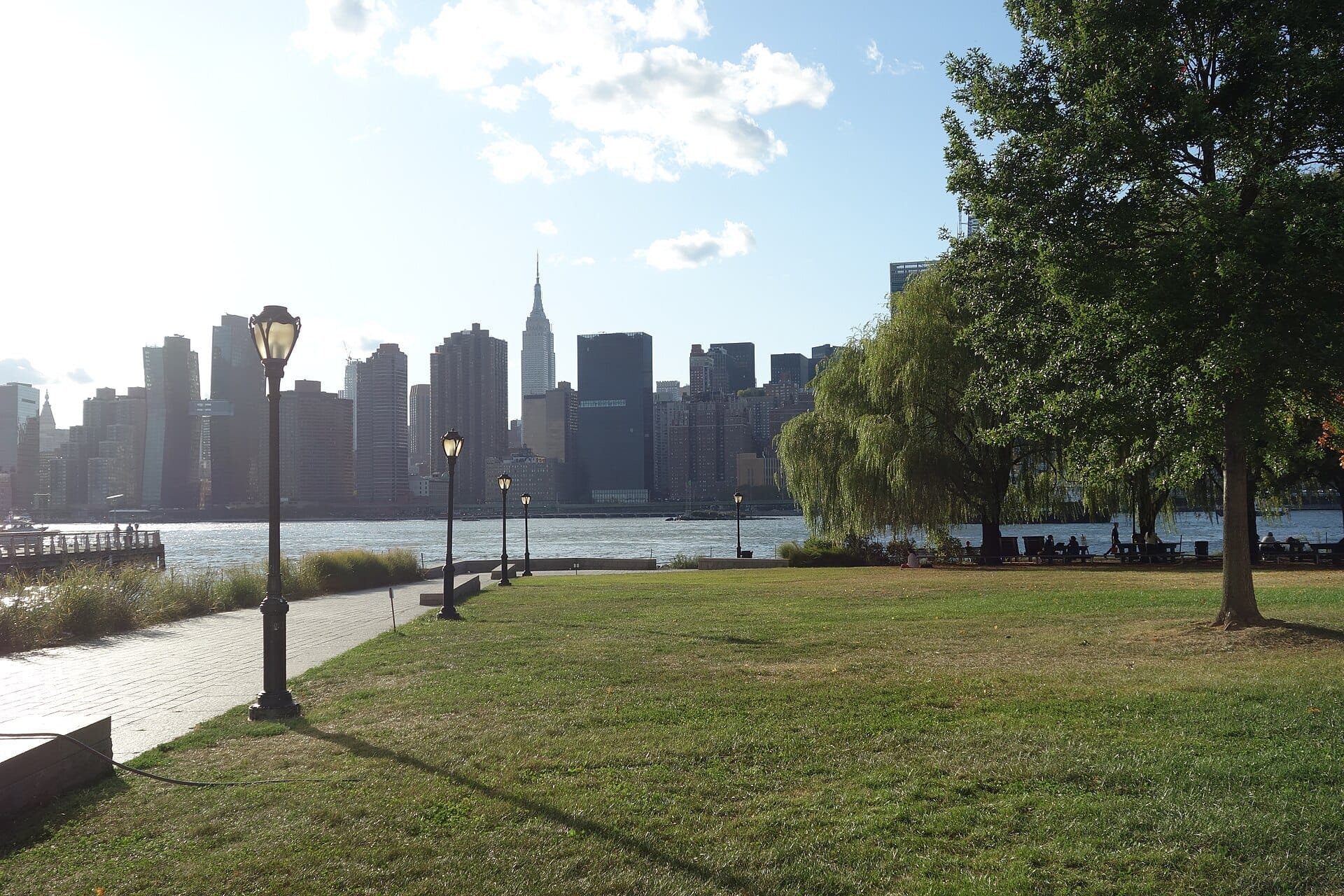
Long Island City in the early morning is a commuter neighborhood in the truest sense. The 7 train platforms fill with young professionals carrying coffee cups, many of them heading the three stops to Times Square-42nd Street. The streets around Queens Plaza have a transactional energy: dry cleaners, delis, and nail salons serve people on their way somewhere else. But walk six blocks west toward the waterfront and the mood changes entirely. Gantry Plaza State Park is nearly empty on weekday mornings, the water flat and reflective, with the UN building and the Chrysler Building framed across the river in a way that feels almost staged.
By afternoon, especially on weekends, that waterfront draws crowds from across the borough. Families with strollers, photographers looking for skyline shots, and couples using the piers as a backdrop: this is now a destination rather than a commuter shortcut. The industrial past is still visible in the converted warehouse buildings along Jackson Avenue, many of which house galleries, creative studios, and production companies. The Citibank tower and surrounding condo developments loom above all of it, a reminder of how fast this stretch of riverfront was rebuilt.
Astoria has a different rhythm entirely. Steinway Street is the main commercial artery running north-south, and on a Saturday afternoon it feels neighborhood-scale: fruit stands, hookah supply shops, discount clothing, and Middle Eastern grocers operating alongside the cafes and bars that have opened in the last decade. The streets around 30th Avenue and Broadway have seen an influx of younger residents and more upscale dining, but without erasing the older layer. At night, the stretch of 30th Avenue from Crescent Street toward Steinway is Astoria's social core, with outdoor seating spilling onto the sidewalk in warm months and most spots staying open late.
What to See & Do
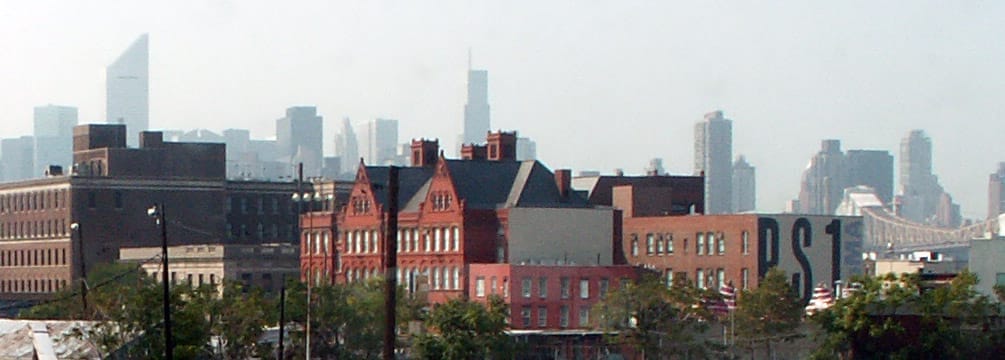
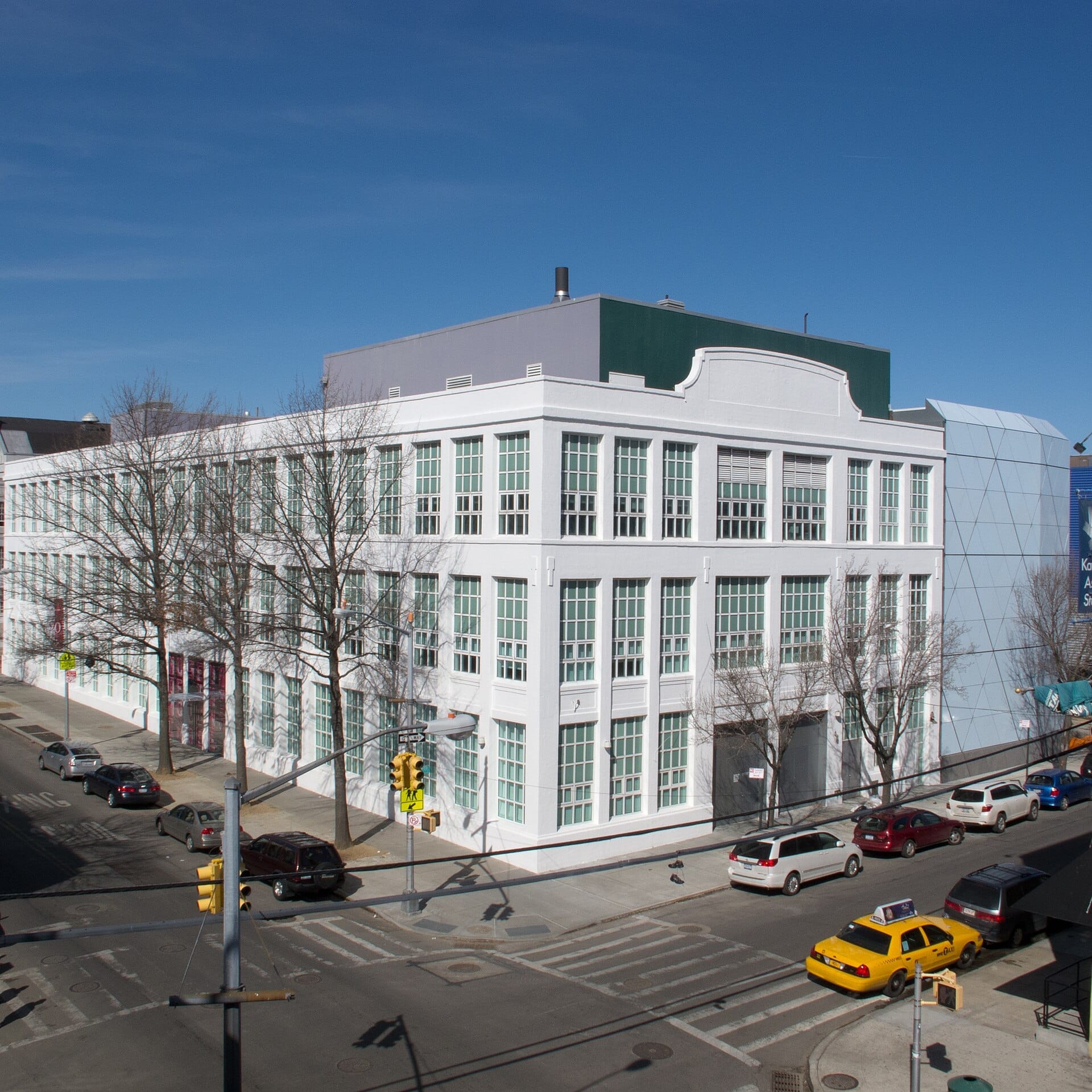
The single most compelling cultural institution in this part of Queens is MoMA PS1, housed in a converted 19th-century schoolhouse on Jackson Avenue in LIC. It functions as the contemporary arm of the Museum of Modern Art and consistently shows experimental and avant-garde work that doesn't fit the mainstream MoMA program. The summer Warm Up concert series in the courtyard has been a fixture of NYC's music calendar for decades. Admission is free for MoMA members and for New York City residents on select days, and is also free with a same‑day MoMA ticket.
On the waterfront, Gantry Plaza State Park is the neighborhood's most photogenic asset. The restored gantry cranes that once loaded goods onto railroad barges now stand as industrial sculpture framing the Manhattan skyline. The park has multiple piers, a playground, and manicured lawns, and it connects northward toward additional waterfront access points. It's free, accessible all day, and consistently one of the best skyline viewpoints in the entire city.
In Astoria, the park named after the neighborhood is the most significant green space. Astoria Park sits along the East River under the Hell Gate Bridge and the Triborough (RFK) Bridge, and contains one of the largest outdoor public pools in the city, which operates free during the city pool season in summer. The park's northern reaches offer relatively quiet waterfront paths on weekday mornings, while weekends bring volleyball games, picnics, and families using the athletic fields.
Astoria also contains the Museum of the Moving Image on 35th Avenue, which traces the history of film, television, and digital media through an impressive collection of costumes, props, cameras, and interactive exhibits. It's a undervisited institution that rewards a few hours without the crowds of Manhattan museum-hopping.
For those interested in the broader Queens cultural picture, the area connects easily to Flushing via the 7 train, and the NYC art scene guide covers how LIC's gallery corridor fits into the wider city map.
MoMA PS1 – contemporary art and the Warm Up summer series on Jackson Avenue
Gantry Plaza State Park – restored industrial piers and Manhattan skyline views
Astoria Park – East River waterfront, Hell Gate Bridge views, and the city's largest outdoor pool
Museum of the Moving Image – film and television history on 35th Avenue
Socrates Sculpture Park – open-air sculpture on the Astoria waterfront at Broadway
Eating & Drinking
Astoria has one of the most diverse food scenes of any neighborhood in New York City, built over decades of successive immigration rather than curated restaurant development. The Greek presence is the most historically rooted: old-school Greek diners and tavernas along Ditmars Boulevard and 31st Street have been operating since the mid-20th century, serving grilled fish, lamb dishes, and thick yogurt in rooms that haven't been redesigned since the 1980s. These are not novelty destinations; they are neighborhood institutions.
Steinway Street between Astoria Boulevard and 28th Avenue is a corridor of Egyptian and broader Middle Eastern food: fuul, koshari, grilled meats, and shawarma at prices that feel like another era by Manhattan standards. Several Egyptian-owned bakeries sell baklava, konafa, and savory pastries by the tray. This strip operates primarily for the local community rather than food tourists, which means quality is high and the experience is more genuine than the curated ethnic food corridors you find in more gentrified neighborhoods.
The 30th Avenue corridor has shifted upmarket in recent years, with a mix of craft beer bars, Italian restaurants, Japanese spots, and cocktail-focused lounges joining the older Greek and South American places. The area around Broadway and 31st Street leans slightly younger and louder after 10pm, making it Astoria's de facto late-night zone. Beer gardens, a format the neighborhood has embraced for decades, are still operating here and provide outdoor communal drinking without the Manhattan price premium.
In Long Island City, the food scene is newer and more concentrated around the residential tower developments near Queens Plaza and the waterfront. The options are solid but the character is that of a neighborhood still finding its dining identity: a mix of fast-casual, brunch spots, and the occasional standout restaurant. The LIC food scene rewards exploration but doesn't yet have the depth of Astoria's.
For a broader look at how this fits into Queens eating overall, the NYC food guide covers the borough's culinary geography in detail.
💡 Local tip
For the best value in Astoria, eat on Steinway Street between Astoria Boulevard and 28th Avenue rather than the 30th Avenue bar corridor. Prices are lower, portions are larger, and the food is cooked for the neighborhood rather than the visitor.
Getting There & Around
Transit access is one of the strongest arguments for staying in or visiting this area. Long Island City is about three to four subway stops from Midtown Manhattan on multiple lines. The N and W trains run from Queensboro Plaza to Times Square in around 10 minutes. The 7 train from Hunters Point Avenue or Vernon Blvd–Jackson Ave reaches Grand Central in roughly 7–10 minutes. The E, M, and R trains also serve Queens Plaza, providing connections to Midtown West, Lower Manhattan, and Brooklyn.
Astoria is served primarily by the N and W trains, which run the length of the neighborhood from Queensboro Plaza and Queens Plaza at the south to Astoria–Ditmars Blvd at the north, stopping at 39th Avenue, 36th Avenue, Broadway, 30th Avenue, Astoria Boulevard, and Ditmars in sequence. The Q100 and other bus routes cross the neighborhood east-west and connect to Jackson Heights, Sunnyside, and the rest of Queens. The M60 bus runs through Astoria to LaGuardia Airport, making this area one of the more convenient bases for travelers flying into that terminal.
The Long Island Rail Road's Hunterspoint Avenue station provides a faster connection to Penn Station for some routes, though for most visitors the subway is simpler. NYC Ferry also serves LIC with stops at Hunters Point South, connecting to Midtown (34th Street) and Greenpoint to the south. The ferry is slower than the subway but offers open-air waterfront travel that many visitors find worthwhile.
Walking between Astoria and LIC is possible but takes 20 to 30 minutes depending on your starting point. The two neighborhoods connect most naturally along 21st Street or Jackson Avenue. Cycling is increasingly viable, with protected lanes on some routes and the Queensboro Bridge's bike path linking LIC directly to Midtown Manhattan.
For a full overview of moving around New York City, the getting around NYC guide covers the subway system, ferries, and how to use the MTA efficiently.
ℹ️ Good to know
The N and W trains split at Queensboro Plaza: the N continues to Astoria-Ditmars, while the W turns off. Check the front of the train before boarding, especially at night when W service may be reduced or suspended.
Where to Stay
Long Island City has become one of the most practical bases in New York City for travelers who want Manhattan proximity without Manhattan prices. The hotels near Queens Plaza and along Queens Boulevard offer mid-range rates, and the commute to Midtown is shorter by subway than from many parts of the Upper West Side or Downtown Brooklyn. This is particularly true for travelers whose Manhattan itinerary is centered on Times Square, the Rockefeller Center area, or the Midtown museum corridor.
The Hunters Point and Vernon-Jackson area is quieter at night than Queens Plaza, which sits under elevated subway tracks and carries significant traffic noise. If noise sensitivity is a concern, hotels or short-term rentals a few blocks from the elevated tracks are worth the slight detour.
Astoria suits travelers who want a residential neighborhood feel rather than hotel-district functionality. Short-term rental apartments are more common here than hotels. Staying near 30th Avenue or Broadway puts you within walking distance of the best dining and the N/W subway, while staying nearer Ditmars gives more quiet but adds a stop or two to your commute. Astoria is a particularly strong base for travelers attending events at LaGuardia Airport or Citi Field, both of which are a short cab or bus ride away.
⚠️ What to skip
Queens Plaza is loud. The intersection sits under the elevated subway structure, and traffic from the Queensboro Bridge approach runs 24 hours. Street-facing rooms in the immediate plaza area can be disruptive, especially light sleepers. Ask specifically about room orientation before booking.
Astoria and LIC reward a particular type of visitor: one who is comfortable navigating beyond the tourist infrastructure of Manhattan and wants to experience a New York neighborhood that functions for real residents. Neither area is a polished visitor destination in the way that the High Line corridor or the Brooklyn waterfront now operates. There are no scripted food hall experiences or landmark retail streets. What you get instead is the actual texture of a diverse, working-class-to-middle-class Queens neighborhood that has absorbed immigrants and artists and young professionals in different waves without losing its underlying character.
LIC is less interesting as a destination in itself than as a base for Manhattan exploration. Its cultural institutions are excellent, its waterfront is beautiful, and its transit connections are among the best of any non-Manhattan neighborhood. But its residential tower character means large stretches of it feel more like a commuter city than a neighborhood. Astoria has more personality, more to eat, and more reason to spend an afternoon wandering. The combination, for a longer stay, works well: base yourself in Astoria for neighborhood life and use LIC's waterfront and subway access for day trips.
Long Island City is one of the fastest subway connections to Midtown Manhattan from any non-Manhattan address: 8 minutes on the N or W from Queens Plaza to Times Square.
Astoria has one of the most authentic and affordable food scenes in New York City, with Greek, Egyptian, South American, and Middle Eastern cuisines operating alongside newer dining options on 30th Avenue and Broadway.
MoMA PS1 and the Museum of the Moving Image are both undervisited institutions that belong on any serious cultural itinerary.
Queens Plaza and the elevated subway tracks generate significant noise: choose accommodation away from the intersection if that matters to you.
This area suits travelers who want lower accommodation costs, real neighborhood life, and fast Manhattan access, but not those looking for a ready-made tourist destination with obvious visitor infrastructure.
Three days is enough to cover New York City's greatest hits — if you plan smart. This itinerary organizes Manhattan by neighborhood cluster, adds a Brooklyn half-day, and cuts through the noise with practical guidance on what's worth your time and money.
New York City has more than 100 museums, which makes choosing worthwhile. This guide cuts through the noise and covers the best museums across Manhattan, Brooklyn, and Queens, from encyclopedic giants to intimate institutions you'll wish you'd discovered sooner.
New York City rewards visitors year-round, but the timing of your trip shapes everything from hotel rates to how much you'll enjoy walking the streets. This guide breaks down every season honestly, including the months most guides skip over.
New York City's skyline is one of the most iconic in the world, and the city offers an extraordinary range of ways to see it. This guide covers every major paid observation deck, the best free viewpoints, and the hidden-angle panoramas that most visitors never find.
Broadway is one of the defining experiences of any visit to New York City. This guide covers everything from ticket prices and discount programs to the best seats, what to expect on the night, and how to avoid getting ripped off.
New York City rewards explorers who venture beyond Manhattan. Whether you want Atlantic Ocean beaches, Victorian river towns, wild urban nature, or a different borough entirely, these day trips are all reachable within two hours of Midtown.
New York City is one of the world's most expensive destinations, but a surprising amount of its best experiences cost nothing at all. From harbor ferry rides and elevated parks to world-class museums with free admission, this guide covers the top free things to do across all five boroughs.
New York City has one of the most comprehensive transit networks in the world, but navigating it takes some know-how. This guide covers the subway, buses, ferries, Citi Bike, taxis, ride-hailing, and airport transfers, with current fares, practical tips, and straightforward guidance on what to skip.
New York City's most famous attractions draw millions, but the city rewards those who look beyond the obvious. From a medieval monastery perched above the Hudson to a car-free harbor island and a cemetery with better skyline views than most rooftop bars, these hidden gems span all five boroughs and cost nothing to seek out.
New York City is one of the world's premier luxury destinations, with six three-Michelin-star restaurants, world-class private experiences, and neighborhoods that reward serious travelers. This guide cuts through the noise to focus on what actually delivers at the high end.
New York City is served by three major airports, and picking the wrong one can cost you an hour or more in transit. This guide breaks down JFK, LaGuardia, and Newark by location, ground transport options, travel times, and real costs so you can make the right call before you book.
New York City contains more than 7,000 completed high-rise buildings spanning four centuries of architectural history. This guide breaks down the city's defining styles, the best buildings to visit by neighborhood, observation deck logistics, and how to explore beyond Manhattan's famous skyline.
New York City is one of the world's great art capitals, with roughly 1,500 galleries spread across Chelsea, the Lower East Side, SoHo, and Brooklyn, plus a cluster of world-class museums that define modern and contemporary art globally. This guide cuts through the noise to identify the essential institutions, experimental spaces, and outdoor art experiences worth your time.
Brooklyn is New York City's most populous borough, home to 2.7 million residents, iconic landmarks, and more distinct neighborhoods than most cities have total. This guide covers the best things to do in Brooklyn, from the Brooklyn Bridge and Prospect Park to Coney Island and Smorgasburg, with practical transport advice, seasonal timing, and honest takes on what's worth your time.
New York City is the stand-up comedy capital of the world, with intimate basement rooms and historic theaters hosting everyone from open-mic newcomers to surprise celebrity drop-ins. This guide covers the best clubs and complementary venues across Manhattan and beyond, with practical tips on booking, neighborhoods, and what to expect.
New York City rewards visitors who come prepared. This guide covers the five boroughs, how to get around on the subway, airport transfers, seasonal timing, tipping customs, and the attractions actually worth your time — plus honest warnings about what to skip.
New York City restaurants span every cuisine on earth, every budget, and every borough. This guide cuts through the noise to tell you exactly what to order, where to go, and what to skip — from legendary delis on the Lower East Side to Queens' unmatched immigrant food corridors.
New York City does romance at every budget and in every season. This guide covers the best couples activities in NYC, from iconic skyline viewpoints and free waterfront walks to Broadway date nights and quiet neighborhood escapes, with practical advice on timing, booking, and what to skip.
Harlem is one of New York City's most culturally significant neighborhoods, home to the Apollo Theater, landmark soul food restaurants, live jazz venues, and a history that shaped American music and literature. This guide covers everything you need to plan a meaningful visit, from the best spots on 125th Street to the quieter brownstone blocks locals actually frequent.
December transforms New York City into its most theatrical self: Christmas trees, ice rinks, department store windows, and the world's most-watched New Year's Eve countdown. This guide covers every major holiday event, practical logistics, weather realities, and the shortcuts that make the difference between a stressful visit and a genuinely great one.
Fall is one of the best times to visit New York City, but it is also one of the most expensive. This guide covers the weather month by month, where to catch the best foliage, every major fall event worth planning around, and the honest tradeoffs of visiting during peak season.
Spring is one of the best times to visit New York City, but timing matters more than most guides admit. This guide covers the real weather picture, cherry blossom logistics, top seasonal events, crowd patterns, and practical tips for getting the most out of April and May in NYC.
Summer in New York City runs hot, loud, and packed with free programming that most visitors never find. This guide covers the best events, beaches, outdoor concerts, and borough-by-borough highlights for June, July, and August, plus practical tips on heat, crowds, and advance booking.
New York City is the jazz capital of the world, with legendary clubs spread across Greenwich Village, Midtown, Harlem, and the Upper West Side. This guide covers the best rooms for hearing live jazz, from intimate basement stages to world-class concert halls.
New York City's neighborhoods span five boroughs and dozens of distinct communities, each with its own character, price point, and visitor experience. This guide breaks down what each area is actually like, who it suits, and what you need to know before you go.
New Year's Eve in New York City is one of the world's most iconic celebrations, but pulling it off well requires planning. This guide covers the Times Square Ball Drop, fireworks locations, transport logistics, ticketed events, and smarter alternatives for every type of traveler.
New York City night options span more than 25,000 establishments across five boroughs. This guide breaks down the best neighborhoods, what drinks cost, how late things run, and the practical details most guides skip.
New York City has a reputation for being expensive, but the reality is more nuanced. With the right approach to transit, food, accommodation, and attractions, you can experience the best of the city for far less than you might expect. This guide covers every angle of the New York City budget equation.
New York City attraction passes promise big savings, but the math only works under specific conditions. This guide breaks down CityPASS, the New York Pass, and the Go City Explorer Pass side by side, with real pricing, key caveats, and a clear verdict on who should buy which.
New York City is far safer than its reputation suggests, but smart travelers still follow a few ground rules. This guide covers subway safety, common scams, neighborhood awareness, seasonal hazards, and practical emergency information so you can focus on enjoying the city.
New York City is one of the world's great shopping destinations, offering everything from Midtown luxury flagships and SoHo boutiques to Brooklyn flea markets and Queens food halls. This guide breaks down the best shopping districts, practical budgeting advice, seasonal crowd patterns, and what to skip — so you spend your time and money wisely.
Thanksgiving in New York City means one thing above all else: the Macy's Thanksgiving Day Parade. But there's far more to the long weekend than giant balloons and floats. This guide covers the parade route, smartest viewing strategies, what to do if crowds aren't your thing, and how to make the most of one of NYC's biggest holidays.
The US Open is one of the four Grand Slam tennis tournaments and the only one held in the United States. Staged each year at the USTA Billie Jean King National Tennis Center in Flushing Meadows–Corona Park, Queens, it draws hundreds of thousands of fans over two weeks in late August and early September. This guide covers everything from buying tickets to getting there, what to expect on site, and how to plan your trip around it.
New York City rewards walkers more than almost any city on earth. These self-guided routes take you through historic districts, iconic parks, waterfront promenades, and neighborhoods where the architecture tells the story better than any museum. Lace up and go.
New York City's weather shifts dramatically across four distinct seasons, from humid July heat to January snowstorms. This guide breaks down what to expect each month, what to pack, and when the climate actually works in your favor as a visitor.
Two days in New York City is enough to see iconic landmarks, eat well, and understand why this city operates at a different scale than anywhere else. This guide gives you a practical, honest framework for a weekend in NYC, with real prices, transit logistics, and clear priorities.
From the American Museum of Natural History to Coney Island, New York City with kids is genuinely doable — if you know where to go, what things actually cost, and how to avoid the planning mistakes that derail family trips. This guide covers the best family-friendly attractions, practical transit tips, seasonal timing, and honest takes on what's worth your time.
Seven days is enough to hit NYC's iconic landmarks, explore its best neighborhoods, and actually understand why this city operates the way it does. This itinerary is built around the subway, structured by geography, and honest about what's worth your time.
New York City is one of the most rewarding solo travel destinations in the world, but it rewards preparation. This guide covers transit, safety, neighborhoods, budgeting, and seasonal strategy so you can move through all five boroughs with confidence.
New York City offers more experiences per square mile than almost anywhere on earth. This guide cuts through the noise to highlight the top things to do in New York City, with honest takes on prices, crowd patterns, and which attractions are actually worth your time.
New York City has over 25,000 restaurants, 57 Michelin-starred venues, and some of the world's best street food — all within five boroughs. This guide cuts through the noise with specific recommendations, honest price ranges, and practical booking advice to help you eat well no matter your budget or neighborhood.
Choosing where to stay in New York City shapes your entire trip. This guide breaks down every major neighborhood by price, access, vibe, and who it suits best — with practical advice on what to avoid and when to book.