Broadway Guide: How to See a Show in New York City
Broadway is one of the defining experiences of any visit to New York City. This guide covers everything from ticket prices and discount programs to the best seats, what to expect on the night, and how to avoid getting ripped off.
Plan and book this trip
Tools from our partner Travelpayouts help you compare flights and hotels. If you book through them, we may earn a commission at no extra cost to you.
Flights
Hotels map
TL;DR
- Broadway runs year-round with 30+ shows playing simultaneously; there is no single 'best season' to go.
- Standard tickets range from around $50 to $200, but lottery, rush, and budget-friendly discount programs can get you in for under $50.
- NYC Broadway Week, held twice a year, offers 2-for-1 tickets and is the single best deal for casual theatergoers.
- Buy directly from the official theater box office or authorized platforms like Broadway.com and Ticketmaster to avoid inflated third-party markups.
- All Broadway theaters are clustered in Midtown Manhattan, mostly within a few blocks of Times Square — easy to reach by subway.
What Broadway Actually Is (and What It Isn't)
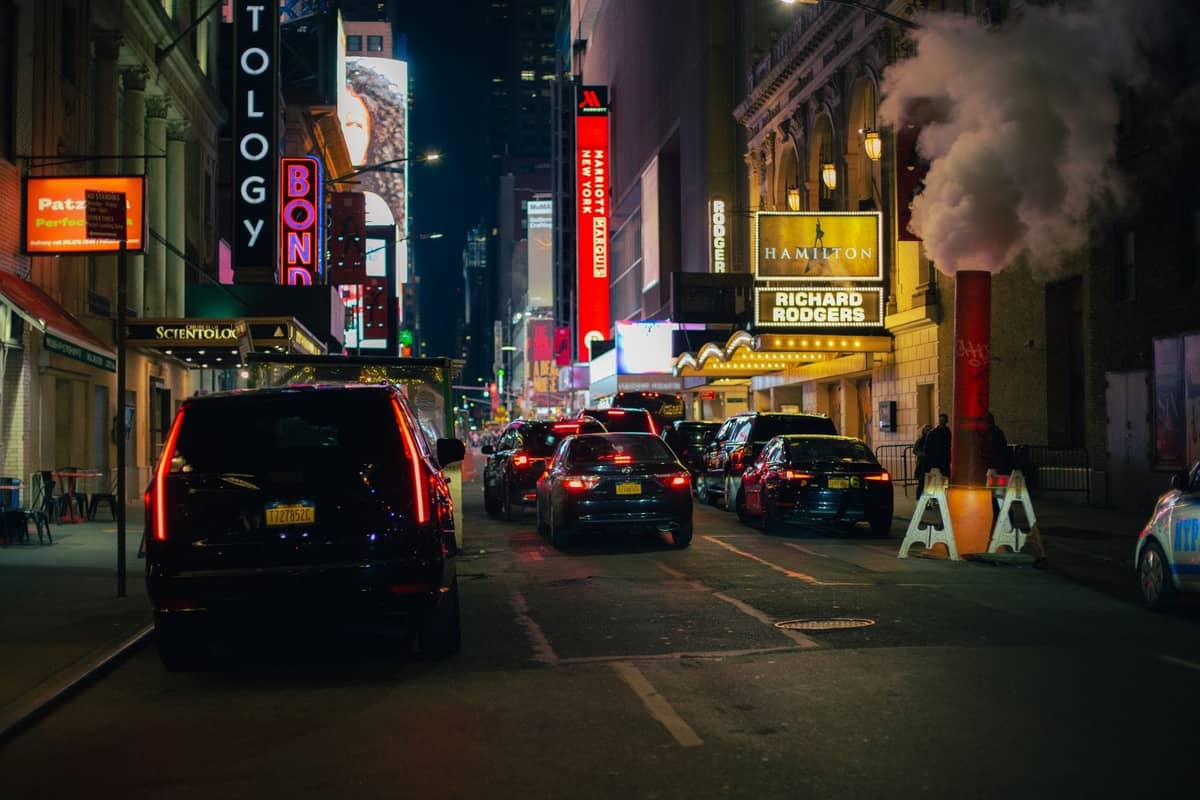
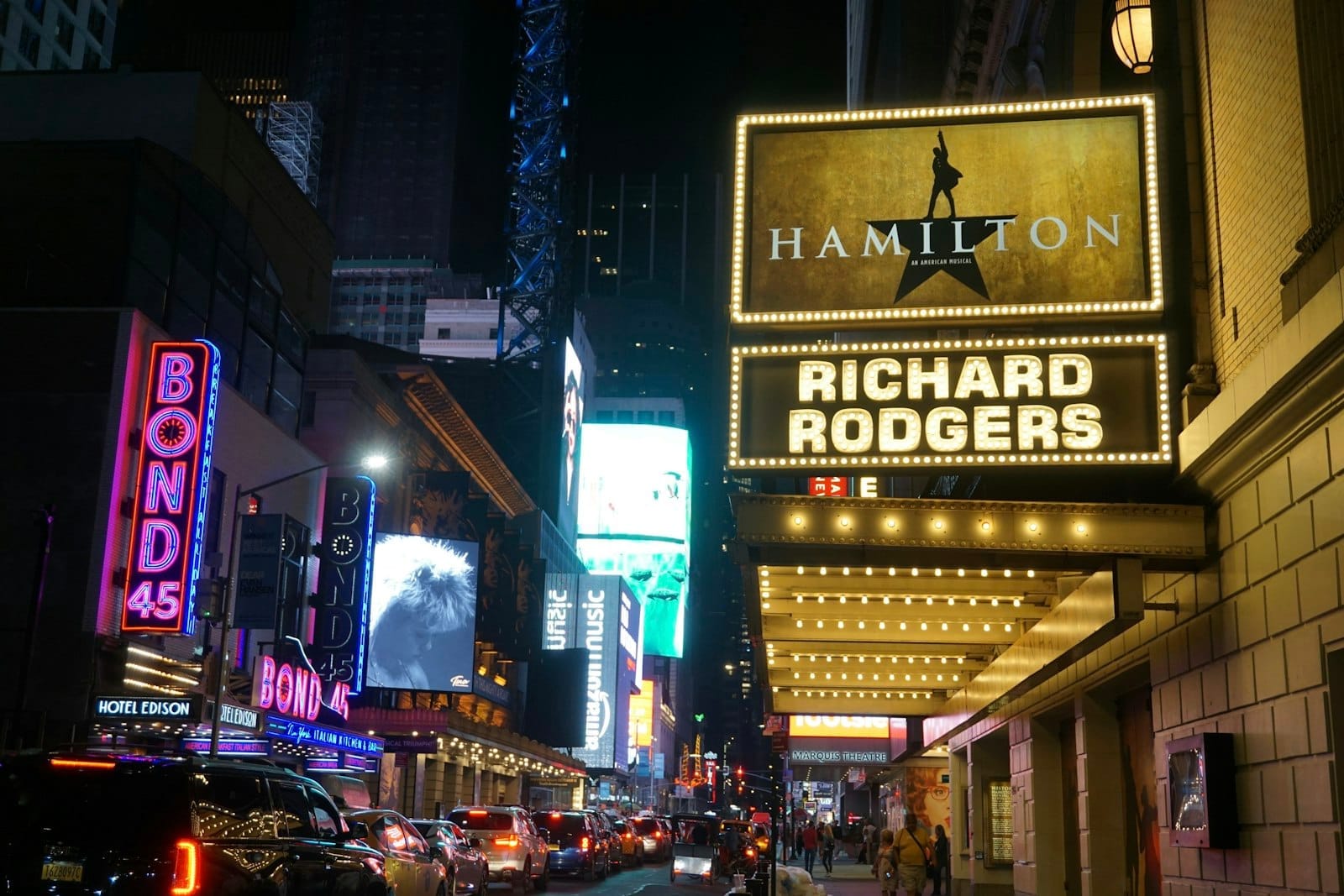
Broadway refers specifically to 41 professional theaters in Manhattan with 500 or more seats, most of them concentrated in the Theater District between West 41st and West 54th Streets, near Times Square. It is not a style of show or a quality label applied to any large theater in NYC. Off-Broadway and Off-Off-Broadway are separate categories with their own pricing, venue sizes, and ticketing ecosystems.
In a typical month, around 20 to 25 productions run simultaneously. The lineup always includes a range of genres: long-running musicals, new dramatic plays, limited-run revivals, and recent Tony Award winners. As a recent example, more than 30 productions have often been active at the same time in a typical month. The idea that only classic long-runners like The Lion King fill Broadway's roster is a persistent misconception — new productions open and close throughout the year.
ℹ️ Good to know
Broadway commonly operates on a weekly schedule of 8 performances per production: typically Tuesday through Sunday, with matinees on Wednesday and Saturday (or sometimes Thursday and Sunday). Monday is the traditional dark day for most shows.
How Much Broadway Tickets Actually Cost
Ticket pricing on Broadway is dynamic, meaning prices shift based on demand, seat location, day of the week, and how close you are to the performance date. As a general benchmark, standard orchestra and mezzanine seats for most shows run between $75 and $175 at face value. Premium seats, typically front-row orchestra or center locations, can exceed $300 to $500 for high-demand shows. The very cheapest seats in the house — rear orchestra, partial-view, or upper balcony — often start closer to $50 to $75.
- Standard tickets Orchestra and mezzanine seats typically range from $75–$175 depending on the show and date. Weekend performances and holidays cost more.
- Premium tickets Front-row and best-location seats for popular shows often run $250–$500+. These are set by producers, not scalpers.
- Lottery and rush tickets Many shows offer same-day digital lotteries or in-person rush tickets for $30–$50 per seat. Rules and availability vary by production.
- Standing room only (SRO) Some shows release standing room tickets on the day of performance when the house sells out, often at reduced prices.
- NYC Broadway Week A city-run promotion offering 2-for-1 tickets across participating shows, typically running twice a year in January and late summer.
⚠️ What to skip
Avoid third-party resale sites like StubHub or Vivid Seats unless you have no other option. Prices are significantly marked up, and some listings are not legitimate. Always check the official theater box office or authorized platforms first.
Where to Buy Tickets: Authorized Platforms and the Box Office
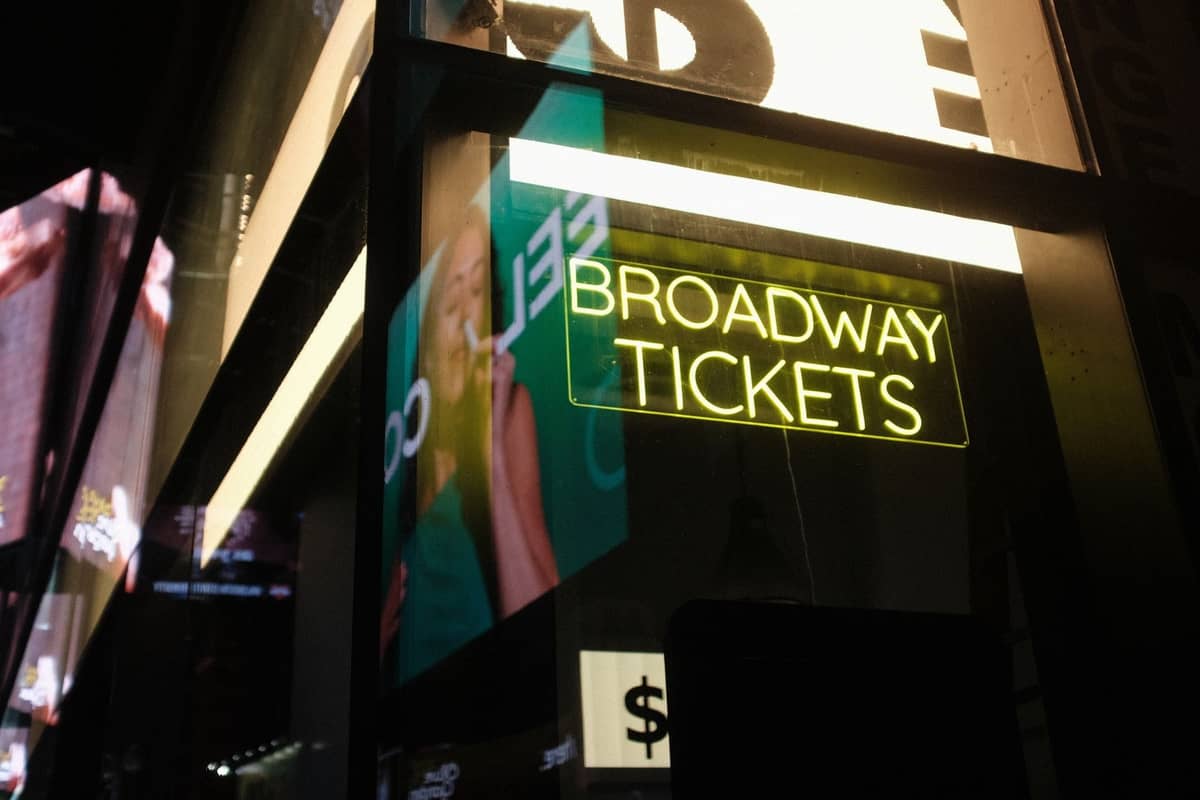
The single most reliable way to buy Broadway tickets is through the official theater box office. You pay face value (though some theaters may still charge minimal fees), and can ask staff directly about seat locations. Box offices are generally open in the afternoon on performance days and a few hours before curtain. For advance bookings, the main authorized digital platforms are Ticketmaster, Telecharge, and the individual show's own website. These authorized sellers generally offer standard face-value tickets plus a service fee, which commonly runs roughly $10 to $25 per ticket, though it can vary by show and vendor.
SeatGeek lists Broadway tickets from multiple sources and includes a 'Deal Score' feature that helps you identify relative value across seat sections and dates. It is useful for comparing options quickly, though prices still reflect market rates. For show information, casting details, and critical coverage, Playbill remains the authoritative trade publication and links out to official ticketing for each production.
✨ Pro tip
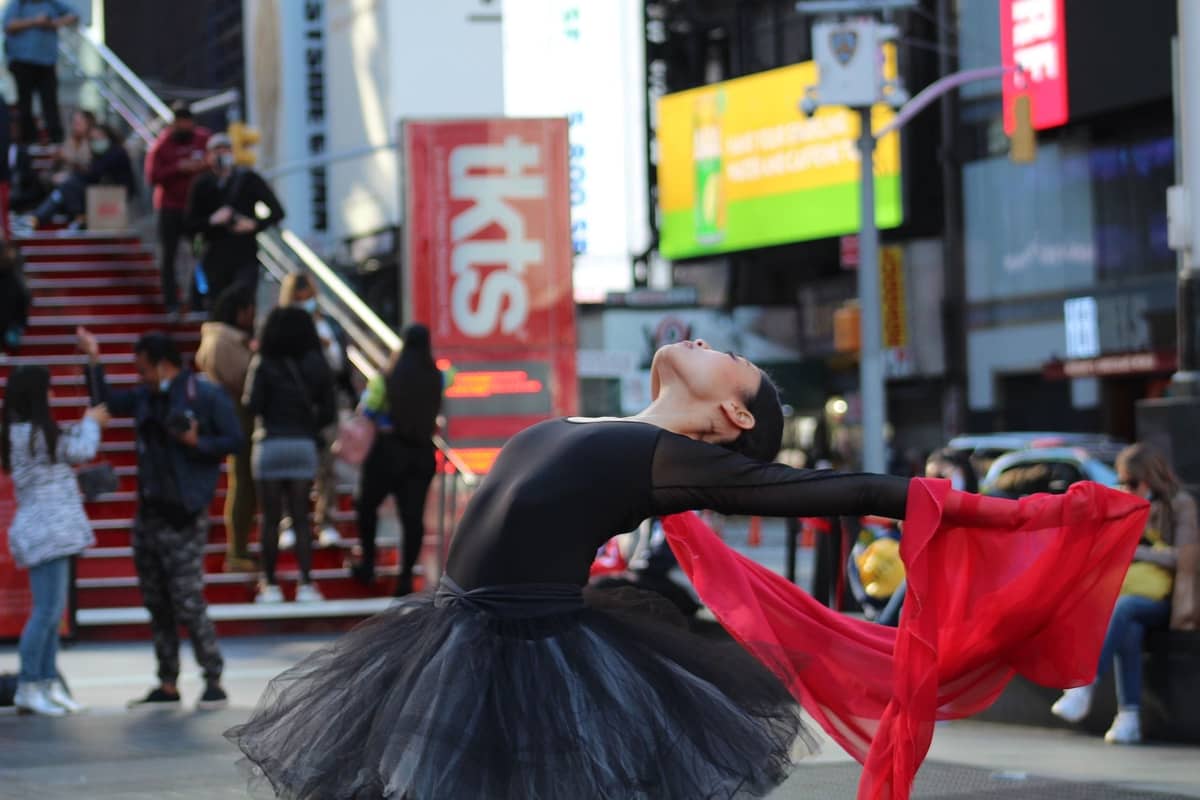
The TKTS booth in Times Square (and at other NYC locations) sells discounted same-day and, in some cases, next-day matinee tickets for many shows at 20–50% off face value. The Times Square booth currently opens at 3pm for most evening performances and 11am for matinees (hours may vary by season and day). Lines can be long on weekends — arrive early or use the TKTS app to check availability before you queue.
Getting the Best Deal: Discounts, Lotteries, and Broadway Week
NYC Broadway Week is the most structured discount opportunity available to visitors. The program, organized by NYC Tourism + Conventions, offers 2-for-1 ticket pricing across a wide selection of participating shows. It runs twice annually, typically in late January through mid-February and again in late August through early September. For the 2026 winter edition, 2-for-1 tickets were valid for performances January 20 through February 12, 2026, with booking opening January 7. Check nyctourism.com for exact dates each year, as they are announced a few weeks before the booking window opens.
Show lotteries have become the standard entry point for budget-conscious theatergoers. Most major productions now run digital lotteries through their own websites or apps like TodayTix, with results announced 2 to 3 hours before showtime. Tickets through these programs typically run $30 to $50 per seat. The odds vary significantly by show — a hot new musical in its first month will have far more entrants than a show in its fifth year of run. Applying to multiple shows on the same day gives you the best statistical chance of winning.
- Apply to show lotteries the morning of your target date through each show's official site or TodayTix
- Visit the TKTS booth for same-day discounts without a lottery — good for flexible visitors who don't mind choosing on the day
- Check Broadway.com and individual show sites for 'digital rush' offers, which function like lotteries but often open a few hours after regular lottery draws
- Consider Tuesday and Wednesday evening performances for lower demand pricing compared to Friday and Saturday nights
- Book well in advance for Tony Award-nominated or newly-opened shows — prices rise sharply as demand increases after nominations are announced each spring
Choosing the Right Show and Seats
Choosing a show depends on your priorities. If you want spectacle and production value, long-running musicals deliver that reliably. If you are interested in new dramatic work or cutting-edge staging, check what has recently opened or is in limited run. Tony Award nominations, announced each spring, are a reliable quality signal. For a broader look at what the city's theater scene offers beyond the main stage, the performing arts venues across the city cover everything from chamber music to experimental theater.
On seating: the front orchestra is immersive but not always the best value. For musicals with elaborate staging and choreography, the rear orchestra or front mezzanine often provides a more complete view of the stage picture. For intimate plays with subtle performances, closer is better. Partial-view seats are discounted but can significantly affect the experience — check seat review sites like BroadwayWorld's seating charts before purchasing any seat labeled 'restricted view.'
💡 Local tip
If this is your first Broadway show, stick to a well-reviewed musical rather than a play. Musicals tend to reward first-time theatergoers more immediately — the production values, songs, and energy of a live performance translate even without prior familiarity with the source material.
Practical Logistics: Getting There, Arriving, and What to Expect

Every Broadway theater sits in or immediately around the Theater District in Midtown Manhattan. The nearest subway stations are Times Square–42 Street (served by 1, 2, 3, 7, N, Q, R, W lines) and 42 Street–Port Authority Bus Terminal (served by A, C, E) and 49th Street (N, R, W). Walking from either station puts you within five minutes of most theaters. For more detail on getting around the city, the NYC transit guide covers subway strategy in depth. Do not drive — parking near Times Square is expensive and scarce.
Arrive at least 20 to 30 minutes before curtain. Late arrivals are typically held in the lobby until the first suitable scene break, which for some productions can mean waiting 20 to 45 minutes. Will-call pickup (collecting tickets at the box office under your name) can take time if there is a queue, so printing or downloading your tickets in advance is worth the extra step. Phones must be silenced and kept away during the performance — this is enforced actively in most theaters, and some productions have specific policies against any device use.
Dress code on Broadway is relaxed by most standards. Smart casual is appropriate and common; jeans and clean sneakers are fine. You will see everything from formal eveningwear to T-shirts in the same row. Tipping is not expected for theater staff, though coat check attendants and bartenders follow the standard NYC tipping customs of 18 to 20 percent. For a full night out in the Theater District, pair the show with dinner beforehand in Midtown or a post-show drink in Hell's Kitchen, which sits immediately west of the Theater District and has a dense concentration of pre- and post-theater bars and restaurants.
FAQ
How far in advance should I book Broadway tickets?
For flexible visitors, 2 to 4 weeks in advance is plenty for most shows. For newly-opened productions or shows receiving award buzz, book as early as possible — prices and availability tighten quickly. If you are visiting during peak periods like the holiday season or spring Tony season, book at least 6 to 8 weeks out for the best seat selection.
What is the cheapest way to see a Broadway show?
The cheapest reliable options are show lotteries (typically $30–$50 per ticket, entered online the morning of the performance), the TKTS discount booth in Times Square (20–50% off, same-day), and NYC Broadway Week (2-for-1 pricing, held twice a year). Standing room tickets are also available for some sold-out shows at reduced prices on the day.
Are there Broadway shows suitable for children?
Yes. Long-running family musicals like The Lion King are specifically designed for younger audiences. Many shows list recommended age ranges on their official pages. Check each production's website for age guidance — some dramatic plays and certain adult-themed musicals are not appropriate for children, and some productions actively discourage attendees under a certain age.
Is the TKTS booth in Times Square reliable?
Yes — TKTS is operated by the nonprofit organization Theatre Development Fund and is a fully legitimate discount ticketing service. Discounts range from 20% to 50% off face value. The trade-off is that selection varies daily and you cannot know exactly what is available until the booth opens. Use the TKTS app to preview the day's offerings before heading over.
What is the difference between Broadway, Off-Broadway, and Off-Off-Broadway?
The distinction is about venue size and union contracts, not quality. Broadway theaters have 500+ seats. Off-Broadway venues seat 100 to 499. Off-Off-Broadway venues seat under 100. Some of New York's most acclaimed and innovative theater happens Off-Broadway, often at lower ticket prices. If you want more adventurous or experimental work, or simply a more intimate experience, exploring Off-Broadway is worthwhile.