Getting Around New York City: The Complete Transport Guide
New York City has one of the most comprehensive transit networks in the world, but navigating it takes some know-how. This guide covers the subway, buses, ferries, Citi Bike, taxis, ride-hailing, and airport transfers, with current fares, practical tips, and straightforward guidance on what to skip.
Plan and book this trip
Tools from our partner Travelpayouts help you compare flights and hotels. If you book through them, we may earn a commission at no extra cost to you.
Flights
Hotels map
TL;DR
- The NYC subway runs 24 hours a day, 7 days a week, and is almost always the fastest way to get around. The base fare is $3.00.
- Pay with OMNY (tap your contactless card or phone) for automatic free transfers and weekly fare capping after 12 rides.
- You do not need a car in NYC. Around 54% of households are car-free. See our neighborhoods guide to plan your base wisely.
- Three major airports serve the city: JFK and LaGuardia in Queens, and Newark (EWR) in New Jersey. Each has different transit options.
- The Staten Island Ferry is completely free and offers great views of Lower Manhattan and the Statue of Liberty.
The NYC Subway: Your Default Mode of Transport
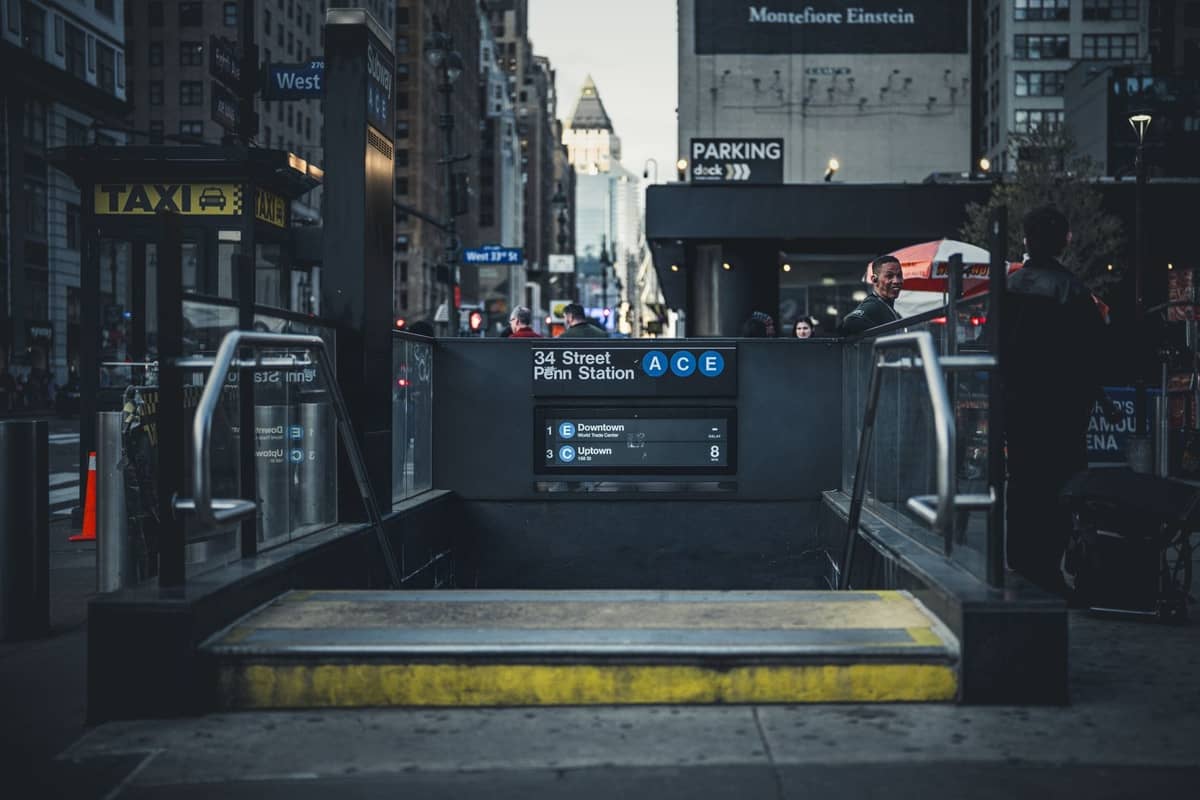
Getting around New York City starts and ends with the subway for most trips. The Metropolitan Transportation Authority (MTA) operates one of the world's largest rapid transit networks, with 472 stations spread across Manhattan, Brooklyn, Queens, and the Bronx. Staten Island has its own separate railway. The system runs around the clock, every day of the year, which is unusual among major world cities.
The standard fare is $3.00 per ride, whether you're going one stop or crossing three boroughs. Pay using OMNY (the contactless tap system that accepts credit cards, debit cards, Apple Pay, Google Pay, and smartwatches) or an existing MetroCard if you still have one (new MetroCard sales ended January 2026). OMNY is the smarter choice for most visitors: it automatically gives you free transfers within 2 hours between subway and local bus, and once you take 12 paid rides in a 7-day period using the same payment method, every additional ride in that period is free. That weekly cap is $35.00 maximum (12 paid rides), replacing the old 7-day unlimited MetroCard.
💡 Local tip
You do not need to sign up or download anything to use OMNY. Just tap your contactless credit or debit card directly at the turnstile. The fare cap applies automatically as long as you use the same card consistently during each 7‑day period that begins with your first tap.
Train frequency varies significantly by time of day. On major Manhattan lines like the 4/5/6, A/C/E, and N/Q/R/W, trains are typically scheduled every few minutes during peak hours (roughly 7-9am and 5-7pm on weekdays). Overnight, between about midnight and 5am, that can stretch to 15-20 minutes or more. The subway still runs, but budget extra time if you're traveling late. Check the MTA app or website for real-time service status, especially during extreme weather when delays are common.
⚠️ What to skip
Subway stations in summer can be brutally hot, especially underground platforms in Manhattan. If you're visiting July or August and waiting more than a few minutes for a train, it's not uncommon to experience temperatures well above 90°F on the platform. This is not a reason to avoid the subway, but it's worth knowing before you arrive in a dress shirt.
Buses, Ferries, and Citi Bike
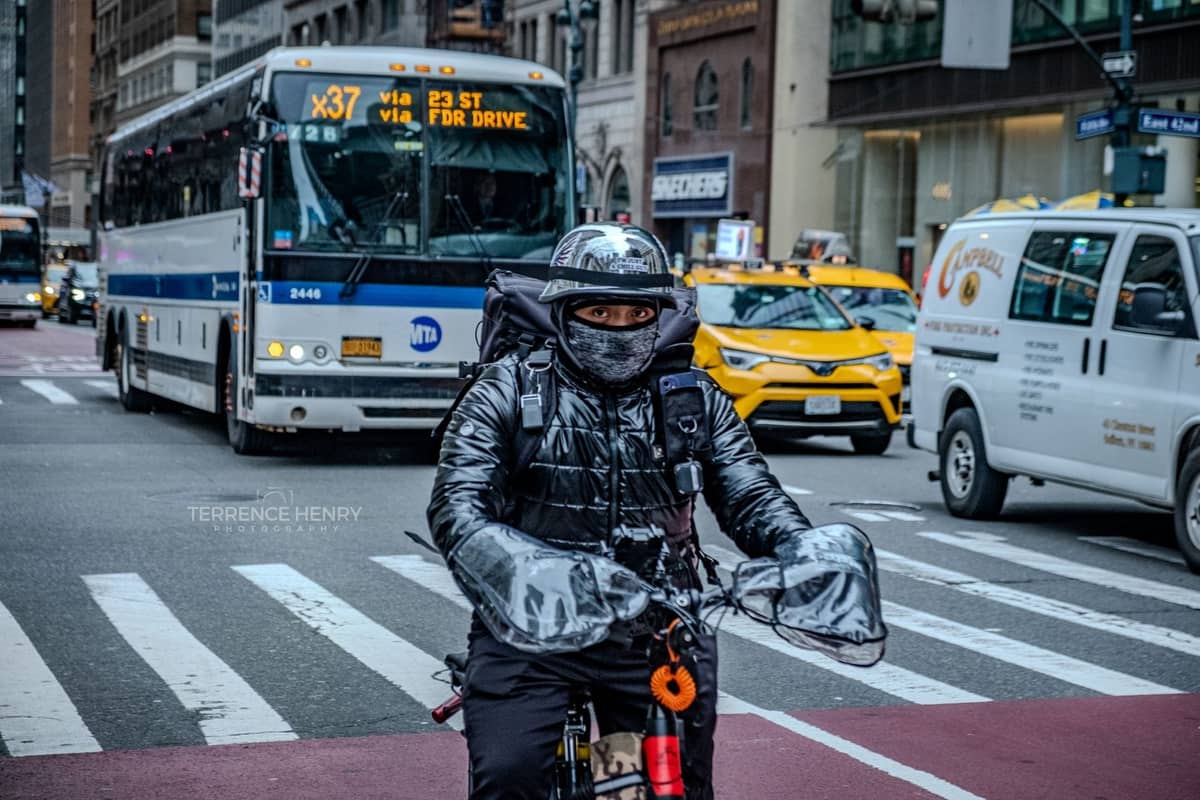
MTA buses cover all five boroughs, including many neighborhoods that subway lines don't reach directly. The same $3.00 fare applies, and the free 2-hour transfer between subway and bus (via OMNY or MetroCard) makes buses a useful extension of your subway trip rather than a separate system. Local buses can be slow in heavy traffic, particularly in Midtown Manhattan. Select Bus Service (SBS) routes are faster because you pay before boarding at a kiosk and can use any door. Look for the SBS designation on the route map.
NYC Ferry operates routes along the East River, to the Rockaways, Governors Island, and other points. The standard fare is $4.50 one-way, with premium pricing on certain routes. It's a practical option for reaching areas like Williamsburg or DUMBO from Manhattan without dealing with transfers, and the harbor views are a bonus. The Staten Island Ferry, operated separately by the NYC DOT, runs between Whitehall Street in Lower Manhattan and St. George Terminal on Staten Island and is completely free, operating 24 hours a day.
Citi Bike, the city's bike-share system, has expanded significantly and now covers most of Manhattan, large parts of Brooklyn and Queens, The Bronx, and Jersey City. A single classic-bike ride costs $4.95 for up to 30 minutes. Day passes and annual memberships offer better value for frequent riders. E-bikes (electric-assist) are available at many docks for an additional per-minute fee. Citi Bike is particularly useful for short trips in Manhattan below 110th Street or along the Brooklyn waterfront, where distances between subway stations can feel longer than expected.
- NYC Subway $3.00/ride. 24/7 service across Manhattan, Brooklyn, Queens, and The Bronx. Fastest option for most cross-city trips.
- MTA Buses $3.00/ride. Free transfer from subway within 2 hours. Best for neighborhoods without nearby subway stops.
- NYC Ferry $4.00 standard fare. Scenic East River and harbor routes. Good for Williamsburg, DUMBO, and Governors Island.
- Staten Island Ferry Free. Runs 24/7 between Whitehall St (Manhattan) and St. George (Staten Island). Great harbor views.
- Citi Bike From $4.79 per 30-minute ride. E-bikes available. Best for short trips in Manhattan and Brooklyn.
Taxis, Ubers, and When to Use Them
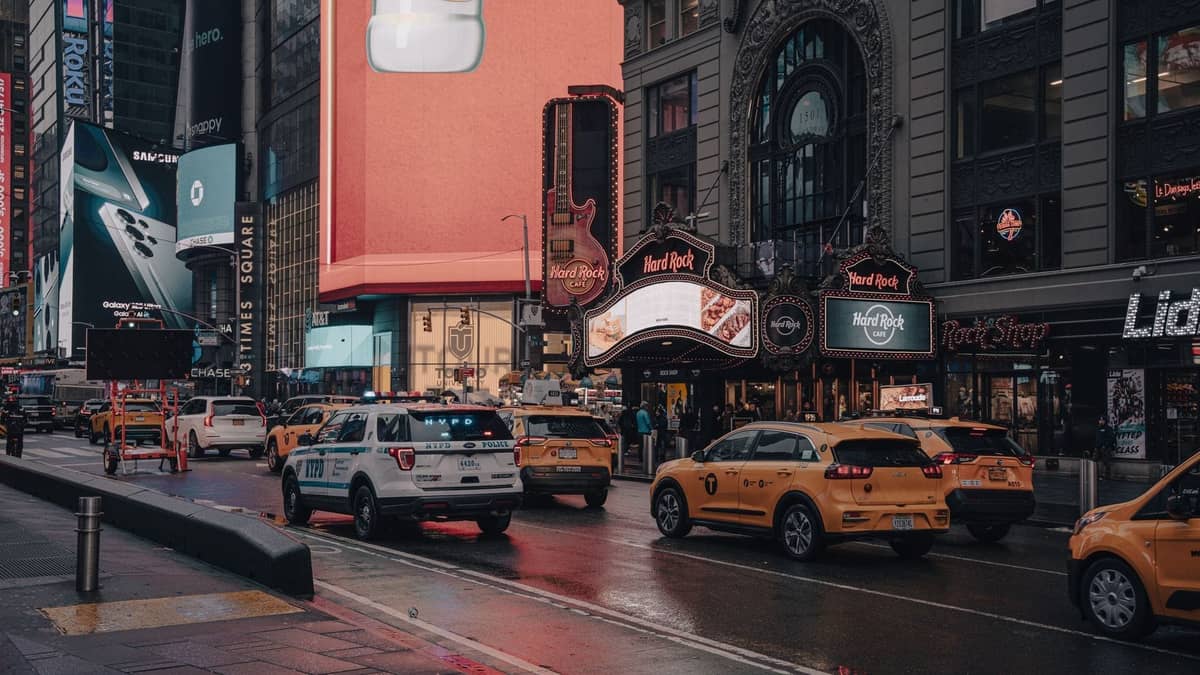
Yellow cabs are metered and can be hailed anywhere on the street in Manhattan (and in many parts of the other boroughs). The meter starts at $3.50 and increases by distance and time. Tolls, a $1.00 overnight surcharge (8pm-6am), and a New York State surcharge are added automatically. Tipping is customary and expected: 18-20% is standard. Borough taxis (green cabs) operate in the outer boroughs and upper Manhattan above 96th Street on the East Side and 110th Street on the West Side, and cannot be hailed in the yellow cab zones.
Uber and Lyft operate across all five boroughs under NYC Taxi & Limousine Commission regulations. Both are reliable and easy to use, though surge pricing during peak hours, bad weather, and events can make them significantly more expensive than a yellow cab. For airport trips or late-night travel when carrying luggage, ride-hailing is often worth the premium. In heavy traffic, however, neither taxis nor ride-hailing are faster than the subway. If you're trying to cross Midtown Manhattan between 8am and 7pm on a weekday, the subway wins every time.
✨ Pro tip
Avoid ride-hailing apps immediately after large events at Madison Square Garden or Times Square on New Year's Eve. Surge pricing can push fares to 3-4x normal rates, and pickup locations are often chaotic. The subway is almost always the better option after concerts and sporting events, even if it's crowded.
Getting from the Airports to the City
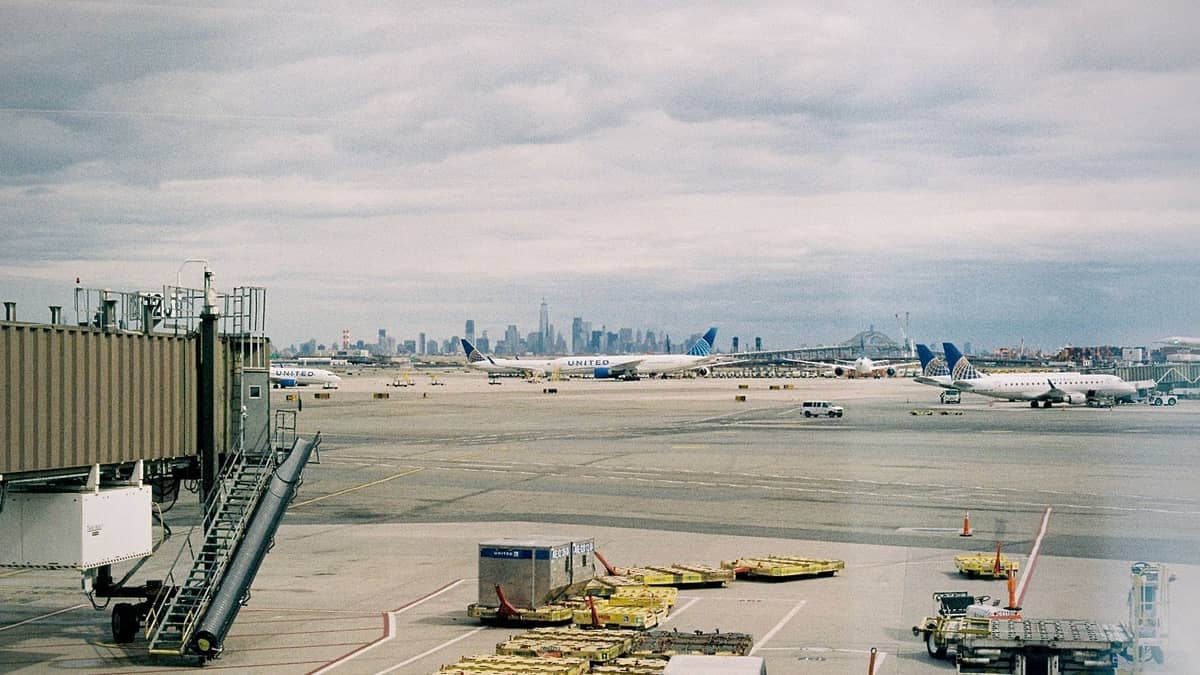
New York City is served by three major airports. JFK International and LaGuardia are both in Queens; Newark Liberty (EWR) is across the Hudson in New Jersey. Each has different transit options, and the right choice depends on your destination, how much luggage you have, and the time of day. For a full airport breakdown, see our NYC airport guide.
- From JFK AirTrain JFK ($8.50) connects all terminals to the subway (Howard Beach or Jamaica stations) and LIRR at Jamaica. Combined with a subway fare, this is the most affordable public transit option. Yellow cab flat rate to Manhattan exists but verify the current rate before travel as it changes. Ride-hailing is widely used but can be expensive with tolls and traffic.
- From LaGuardia (LGA) No direct rail connection. MTA buses serve the airport and connect to the subway. The Q70-SBS bus (LaGuardia Link) runs express to Jackson Heights-Roosevelt Avenue and Woodside subway stations. Taxis and ride-hailing are common, though traffic on the BQE and Grand Central Parkway can be severe during peak hours.
- From Newark (EWR) AirTrain Newark connects terminals to Newark Liberty International Airport station, where NJ Transit trains and Amtrak run to New York Penn Station in around 30 minutes. This is generally faster than driving in traffic. Check current NJ Transit fares, as the AirTrain plus train combination pricing is separate from MTA fares.
ℹ️ Good to know
Transit fares and airport flat rates change periodically. Always verify current pricing on the official MTA website, the NYC Ferry site, or the airport's ground transportation page before you travel.
Walking and Navigating by Neighborhood
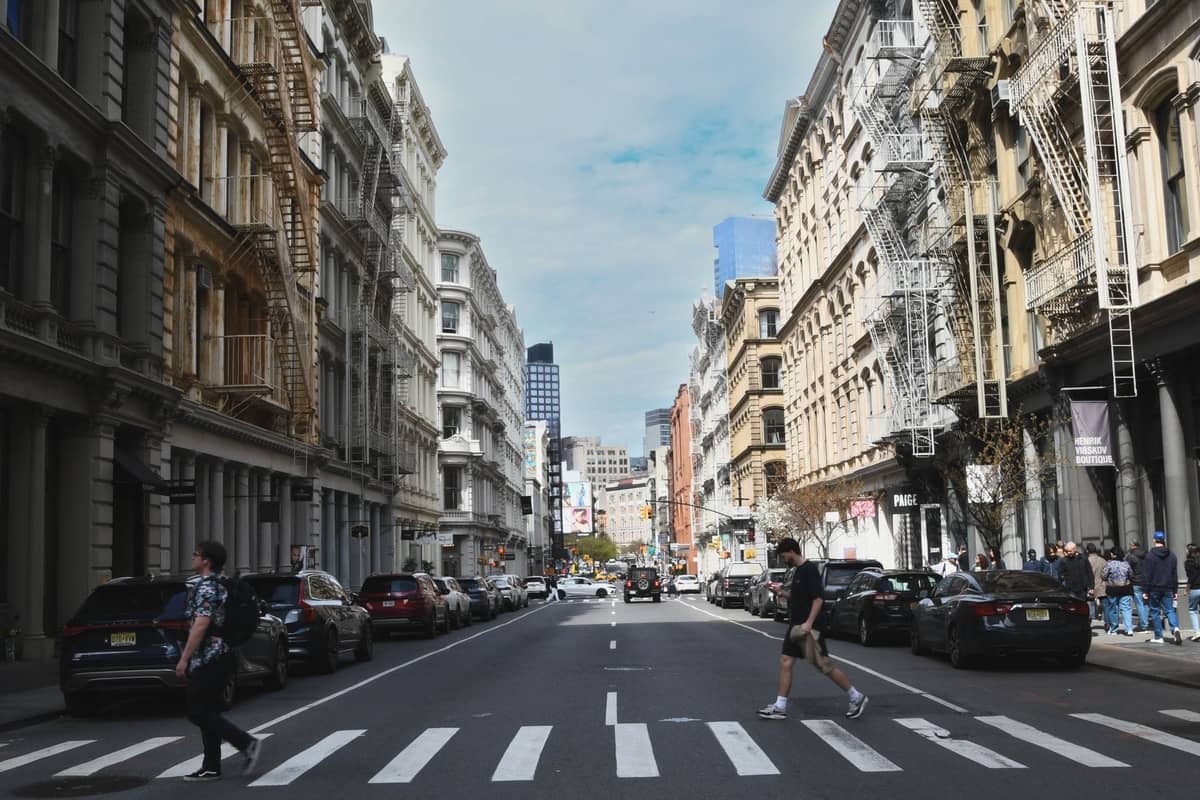
New York City is far more walkable than most American cities, and in Manhattan especially, walking is often the best option for short distances. The grid system in Midtown and Uptown makes navigation straightforward: avenues run north-south, streets run east-west, and numbers increase as you head uptown (north). Below 14th Street, the grid breaks down into older, irregular street patterns through neighborhoods like Greenwich Village and Lower Manhattan, so a maps app is genuinely useful here.
As a rough guide, Manhattan blocks are not uniform. The distance between most numbered streets (north-south) is about 1/20 of a mile, meaning 20 blocks equal roughly one mile. Avenues (north-south) are spaced much farther apart, with each block typically 1/4 to 1/5 of a mile. Budget your walking time accordingly: 10 blocks uptown or downtown is a 10-minute walk at a normal pace, but 10 blocks crosstown can take nearly 30 minutes. Subway transfers are often faster for crosstown trips in Midtown.
The outer boroughs vary considerably in walkability. Williamsburg and DUMBO are compact and easy to explore on foot. Flushing and parts of Queens are more spread out. The Bronx and Staten Island require more intentional use of buses and trains to cover distances efficiently.
Practical Tips for Navigating NYC Transit
A few habits separate experienced NYC transit users from frustrated tourists. First, always check the direction of the train before boarding. Many stations serve both uptown and downtown trains on the same platform, and it is easy to board in the wrong direction. The signage is generally clear, but pay attention especially in older stations where digital displays are limited.
Download the MTA app or use Google Maps for real-time arrival information and service alerts. The MTA app shows live train positions on most lines. If you're planning a trip to Central Park or crossing from the East Side to the West Side, the crosstown buses (M86 SBS, M96, M106) can save significant time compared to going downtown and back up.
- Use OMNY (contactless card or phone) rather than buying a MetroCard. Fewer steps, same fare, automatic transfers and weekly capping.
- Check subway service status before heading underground, especially on weekends when scheduled maintenance causes frequent route changes and diversions.
- Stand to the right on escalators if you're not walking up. This is an unwritten but widely observed rule, especially in busier stations.
- Avoid peak rush hour (7-9am, 5-7pm weekdays) on the 4/5/6 and L trains if you have luggage. Platforms and cars are genuinely packed.
- The first and last cars of the train are often less crowded. Move toward the ends of the platform to board a less full car.
- Tap OMNY only once per trip. Turnstiles occasionally fail to register and you may be double-charged. If this happens, dispute the charge at a subway booth or via the MTA website.
FAQ
Is the New York City subway safe for tourists?
The subway is used by millions of people daily and is generally safe, including at night. Normal city precautions apply: be aware of your surroundings, keep phones and valuables out of view in crowded cars, and trust busy platforms over empty ones during late-night hours. The MTA has increased security presence in recent years. For more context, see NYC safety information from the official NYC tourism site.
What is the cheapest way to get from JFK airport to Manhattan?
Taking the AirTrain JFK to the Jamaica station and then the E, J, or LIRR train into Manhattan is the most affordable option. The AirTrain costs $9.00 and the subway adds $3.00, for a total of around $12-13. The LIRR from Jamaica to Penn Station is faster but costs more. Always verify current fares on the MTA website before traveling.
Do I need a MetroCard or can I just use my phone?
You can pay for the subway and most MTA buses using OMNY, which accepts any contactless credit or debit card, Apple Pay, Google Pay, or compatible smartwatch. No app download or sign-up required. Existing MetroCards still work at all stations, but new MetroCard sales ended in January 2026 — OMNY is the standard option and includes automatic fare capping.
How do I get around NYC without the subway?
Buses, Citi Bike, NYC Ferry, taxis, and ride-hailing (Uber, Lyft) all offer viable alternatives depending on your destination. For short distances in Manhattan, walking is often the fastest option. The Staten Island Ferry is free and covers that borough's main connection to Manhattan. For longer outer borough trips without a nearby subway stop, buses or ride-hailing are the practical choice.
Is it worth renting a car in New York City?
For most visitors, no. Parking in Manhattan typically costs $30-70 per day in a garage, traffic is consistently heavy, and the public transit network covers nearly everywhere you'd want to go. Renting a car makes more sense if you plan to take day trips to areas outside the city, such as the Hudson Valley or Long Island. If you do rent, do it for those specific days rather than keeping a car for your entire stay.