Central Park: How to Make the Most of Manhattan's Great Lawn
Central Park is a 843-acre public park stretching from 59th to 110th Street in Manhattan. Entry is free, the park is open daily until 1:00 a.m., and it contains dozens of distinct landscapes, landmarks, and activities within walking distance of each other.
Quick Facts
- Location
- Fifth Avenue to Central Park West, 59th St to 110th St, Manhattan
- Getting There
- Multiple subway lines serve the park perimeter; A/C/B/D/1 trains stop at 59th St–Columbus Circle (south end)
- Time Needed
- 2–6 hours depending on how much ground you want to cover; a full north-to-south walk takes about 90 minutes
- Cost
- Free to enter. Separate fees apply for the Central Park Zoo, certain guided tours, and seasonal rentals
- Best for
- Walkers, picnickers, families, photographers, and anyone needing a break from Midtown
- Official website
- www.centralparknyc.org
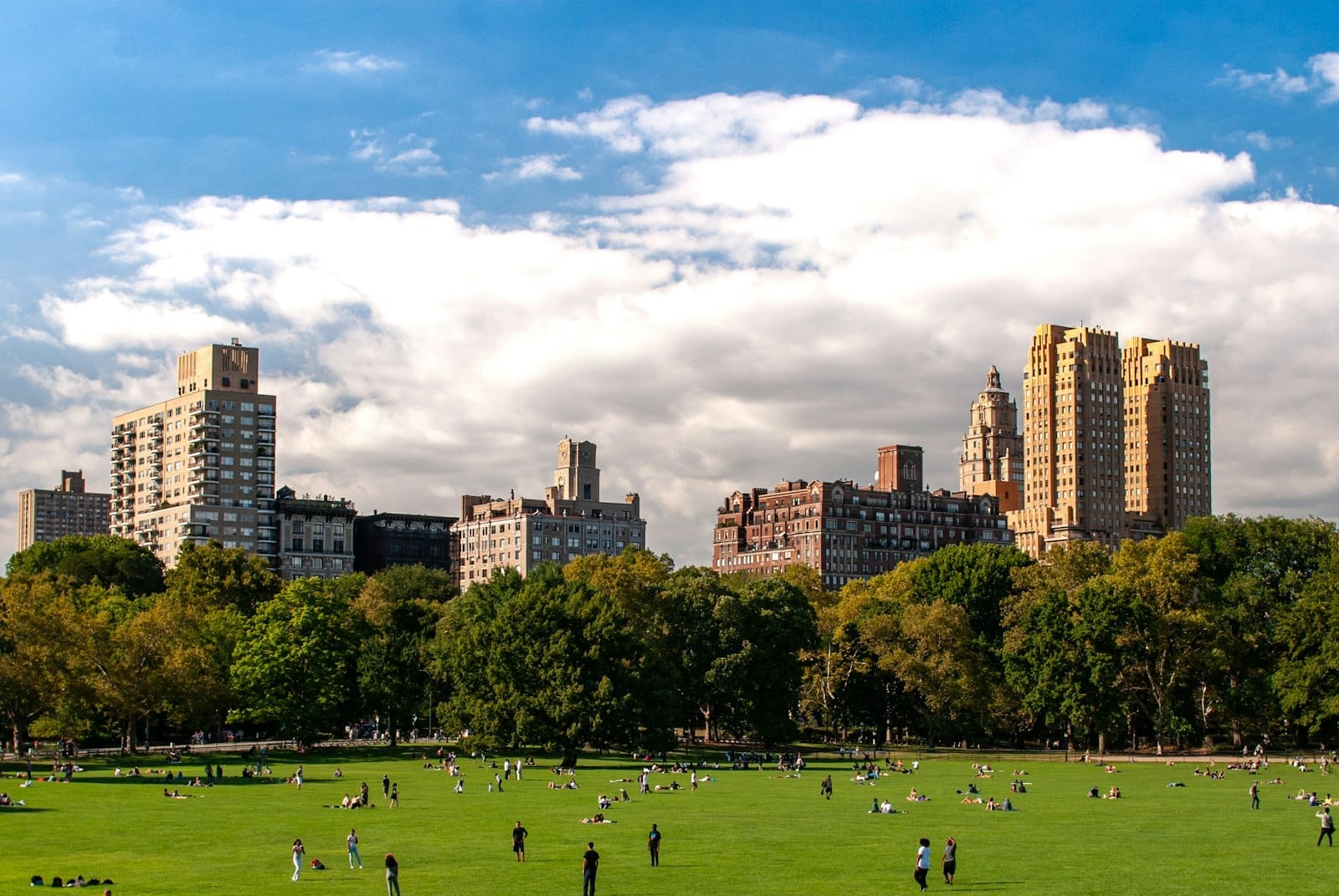
What Central Park Actually Is
Central Park is a 843-acre urban public park occupying a rectangular strip of Manhattan between 59th and 110th Streets. It was created between 1858 and 1876, with land acquisition beginning in 1857, making it one of the earliest major landscaped public parks in the United States. The design by Frederick Law Olmsted and Calvert Vaux transformed a largely rocky, swampy tract into a system of meadows, wooded paths, formal gardens, lakes, and open lawns that today sits surrounded entirely by some of the most expensive real estate on earth.
The park stretches about 2.5 miles north to south and 0.5 miles east to west. That sounds manageable until you start walking and realize how much variation exists within those boundaries. The southern third, from 59th to roughly 72nd Street, contains the most photographed landmarks and draws the densest crowds. The northern section, from 96th Street up to 110th, is quieter, less manicured in places, and used primarily by neighborhood residents rather than tourists.
💡 Local tip
If you enter at the southeast corner near the Plaza Hotel, you are at the tourist center of the park. To find open space and fewer people, walk north of 85th Street.
The Park at Different Times of Day
Early morning, roughly 6:00 to 8:30 a.m., is the best time to visit if you want the park to feel like it belongs to you. Joggers run the 6-mile loop road, cyclists pass in near-silence, and the light hitting the Reservoir or the Ramble canopy is soft and low. The Sheep Meadow and the Great Lawn are empty or nearly so. Bethesda Fountain has no one standing in front of it for the photograph. This window closes quickly.
By 10:00 a.m. on a clear weekend, the main paths from the south entrance fill with strollers, rental bikes, and tour groups following guides with umbrellas. Midday on a summer Saturday brings food cart smells, the faint sound of free concerts warming up near the Naumburg Bandshell, and long queues at the Central Park Boathouse. This is not unpleasant, but it is busy. If you are coming for serenity, adjust your expectations or your schedule.
Late afternoon, particularly in autumn when the foliage turns orange and gold, produces some of the most rewarding light for photography. The park begins to thin out around 5:00 p.m. on weekdays. By evening, the main paths remain lit and are used by joggers and dog walkers, but the park closes at 1:00 a.m., so late visits are possible though less common in remote areas.
Tickets & tours
Hand-picked options from our booking partner. Prices are indicative; availability and final rates are confirmed when you complete your booking.
Central Park Guided Bike Tour with Map
From 41 €Instant confirmationFree cancellationNYC: Official Grand Central Terminal Tour
From 30 €Instant confirmationFree cancellationCentral Park self-guided audio tour
From 15 €Instant confirmationPrivate Central Park walking tour
From 62 €Instant confirmationFree cancellation
Key Landmarks Worth Your Time
The most iconic single spot in the park is Bethesda Terrace and Fountain, sitting at the center of the park near 72nd Street. The terrace itself, built of sandstone with intricate carved panels, is worth examining up close even if you have seen it in every film set in New York City. The fountain's central figure, the Angel of the Waters, was created by sculptor Emma Stebbins and unveiled in 1873, making it one of the few public artworks in 19th-century New York commissioned from a woman.
Just north of Bethesda is the Ramble, a 36-acre woodland deliberately planted to mimic a wild forest and now one of the most significant urban bird-watching sites in the northeastern United States. During spring and fall migrations, birders arrive before dawn with binoculars. Even without a field guide, the density of birdsong on a May morning in the Ramble is noticeable. Further north, Belvedere Castle sits on the highest natural rock outcropping in the park, offering a clear sightline over Turtle Pond and the Great Lawn.
The area around 72nd Street on the west side contains Strawberry Fields, a 2.5-acre memorial to John Lennon located directly across from the Dakota building on Central Park West where he lived. The circular mosaic marked 'Imagine' draws a quiet, reverential crowd most days. It is a small space and can feel crowded; visit in the morning or on a weekday for a calmer experience.
How to Navigate the Park Without Getting Disoriented
The park uses a simple numbering system on its lampposts that most visitors miss entirely. Each lamppost has a four-digit number: the first two digits indicate the nearest cross street, and the last digit indicates whether you are on the east (even) or west (odd) side of the park. A post reading 7203 means you are near 72nd Street on the west side. This system is more reliable than phone GPS, which sometimes loses accuracy under the tree canopy.
The main Loop Road circuits the park and is closed to motor vehicle traffic at all times, making it practical for cycling or running. Rental bikes and pedicabs are available near the park's main south entrances. The transverse roads at 65th, 79th, 86th, and 97th Streets cut east-west through the park for vehicle traffic and are the only roads open to cars; they pass through tunnels so they are largely invisible from inside the park.
ℹ️ Good to know
The Central Park Conservancy offers free guided walking tours on select dates. Check centralparknyc.org for the current schedule before your visit, as programs vary by season.
Seasonal Conditions and Weather
Spring (April through early June) and autumn (mid-September through October) are the most comfortable seasons for spending extended time in the park. Temperatures typically fall in the range of 12–18°C (mid-50s to mid-60s°F) in late spring, with lower humidity than summer. The cherry trees near the Conservatory Garden and around the Reservoir bloom in early to mid-April. For more on timing your visit around seasonal highlights, the best time to visit New York City guide covers this in detail.
Summer brings real heat and humidity. July and August afternoons in the park can feel oppressive, and the Sheep Meadow fills with sunbathers and picnickers early. Free SummerStage concerts and Shakespeare in the Park performances at the Delacorte Theater are genuine draws in this season, but demand for Shakespeare tickets is intense: the free tickets are distributed by a lottery system through the TodayTix app and in person on the day of performance. Arrive early if you plan to queue in person.
Winter is genuinely underrated. The park is quieter, the bare tree lines reveal views of surrounding skyscrapers that the summer canopy hides, and Wollman Rink opens for ice skating from roughly October through April. Snow transforms the park dramatically, and the hours after a snowfall, before the paths are cleared, are among the most beautiful the park offers.
⚠️ What to skip
Rain significantly changes the experience. Unpaved paths and the Ramble become muddy quickly. Wear shoes you are comfortable getting wet if there is any chance of rain.
Honest Assessment: Is It Worth It?
For first-time visitors to New York City, yes, unquestionably. Central Park is a legitimate urban design achievement and offers a qualitatively different experience from anything in the surrounding city. The contrast between the skyline visible above the treeline and the quiet interior paths is something photographs do not convey accurately.
For travelers on a second or third trip, the park rewards specificity. Rather than a general walk, pick one objective: the Conservatory Garden on the east side at 105th Street (formal gardens, rarely crowded), the Harlem Meer at the northeast corner on a weekday morning, or a structured bird walk in the Ramble. The park's connection to the surrounding neighborhoods also makes it a natural anchor point. The Upper West Side and Upper East Side both border the park and contain excellent museums, restaurants, and residential streets worth exploring before or after your visit.
Who might not enjoy it: visitors who dislike unstructured time, find walking on uneven paths difficult, or are visiting during a July heat wave with no shade plan. The park also attracts a persistent population of pedicab drivers near the south entrances who quote prices verbally before confirming them in writing. Agree on the total fare before you board, not after.
Getting There
The park's southern boundary at 59th Street is served by the A, C, B, D, and 1 trains at Columbus Circle (59th Street–Columbus Circle station) on the west side, and the N, R, and W trains at Fifth Avenue–59th Street on the east side. The 72nd Street and 86th Street subway stations on both the B/C line (west side) and the 4/5/6 line (east side) provide mid-park entry points. Bus routes M10, M7, M4, and M79, among others, also run along the park perimeter.
For full transit context in the city, the getting around New York City guide covers subway navigation, fares, and tips for orientation. Verify current MTA fares before your visit as they are subject to change.
Insider Tips
- Use the lamppost numbering system to stay oriented: the first two digits are the nearest street number, and an odd final digit means you are on the west side. It works better than GPS under the tree canopy.
- The Conservatory Garden at Fifth Avenue and 105th Street is the park's only formal garden and one of its most photographed spaces in spring. Most visitors never make it this far north.
- Shakespeare in the Park tickets are free but go through an official lottery via the TodayTix app. Sign up in the app rather than queuing in person to improve your odds on high-demand shows.
- Wollman Rink on the southeast side offers ice skating in winter; the former Lasker Rink near 106th Street is currently closed for redevelopment. Verify current hours and prices directly with the operators before visiting.
- The park road loop is closed to cars on weekends and most weekday hours. Renting a bike is one of the most efficient ways to cover the full 6-mile loop in under an hour and see the park's variation from north to south.
Who Is Central Park For?
- Walkers and joggers who want a long route with changing scenery away from traffic
- Families with children looking for open lawns, a zoo, and a carousel in a single afternoon
- Photographers, especially in early morning or autumn foliage season
- Birders during spring and fall migration periods in the Ramble
- Visitors combining the park with museum visits on the Upper East Side or Upper West Side
Nearby Attractions
Other things to see while in Central Park:
- Belvedere Castle
Perched atop Vista Rock at the heart of Central Park, Belvedere Castle is a 19th-century Gothic-Romanesque folly offering some of the most rewarding panoramas in New York City — all free of charge. Designed by Calvert Vaux and completed in 1872, the castle now serves as a visitor center operated by the Central Park Conservancy, and remains one of the park's most photogenic and historically layered landmarks.
- Bethesda Terrace and Fountain
Bethesda Terrace and Fountain sits at the heart of Central Park, framing the iconic Angel of the Waters sculpture against the backdrop of the Lake. Free to visit any day of the week, it rewards those who arrive at the right hour with light, space, and genuine New York atmosphere.
- Central Park Zoo
One of the oldest zoos in the United States, the Central Park Zoo occupies about 6.5 acres near the southeast corner of Central Park. Small by design, it rewards visitors who take it slowly — especially families with young children and anyone wanting wildlife between museum stops.
- Strawberry Fields
Strawberry Fields is a 2.5-acre memorial landscape on the west side of Central Park, dedicated to John Lennon and anchored by the iconic 'Imagine' mosaic. Free to visit and open daily, it draws Beatles fans, quiet seekers, and curious travelers year-round.