Central Park Zoo: The Complete Visitor Guide
One of the oldest zoos in the United States, the Central Park Zoo occupies about 6.5 acres near the southeast corner of Central Park. Small by design, it rewards visitors who take it slowly — especially families with young children and anyone wanting wildlife between museum stops.
Quick Facts
- Location
- 64th Street & 5th Avenue, New York, NY 10065
- Getting There
- N/R/W to 5th Ave/59th St or 6 to 68th St/Hunter College; buses M1–M5, M66, Q32
- Time Needed
- 1 to 2 hours
- Cost
- Adults $22.95 | Seniors $18.95 | Children 3–12 $16.95 | Under 3 free with general admission pricing subject to change (verify before visiting)
- Best for
- Families with young children, short attention spans, wildlife lovers between sightseeing stops
- Official website
- centralparkzoo.com
What the Central Park Zoo Actually Is
The Central Park Zoo is a compact, accredited zoological park covering about 6.5 acres in the southeast corner of Central Park, one block west of Fifth Avenue along 64th Street. It is operated by the Wildlife Conservation Society, the same organization that runs the Bronx Zoo, the New York Aquarium, and several other WCS facilities in the city. First established on this site in 1864, it holds the distinction of being one of the oldest zoos in the United States — predating the formal zoo movement that would later produce larger, more theatrical institutions.
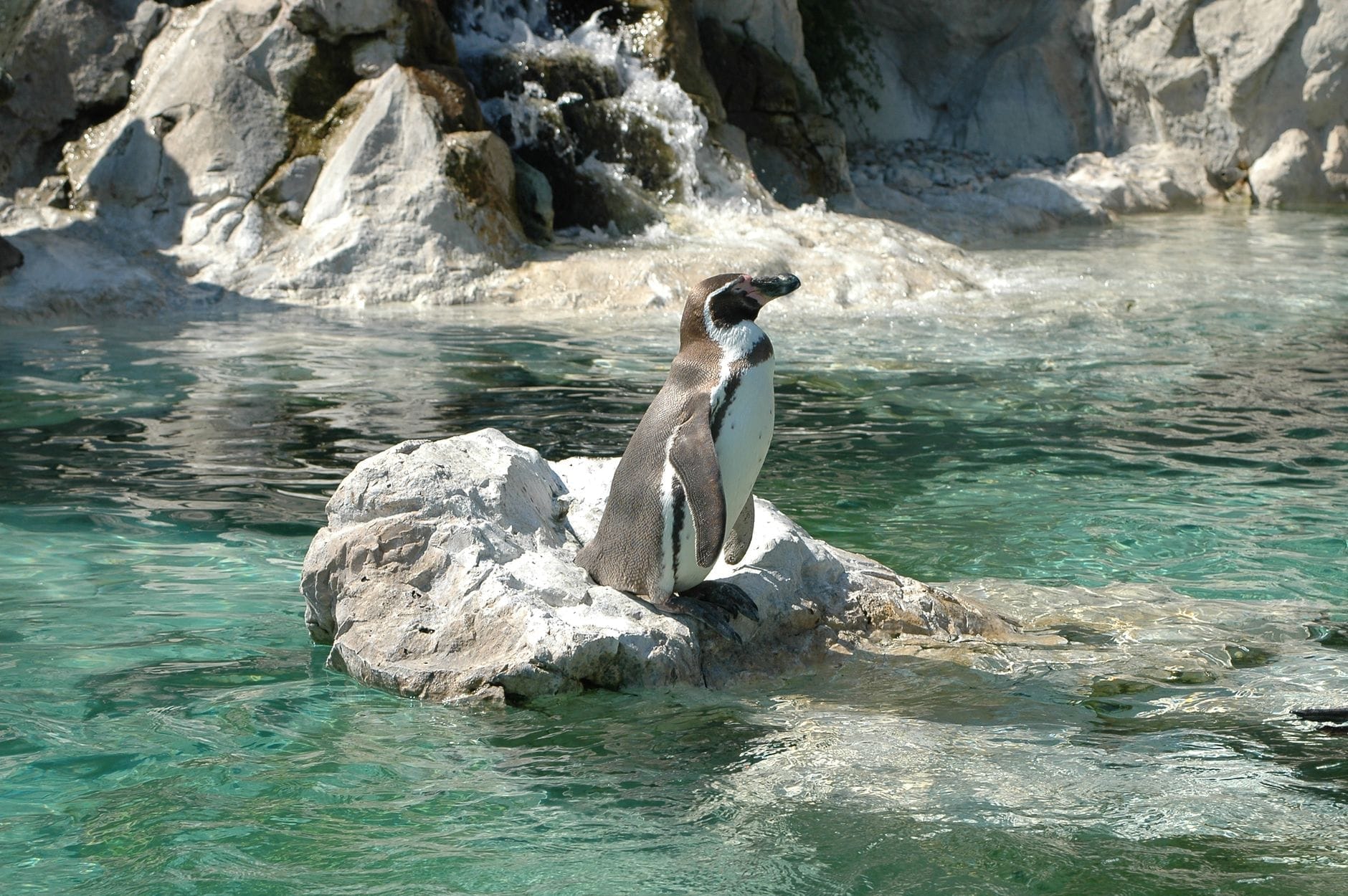
The word 'compact' is important. This is not a destination where you walk miles past enclosure after enclosure. The collection is deliberately focused: snow leopards, red pandas, sea lions, African penguins, a tropical zone full of small birds and reptiles, and a children's zoo section called the Tisch Children's Zoo just inside the 65th Street entrance. What the zoo lacks in scale it compensates for in density — you can stand close enough to a red panda to watch it nap in real time, something that simply is not possible in a sprawling facility.
💡 Local tip
Buy tickets online in advance at centralparkzoo.com. Walk-up lines at the ticket booth move slowly on weekends, and timed entry helps you skip the bottleneck near the 5th Avenue gate.
How the Experience Unfolds
Entering from the main gate on 64th Street and Fifth Avenue, visitors step into a landscaped courtyard framed by early 20th-century brick architecture. The central sea lion pool anchors this space physically and acoustically — sea lions bark on schedule during feedings, and the sound carries across the whole zoo. If you arrive just before a scheduled feeding, you will find benches around the pool filling up fast. The feeding itself lasts only about ten minutes but draws the largest single crowd of any moment in the zoo.
The zoo divides into three climate zones, which provide genuine variety in a small footprint. The Polar Circle is cool and dim, designed around penguins and a polar bear viewing area. The Temperate Territory sits at the open-air center of the zoo and houses the red pandas and snow leopards in naturalistic rockwork enclosures. The Tropic Zone is a glassed greenhouse structure where the temperature and humidity shift noticeably from the outside air — in winter, the contrast is immediate and the warm, plant-heavy space feels almost disorienting.
The snow leopard exhibit tends to be the most emotionally arresting for adult visitors. The cats are crepuscular and often more active in early morning and late afternoon than in the middle of the day. If you visit midday in summer, there is a real chance you will see a snow leopard doing very little at all. Plan accordingly.
Tickets & tours
Hand-picked options from our booking partner. Prices are indicative; availability and final rates are confirmed when you complete your booking.
Central Park Zoo and Manhattan Walking Tour
From 49 €Instant confirmationFree cancellationCentral Park Guided Bike Tour with Map
From 41 €Instant confirmationFree cancellationNYC: Official Grand Central Terminal Tour
From 30 €Instant confirmationFree cancellationCentral Park self-guided audio tour
From 15 €Instant confirmation
Morning vs. Afternoon: When to Visit
Weekday mornings between 10:00 AM and noon are the least crowded window. School groups arrive primarily on weekday mornings from spring through early June, so there is a tradeoff: Tuesday through Thursday in April and May can bring organized groups that make the paths feel narrow. Outside of school season, early weekday mornings are quiet in a way that weekend afternoons simply are not.
Weekends in summer draw the heaviest crowds. Families with strollers converge near the children's zoo and the sea lion pool. The paths are wide enough to navigate, but the zoo feels completely different — louder, denser, and less contemplative. If your primary goal is observing animal behavior rather than managing crowd flow, a weekday visit outside school season is worth scheduling around.
⚠️ What to skip
The zoo closes earlier in the off-season. From November through March, last entry is at 3:30 PM or one hour before closing when hours are 10:00 AM to 4:30 PM. Arriving after 3:00 PM in winter leaves very little time.
Seasonal Hours and Ticket Prices
The zoo operates on two seasonal schedules. From April through October, the zoo is open Monday through Friday from 10:00 AM to 5:00 PM, with extended hours to 5:30 PM on weekends and holidays. From November 1 through March, daily hours are 10:00 AM to 4:30 PM. Last entry is one hour before closing in all seasons.
Admission as listed on the official ticketing page for Total Experience tickets: adults (ages 13 and up) pay $22.95; seniors (65 and older) pay $18.95; children ages 3 to 12 pay $16.95; children 2 and under enter free. These prices should be verified before visiting, as WCS adjusts pricing periodically. There is no on-site parking. The zoo's own guidance explicitly recommends public transit.
Getting There
The most direct subway routes are the N, R, or W trains to Fifth Avenue/59th Street, which deposits you about five blocks south of the zoo entrance — a flat, straightforward walk up Fifth Avenue along the park wall. The 6 train to 68th Street/Hunter College is a slightly longer walk but equally viable from the Upper East Side. Bus routes M1, M2, M3, M4, and M5 run along Fifth Avenue and Madison Avenue; the M66 crosstown bus also stops nearby. For a fuller sense of navigating New York City by transit, the MTA system is generally the fastest and cheapest option.
From Midtown hotels, the zoo is a reasonable 15-to-20-minute walk through the park itself, which many visitors find preferable in good weather. Entering Central Park at 60th Street and walking north along the park's eastern edge is pleasant and adds almost nothing to the overall journey time.
The Children's Zoo and What Families Should Know
The Tisch Children's Zoo, accessible just inside the 65th Street entrance, is geared toward children under 8. It features domesticated and farm animals in a hands-on format, with low barriers and feeding opportunities. For very young visitors, this section often generates as much excitement as the main zoo — sometimes more. It is worth knowing that the children's zoo is included in the standard admission price, not an add-on. Families planning a full day in the park can combine a zoo visit with the nearby broader Central Park and spend additional time at the carousel, the Dairy visitor center, or the playgrounds just south of the 65th Street transverse.
Strollers are permitted throughout the zoo. The paths are paved and relatively level, making navigation manageable for families with wheels. For accessibility needs beyond this general note, the official website should be consulted directly, as the zoo's published visitor pages do not detail specific accommodation arrangements.
Photography and What You Will Actually See
The zoo is photogenic in a controlled, intimate way. Because enclosures are small and animals are often close, you do not need a telephoto lens to photograph most exhibits. A standard phone camera works well at the sea lion pool, the penguin viewing window, and the red panda area. The Tropic Zone is dim inside and requires some patience or a camera with good low-light performance.
The snow leopard enclosure presents the most photographic challenge: the animals frequently position themselves behind rocky outcroppings or vegetation. Early morning visits in cooler months tend to produce more visible, active cats. The red pandas, by contrast, seem indifferent to human attention and are reliably photogenic throughout the day.
ℹ️ Good to know
The zoo sits inside Central Park near the Wollman Rink and the Arsenal building. After your visit, the surrounding park paths offer an easy transition to a broader afternoon in the park without backtracking.
Honest Limitations: Who Should Think Twice
The Central Park Zoo is often compared unfavorably to the Bronx Zoo by visitors expecting a full zoological experience. That comparison is fair. If your priority is seeing large herds of African wildlife, elephant enclosures, or the kind of diversity you find in a 265-acre institution, the Bronx Zoo is the better investment of time and money. The Central Park Zoo's value is specifically tied to its location, its scale, and the quality of a short, focused visit.
Solo adult travelers without a particular interest in wildlife may find the admission price hard to justify against the time spent — especially given how much of New York City is free or low-cost to explore. Visitors who have already spent time at major animal institutions elsewhere will recognize much of what is on offer here.
Weather matters more than at most indoor attractions. The zoo is largely outdoor, and a rainy afternoon significantly degrades the experience — many animals retreat indoors to off-view areas, and the paths, while paved, are exposed. Check the forecast before committing, especially in shoulder seasons.
Insider Tips
- Sea lion feedings happen on a daily schedule — check the posted times at the entrance and plan to arrive at the pool five minutes early for a front-row view.
- The Tropic Zone is warmest in winter and functions as a genuine respite from cold air. Even if you have minimal interest in tropical birds and reptiles, it is worth five minutes on a cold day.
- Red pandas are easiest to spot in the morning when temperatures are cooler. By midday in summer they tend to sleep in shaded spots that are partially obscured from viewing areas.
- There are limited food options inside the main zoo proper, and the Dancing Crane Café near the children's zoo entrance offers snacks and light meals. Plan accordingly if you are visiting with hungry children.
- The zoo's 5th Avenue entrance faces the Arsenal building, which houses a small free gallery and the original Olmsted and Vaux plan for Central Park — worth a five-minute detour before or after your visit.
Who Is Central Park Zoo For?
- Families with children under 10 who want a structured, walkable wildlife experience
- Visitors combining a Central Park afternoon with a single ticketed attraction
- Travelers on a half-day schedule who cannot commit to the journey up to the Bronx Zoo
- Animal photographers looking for close, accessible subjects in an urban setting
- First-time visitors to New York City pairing the zoo with a walk along Fifth Avenue
Nearby Attractions
Other things to see while in Central Park:
- Belvedere Castle
Perched atop Vista Rock at the heart of Central Park, Belvedere Castle is a 19th-century Gothic-Romanesque folly offering some of the most rewarding panoramas in New York City — all free of charge. Designed by Calvert Vaux and completed in 1872, the castle now serves as a visitor center operated by the Central Park Conservancy, and remains one of the park's most photogenic and historically layered landmarks.
- Bethesda Terrace and Fountain
Bethesda Terrace and Fountain sits at the heart of Central Park, framing the iconic Angel of the Waters sculpture against the backdrop of the Lake. Free to visit any day of the week, it rewards those who arrive at the right hour with light, space, and genuine New York atmosphere.
- Central Park
Central Park is a 843-acre public park stretching from 59th to 110th Street in Manhattan. Entry is free, the park is open daily until 1:00 a.m., and it contains dozens of distinct landscapes, landmarks, and activities within walking distance of each other.
- Strawberry Fields
Strawberry Fields is a 2.5-acre memorial landscape on the west side of Central Park, dedicated to John Lennon and anchored by the iconic 'Imagine' mosaic. Free to visit and open daily, it draws Beatles fans, quiet seekers, and curious travelers year-round.