Belvedere Castle: Central Park's Hilltop Folly With the Best Free Views in Manhattan
Perched atop Vista Rock at the heart of Central Park, Belvedere Castle is a 19th-century Gothic-Romanesque folly offering some of the most rewarding panoramas in New York City — all free of charge. Designed by Calvert Vaux and completed in 1872, the castle now serves as a visitor center operated by the Central Park Conservancy, and remains one of the park's most photogenic and historically layered landmarks.
Quick Facts
- Location
- Mid-Park at 79th Street, Central Park, New York, NY 10024. Atop Vista Rock, near the Great Lawn.
- Getting There
- B/C trains to 81 St – Museum of Natural History (approx. 5-min walk); B/C to 86 St (approx. 9-min walk).
- Time Needed
- 30–60 minutes at the castle; allow 2–3 hours if combining with a broader park walk.
- Cost
- Free. No ticket required.
- Best for
- Views, architecture, history, photography, and families with curious kids.
- Official website
- www.centralparknyc.org/locations/belvedere-castle
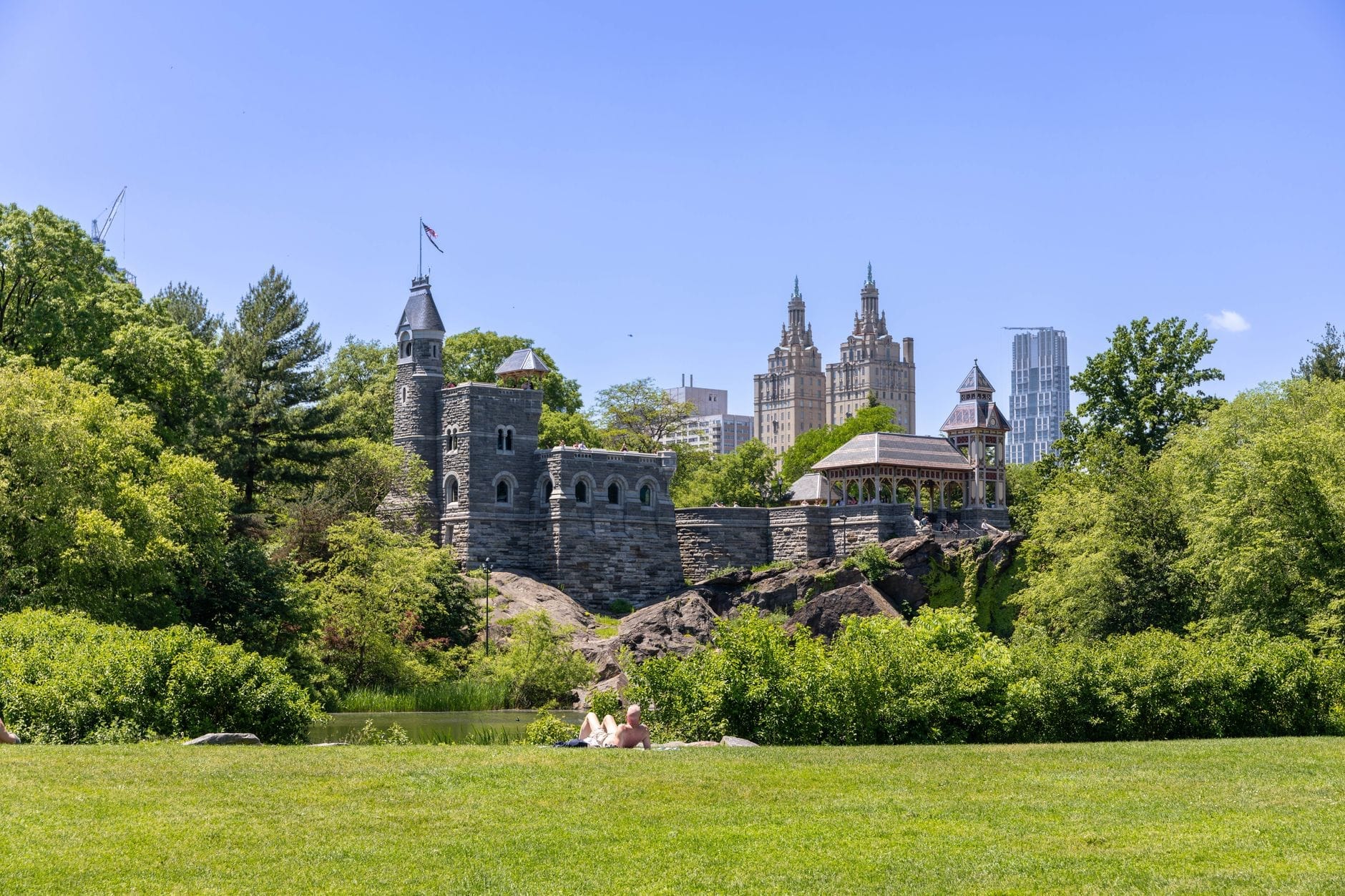
What Belvedere Castle Actually Is
Belvedere Castle is a Victorian-era architectural folly sitting atop Vista Rock, the second-highest natural point inside Central Park. Designed by Calvert Vaux and Jacob Wrey Mould, the same pair responsible for much of Central Park's decorative architecture, the castle was completed in 1872 as an open-air ornamental lookout. It was never meant to be a functional castle; it had no doors or windows and no enclosed interior space. Its sole purpose was to provide a picturesque terminus to the sight lines across the Turtle Pond below — and to give parkgoers a high point from which to survey the landscape.
That original vision was disrupted in 1919 when the U.S. Weather Bureau converted the structure into a functioning meteorological station, enclosing parts of the building and altering the turret to house instruments. The castle fell into serious disrepair after the 1960s, and was ultimately renovated and reopened as a visitor center in 1983. A second, more comprehensive restoration completed in 2019 stabilized the stonework, modernized the terraces, and refreshed the interior. Remarkably, the castle still serves a scientific purpose: weather instruments near the building continue to record the official temperature, wind, and rainfall readings for Central Park.
ℹ️ Good to know
Opening hours: Open daily, 10:00 AM–5:00 PM (terrace access ends at 4:55 PM). Closed Thanksgiving Day, Christmas Day, and New Year's Day. Admission is free.
The View: What You Actually See From the Top
The terrace at the top of Belvedere Castle delivers an unusually wide panorama for a city landmark that costs nothing to enter. To the north, the Great Lawn stretches out as a broad oval of grass, often covered in sunbathers and softball games on warm afternoons. To the south and east, the Ramble — one of Central Park's densest woodland sections — fills the view with a canopy that, in late October, turns a patchwork of amber and rust. Turtle Pond sits directly below, close enough to make out the turtles sunning on rocks near the water's edge on clear mornings.
Beyond the park's tree line, the skyline interrupts in both directions: the Upper West Side towers press in from the west, and Fifth Avenue's residential towers frame the east. It is not the panoramic cityscape you get from the observatory decks at the Empire State Building or Summit One Vanderbilt, but it is something different: a view that makes the city feel like a frame around the park, rather than the other way around.
For visitors primarily focused on elevated city views, it is worth knowing that purpose-built observatories offer significantly more dramatic skyline perspectives. Our guide to the best views in New York City covers both free and ticketed options across the five boroughs.
Tickets & tours
Hand-picked options from our booking partner. Prices are indicative; availability and final rates are confirmed when you complete your booking.
Statue of Liberty, Ellis Island, and Brooklyn Bridge Happy Hour Cruise
From 49 €Instant confirmationFree cancellationSpirit of New York Dinner Cruise
From 161 €Instant confirmationFree cancellationNew York City Highlights bike tour
From 70 €Instant confirmationFree cancellationNew York Statue of Liberty and Ellis Island tour by ferry
From 55 €Instant confirmation
Architecture and Design: Reading the Building
The castle blends Gothic and Romanesque Revival elements, which was a deliberate choice by Vaux and Mould. The rough-hewn Manhattan schist used in the base walls is the same exposed bedrock of Vista Rock itself; the castle essentially grows out of the hillside rather than sitting on top of it. Look closely at the stonework and you can see the transition from natural rock to quarried block. The tower, battlements, and arched windows give the structure a medieval silhouette, though the detailing is more whimsical than scholarly — this was always a theatrical set piece, not an academic historical recreation.
The castle sits within a park that contains some of the finest 19th-century landscape and decorative architecture in the United States. If the design interests you, the New York City architecture guide provides broader context on the city's built heritage, while nearby Bethesda Terrace and Fountain — also designed by Vaux and Mould — is arguably the most ornate public space in any American urban park.
When to Visit: How the Experience Changes by Time of Day
Weekday mornings between 10:00 AM and noon are the quietest window. The light from the east is low and warm, landing directly on the castle's south-facing terrace, and the Turtle Pond below is calm enough to produce reflections. Birdwatchers are frequently set up along the pond's edge at this hour, scanning the Ramble; the castle terrace is a recognized spot for watching migrating raptors drift over the park during spring and fall.
Midday on weekends, particularly between April and October, draws the largest crowds. The terrace is a natural gathering point, and it can feel congested when tour groups arrive together. Families with children tend to cluster around the gift shop inside. The experience is still perfectly pleasant, just more social. Late afternoon — roughly 3:30 PM to the 4:55 PM terrace cutoff — brings softer light and slightly thinner crowds, and the view toward the west catches the sun dropping toward the Upper West Side.
Winter visits have a specific appeal. With the deciduous trees bare, the sight lines from the terrace extend considerably further into the Ramble and toward the Great Lawn. Snow on the battlements and the frozen edges of Turtle Pond below creates a scene that is genuinely unusual for a city landmark. Dress accordingly: the terrace is fully exposed and wind comes in from the north with no obstruction.
💡 Local tip
For the best photographs, arrive within the first hour of opening on a weekday. Morning light hits the south-facing terrace directly, and you will have the battlement railings largely to yourself.
Inside the Castle: The Visitor Center and Gift Shop
The interior of Belvedere Castle is compact. The Central Park Conservancy operates it as a combination visitor center and gift shop, with maps, park merchandise, and a small exhibit about the castle's history and the weather monitoring equipment associated with it. Staff are generally knowledgeable about the surrounding park and can point visitors toward quieter trails or seasonal highlights in the Ramble. Do not expect a museum-scale exhibition; the interior is a single room. The main draw remains the terrace outside.
One practical note that many visitors miss: there are no restrooms on site at Belvedere Castle. The nearest public facilities are at the Delacorte Theater, a short walk north, or at the nearby 79th Street Transverse Road comfort station.
⚠️ What to skip
No restrooms at Belvedere Castle. Plan accordingly before ascending Vista Rock, especially with young children.
Getting There and Navigating the Park
The most direct subway approach is the B or C train to 81 St – Museum of Natural History on the Upper West Side. From the station, enter the park at 81st Street and walk east across the park, following the path toward the Turtle Pond. The walk takes roughly five to eight minutes and is fairly intuitive: Vista Rock is visible above the treeline once you are in the park. Alternatively, the B or C to 86th Street puts you at the northern approach; from there, walk south along the west drive and cut across toward the Great Lawn.
Central Park's internal layout can be disorienting, especially around the Ramble. If you are planning a longer exploration of the park, it is worth reading the full Central Park visitor guide before arriving.
The path from Turtle Pond up to the castle entrance involves stone steps. The approach from the south side of Vista Rock is steeper; the north approach from the Delacorte Theater is slightly more gradual but still involves uneven terrain. Visitors with limited mobility should note that the 2019 restoration improved the terraces but the rocky hillside approach itself remains challenging. Official accessibility specifications are not detailed in park sources, so contact the Central Park Conservancy directly if this is a concern.
What to Combine It With Nearby
Belvedere Castle sits at a natural crossroads in the park. The Delacorte Theater, home to the Public Theater's annual free Shakespeare in the Park productions, is immediately to the north. The Strawberry Fields memorial is a 15-minute walk southwest, and the American Museum of Natural History is just outside the park's 81st Street entrance to the west — one of the city's great museums and a logical pairing for a half-day itinerary.
If you are building a full day around the Upper West Side and Central Park, the first-time visitor guide to New York City offers a structured overview of how to sequence the area's main attractions without backtracking.
Insider Tips
- The Turtle Pond below the castle is one of the most reliable spots in Manhattan to photograph great blue herons, especially in early morning during spring. Stand on the lower path and look toward the water's edge near the rocks.
- The castle's Henry Luce Nature Observatory, inside the visitor center, has historically loaned out nature kits (including binoculars and field guides) free of charge — useful for birdwatching in the adjacent Ramble. Ask at the desk.
- During fall migration (roughly late September through October), Belvedere Castle's elevated position makes it one of the best spots in Central Park to watch hawks and other raptors moving south. The NYC-based Hawk Watch has documented consistent sightings from this exact vantage point.
- Central Park's official weather data — temperatures, rainfall totals, record highs and lows quoted in news coverage — is recorded from instruments near this castle. When a news report says 'Central Park recorded 2 inches of rain,' that measurement comes from equipment associated with this building.
- Skip the main south-facing stone steps if you want a quieter approach: the path from the Delacorte Theater to the north is less trafficked and offers a different perspective on Vista Rock's exposed schist.
Who Is Belvedere Castle For?
- Photographers looking for a free, elevated vantage point with park and skyline framing
- Families with children who enjoy the castle novelty and the nature kits inside
- Architecture and history enthusiasts interested in Calvert Vaux's park design
- Birdwatchers using the Ramble and Turtle Pond as a base
- First-time visitors wanting a Central Park landmark that requires no tickets or advance planning
Nearby Attractions
Other things to see while in Central Park:
- Bethesda Terrace and Fountain
Bethesda Terrace and Fountain sits at the heart of Central Park, framing the iconic Angel of the Waters sculpture against the backdrop of the Lake. Free to visit any day of the week, it rewards those who arrive at the right hour with light, space, and genuine New York atmosphere.
- Central Park
Central Park is a 843-acre public park stretching from 59th to 110th Street in Manhattan. Entry is free, the park is open daily until 1:00 a.m., and it contains dozens of distinct landscapes, landmarks, and activities within walking distance of each other.
- Central Park Zoo
One of the oldest zoos in the United States, the Central Park Zoo occupies about 6.5 acres near the southeast corner of Central Park. Small by design, it rewards visitors who take it slowly — especially families with young children and anyone wanting wildlife between museum stops.
- Strawberry Fields
Strawberry Fields is a 2.5-acre memorial landscape on the west side of Central Park, dedicated to John Lennon and anchored by the iconic 'Imagine' mosaic. Free to visit and open daily, it draws Beatles fans, quiet seekers, and curious travelers year-round.