What to Eat in New York City: The Essential Food Guide
New York City restaurants span every cuisine on earth, every budget, and every borough. This guide cuts through the noise to tell you exactly what to order, where to go, and what to skip — from legendary delis on the Lower East Side to Queens' unmatched immigrant food corridors.
Plan and book this trip
Tools from our partner Travelpayouts help you compare flights and hotels. If you book through them, we may earn a commission at no extra cost to you.
Flights
Hotels map
TL;DR
- New York City restaurants range from $3 street pizza to $300+ tasting menus — you can eat brilliantly at any budget.
- The most iconic NYC foods are the bagel with lox, a foldable pizza slice, and the pastrami sandwich — all rooted in the city's Jewish immigrant history. See our full where to eat in New York City guide for neighborhood-by-neighborhood picks.
- Queens and The Bronx offer some of the most authentic and affordable world cuisine in the entire country — don't limit yourself to Manhattan.
- Outdoor food markets like Smorgasburg run spring through fall; most fine-dining rooms require reservations weeks in advance.
- Tipping 18-22% is standard at sit-down restaurants. It is not optional in NYC culture.
Why NYC's Food Scene Is Unlike Any Other City
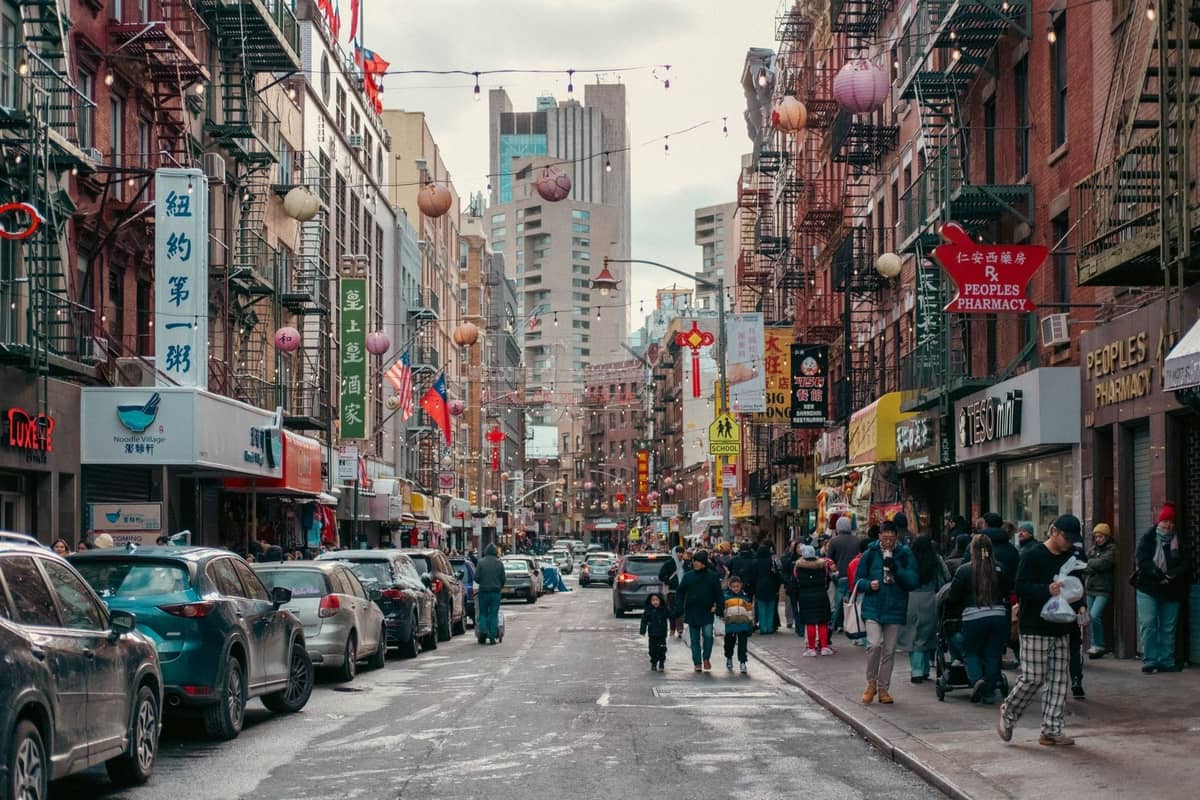
New York City's food culture is a direct product of its immigration history. Over the past 150 years, successive waves of Jewish, Italian, Chinese, Puerto Rican, Dominican, Korean, and West African communities have each planted culinary flags across the five boroughs. The result is a city where you can eat Sichuan malatang in Flushing, jerk chicken in The Bronx, Georgian cheese bread in Brighton Beach, and a $2 dumpling in Chinatown — all on the same day, without going out of your way.
The scale matters too. With about 8.5 million residents and tens of thousands of restaurants, competition is ferocious. A mediocre spot doesn't survive long. That pressure produces quality at every price point — which is why even a bodega chopped cheese or a corner slice can be genuinely excellent if you know where to look.
ℹ️ Good to know
NYC has no official 'food district' — great eating is distributed across all five boroughs. Some of the most celebrated food corridors, like Roosevelt Avenue in Queens or Arthur Avenue in The Bronx, are nowhere near Midtown Manhattan.
The Iconic NYC Foods You Actually Need to Try
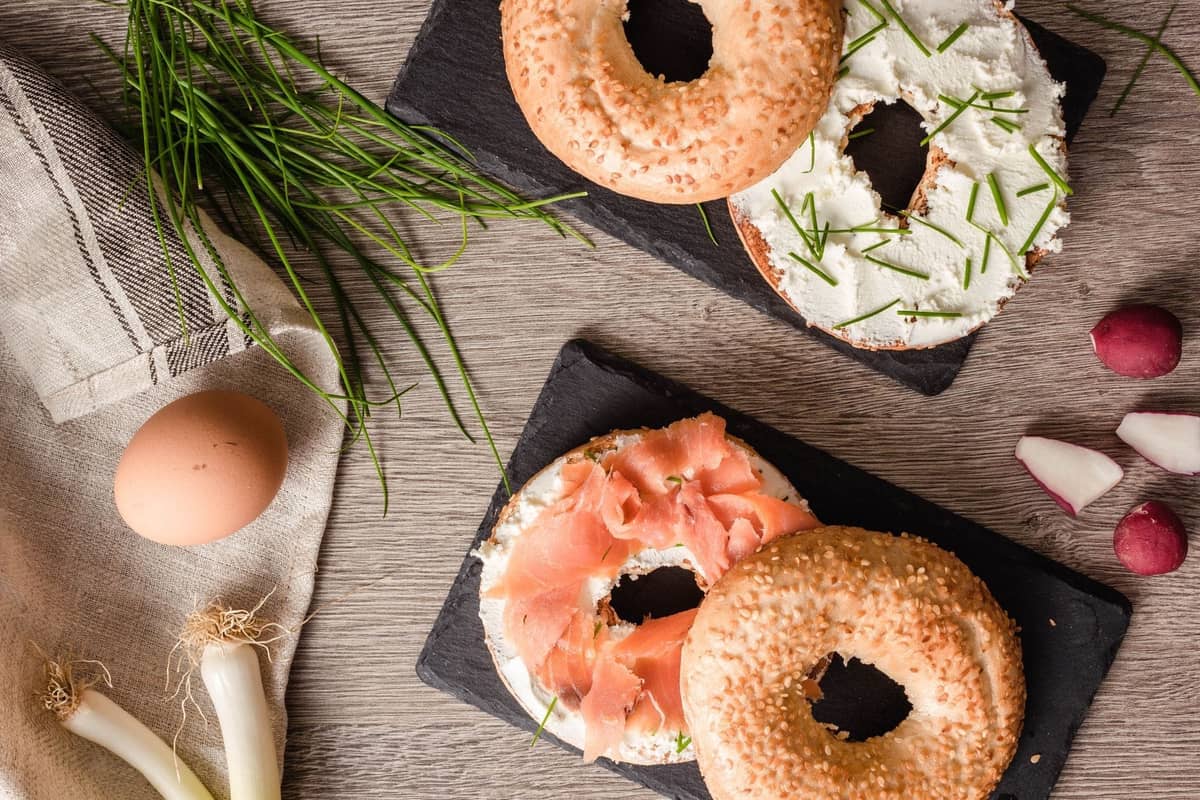
Start with the bagel. A proper New York bagel is hand-rolled, briefly boiled, then baked — producing a chew and crust that no other city reliably replicates. The classic order is bagel with lox, cream cheese, capers, and red onion. The Lower East Side is where this tradition is most concentrated: Russ & Daughters, open since 1914 on East Houston Street, remains the benchmark. Expect to pay around $18-24 for a full lox plate, or $5-8 for a simple bagel with cream cheese.
The New York pizza slice is a category of its own. The defining characteristics: large, thin, slightly charred crust, foldable down the middle to eat while walking, sold by the slice for around $4-6. The best old-school slice shops use coal or deck ovens. Prince Street Pizza in Nolita is famous for its pepperoni slices; Di Fara in Midwood, Brooklyn has had a cult following for decades. Avoid tourist-trap slices near Times Square — the quality drops sharply in high-foot-traffic zones where turnover replaces craft.
The pastrami sandwich at Katz's Delicatessen on the Lower East Side is not hyperbole. The hand-carved, steam-heated pastrami on rye, with a smear of deli mustard, is one of the most specific food experiences the city offers. Sandwiches run around $25-30, which sounds steep until you see the size. Katz's is cash-friendly but also accepts cards; expect a line on weekends, especially after noon.
- Bagel with lox Best at Russ & Daughters (Lower East Side) or Absolute Bagels (Upper West Side). Around $5-24 depending on toppings.
- Pizza slice Di Fara (Brooklyn), Joe's Pizza (West Village), Prince Street Pizza (Nolita). Budget $3-5 per slice.
- Pastrami sandwich Katz's Delicatessen is the standard. Around $25-30 for a full sandwich. Arrive before noon on weekends.
- Chopped cheese A Harlem and Bronx bodega staple — ground beef, cheese, onions, and peppers on a hero roll. Usually $5-8.
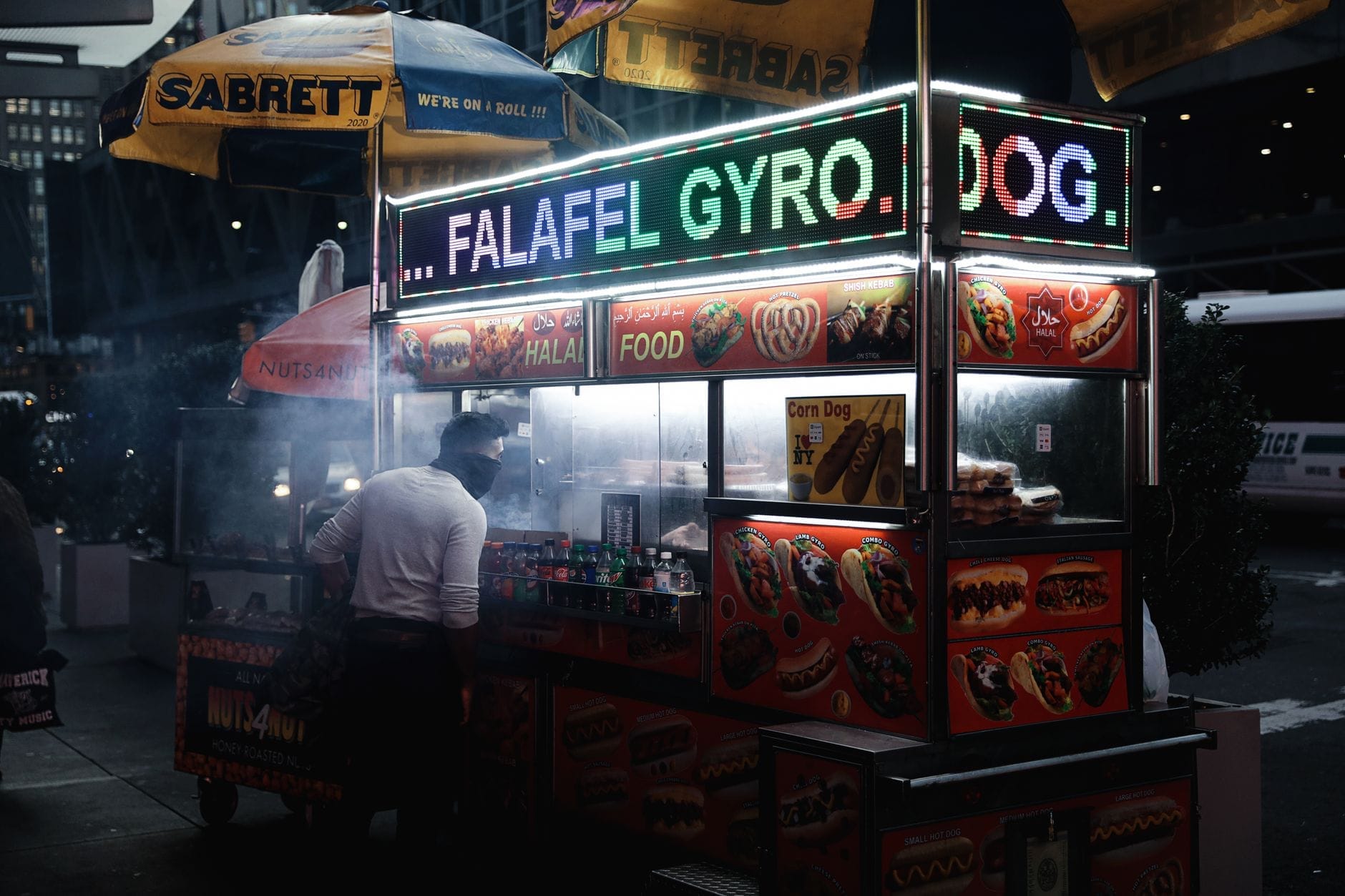
- NYC hot dog From a street cart near Central Park or a Papaya King-style shop. About $2-4. Simple, fast, authentic.
- New York cheesecake Dense, cream-cheese based, with a graham cracker crust. Junior's in Brooklyn is the most famous source.
Where Each Borough Eats: A Neighborhood Food Map
Manhattan gets most of the press, but Flushing, Queens is arguably the most exciting food destination in the entire city. The area around Main Street and Roosevelt Avenue contains a very large Chinatown, with specialties from Sichuan, Cantonese, Fujian, and Taiwanese cuisines represented at street-level restaurants and underground food courts. Soup dumplings (xiao long bao), scallion pancakes, and hand-pulled noodles here cost $8-15 per dish.
The Bronx's Arthur Avenue is the city's true Italian-American food corridor — more authentic and less touristy than Manhattan's Little Italy, which has largely become a restaurant strip catering to visitors. On Arthur Avenue, you'll find old-school pork stores, fresh pasta shops, and red-sauce Italian restaurants where locals actually eat. A pasta lunch here runs $15-22.
Brooklyn's food geography is wide. Williamsburg has high-end restaurants and trendy brunch spots with prices to match ($20-30 per plate). Park Slope skews toward neighborhood dining: solid Italian, reliable Thai, good wine bars. Bensonhurst and Sunset Park are where to go for Chinese and Latin American food at honest prices.
⚠️ What to skip
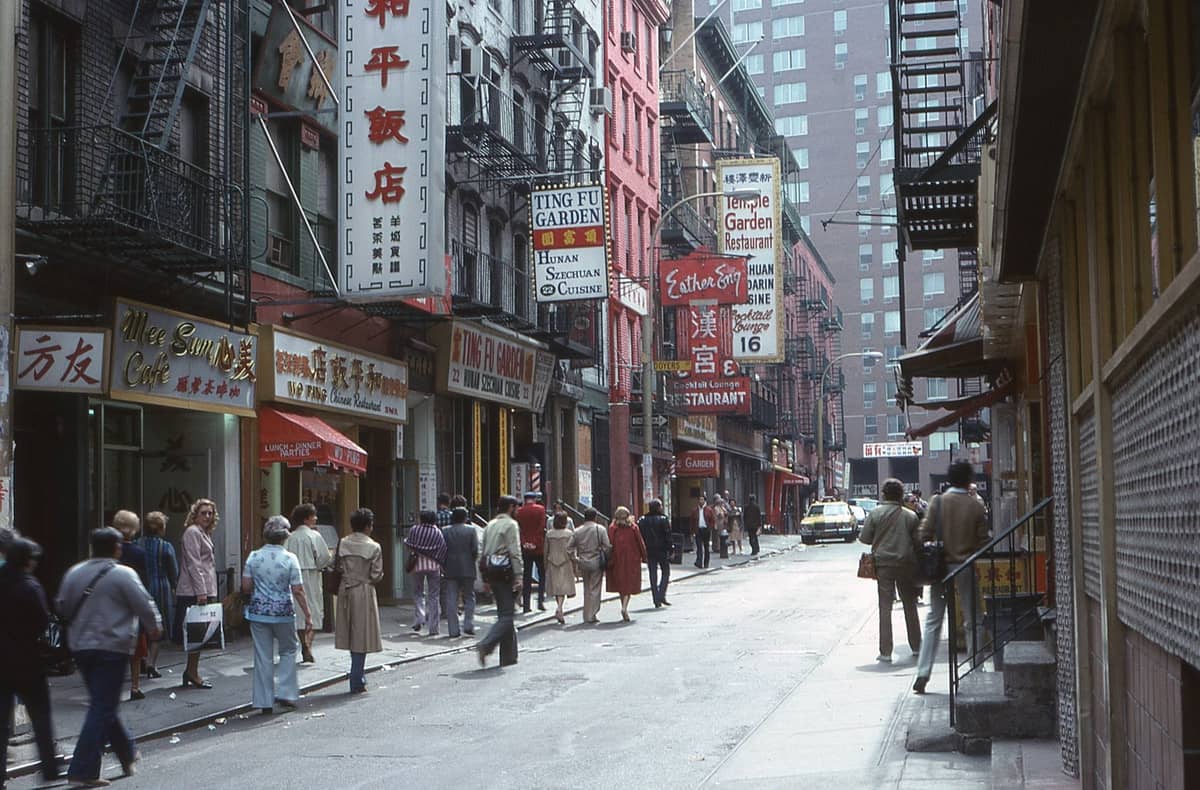
Manhattan's Chinatown (around Canal Street) is worth visiting but has become more variable in quality than Flushing. If you want the most authentic and diverse Chinese food in NYC, take the 7 train to Flushing — it's around 30–40 minutes from Midtown and a completely different experience.
Budget Eating vs. Fine Dining: What to Expect at Each Level
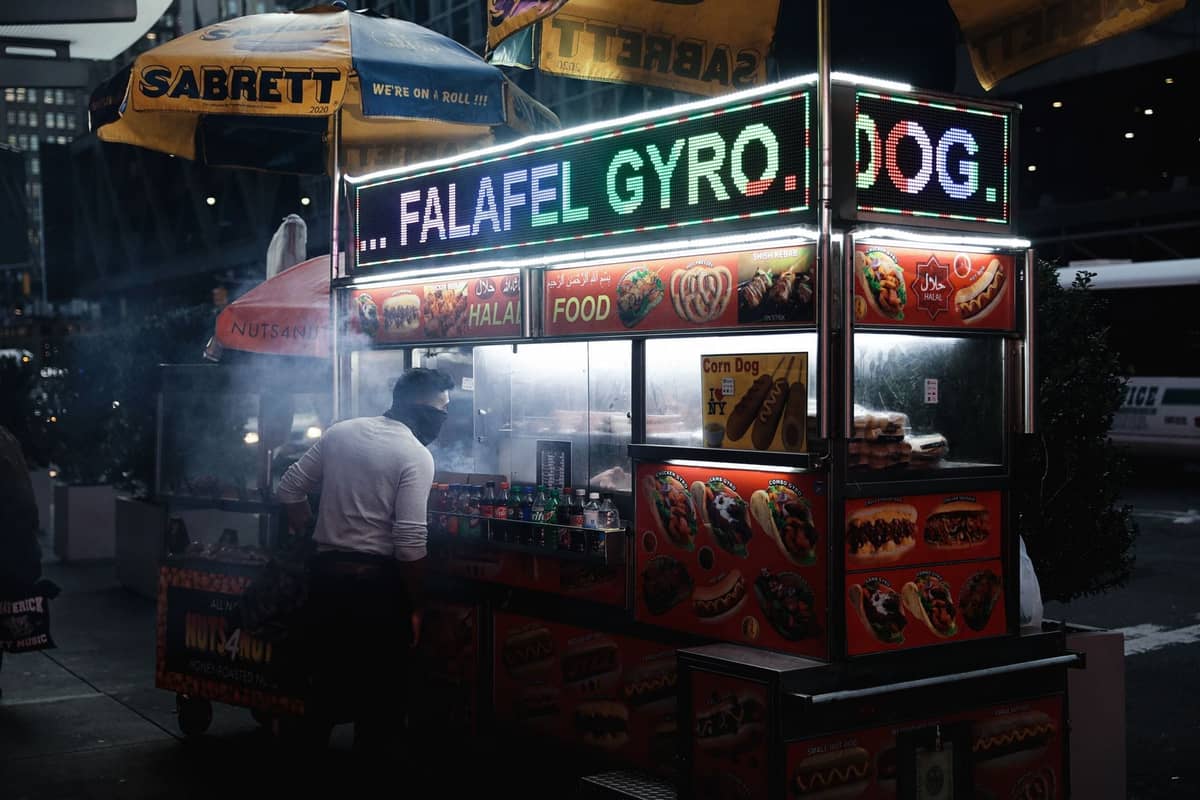
Eating well in NYC on a tight budget is entirely realistic. The city's dumpling shops, taco trucks, halal carts, dollar-slice pizzerias, and bodegas mean a satisfying meal under $10 is always within reach. The famous halal cart chicken and rice (most associated with The Halal Guys, though many independent carts are equally good) runs around $8-10 and is filling enough for a full lunch.
Mid-range dining — what locals actually do most of the time — lands between $20 and $55 per person including a drink or two. This covers everything from a proper ramen bowl in the East Village to a full dim sum spread in Flushing to a farm-to-table dinner in the West Village. Reservations are advisable at any mid-range spot that's been reviewed in the last two years; OpenTable and Resy are the platforms most NYC restaurants use.
At the top end, NYC's fine dining is genuinely world-class. Tasting menus at Michelin-starred restaurants — Eleven Madison Park, Le Bernardin, Per Se, and others — typically start at $250-350 per person before wine pairings, tax, and the typical 18–20%+ service charge or tip. These require booking weeks or months ahead. The experience is extraordinary for a special occasion, but it is a very specific kind of eating: structured, long (3+ hours), and formal. If that isn't what you're after, NYC's best casual restaurants at $40-60 per head are just as impressive in their own way.
- Budget (under $15): halal cart rice plates, pizza slices, dumplings, chopped cheese, street hot dogs, bodega sandwiches
- Mid-range ($20-55): ramen, Korean BBQ, tacos, dim sum, casual Italian, neighborhood bistros
- Upscale ($60-120): oyster bars, Japanese omakase at smaller counters, steakhouses, wine-focused restaurants
- Fine dining ($200+): Michelin-starred tasting menus, reservation required months ahead, formal dress codes apply at some venues
Food Markets, Seasonal Eating, and Outdoor Options
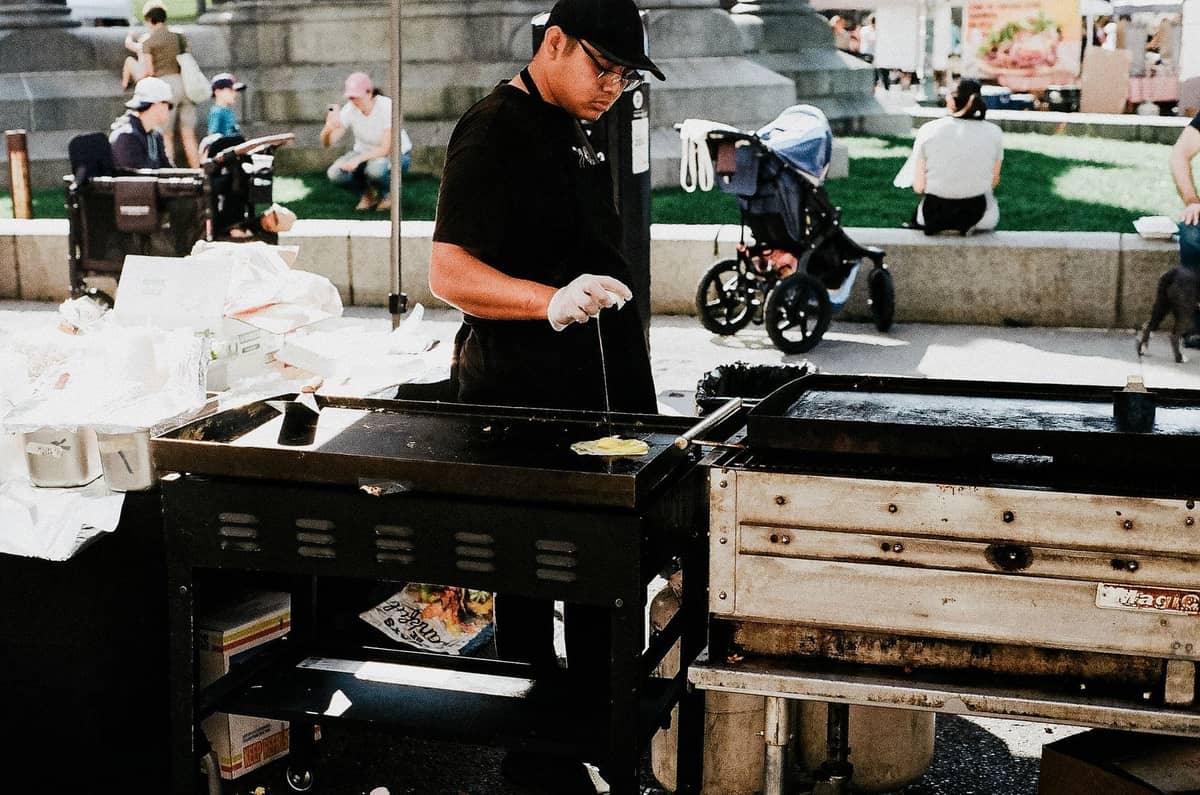
Smorgasburg is one of the largest weekly outdoor food markets in the US, running Saturdays in Williamsburg and Sundays in Prospect Park from roughly April through October. Around 100 vendors sell everything from lobster rolls to Ethiopian injera to Japanese milk bread. Budget $15-30 for a solid meal across multiple stalls. It's genuinely good — not a tourist trap — but go early (before 12:30pm) to beat the crowds.
The Chelsea Market is an indoor food hall in a converted factory building on the High Line's south side. It operates year-round and houses a mix of food vendors, specialty grocers, and sit-down spots. Quality is consistent, prices are mid-range, and it's a practical lunch stop if you're already in Chelsea or visiting the High Line. The Lobster Place seafood counter inside is one of the best casual seafood options in the city.
The Queens Night Market runs Saturday evenings from April through October at Flushing Meadows Corona Park, showcasing around 60–70 vendors representing dozens of cuisines — all at $6 or under per dish. It is specifically designed as an affordable, multicultural eating event. For food scope and price, it's one of the best deals in NYC and almost entirely off the tourist radar.
✨ Pro tip
For the best seasonal eating, visit in fall (September to November). Harvest menus hit farm-to-table restaurants, outdoor markets are still running but without summer's peak crowds, and temperatures make walking between food stops comfortable. Spring (April to June) is a close second.
Practical Eating Tips: Reservations, Tipping, and What to Avoid
Reservations matter more in NYC than almost anywhere else. Popular restaurants at all price points fill up fast — often a week out for mid-range spots, and months out for anything Michelin-adjacent. Use Resy, OpenTable, or Tock. If you can't get a booking, many restaurants hold back bar seats or walk-in tables; showing up at 5:30pm (before the main wave) or after 9pm significantly improves your chances.
Tipping is not negotiable in NYC's restaurant culture. The standard is 18-22% on the pre-tax total at sit-down restaurants. Many restaurants now include a suggested gratuity on the bill, but it is still technically optional — 20% is the baseline most servers expect. At counter-service spots and coffee shops, tipping is less strictly expected but appreciated. At bars, $1-2 per drink or 20% of the tab is customary.
A few things to genuinely avoid: restaurant rows directly adjacent to major tourist attractions (the blocks immediately surrounding Times Square, the area right next to the Statue of Liberty ferry terminal) exist almost entirely to serve people who won't come back. Prices are higher, quality is lower, and there's simply no reason to eat there when a 10-minute walk in any direction opens up far better options. Similarly, the $1 pizza slice is not actually $1 at most places anymore — if a sign still claims this, verify before ordering.
For travelers watching their budget, the combination of food markets, ethnic restaurant corridors, and the city's competitive slice-and-sandwich scene means eating well for under $30 a day is achievable. See our guide to New York City on a budget for a full breakdown of strategies, including free food events and lunch specials.
FAQ
What food is New York City most famous for?
New York City is most associated with the bagel with lox and cream cheese, the foldable pizza slice (sold by the slice at pizzerias citywide), and the pastrami sandwich on rye — most famously at Katz's Delicatessen. The chopped cheese from Harlem and Bronx bodegas has also become a recognized NYC original in recent years.
How much does it cost to eat out in New York City?
Costs vary enormously. Street food and pizza slices run $3-10. A casual sit-down meal with a drink is typically $20-40 per person. Mid-range neighborhood restaurants average $40-70 per person with drinks. Fine dining tasting menus at Michelin-starred restaurants start around $250-350 per person before wine and service charges.
Where should I eat in NYC if I'm on a budget?
Flushing, Queens offers the best value for diverse, high-quality food — dishes run $8-15 at most restaurants. The Queens Night Market (April-October, Saturdays at Flushing Meadows) caps every dish at $6. Manhattan's Chinatown, the East Village, and the halal carts found throughout Midtown all offer solid meals under $12.
Do I need reservations at New York City restaurants?
For any restaurant that has received press coverage or has consistent online reviews, yes. Popular mid-range spots fill up 5-7 days in advance; well-known fine dining venues can require booking 1-3 months ahead. Use Resy, OpenTable, or Tock. Walk-in options improve significantly before 6pm or after 9pm.
Is the food in the outer boroughs better than Manhattan?
For specific cuisines, yes — often significantly. Flushing and Jackson Heights (Queens) for Chinese and South Asian food, Arthur Avenue (The Bronx) for Italian, and parts of Brooklyn for Middle Eastern and Caribbean cooking all outperform Manhattan equivalents in authenticity and value. Manhattan has the highest concentration of fine dining and trendy restaurants, but the outer boroughs win on diversity and price.