Smorgasburg: Brooklyn's Open-Air Food Market on the East River
Every Saturday from April through October, Smorgasburg transforms a waterfront lot in Williamsburg into one of New York City's largest open-air food markets. Scores of vendors line the East River with everything from creative street food to craft drinks, all with the Manhattan skyline as a backdrop. Entry is free; you pay only for what you eat.
Quick Facts
- Location
- 90 Kent Ave, Williamsburg, Brooklyn, NY 11211
- Getting There
- L train to Bedford Ave (approx. 10-min walk); East River Ferry to North Williamsburg
- Time Needed
- 1.5 to 3 hours
- Cost
- Free entry; food and drinks purchased per vendor (prices vary)
- Best for
- Food lovers, weekend explorers, families, first-time Brooklyn visitors
- Official website
- www.smorgasburg.com
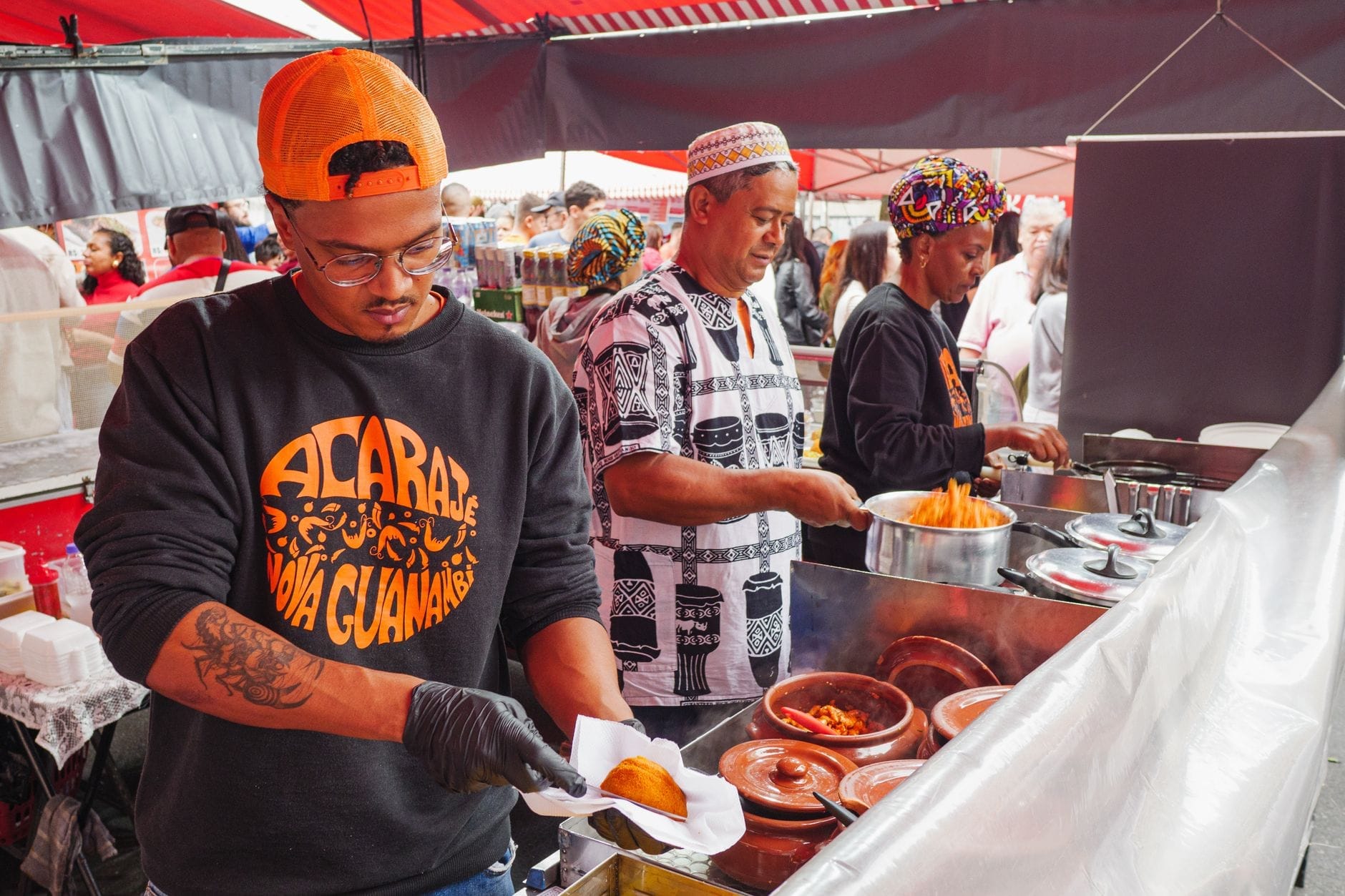
What Smorgasburg Actually Is
Smorgasburg is the largest weekly open-air food market in America, welcoming more than two million visitors a year across its locations in New York, Los Angeles, and Miami. The name is a deliberate mashup of 'smorgasbord' and 'Williamsburg', and the concept launched in May 2011 as an offshoot of the Brooklyn Flea food vendor program. What began as a single Brooklyn waterfront gathering has since expanded to multiple sites, and the Saturday Williamsburg location remains the original.
On any given Saturday between April and October, dozens of vendors set up along the East River at 90 Kent Avenue. The lineup rotates across the season, with new vendors introduced and others cycling out. You'll find everything from Japanese milk bread stuffed with savory fillings, to wood-fired arepas, handmade dumplings, smoked fish on rye, and artisanal soft-serve in flavors that change weekly. The market skews toward independent operators and small-batch producers rather than established restaurant brands, which gives it a different character from a typical food hall.
ℹ️ Good to know
Smorgasburg operates Saturdays 11:00–18:00 at Williamsburg (April–October), Sundays 11:00–18:00 at Prospect Park (Breeze Hill), and Fridays 11:00–18:00 at the World Trade Center. Confirm dates on smorgasburg.com before visiting, as the schedule can shift year to year.
The Williamsburg Waterfront: Setting and Atmosphere
The site itself does a lot of the work. The market occupies a flat, open lot directly on the East River waterfront, with unobstructed views of the Manhattan skyline directly across the water. On a clear morning in early October, the light hits the water and the buildings behind it in a way that makes the whole scene feel larger and more cinematic than it has any right to be for a farmers market.
The layout is informal: vendor stalls fan out in loose rows across the lot, with picnic tables and benches scattered around the edges. There's no roof, no walls, and no air conditioning, which means sun and weather are real factors. On hot July afternoons, the concrete can radiate heat significantly. On overcast days in April or September, it becomes one of the more comfortable outdoor eating experiences in the city.
Williamsburg itself adds context worth noting. The neighborhood around the market is one of Brooklyn's most walkable, and the broader Williamsburg and Brooklyn waterfront area rewards extra time before or after the market. Kent Avenue runs along a stretch of former industrial waterfront that has been gradually opened up to pedestrian use, and the market fits naturally into that character.
Tickets & tours
Hand-picked options from our booking partner. Prices are indicative; availability and final rates are confirmed when you complete your booking.
Statue of Liberty, Ellis Island, and Brooklyn Bridge Happy Hour Cruise
From 49 €Instant confirmationFree cancellationSpirit of New York Dinner Cruise
From 161 €Instant confirmationFree cancellationNew York City Highlights bike tour
From 70 €Instant confirmationFree cancellationNew York Statue of Liberty and Ellis Island tour by ferry
From 55 €Instant confirmation
How the Experience Changes Through the Day
Arriving at 11:00 or shortly after opening gives you a meaningful advantage. Lines are shorter, vendors are fully stocked, and you can circle the entire market before committing to what you actually want to eat. The crowd at opening skews toward regulars who know exactly which stall they're heading to first. By noon, the market has filled considerably, and certain popular vendors develop queues of 15 to 20 minutes.
Between 12:30 and 14:30 is peak volume. The picnic tables fill up quickly, and the main pathways between stalls get tight with stroller traffic, groups of friends, and distracted eaters carrying plates. If you're visiting with young children or anyone who finds dense crowds uncomfortable, this window is the hardest to navigate. Some vendors begin to run out of signature items by early afternoon.
The last hour before closing, around 17:00, sees the crowd thin and some vendors begin packing down. Occasionally you'll find discounts on remaining food, though this is not guaranteed. The light on the waterfront at this hour is genuinely good for photography, and the atmosphere is calmer.
💡 Local tip
Arrive at 11:00 when doors open. You'll get first pick of every vendor, shorter lines, and the chance to walk the entire market before committing. Come hungry enough to try three or four things rather than loading up on one large portion.
Navigating the Market: Practical Walkthrough
There's no entrance fee and no wristband, you simply walk in from Kent Avenue. Vendors accept both cash and cards, but individual stall policies vary, and a few smaller operators are cash-only. Bringing some small bills avoids awkward moments at card minimums. An ATM is typically available nearby, but lines for it form on busy afternoons.
The smart approach is to do one full lap of the market before buying anything. It takes about 15 minutes and lets you compare options, spot which lines are moving quickly, and calibrate your appetite across four or five stops rather than one. Many visitors make the mistake of stopping at the first stall that looks good, filling up, and then discovering the vendors they actually wanted at the far end.
Seating is communal and not reserved. On peak days, it's worth identifying a table before loading up on food rather than carrying plates around searching. Some visitors spread across the grassy area adjacent to the lot, particularly families with children. Napkins and basic utensils come from individual vendors; there's no central service station.
- Wear comfortable shoes: the lot is flat but you'll be standing and walking for 1.5 to 2 hours
- Sunscreen and a hat matter significantly in June, July, and August, when the open lot offers minimal shade
- Bring a reusable bag if you plan to pick up pantry items or packaged goods from vendors
- Dogs are common at the market; the space tends to be tolerant of well-behaved leashed dogs
- Strollers navigate the main aisles reasonably well, though it gets tight during peak hours
Getting There
The L train to Bedford Avenue is the most direct subway option. From the station, the walk to the waterfront along North 7th Street takes about 10 minutes. The route passes through the heart of Williamsburg's main commercial strip, which makes it easy to stop for coffee before the market if you're arriving early. Verify current L train service status before you go, as weekend service can include rerouting on the MTA network.
The East River Ferry also stops at North Williamsburg, which is a genuinely pleasant approach to the market, particularly from Manhattan's lower east side or from DUMBO. For broader guidance on public transit options across Brooklyn, the NYC transit guide covers subway, bus, and ferry connections in detail.
Weather and Seasonal Considerations
The market runs weekends from April through October, which covers a wide range of New York weather. April and May offer mild temperatures but can be wet; a light rain doesn't typically shut the market down, but it does change the experience considerably. Heavy rain will send vendors under their canopies and can make the lot unpleasant underfoot. Check the forecast before committing to a Saturday visit.
June through August brings the market's highest attendance and its hottest conditions. The open waterfront catches some breeze off the East River, but on a humid July afternoon the lot can feel stifling. September and October are broadly considered the most comfortable months to visit, with lower humidity and strong light. If you're planning your Brooklyn visit around good conditions, the fall in New York City guide explains why September and October tend to draw visitors back repeatedly.
⚠️ What to skip
Smorgasburg is an outdoor market with no rain cancellation policy listed publicly. Check smorgasburg.com or their social channels on the morning of your visit if weather looks uncertain. Isolated showers sometimes pass quickly; sustained rain makes the experience significantly less enjoyable.
Is It Worth Your Time? An Honest Assessment
Smorgasburg has genuine strengths. The vendor quality is notably higher than a typical street fair, the waterfront location is hard to beat as a backdrop, and the free entry means there's no sunk-cost pressure. If you're visiting New York for the first time and want a single place to sample Brooklyn's food culture in concentrated form, this is a reasonable answer.
That said, it's worth calibrating expectations. Prices at individual vendors reflect the premium Brooklyn food market context: a single item typically costs between $8 and $16, and a full meal for two across multiple vendors will run $40 to $60 without drinks. The market is also genuinely crowded on peak summer Saturdays, and parts of the experience—waiting in line, hunting for a table, navigating the lot—feel more effortful than relaxed. If you're looking for a quieter food experience in Brooklyn, the Brooklyn Flea (Smorgasburg's parent market) runs on a different schedule and tends to draw a calmer crowd. Visitors who find outdoor markets in any form unenjoyable, or who strongly prefer air conditioning in summer, should probably skip the Williamsburg location in July and August.
For food-focused visitors spending several days in Brooklyn, Smorgasburg makes sense as one stop within a broader itinerary. A well-planned weekend could combine Saturday at the market with a walk along the waterfront and into Williamsburg proper. The Brooklyn neighborhood guide outlines how to connect the market with nearby areas worth exploring.
Insider Tips
- Do a full lap before buying anything. The vendor you want most is almost always at the far end of the market, and you'll regret filling up before you reach it.
- If you're visiting as a group, split up for the initial circuit and reconvene with recommendations. It's faster and more effective than navigating the crowd together.
- The Sunday Prospect Park location (Breeze Hill, near the Lincoln Road entrance) is noticeably less crowded than Saturday Williamsburg and draws a more local crowd. If a relaxed pace matters more than the waterfront view, Sundays in the park can be the better option.
- Several vendors sell packaged or jarred goods, sauces, spice blends, and preserves alongside their prepared food. These make for more specific souvenirs than anything you'll find in a gift shop, and you can compare directly with the dish they came from.
- The East River Ferry approach to the market is worth the slight extra effort, especially on a clear day. Arriving by water and seeing the Williamsburg waterfront from the river before you step onto it changes how the whole visit feels.
Who Is Smorgasburg For?
- Food-focused travelers who want to sample Brooklyn's independent food scene in one visit
- First-time Brooklyn visitors looking for an accessible, low-commitment entry point into Williamsburg
- Families with children who can handle outdoor crowds and benefit from wide-ranging food options
- Weekend visitors with Saturday mornings free and an appetite for grazing across multiple cuisines
- Photographers wanting a combination of street food culture, crowd life, and Manhattan skyline in a single location
Nearby Attractions
Other things to see while in Williamsburg:
- Bushwick Collective Street Art
Spread across the sidewalks and warehouse walls of Bushwick, Brooklyn, the Bushwick Collective is one of the largest open-air street art districts in the United States. Formally established in 2012, it is free to visit at any hour and anchored just steps from the L train's Jefferson Street stop.