The Bushwick Collective: Brooklyn's Open-Air Street Art District
Spread across the sidewalks and warehouse walls of Bushwick, Brooklyn, the Bushwick Collective is one of the largest open-air street art districts in the United States. Formally established in 2012, it is free to visit at any hour and anchored just steps from the L train's Jefferson Street stop.
Quick Facts
- Location
- Troutman St & St. Nicholas Ave, Bushwick, Brooklyn, NY 11237
- Getting There
- L train to Jefferson St (approx. 2-minute walk)
- Time Needed
- 1 to 2.5 hours depending on pace
- Cost
- Free, open 24/7
- Best for
- Art lovers, photographers, urban explorers, culture seekers
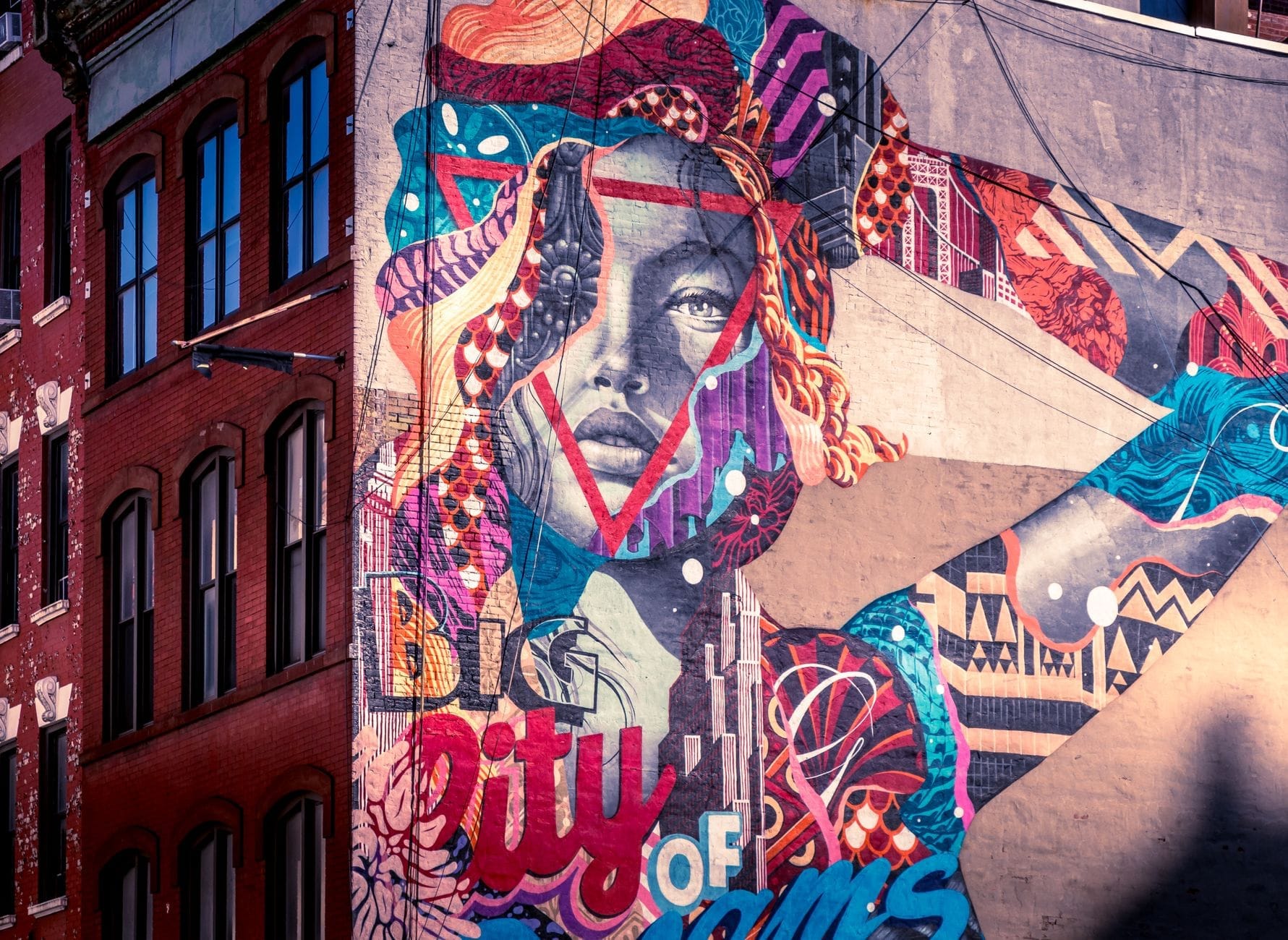
What the Bushwick Collective Actually Is
The Bushwick Collective is an outdoor street art district centered on Troutman Street and St. Nicholas Avenue in the Bushwick neighborhood of Brooklyn. It is not a gallery with walls and a front desk. There are no tickets, no opening times, and no curated walking path. What you get instead is roughly a half-mile stretch of industrial blocks where the buildings themselves have become the canvas.
The project was formally established in 2012 by Joseph Ficalora, a Bushwick native who began inviting artists to paint the walls around his neighborhood after some of the first murals appeared in the early 2010s. It operates as a registered 501(c)(3) nonprofit organization. Since then, murals by artists from dozens of countries have covered walls, roll-down gates, loading docks, and facades of every scale. Individual murals have an average lifespan of around twelve months before being painted over and replaced, which means no two visits to the Collective are identical.
For visitors curious about how Brooklyn's creative neighborhoods compare, it helps to understand the borough's broader cultural geography. The Collective sits in a district that borders Williamsburg and the surrounding Brooklyn neighborhoods that have drawn artists and designers for decades, though Bushwick itself retains a more industrial, less polished feel.
ℹ️ Good to know
Because murals are regularly replaced, checking the Bushwick Collective's official Instagram (@thebushwickcollective) before you visit will show you which works are currently up and if any new pieces have recently been unveiled.
The Experience: What You See and Hear on the Ground
Coming out of Jefferson Street station on the L train, you are effectively already inside the district. The transition is immediate: within about twenty steps of the subway exit, large-scale murals line both sides of Troutman Street. The works range from photorealistic portraiture to abstract geometric compositions to dense illustrative scenes that take minutes to fully read. Scale is part of the experience. Some pieces fill three-story brick facades from sidewalk to roofline.
The smell of the neighborhood is industrial at its base: a trace of diesel, aged brick, the occasional food cart or taco truck nearby. The sound layer shifts by time of day. Mid-morning on a weekday, you might hear the roll of a delivery truck, workers outside a nearby business, music drifting from a cracked door. The streets are not pedestrianized and vehicles do pass through, so this is an active working neighborhood rather than a managed cultural zone.
Walking the grid takes some navigation. The core is Troutman Street between Wyckoff Avenue and St. Nicholas Avenue, but murals spill onto Starr Street, Cypress Street, and the adjacent blocks. A loose, exploratory approach works better than trying to follow a rigid route. Look up as well as straight ahead: second-floor windows, stairwells, and rooftop parapets sometimes carry work that is easy to miss at street level.
Tickets & tours
Hand-picked options from our booking partner. Prices are indicative; availability and final rates are confirmed when you complete your booking.
Statue of Liberty, Ellis Island, and Brooklyn Bridge Happy Hour Cruise
From 49 €Instant confirmationFree cancellationSpirit of New York Dinner Cruise
From 161 €Instant confirmationFree cancellationNew York City Highlights bike tour
From 70 €Instant confirmationFree cancellationNew York Statue of Liberty and Ellis Island tour by ferry
From 55 €Instant confirmation
Morning, Afternoon, and Night: How the Visit Changes by Hour
Morning visits, particularly on weekdays before 10 a.m., offer the clearest conditions for photography and reflection. The streets are relatively quiet, the light is soft and angled, and you have long walls largely to yourself. This is when the scale of individual murals becomes most apparent without people or parked trucks disrupting sightlines.
Weekend afternoons are a different scene. The Collective draws steady foot traffic from mid-morning onward, with photographers, art students, tourists, and local residents all moving through the same blocks. The energy is social and at times lively. Street vendors occasionally set up nearby. If you are visiting for documentation or prefer quieter contemplation of the work, weekday mornings are the clear choice. If you enjoy the atmosphere of a neighborhood fully alive around public art, weekend afternoons have their own appeal.
Night visits are entirely possible since everything is on public streets, and some murals are lit by ambient street lighting or nearby storefronts. However, the experience is significantly reduced without natural light. Many of the finer details and color relationships in complex murals become difficult to read after dark, and photography becomes technically challenging without specialist equipment. Night visits are interesting for the atmosphere rather than serious art viewing.
💡 Local tip
For photography, golden hour after sunrise or in the hour before sunset produces the best light on east-west facing walls along Troutman Street. Midday overhead sun creates harsh shadows on highly textured brick surfaces.
History and Cultural Context
Bushwick's industrial character, shaped by decades of manufacturing activity, left the neighborhood with large expanses of bare brick and concrete: exactly the kind of surfaces that make large-format mural work viable. The district experienced significant disinvestment in the latter half of the twentieth century, and the arrival of artists in the 2000s and early 2010s followed patterns seen in other post-industrial Brooklyn neighborhoods.
What distinguishes the Collective from informal graffiti districts that developed organically elsewhere is the curatorial structure. Ficalora actively recruits artists, coordinates permissions with building owners, and maintains relationships that allow the walls to be repainted on a rotating schedule. Artists who have contributed work include internationally recognized figures from the United States, Latin America, Europe, and Asia, creating a genuinely international survey in a concentrated geographic area.
The Collective operates at the intersection of street culture and institutional art world recognition. It is worth comparing to other large-format public art projects in New York for context. The High Line in Manhattan commissions similar outdoor works within a managed park setting, but the Collective's raw, unmediated street context produces a noticeably different register of work and experience.
Practical Walkthrough: Getting There and Moving Through the Space
The L train to Jefferson Street is the most direct route. Jefferson Street station exits directly onto the surrounding blocks, with Troutman Street accessible within two minutes on foot. The L train typically runs every few minutes during peak hours. Confirm current service patterns with the MTA before traveling, as the L train has experienced periodic weekend service adjustments.
There is no formal map distributed at the site. Several independent guides and tour operators have produced walking maps of the area, and the Bushwick Collective's own social media channels post updates on new installations. A self-guided visit typically takes between one and two and a half hours, depending on how closely you engage with individual works. Carrying a fully charged phone for navigation and photography is advisable, as the grid can be disorienting on a first visit.
Wear comfortable shoes. You will be on pavement throughout, and covering several blocks in each direction is typical. The sidewalks are standard New York City urban pavement, which means occasional uneven sections, curb drops at intersections, and no special accommodations for mobility aids beyond what the standard street grid provides. There are no dedicated restroom facilities within the Collective itself; nearby cafes and businesses along Wyckoff Avenue and Knickerbocker Avenue are the practical options.
⚠️ What to skip
The Collective is in an active working neighborhood, not a pedestrian zone. Pay attention to vehicle traffic when stepping back to photograph large murals, and do not enter private property or business yards to get a better angle on a wall.
Weather and Seasonal Considerations
The Collective is entirely outdoors, so weather determines the quality of the visit more than it does at most New York attractions. Spring and fall are the most comfortable seasons for a relaxed, extended walk: temperatures are moderate, and the reduced humidity compared to midsummer makes longer outdoor visits manageable.
Summer visits are popular and the neighborhood has energy, but heat and humidity can make an extended walking tour uncomfortable, particularly on afternoons in July and August when temperatures regularly reach the high eighties Fahrenheit. For general timing guidance across the city's outdoor attractions, the best time to visit New York City consistently points to April through June and September through October as the most favorable windows.
Winter visits are entirely viable since the murals are permanent fixtures regardless of season, but cold and wind on exposed industrial blocks make browsing less enjoyable. Snow and ice on sidewalks require appropriate footwear. On a clear, cold winter morning with low foot traffic and sharp light, some visitors find the experience particularly stark and memorable. It depends on your tolerance for the cold.
Who Should Reconsider This Visit
The Bushwick Collective is sometimes described in terms that set expectations it cannot always meet. The density and quality of work varies by block, and because murals rotate, you might visit shortly after several major pieces have been painted over and before their replacements are complete. The surrounding blocks are industrial and authentically ungentrified in sections, which is appealing to some visitors and off-putting to others. If you are expecting a curated museum-quality environment with clear wayfinding, lighting control, and visitor services, this is not that.
Visitors with significant mobility limitations should be aware that the streets and sidewalks are standard city infrastructure with no special accommodations. If your primary interest is New York's broader art scene, the New York City art guide covers the full range from major institutions to emerging spaces, which may help you prioritize.
Insider Tips
- The block of Troutman Street immediately outside Jefferson Street station has the densest concentration of murals and is the logical starting point, but walking two blocks further west toward Wyckoff Avenue often reveals larger-scale and more recently painted works with fewer visitors.
- Check the Bushwick Collective's Instagram before you leave home. New murals are announced there, and you can identify specific artists whose work you want to seek out rather than wandering without context.
- Local cafes along Wyckoff Avenue, a short walk from the core of the Collective, are practical stops for a mid-walk break and restroom access. They also offer a view into the neighborhood's day-to-day character beyond the art.
- The most photogenic angles on large multi-story murals are often from across the street, but parked vehicles along Troutman frequently block sightlines. Arriving early on weekday mornings significantly reduces this problem.
- The Collective hosts occasional block party events, typically in warmer months, when new murals are unveiled with the artists present. Following their social channels is the only reliable way to know when these events are scheduled.
Who Is Bushwick Collective Street Art For?
- Photographers and visual artists looking for large-format, high-quality subjects across a walkable area
- Travelers interested in contemporary urban culture and the intersection of street art with community identity
- Those exploring Brooklyn beyond its more visited northern neighborhoods, looking for a less polished experience
- Budget-conscious visitors seeking a substantive cultural experience at no cost
- Repeat visitors to New York City who want to see something genuinely different from their previous trips, since the murals change annually
Nearby Attractions
Other things to see while in Williamsburg:
- Smorgasburg
Every Saturday from April through October, Smorgasburg transforms a waterfront lot in Williamsburg into one of New York City's largest open-air food markets. Scores of vendors line the East River with everything from creative street food to craft drinks, all with the Manhattan skyline as a backdrop. Entry is free; you pay only for what you eat.