Chelsea Market: Inside NYC's Most Storied Food Hall
Chelsea Market is a sprawling indoor food hall and retail complex built inside the former National Biscuit Company factory on Ninth Avenue. Free to enter and open daily, it draws millions of visitors a year with a mix of specialty food vendors, independent shops, and raw industrial architecture that no purpose-built market can replicate.
Quick Facts
- Location
- 75 Ninth Avenue, between 15th & 16th Streets, Chelsea, Manhattan
- Getting There
- A, C, E, L to 14th St–8th Ave; M11 bus on 9th Ave
- Time Needed
- 1–2 hours for browsing; longer if dining
- Cost
- Free entry; food and shopping at vendor prices
- Best for
- Food lovers, architecture enthusiasts, rainy-day exploring
- Official website
- www.chelseamarket.com
What Chelsea Market Actually Is
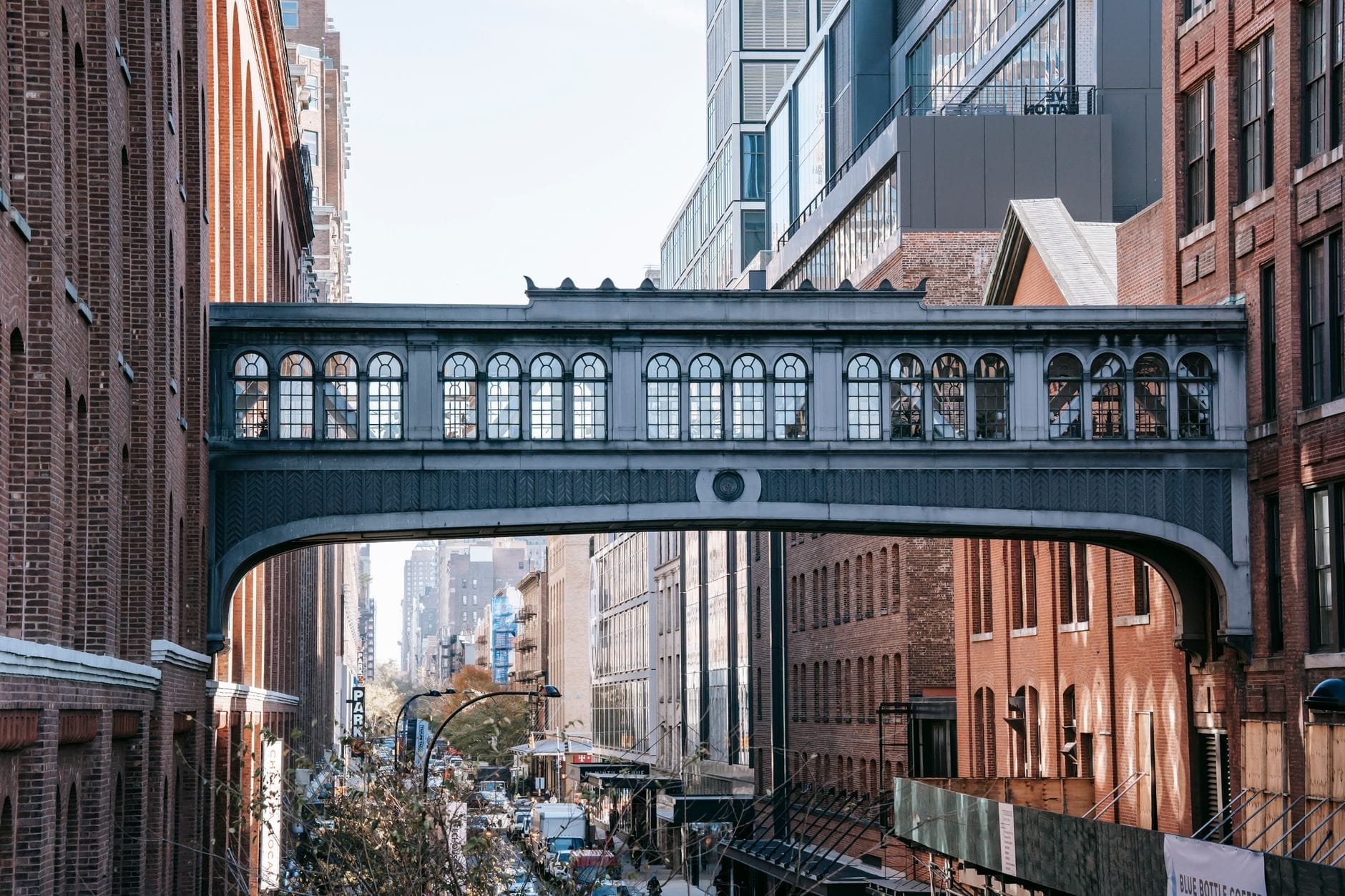
Chelsea Market is not a farmers market, not a food court, and not a shopping mall, though it shares DNA with all three. It is a roughly 1.1-million-square-foot complex running the full block between Ninth and Tenth Avenues, with a ground-floor corridor of roughly 35 vendors, restaurants, and specialty retailers. You enter through heavy industrial doors, and the building announces itself immediately: exposed brick, raw steel, overhead pipes painted in faded colors, and the faint smell of baked goods that seems to have seeped into the walls over a century.
The upper floors house offices, including major Google New York offices, but the ground level belongs entirely to the public. The main corridor is roughly 800 feet long and curves slightly, so you can never see the full length from either entrance. That design quirk forces you to walk the whole stretch to see what you might have missed, which is partly the point.
💡 Local tip
Enter from the Ninth Avenue side (15th Street) if you want to start near the market's food-heavy core. The Tenth Avenue entrance near the High Line is better if you're arriving from the west.
The Building's History: Why the Bones Matter
The site's identity runs deeper than any single tenant. This block was the major production complex of the National Biscuit Company, later known as Nabisco, from the late nineteenth century onward. The Oreo cookie is widely credited as having been invented here in 1912, a fact the market leans into without overplaying.
The complex is actually a collection of eleven interconnected brick factory buildings, not one structure. Developers began converting it into a food and retail market in 1997, and the adaptive reuse was carefully managed to preserve the industrial fabric rather than sanitize it. The result is that structural elements most developers would have ripped out, overhead catwalks, original factory windows, raw concrete load-bearing columns, are now the building's primary aesthetic selling point.
For visitors interested in how this neighborhood evolved around the market, the High Line runs directly above the Tenth Avenue side of the building, and the two attractions are physically connected at street level. The area's transformation from industrial district to cultural destination is one of the more coherent urban stories in recent Manhattan history.
Tickets & tours
Hand-picked options from our booking partner. Prices are indicative; availability and final rates are confirmed when you complete your booking.
Chelsea Market, High Line and Meatpacking food and history tour
From 48 €Instant confirmationFree cancellationHigh Line, Chelsea, Hudson Yards Walking Tour with Edge Admission
From 44 €Instant confirmationFree cancellationThe High Line & Chelsea guided walking tour
From 33 €Instant confirmationFree cancellationStatue of Liberty, Ellis Island, and Brooklyn Bridge Happy Hour Cruise
From 49 €Instant confirmationFree cancellation
What You'll Find Inside: Vendors and Atmosphere
The vendor mix skews toward quality over novelty. Lobster Place is the market's anchor seafood vendor, a proper fishmonger with a raw bar and prepared food counter that draws long lines by noon. Los Tacos No. 1 routinely has the longest line in the building, sometimes snaking back twenty people before 1pm on weekends. Buon Italia stocks Italian pantry goods you will genuinely struggle to find elsewhere in the city. L'Arte del Gelato, Fat Witch Bakery, and Anthropologie sit alongside cooking supply shops, a wine merchant, and a bookstore with a tight, well-curated selection.
The corridor has a few seating areas with communal tables, but not enough for the midday crowd. A small interior water feature, a stone channel with running water, runs along part of the floor, easy to miss if you're focused on the food stalls. The ceiling heights vary considerably as you move through the connected buildings, shifting from low and intimate to cathedral-scale industrial without warning.
Photography is straightforward here: natural light from the large factory windows is best in the morning, and the east-facing windows on the Ninth Avenue side get direct light until around 11am. By afternoon, the interior is evenly lit but darker, which makes food photography harder without a phone flash.
When to Visit: Crowds and Timing
Chelsea Market typically opens in the morning and stays open into late evening, with exact hours varying by day and tenant, though individual vendor hours vary and some open later or close earlier than the building itself. The market is at its quietest before 9am on weekdays, when the coffee counters are open but the food vendors are still setting up. This is the best time to walk the full corridor without fighting foot traffic.
Saturday and Sunday between 11am and 3pm are the most crowded periods by a considerable margin. The corridor becomes genuinely difficult to navigate at peak times, and the lines at popular vendors can double in length. If you're visiting on a weekend specifically for the food, arriving at opening or after 3pm is the practical move.
⚠️ What to skip
Holiday hours differ from standard hours on Thanksgiving, Christmas Eve, Christmas Day, New Year's Eve, and New Year's Day. Check the official website at chelseamarket.com/visit before planning a holiday-period visit.
Weekday lunch hours, roughly 12pm to 2pm, bring a different crowd: office workers from the upper floors and nearby buildings filling the communal tables quickly. If you can time a weekday visit for mid-morning or mid-afternoon, you'll get a calmer experience with shorter waits at the more popular counters.
Getting There and Getting Around
The most direct subway access is the A, C, E, or L train to 14th Street at Eighth Avenue. From there, walk one block west to Ninth Avenue and one block north to 15th Street. Total walking time is under five minutes. The M11 bus runs down Ninth Avenue and stops directly outside the market's main entrance. If you're coming from the High Line, the Tenth Avenue entrance at 15th Street puts you at the market's western end.
Chelsea Market sits in the heart of the Chelsea and Meatpacking District neighborhood, making it a natural stop on a longer walk that might include the High Line to the north or the Meatpacking District's galleries and shops to the south.
Parking is not a practical option. The surrounding streets are metered and often congested, and the nearest garages fill quickly on weekends. Public transit or walking from nearby neighborhoods is the sensible approach.
Who Gets the Most Out of Chelsea Market (And Who Might Not)
Food-focused travelers get the clearest return here. The quality of ingredients at vendors like Lobster Place and Buon Italia is genuinely high, and you can build a serious meal by moving between counters. Architecture and design visitors will find the industrial conversion worth studying as a case study in adaptive reuse, particularly the transition between building sections where you can read the original factory structure most clearly.
Travelers looking for a quiet, contemplative experience should manage their expectations. On busy days the noise level in the corridor is substantial, with conversation, vendor activity, and foot traffic creating a constant low roar. It's an energetic environment, not a calm one.
If you're building a full day around this part of Manhattan, the Whitney Museum of American Art is a short walk south, and the High Line entrance closest to Chelsea Market is immediately adjacent on Tenth Avenue. The NYC food guide has more context on how Chelsea Market fits into the broader food landscape of the city.
Visitors who have already spent time in well-known food halls in other cities, Eataly, Reading Terminal Market, Borough Market in London, may find Chelsea Market familiar rather than revelatory. It is a strong example of the format, but it's not without competition even within Manhattan. The experience is worth the stop, especially given the free entry, but managing expectations around the weekend crowds will make the visit more enjoyable.
Practical Notes Worth Knowing
Entry is free and there is no ticket, reservation, or timed-entry requirement. You can walk in, browse, and leave without spending anything, though leaving without buying food requires some discipline. Most vendors accept card payments; cash is useful but not necessary for the majority of stalls.
If you're combining Chelsea Market with a broader neighborhood walk, the NYC walking tour guide covers routes that connect the market to the High Line, Hudson Yards, and the Meatpacking District in a single afternoon.
The building is largely accessible at ground level, with a wide flat corridor running its full length. Specific details about elevator access to upper-level spaces or accessible restroom locations are best confirmed directly with the market before your visit.
Insider Tips
- Lobster Place's raw bar is a genuinely good value for oysters at lunch on weekdays, when the line is a fraction of the weekend length. The full lobster rolls are priced accordingly, but the oyster selection is strong.
- The water channel running along the corridor floor is easy to step over without noticing. It's one of the building's original decorative elements from the 1997 conversion and worth a look if you're interested in how the architects approached the renovation.
- Buon Italia, near the Tenth Avenue end, stocks Italian pantry items including specific pasta shapes, cured meats, and regional cheeses that are difficult to source elsewhere in Manhattan. It functions as a proper specialty grocer, not just a market stall.
- The best photographs of the corridor's architecture are taken from the Ninth Avenue entrance looking west, early in the morning before the foot traffic builds. The light through the factory windows creates strong contrast against the brick walls.
- If you need a seat and the communal tables are full, the area near the Tenth Avenue exit has slightly more breathing room and occasional free seating near the High Line entrance.
Who Is Chelsea Market For?
- Food travelers who want to graze across multiple vendors in a single space
- Architecture and design enthusiasts interested in adaptive industrial reuse
- Rainy-day visitors looking for a covered, walkable alternative to outdoor sightseeing
- Travelers pairing a visit with the High Line, which connects directly at the Tenth Avenue side
- Anyone wanting a self-directed food hall experience without admission fees or reservations
Nearby Attractions
Other things to see while in Chelsea & Meatpacking District:
- The High Line
Built on a disused freight rail spur above the streets of Manhattan's West Side, the High Line is a 1.45-mile elevated public park running from the Meatpacking District to Hudson Yards. Free to enter year-round, it combines landscape architecture, rotating public art, and some of the best oblique views of the Hudson River and Chelsea's roofline. The experience shifts dramatically depending on the season and the hour you arrive.
- Hudson River Park
Stretching roughly 4–4.5 miles along Manhattan's Hudson River shoreline from the northern end of Battery Park City to West 59th Street, Hudson River Park is the second-largest park in Manhattan. With 550 acres, roughly 20 public piers, and free admission, it offers a rare combination of open sky, river views, and accessible green space in one of the world's densest cities.
- Little Island at Pier 55
Little Island at Pier 55 is a free, 2.4-acre public park that appears to float above the Hudson River on tulip-shaped concrete pillars. Opened in 2021, it combines landscape architecture, outdoor performance spaces, and sweeping river views in one of the most inventive public spaces New York City has built in decades.
- Whitney Museum of American Art
Perched between the High Line and the Hudson River in the Meatpacking District, the Whitney Museum of American Art is the country's foremost institution dedicated to art made in the United States. The Renzo Piano-designed building is as much a reason to visit as the collection inside.