Whitney Museum of American Art: What to Know Before You Visit
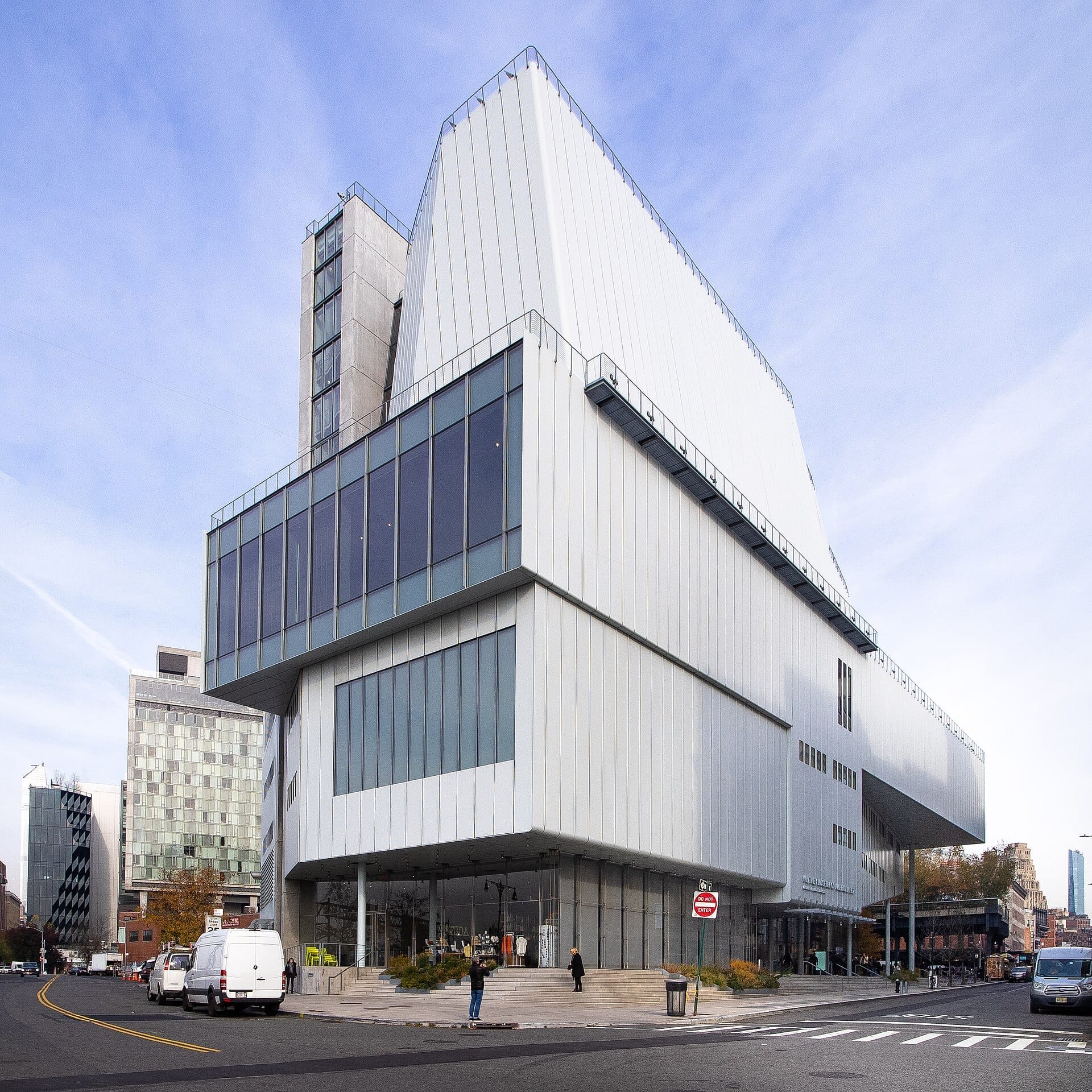
Perched between the High Line and the Hudson River in the Meatpacking District, the Whitney Museum of American Art is the country's foremost institution dedicated to art made in the United States. The Renzo Piano-designed building is as much a reason to visit as the collection inside.
Quick Facts
- Location
- 99 Gansevoort Street, Meatpacking District, Manhattan
- Getting There
- A, C, E, L to 14th St–8th Ave (approx. 6 blocks)
- Time Needed
- 2–3 hours for a focused visit; 4+ for a full exploration
- Cost
- Adults $30 | Seniors/Students $24 | 25 and under always free | Free Fridays 5–10 pm and Free Second Sundays
- Best for
- Contemporary American art, architecture lovers, free Friday evenings
- Official website
- whitney.org
What the Whitney Actually Is
The Whitney Museum of American Art is not a general art museum that happens to have American works. It is a single-subject institution with a singular mission: collecting, preserving, and interpreting art created in the United States from the 20th century to today. That focus gives it a coherence that broader encyclopedic museums cannot replicate. Walking through its galleries, you are not browsing a survey of world art history. You are looking at one country's artistic conversation with itself, over roughly one hundred years.
The museum was founded in 1930 by Gertrude Vanderbilt Whitney, a sculptor and passionate collector who had been rejected by the Metropolitan Museum of Art when she offered her collection as a donation. She opened her own museum the following year, in 1931, on West Eighth Street near Fifth Avenue. It moved to West 54th Street in 1954, then relocated again to a landmark Marcel Breuer-designed building on Madison Avenue at 75th Street in 1966. That Brutalist building later became the Met Breuer, operated by the Metropolitan Museum, and is now home to the Frick Madison. The Whitney's current home, designed by Italian architect Renzo Piano and opened on May 1, 2015, is a very different statement.
The permanent collection holds more than 27,000 works, spanning painting, sculpture, photography, film, video, and performance. The museum is particularly strong in early 20th-century American modernism and post-war abstraction, and its commitment to living artists means the collection is actively growing. The Whitney Biennial, held every two years, has been a bellwether of American contemporary art since 1932.
The Building: Renzo Piano at 99 Gansevoort
The building itself rewards close attention before you step inside. Piano designed an asymmetric stack of volumes in steel, concrete, and glass that is deliberately industrial in character, referencing the neighborhood's history as a meatpacking and warehouse district rather than trying to overwrite it. The exterior is clad in a blue-grey painted steel that picks up the light and color of the Hudson River, which sits just two blocks to the west. From certain angles, especially looking up from the corner of Gansevoort and Washington Streets, the building's cantilevered upper floors create a sense of weight and float at the same time.
The site was chosen deliberately. The southern terminus of the High Line passes directly alongside the museum's north facade, and Piano designed generous outdoor terraces on multiple floors that open onto that elevated walkway. The largest terrace, on the eighth floor, offers an unobstructed view of the Hudson River and the piers of Hudson River Park. On a clear afternoon, the light here is soft and lateral, ideal for sitting with the view rather than rushing to the next gallery.
💡 Local tip
The ground floor, including the lobby, the Floor 1 gallery, the museum shop, and Frenchette Bakery, the ground-floor bakery, is always free to enter. You do not need a ticket to walk in, browse the shop, have coffee, or see the lobby installation.
Inside, the galleries are tall and raw-feeling, with exposed concrete columns, wide-plank oak floors in some spaces and polished concrete in others. The industrial scale was not accidental: Piano designed rooms large enough to accommodate the oversized canvases and large-format video installations that define much of contemporary American art. Natural light enters through carefully positioned skylights and floor-to-ceiling windows, and the quality of that light shifts noticeably over the course of a day.
Tickets & tours
Hand-picked options from our booking partner. Prices are indicative; availability and final rates are confirmed when you complete your booking.
Whitney Museum of American Art and Manhattan Walking Tour
From 49 €Instant confirmationFree cancellationStatue of Liberty, Ellis Island, and Brooklyn Bridge Happy Hour Cruise
From 49 €Instant confirmationFree cancellationSpirit of New York Dinner Cruise
From 161 €Instant confirmationFree cancellationNew York City Highlights bike tour
From 70 €Instant confirmationFree cancellation
The Collection: What You Will Actually See
The permanent collection galleries rotate frequently, so no two visits are identical. That said, certain artists and movements consistently appear: Edward Hopper, Georgia O'Keeffe, Alexander Calder, Jasper Johns, Mark Rothko, Louise Bourgeois, Kara Walker, and Cindy Sherman are names you can reasonably expect to encounter. The museum holds the largest collection of Hopper's work in the world, including some of his most recognized paintings, and there is usually a dedicated Hopper gallery on one of the upper floors.
The Whitney's strength is not just in individual names but in how it contextualizes American art politically and socially. Works are frequently grouped thematically rather than chronologically, which means you might find a 1940s oil painting in conversation with a 2010 video installation. That curatorial approach requires some adjustment if you are used to conventional art museum sequencing, but it often produces unexpected comparisons that make both works more legible.
Special exhibitions run alongside the permanent collection and are generally included in the admission price. The Whitney Biennial is worth timing your visit around if you have flexibility. It is one of the few institutional exhibitions in the country that consistently generates genuine critical debate rather than comfortable retrospectives. For context on how the Whitney fits into NYC's broader museum landscape, see our guide to the best museums in New York City.
How the Experience Changes by Time of Day
Weekday mornings between 10:30 am and noon are the quietest period. Groups and school visits tend to arrive mid-morning, but the museum is large enough that they rarely overrun the upper-floor galleries. If you want the Hopper room or the largest exhibition galleries to yourself, a Wednesday or Thursday morning is your best window. The natural light in the upper galleries during late morning is particularly clean, with diffused northern light coming through the skylights.
Friday evenings from 5 pm to 10 pm offer free admission, which means they draw a mixed crowd: after-work professionals, art students, date-night visitors, and people who simply want to be inside a beautiful building without spending $30. It is crowded, particularly in the ground-floor spaces and the outdoor terraces, but the energy is different from a typical museum visit. The bar on the ground floor opens, the light shifts to golden evening tones across the Hudson-facing terraces, and the galleries feel more social than contemplative. If you are looking for an atmosphere more like a cultural event than a hushed museum experience, Friday evening is the right choice.
Weekend afternoons are the most congested period, especially when a major special exhibition is running. The second Sunday of each month offers free admission, which compounds the crowd. If you visit on a free Sunday, arrive at opening time (10:30 am) to get ahead of the peak. Saturday mornings are a reasonable middle ground: some weekend energy without the full weekend-afternoon pressure.
ℹ️ Good to know
Tuesday is the museum's regular closed day outside of the extended summer schedule. Always check current hours at whitney.org before visiting, as the museum operates an extended summer schedule (typically mid-June through mid-August) when it opens seven days a week.
Getting There and Practical Logistics
The museum sits at 99 Gansevoort Street, at the southern edge of the Meatpacking District, about half a block from the Hudson River. The closest subway stop is 14th Street–8th Avenue, served by the A, C, E, and L lines. From the station, walk south on 8th Avenue, then west on Gansevoort Street; the walk takes roughly six minutes. The museum entrance is on Gansevoort Street, and the building is immediately identifiable from a distance.
Citi Bike docks are available at the southwest corner of Gansevoort Street and Washington Street, directly outside the museum. If you are combining this visit with a walk along the High Line, the natural approach is to walk the High Line south from 23rd Street or 14th Street and descend at the Gansevoort Street exit, which deposits you directly at the museum's north entrance. That sequence places the building at the end of the walk rather than the beginning, which is architecturally satisfying.
Driving is not recommended unless you have a specific reason. Street parking in the Meatpacking District is extremely limited, and garage rates in the area are high. ICON Parking operates facilities nearby on Jane Street and West 15th Street if you have no alternative.
The museum is fully accessible by ramp and elevator. Manual wheelchairs are available free of charge on a first-come, first-served basis at the admissions desk or coat check. All levels, including outdoor terraces, are accessible.
Tickets, Pricing, and Free Entry Options
Standard adult admission is $30. Seniors and students pay $24. Visitors age 25 and under are admitted free every day, with no special code or proof of membership required beyond age verification, as part of the Free 25 and Under program. Members enter free at all times. These prices are current as of the museum's published schedule but can change; verify at whitney.org before your visit.
Two additional free windows are worth knowing: Friday evenings from 5 pm to 10 pm, and the second Sunday of every month, when the full museum is open at no charge. These are genuine free admissions, not pay-what-you-wish arrangements. The trade-off is that these sessions are busier than standard admission hours. The Friday evening window is particularly good because the extended hours (until 10 pm) allow you to avoid the early evening rush by arriving at 7 or 7:30 pm.
If you are managing a tight budget across multiple NYC museums, the Whitney's free-entry structure can make it one of the more accessible options. For a broader look at cost-effective cultural visits in the city, see our guide to free things to do in New York City.
Photography, Outdoor Terraces, and What Else Is Here
Photography for personal, non-commercial use is permitted throughout most of the museum, including in permanent collection galleries. Some temporary exhibitions restrict photography, and signage will indicate this clearly. The outdoor terraces on Floors 5, 6, and 8 are open during museum hours and offer some of the better elevated views of the Hudson River and the West Village roofline available anywhere in the neighborhood without paying observatory prices. The eighth-floor terrace in particular is large enough to walk around rather than just stand and photograph.
For views of a different kind, the rooftop terraces here pair naturally with a broader itinerary of NYC viewpoints. Our guide to the best views in New York City covers the full range, from here to the observatories uptown.
The ground floor is worth spending time in regardless of whether you pay for the upper galleries. Frenchette Bakery, the restaurant and bakery, serves breakfast and lunch, with a menu that runs toward upscale American comfort food. It is not cheap, but the space is well-designed, the coffee is good, and it connects directly to the outdoor ground-floor space facing the street. The museum shop stocks a well-curated selection of art books, catalogues, and design objects, and is one of the better art bookshops in Lower Manhattan.
Honest Assessment: Is It Worth It?
The Whitney is not overhyped. The $30 adult ticket is not cheap by museum standards, but the building alone justifies a visit, and the collection is genuinely strong. The caveat is that the experience is highly dependent on what is currently on show. When the temporary exhibitions are firing, particularly during Biennial years, the Whitney is one of the most intellectually engaging museums in the city. During quieter programming periods, the permanent collection galleries can feel relatively thin for $30.
Visitors who find contemporary American art inaccessible or frustrating may struggle here. The collection makes no effort to ease the viewer in with familiar historical work before moving into the challenging. If the Metropolitan Museum of Art's European galleries are your comfort zone, the Whitney will require a different kind of patience. That is not a flaw, but it is worth knowing before you spend $30 and two hours on a rainy afternoon. Travelers with children under 10 may also find the gallery format less engaging than family-oriented institutions in the city.
If you are planning a broader art itinerary in the city, the Whitney fits naturally into a New York City art guide that also covers the Met, MoMA, and the Guggenheim. Each has a genuinely different character, and knowing what each does best will help you allocate your time.
Insider Tips
- Friday evenings are free, but if you arrive between 5 and 6:30 pm you will compete with the after-work rush at the entrance. Arriving at 7 or 7:30 pm gives you more room in the galleries and the terraces are less congested as the initial crowd thins.
- The High Line's Gansevoort Street exit deposits you directly at the museum's north entrance. Walking the High Line south first and ending at the Whitney is a natural half-day itinerary that requires no backtracking.
- Coat check is on Floor -1, accessible by elevator, and is free. Using it makes navigating the galleries considerably easier on cold-weather days when you would otherwise be carrying a heavy coat through narrow viewing spaces.
- The museum's eighth-floor terrace is open during all museum hours and is one of the few elevated outdoor spaces in the Meatpacking District that does not require a restaurant reservation. On clear evenings, the view west over the Hudson is worth the elevator ride even if you have seen it before.
- If you are a student or age 25 or under, you never pay. But bring ID. Staff do check, particularly on free Fridays when the policy is most likely to be tested.
Who Is Whitney Museum of American Art For?
- People with a genuine interest in 20th-century and contemporary American art, particularly abstract, conceptual, and socially engaged work
- Architecture and design enthusiasts who want to experience a landmark Renzo Piano building in detail
- Budget-conscious visitors willing to plan around Free 25 and Under, free Friday evenings, or free Second Sundays
- Visitors 25 and under, who receive free admission every day without conditions
- Anyone combining the museum with a High Line walk, as the two experiences connect physically and thematically
Nearby Attractions
Other things to see while in Chelsea & Meatpacking District:
- Chelsea Market
Chelsea Market is a sprawling indoor food hall and retail complex built inside the former National Biscuit Company factory on Ninth Avenue. Free to enter and open daily, it draws millions of visitors a year with a mix of specialty food vendors, independent shops, and raw industrial architecture that no purpose-built market can replicate.
- The High Line
Built on a disused freight rail spur above the streets of Manhattan's West Side, the High Line is a 1.45-mile elevated public park running from the Meatpacking District to Hudson Yards. Free to enter year-round, it combines landscape architecture, rotating public art, and some of the best oblique views of the Hudson River and Chelsea's roofline. The experience shifts dramatically depending on the season and the hour you arrive.
- Hudson River Park
Stretching roughly 4–4.5 miles along Manhattan's Hudson River shoreline from the northern end of Battery Park City to West 59th Street, Hudson River Park is the second-largest park in Manhattan. With 550 acres, roughly 20 public piers, and free admission, it offers a rare combination of open sky, river views, and accessible green space in one of the world's densest cities.
- Little Island at Pier 55
Little Island at Pier 55 is a free, 2.4-acre public park that appears to float above the Hudson River on tulip-shaped concrete pillars. Opened in 2021, it combines landscape architecture, outdoor performance spaces, and sweeping river views in one of the most inventive public spaces New York City has built in decades.