Hudson River Park: Manhattan's Miles-Long Waterfront Escape
Stretching roughly 4–4.5 miles along Manhattan's Hudson River shoreline from the northern end of Battery Park City to West 59th Street, Hudson River Park is the second-largest park in Manhattan. With 550 acres, roughly 20 public piers, and free admission, it offers a rare combination of open sky, river views, and accessible green space in one of the world's densest cities.
Quick Facts
- Location
- West Street from Battery Place to W 59th St, Manhattan (runs through multiple neighborhoods including Chelsea/Meatpacking)
- Getting There
- Multiple subway lines and crosstown buses serve the park's length; enter from west-side cross streets. Check current MTA maps for nearest stop to your target pier.
- Time Needed
- 1–4 hours depending on how much you walk; a full south-to-north walk takes 2–3 hours
- Cost
- Free to enter; individual activities and concessions charge separately
- Best for
- Runners, cyclists, families, anyone wanting river views without a ticket price
- Official website
- hudsonriverpark.org
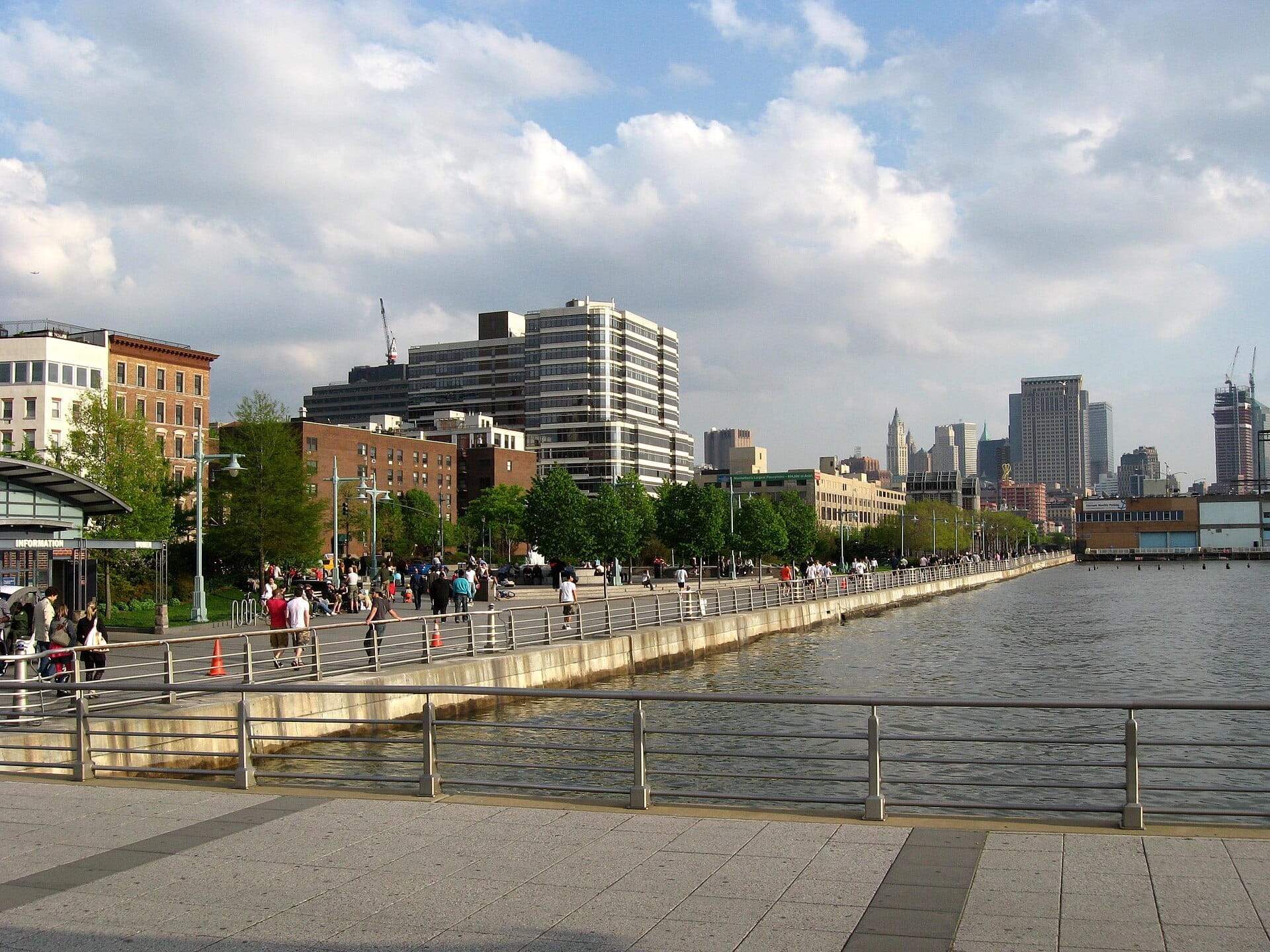
What Hudson River Park Actually Is
Hudson River Park is not a single destination with a gate and a focal point. It is a continuous roughly 4–4.5-mile linear park along the western edge of Manhattan, managed by the Hudson River Park Trust, a New York State public-benefit corporation established under the Hudson River Park Act of 1998. The park runs from the northern end of Battery Park City near Chambers Street all the way north to West 59th Street in Hell's Kitchen, passing through Tribeca, the West Village, the Meatpacking District, Chelsea, and Hudson Yards along the way.
At roughly 550 acres, it is the second-largest park in Manhattan after Central Park, and it includes about 20 public piers that jut out into the Hudson River. Each pier has its own character. Some are lively recreation hubs with sports courts and event spaces. Others are quieter, reserved for ecological habitat or contemplative waterfront sitting. Understanding this variety is the key to getting what you want from a visit.
ℹ️ Good to know
General park hours are 6:00 AM to 1:00 AM daily for most areas of the park, year-round. Hours for specific piers and facilities may vary. Always check on-site signage or the official Hudson River Park website before planning around a specific pier.
The Feel of the Park: Morning, Afternoon, and Evening
Early mornings belong to locals. From around 6:30 AM, the esplanade fills with runners in a quiet rhythm, their footsteps audible against the lapping of river water. The Hudson is wide here, and the western shore of New Jersey sits low on the horizon across the water. The light in the morning comes from behind you if you are heading north, casting long shadows across the planks of the wooden piers.
By midday on a weekend in spring or summer, the mood shifts completely. Cyclists in clip-shoes compete for space with families pushing strollers, teenagers on electric scooters, and tourists stopping in the middle of the path to photograph the Statue of Liberty or the New Jersey Palisades. The smell of sunscreen and food cart pretzels drifts over from the park entrances. It becomes, in parts, quite crowded.
Evenings offer something different again. As the sun drops toward New Jersey around 7 or 8 PM in summer, the western-facing piers become some of the best places in the entire city to watch a sunset. The sky turns orange and pink behind the skyline of Jersey City and Hoboken, and the river catches the color. Groups gather on pier benches with takeout containers and cans of beer from nearby shops. It is relaxed in a way that feels rare in Manhattan.
For a full overview of where this park fits among Manhattan's outdoor spaces, see our guide to free things to do in New York City.
Tickets & tours
Hand-picked options from our booking partner. Prices are indicative; availability and final rates are confirmed when you complete your booking.
High Line, Chelsea, Hudson Yards Walking Tour with Edge Admission
From 44 €Instant confirmationFree cancellationSecrets of Hudson Yards, High Line & The Vessel
From 30 €Instant confirmationFree cancellationNew York City High-Line and Hudson Yards walking tour
From 36 €Instant confirmationFree cancellationStatue of Liberty, Ellis Island, and Brooklyn Bridge Happy Hour Cruise
From 49 €Instant confirmationFree cancellation
What You Will Actually See: Key Sections of the Park
The southern end of the park, near Tribeca and the West Village, is generally quieter and less commercially developed. The piers here tend to attract joggers and dog walkers rather than large crowds. Pier 25 in Tribeca is a notable exception, offering beach volleyball, minigolf, and a playground that draws families throughout the warmer months.
As you move north through the Meatpacking District and into Chelsea, the park becomes more active and more varied. Pier 45, sometimes called 'the lawn pier' by regulars, is a wide open grass rectangle jutting into the river. On warm afternoons, it is completely covered with sunbathers lying shoulder to shoulder. It functions as a kind of rooftop terrace for the West Village, except the view is the Hudson rather than a skyline. Pier 46 nearby is quieter, with benches facing south and west.
Chelsea Piers, the large sports and entertainment complex anchoring the Chelsea section of the park around West 17th to 23rd Streets, marks the densest stretch of activity. Here you will find a golf driving range, an ice rink (seasonal), gymnastics facilities, and a marina. It is largely ticketed and commercial, but the outdoor promenade alongside it is free and worth walking. The marina's sailboat masts creak and clink on breezy afternoons.
The park's Chelsea stretch connects naturally to the elevated High Line just a few blocks inland, making a natural combined walk for anyone exploring the west side of Manhattan.
How to Get There and Move Through the Park
The park runs the entire length of Manhattan's west side and can be entered from virtually every major cross street that terminates at the river. There is no single entrance. The most practical approach is to decide which section of the park you want to visit first, then take the subway to the nearest stop in the corresponding neighborhood and walk west.
For the Chelsea and Meatpacking section, the A, C, and E trains to 14 St (Eighth Avenue), or the L train to 8 Av, put you within about a 10-minute walk of the river. For Tribeca piers, the 1 train to Franklin Street or the A/C/E to Chambers Street are practical options. For the northern section near West 59th Street, the 1, A, B, C, and D trains to 59 St–Columbus Circle are closest.
The shared-use path running the length of the park is a mixed cycling and pedestrian route. If you intend to cycle the full stretch, be aware that the path crosses several active road intersections and passes through bottleneck sections near popular piers. Citi Bike stations are located throughout the area, making a one-way ride along the park and back through the interior a very workable half-day plan.
⚠️ What to skip
The shared path between cyclists and pedestrians causes regular conflict near crowded piers, especially Pier 45 and Chelsea Piers on weekends. If you are walking with children or at a slower pace, expect fast-moving cyclists and e-bikes to pass closely. Stay in the pedestrian lane where it is marked.
History and Ecological Context
Before the Hudson River Park Act of 1998 formalized the park's creation, this stretch of Manhattan's waterfront was a working industrial and commercial port. The piers were used for transatlantic ocean liners, freight, and later by the city's Department of Sanitation. Many piers fell into disrepair through the latter half of the 20th century. The conversion of this waterfront from industrial infrastructure to public green space is one of the more significant urban reclamation projects in New York City's recent history.
The Hudson River Park Trust oversees not just the recreational park but also an estuarine sanctuary that covers the entire stretch of river alongside the park. Several piers have been intentionally designed with habitat structures below the waterline to support fish and invertebrate populations in the river. If you look over the edge of certain piers, you can see the underwater reef structures through the water at low tide.
For context on how this waterfront fits into the wider fabric of lower Manhattan, the Chelsea and Meatpacking District neighborhood guide covers the cultural and architectural character of the area immediately east of the park.
Photography, Weather, and Practical Logistics
The park faces west across the Hudson, which means afternoon and evening light is ideal for photography. Morning light comes from behind, which can work well for photographing the river surface and the New Jersey shore, but less so for capturing any features on the Manhattan side. The best photography windows are roughly 30 minutes before and after sunset on clear days, particularly from Pier 45 or from the open lawns near the northern Chelsea piers.
Wind is a significant factor on exposed piers. Even on a mild day in the city, standing at the end of a pier over open water can feel significantly colder. In autumn and winter, the wind off the Hudson is sharp and persistent. Layers are practical even when temperatures seem comfortable inland. Rain renders several piers extremely slippery, as the wooden decking loses grip quickly.
The park is fully wheelchair accessible with paved or gently ramped pathways along the esplanade. Most pier access points accommodate mobility devices, though the older wooden surface of some piers can be uneven. The official Hudson River Park website provides accessibility contact information for visitors who need specific guidance.
💡 Local tip
For the best combination of open space and river views without crowds, visit the park on a weekday morning between 7 and 10 AM, or in late September through October when temperatures are mild, the summer crowds have thinned, and the light over the Hudson is particularly clear.
Who This Park Is Not For
If you are expecting a curated, interpretive experience with clear signage explaining what you are looking at, Hudson River Park will feel underdeveloped. It is a working public park, not a tourism attraction with an itinerary. Visitors who arrive without a sense of which pier or section they want to explore often find themselves walking past chain-link fencing around ongoing construction, crossing busy roads at unmarked intersections, or ending up at a pier that is closed for a private event.
Construction has been a persistent feature of the park since it opened, and remains so. Several piers are in various stages of renovation or redevelopment at any given time. This does not undermine the park's appeal, but it does require a degree of flexibility and advance checking of which sections are open.
Travelers visiting New York City for the first time who want a compact, high-impact overview of the city may find the park less immediately rewarding than iconic sites. The first-time visitor guide to New York City can help prioritize how to balance waterfront time against other experiences.
Insider Tips
- Pier 45 fills completely on warm weekend afternoons from May through September. If you want to sit on the grass with a river view without the crowd, arrive before 10 AM or visit on a weekday.
- The section of the park between West 26th and West 34th Streets is less trafficked than the Chelsea Piers stretch and the West Village piers, and offers some of the widest, most unobstructed views of the river.
- Several piers host free outdoor film screenings and fitness classes during summer. Check the Hudson River Park Trust's official events calendar before your visit, as these fill up quickly and schedules change year to year.
- If you plan to cycle the full length, go south to north in the morning so the sun is at your back on the return. Citi Bike docks are plentiful along the route; you do not need to complete a round trip on the same bike.
- The esplanade near the park's southern end toward Battery Park City is significantly less crowded and better maintained than mid-park stretches, making it a good option for a quieter waterfront walk combined with a visit to nearby Lower Manhattan landmarks.
Who Is Hudson River Park For?
- Runners and cyclists looking for a long, flat, car-free route along the water
- Families wanting outdoor space with playgrounds and river access at no cost
- Sunset-watchers and photographers working with western light over the Hudson
- Visitors combining a walk with nearby attractions like the High Line or the Whitney Museum
- Locals and repeat visitors wanting a few hours of open sky away from Midtown density
Nearby Attractions
Other things to see while in Chelsea & Meatpacking District:
- Chelsea Market
Chelsea Market is a sprawling indoor food hall and retail complex built inside the former National Biscuit Company factory on Ninth Avenue. Free to enter and open daily, it draws millions of visitors a year with a mix of specialty food vendors, independent shops, and raw industrial architecture that no purpose-built market can replicate.
- The High Line
Built on a disused freight rail spur above the streets of Manhattan's West Side, the High Line is a 1.45-mile elevated public park running from the Meatpacking District to Hudson Yards. Free to enter year-round, it combines landscape architecture, rotating public art, and some of the best oblique views of the Hudson River and Chelsea's roofline. The experience shifts dramatically depending on the season and the hour you arrive.
- Little Island at Pier 55
Little Island at Pier 55 is a free, 2.4-acre public park that appears to float above the Hudson River on tulip-shaped concrete pillars. Opened in 2021, it combines landscape architecture, outdoor performance spaces, and sweeping river views in one of the most inventive public spaces New York City has built in decades.
- Whitney Museum of American Art
Perched between the High Line and the Hudson River in the Meatpacking District, the Whitney Museum of American Art is the country's foremost institution dedicated to art made in the United States. The Renzo Piano-designed building is as much a reason to visit as the collection inside.