Arthur Avenue: The Bronx's Real Little Italy
Arthur Avenue in the Belmont neighborhood of The Bronx is the most genuine Italian-American commercial strip left in New York City. Unlike its Manhattan counterpart, this is a working neighborhood where third-generation butchers, hand-rolled cigars, and fresh pasta made on-site are still the daily norm, not tourist theatre.
Quick Facts
- Location
- Arthur Avenue & East 187th Street, Belmont, The Bronx, NYC
- Getting There
- Metro-North Harlem Line to Fordham, then 10-min walk; or B/D subway to Fordham Road, BX12 bus east
- Time Needed
- 2–3 hours for a proper browse and a meal
- Cost
- Free to walk; budget $15–40 per person for food and provisions
- Best for
- Food lovers, Italian-American culture, neighborhood atmosphere
- Official website
- bronxlittleitaly.com
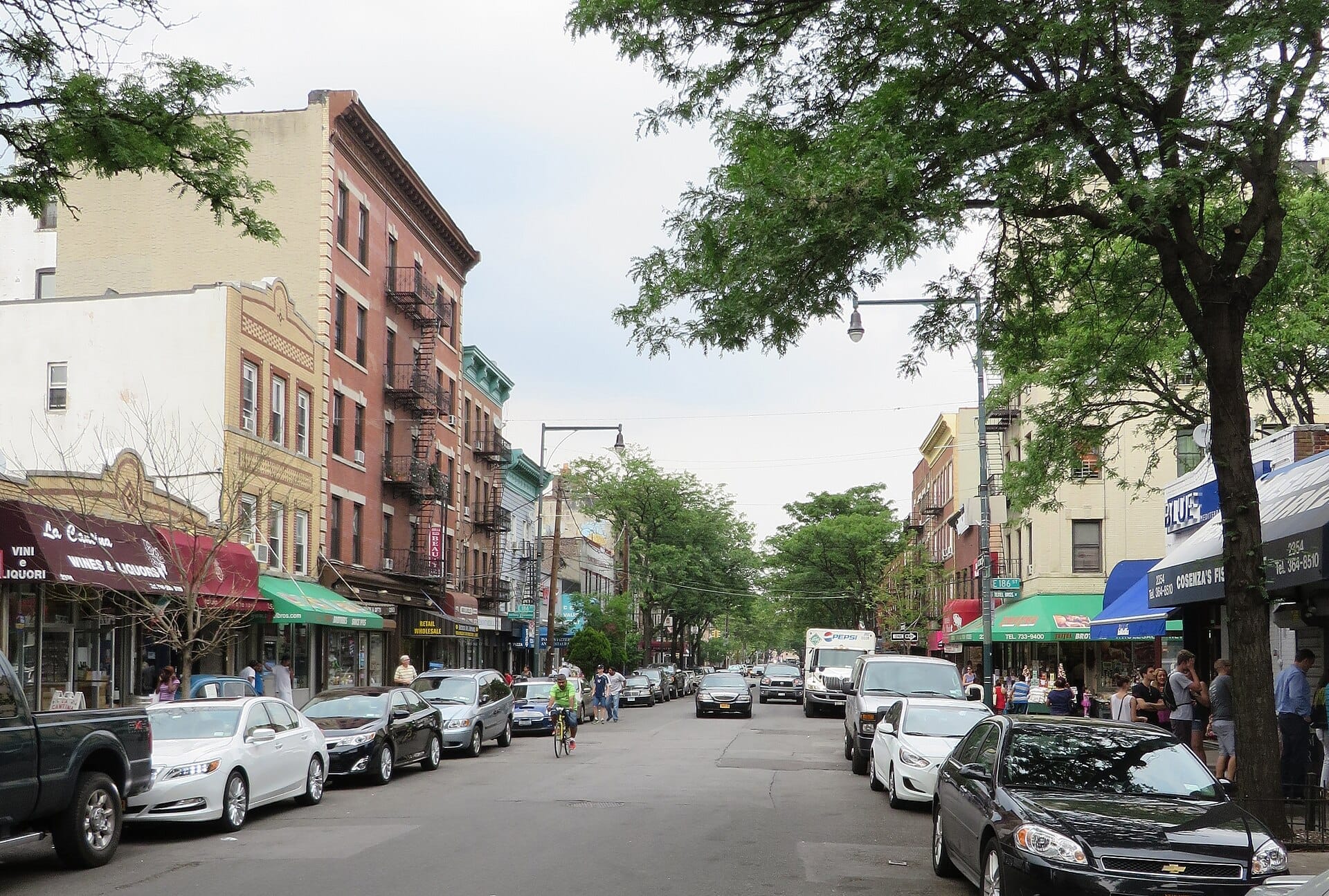
What Arthur Avenue Actually Is
Arthur Avenue is a public street, not a ticketed attraction. It runs through Belmont, a residential neighborhood in the central Bronx, and its commercial heart spans roughly the four-block stretch along Arthur Avenue itself and the cross-block on East 187th Street. There are no rope lines, no admission booths, no curated entrances. You walk in, the smell of fresh bread hits you immediately, and you figure out the rest as you go.
What sets this place apart from Manhattan's Mulberry Street Little Italy is continuity. Where lower Manhattan's Italian identity has largely been absorbed by tourism infrastructure, Belmont remains a working Italian-American neighborhood. The families who own these shops often live nearby. Regulars argue about whose mozzarella is better. The butchers know their customers by name. This is the distinction that gives Arthur Avenue its reputation as the real thing.
💡 Local tip
Most shops operate Tuesday through Saturday, with many closing Sunday and Monday entirely. If you plan around a Monday visit, expect a significantly quieter and less rewarding experience.
The Anchor Stops: What to Look For
The Arthur Avenue Retail Market, a covered indoor market on Arthur Avenue itself, is the clearest entry point for first-time visitors. Built in the 1940s at the direction of Mayor Fiorello La Guardia to get pushcart vendors off the street, the market houses a cluster of independent stalls under one roof: imported Italian grocery items, fresh produce, a legendary cheese and salami counter, and a bar where older men drink espresso without any apparent hurry. The building is modest but the concentration of product is extraordinary.
Outside the market, the street rewards slow walking. Bakeries display taralli, sfogliatelle, and loaves of semolina bread with sesame seeds pressed into the crust. Pork stores stock cuts you will not find at a standard supermarket: tripe, guanciale cured in-house, handmade sausages with fennel or hot pepper. Pasta shops sell fresh sheets and stuffed varieties made the same morning. A tobacco shop a few doors down has been hand-rolling cigars in the window for decades, and the scent drifts onto the sidewalk.
For anyone putting together a broader picture of the Bronx's cultural landscape, Arthur Avenue pairs well with a visit to the Bronx Zoo or the New York Botanical Garden, both within a short distance.
Tickets & tours
Hand-picked options from our booking partner. Prices are indicative; availability and final rates are confirmed when you complete your booking.
NYC Christmas tour with 5th Avenue, Rockefeller Tree and Xmas Village
From 34 €Instant confirmationFree cancellationNYC contrasts tour in the Bronx, Queens & Brooklyn
From 51 €Instant confirmationNew York City bus tour of Brooklyn, Bronx and Queens
From 72 €Instant confirmationFree cancellationNeighborhoods of New York tour: Brooklyn, Bronx, Harlem, Queens and Coney Island
From 72 €Instant confirmationFree cancellation
How the Neighborhood Changes Through the Day
Arrive before 10am and you catch the neighborhood at work. Delivery vans idle outside the pasta shops. Store owners hose down sidewalks. The bakeries are at their most productive, and the bread is still warm. There is very little tourist traffic at this hour, which means you can move through the indoor market and talk to vendors without competing for attention.
From late morning through early afternoon, the energy shifts. Restaurants open for lunch, families from the neighborhood mix with visitors who have made the trip specifically to eat. The trattorias and red-sauce institutions fill up quickly, particularly on Saturdays. If you want a table at one of the more established restaurants without a reservation, arriving right at noon gives you the best chance.
By mid-afternoon, the food shops begin to wind down. Some bakeries sell out of specific items entirely by 2pm. The atmosphere becomes more relaxed, better suited to lingering over coffee at one of the indoor counters than to focused shopping. Late afternoon is a pleasant time to simply walk the surrounding blocks of Belmont, where the residential character of the neighborhood becomes more apparent.
ℹ️ Good to know
Saturday morning is the peak time for locals doing their weekly shopping. The indoor market and the shops along Arthur Avenue are busy but never chaotic, and it is the best single moment to experience the neighborhood at full life.
Historical and Cultural Context
Italian immigrants began settling Belmont in significant numbers in the late 19th and early 20th centuries, many of them originally from southern Italy, particularly Calabria and Campania. The neighborhood developed as a tight-knit enclave with churches, mutual aid societies, and the commercial strip along Arthur Avenue serving as its economic and social spine. By the mid-20th century, Belmont was one of the largest Italian-American communities in the northeastern United States.
The postwar decades brought demographic shifts to many of New York's ethnic neighborhoods, and Belmont was no exception. Albanian and Latin American communities moved into adjacent blocks, and the neighborhood's Italian-American population contracted. What remained was a core of long-established food businesses whose owners chose to stay, many of them inheriting the shops from parents or grandparents. This compression, counterintuitively, intensified the food culture rather than diluting it. The places that survived the transition tended to be the best ones.
The Italian-American story in New York City has multiple threads. For a broader perspective on immigrant community histories in the city, the Tenement Museum on the Lower East Side offers documented accounts of similar settlement patterns from multiple groups.
Eating on Arthur Avenue
Lunch is the more practical meal here. The sit-down trattorias serve red-sauce Italian-American cooking at prices that feel like a different era compared to Manhattan restaurants: a plate of rigatoni with Sunday gravy, a basket of bread, a glass of house wine, and you are unlikely to spend more than $25 to $30 before tip. The food quality varies by establishment, but the established places with lines out the door have earned those lines.
An equally rewarding option is assembling a meal from the shops themselves. A wedge of aged provolone, a few slices of mortadella, a chunk of semolina bread, and a cannoli from the bakery constitute a lunch that costs under $15 and can be eaten on a bench in nearby Fordham Road or standing at a market counter. This is, arguably, the more authentic Arthur Avenue experience: treating the shops as your kitchen rather than walking through them as a spectator.
💡 Local tip
If you are buying from the pork stores or cheese counters, do not hesitate to ask for a taste before committing to a quantity. This is expected practice, not a social imposition.
Getting There and Getting Around
The most straightforward public transit option from Midtown Manhattan is Metro-North's Harlem Line from Grand Central Terminal to the Fordham stop, a ride of roughly 20–40 minutes. From Fordham station, Arthur Avenue is about a 10-minute walk east. Alternatively, the B or D subway lines stop at Fordham Road, from which the BX12 bus runs east toward the neighborhood. The walk from the Fordham Road subway station takes closer to 15 minutes.
For visitors already planning a day in the area, Arthur Avenue integrates easily into a broader Bronx itinerary. The Bronx Zoo entrance is about a mile and a half south of Belmont, manageable on foot or by bus.
Street parking exists but is genuinely competitive on Saturdays. Arriving by transit is the practical choice and avoids circling residential blocks in search of a spot. The neighborhood itself is compact and entirely walkable; you will not need transportation once you arrive.
For visitors with mobility considerations, Arthur Avenue and East 187th Street are standard New York sidewalks, meaning curb cuts are present but surface conditions vary. The indoor Arthur Avenue Retail Market has a single main entrance level and is generally manageable, though the stalls are tightly arranged. Individual restaurants vary in their accessibility and it is worth calling ahead if this matters for your visit.
Photography and What to Expect Visually
Arthur Avenue is photogenic in the way old commercial streets often are: hand-painted signs, cured meats hanging in windows, stacked cans of San Marzano tomatoes, the warm interior light of the indoor market. Morning light on the shop facades is particularly good. That said, some vendors are not enthusiastic about cameras pointed at them while they work, which is a reasonable position. Ask before shooting behind counters. Street-level exteriors and the market's interior architecture are fair game.
The neighborhood does not have grand architectural set pieces. It will not produce the kind of photographs that define a New York City visit. What it produces instead are images with texture and specificity: things that look like nowhere else. If your instinct is to document the particulars of a place rather than its skyline, this is your kind of subject.
Insider Tips
- The pastry shops on East 187th Street sometimes have fresh-made sfogliatelle only on weekend mornings. They sell out by early afternoon and are not restocked. Plan accordingly if this matters to you.
- Several of the pork stores and cheese shops will vacuum-seal purchases for travel, which is worth asking about if you are flying and want to bring provisions home.
- The indoor Arthur Avenue Retail Market has a bar counter near the back where you can get a proper espresso for roughly the same price as a bodega coffee. It is an underused spot to sit down briefly without committing to a full restaurant meal.
- East 187th Street between Arthur Avenue and Hughes Avenue is worth exploring as much as Arthur Avenue itself. The cross-block has additional food vendors and slightly fewer visitors on a typical weekend.
- Come hungry but do not overplan your eating. The best approach is to graze across two or three stops rather than arriving with a fixed reservation at a single restaurant. Flexibility is rewarded here.
Who Is Arthur Avenue — The Real Little Italy For?
- Food travelers who want to shop and eat in a context that still functions as a real neighborhood
- Visitors interested in Italian-American history and the continuity of immigrant community food culture
- Bronx day-trippers pairing the area with the Bronx Zoo or New York Botanical Garden
- Anyone looking for specialty Italian provisions, house-made pasta, aged cheeses, or cured meats at prices well below what Manhattan delis charge
- Photographers drawn to the textures of old commercial streetscapes rather than landmarks
Nearby Attractions
Other things to see while in The Bronx:
- Bronx Zoo
One of the largest urban zoos in the world, the Bronx Zoo stretches across more than 265 acres of hardwood forest in The Bronx, housing over 11,000 animals from 640-plus species. Whether you have three hours or a full day, knowing how the grounds work before you arrive makes all the difference.
- New York Botanical Garden
Spanning 250 acres in The Bronx, the New York Botanical Garden combines world-class plant collections, a landmark Victorian glasshouse, and one of the last old-growth forests in New York City. Here is everything you need to plan a visit worth the trip.
- Pelham Bay Park
Pelham Bay Park is New York City's largest public park, covering 2,772 acres of salt marshes, coastal forest, wetlands, and 13 miles of Long Island Sound shoreline. Three times the size of Central Park, it sits at the northeastern tip of The Bronx and remains genuinely off the tourist trail.
- Wave Hill
Perched above the Hudson River in Riverdale, Wave Hill is a 28-acre public garden and cultural center that combines horticultural artistry with sweeping views of the Palisades. Open year-round, with free admission on Thursdays until noon, it rewards visitors who take the time to reach it.