Pelham Bay Park: The Bronx's 2,772-Acre Escape Most Visitors Never Find
Pelham Bay Park is New York City's largest public park, covering 2,772 acres of salt marshes, coastal forest, wetlands, and 13 miles of Long Island Sound shoreline. Three times the size of Central Park, it sits at the northeastern tip of The Bronx and remains genuinely off the tourist trail.
Quick Facts
- Location
- Bruckner Blvd, Eastchester, Hutchinson, Bronx, NY
- Getting There
- 6 train to Pelham Bay Park (last stop); Bx5, Bx12, Bx23, Bx29 buses
- Time Needed
- 2 hours for a single area; full day to explore the park broadly
- Cost
- Free to enter; summer parking fee at Orchard Beach lot
- Best for
- Nature walks, birdwatching, beach days, family outings, escaping the city
- Official website
- www.nycgovparks.org/parks/pelham-bay-park
What Pelham Bay Park Actually Is
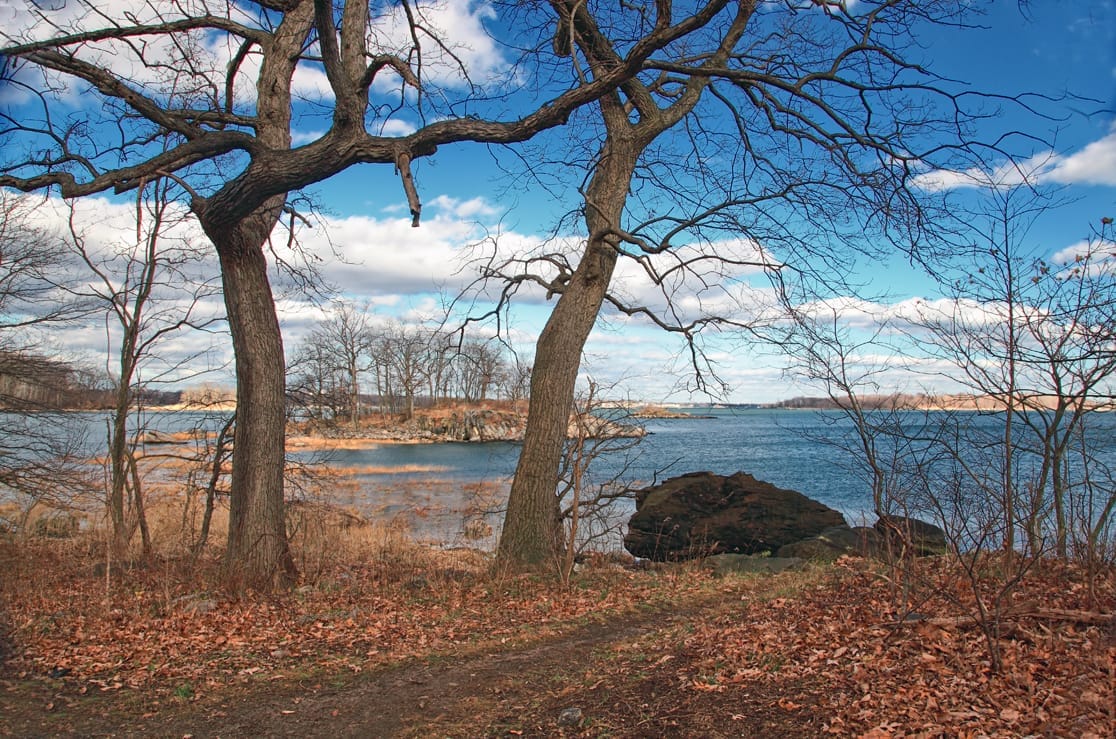
Pelham Bay Park is New York City's largest public park by a considerable margin. At roughly 2,772 acres, it is more than three times the size of Central Park, yet it draws a fraction of the visitors. Created in 1888, the park occupies the northeastern corner of The Bronx, where the land opens up into salt marshes, lagoons, second-growth forest, rocky outcroppings, and a continuous 13-mile saltwater shoreline facing Long Island Sound.
The park is not a single manicured space. It is a patchwork of distinct ecosystems and use zones: a public beach, a golf course, wetland trails, picnic groves, a historic mansion, athletic fields, and sections of genuine coastal wilderness. That variety is both its strength and the thing that confuses first-time visitors. Coming without a plan means you could spend two hours wandering parking lots between destinations. Coming with even a rough itinerary means you will experience something that feels completely unlike the rest of New York City.
💡 Local tip
The 6 train terminates at Pelham Bay Park station, making this one of the most transit-accessible large natural areas in the city. From Midtown Manhattan, the ride takes roughly 45 minutes.
Orchard Beach: The Social Heart of the Park
Orchard Beach is the park's most visited section, and for much of the year it tells you exactly where you are in the social fabric of The Bronx. The mile-long crescent of sand, built by Parks Commissioner Robert Moses in the 1930s using landfill between two islands, faces a calm stretch of Long Island Sound. The water is generally calmer than ocean beaches, which makes it popular with families and older swimmers.
On summer weekends, the beach is alive with sound: speakers, the smell of charcoal drifting from the picnic areas behind the promenade, children in the shallow water, volleyball games on the sand. The colonnade and bathhouse complex at the back of the beach, also built under Moses, is a restrained Art Deco structure in cream-colored brick that still functions as changing rooms and concessions. It is not glamorous, but it holds its dignity.
Outside of summer, Orchard Beach is a different place entirely. On weekday mornings in spring or autumn, the promenade is nearly empty. The crunch of sand underfoot, the smell of salt and seaweed at low tide, and the view across the Sound to City Island and Hunter Island give the beach a quality that no amount of summer crowds can quite replicate. This is arguably the better version of the place.
ℹ️ Good to know
Orchard Beach has seasonal hours and the parking lot charges a fee during summer months. If you arrive by subway and bus, you avoid the parking charge entirely. Check NYC Parks for current seasonal schedules before visiting.
Tickets & tours
Hand-picked options from our booking partner. Prices are indicative; availability and final rates are confirmed when you complete your booking.
Statue of Liberty, Ellis Island, and Brooklyn Bridge Happy Hour Cruise
From 49 €Instant confirmationFree cancellationSpirit of New York Dinner Cruise
From 161 €Instant confirmationFree cancellationNew York City Highlights bike tour
From 70 €Instant confirmationFree cancellationNew York Statue of Liberty and Ellis Island tour by ferry
From 55 €Instant confirmation
The Trails: Salt Marshes, Forest, and Coastal Paths
Beyond the beach, Pelham Bay Park contains several miles of walking and nature trails that cut through ecosystems you would not expect to find inside city limits. The Hunter Island and Lagoon Loop trail system is the most accessible starting point. Hunter Island, despite its name, is connected to the mainland and can be walked entirely on foot. The path edges along the rocky shoreline, with views across the Sound, then turns inland through a forest of oak, tulip tree, and black cherry that feels genuinely remote.
The salt marshes along Twin Island and the North Lagoon area are among the most ecologically significant parts of the park. In spring and late summer, these wetlands attract migratory shorebirds, herons, and egrets in numbers that surprise even experienced birdwatchers. The mud smells like low tide and organic matter, which is to say it smells like a healthy estuary. Bring binoculars if birdwatching is the goal.
Trail surfaces vary considerably. Some sections are paved or have compacted gravel. Others are rough dirt paths with exposed roots and uneven footing. Appropriate footwear matters: sandals are fine at Orchard Beach but a poor choice for the woodland trails. After rain, the forest paths can be muddy for a day or two.
For those building a day trip around outdoor exploration, the park pairs well with a visit to the Bronx Zoo or the New York Botanical Garden, both a short drive or bus ride west into The Bronx.
The Bartow-Pell Mansion Museum
Tucked inside the park's southern section is the Bartow-Pell Mansion Museum, a Greek Revival country house built in the 1840s on land that has been in continuous European occupation since the 17th century. The mansion sits at the end of a long driveway framed by old-growth trees, and the shift from public park to formal historic landscape is abrupt and atmospheric.
The interior is decorated in the style of an antebellum merchant's home, with period furniture and restored plasterwork. The formal garden behind the house, with its geometric parterres and stone balustrade, is open to walk through and is a surprisingly serene spot even if you have no interest in interior tours. Admission fees and operating hours for the museum are set by its operators and should be verified directly before visiting, as they differ from general park hours.
💡 Local tip
The mansion is not directly served by the same bus routes as Orchard Beach. If you plan to visit both in one day, a car or ride-hailing service between sections of the park saves significant time.
How the Park Changes by Season and Time of Day
Summer is the park's loudest and most social season. Orchard Beach draws large crowds on weekends from late June through August, particularly from Bronx and Upper Manhattan neighborhoods. Parking fills early on hot days. If you want the beach with some elbow room, arriving before 10 a.m. or on a weekday afternoon changes the experience substantially.
Spring and autumn offer the best conditions for trail walking and birdwatching. April and May bring migrating warblers and shorebirds through the wetlands. October is when the forest canopy shifts to amber and rust, and the light across the Sound in the late afternoon turns the kind of warm gold that makes the park look like something from a different latitude. Crowds are minimal outside weekends.
Winter visits are quiet to the point of solitude. The beach is empty, the trails are yours, and on clear days the views across Long Island Sound are unobstructed by foliage. Cold-weather walking here requires layers and wind-resistant outer clothing, as the shoreline is exposed to northeasterly winds off the water. The park is open daily from 6:00 a.m. to 1:00 a.m., though some facilities have reduced or suspended winter operations.
If you are planning a visit around specific seasonal conditions, the best time to visit New York City guide covers the city's climate patterns in detail.
Getting There and Moving Around the Park
The 6 train runs to Pelham Bay Park station, the line's last stop. From the station, the Bx29 bus connects to Orchard Beach during the summer season. The Bx5 and Bx12 buses provide access from different parts of The Bronx, while the BxM8 express bus connects from Manhattan. The Q50 and Westchester Bee-Line 45 offer connections from Queens and Westchester County respectively via Pelham Bay Park station. Check current MTA schedules for the Bx29, as it operates seasonally.
By car, the park is accessible via the Bruckner Expressway/New England Thruway and the Hutchinson River Parkway. Multiple parking lots serve different sections of the park, including lots at Middletown Road, Rodman's Neck, the Pelham/Split Rock Golf Course, and Orchard Beach. The Orchard Beach lot is the busiest and the one most likely to fill on summer weekends.
For a broader overview of navigating the city's transit system, the getting around New York City guide covers subway, bus, and ferry options across all five boroughs.
One practical note about the park's scale: different sections are not always walkable from each other in a single outing. The distance from Orchard Beach to the Bartow-Pell Mansion, for example, is over a mile by road, and there is no loop trail connecting them conveniently. Decide your focus area before you arrive.
Photography and What to Expect at Different Points
The park rewards photographers willing to move through different zones. At Orchard Beach, the colonnade and bathhouse are best in the early morning when the low sun catches the pale brick from an angle and the beach is empty. During summer afternoons, the beach itself has an authentic social energy that reads well in candid photography, but the light from the west can be harsh midday.
The Hunter Island trails produce strong landscape shots along the rocky shoreline, where lichen-covered granite meets the water. In autumn the forest section has dense color. The salt marsh areas require some patience: the light shifts quickly in open wetland and a telephoto lens helps for bird photography without disturbing the habitat.
⚠️ What to skip
Cell signal can be unreliable in the forested trail sections. Download an offline map before entering the woodland trails, particularly if you are unfamiliar with the park layout.
Who Should Think Twice Before Visiting
Pelham Bay Park is not for visitors looking for a curated, easy-to-navigate tourist attraction. There are no information kiosks at most trail entrances, wayfinding signage is inconsistent in the less-trafficked sections, and the park's sheer size means that without preparation you may feel disoriented. Visitors expecting a compact, Central Park-style experience will find this place much rougher around the edges.
The park also has no significant food or retail infrastructure outside the Orchard Beach concessions area, which operate seasonally. If a polished day in the city is more your style, the things to do in New York City guide covers a broader range of options across all neighborhoods and budgets.
Insider Tips
- The Bx29 bus from Pelham Bay Park subway station to Orchard Beach is seasonal and runs primarily in summer. In the off-season, confirm the current route schedule with the MTA before you rely on it, or plan to walk the roughly 2 miles from the subway station to the beach.
- The rocky shoreline trail on the eastern side of Hunter Island, where the path drops close to the water, offers some of the most unexpected coastal scenery in New York City. Most visitors stick to the paved promenade and never find it.
- If you visit Orchard Beach during peak summer and want to use the parking lot, aim to arrive before 9:30 a.m. on weekends. By mid-morning on hot days, the lot approaches capacity and queuing adds time to your visit.
- The Bartow-Pell Mansion's formal garden is one of the most overlooked quiet spots in the entire park. Even when the mansion interior is closed, the garden grounds are worth a short detour for anyone who reaches that section of the park.
- Mosquitoes are active near the salt marsh and lagoon areas from late spring through early autumn, particularly in the hour after dawn and before dusk. Insect repellent is not optional if you plan to spend time near the wetlands.
Who Is Pelham Bay Park For?
- New York City residents and long-stay visitors seeking genuine nature rather than a tourist attraction
- Birdwatchers, particularly during spring and late-summer migration periods near the salt marshes
- Families looking for a free beach day within the city that avoids the long subway ride to Rockaway or Coney Island
- Walkers and hikers who want coastal and woodland terrain without leaving the five boroughs
- History and architecture enthusiasts interested in the Bartow-Pell Mansion and its Greek Revival landscape
Nearby Attractions
Other things to see while in The Bronx:
- Arthur Avenue — The Real Little Italy
Arthur Avenue in the Belmont neighborhood of The Bronx is the most genuine Italian-American commercial strip left in New York City. Unlike its Manhattan counterpart, this is a working neighborhood where third-generation butchers, hand-rolled cigars, and fresh pasta made on-site are still the daily norm, not tourist theatre.
- Bronx Zoo
One of the largest urban zoos in the world, the Bronx Zoo stretches across more than 265 acres of hardwood forest in The Bronx, housing over 11,000 animals from 640-plus species. Whether you have three hours or a full day, knowing how the grounds work before you arrive makes all the difference.
- New York Botanical Garden
Spanning 250 acres in The Bronx, the New York Botanical Garden combines world-class plant collections, a landmark Victorian glasshouse, and one of the last old-growth forests in New York City. Here is everything you need to plan a visit worth the trip.
- Wave Hill
Perched above the Hudson River in Riverdale, Wave Hill is a 28-acre public garden and cultural center that combines horticultural artistry with sweeping views of the Palisades. Open year-round, with free admission on Thursdays until noon, it rewards visitors who take the time to reach it.