Wave Hill: The Bronx's Most Overlooked Garden with the Best Views in New York
Perched above the Hudson River in Riverdale, Wave Hill is a 28-acre public garden and cultural center that combines horticultural artistry with sweeping views of the Palisades. Open year-round, with free admission on Thursdays until noon, it rewards visitors who take the time to reach it.
Quick Facts
- Location
- 675 W. 252nd St. (entrance at 249th St. & Independence Ave.), Riverdale, The Bronx, NY 10471
- Getting There
- Metro-North Hudson Line to Riverdale station, or subway (1 train) to 231st St. + Bx7 or Bx10 bus toward 246th St. to 249th St. & Independence Ave.
- Time Needed
- 2 to 3 hours for gardens and gallery; longer if attending a program
- Cost
- Adults $10 | Seniors 65+ & Students $6 | Children 6–17 $4 | Free on Thursdays until noon | Members always free
- Best for
- Garden lovers, Hudson River views, peaceful escapes from Manhattan, family outings
- Official website
- www.wavehill.org
What Wave Hill Actually Is
Wave Hill is a public garden and cultural institution spread across 28 acres of Riverdale, a quiet residential enclave in The Bronx that feels nothing like the city most visitors imagine when they arrive in New York. Overlooking the Hudson River and the forested cliffs of the New Jersey Palisades, it functions as what its own documentation calls a museum without walls: a place where horticulture, fine art, and landscape design coexist in a setting that is genuinely beautiful, not merely pleasant.
The grounds include formal gardens, a wildflower meadow, an 8-acre woodland, working greenhouses, and two historic houses that now host art exhibitions. There are no blockbuster crowds, no souvenir stands at every turn, and no entrance-fee lines stretching around the block. The experience is closer to visiting a well-tended private estate than to a typical city attraction.
💡 Local tip
Admission is free every Thursday from 10 AM to noon. If your schedule allows it, Thursday morning is an ideal time to visit: the grounds are quiet, the light from the west hits the Palisades beautifully after 10 AM, and the weekday calm means you can have stretches of the garden almost entirely to yourself.
History: From Private Estate to Public Garden
The land has been occupied since the 1840s. The Morris family lived at the estate from 1843 to 1852, and by 1865 the property had passed to William H. Appleton, a prominent publisher, who expanded the grounds considerably. What followed was a century of private ownership that included tenants of remarkable cultural stature: Mark Twain rented the house for two summers in the early 1900s, Theodore Roosevelt's family spent time here during his childhood, and conductor Arturo Toscanini lived on the grounds in the 1940s.
In 1960, the estate was donated to the City of New York. It opened to the public in 1965 and has operated since as a nonprofit cultural institution managed independently, though on city-owned land. That governance structure matters in practice: Wave Hill invests seriously in its plant collections and programming in ways that go beyond what most municipal parks can sustain. The gardens are maintained with the care of a botanical institution, not just a public greenspace.
The broader Riverdale neighborhood that surrounds Wave Hill is worth understanding before you go. It sits in the far northwest corner of The Bronx, far from the South Bronx neighborhoods that dominate the borough's popular image. Riverdale is leafy and largely residential, with a distinctive topography of hills and Hudson River views that makes it feel more like Westchester County than New York City.
Tickets & tours
Hand-picked options from our booking partner. Prices are indicative; availability and final rates are confirmed when you complete your booking.
Statue of Liberty, Ellis Island, and Brooklyn Bridge Happy Hour Cruise
From 49 €Instant confirmationFree cancellationSpirit of New York Dinner Cruise
From 161 €Instant confirmationFree cancellationNew York City Highlights bike tour
From 70 €Instant confirmationFree cancellationNew York Statue of Liberty and Ellis Island tour by ferry
From 55 €Instant confirmation
The Gardens: What You Actually See
The Flower Garden is the centerpiece, and it earns that status across every season. In spring, tulips and alliums push through beds that are designed with unusual color restraint: no garish mass plantings, but thoughtful combinations that reward close attention. Summer brings dahlias, tender perennials, and an abundance of texture that rewards slow walking. By autumn, the borders shift to grasses and late-season seedheads that catch the low afternoon light in a way that is genuinely photogenic without trying to be.
The Pergola overlook is where most visitors pause longest. A long stone terrace lined with wisteria columns frames a direct view down to the Hudson and across to the Palisades cliffs, which rise sharply on the New Jersey side. On clear days the view extends for miles. Early morning visits catch a stillness that the afternoon cannot replicate; by midday on weekends, the terrace fills with visitors taking photographs, so come before 11 AM if solitude matters to you.
Beyond the formal gardens, the Woodland path winds through 8 acres of largely unmaintained native forest that edges the property's western slope toward the river. The air is noticeably cooler here, and the transition from manicured garden to wild understory happens quickly. The path is unpaved in sections and uneven in places, so footwear matters more here than in the rest of the grounds.
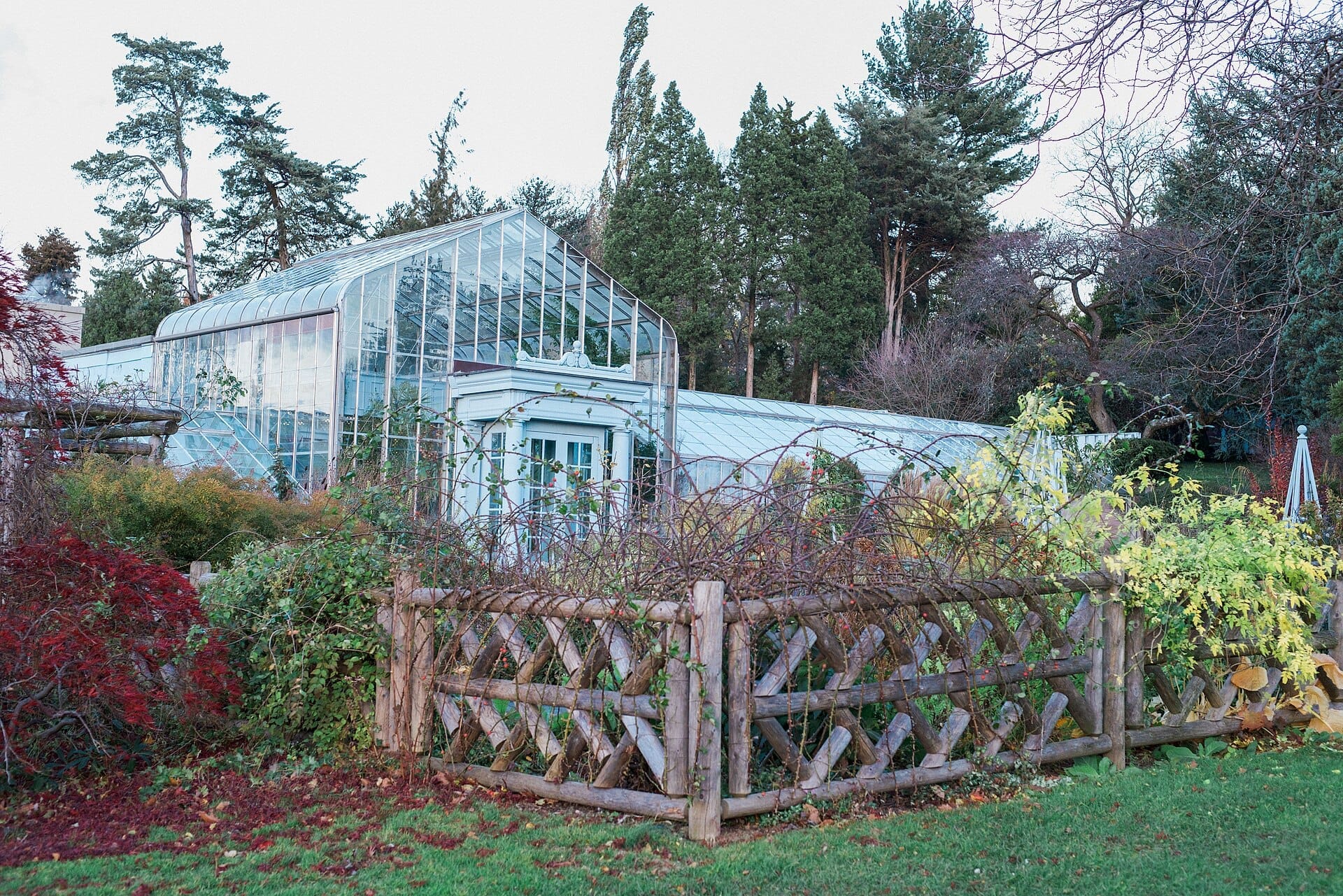
The Marco Polo Stufano Conservatory and adjacent greenhouses are open during garden hours and house tropical and succulent collections that shift seasonally. In winter, when the outdoor gardens are spare, these glass structures become the primary draw, warm and fragrant against the cold.
Art Exhibitions and Cultural Programming
Wave Hill is not only a garden. Glyndor Gallery, housed in one of the historic estate buildings, presents rotating contemporary art exhibitions that consistently engage with landscape, ecology, and the natural world. The programming leans curatorial rather than commercial: you are more likely to find a thoughtful site-specific installation or a show by a mid-career artist working with natural materials than anything crowd-pleasing or familiar.
Family programs, horticultural workshops, and seasonal events run year-round. The Sunday Family Art Project, offered most Sundays, lets children engage with hands-on art-making that connects to the current gallery exhibition. These programs often fill up, and some require advance registration through the Wave Hill website.
ℹ️ Good to know
Check the Wave Hill events calendar before your visit at wavehill.org. Seasonal programs, including summer twilight evenings and winter greenhouse tours, are scheduled throughout the year and add significant value to a general visit.
When to Visit and How the Experience Changes
Wave Hill is open year-round, Tuesday through Sunday, from 10:00 AM to 4:30 PM in winter and to 5:30 PM in spring, summer, and fall, with last entry 30 minutes before closing. It is closed Mondays. Each season offers something genuinely different rather than a diminished version of a summer peak.
Spring, roughly April through early June, is when the garden is most intensively planted and the views are sharpest before the tree canopy fills in. Autumn, September through November, brings richly colored foliage and low-angle light that photographs particularly well. Winter strips the garden to its bones: the structure of the beds, the greenhouse warmth, and the unobstructed Palisades view make it a compelling off-season destination that most New York City visitors completely overlook.
Summer weekends, especially July and August, bring the largest crowds, and the combination of heat and humidity can make the open terraces uncomfortable between noon and 3 PM. If you visit in summer, plan to arrive at 10 AM, spend the midday hours in the shaded woodland or inside the gallery, and return to the Flower Garden in late afternoon when the light improves and the heat eases.
⚠️ What to skip
Wave Hill is an outdoor site. Rain significantly limits the experience, particularly on the open terraces and in the woodland. Light drizzle is manageable, but plan around the forecast. The greenhouses and gallery remain accessible in wet weather, but they represent only a portion of what makes the visit worthwhile.
Getting There: The Transit Reality
Reaching Wave Hill requires more effort than most Manhattan attractions, and it is worth knowing this in advance rather than discovering it on the day. The most practical public transit option from Midtown Manhattan is the Metro-North Hudson Line from Grand Central Terminal to the Riverdale station, which places you about a 15-minute walk from the Wave Hill entrance. The train ride takes roughly 20 to 25 minutes, and trains run regularly on weekdays and weekends.
Alternatively, take the 1 subway train to 231st Street and transfer to the Bx7 or Bx10 bus toward 252nd Street. This option takes longer but costs only a standard subway fare. For visitors combining Wave Hill with other Bronx destinations, such as the New York Botanical Garden or the Bronx Zoo, note that those sites are on the eastern side of the borough and a significant distance away; combining them in a single day requires careful planning and is not a casual walk between stops.
By car, Wave Hill has a parking area accessible from Independence Avenue. On weekends in peak season, this lot can fill by late morning, so arrival before 10:30 AM is advisable if you are driving.
Practical Notes: Accessibility, Photography, and What to Bring
The garden's terrain varies considerably. The formal gardens and the Pergola terrace are accessible on paved or packed-surface paths, but the Woodland section involves unpaved slopes. Wave Hill's visitor information addresses accessibility in detail on their Know Before You Go page, which is worth reviewing before visiting if mobility is a concern.
For photography, the Pergola terrace offers the most iconic composition: wisteria columns in the foreground (in season, typically May), Hudson River in the mid-ground, and the Palisades as a backdrop. Morning light from the east illuminates the terrace walls well. By afternoon the light shifts behind the cliffs, creating a more dramatic but less evenly lit scene. The Flower Garden is best photographed in soft overcast light, which neutralizes shadows in the densely planted beds.
Wear comfortable walking shoes; the Woodland path in particular rewards those who are not in sandals. Bring water, as there are limited food options on site. A light layer is worth having in spring and autumn, when temperatures on the open terrace can feel significantly cooler than in the city below. For broader context on navigating New York City's parks and green spaces across seasons, the best time to visit New York City guide covers climate patterns in useful detail.
An Honest Assessment: Is It Worth the Trip?
Wave Hill is not for everyone. If your New York itinerary is short and focused on Manhattan landmarks, the time required to reach Riverdale and return may not justify the journey. The garden does not offer the kind of instant visual payoff that makes a first-time visitor feel they have checked something significant off a list.
But for travelers who have already covered the essential Manhattan sites, or who actively seek experiences that feel proportionate to the city's complexity rather than simply its fame, Wave Hill delivers something rare: genuine quiet, serious horticulture, and one of the best unobstructed Hudson River views in New York. It is the kind of place that makes regular visitors to the city feel like they finally found something. For that audience, it belongs alongside destinations like Fort Tryon Park as an example of what The Bronx and Upper Manhattan offer beyond the tourist mainstream.
Visitors interested in other significant New York City gardens should also look at the Brooklyn Botanic Garden for comparison: it is larger, more central, and more visited, which means a different kind of experience entirely.
Insider Tips
- The Metro-North Riverdale station is the single most efficient way to arrive from Midtown. The round trip takes under an hour of travel total and is significantly faster than any bus combination from the subway.
- Wisteria on the Pergola peaks in early to mid-May. This is a short window of roughly two weeks, and it transforms the terrace completely. If you are visiting in spring and can time it, check whether the wisteria is in bloom before you go.
- Wave Hill's café, located in the Wave Hill House, serves light food and drinks on a terrace that also has Hudson River views. It is easy to miss if you follow the main garden circuit without backtracking. Worth seeking out for a rest stop mid-visit.
- The greenhouses are underappreciated in winter. January and February visits focused on the glasshouses and the gallery can be surprisingly rewarding when outdoor gardens in the rest of the city offer nothing.
- Admission pricing may change for special weekend events and programs. Check the Wave Hill website before your visit to confirm current fees, particularly on public holiday weekends.
Who Is Wave Hill For?
- Garden enthusiasts and plant collectors who appreciate serious horticultural curation
- Photographers seeking Hudson River and Palisades views without crowds
- Couples looking for a calm, beautiful afternoon outside Manhattan
- Families with children interested in structured art and nature programs on Sundays
- Return visitors to New York City who have covered the main attractions and want something genuinely different
Nearby Attractions
Other things to see while in The Bronx:
- Arthur Avenue — The Real Little Italy
Arthur Avenue in the Belmont neighborhood of The Bronx is the most genuine Italian-American commercial strip left in New York City. Unlike its Manhattan counterpart, this is a working neighborhood where third-generation butchers, hand-rolled cigars, and fresh pasta made on-site are still the daily norm, not tourist theatre.
- Bronx Zoo
One of the largest urban zoos in the world, the Bronx Zoo stretches across more than 265 acres of hardwood forest in The Bronx, housing over 11,000 animals from 640-plus species. Whether you have three hours or a full day, knowing how the grounds work before you arrive makes all the difference.
- New York Botanical Garden
Spanning 250 acres in The Bronx, the New York Botanical Garden combines world-class plant collections, a landmark Victorian glasshouse, and one of the last old-growth forests in New York City. Here is everything you need to plan a visit worth the trip.
- Pelham Bay Park
Pelham Bay Park is New York City's largest public park, covering 2,772 acres of salt marshes, coastal forest, wetlands, and 13 miles of Long Island Sound shoreline. Three times the size of Central Park, it sits at the northeastern tip of The Bronx and remains genuinely off the tourist trail.