Brooklyn Botanic Garden: What to Expect Before You Go
Spread across 52 acres in central Brooklyn, the Brooklyn Botanic Garden is one of the most carefully curated urban gardens in the United States. From the world-famous Japanese Hill-and-Pond Garden to the fragrant Rose Garden, it rewards visitors in every season — though timing your visit right makes a significant difference.
Quick Facts
- Location
- 990 Washington Ave / 455 Flatbush Ave, Brooklyn, NY 11225
- Getting There
- B, Q, S trains to Prospect Park; 2, 3 to Eastern Pkwy–Brooklyn Museum
- Time Needed
- 2–3 hours for a relaxed visit; 4+ hours during cherry blossom season
- Cost
- Paid timed-entry tickets required; free and discounted hours available — check bbg.org for current prices
- Best for
- Spring cherry blossoms, slow weekend mornings, families, photography
- Official website
- www.bbg.org
What Brooklyn Botanic Garden Actually Is
The Brooklyn Botanic Garden opened on May 13, 1911, on land originally acquired by the City of Brooklyn in 1864 as part of the Prospect Park land purchases. What began as an adjunct to a public park has grown into an independent, 52-acre institution operated by the Brooklyn Botanic Garden Corporation — one of the most visited botanic gardens in the country, drawing over 800,000 visitors a year.
Unlike larger botanical institutions such as the New York Botanical Garden in The Bronx, BBG is compact and walkable. You can cross the entire property in about 20 minutes at a brisk pace, which means it's accessible even for visitors with limited mobility or energy. But the density of what's packed into those 52 acres is striking: over 9,000 plant taxa across a dozen distinct garden sections, plus three climate-controlled conservatories.
The garden sits directly adjacent to Prospect Park and just a short walk from the Brooklyn Museum, making it a natural anchor for a full day in central Brooklyn.
ℹ️ Good to know
Advance-purchase tickets are strongly recommended, and walk-up availability is limited, especially on weekends and during cherry blossom season. Book at bbg.org before your visit.
The Gardens Themselves: What You'll Actually See
The Japanese Hill-and-Pond Garden is the most architecturally striking section of the property. Designed in 1914 by landscape architect Takeo Shiota, it predates most Japanese garden installations in American public parks and remains one of the most authentic examples in the country. The garden centers on a pond fed by a small waterfall, crossed by a traditional drum bridge, and flanked by stone lanterns and a torii gate reflected in the still water below. In cherry blossom season, the weeping cherry trees arching over the water's edge produce an image so photographed it has become iconic — but it earns the attention.
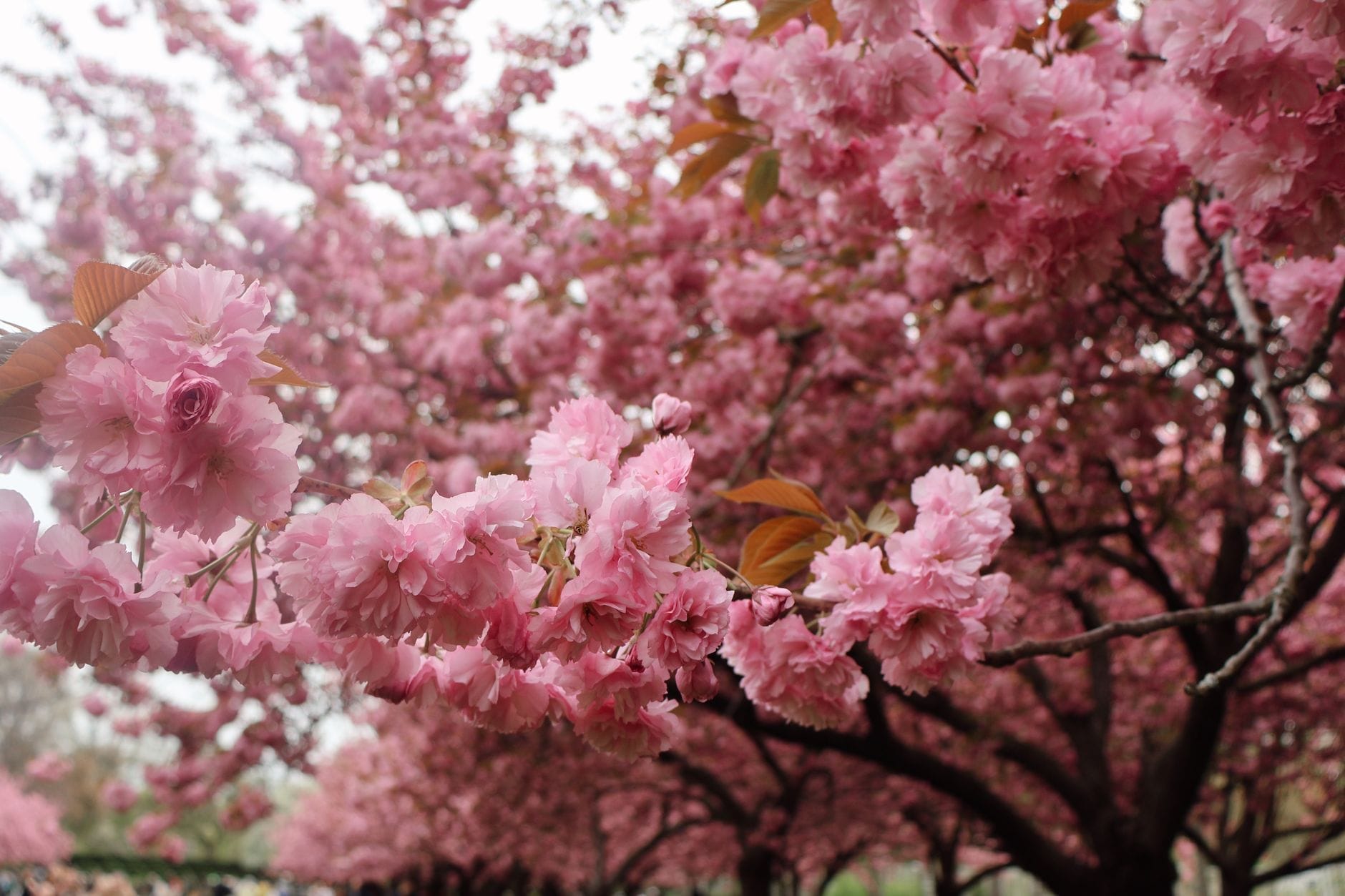
The Cherry Esplanade is the other signature space: a long allée of Kwanzan cherry trees that bloom slightly later than the weeping cherries around the pond, usually in late April. When both are in peak bloom simultaneously, the garden becomes genuinely crowded. Paths narrow. Ticket windows sell out days in advance. This is not the time for a quiet stroll — it's more like a shared civic celebration, and visitors who lean into that energy tend to enjoy it more than those expecting solitude.
Beyond the cherries, the Rose Garden (in full bloom from late May through June) is structured around formal beds with labeled varieties, making it useful for both casual visitors and serious gardeners. The Cranford Rose Garden contains over 1,000 rose varieties — one of the largest collections in the northeastern United States. The fragrance on a warm afternoon is dense, almost overwhelming, and the low hum of bees working through the beds adds an unexpected layer of sound to the experience.
The Cherry Walk, the Native Flora Garden, the Herb Garden, and the Shakespeare Garden round out the outdoor sections. The conservatories — the Steinhardt Conservatory complex — house tropical, temperate, and arid collections, and are especially worth visiting in winter when the outdoor gardens are bare. The Bonsai Museum inside the conservatory complex holds one of the largest collections of bonsai in the U.S., including specimens over a century old.
Tickets & tours
Hand-picked options from our booking partner. Prices are indicative; availability and final rates are confirmed when you complete your booking.
Statue of Liberty, Ellis Island, and Brooklyn Bridge Happy Hour Cruise
From 49 €Instant confirmationFree cancellationChristmas lights tour in Dyker Heights, Brooklyn
From 48 €Instant confirmationFree cancellationNew York Brooklyn Bridge and DUMBO food-tasting guided tour
From 89 €Instant confirmationFree cancellationBrooklyn Bridge and DUMBO neighborhood walking tour
From 42 €Instant confirmationFree cancellation
How the Experience Changes by Time of Day and Season
Weekday mornings shortly after the 10 a.m. public opening are consistently the quietest time to visit. By midday on weekends, especially in spring, paths through the Japanese Garden and around the Cherry Esplanade become difficult to navigate without bumping into other visitors' cameras. If you have flexibility, Tuesday or Thursday — when the garden stays open until 8:30 p.m. — offer the most space and the best light in late afternoon and early evening.
The evening hours on Tuesday and Thursday are genuinely underused. After about 6 p.m., crowds thin considerably. The low-angle light is excellent for photography. The garden takes on a different, quieter quality — the sounds shift from children and tour groups to birds and the occasional distant traffic from Eastern Parkway.
Seasonally, spring is the obvious peak. The cherry blossoms typically peak in late April, though the exact dates shift year to year depending on winter temperatures. BBG tracks bloom progress on their website and social media during the season, which is genuinely useful for trip planning. Summer brings the Rose Garden and a full, green density to the landscape. Autumn brings subtle foliage color — the Japanese Garden is particularly striking in October. Winter is the most overlooked season: the conservatories are warm and lush when the rest of Brooklyn is gray, and the garden is rarely crowded.
💡 Local tip
For cherry blossom season, book tickets as soon as the timed-entry windows open — typically several weeks in advance. Arrive at or before 10 a.m. for the lightest crowds and the most flattering morning light on the water in the Japanese Garden.
Getting There and Finding Your Way In
BBG has two main public entrances: the Washington Avenue entrance at 990 Washington Avenue and the Flatbush Avenue entrance at 455 Flatbush Avenue. The Eastern Parkway entrance (Osborne Garden) is temporarily closed for restoration — confirm current status before visiting. The Flatbush Avenue entrance is closest to the Prospect Park subway station (B, Q, S trains), making it the most convenient for visitors coming from Manhattan. The Eastern Parkway–Brooklyn Museum stop (2, 3 trains) deposits you directly in front of the Brooklyn Museum and a short walk from the Washington Avenue entrance.
The surrounding Prospect Park and Park Slope neighborhood is walkable and well-served by transit. Parking exists in the area but is limited and unreliable on busy weekends — the subway is the practical choice for most visitors.
The garden is closed Mondays. Wednesday, Friday, Saturday, and Sunday hours are 10 a.m. to 6 p.m. (last entry 5:30 p.m.), and Tuesday and Thursday hours extend to 8:30 p.m. (last entry 8 p.m.) during the current seasonal schedule. Seasonal variations exist — check bbg.org before your trip, particularly around holidays.
Photography, Accessibility, and What to Bring
Photography is permitted throughout the garden for personal use. Tripods are allowed in most areas but can create friction on crowded paths during peak season — collapsible or travel tripods work better. The Japanese Hill-and-Pond Garden offers the most consistently photogenic compositions: reflections on the pond work best in the morning before wind picks up. The Cherry Esplanade rewards wide-angle lenses in full bloom. The conservatories are excellent for macro and detail work year-round.
Many of the main paths are paved and suitable for wheelchairs and strollers. Some sections, particularly portions of the Native Flora Garden, involve uneven terrain. Accessibility details, including current pathway conditions and any temporary closures, are published on the BBG Visit page and are worth checking specifically if mobility is a consideration.
Wear comfortable walking shoes regardless of season. In spring, the lawn areas can be soft after rain. A light layer is useful even on warm days, since shaded sections near the pond stay cool. The garden does not allow alcohol, barbecues, or amplified music, which keeps the atmosphere notably calmer than nearby Prospect Park on a summer weekend.
Honest Assessment: Who Should Come and Who Might Not
BBG is not a free or casual drop-in experience. Admission tickets, strongly recommended advance booking, and a real risk of sold-out windows during peak weekends mean it requires some planning. Visitors who prefer spontaneous, walk-up attractions may find the logistics frustrating. Those looking for the scale and scope of the New York Botanical Garden in The Bronx — which covers 250 acres — will find BBG smaller and more curated, though not lesser.
For travelers with limited time in Brooklyn who want one experience that combines natural beauty, cultural depth, and a sense of the borough's residential character, BBG delivers that efficiently. It pairs well with a visit to the Brooklyn Museum next door, or with a walk along the eastern edge of Prospect Park. The combination of those three in a single day is one of the more satisfying itineraries available in Brooklyn.
If you're building a broader Brooklyn itinerary, the Brooklyn neighborhood guide covers how to connect BBG with other parts of the borough.
Insider Tips
- The Tuesday and Thursday evening hours (currently scheduled until 8:30 p.m. in season) are the garden's best-kept secret. After 6 p.m., crowds drop sharply, light is excellent, and the atmosphere shifts completely.
- BBG offers free or discounted admission on specific days and times — check the Hours & Admission page at bbg.org before purchasing. Eligibility varies by Brooklyn residency, age, and membership status.
- During cherry blossom season, the weeping cherries near the Japanese Garden typically peak before the Kwanzan cherries on the Cherry Esplanade. If you can only visit once, check BBG's bloom tracker to know which is currently at peak.
- The Steinhardt Conservatory's bonsai collection is routinely overlooked by first-time visitors focused on outdoor gardens. It includes specimens over 100 years old and takes only 20 minutes to see properly.
- If you're visiting with children, the Discovery Garden in the northwest corner of the property is a dedicated hands-on space with composting stations, sensory plantings, and a worm bin — genuinely engaging for kids under 10.
Who Is Brooklyn Botanic Garden For?
- Spring travelers who plan ahead and want to experience the cherry blossoms without traveling to Japan
- Photography enthusiasts looking for varied compositions across Japanese, formal European, and native plant garden styles
- Families with children who want outdoor space that's structured and manageable, not overwhelming
- Travelers pairing a garden visit with the Brooklyn Museum next door for a full cultural day in Park Slope
- Visitors who want a genuine neighborhood Brooklyn experience away from the tourist corridors of Manhattan
Nearby Attractions
Other things to see while in Prospect Park & Park Slope:
- Brooklyn Museum
The Brooklyn Museum is one of the largest and most encyclopedic art institutions in the United States, housed in a monumental Beaux-Arts building on Eastern Parkway. With a permanent collection spanning ancient Egyptian artifacts to contemporary feminist art, it rewards repeat visits and first-timers equally.
- Green-Wood Cemetery
Founded in 1838 and designated a National Historic Landmark, Green-Wood Cemetery spans 478 acres of rolling hills in Brooklyn, holding the remains of over 570,000 people including artists, politicians, and Civil War generals. The grounds are free to enter year-round and reward visitors with panoramic views, Gothic Revival architecture, and some of the quietest hours available anywhere in New York City.
- Prospect Park
Prospect Park is Brooklyn's 526-acre centerpiece, designed by the same duo behind Central Park and free to enter year-round. From its Long Meadow to its forested Ravine, it rewards visitors who slow down and explore beyond the main loop.