Prospect Park: Brooklyn's Grand Urban Escape
Prospect Park is Brooklyn's 526-acre centerpiece, designed by the same duo behind Central Park and free to enter year-round. From its Long Meadow to its forested Ravine, it rewards visitors who slow down and explore beyond the main loop.
Quick Facts
- Location
- Prospect Pk W, Flatbush Ave, Parkside Ave & Ocean Ave, Brooklyn, NY 11215
- Getting There
- Subway 2/3 to Grand Army Plaza; B/Q to Prospect Park; F/G to 15 St–Prospect Park
- Time Needed
- 2–4 hours for highlights; a full day to explore thoroughly
- Cost
- Free (park entry). Some facilities — zoo, ice rink — charge separately
- Best for
- Nature walks, family outings, picnics, birdwatching, weekend relaxation
- Official website
- www.prospectpark.org
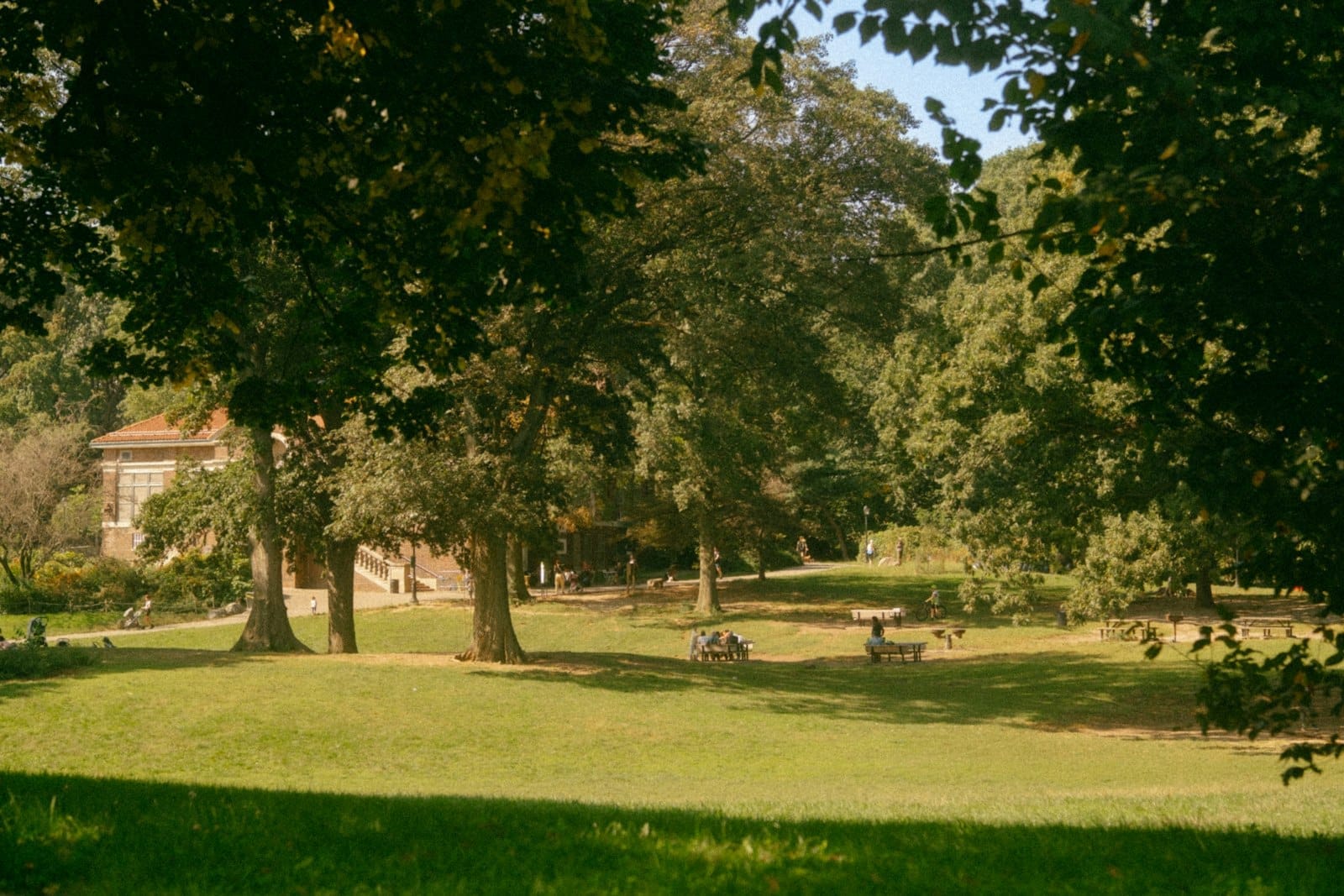
What Prospect Park Actually Is
Prospect Park is a 526-acre public park in Brooklyn, New York City, designed by Frederick Law Olmsted and Calvert Vaux and constructed over roughly three decades beginning in 1865. The same landscape architects created Central Park in Manhattan, but Olmsted himself later said Prospect Park was their finest work. That claim is not just modesty — the design here achieves something Central Park cannot: it makes you forget, at times entirely, that you are inside a city of 8.5 million people.
The park is managed jointly by the New York City Department of Parks and Recreation and the Prospect Park Alliance, a nonprofit conservancy that has driven major restoration since the 1980s. Entry to the park is free and the park is open year-round. Individual venues inside — the zoo, the LeFrak Center at Lakeside — charge their own fees.
💡 Local tip
The park's perimeter loop road (3.35 miles) is closed to cars most of the time and popular with runners and cyclists. If you plan to walk or run the full loop, allow 60–90 minutes and wear comfortable shoes — the terrain is more varied than it looks on a map.
The Landscape: Three Distinct Worlds in One Park
Unlike many urban parks that feel like one continuous lawn, Prospect Park is organized into three dramatically different zones. The Long Meadow, running roughly a mile through the western side of the park, is one of the largest open meadows in any New York City park. On warm weekend afternoons it fills with families, dogs, soccer games, and elaborate picnic setups. In the morning — particularly before 9 a.m. on weekdays — it is nearly silent. The light comes in low and long across the grass, and the only sounds are birds and the occasional jogger.
The Ravine, in the park's northern interior, is the only remaining forested ravine in Brooklyn. A stream runs through it, crossing under stone bridges and past mature oaks and tulip trees whose canopy closes overhead in summer. This section has been carefully restored by the Alliance over decades. The soil underfoot is soft and damp near the water, and the contrast with the meadow — both are within a 10-minute walk of each other — is remarkable.
The third zone, the Lake in the southern portion, covers 60 acres and connects to a network of paths, boathouses, and the LeFrak Center at Lakeside. In fall, the tree reflections on the water are exceptional. In winter, sections of the lake sometimes freeze, though the designated ice skating is handled by the LeFrak Center's indoor and outdoor rinks. Paddleboat rentals are available seasonally on the lake — check the Prospect Park Alliance site for current hours and availability.
Tickets & tours
Hand-picked options from our booking partner. Prices are indicative; availability and final rates are confirmed when you complete your booking.
Statue of Liberty, Ellis Island, and Brooklyn Bridge Happy Hour Cruise
From 49 €Instant confirmationFree cancellationSpirit of New York Dinner Cruise
From 161 €Instant confirmationFree cancellationNew York City Highlights bike tour
From 70 €Instant confirmationFree cancellationNew York Statue of Liberty and Ellis Island tour by ferry
From 55 €Instant confirmation
Historical and Cultural Significance
Prospect Park was designated a New York City scenic landmark and is listed on the National Register of Historic Places. Construction began in 1865 under Olmsted and Vaux, and while core elements were in place by the early 1870s, finishing touches continued through 1895. The park was built partly in response to Brooklyn's rapid industrialization — a deliberate act of civic investment in breathing room for a working-class population. At the time, Brooklyn was still an independent city; it would not consolidate into New York City until 1898. The park served as a shared green space for a borough of immigrants and laborers long before Park Slope became the affluent neighborhood it is today. For more on how Brooklyn has evolved around the park, the Brooklyn neighborhood guide provides useful context.
The park contains one of the city's significant Civil War memorials — the Soldiers' and Sailors' Arch at Grand Army Plaza, just outside the main entrance on the northeastern side. The arch and surrounding plaza were completed in 1892 and continue to function as a civic gathering space, including as the terminus of Brooklyn's annual parade events.
Grand Army Plaza also hosts the Grand Army Plaza Greenmarket on Saturday mornings, one of the more serious greenmarkets in the city. If your visit falls on a Saturday, arriving via Grand Army Plaza and passing through the market before entering the park adds texture to the morning.
How the Experience Changes by Time of Day
Early mornings (6–9 a.m.) belong to a specific crowd: serious runners on the loop road, dog walkers threading through the Long Meadow, and birdwatchers working the Ravine with binoculars. The park contains over 200 recorded bird species across the year, and the wooded areas — particularly around the Ravine and the Peninsula in the Lake — are known to birders during spring and fall migration. On these mornings, the air carries the smell of damp earth and cut grass, and the park's scale feels almost private.
By late morning on weekends, the tone shifts noticeably. Grand Army Plaza fills with stroller traffic, the main paths get busier, and groups claim meadow territory for the day. The atmosphere is festive and communal in the best sense — portable speakers, children's birthday setups, large extended-family gatherings. The park is genuinely diverse in its users in ways that reflect Brooklyn's neighborhoods, and that social texture is part of what makes it worth visiting.
Evenings in summer are their own event. The park hosts the Celebrate Brooklyn! Performing Arts Festival at the Bandshell, an outdoor concert series running from June through August. Performances range across genres — gospel, indie rock, international music, jazz — and most shows are free or low-cost. Bring a blanket and arrive early; the sloped hill in front of the Bandshell fills quickly.
ℹ️ Good to know
The park's interior is poorly lit after dark, and while it is generally well-used by locals in the evenings during summer, solo visitors unfamiliar with the layout should stick to the main perimeter loop after sunset rather than the interior paths.
Getting There and Getting Around
The most convenient subway access is the 2 and 3 trains to Grand Army Plaza, which deposit you directly at the northeastern entrance near the Arch. The F and G trains stop at 15th Street–Prospect Park on the park's western side, useful if you are coming from lower Manhattan or from the G train corridor. The B and Q also serve the Prospect Park station near the southeastern edge. If you are combining the park with a visit to the nearby Brooklyn Museum or the Brooklyn Botanic Garden — both immediately adjacent — the Grand Army Plaza entrance puts you within easy walking distance of all three.
Inside the park, the loop road gives you a reliable navigational spine. Free park maps are available at the Tennis House and other staffed locations, or downloadable from the Prospect Park Alliance website. The interior can be disorienting if you leave the main paths, particularly in the Ravine and the forested sections near the lake. A downloaded map or a screenshot is more reliable than cell signal in those areas.
Citi Bike docks are available at several park entrances, including Grand Army Plaza and near the 9th Street entrance on the western side, making the park a practical midpoint for a longer cycling day across Brooklyn.
Practical Notes: What to Know Before You Go
Weather shapes the experience significantly. Spring, from mid-April through May, brings the park to its most photogenic state: cherry trees near the Grand Army Plaza entrance and the azalea collections flower in sequence, and the Long Meadow is lush before summer heat sets in. Fall, from late September through November, offers the most dramatic foliage — the mix of oak, maple, and sweet gum around the Ravine and the lake turns reliably. Summer weekends are the most crowded, and the meadow can feel relentlessly busy by early afternoon. Winter visits are quieter and have their own quality, especially after snowfall, when the loop road becomes a silent white corridor.
For families with children, the park has strong infrastructure: multiple well-maintained playgrounds, the Prospect Park Zoo (run by the Wildlife Conservation Society, with its own admission fee), and the LeFrak Center at Lakeside, which offers ice skating in winter and other programming year-round. The NYC with kids guide covers how to sequence a Brooklyn day that includes the park alongside other child-focused attractions.
Accessibility across the main paths and the perimeter loop is generally good, with paved surfaces and gradual grades on most major routes. The Ravine trail involves uneven terrain and is not accessible by wheelchair. Visitors with mobility needs should consult the Alliance's accessibility map before planning interior routes.
⚠️ What to skip
Avoid driving to Prospect Park on summer weekends. Parking on surrounding streets is extremely limited and enforcement is active. The subway is unambiguously the better option from anywhere in Brooklyn or Manhattan.
Who Should Temper Their Expectations
Prospect Park is not a manicured showpiece in the way of formal European city gardens. If you are expecting curated flower beds and architectural precision, you may find the design more rough-edged than anticipated — by intention. The aesthetic is one of designed naturalism: loose, layered, and deliberately unpolished in places. The Ravine in particular looks genuinely wild, which some visitors read as neglect. It is not.
Visitors specifically seeking iconic New York City views from a park setting might find the park's enclosed design less satisfying than the Brooklyn Heights Promenade or waterfront options with skyline sightlines. Prospect Park turns inward by design — the views are of trees, meadows, and water, not the city beyond.
Insider Tips
- The Audubon Center at the Boathouse, on the eastern shore of the lake, is a free visitor center with exhibits on park wildlife and ecology. It is often overlooked but worth a stop, and staff can point you toward current wildlife activity in the Ravine.
- Saturday mornings at Grand Army Plaza combine two of Brooklyn's better free experiences: the Grand Army Plaza Greenmarket outside the park and the Long Meadow at its quietest. Arrive by 8:30 a.m. to hit both before the crowds.
- The Peninsula, a wooded landmass jutting into the lake on the eastern side, is the best birdwatching spot in the park during spring migration (late April through May). Walk the path around its edge rather than cutting through the interior.
- For photography, the stone arch bridges inside the park — particularly those in the Ravine — are among the most underused subjects in Brooklyn. Overcast days flatten the contrast and bring out the texture of the stonework far better than direct sun.
- The Picnic House on the Long Meadow can be rented for private events, but on non-event days its surrounding area on the meadow's western edge is one of the best spots to set up with a book and a blanket, away from the higher-traffic central meadow.
Who Is Prospect Park For?
- Brooklyn residents and repeat NYC visitors who want green space without Manhattan crowds
- Families with young children looking for a full half-day of varied outdoor activities
- Birdwatchers, especially during spring and fall migration seasons
- Runners and cyclists wanting a car-free loop in a scenic urban setting
- Travelers combining the park with the Brooklyn Museum or Brooklyn Botanic Garden next door
Nearby Attractions
Other things to see while in Prospect Park & Park Slope:
- Brooklyn Botanic Garden
Spread across 52 acres in central Brooklyn, the Brooklyn Botanic Garden is one of the most carefully curated urban gardens in the United States. From the world-famous Japanese Hill-and-Pond Garden to the fragrant Rose Garden, it rewards visitors in every season — though timing your visit right makes a significant difference.
- Brooklyn Museum
The Brooklyn Museum is one of the largest and most encyclopedic art institutions in the United States, housed in a monumental Beaux-Arts building on Eastern Parkway. With a permanent collection spanning ancient Egyptian artifacts to contemporary feminist art, it rewards repeat visits and first-timers equally.
- Green-Wood Cemetery
Founded in 1838 and designated a National Historic Landmark, Green-Wood Cemetery spans 478 acres of rolling hills in Brooklyn, holding the remains of over 570,000 people including artists, politicians, and Civil War generals. The grounds are free to enter year-round and reward visitors with panoramic views, Gothic Revival architecture, and some of the quietest hours available anywhere in New York City.