Brooklyn Heights Promenade: The Definitive Guide to Brooklyn's Best Skyline View
The Brooklyn Heights Promenade is a free, third-of-a-mile walkway perched above the Brooklyn-Queens Expressway, offering one of the most photographed views of the Manhattan skyline, Brooklyn Bridge, and New York Harbor. Open daily at no cost, it suits everyone from early-morning joggers to sunset photographers.
Quick Facts
- Location
- Remsen Street to Orange Street, Brooklyn Heights, Brooklyn, NY 11201
- Getting There
- 2/3 to Clark St or Borough Hall; A/C to High St; R to Court St
- Time Needed
- 30–60 minutes for a leisurely walk; longer if you linger at benches
- Cost
- Free — no admission fee
- Best for
- Skyline photography, sunset views, a quiet alternative to crowded Manhattan viewpoints
- Official website
- www.nycgovparks.org/parks/brooklyn-heights-promenade
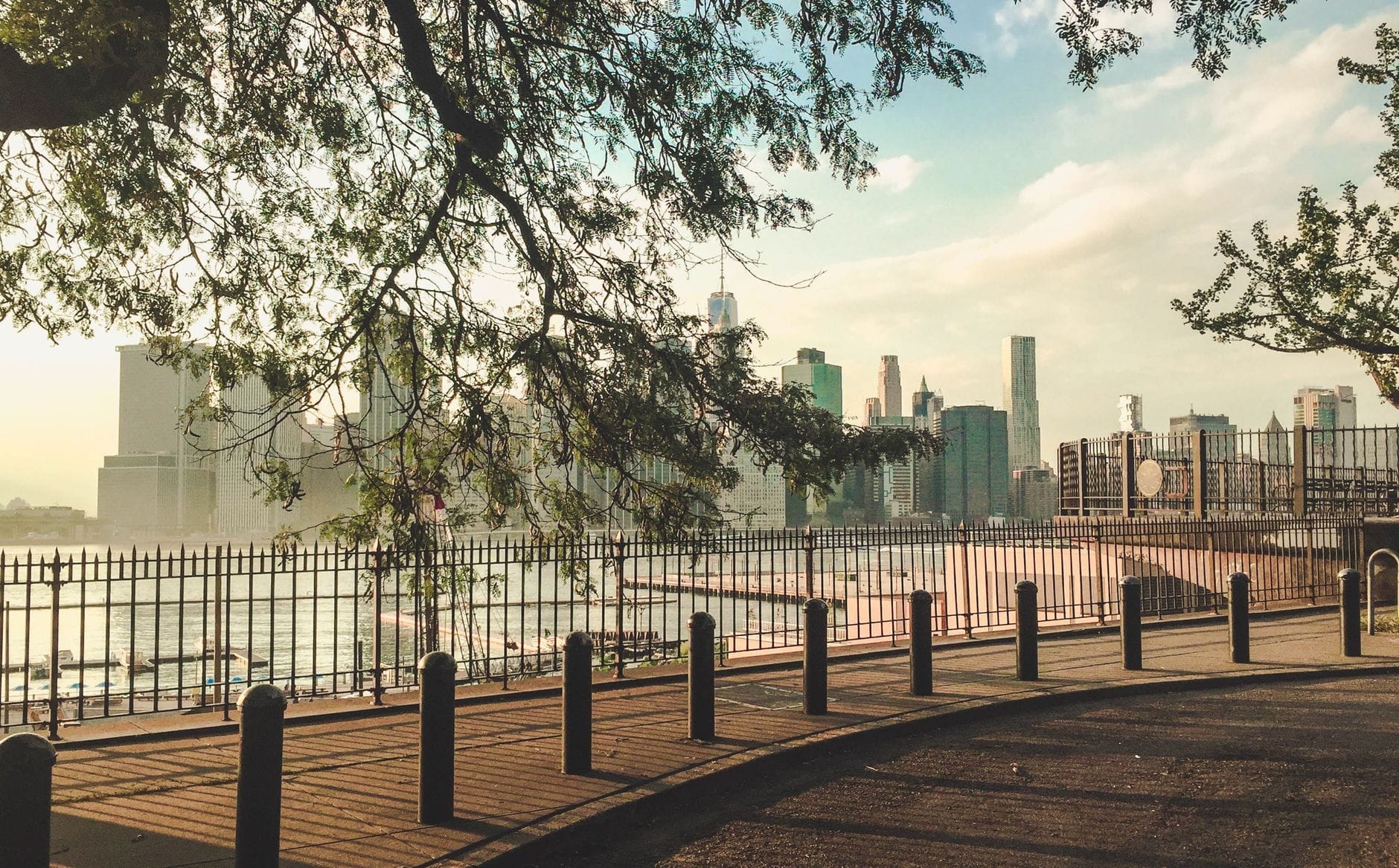
What Is the Brooklyn Heights Promenade?
The Brooklyn Heights Promenade is a paved public walkway stretching approximately 1,826 feet (about one-third of a mile) along the western edge of the Brooklyn Heights neighborhood, roughly from the west end of Remsen Street to the west end of Orange Street, maintained by NYC Parks. It sits on the uppermost level of a triple-cantilevered structure built above the Brooklyn-Queens Expressway, a piece of mid-century civic engineering that turned a highway problem into a public amenity. The result is a level, open-air terrace that floats above the waterfront, facing west across the East River directly toward Lower Manhattan. For a broader sense of the neighborhood it inhabits, see our guide to DUMBO and Brooklyn Heights.
The view from the promenade is not incidental — it is the point. On clear days, the full Lower Manhattan skyline spreads across the water, from the towers of the Financial District on the right to the Brooklyn Bridge anchoring the frame on the left. New York Harbor opens up to the south, and on days with low humidity, you can make out the Statue of Liberty in the distance. This is a view that has been painted, filmed, and photographed for decades, and it holds up in person.
💡 Local tip
Enter from the west end of Montague Street, Clark Street, or Pierrepont Street for level, step-free access. These entrances are the most wheelchair- and stroller-friendly approach to the promenade's main stretch.
A Brief History: From 1827 Proposal to 1950 Dedication
The idea of a promenade on the Brooklyn Heights escarpment is older than the promenade itself by well over a century. In 1827, landowner Hezekiah Pierrepont — whose name lives on in the nearby street — proposed a public walkway along this bluff to take advantage of the views it commanded over the harbor. At that time, Brooklyn Heights was already developing as an affluent residential enclave, in part because ferry service to Manhattan made it an early commuter suburb.
The promenade as it exists today is inseparable from Robert Moses and the construction of the Brooklyn-Queens Expressway in the 1940s. Rather than route the highway directly along the waterfront bluff and destroy the neighborhood's character — or cut through the residential blocks above — engineers designed a cantilevered triple-deck structure: two roadway levels below and a public promenade on top. The promenade was formally dedicated in the 1950s. That bargain, between highway infrastructure and neighborhood livability, remains one of the more unusual urban design solutions in New York City history.
Tickets & tours
Hand-picked options from our booking partner. Prices are indicative; availability and final rates are confirmed when you complete your booking.
Christmas lights tour in Dyker Heights, Brooklyn
From 48 €Instant confirmationFree cancellationBrooklyn Christmas Lights Tour (at Dyker Heights)
From 21 €Instant confirmationFree cancellationBrooklyn Heights and Dumbo self-guided walking audio tour in New York
From 15 €Instant confirmationFree cancellationStatue of Liberty, Ellis Island, and Brooklyn Bridge Happy Hour Cruise
From 49 €Instant confirmationFree cancellation
The View: What You Actually See
Standing at the railing, the Manhattan skyline occupies your entire field of vision to the west. The Financial District's cluster of towers dominates the center: One World Trade Center is the most prominent vertical element, its tapered glass form catching light differently throughout the day. Slightly south and lower, the Beaux-Arts dome of the old New York Life building and the ornate top of 70 Pine Street add historical texture to the skyline. To the north, the Brooklyn Bridge spans the river at roughly eye level from the promenade's northern end, providing a rare perspective where you see the bridge from the side rather than head-on.
Below the promenade, the East River is in constant motion: tugboats, barges, water taxis, and NYC Ferry vessels cross the water at regular intervals. The working character of the harbor is visible in a way that's harder to appreciate from Manhattan itself. If you want to compare this perspective with views from higher up in Manhattan, our guide to the best views in New York City puts the promenade in context alongside rooftop observatories and bridges.
The benches along the western railing face the view directly. On warm evenings, most are occupied within the first hour after sunset, so arriving early is worthwhile if you want a specific spot. The walkway itself is wide enough that even when moderately busy, foot traffic flows easily and you rarely feel pressed against other visitors.
How the Experience Changes by Time of Day
Morning
Early mornings on the promenade have a different quality from any other time of day. The light hits the Manhattan skyline from behind the viewer, illuminating the western faces of the buildings across the river in direct, warm tones. Joggers, dog walkers, and a handful of photographers with tripods are the typical early crowd. The BQE traffic below hums steadily, but the ambient noise of the city hasn't fully built yet, and the air off the harbor carries a faint salt smell that disappears by midday.
Midday
Between roughly 10 a.m. and 3 p.m., the promenade sees its heaviest tourist traffic, especially in spring and summer. The sun is high and slightly south of the view axis, which means the Manhattan skyline can appear somewhat washed out in photographs taken during these hours. Families with strollers, school groups, and visitors working their way between Brooklyn Bridge Park and Brooklyn Heights are common. It remains pleasant for a walk, but this is not the prime photography window.
Sunset and Evening
Sunset is the most compelling time to visit, and the promenade earns that reputation. As the sun drops toward New Jersey in the west, the Manhattan skyline catches the light directly — glass curtain walls glow orange and gold, and the Brooklyn Bridge cables catch a warm highlight that fades quickly. As dusk settles, the buildings begin to light from within, and by full dark, the skyline reflects off the East River in long vertical streaks. This is when the benches fill and couples, photographers, and visitors who have done their research all converge. Arrive 30 to 45 minutes before sunset to secure a bench.
ℹ️ Good to know
The Manhattan skyline faces west from the promenade, which means the sun sets roughly behind the viewer at golden hour — excellent for lighting the buildings across the river. For sunset times, check a local weather app the day of your visit.
Getting There: Transit and Access
The promenade is straightforward to reach by subway. The 2 and 3 trains stop at Clark Street, a nearby station and deposits you about two blocks east of the promenade's northern entrance. The same 2/3 trains stop at Borough Hall to the south, a slightly longer walk but useful if you're combining the promenade with the area around Atlantic Avenue or downtown Brooklyn. The A and C trains stop at High Street, also within walking distance.
From DUMBO, it's a walkable uphill climb via the Columbia Street/Columbia Heights corridor, or you can connect via the Brooklyn Bridge itself and enter the Heights from the north. Combining the promenade with a walk across the Brooklyn Bridge makes for a logical half-day loop that covers two of Brooklyn's most distinctive experiences without requiring any transit between them.
Access points are spread along the promenade's length. The west end of Montague Street is the most centrally located and the most used. Orange Street to the north and Remsen Street to the south mark the ends of the walkway. All main entrances are at street grade with no significant steps, making the promenade accessible for strollers and wheelchairs, provided you enter from the cross-street ramps rather than any stairs-only secondary access points.
Photography Tips
The promenade is one of the most photographed spots in all of New York City, and for good reason — the composition practically builds itself. The railing forms a natural foreground, the Brooklyn Bridge anchors the left side of the frame, and the skyline fills the rest. The challenge is making an image that feels personal rather than generic.
- Shoot during golden hour or shortly after sunset (blue hour) for the best light on the skyline and manageable contrast ratios.
- Use a wide lens (24mm or wider on full frame) from the railing to include both the bridge and the Financial District towers in a single frame.
- For long-exposure shots of the river at night, a small travel tripod fits easily along the railing. The promenade surface is flat and stable.
- For a less typical angle, walk to the southern end near Joralemon Street, where the bridge appears at a sharper diagonal and the One World Trade Center framing changes significantly.
- Overcast days produce even, diffuse light that works well for capturing architectural detail without harsh shadows — don't automatically write off cloudy days.
What to Know Before You Go
The promenade is exposed to wind off the East River year-round. In winter, that wind makes the air feel significantly colder than temperatures suggest, so dressing in layers is practical even on days that seem mild in forecasts. In summer, the same breeze is a genuine asset — the promenade stays cooler than the adjacent streets.
There are no food vendors or restroom facilities directly on the promenade itself. Montague Street, one block east, has coffee shops, bakeries, and casual restaurants where you can regroup before or after a walk. For a longer eating and drinking itinerary in the area, the New York City food guide covers options across the boroughs.
Weather affects the experience meaningfully. Rain makes the railing slippery and the benches unusable, and low clouds can obscure portions of the skyline. A light drizzle, paradoxically, can produce dramatic atmospheric shots, but a heavy overcast that sits below the building tops reduces the view to little of interest. Check conditions before making a dedicated trip solely for photography.
⚠️ What to skip
There are no public restrooms on the promenade itself. The nearest public facilities are at nearby Brooklyn Bridge Park or in the cafes along Montague Street.
If you're planning to visit several Brooklyn landmarks in one trip, the adjacent neighborhood of DUMBO and Brooklyn Heights has a walkable concentration of attractions including Brooklyn Bridge Park and Jane's Carousel, all reachable on foot from the promenade's southern access points.
Insider Tips
- The southern end of the promenade, near Joralemon Street, is consistently less crowded than the central Montague Street section — and it offers an arguably better diagonal angle on the Brooklyn Bridge for photography.
- On Fourth of July, the promenade is one of the best free spots in the city for Macy's fireworks, but it fills up hours in advance. Arrive by mid-afternoon if you want a railing spot.
- In winter, clear cold days after a front passes through produce exceptionally crisp, blue-sky views with excellent visibility to the Statue of Liberty — far better than hazy summer afternoons.
- The 2/3 train at Clark Street is a convenient nearby stop for first-time visitors. From that exit, the promenade is about a three-minute walk west.
- Combining the promenade with a walk through the Brooklyn Heights Historic District — the blocks of 19th-century rowhouses immediately to the east — adds significant context to the neighborhood and takes under 30 additional minutes.
Who Is Brooklyn Heights Promenade For?
- Photographers and anyone serious about capturing the Manhattan skyline from a distance at golden hour
- First-time New York City visitors who want a free, iconic view without the admission fees of rooftop observatories
- Couples looking for a low-key evening walk with a genuinely impressive setting
- Travelers combining Brooklyn Bridge access with a neighborhood walk through Brooklyn Heights
- Anyone visiting on a budget who wants a high-quality NYC experience at no cost
Nearby Attractions
Other things to see while in DUMBO & Brooklyn Heights:
- Brooklyn Bridge
The Brooklyn Bridge spans the East River between Lower Manhattan and Brooklyn Heights, and crossing it on foot is one of the most rewarding walks in New York City. Open at all hours to pedestrians, completely free, and loaded with 140 years of engineering history, it rewards visitors who time their visit well and know where to stand.
- Brooklyn Bridge Park
Stretching 1.3 miles along Brooklyn's East River shoreline, Brooklyn Bridge Park is an 85-acre public waterfront space that trades industrial piers for lawns, kayaking, playgrounds, and some of the most direct views of the Manhattan skyline and Brooklyn Bridge anywhere in the city. Entry is free, and the park runs from Washington Street all the way to Atlantic Avenue.
- Brooklyn Flea
Brooklyn Flea is New York City's most well-known weekend flea market, operating every Saturday and Sunday under the DUMBO Archway at 80 Pearl Street. Free to enter and operating seasonally from April through December, it draws a mix of serious vintage hunters, casual browsers, and food lovers into one of Brooklyn's most photogenic neighborhoods.
- Jane's Carousel
Jane's Carousel is a fully restored 1922 merry-go-round housed in a striking glass pavilion designed by architect Jean Nouvel, set directly on the East River between the Brooklyn and Manhattan Bridges. At $4 a ride, it offers one of the most atmospheric and affordable experiences in Brooklyn Bridge Park, combining genuine historic craftsmanship with an almost unreasonably good view of the Manhattan skyline.